
Relive the World of DRAGON QUEST I in DRAGON QUEST Smash/Grow!
Relive the World of DRAGON QUEST I in DRAGON QUEST Smash/Grow!

Fallout 3 Remastered has been brought to life in Unreal Engine in a new seven-minute video that has surfaced online.
The post Fallout 3 Remastered in Unreal Engine Video Appears Online appeared first on Insider Gaming.
ARC Raiders has seen a decline that has stripped hundreds of thousands of players away from the game, and it's not slowing down.
The post ARC Raiders Player Count Has Been Bleeding For Five Months and Isn’t Slowing appeared first on Insider Gaming.

Minecraft Dungeons 2 has a release date, just two months after it was first revealed this past March 2026. It'll arrive on all current-gen PC and console platforms (including Nintendo Switch 2) this coming September 29, 2026. Spotted by Wario64 on X (formerly Twitter), the game's Nintendo eShop page went live earlier than it should've, ahead of its reveal either later today on Summer Game Fest 2026 or on Sunday, during the Xbox Games Showcase. There's always a few games that entirely leak ahead of the show with an early store page or an early tweet. This year, it's Minecraft […]
Read full article at https://wccftech.com/minecraft-dungeons-2-release-date-leak-summer-game-fest-xbox-games-showcase-2026/

Mortal Kombat 1 is officially set to launch a special online stress test ahead of its true beta in August 2023. Here's how to join in.
The post Mortal Kombat 1 online stress test beta set for June 2023 appeared first on GamesHub.
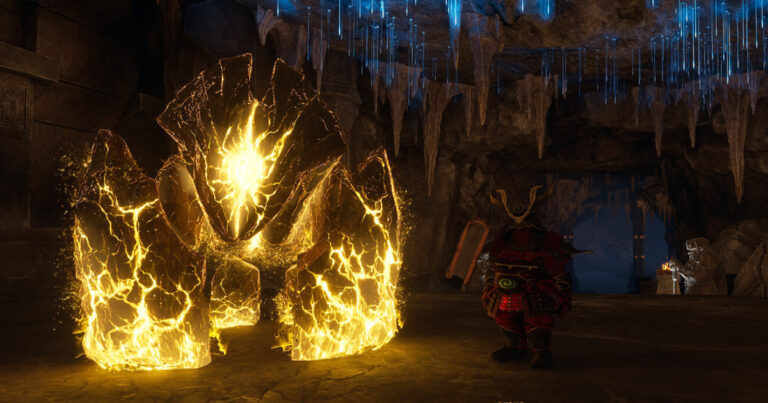 A scandal continues to unfold around the creators of Ashes of Creation studio.
 The developers of Heroes of Might & Magic: Olden Era have decided to join forces with four other game studios. Together, they have formed a holding company named Nova Assembly, aiming to challenge the crisis in the industry.
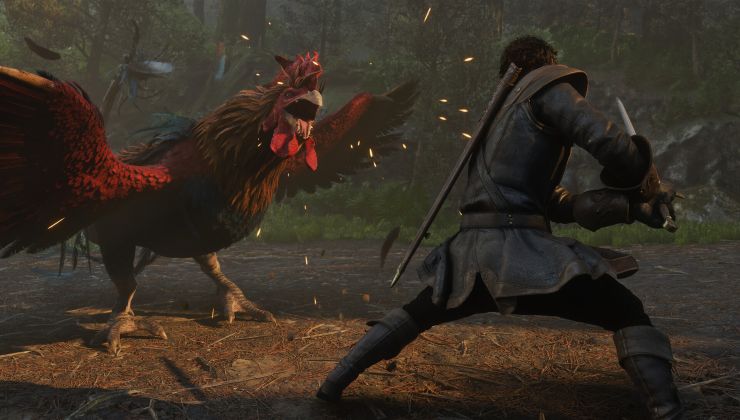
Read the full article on GamingOnLinux.

HIGH A dense stack of high-quality and various puzzles.
LOW Some rule variants are less intuitive than others.
WTF The bootleg hobbit holes in some parts of the map.
The Artisan of Glimmith has an interesting provenance. Developer Lunarch Studios previously brought us Islands of Insight, an enormous, quixotic experience that was given away for free for 24 hours a few months after its release to build a player base. This base was necessary because Islands wasn’t just the sprawlingest, openest-world puzzler ever made, but one served with MMO-style shared-world elements.
However, problems dogged this admirably eccentric vision, and rather than abandoning their progeny and running for the hills, Lunarch decided to shut down the Islands servers and patch the game to be entirely single player in what gaming historians are already calling “a real bro move.”
Yes, the world was not ready for IoI‘s ambition – the Market’s blind idiot gods would never accept something so inherently, opulently niche. MMOs, after all, are about Making Profit Forever, and there wasn’t enough profit in Islands to grant it even the conditional immortality of an always-online experience.

But it wasn’t purely faceless forces that sealed IoI’s fate, because its sheer breadth hit mixedly even amongst the hardcore puzzleheads. IoI contained 10,000 puzzles spread across more than 20 different formats, but these formats were not created equal (some of can hardly be called puzzles at all), and there were those who didn’t enjoy the glut of low-impact filler – the IoI equivalent of MMO trash mobs – crowding out the good stuff, specifically the logic grid puzzle set on which the designers obviously expended the most effort and channeled the most creativity.
This prelude is important to Artisan because it is, essentially, a pure distillate of Islands of Insight. It’s the result of that earlier cyclopean bulk being pared back so extensively as to almost completely hide the lineage. Artisan is a single-player experience focused on logic grid-style puzzling, and that’s it — gone is the open world, the platforming, the multiple puzzle types, and any whiff of another human being. This is a much humbler title, but it absolutely shines because of it.
In The Artisan of Glimmith players are the artisan, and they’re in Glimmith, restoring stained glass windows piece by piece by solving logic puzzles, much as the master craftsmen of yore did. These puzzles are comprised of grids of squares, and these squares must be divided up into different colored segments according to an expansive suite of rules.

Each region of the Glimmithian map (more anon) focuses chiefly around a single rule and its implications. A simple, early rule is “Numbered Regions.” If a square has a number on it, that means its region must consist of that many squares exactly. The designers have ranked each puzzle from 1 – 7, with 7 being the hardest, and they really do seem to winnow out all meaningful permutations of each rule, as well as many interactions between different rules.
Puzzle quality here is quite good. There’s definitely a little bloat, particularly in the number of introductory puzzles in each zone, but the design rigor in the mid- to high-difficulty puzzles offers more than enough mental chew to satiate the more ravenous seekers of cerebral sustenance in the audience. Glimmith looks relaxing, it sounds relaxing, but it hits hard when it wants to, with gold completions in each region (awarded for solving all standard puzzles in a zone) and optional superboss puzzles hung out there for the truly dedicated.
There are also plenty of rolling green hills for a casual player to run around in without stumbling into the gnarlier stuff, and I think most people will finish the main campaign and feel satisfied with their purchase. Glimmith successfully navigates the Scylla and Charybdis that are the casual and hardcore puzzle fan demographics, and feels both old and new in that way. Think of it as a mutated fugue on Nikoli-style pencil puzzles, or the apex predator of Big Fish era puzzlers — something your mom would play if she had a Steam account and was into Raymond Smullyan.

There are no overarching metapuzzles in the Talos Principle-ian sense, but Glimmith’s overworld does have many hidden puzzles — and the camera must be positioned just so to see them. It’s just a light sprinkling of Hidden Object, and is completely optional for those interested in just “beating” the game. Moreover, once the main story is finished, Glimmith provides players with tools for finding puzzles without having to look for them, turning the overworld completely into what it already mostly was — a fancied up level selection screen.
Ludo-ergonomically, there isn’t much to complain about. Given that this is an experience about making stained glass windows, I deeply appreciate Lunarch allowing players to pick the pigments they want to use on each section, and the toggle-able note-taking mode is also great. I’ll say that setting up custom palettes (so that regions are only painted in certain shades) is a bit fiddly, and I could stand more granularity in configuring what specific shade of each color I’m working with, but overall everything here is good.
In fact, the whole game is good – it’s not an all-time great, but a rare, pure example of something unambitious and also essentially perfect. I’m nearing 30 happy hours spent making stained glass and, conservatively, have another 30 hours of time left here, should I choose to pursue it. Again, Glimmith is not high concept, it isn’t beating anybody over the head with its cleverness, but its calm, dependable quality flows from it like a river or a cool breeze. For those into puzzle games who somehow don’t already own it, today’s the day. Have at it.
Score: 8 out of 10
Disclosures: This game is developed by Lunarch Studios and published by Lunarch Studios and 983 Interactive. It is currently available on PC. This copy of the game was obtained via publisher. Approximately 23 hours of play were devoted to the game, and it was not completed. There are no multiplayer modes.
Parents: At the time of review this game was not yet rated by the ESRB, but I wish it were because it would be funny to read the org’s matter of fact summary of a game that is 100% benign and unviolent from tip to tail. Don’t see this game being a huge hit with the kids given that it isn’t about dabbing Minions or evil mascot characters or whatever, but, if they do play it, unless they’re suffering from acute vitrophobia, this is fine for them and anyone else.
Colorblind Modes: There are no colorblind modes present.
Deaf & Hard of Hearing Gamers: There’s no plot in Glimmith, but there are occasional hint messages as well as text (see examples above) explaining whatever solving rules are currently present, so text size is a consideration here. The font can be resized, but only to one maybe 25% larger version – better than nothing, and hopefully good enough most of the time, but I wish there was more granularity and extended size options. Given that the rule text is large by default and accompanied by a visual element, however, I’m going to say this game is fully accessible.
Remappable Controls: The game supports keyboard + mouse only, and the controls cannot be remapped. Keyboard controls are simple, with right/left/center clicking being the primary method of interaction, supplemented by a clutch of keystrokes and hotkeys for advanced, but useful, functionality like instantly filling areas with color.

The post The Artisan Of Glimmith Review appeared first on Gamecritics.com.
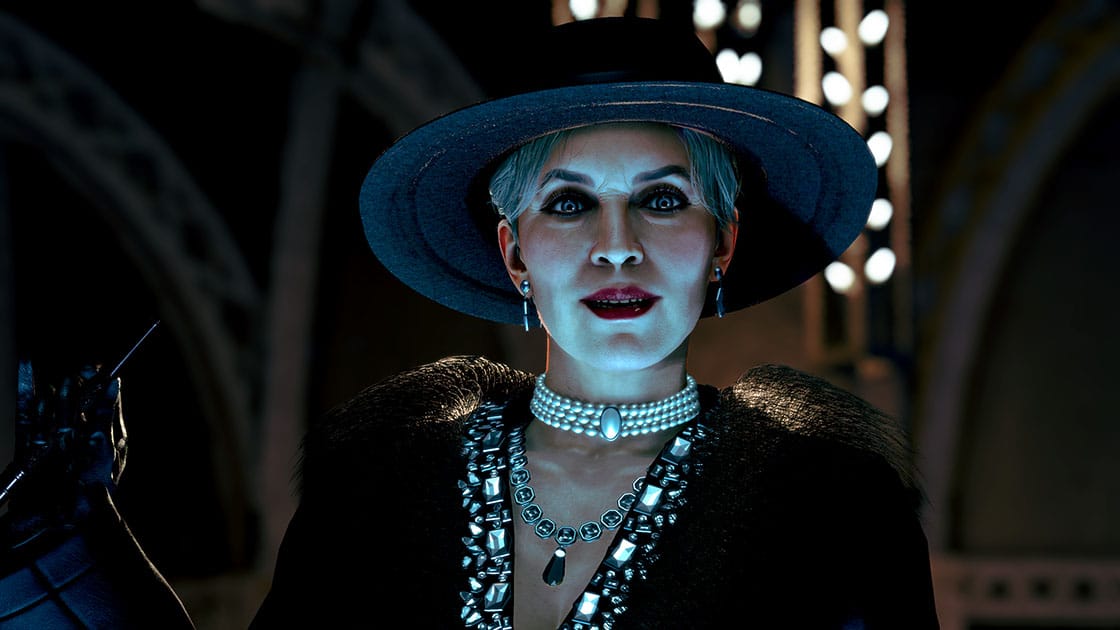
Like most expressions of the hypermasculine crime genre, from song to film, the Yakuza series’ relationship to its women is often patronising at best and hostile at worst. Its most recent release at the time of writing, the tepid Yakuza Kiwami 3 (along with the bundled campaign Dark Ties), is the very picture of this. The hiring of confessed sex pest Teruyuki Kagawa for one of the most involved likeness character roles in the entire series (he’s the first actor to do his own mocap for the game) is the immediate example.
Fellow game journalist Ashley Schofield writes for Skybox that, despite having always depicted unambiguously misogynistic predators as bad guys, the series really isn’t so much at odds with itself in Kagawa’s presence as it is following its hypocritical treatment of women to its conclusion. From iron-hearted acting Tojo chairwoman Yayoi Dojima becoming a damsel in distress in Yakuza 2, all the way to Chitose Fujinomiya’s arc in Like a Dragon: Infinite Wealth, stripping all agency from her unsavoury deeds, female characters are at once deified and treated as tools for the development of their male counterparts.
There is nothing in the franchise that shows this quite as well as creator Toshihiro Nagoshi’s philosophy, kept alive by his close collaborator and now leader of RGG Studio, Masayoshi Yokoyama: with a few exceptions (namely Tanimura’s female instructor in Yakuza 4, the 9-year-old Haruka Sawamura, and a couple of trans women - I wonder why), Kazuma Kiryu and friends are forbidden from ever raising a hand against a woman. Every time a villain hits one during a cutscene, too, she always falls to the ground and stays there, no matter her level of fighting skill; a grand show of just how despicable the action is.
As the years have gone by, the series has made several attempts at grappling with the idea of fighting female characters. Like a Dragon: Pirate Yakuza in Hawaii promised a lady main villain with a swordswoman for a retainer — yet refused to let you actually punch either of them. Instead, the game only allows a ship battle against the big baddie’s pirate crew, never mind the fact that Goro Majima doesn’t seem that averse to hitting women (he’s slapped his forgotten ex-wife at least once, for one).
Even the otherwise pro-woman Yakuza: Like a Dragon balks at the concept of fighting crime leader Seonhee, instead making her sic her male second-in-command, Joongi Han, on Ichiban Kasuga and company. Lost Judgment’s biker gang racing mode may be the closest we get; there is an all-girls crew whom the player must knock off their rides to gain politicking leverage, led by goth rocker badass Rina Minagawa (whose main contribution still is just having been in love with the leader of the gang to which hers is a subgroup... baby steps).
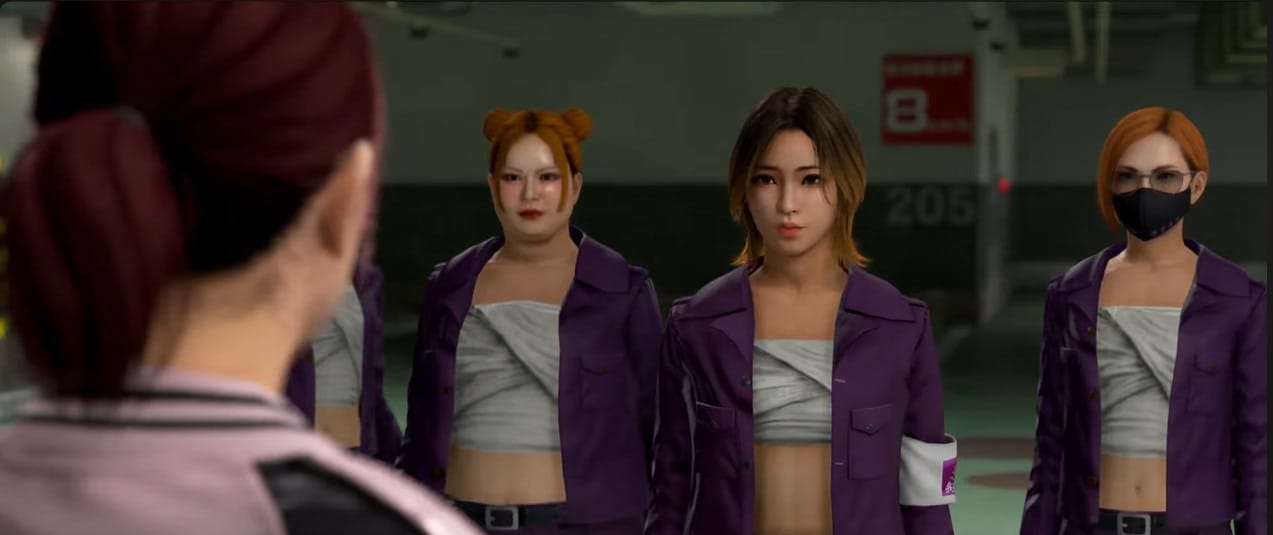
It is thus remarkable that Kiwami 3 returns to that setting for the Ryukyu Gal Gang, a side mode retconned to be part of the original Yakuza 3, which sees Kiryu advising the Haisai Girls, another girl biker gang led by young and spunky Tsubasa Miyazato. When you first meet Tsubasa, she and her gals are getting attacked by the Tokyo Night Terrors, an all-male group from Tokyo that wants to take over Okinawa’s biking scene by force. Kiryu comes to their aid, but not before proselytising to the jerks about how hitting a woman is a coward’s practice — no matter if they’re rival gang members fighting you on those grounds. The “fairer sex”, as the series believes them, is untouchable due to some sort of inherent weakness.
While the game tries to dress up Kiryu’s newfound advisor position as some sort of bid for gender inclusivity, there’s no other way to put it but the cliché one: it’s a man barging into a woman’s space. Player agency here translates to the quiet implication that these clueless, overconfident little girls need a big, strong guy to guide them in finding their truest selves, and there is no amount of “she found herself on her own” insistences from the Dragon of Dojima that can handwave this.
To that end, it’s very notable that the menacing cutscenes of the storyline villains debating their next moves don’t say “we’re going to crush Tsubasa and her gang” or anything of the sort. They’re all eager to fight Kiryu, the true threat in their eyes (and of the narrative’s), because aww, look how cool you are shepherding these idiots to their coming of age.
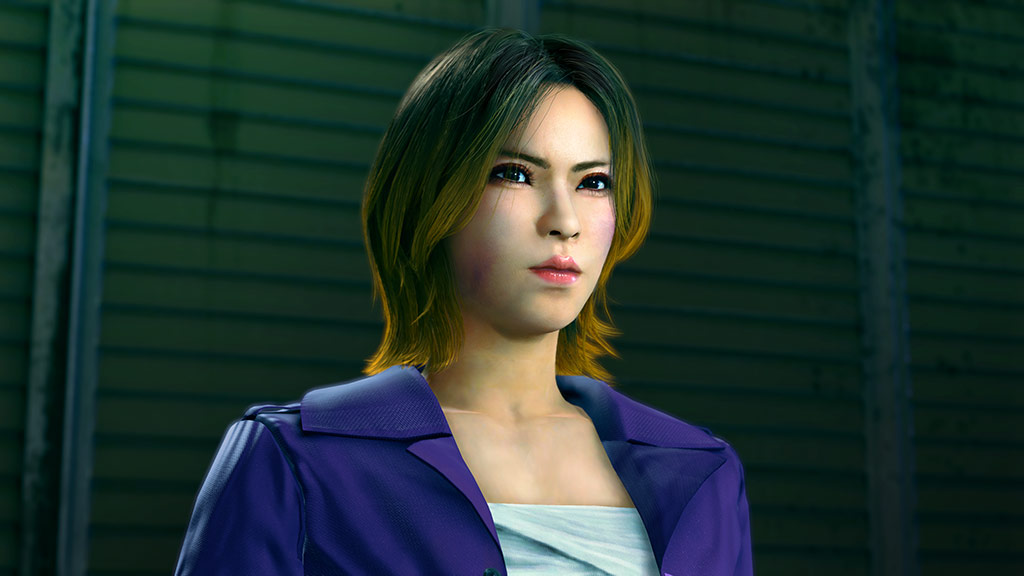
This disingenuous heralding of “girl power,” which is really just thinly veiled misogyny, further extends to the storyline involving Tsubasa’s rival, Sakura, the leader of the supposedly uber-powerful Ryukyu Venus. Because Kiwami 3 has no concept of what the “side” in “side mode” means, all players are forced to see the way this plot beat develops: Sakura is touted as the first one up to bat out of the three arch-villain groups, but when her time to shine arrives, she and her (again, extremely powerful) group are instead overpowered with ease by the “real” bad guys and become a gaggle of damsels in distress.
This is just more fuel to the malice of your opponents, as if “unsubtle allegory for colonialism, being a Tokyo group looking to conquer Okinawa and all” wasn’t strong enough motivation for the audience’s hatred already. What untold horrors would happen if Kazuma Kiryu (and his female companions, but who gives a rip about them, right?) had to take women seriously as opponents?
Well, perhaps the next step in the series’ evolution is to discover just what might happen if women were taken seriously. RGG Studio has tried to play both sides before: their best effort in the “strong female character” field has been Saeko Mukoda from Yakuza: Like a Dragon, a character who explicitly draws her power from womanhood instead of being, like Kaoru Sayama had been in Yakuza 2, just “strong for a woman”, which usually didn’t mean much in the face of men.
Sure, it comes in the form of the kinda-sexist trope of using feminine signifiers as weapons — your clutch bag whacks and makeup poison and seduction techniques and what have you — but one finds it’s quite forgivable in a game whose entire class system relies on common-ish jobs overblown to comedic proportions, in the Miitopia vein of humour.
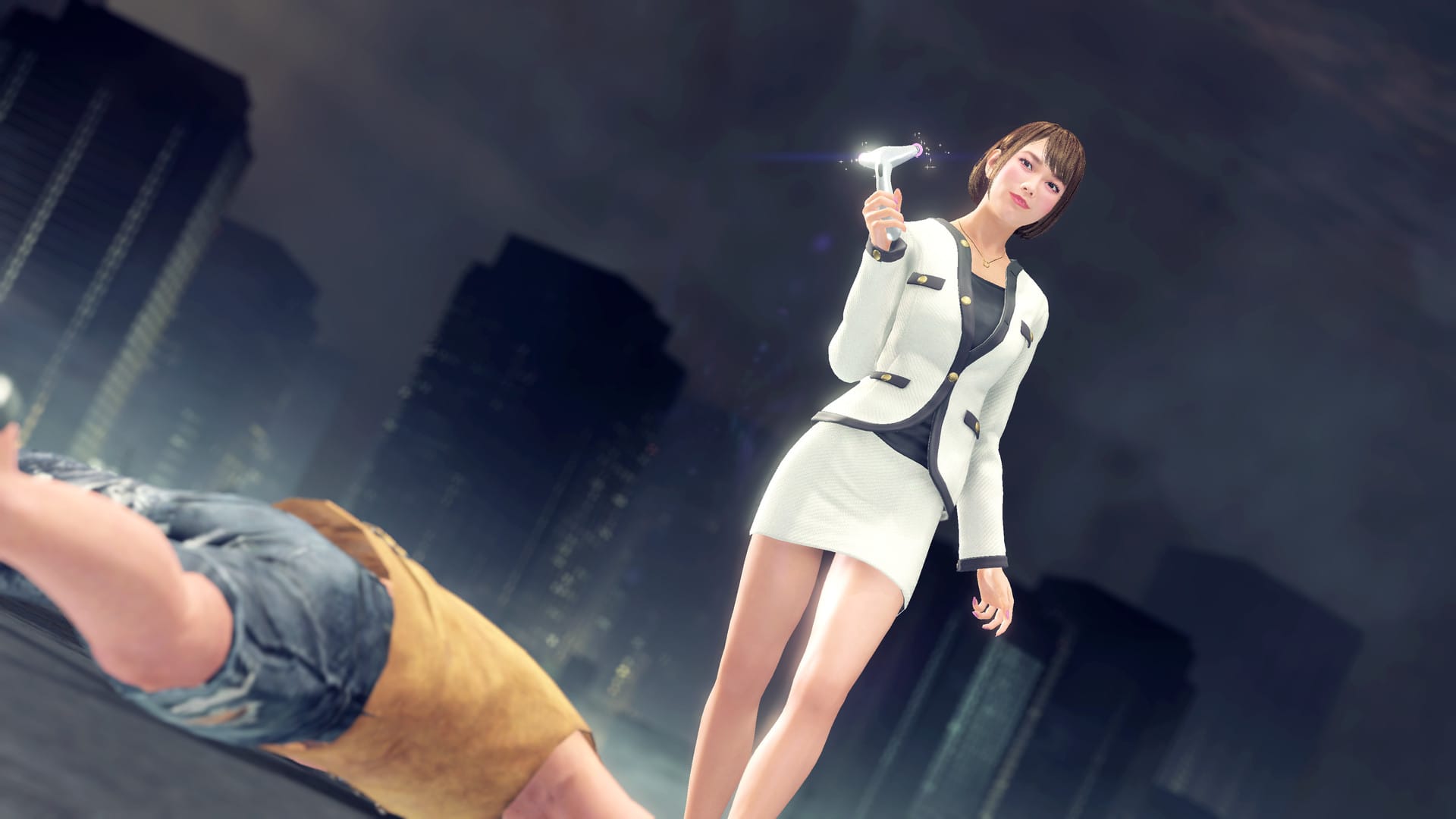
In Like a Dragon (and its sequel Infinite Wealth, though that one has some other problems with misogyny), specifically, this attitude is supported by the use of the Heroine’s Journey, as Niki Fakhoori writes for Stop Caring. By moving away from the classic Hero’s Journey, a mode of narrative that rewards more classically “masculine” traits (such as a “lone wolf” type approach to life, Kiryu’s entire M.O.), Ichiban Kasuga’s turn-based RPG philosophy gives more room to his allies to be treated not as disposable plot devices, but as people in their own right. This is why, when the group has to help Saeko deal with a sexual harasser during an undercover mission, it comes off less “defend the poor woman who can’t do that for herself” and more “get a friend out of a pinch”. Even through the usual Yakuza series plot beats, there is room for a more humanised treatment of women — the games have already done the work to show that themselves, see?
It is thus high time to take down that sacred cow. Despite RGG Studio’s best efforts to dance around it, relegating conflict with women to non-punching side modes and the like, there can be no true gender equality if we keep framing one side as fundamentally incapable of doing something. There is so much work on the narrative side to avoid the simplest solution; it has frankly become ridiculous over the years. It seems all we will ever get is a collage of examples — a motorcycling rival we don’t meet in classic combat, a female fighting style master who just gives you objects to wreck, a Yakuza chairwoman used as a prop, a coach you actually do get to spar with but who disappears from the series forever after that — and never the fully realised thing.
As Yakuza refuses to let go of the legacy of the Kiryu Saga, its women are the most immediate victims. Committing fully to the idea that gender is irrelevant to strength requires actually making it so that lady villains get to exist in all of the same modes as men, which does include getting their faces caved in just like them. The current approach of pretending as though the issue doesn't exist, while mostly treating female characters in patronising ways, truly does nothing for anyone. What's a Dragon that doesn't respect his adversary?
The Rust 'Built Different' update has just landed, bringing with it the most substantial upgrade to its player models in years. Sporting fresh animations to boot, characters are far more realistic, though I always found their kinetic jank to be part of the Rust experience. Alongside the revamp, Facepunch has brought a new top-tier armor set and a classic assault rifle to the fore.


Helldivers 2 still has every right to be considered among the best co-op games, but there's been discontent in the ranks of Super Earth lately. Head over to Steam and you'll find a 'mixed' recent review rating, with a growing desire for more regular updates and new methods of persistent progression. Developer Arrowhead Game Studios has answered the call. In a new message to the community, Game Director Mikael Ariksson walks through incoming upgrades to both community-wide and personal progression, along with the exciting promise of full ship customization.

Satisfactory 1.2 has arrived, and that matters whether you're a long-term builder, a creative mode junkie, or someone starting out on their first adventure through the factory-crafting sandbox game. Coffee Stain Studios has spent months packing all manner of new quality-of-life features, additional tools, and aesthetic touches into its latest Satisfactory update. Several more months of testing later, and it's ready for everyone - and the changes are big enough that you're going to want to think about a complete rebuild.

A new Fallout 76 update has just launched, and it's about to make the world a lot more chaotic - but also open up another way to get your hands on its top-tier gear in doing so. Fallout 76 Infestations, which is accompanied by Season 25 of the survival game, 'Under Siege,' covers the map in a barrage of bounteous bosses, each promising to act as a possible gateway to the four-star legendaries that have thus far been pretty elusive to get your hands on. The only caveat is that you'll need to make sure you get there in time.
