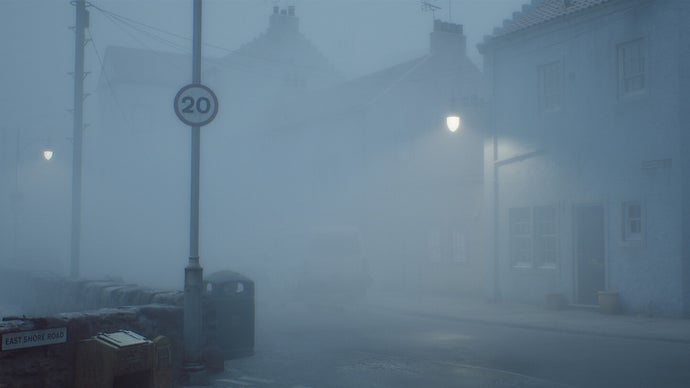
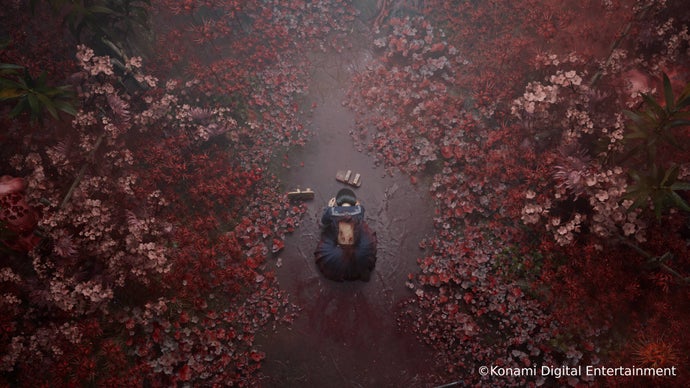
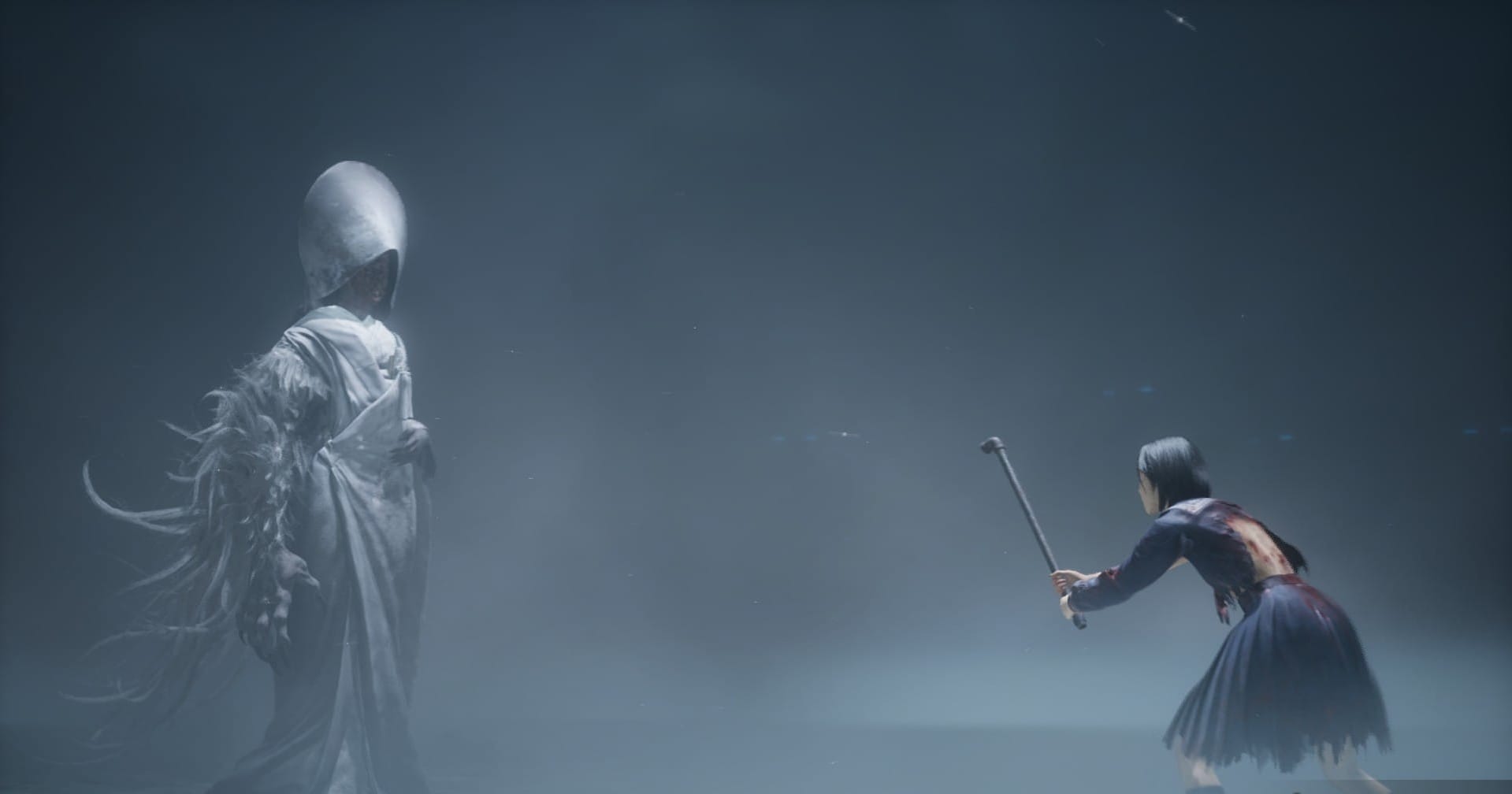
It's 1996. The weather's crap. You're wandering the streets of a Scottish village that looks deserted aside from some lumbering horrors who seem intent on sticking weird needles into you. No, this isn't the blurb of iconic film Trainspotting, it's the setup for Silent Hill: Townfall.
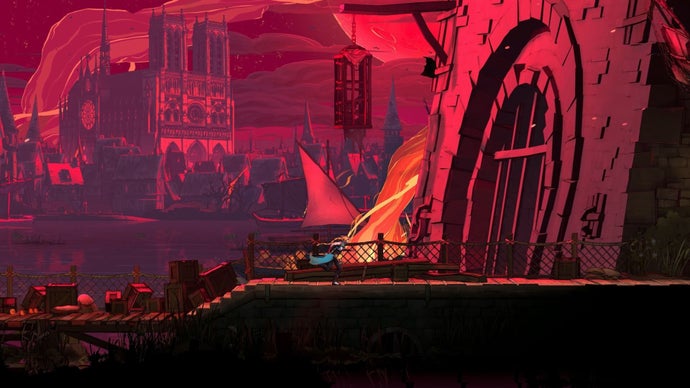
Sharpen your fangs and chuck out all of the garlic bread in your house, Castlevania's back with a new game co-developed by the folks who made roguelike-Metroidvania Dead Cells. Castlevania: Belmont's Curse is the name of this fresh bout of vampire whippage set in medieval Paris, which publishers Konami have teased is just the first of many Castlevania things they have coming as the series turns 40.
The moment I arrived in Silent Hill f, I could tell the fog was back, and not just as eye candy, but as a choking and tangible entity. It is a character, and not a backdrop. It’s an impenetrable barrier, a veil that absorbs sound, muffles your footfalls, and time moves differently. There were moments where I caught myself standing still just watching the fog, convinced it was so painfully obvious, that I could see a figure or something ghastly moving just out of reach. The fog in this area is not meant as a simple decoration; it is the very essence of the terror, and it is something that truly works.
The feel of the sound is as important as the visual in the space. This part of the score might seem dissonant. In fact, it is jarring, static, and distortion corseted into some kind of rhythm, but certainly not something that you will want to hum. As you start playing it, the tune integrates into your body as if you are a puppet, every strung nerve maximally toned. And, finally, the silence comes—a thick silence, uncomfortable and constraining, and heavier than the sound ever could be. Every part of the space carries a threat, and, days later, I still remember going more slowly at the borders of the seats that day and, more than once, trying to decipher some shapes in the dim light. For me, this is precisely what Silent Hill should have been.
Return of a Veteran
I remember playing Silent Hill the moment it was released. Coming all the way to New Zealand, the first launch of Silent Hill was accompanied by a gag promotional item – a pair of underwear that was packed with the game. The reasoning was obvious, and trust me, I should have preserved it with the rest of my belongings for the latest sequel. I have to say, after the many sequel iterations and comparisons like the experimental misfires and genre offs, I have to say that Silent Hill f has emerged from the mist as the truest sequel. Homecoming and Downpour detours all, this is the bloodline the series was always meant to have. Appendices with the sound mixed to gnaw like a parasite – the steadfast fog once more is in position to the liege, and the narrative has found blasphemy in the lost, ravenous, cruel.
Language as a Layer of Dread
I put on the English voiceover at first, but switched to the Japanese audio and subtitles because I liked it better. This is perhaps the easiest, yet disquieting experience of the game. Each sentence in Japanese has a near ritualistic quality to it, as if the entire phrase is etched into stone or was whispered as a spell. It is not a matter of just listening to someone speak in a different language, it is all in the rhythm, the sharpness, the delivery, the breath. It is real and true dread that lies in these performances. When dubbed in English, part of that spellbinding quality is retained, but it is shrouded in something all too comfortable and all too clean. Each Japanese sentence, in its articulation, seems to be a blade cutting through the fog.
The Journal That Breathes
Within every game, even among PS5 horror games, there is a detail that is profound, tiny, and necessitates comment: the journal. It’s more than a menu, a script, or a set of notes. It is a relic, heavy in its binding, immersive in its design, and rests in a tactile silence. Each page turn tumbles more towards a violation. It is intricately woven with the anxiety of something confidential, something that should not be core sampled and brushed through, like a relic that contains more sinister than salubrious offerings.
Performances That Cut Through the Fog
Silent Hill f is a silent film which does not indulge in camp. No actors are making faces at the camera. No attempts at over-the-top drama that would soften the fear. The actors are silent and carry the horror through their intensity. They do not act out fear, but instead, dread. Their presence is enough to make sure the player does not escape from the experience. While most horror games emphasize caricature, Silent Hill focuses on real people, and the descent into horror becomes even more disturbing.
A Narrative Devoid of Clarification
Still lost, yet elated after a good ten hours of play, remains a joy in Silent Hill f. For the release of Silent Hill, the only time when I felt strongest was during the moments I was not able to understand the narrative of the game, mainly during the times of uncertainty. Every realization is another question.
There is no spoon feeding, there is no expository dumping to aid you. The narrative serves only as a construct maze, shrouded in fog, and I have yet to escape its confines. The fog is not purely a negative; it's a victory. It feels as though there is a story, and it functions as a story by resisting imagination, simulation, and interpretation.
Relentless Combat
Example, Silent Hill. On f, it is clear the game possesses real bite. It plays in a real, tangible, responsive world, pleasant to all players who buy PS5 games. Here, the combat is visceral. Automatically, there is no combat without complete precision. Every window of attack is small; the very rare double window of attack requires the enemy to be slightly in a precise position.
Every single encounter is less of a mash attack and feels more like a tactical puzzle of life. One particular boss, for every single encounter, a complete three hours of my life was devoted. In every aspect, every single attempt was another test of my patience and adaptability. Out of the countless dominations that it was able to withstand, each was like an individual lightning streak, a moment of mental alacrity.
You could say that on lower difficulties, the game nears a more pure horror rhythm, as the atmosphere does more of the work than the mechanics. But on Hard, the system shifts to a more punishment-duel system, nearly Soulslike in its relentlessness. It does have some issues; clunky moments do exist, but unlike any other game, it does reward mastery in a way that Silent Hill has rarely done before.
Tremors You Can’t Forget
The scarecrows take the trophy for the most terrifying. Their bodies are the most abstract of forms, with each of the movements bizarrely entrancing and terrifying. They do not just stalk you; rather, they inhabit the fog with grotesque elegance as they bend and contort. Then, there is the design element that is so obvious to everybody, they are the most horrid. It is a contradiction that you can’t take your eyes away from, pure horror mixed with pure lust, and pure disgust mixed with pure attraction. Silent Hill has never strayed from a contradiction, and in this scene, it strayed more than the others, with its creatures that disturb and distract in equal parts. Forget the first titles where nurses were overexposed; in Silent Hill f, it is the scarecrows that carry the real payload.
A Loop of Suffering and Mastery
Silent Hill f, at its core, is based on a loop of adaptation. The structure, much like Sekiro: Shadows Die Twice, is about mastery, but the spine-crushing atmosphere of Silent Hill alters the flavor. The dread, the atmosphere, is the first layer of punishment that one must peel off. The rest is a terrible bundle of collapse at the edge of which one must pay to find a shred of success. Exhausting it may be, but it is also a thrill.
On standard difficulty, the layer of punishment is lighter, and the dread is left to hover over the mechanical brutality. But in Hard mode, the game is a devotion asking for nothing less. Suffering, the loop of defeat and persistence, is, in a different way, easily submerged in the fog’s grasp.
A Resurrection, Not Just a Sequel
Silent Hill f is not just another entry in a series attempting to relive lost glory. It is a resurrection. The essence of the franchise has been rediscovered: the fog, the ambiguity, the intimate terror, all of which have been augmented with new designs, new performances, and new risks. It is not perfect. The combat can falter, the spikes in difficulty can be quite vexing, and the story will undoubtedly alienate most people.
It is not nostalgia. It is not imitation. It is a reclamation.
Final Reflection
Silent Hill f impressed me more than I had anticipated. It hit me differently, provoking not just fear, but something akin to inner pain, a discomfort that lingers after the controller has been set down. The fog feels alive again. The narrative is adamant in not explaining itself. The scarecrows disturb me with their paradox of horror and beauty. There is more than mere horror for the sake of horror. There is horror as the act of reflection, horror as the act of artistic expression, horror as the act of confronting something you wish you could turn away from but cannot. For the fans devoted to the series, those who like psychological horror that is more disturbing than startling, Silent Hill f is an intricate design of a nightmare to inhabit.
The original Metal Gear Solid was a long time ago now (Konami)
It was one of the most influential games of the PlayStation 1 era but how does Metal Gear Solid stand up almost three decades later? A reader is surprised to find out.
Alaska – Bering Sea. A submarine cuts through the murky ocean depths. Tonally and in terms of production values the score that plays infers that you’re watching a scene from a Hollywood action movie. But this isn’t a movie, although in many respects you get the impression that it wants to be. What I’ve described is the opening cut scene of Metal Gear Solid, a game that I adored many years ago. Since I still have my original twin disc copy of the game I thought I’d replay it from start to finish on a PlayStation 2 [presumably via The Essential Collection – GC]. Would this much revered classic be as good as I remembered?
You are Solid Snake. Your mission: infiltrate a terrorist stronghold, free a couple of hostages and investigate a possible nuclear threat. Do this with the clothes on your back, a CODEC receiver/transmitter, a scope, and a packet of cigarettes. For this mission weapons and equipment are OSP – on-site procurement. In terms of real-world logic our hero’s initial loadout is ludicrous. However, starting out with close to no items in your inventory does turn the game into a big treasure hunt. And in this case that treasure is military hardware: thermal goggles, chaff grenades, C4 explosive, Stinger missiles…
Replaying Metal Gear Solid it took me a while to adjust to the top-down view that it uses, which when compared to the presentation of modern big budget games seems basic and regressive, but provided that you make use of the radar in the top right corner of the screen the gameplay of Metal Gear Solid still works perfectly. Nearly three decades have passed and yet Shadow Moses Island prevails as a wonderous gaming world to immerse yourself in. Who cares about blocky graphics when the interactive picture those graphics paint is so atmospheric and nuanced?
While you sneak around the overrun military base, patrolling enemies yawn, stretch, fall asleep, and follow any footprints in the snow that Snake makes. The warmth of an enemy’s breath shows up as mist. Make a guard suspicious and a question mark appears above their head. Alert a guard and their heightened awareness is indicated by the now iconic exclamation mark.
On this playthrough I surprised some mice in an air vent. Little exclamation marks appeared above the rodents’ heads when they saw me and scurried off. Half the fun of Metal Gear Solid, and the franchise overall, is discovering these quirky and innovative details.
Expert, exclusive gaming analysis
Sign up to the GameCentral newsletter for a unique take on the week in gaming, alongside the latest reviews and more. Delivered to your inbox every Saturday morning.
This time around I had problems defeating each and every boss in this game, I expect due to a substantial lack of practise. But the rogue elements of Foxhound are so atypical and entertaining that even when they kill you it’s hard to resent them. The game certainly wouldn’t be the same without their presence.
For instance, Cyborg Ninja still made an impression on me, or rather his introduction did. Walking down a corridor littered with bleeding corpses flung this way and that you feel like you’ve mistakenly strayed into a survival horror game. This part of Snake’s mission flags up another recognisable trait of the Metal Gear franchise, for better or for worse: tonal inconsistency.
Those melodramatic cries on the cool-looking Game Over screen. SNAAAAKE! Are those outbursts meant to be funny? They made me laugh every time I heard them.
Then you’ll get characters that appear to fall in love over the space of an hour or so, having never met. Otacon and Sniper Wolf. This entirely one-sided romance is so phoney, and yet the game tries to tug on our emotional heart strings when one of them dies.
Snake himself seems like a decent bloke. A moral, modest underdog and so it’s easy to side with him. And then the expert operative tells Meryl that she’s got a great butt. Wow. With chat up lines like that Snake how can any woman resist you?
The game that made stealth cool (Konami)
Predictably, since I haven’t attempted this sneaking mission for at least a couple of decades, I had trouble beating Metal Gear Rex near the end of the game. This boss battle has two phases. In-between the first phase and the second phase there’s a cut scene that you’re forced to watch again and again if you keep losing the fight. I couldn’t skip this moment, which made it seem like a sadistic punishment for dying.
After finishing Metal Gear Solid I wanted to play through the game again. To me that’s clear evidence of its quality. The good parts of Solid Snake’s PlayStation debut certainly outweigh what’s bad. But what’s bad about the game is bad with a capital B or rather misjudged to an extent that these flaws clearly stand out.
Saying that, even after recently experiencing them I can tolerate Metal Gear Solid’s annoyances because they’re counteracted with flashes of genius. The location of Meryl’s CODEC frequency. Homing in on your target in first person view with a Nikita remote-controlled missile. Psycho Mantis breaking down the fourth wall and messing with your game console. Cooling down and heating up the PAL card. What other game allows you to sneak around and fast travel inside a cardboard box?
All of that gaming gold is probably worth having to read your way through line after line of CODEC exposition. And sweet as she is, I wish Mei Ling would learn the value of concise verbal exchanges during an active mission. Yes, Mei Ling, I want to save. That’s kind of why I called you. No, please don’t tell me another Chinese proverb, unless it’s one about the benefits of radio silence.
Konami Digital Entertainment Inc. has announced today that its popular game eFootball be hosting a major Manchester United-focused competitive campaign. Players around the world will have the chance to compete in order to become the official Manchester United representative in the eFootball Championship 2026.
For interested fans, the online qualifiers for the event are now live for the in-game Club Event “eFootball Championship 2026 Manchester United.” Participating in the event will give players the chance to represent the Red Devils on the global esports stage, which in turn determines the official Manchester United representative for the eFootball Championship 2026.
KONAMI says that in the previous season, 36.3 million players competed in Club Events, with the journey starting all over again this year. All players need to do to have a chance is download eFootball for free and enter the “Match” hub to potentially start your future eFootball legacy.
Two tournaments are slated for fans to compete in: the ’eFootballChampionship 2026 Open’ and the ‘eFootballChampionship 2026 Club Event.’ The former is for all users, and the latter is used to determine each eFootball partnered club’s number one fan. If you manage to succeed in these events, you will be able to compete for the title of ‘World’s Best eFootball player’ at the ‘eFootballChampionship 2026 World Finals’ expected for the summer of 2026.
Surpassing 950 million downloads, the game’s reach has been cemented since its days before its rebranding as PES. In celebration of that fact and to support the current campaign, eFootball has added the Manchester United Club Pack featuring the club’s starting XI, as well as legendary players from the club’s past. Big Time player George Best has been added, along with Epic’s Peter Schmeichel and Bryan Robson.
Spotify Camp Nou in the process of its renovation.
Players can also enjoy a fresh stadium, FC Barcelona’s newly renovated home, Spotify Camp Nou. The stadium is so far only available for mobile players, but PC and console players will soon be able to play a match in the Barcelona icon in a coming update. Using the new stadium, players can experience more of what the game has to offer by participating in the campaign, where daily log-ins and progressing through in-game events can unlock special goal effects and tickets offering the chance to win up to 1,000 in-game coins.
Compete, play, and enjoy yourself in eFootball’s newest campaign, and maybe even try to get that spot representing Manchester United.
Last year, after a bit of a wait, Silent Hill was released, and with it came some changes to the series. The combat was a lot more actiony, the format for multiple endings was drastically different, but the most obvious change was its setting. We're not in Silent Hill anymore, Toto! We're in Ebisugaoka, Japan, also a fictional town, though clearly not a fictional country. And that's because Silent Hill, the place, is now also Silent Hill, the "phenomenon."
Silent Hill F is not only the first brand new survival horror game in the franchise in a long time, but also the series' first spin-off, bringing the action to new locales and situations. We leave the horrors of America for a trip to 1960s Japan. While the game presents a fresh take on the series, its gameplay feels like it's being pulled between two horrors.
Cursed All Over
The story follows Hinako, a teenage girl in a rural mountain town. One day, a fog rolls in that seems to cause everyone to disappear, and the town is now full of strange monsters out to get her. She not only needs to navigate the town with the remaining survivors, but a strange man haunts her nightmares.
The story is great, and the game avoids retreading the themes and plot of prior games in the series. Hinako is portrayed as a tomboy and someone who does not like that women are seen as nothing more than a traditional housewife to a man. This upsets her father, who views her as less than her older, married sister. The girls of the village treat her as an outsider and a freak because she doesn't act like the other girls, and because her best childhood friend is a boy. The impact of misogyny and how it can be inflicted by both men and women is on display here.
While the story may be different, you're still going to wander around seemingly normal environments, getting into fights and puzzle-solving. Silent Hill F, however, does things a bit differently with both.
Spooky Soulslike?
The combat system here feels like an attempt to mirror the more personal and methodical fighting of a Soulslike. You'll pick up weapons from the environment in the everyday world, while the nightmare world has stock weapons. The everyday weapons have durability and can break after being overused, but tool kits can be found to enact repairs. Inventory management is a big deal, as you start with limited inventory slots and will want to fill them up with the various recovery items that heal or provide other bonuses. You can find inventory upgrades that are definitely worth seeking.
Combat plays a far larger role here than in previous entries, which does distract from the exploration. Source: Author.
Sanity is a new resource that works with the advanced techniques for fighting. You have a light and heavy attack, which both drain stamina on use. By holding down the focus button, you'll consume sanity to either charge for a strong attack or attempt to counter the enemy when they flash to perform a stunning blow. Sanity can also drain if you are hit by certain attacks, and running out means you take increased damage. You can sell certain items for "faith" at the local shrines/save points that can be used to upgrade your stats and equip Omamoris that provide passive boosts.
The enemy design here is great despite the presence of just a few main types. Each one moves and behaves differently, with a lot of idle animations and weird posturing to make it hard to read them. These are not your basic mannequin monsters from the previous games, and that extends to the newly designed boss fights that are far more lively than previous ones. I'll talk about this further down, but the combat feels less about survival horror and more like a slower take on a Soulslike.
Brain Scratching Scares
For those fearing that a new Silent Hill wouldn't have fiendishly difficult puzzles, I can put those fears to rest. The puzzle design returns to the roots of the series and survival horror, as you must use knowledge both in and outside of the game if you want to solve them.
I played on the highest puzzle difficulty, and it was certainly a challenge. Some of the puzzles require you to understand logic or information without giving you the reference points or material you need, which can lead to frustration. For the very first and last puzzles, I had to look up the solutions, and even knowing it, I had no idea how the clues were supposed to reference the answer. That represents a breakdown in puzzle design – if the clues still don't make sense after you solved it, then the puzzle and/or clues weren't good to begin with.
It's like asking someone to solve a puzzle related to John and Jane's favorite colors, but the game never tells you who John and Jane are and expects you to know who the game developer's friends are as a reference. This feels like a return to the player-unfriendly puzzle design that dominated the adventure genre starting in the 80s.
The one upside is that the puzzles come paired with an excellent journal system, not only keeping track of the characters and monsters, but also providing a collection of all found hints and their relation to each puzzle. This is something I would love to see standardized among adventure games. However, this does come at a cost; there are far fewer puzzles compared to previous entries, and a greater focus on combat, which takes me to my main issues with the game.
While the game purports to be survival horror, there are a lot of action game and Soulslike design features, including unblockable grabs. Source: Author.
All the Action and Survival Horror
Combat has never been the focus of a Silent Hill game, and has functionally been a bit janky at best. This is the first game to have a fully built combat engine; however, "combat engine" and "survival horror" don't really work together.
The aforementioned Soulslike style, on paper, seems like it would work for a survival horror game – Hinako has very long wind-up and recovery animations, so every attack has to be planned out. However, you also have a dodge with I-frames and a punish attack. The game is heavily focused on stunning enemies to deliver more damage, which heavy strikes, focus strikes, and your punish can achieve, and the game is really going to make you use them.
This is by far the most combat-intensive Silent Hill game I've seen yet. The horror of being in a town beset by a curse starts to fade after your umpteenth fight as you rip apart your enemies. What I really didn't like from a horror standpoint is that the game wants you to avoid combat and gives you the option to sneak by enemies in spots...and then it locks you into arenas to fight your way out. At one point, the game practically gives you a devil trigger and asks you to rip and tear until it is done.
Regarding enemy design, I understand the subtext of featuring an enemy that is about the horror of birth in a game about a girl struggling with misogyny. That said, having an enemy that can infinitely respawn other enemies, in a required arena, in a survival horror game, starts to get annoying, not scary.
When you are in those high-action segments, you are still using the very slow, very stilted combat system. While you can upgrade your stamina and sanity, along with the help of the Omamoris, they don't suddenly make the combat faster or provide a new dynamic, such as the auto locks featured in the Callisto Protocol. Sometimes, the enemies just refuse to use any counter-able attack, and you'll need to rely on hopefully getting the stagger off, or you will be attacked easily. There are some Omamori that are really good, but they are tied to the random draw, proving the real psychological horror is gacha. The very fact that there are repeated arena fights in a Silent Hill game makes it tempting for me to give this game an F just on that alone.
Even with different endings, you're still going to be hacking and slashing through the game's combat portions. Source: Author.
Not So Final
Perhaps the biggest disappointment is that all this was designed around playing the game a minimum of 3 times, with a total of 5 endings. This is the only horror game I could think of that actually adds new challenges and puzzles on repeated playthroughs of the main quest, but it's all built on the same annoying puzzle design and repetitive combat. I do like that the world is different, leading to more information and additional content, but you must go through the entire game again to begin seeing this. The best parts of this game are when you get to wander around looking for clues and investigating, and you can do far more of that on your second playthrough and beyond.
Besides having upgraded stats to decrease the difficulty, just having more inventory space to hold and experiment with the additional items also makes things easier. An item I neglected on my first run that would have helped tremendously is the one that gives you infinite stamina for a few minutes.
However, asking the player to repeat the majority of what they just did so that the story makes sense doesn't really work in my opinion. Either the game needs to feel like a different experience, such as Madhouse mode from Resident Evil 7, offer a brand new experience like the Route A/ Route B setup in Resident Evil 2, or just let the player tear through everything they've already done to get to the new stuff.
A Loud Failure
For me, Silent Hill F fails when it comes to puzzle and combat; as a survival or action horror game, it just doesn't work. I wonder if the developers saw the success of Resident Evil 7 and its successors, and felt that the solution to bring back Silent Hill was just to add more combat and action. The story and monster designs are great, but focusing so much on combat, even to the game's difficult final boss, feels like a bit of a betrayal of the series. It's hard to be introspective and learn more about yourself and society when you're busy dodging multi-hit combos from all sides while trying to find the punish tell.
(Note: This review was written with the 1.0 version of Silent Hill F. Following the release, the game has had a balance patch that has reduced the difficulty and the amount of encounters, but I have not had a chance to replay it to see the exact changes).
Be sure to follow me on Bluesky for all my updates on design talks and random game design questions
A new trailer for Christophe Gans’ upcoming Return to Silent Hillhas hit YouTube, offering the most detailed look yet at the upcoming big screen adaptation of Silent Hill 2.
The trailer definitely isn’t short on atmosphere, with the foggy town in all its spine-chilling glory looking just as you would imagine, as protagonist James Sunderland explores its empty streets. Speaking of James, we see him interacting with Maria and encountering a number of iconic creatures from the film’s source material, notably the Lying Figures and Bubblehead Nurses. Pyramid Head is also seen lugging his massive knife along the floor, and the Lakeview Hotel appears in flames, something we didn’t actually see happen in the game.
The synopsis for Return to the Silent Hill is more or less identical to Silent Hill 2 from what we know, with James called to the town by Mary to meet her in their ‘special place.’ However, there appears to be no mention of Mary having died from a mysterious illness three years prior, as it says James was merely ‘separated’ from her. Still, we’ll just have to wait and see how things play out in cinemas.
Check out the trailer below.
This will be the third Silent Hill movie to hit the big screen, following on from the 2006 original starring Sean Bean and Radha Mitchell that was also directed by Gans. That movie loosely adapted the story of the original Silent Hill, although an original character, Rose, replaced Harry’s role from the game as she searched for her missing daughter in Silent Hill. Following this came the M.J. Bassett-directed Silent Hill Revelation in 2012, which used the story of Silent Hill 3 as the basis for its narrative.
Return to Silent Hill is set to launch in cinemas on January 23, 2026.
Publisher Konami and developer Bloober Team announced their Silent Hill 2 remake is now available for Xbox consoles. The Silent Hill 2 remake is now available for Xbox Series X|S, via the Microsoft Store. A 50% discount is currently being run to celebrate the new release. The Silent Hill 2 remake has been available since October 2024 for Windows PC (via Steam) […]
Konami has released a new Metal Gear Solid Fox Hunt update that includes various tweaks to the publisher’s new multiplayer game while adding a much requested feature.
The most significant change here is how matchmaking works. Previously, players would need to manually select their region which could prolong waiting times depending on your chosen region and the time of day. Now the game will detect if matchmaking is taking too long, widening the search to all regions.
Metal Gear Solid Delta: Snake Eater Fox Hunt patch 1.2.3 is available to download across all platforms and will need to be installed in order to access the game. Here’s a rundown of what changes have been made.
Metal Gear Solid Fox Hunt Update 1.2.3 Patch Notes
Added ability to place enemy detection pings while aiming with a knife or gun.
XP can now be earned in custom matches.
Players will now be matched with others from different regions when matchmaking on their current server takes too long.
Extended the duration of invincibility after respawning.
Fixed an issue where invincibility after respawn was canceled by rolling or using Naked Sense.
Minor bug fixes and adjustments.
Fox Hunt launched on October 30th as part of the Snake Eater remake. In our review we scored the multiplayer mode a strong 8/10, saying:
“Metal Gear Solid Delta: Snake Eater’s Fox Hunt multiplayer mode rounds off one of the best remakes of 2025. It offers a surprisingly robust spin on existing battle royale and extraction shooter concepts, with smaller maps and match times working in its favour, successfully incorporating those stealth and strategy elements fans have come to expect.”
Despite our praise, we also noted the game’s lack of content at launch with two modes and a handful of maps. In some ways, this minimal offering works in Fox Hunt’s favour though the lack of a future roadmap is somewhat concerning. Hopefully we’ll hear more from Konami very soon.
Weeks of rumors and even a rating by the ESRB later, a release date for Bloober Team’s Silent Hill 2 on Xbox Series X/S has leaked via Microsoft’s own storefront. Discovered by True Achievements, which has access to the Xbox Store’s backend (and provided a screenshot of the listing), it’s apparently out on November 21st.
Going by the image, it will support Xbox cloud saves, Achievements, and more. A Deluxe Edition is also seemingly on the way, with a digital art book and soundtrack. It’s worth noting that Xbox Series X/S and PC are listed as platforms, but Xbox Play Anywhere support isn’t specified.
It’s possible that the listing is still a work in progress, so we’ll have to wait for the official announcement. If Silent Hill 2 remake is dropping seemingly out of nowhere in the coming weeks for Xbox, then what about Born from a Wish, the long-rumored additional scenario turned paid DLC?
Actor Salóme Rannveig Gunnarsdóttir, who plays Maria in the base game, said that Bloober Team hadn’t contacted her for the same. However, narrative designer Grzegorz Like seemingly teased its existence, responding to a fan with, “Born from what?” and the “eyes” emoji.
Stealth drop incoming? At the very least, it could be an announcement at The Game Awards on December 11th. In the meantime, check out our review of Silent Hill 2 remake on PS5 here. You can also learn more about the latest entry, Silent Hill f,here.
My obsessive passion toward the Silent Hill series makes me evaluate the most recent release with excitement and anxiety at the same time. It's not a dread in a horror sense but a dread borne out of the fear of being disappointed. Walking through the Silent Hill foggy streets over a hundred times has and will always leave an imprint. Silent Hill 2 has left a benchmark which I consider so high that I regard it as impossible to touch. The new entries that have been released under the Silent Hill title always bring with them a certain burden. Unfortunately, most of them fail to deliver. The most recent release, Silent Hill f, has not been able to hold on to the Silent Hill name in terms of the setting and the lore, and has turned the entire franchise on its head. This game, Silent Hill f, is something completely new yet familiar, which has been transplanted into new soil.
The Setting: A Shift to 1960s Japan
Your first baffling moment of Silent Hill f is how the game world has ditched the Maine fog-inspired smalltown America for the rural Japan of the 1960s. This is the greatest challenge for me, yet the most interesting decision, as a lifetime Silent Hill addict. The diners, motels, rusting steelworks, crumbling hospitals, and mild Protestantism of my Silent Hill have been drenched in Americana. To replace that with Shinto shrines, paper sliding doors, and tatami mats is to risk desecrating the very essence of the franchise.
What other use does it serve aside from as a tool to flesh out the foundations of the game world? The village appears to have much history and to have suffered over the years, even without any of the game’s narrative to explain it. However, it appears history is a bit more complex and more imagined than history as a tool to disguise suffering, tradition, and unfulfilled. The genre of Japanese folklore ghost stories is more like integrating it with the Silent Hill form of psychological abuse/violence.
The game is also dipped with a metaphor, where snow is ash, like falling. The obstructed and rotting bloom showers the entire region with a debris of corruption, more so, delicate petals which almost seem out of place, comely to the counterpart of a horror. It is this factor of beauty within decay, or perhaps grace within the contempt, that lends the world of Silent Hill F a certain critic as some of the most skilled.
Themes and Narrative: Hinako’s Journey
Hinako Shimizu, too, appears to lack all the marks of mystique at rest. However, there is also much more than that. Silent Hill f has mastered the art of visual representation of the turmoil, abuse, and contempt which has been deeply implanted within. The protagonist, too, has the ability to slice and extract parts of themselves, helping at the same time to reinforce the fragments of the whole. This inner world of the Hero is weak to the external world in relation to the world, with the characters often appearing as a reflection of the player’s own turmoil and pain.
Silent Hill does capture the personal horrors, and I can think of no better example for that than Hinako’s journey. It is not fighting the inner demons that is of paramount importance, rather, it is the ability to endure what is able to be externalized, that is, what is done to the person during the school, the hallways, the decrepit shrines, the collapsing hopes and the all encompassing expectations that are imposed and which intersect and for which a description would be personal and yet horrific. It is stories which are vague enough and complex enough to ask for analysis and which do not seek to provide ready answers, in which the thinking person is challenged. How much of the pain is internalized and projected, externalized, or suffering?
Silent Hill f captures the essence of the individual’s internal battle to a fine point. It paints the broader iross of beneath which the individual’s pain is hidden, not in a reduced form of the gap between feeling and emotion, but in the elemental formlessness. It walks you through layer after layer, and what you always find is the pulse of the game.
Atmosphere: The Crown Jewel of the Game
Every horror game lives and dies by atmosphere, and Silent Hill f resonates with that deeply. Powered by Unreal Engine 5, environments are not only gorgeous but also infused with astonishing strokes of artistry and reality. The wood that creaks and cracks underfoot bends and crackles in old Japanese houses. Light from a flickering lantern casts shadows on walls that draw your attention, only to make you cringe. Flowers bloom and die such that their remnants, bathed in the sadness of withering, spin dreads that are spine-chillingly uncomfortable without direct bloodshed.
Even though he did not compose the soundtrack, the sound design does make an effort to honor the legacy. Yamaoka’s contribution, on the other hand, remains priceless, the very soul of the Silent Hill series, and Yamaoka's work on Silent Hill f attests to that principle. The sound in this game is not background; it is pure, distilled tension. The long silences are filled with whispers that you question the reality of. Sad strings retire to low grumbling that gnaws at your inner self and sinks you deeper into despair and tension. These details are very important to me, and no Shadow of the Colossus is weighted at thirty percent, I do recognize that Silent Hill f is capable of doing the same in order to maintain the tension.
Combat: A Counterproductive System
For me personally, an ever-present burden to carry represents the game’s biggest flaw. Why the developers decided to do away with ranged warfare is a mystery I will never understand. A greater emphasis has been placed on melee sorties. You would logically assume that this should make skirmishes more personal and scary. Your character light attacks with the left click and heavy swings with the right, dodges, and, if the fates align, can use focus mode to counter.
Monsters in Silent Hill f are associated with sight mechanics, which means you can completely ignore them if you want to. And honestly, that is what I suggest you do. Fighting is far more bothersome than rewarding, as most players who buy cheap PS4 games know from the previous games of the series. Enemies drop nothing of value, they respawn, and the weight of every blow is super exaggerated and breaks immersion. Silent Hill 2’s combat, in all its ease, achieved a grandmaster balance—every interaction felt meaningful, yet nothing was overly suffocating. Silent Hill f chose to ignore that. Instead, the game has overly complicated combat, all the while making it meaningless.
The experience becomes jarring as a result of this. The biggest horror comes from the inability to tame something, not from annoyance with mechanics that seem pointless. For the most genuine experience, turn on Hard Mode, then try to avoid combat as much as you can, and let the game do its thing. The tension of monsters lurking in the fog is far more thrilling than the satisfaction of swinging a weapon mindlessly. Where the monsters are unduly left behind, the tension of not knowing where they will emerge next is far more powerful.
Puzzles: Consideration for the player
Of all the timer surprises in Silent Hill f, the puzzles were the most surprising. On Hard difficulty, the puzzles are well-crafted, logical, and reasonable, and challenging, but do not descend into the abstract. They require a combination of observational skills, memory, logical reasoning, and, in some instances, lateral thinking, which, in turn, tests your patience and is rewarded with the satisfaction of the 'light-bulb' moment. Unlike seasoned players, newcomers to the story are able to immerse themselves in the narrative at their own pace.
The most remarkable feature of all is the most current example of 'Lost in the Fog' mode, which is available only after the first playthrough. In my estimation, this is the hardest of all considered. It presents a narrative puzzle that integrates the rest of the three, simultaneously overshadowed by the dual, Silent Hill ambiguity.
Technical Stability and Performance
This is one area where Silent Hill f has exceeded my expectations. Modern games, particularly those created using Unreal Engine 5, far too often launch with significant performance issues. Silent Hill f, however, manages to run smoothly and even consistently. The framerate stays stable, loading times are brief, and it’s overall very polished. For once, an early access period didn’t feel like an insult to those who paid more to play it early. It felt like the developers wanted to be paid for something. They owed it to the players to release something stable. In an oversaturated gaming market where so many remakes and reimaginings fall apart due to poor execution, Silent Hill f manages to work.
The Silent Hill Identity: Lost or Preserved?
Every fan who buys PS5 horror games has to deal with the following question one way or another: Is Silent Hill f really Silent Hill? One could argue that it has no American setting, no narrative elements concerning a cult, and lacks the atmosphere that hung over the first four installments. On this basis alone, I would say it could have been a Siren game, or quite easily, an entirely new franchise.
But at its core, Silent Hill was never really about the town itself. It was the trauma and personal suffering that reconfigured one’s reality. It is Silent Hill f that retains the very essence. There is a kind of inner decay, personified in Hinako’s story. Silent Hill, or in its spirit, the withering blossoms, the ghosts of ghosts, the expectations, and the expectations that linger in every corner, the beautiful, oppressive, and suffocating beauty of every corner.
So to answer the question, no, it is neither a revival of the franchise in the orthodox sense. If one looks at it from the lineage I would have wanted, it is certainly not Silent Hill 5.
Recommendations for Play
To enhance your experience, I suggest: forgoing the APK dub and using the Japanese voiceover, as it is more immersive and better captures the atmosphere. Try to keep your room dark, and if possible, use a gamepad instead of a keyboard for better immersion. Above all else, you must play on Hard difficulty. This is the only setting that fully restores tension to fights and ensures that puzzles are interesting and not arbitrary. If you are a fan of the genre, you can return for a second playthrough on "Lost in the Fog" mode.
Conclusion
Unlike the other installments in the Silent Hill franchise, like Silent Hill 2, for example, I do not find Silent Hill f to be a game I replay every year as a form of ritual, nor do I consider it to be part of my childhood. While its identity may stray and its combat may falter, the atmosphere and narrative are the most captivating. Silent Hill players will find it difficult not to have any expectations and see this new version for what it is instead.
Should you approach it expecting the American fog, the cult, the landmarks you are accustomed to, you will not get what you are looking for. However, granting yourself the ability to think about it as a tale of inner sorrow, wrapped in decaying flowers with unfurling, subtle folklore, may open your mind to a greater appreciation for it. Silent Hill f is an excellent and, perhaps, one of the better horror games. Even though it is not a renaissance for the franchise, it is a fitting addition to the series that not only should be played, but also discussed and revisited.