Clockwork Ambrosia is a steampunk fusion of metroidvania and weapon-building 2D shooter where you combat deadly robots and monsters.
In Clockwork Ambrosia, pull on the boots of airship pilot Iris, stranded after a near-miss crash on a mysterious island. The populace has disappeared, seemingly replaced by malevolent robots and cyborgs. Piece together unique weapons with game-changing modifications and synergies – screen-filling shot splitters, devastating … Read More
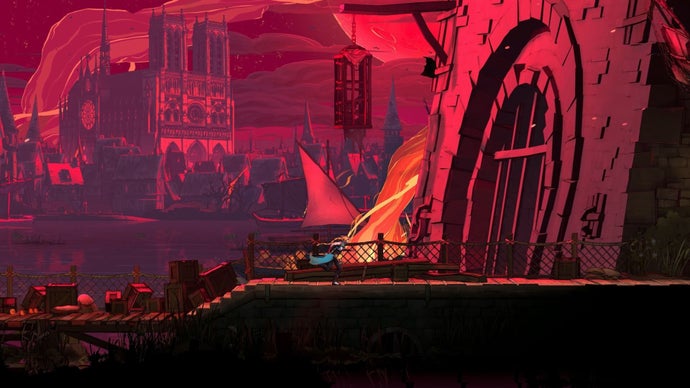
Sharpen your fangs and chuck out all of the garlic bread in your house, Castlevania's back with a new game co-developed by the folks who made roguelike-Metroidvania Dead Cells. Castlevania: Belmont's Curse is the name of this fresh bout of vampire whippage set in medieval Paris, which publishers Konami have teased is just the first of many Castlevania things they have coming as the series turns 40.
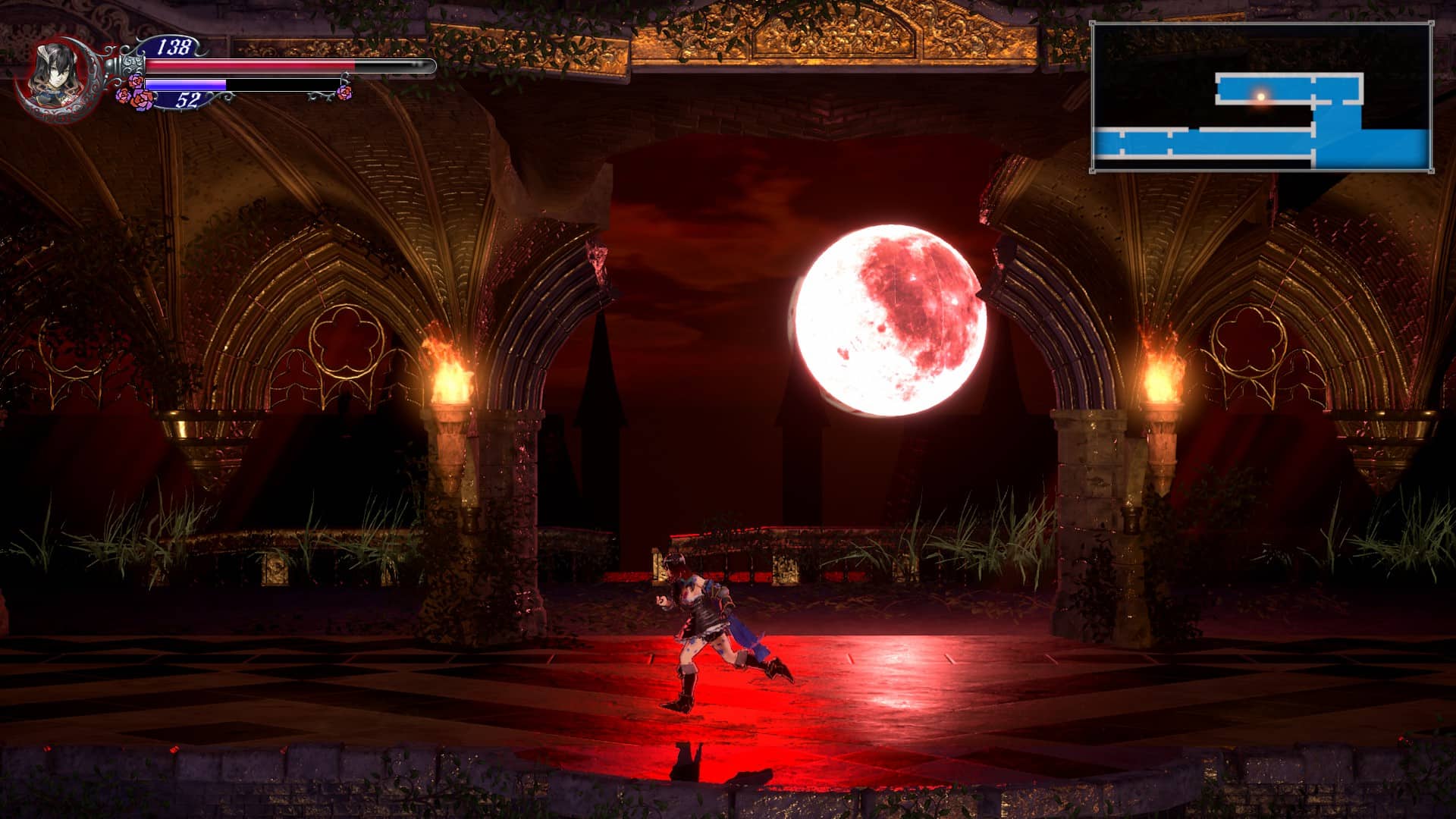
If you’ve been holding out for a high-value title to justify checking the store every day, this is it. Today, December 23, Epic opened the vault to reveal Bloodstained: Ritual of the Night. This is the definitive spiritual successor to Castlevania: Symphony of the Night, directed by the legendary Koji Igarashi. It delivers exactly what fans have been asking for: a massive, gothic castle, precise combat, and a deep RPG system that lets you tailor your character to your specific playstyle.
Bloodstained- Ritual of the Night Gameplay
The Power of Shards
The defining mechanic of the game is the Shard System. When you defeat enemies, you have a chance to absorb their essence in the form of a crystal shard. These shards aren’t just minor buffs; they provide hundreds of unique powers ranging from passive stat increases and summoned familiars to massive magical attacks. Some shards are even essential for progression, granting movement abilities like gravity manipulation or teleportation that are required to reach the castle’s deepest secrets. Because you can swap these powers and weapons at any time, you never feel locked into one way of playing.
Bloodstained- Ritual of the Night Fight is won
A Gothic Masterclass
Visually, the game uses a 2.5D style that makes the screen-filling boss fights feel cinematic and intense. The soundtrack is also a major highlight, composed by Michiru Yamane, the artist responsible for the iconic music of the original Castlevania series. It’s atmospheric, rewarding, and specifically designed for players who enjoy uncovering every hidden room and secret on a complex map.
The Deal
Bloodstained usually retails for $39.99, which makes it the most significant giveaway of the holiday event so far. You have 24 hours to claim it before it is replaced on December 24 at 11:00 AM ET. If you value games with actual mechanical depth and a pedigree of excellence, get this added to your library immediately.
LOW Borrows more than necessary from its influences
WTF Another self-sabotaging final boss?
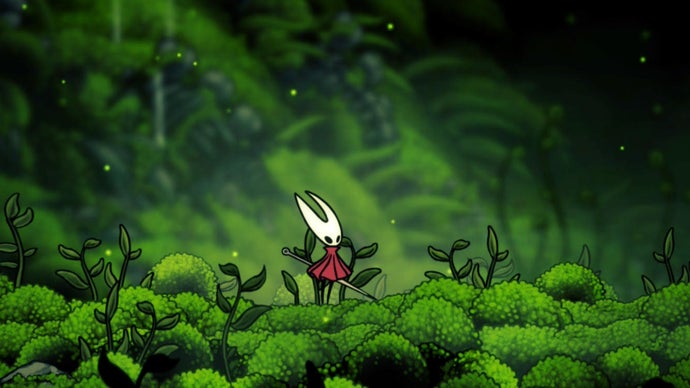
I have played more metroidvanias this year than any other genre. According to my Steam Replay, this sort of game took up over 1/4th of my total playtime this year (mainly because of Hollow Knight: Silksong) but out of everything I played, only about two of them have been worth my time — and of those, I’ve only reviewed one on this website. Constance, a hand-drawn, movement-packed metroidvania, is that one.
In this title I played as the titular character Constance — a burnt-out digital artist with mental health struggles who falls into a dreamlike inner world. Her only hope of escape is to capture four “tears” and use them to escape the world and her creative abyss.
Upon first glance, it’s clear Constance takes influence from a number of highly-successful metroidvanias and platformers – chiefly Hollow Knight and Celeste. There are portions here that aggressively pull from these influences, almost to its detriment. However, while Constance does draw from these sources, it still somehow managed to carve out a niche of its own.
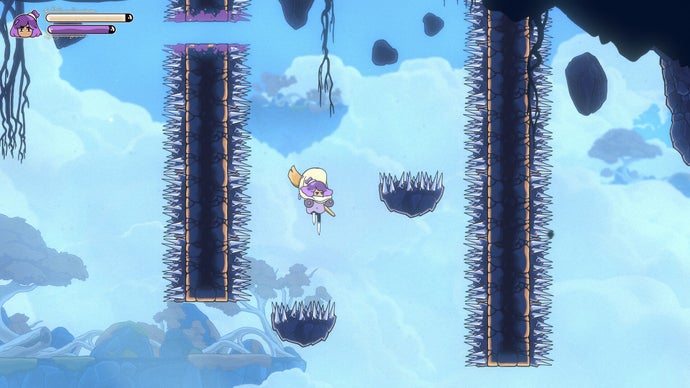
The first thing I noticed as starkly different from Constance’s predecessors is the world design. It’s not dark, dreary, and oppressive. In fact, it’s downright colorful. Pastel hues of blue, yellow, and pink highlight some of the more cheery areas of the dream world Constance is trapped in. Even the gloomy areas in the lower regions of the map, like the forest green-tinted sewer, were still nice to look at and gave a sense of peace and calm that’s fairly uncommon in these experiences.
This sense of calm is amplified by Constance’s movement and platforming. Given her background as an artist, Constance’s main abilities stem from a large paintbrush strapped to her back. It’s with this paintbrush and a vial of paint she keeps locked and loaded that she is able to dash through obstacles, whack enemies with extra strength, and turn into a blob to stick to walls. Combining these elements makes perhaps the most fluid platforming experience I’ve played in a long time.
However, some dark portions of Constance’s world come via difficult portions of combat and platforming gauntlets. Some of the platforming sections are not for the faint of heart, and require precise button presses and carefully-timed jumps to pass through without a scratch. Constance differs from other metroidvanias, though, by making its hardest areas almost always optional, and any difficulty spikes are almost always chosen by the player. When a gauntlet had me sweating, it was always to get additional resources not necessary to completing the main story.
On the other hand, while I could access every area once the traversal abilities were fully unlocked, some secrets stayed hidden due to limitations – chiefly her paint meter. Every action costs paint, such as dashing, wall climbing, and launching off of “dash points” hung in midair. I enjoyed some of these extra resources being hidden behind harder platforming challenges, but some of the hardest resources to get are extra paint vials, which are needed to get to more paint vials. It feels a bit like a self-defeating loop.
Otherwise, Constance undertakes an impressive balancing act of creating a world that’s pleasant to be in while also being a delight to look at. At the same time, it outlines the underlying themes of Constance’s internal struggle with mental health. In support of this idea, she talks with NPCs including a damsel made out of a lampshade, a frustrated and discombobulated arcane professor, and a carnival director with split personalities. Each ones’ struggles makes Constance feel lighter about her own, and by helping them, she begins to understand her own mind better.
I had a lovely time with Constance. It’s not a lore-intensive metroidvania, it’s not particularly difficult unless the player wishes to test themselves, and it never outstayed its welcome. Among the titanic release of Silksong and other metroidvanias, Constance still managed to make an impression on me. Don’t let this one pass you by.
Rating: 7 out of 10
Disclosures: The game was developed by btf and is co-published by btf, ByteRockers Games and PARCO Games. It is currently available on PC. This copy of the game was obtained via publisher and reviewed on PC. Approximately 8 hours were devoted to the game, and it was completed. There are no multiplayer modes.
Parents: This game is not rated by the ESRB, but it has mild depictions of fantasy violence and involves in-depth discussions of depression and burnout. This game is not made for kids.
Colorblind Modes: There are no colorblind options.
Deaf and Hard of Hearing Gamers: The only dialogue and sounds are communicated through speech bubbles. The text for these speech bubbles cannot be resized. There are no relevant audio cues needed for gameplay. This game is fully accessible.
Remappable controls: Controls are fully remappable.
HIGH Charming. Nostalgic aesthetic, fresh mechanics.
LOW Rookie mistakes. Uninspired combat, stale boss fights.
WTF Did they really need to make that dude’s butt jiggle sound like that?
When I first saw the email from Tastie Games with “bossavania” in the subject line, I cocked my head in puzzlement and was curious to know what that meant exactly, so I took a look.
The press release included stills, accolades and a brief description of the new genre, stating “It combines the strategic, puzzle-like boss fights of games like Punch-Out!! with the freedom and exploration of a metroidvania.”
While there aren’t quite enough novel ideas to say that it truly did establish a new genre, the devs clearly put a lot of love into it, and I enjoyed many aspects of their work.
The premise is centered around a girl who belongs to an underground-dwelling society and must endure a rite of passage which involves collecting medals from four area captains. Along the way she’ll encounter a plethora of curious life forms in different biomes and a colorful cast of idiosyncratic NPCs with authentic humor.
Tonally, it seems cheery, but underneath the charming retro aesthetics and upbeat chiptune soundtrack lies a darker social commentary regarding the reason why her people are living underground — they don’t have much of a choice, if there ever was a choice, and this situation is explained by unearthing intriguing lore nuggets that help fill in the blanks.
Gameplay-wise, I found Mole Maiden to be engaging thanks to tight controls and a novel approach to platforming. While some abilities and powerups will be familiar to platforming fans, its drilling mechanic is the most unique, as it allows the player to reach new areas by digging, flying around and leaving bombs in their wake.
There’s a bit of a learning curve to controlling it effectively, but once the player gets the hang of it, drilling through a section of sand or rock and then launching into another is a blast, especially as the level design becomes more elaborate and offers more opportunities to reach a previously-inaccessible upgrade or rare item.
I also liked how the devs tied this drilling to health — attacking hostile NPCs loads the player’s drill with fuel, which they can then use to replenish their life. However, while this reward mechanic worked for me, Mole Maiden‘s combat, as a whole, lost its charm quickly.
While it’s possible there were some abilities or powerups I hadn’t yet unlocked, most of my time in combat amounted to little more than dodging and mashing the attack button — and for a self-proclaimed “bossavania,” the bosses of Mole Maiden feel gimmicky and ultimately underwhelming.
During my first boss fight, I was frustrated by the sluggish pace as I exchanged blows with the enormous butt-jiggling King B. who I defeated simply by getting behind him and wailing on his rear end over and over until he had a tantrum, and then I would get out of the away until he was finished — wash, rinse and repeat.
Maybe I’ve played too many soulslikes, but I found the movesets of every boss or miniboss that I faced so predictable and easy to telegraph that I barely felt any satisfaction when I won and progressed to the next area.
I was also disappointed to find that the devs structured things so that there was a linear order to what bosses and areas needed to be cleared before advancing — although that’s essentially consistent with traditional metroidvanias, games like Hollow Knight have shaken up the formula in that they adopted a more open approach so that there are multiple avenues to acquiring different powerups needed to advance.
Finally, there were a few glitches that weren’t gamebreaking, but did feel a bit amateurish. The most glaring oversight that I came across early on was the “thank you for playing” message from the developer which appeared mid-boss fight and caused me to die.
I assume it exists because a demo version would let the player try for a certain amount of time before it triggered the message, but I was playing the full version of the game. Or maybe they kept it in intentionally? Either way, they shot themselves in the foot, as a message shouldn’t pop up and cause the player to be defeated because their view is obstructed.
Other glitches were fairly commonplace, like various camera issues, and there was one recurring miniboss who would sometimes start sliding across the screen and get stuck attacking into a corner, making it cake for me to beat him.
Some glitches were just plain weird, like the occasional sound effect that would sometimes linger following a defeat. Most memorably, it happened with the first boss whose squishy butt-jiggling sound effect persisted even after the screen faded to black.
Maybe after the devs squash the bugs and make a few other changes I’ll want to come back and dig some more, but in its current state, Mole Maiden doesn’t feel like it’s quite ready to surface.
Disclosures: This game was developed and published by Tastie Games LLC. The game is currently available on PC. It was obtained via publisher and reviewed for PC. Approximately 3.5 hours were devoted to the campaign mode. The game was not finished. There is no multiplayer functionality.
Parents: This game is not rated by the ESRB but has only cartoon violence and crude language, so the equivalent of a “T” may be appropriate.
Colorblind Modes: There are no colorblind modes available.
Deaf & Hard of Hearing Gamers: This game features text-based dialogue with some audio in Japanese or gibberish dialogue to give it flavor, but doesn’t have any audio cues that impact the gameplay in any significant way. As such, this game is fully accessible.
Remappable controls: The controls cannot be remapped.
There’s something wonderfully appealing about a game that knows it’s ridiculous. Folly of the Wizards, this colourful roguelike adventure on Xbox, absolutely embraces the idea of playing as a catastrophically unqualified wizard apprentice trying to save the world. The premise is silly, the characters are quirky, and the whole thing has this tongue-in-cheek charm that makes you want to keep plugging away at “just one more run.” But, and I say this with genuine affection for what’s here, there are some significant bumps in the road that prevent this from being the magical experience it could be.
A World Worth Exploring (Visually, At Least)
Let’s start with what Folly of the Wizards absolutely nails. The art direction is gorgeous. Each biome feels distinct and alive, from the demonic worms erupting in the desert to the noxious clouds lurking in forests. The character designs are whimsical without being cutesy to the point of annoyance, and there’s real personality in how every NPC is written. When you meet characters between runs, they feel like they belong in this weird wizarding world.
The humour is genuinely decent too. The game doesn’t take itself seriously, and it actively mocks you when you fail. There’s something oddly motivating about your wizard getting roasted after a bad run. It’s self-aware in the best way possible.
The Gameplay Loop: Familiar But Stretched Thin
The core gameplay is straightforward. You jump into procedurally generated dungeons, clear rooms, collect upgrades, and face bosses across multiple floors. You’ve got your basic spell attack, a double jump, a dash, and access to elemental spells. On paper, this is solid roguelike stuff, and to be honest, the structure works fine for the first few runs.
Having spent the last few weeks building my own platformer, I genuinely appreciate how difficult it is to nail movement mechanics and responsive controls. Folly of the Wizards gets some things right. The shooting is twin-stick style, which feels intuitive, and the platforming sections aren’t overly demanding. But here’s where things get messy.
The controls on console are genuinely bizarre. Jump is bound to LB/L1. LB! In a game where jumping and dashing are absolutely vital to survival. I understand why this bothers people so much because, frankly, it’s weird. The game doesn’t feel natural to play on controller, and what makes this even more frustrating is that X/A is just sitting there, unused. At minimum, letting players remap controls would have solved this entirely.
The System Confusion Problem
Beyond the controls, Folly of the Wizards suffers from what I’d call “system inflation without explanation.” You can grab from a pool of 130 relics, tomes, and scrolls during a run. That’s a lot of variety, and theoretically, that’s brilliant. In practice? You’ll often pick something up and have absolutely no idea what it does.
The in-game catalogue offers visual descriptions but almost nothing about actual functionality. You might grab something that accidentally replaces your favourite weapon, and there’s no way to get it back. It’s frustrating not because the systems don’t exist, but because they’re never explained. A simple tooltip system would have changed everything.
The affinity system with NPCs has similar problems. Depending on your conversations, you’ll build relationships that apparently determine what items become available. But here’s the thing: it’s never explained how this actually works. You’re largely guessing, and whilst the writing is charming, the systems behind it remain opaque.
The Grind Against Repetition
Here’s my honest assessment after several runs: Folly of the Wizards is engaging in shorter bursts, but it doesn’t quite have that addictive “one more run” feeling that roguelikes need to survive. The visuals carry the experience initially, but after a couple of longer sessions, the repetition starts to wear on you. The bosses help break things up, but the room-to-room combat loop doesn’t vary enough to keep pulling you back.
The game is perfectly playable in 30-minute chunks, but it doesn’t inspire marathon sessions. And when the roguelike genre is absolutely packed with options, that’s a significant problem. You need something special to keep players invested, and Folly of the Wizards relies too heavily on its charm rather than its mechanics.
What Actually Works
Don’t get me wrong: there’s real fun to be had here. The moment-to-moment gameplay feels good when things click. Learning which enemies are vulnerable to specific elements creates actual strategy. The boss fights are creative and memorable. And honestly, the writing throughout is consistently entertaining.
For players who genuinely love roguelikes and don’t mind the steep difficulty curve, there’s absolutely something worth exploring. The 22 unique bosses, 9 biomes, and multiple endings give you reason to keep going. It’s just that these good elements sit alongside genuine frustrations.
Folly of the Wizards is a charming roguelike let down by unintuitive controls, poor system explanation, and repetitive gameplay loops that wear thin after a few hours. There’s real magic buried here, but it’s weighed down by mechanical clunk. Worth trying if you’re a roguelike enthusiast, but casual players will likely bounce off quickly.
A recap: of the seven hopefuls I slipped into our bulk 2025 list of "Oh, that looks alright" games, only three actually released in 2025, and one of them wasn’t very good. If it’s the hope that kills you, I am therefore dead four, arguably five times over. Real Necron shit, honestly.
Being & Becoming is an atmospheric metroidvania where you consume corrupted souls and wield them as weapons across a kingdom trapped in a Collective Dream.
In Being & Becoming you play as the Lucid Dreamer, navigating through a vast interconnected world warped by dreams. The game gives you freedom to shape your own path – your decisions determine which areas become accessible and how the … Read More
Xplorite is a hand-drawn 2D metroidvania where you explore an alien planet while fighting rogue robots and uncovering the fate of a missing research team.
In Xplorite you play as Sy, an agent sent by the G.S.O. to investigate the mysterious disappearance of scientists on planet Nargal. The game primarily features robotic enemies controlled by a malevolent AI, which you’ll battle using an expanding arsenal … Read More
GRIME II is an action-adventure metroidvania where a shapeless entity wields tendrils made of hands against twisted creatures in a world obsessed with artistic expression as reality itself bends to creation.
Returning to the acclaimed GRIME universe, GRIME II puts you in the role of a Formless – an art mimic capable of absorbing defeated enemies and reshaping them into molds for combat and exploration. … Read More
Hollow Knight: Silksong developer Team Cherry has revealed it won't be making the trip to The Game Awards next month, as the team believes Clair Obscur: Expedition 33 will sweep the Game of the Year award.
Right, has everyone got Hollow Knight: Silksong out of their system? I'm sure there's plenty of you that have scoured enough of its map to feel satisfied and ready for another hand-drawn metroidvania. Enter Constance! A game that fits that bill precisely, albeit with its own, quite literally painterly flair, one which is out today.