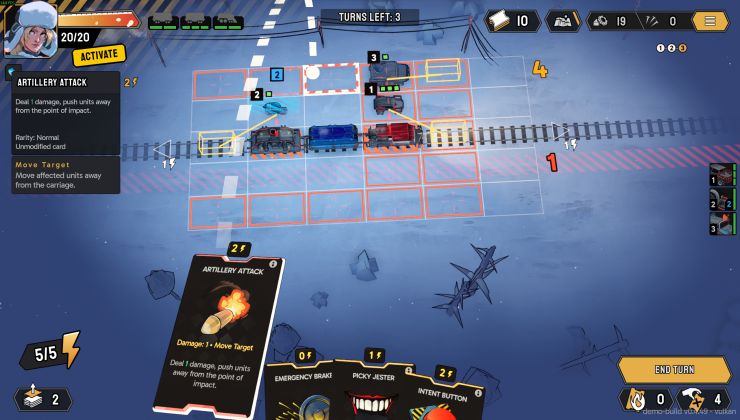
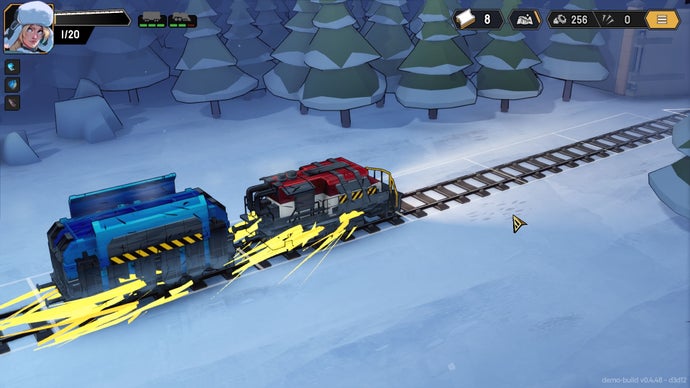
The thing you need to understand about Fogpiercer is that this deckbuilding roguelike, in which you control a train battling Mad Max-style road bandits, knows the secret joy of artillery. It is one of the few games that recognises that while it's satisfying to hit an enemy with a shell from a howitzer, it's even more satisfying to target the space next to them and use the force of the blast to give them a sideways shove into a wall.
It's a mechanic that puts Fogpiercer into the same fine company as Into The Breach.
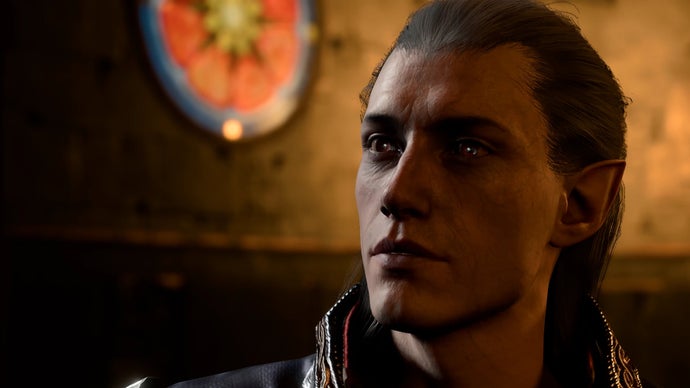
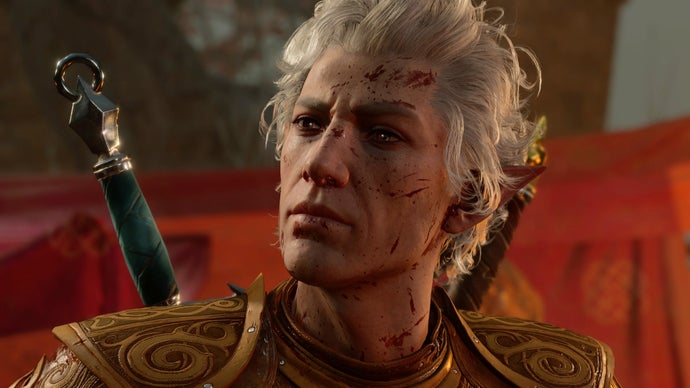
Another intriguing Baldur's Gate 3 custom campaign mod has emerged to confront your party of quirky RPG adventurers. This one's a short story which lets you take a break from BG3's main story to attend a dinner party at the house of a not-at-all creepy rich bloke, who happens to be very good at jamming out on the organ via illusions.
Why is everything rolling sideways on my desk all of a sudden? What’s this mysterious force, dragging my chair towards the wall? Why are all the cars in the vicinity tumbling and rolling in the direction of *checks press release* ...North Carolina, USA? It can only be gravitational disturbance caused by the impending 1.0 release of a massive strategy project. This time it’s Heart of the Machine, a “4X-style”, “dimension-busting” sci-fi game developed by Arcen Games and published by Hooded Horse.
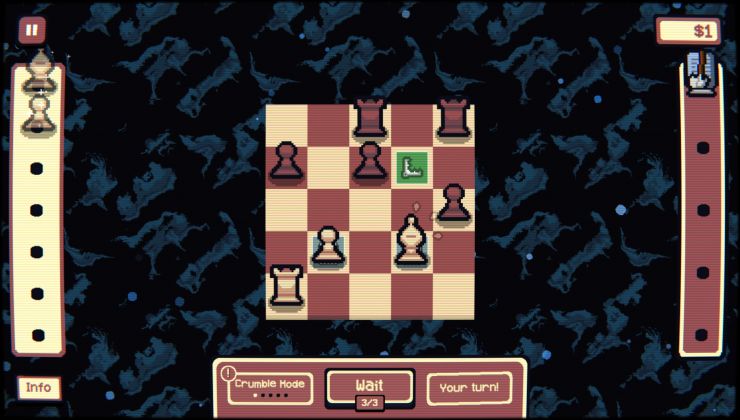
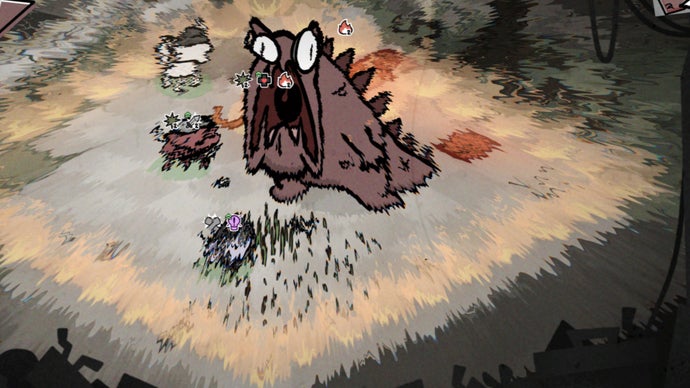
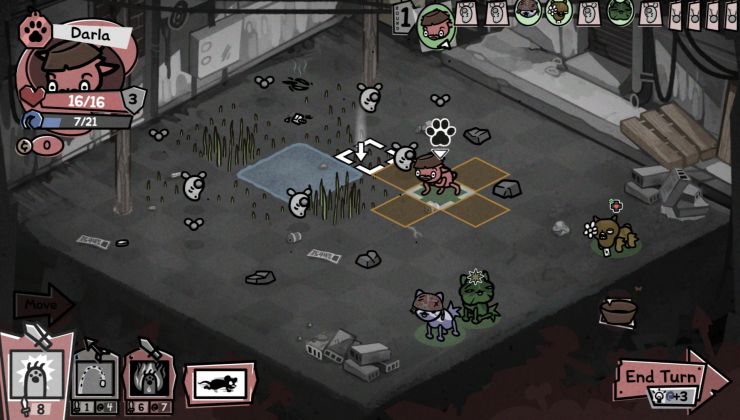
"You will get anywhere between a fairly surgical battle with the more simple moves and synergies, to a downright-drunken-disaster run. [They] act with basically zero understanding of enemy mechanics, no regard for their ability order, and they couldn't give less of a damn about tile hazards." This is a section taken from the description of a mod which turns Mewgenics into an auto-battler, but turning the controls over to an AI chessmaster. That AI chessmaster just happens to play almost exactly like I have in my seven hours with it thus far.
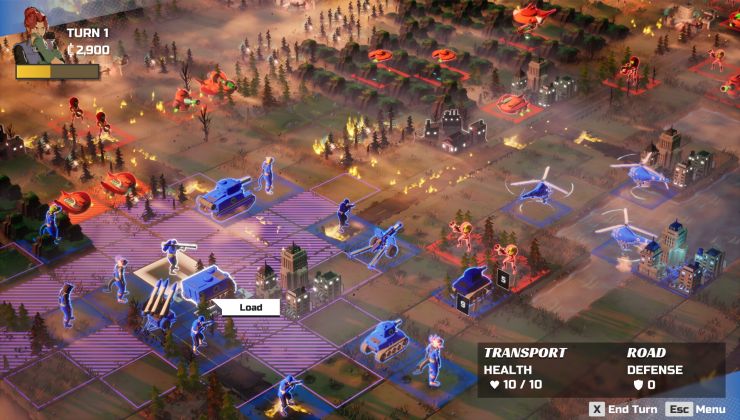
Relic Entertainment produced their own Advance Wars-like strategy game with Earth vs Mars from a smaller team, and now it is updated to be Steam Deck Verified.
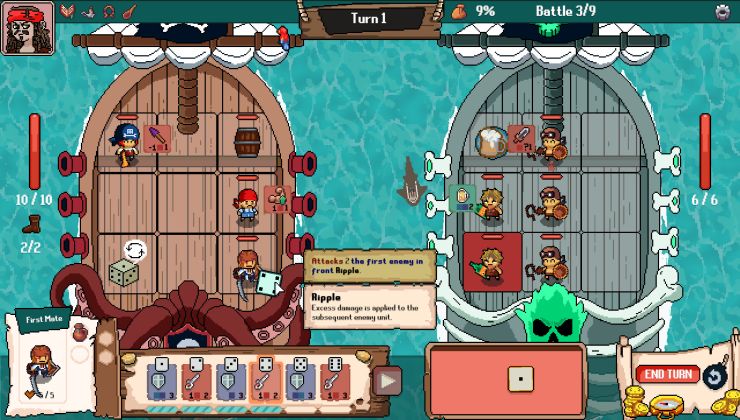
DeckWrecking Pirates appears to have a fun blend of various features that fans of turn-based strategy games and deck-builders will no doubt appreciate.
With Baldur's Gate 3 and its gang of rowdy adventuring mates in the rear view mirror, Larian are hoping to improve a couple of aspects of how they handle companions going forwards - a process that'll likely kick off in Divinity. In particular, the development of deeper relationships between party members and a more subtle build to the moment when the player's relationship veers into deeply horny territory are on their list of learnings.
What did you do while recovering from your big medical thing, Sin? Well. Loath as I am to talk about myself ("lol. lmao." - Combative New Ed), I... don't know? There was some Ultima Underworld, some workers, some resources, some Pagonians pioneered. But in the dimensionless vortex of first-time-off-since-2020, I think I did... nothing. The lists barely moved.
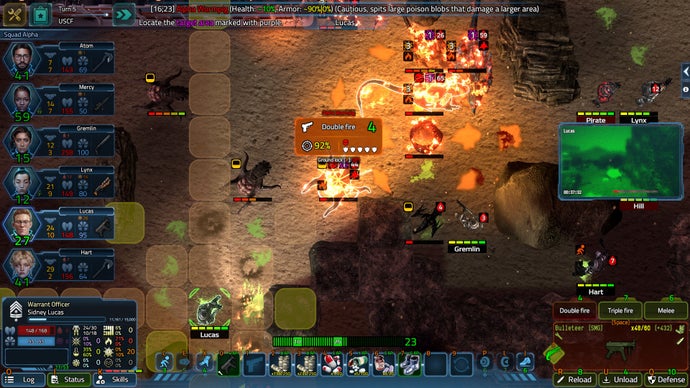
Except, finally, for a game I struggled with last year. A strange game, easily punished, as all turn-based games must be for dolt reasons, for not being bloody XCOM. USC Colon Counterforce is more like oldXCOM, aka UFO. But it's not a recreation of that, nor of Aliens, its other obvious inspiration. It diverges as much as it reminds, and makes some mistakes in a way that we all must, when pursuing our own identity instead of an impression of someone else's.
I wish I'd given it a second chance sooner. I wish I could shake everyone and say "This! This is the way! There is more than one path, if you just look for it! Yes, the one before you stumbled. But look at it it. See the admittedly weakly-named USC, and its bruises. It is beautiful. It is itself".
We've all been there. You're at the end of a game, you've done all of the side quests, you're strong as hell, finally read to take on the final boss, confident you can finish this quest you started 30-100 hours ago. Only to find that the fight is a piece of piss because, whoops! You overlevelled yourself by too much. This was seemingly the case for a number of people in Clair Obscur: Expedition 33, and now the game's lead designer Michel Nohra has expressed some regret for those who had that experience.
When a game like Clair Obscur: Expedition 33 rocks up, rakes in a bunch of success and critical acclaim, alongside the top game of the year prize at Geoffie's Lil Night of Ads, there will be certain expectations of what's next. It's always what's next! Because there has to be more. But whatever more ends up being for developer Sandfall Interactive, the team is trying to make sure they don't just bow down to what people want from them.
Most anticipated? Oh reader, you gentle, innocent child. Hark at you, ambling in here with supple joints, eyes clear as springwater, and the scent of hope in your hair. I have grown old, dear reader. I no longer feel this emotion called "anticipation", anymore than I remember the taste of strawberries in the Shire. Years of waiting for another Legacy of Kain game have broken my spirit. My heart is a sponge of sorrow. My beard coils round my ankles like a listless cat. All has become grey.
If I were the foreman of an game refinery, I might be dabbing my forehead in anticipation right now because there is a lot coming down the pipeline in 2026. You may be looking at the telltale bulge of Grand Theft Auto, but I'm more focused on the amount of damn fine horror we've got in the plumbing.
Keep Driving captures the dream of a road trip, a coming of age experience where you’re finally able to start motoring around the world in your own set of wheels. Your sense of wonder’s still intact and each place you visit on brings fresh surprises.
But the game isn't a schmaltzy dip into wanderlust, or a blinkered memory of youth and a lack of responsibilities. Lurking in the background is the nervousness of inexperience, which transforms mundane tasks into nightmares you must overcome.
Hooded Horse have just announced that they're publishing it, which is lovely because it means I can write about a horse game this week that hasn't been banned from Steam for infringing upon Valve's ever-elastic content policies. There are no scenes of iniquity so far in Roaming Blades, just good, wholesome disembowelment and the chance to blow up lingering balls of lightning. Here's the trailer.
As I wrote in my replay of Heroes of Might and Magic II, it wasn’t the Civilization series that introduced me to the “just one more turn” syndrome.
Heroes of Might and Magic II (1996)
I also wrote that the third entry, Heroes of Might and Magic III (1999), was probably my favourite in the series.
A significant visual upgrade in Heroes of Might and Magic III gave this series a more cinematic, less animated look.
I played countless hours in the early 2000s, and have considered featuring it here on Present Perfect Gaming for a while now. The decision to actually do so was brought about from my recent discovery that the expansions to Heroes of Might and Magic III, Armageddon’s Blade (1999) and The Shadow of Death (2000), were not the only expansions…
Heroes of Might and Magic III: Armageddon’s Blade campaign mission select screen
Heroes Chronicles was a series of campaigns released in eight standalone instalments through 2000-2001, following the release of The Shadow of Death.
Heroes of Might and Magic III: The Shadow of Death—campaign select screen
It appears these instalments were designed as a lower-cost entry point to the main Heroes of Might and Magic III game. They don’t feature multiplayer, single-player non-campaign scenarios, or the map editor function.
No multiplayer in Heroes Chronicles, opposed to the many options in the main game.
To me it looks like an early form of episodic content, which I became familiar with in the mid-2000s with games developed by Telltale Games (such as the Sam & Max series). After all, if you bought all of these Heroes Chronicles releases, I’m sure you would have ended up spending much more than the cost of the main game and its two sequels…
But I digress. How did I not know that there was more to Heroes of Might and Magic III?? It’s also been on GOG.com for over ten years and I’ve never picked up on it.
My only defence is that the “Might and Magic” phrase doesn’t appear in the title of Heroes Chronicles. (I’ll admit that’s a weak defence…)
No “Might and Magic” here
Having just discovered the existence of Heroes Chronicles, I thought it was a good opportunity to revisit an old favourite, but be able to experience it through a new campaign.
The Game
Heroes Chronicles continues the fantasy turn-based strategy tradition established with the release of Heroes of Might and Magic (1995), and is essentially a series of standalone expansions to Heroes of Might and Magic III.
Heroes of Might and Magic (1995)
The first instalment, or chapter, in Heroes Chronicles is titled Warlords of the Wasteland. It’s actually set before the events in Heroes of Might and Magic III, and follows the rise of Tarnum, a barbarian hero. Throughout this first chapter in Heroes Chronicles, you lead Tarnum through eight campaign missions.
The spotlight shines on Tarnum.
Gameplay is the same as it has always been in Heroes of Might and Magic. From the strategic map, you control Tarnum and any other heroes for hire you acquire. From this view, you move your heroes and their forces around the map. Each turn is one day, with heroes having a limited amount of movement available to them each day. The strategic map is all about exploration, acquisition of resources, and conquering territory.
Heroes on a map
To build your forces, you need to control and maintain your towns and castles. These bases serve to generate military units. Building new structures provides access to new units.
Tarnum comes to town.
But to build these structures, particularly those generating more powerful units, you will need those all-important resources.
Acquiring an Alchemist Lab
Often, to gain control of resource-generating structures, you’ll need to fight for it. This brings you to the tactical map, where you control your hero and their forces on the battlefield.
Switching to the tactical map for battle
You’ll also need to head out onto the battlefield when you come across enemy heroes and towns.
Laying siege
It’s often the familiar formula of securing your resources, building up your forces, and taking out your enemies that will bring success in Heroes Chronicles.
A glorious victory for Tarnum
There are roleplaying-game elements, as Tarnum and any other heroes you recruit can level up, mostly through experience gained from combat. Hero levels provide primary skill increases, which predominantly aid you on the battlefield.
Levelling up also provides access to secondary skills, which your heroes can utilise on or off the battlefield depending on the skill. For example, the Logistics and Pathfinding skills provide more movement and make it easier to traverse difficult terrain, where the Leadership skill provides better morale to your units on the battlefield, making it more likely they’ll gain bonus attacks.
Tarnum levels up.
Levelling up is important, as you lead Tarnum in each campaign scenario, and usually carry your other heroes forward as well. It’s a lot better bringing experienced heroes with you into a new mission than recruiting new ones.
Dessa the Battle Mage gains a level.
Another roleplaying element is inventory management. Tarnum and your other heroes can acquire artifacts, from exploration as well as from defeated enemy heroes. These artifacts can be equipped on the hero, and can provide bonuses such as increasing primary skills in combat or increasing resource generation.
Acquiring an artifact
If you’re new to the Heroes of Might and Magic series, I provide a more in-depth overview of the gameplay in my replay of Heroes of Might and Magic II. Though a different game, the underlying engine is similar.
Town view—Heroes of Might and Magic II
With that said, I think it’s time we join lowly Tarnum the Barbarian and see how he became an immortal king…
Tarnum’s initial home base—not much to look at, yet…
The Replay
The Heroes Chronicles intro video is shorter, and much less epic than the intro to Heroes of Might and Magic III. I also found it slightly confusing.
The video shows Tarnum being slain on the battlefield, before appearing before a council of ancestors in the afterlife. This council decides Tarnum isn’t ready for eternal rest just yet, and sends him back to the land of the living.
Judgement Day
I assumed this would be the start of his journey, but the narration then addresses the audience and suggests we want to know how Tarnum rose to become a great hero. Basically, it’s one of those stories that starts at the end. I just found it out of place, and would have thought the intro video could have been used to better effect introducing the actual story.
Apparently, it is important, as the first campaign mission states that knowing where it all began for Tarnum will aid in understanding him…
Time will tell if this narrative setup will be a clichéd origin story or not.
Perhaps it will all make more sense once I’ve played through this first chapter, or perhaps the entirety of Heroes Chronicles. It’s an intriguing start from a narrative perspective. I know Heroes of Might and Magic III is a great game, but can Heroes Chronicles deliver a satisfying story-driven experience?
The first campaign mission sees you needing to defeat the current lord of the barbarian clans, Rabak, so Tarnum can name himself king. Nothing too serious, then…
Rabak is a stereotypical tyrant.
The story is front and centre during missions, as over the first few turns you get a lot of narrative text. The overall objective of this campaign is to overthrow the Wizard-Kings who rule the land once held by the great barbarian conqueror, Jarg.
More reading…
This first mission is on a small map, which usually means the scramble for territory and resources will be swift and brutal.
Even just stepping out from the stronghold to the left, you can already see almost a quarter of the map (minimap top right).
I took Tarnum east, and soon found another barbarian town to liberate.
Expanding empire
Towns are important, as they provide you with income each turn, as well as generating units to hire each week.
A burgeoning barbarian town
The story continues to develop, as Tarnum soon learns that the people no longer remember the time of Jarg. As such, Tarnum decides to seek out bards across the land, the storytellers and holders of history. Tarnum is hoping the bards will be able to help the population reclaim their identity and therefore support his aim to reconquer the barbarian lands.
Bravery and bards—classic fantasy fare
Over the first two weeks, as well as taking over another barbarian town, Tarnum had levelled up multiple times and acquired a gold mine (increasing daily income). He now controlled the northern half of the map.
For a look at the gameplay over the first two weeks, check out my video on YouTube:
It was now time to turn Tarnum’s attention south, to seek out Rabak, and strengthen his claim to becoming King of the Barbarians.
Unexplored southern region
So far, playing on the normal difficulty setting, progress had been straight forward. This first mission had been relatively low power, where you quickly muster your forces and start marching forward. This wasn’t going to be an epic battle—it was going to be a set of quick skirmishes.
Numbers of units are shown next to each unit “stack”.
Playing Heroes Chronicles came naturally to me; my experiences with Heroes of Might and Magic III had served me well. It all came back to me, particularly how to build up your towns and manage your resources. By the time I headed south, I had built up a reasonable force to hunt down Rabak.
Force in numbers
Sadly for Tarnum, he discovers there are only four bards left. Like progress on the strategic map, the story progresses quickly in Heroes Chronicles.
The story of the last bards
At this point in the mission, I acquired a second hero. Though I didn’t need to in order to be victorious in this opening mission, knowing that I could bring this other hero forward into the following mission meant it was strategically advantageous to do so. A levelled-up second hero is better than acquiring a level one hero in the next mission.
Oris the Battle Mage joins the party.
It wasn’t long until I located Rabak and sized up his strength.
Scouting Rabak and his troops
Tarnum was more than ready for this fight.
More than a match for Rabak
With Rabak defeated, his home base quickly fell.
Rabak’s stronghold was ready to fall.
Tarnum’s success has not gone unnoticed among the Wizard-Kings—the next mission in Heroes Chronicles sees Tarnum with a target on his back.
Despite Tarnum naming himself King of the Barbarians, to the Wizard-Kings he’s just a rebel fly to be squashed.
Instead of fighting barbarians, this mission sees you taking on a new opposition in Tower towns and units. The Tower town is one of eight original town types in Heroes of Might and Magic III. In this first chapter of Heroes Chronicles, you use the barbarian-themed Stronghold town type. Across the eight campaign missions, you only end up experiencing four of the eight town types, so Heroes Chronicles is more tightly focussed (or restrictive, depending on how you look at it).
Magic and mystique—inside a Tower town
The second mission also takes place on a small map, and with three Tower towns to conquer, there wasn’t going to be much room to move without coming across the enemy.
Just started, and almost half the map is already visible—this is going to be another quick and brutal mission.
Moving quickly, I managed to take the Tower town to the northwest, and secured the western front.
A meagre assault force, but more than enough to take this town.
This also meant access to Tower units.
New town, new toys
Pressing the advantage, I led Tarnum east and took the Tower town in the northeast.
Victory here made the end inevitable.
Nearing the end of this mission, I also managed to upgrade my Stronghold town to provide the strongest units: Behemoths (and the upgraded version: Greater Behemoths).
Recruiting Behemoths
The final town was no match for Tarnum’s forces now.
Greater Behemoths advancing…
The third mission changed up the victory condition. Instead of just conquering all enemy forces, there was a time limit. The remaining bards had been captured, and were now being ransomed in exchange for Tarnum’s life. The bards will be executed in three months’ time…
A wizard, Kurl, has captured the bards.
This mission was again on a small map, but the approach to the captor was restricted and linear due to the need to access a series of border guards across the map in order to progress into new territories.
Locating a Blue Border Guard Tent
At the start of the third week, one of the bards is executed.
The threat is real.
Finding the border guards didn’t prove too challenging, and I managed to find the Tower town where the remaining bards were being held captive early in the second month.
Tarnum targets the captor, Kurl.
Tarnum and his army made short work of the defenders, and the bards were freed.
Defeating Kurl the Captor
The next mission sees Tarnum attempting to “unite” more forces under his banner. This time, you head into the Mudlands, which happens to be in the middle of a civil war.
Civil war could prove advantageous.
You’ll be battling the Fortress towns, which produce armies of deadly creatures like basilisks, wyverns, and hydras.
Fearsome Fortress beasts
But before you can lead Tarnum into the harsh, swamp-infested territory, he receives a captivating visitor.
Her name is Yalla…
It seems Tarnum will have a love interest in this story. Yalla, this mysterious warrior, informs Tarnum of what he’s up against, with three factions fighting amongst themselves.
She wasn’t wrong, as I hadn’t even managed to get Tarnum into enemy territory before one faction was eliminated.
That was easy!
For a few turns, the attention turns to Yalla’s story, but it isn’t long before it’s back to the mission at hand. This mission is the first in Heroes Chronicles to take place on a larger map, and once you head north the terrain is more difficult to travel over on the strategic map.
Heading north into the swamp
On larger maps, you’ll need to manage your supply lines. As I took Tarnum north, I used my other hero to transport the additional units to him each week.
Supporting the war effort
Heading north, I didn’t encounter much resistance, and soon took the northeast and eliminated another faction.
A Fortress town siege
Sweeping west, it wasn’t long until the civil war was ended with the submission of the third faction.
The plan was to unify, but this was all about conquering.
This victory brought the halfway point in this first chapter of Heroes Chronicles. The next mission was to be a long, hard-fought battle through a heavily fortified region.
Next mission: Siege of the Wallpeaks
This mission saw the introduction of the Castle town, with its clerics and knight heroes marshalling ground troops and cavalry alongside griffons and angels.
Entering a Castle town
Taking place on another large map, you learn that nobody has ever been able to conquer this mountainous territory. It would take a large force to be the first.
Challenge accepted.
At this point, there was a certain sameness to the missions that was beginning to frustrate. You always start each mission with a Stronghold town, with very few structures and a very small force. So each mission so far in Heroes Chronicles, you have to go through that same build up of structures and forces.
Though weak in forces at the start of each mission, Tarnum himself was getting stronger.
At least in this mission, there was the novelty of another new enemy to take on, and a new town type to manage once I’d started capturing them.
Castle town siege
It wasn’t a particularly challenging mission, but it did take a while to fully explore the map.
The map was almost fully explored when the plague hit! This hurts unit populations in towns, reducing the number of units available to recruit.
In the end, I had entered the fourth month when the final town was captured.
The largest sieging force I had built in Heroes Chronicles.
Now when I complained just above about each mission restarting you with a small force, which thematically didn’t always make much sense as you’ve usually just amassed a rather large force in the previous mission, the next mission resorts to using the story to justify it.
It’s a trap!
Yes, that’s right. Having just put together a force so large and strong that it could conquer the mountain passes for the first time in history, you lose it all to a trap. An ambush.
Once again, we find Tarnum weak and surrounded by enemies.
And so it begins…Again.
From the narrative perspective, this mission, and the one following it, were about regrouping and building a force that could finally defeat the Wizard-Kings. From a gameplay perspective, these two missions just felt like they extended the campaign out for no good reason.
I also didn’t like the direction the story was taking, with Tarnum seemingly more extremist in his desire to wipe out the mages from the map.
Pledge allegiance to Tarnum, or…
The penultimate mission felt particularly egregious when confronted with peasant rebellions.
Tarnum is personally affronted by the peasant rebellion.
Tarnum believes the local populace is either with him or against him. Despite the peasants’ fear that siding with Tarnum will lead to retribution from the Wizard-Kings, Tarnum mercilessly slaughters them all.
Playing armchair general was becoming increasingly uncomfortable.
I found it hard from this point to separate the story in Heroes Chronicles from the game I was playing and enjoying.
Chasing fleeing peasants felt decidedly unheroic.
I wanted to play the hero, but this felt anything but heroic.
The final mission and conclusion of this first chapter of Heroes Chronicles did provide me with clarification and closure, however.
Tarnum deals with defiance—poisoning his disloyal captains.
The mission itself was long, and fairly linear. It takes place on a large map, but it isn’t all accessible from the beginning. You also lose any other heroes you had built up.
Tarnum starts solo.
It provided its challenges, where for the first time in the campaign I had heroes and towns defeated.
This defence of a Tower town went down to the last few units, ultimately falling to the sieging forces.
After nearly four months, I finally found the portal to the location of the final border guard tent.
Angels guard the border guard tent—fortunately I came prepared.
Tarnum could then cross the border and lay siege to the final town loyal to the Wizard-Kings.
The final battle
The campaign was over. The barbarian lands were liberated. But what of Tarnum? Would he become a benevolent leader, or despicable despot?
The Verdict
Let’s get back to that closure I mentioned just above.
Remember how in the beginning of the campaign it was stated that knowing where Tarnum came from will aid in understanding him, and why he was judged unworthy of the afterlife?
Over the course of the campaign, Tarnum had turned into a tyrant.
Heroes Chronicles ends with a vision of the future, with Tarnum defeated, bringing him to be judged for his actions in this campaign by his ancestors.
So it was foreshadowed, and it did come to pass.
In the beginning it was about liberation, but as it progressed it became about conquering and subjugating. Heroes Chronicles tells a descent-into-madness story of a flawed hero.
I’m not opposed to playing morally ambiguous characters, or exploring difficult themes. The lack of agency is what ultimately troubled me.
Heroes of Might and Magic is a series portraying good versus evil; there are good heroes and evil heroes. Heroes of Might and Magic III introduced neutral towns and heroes, and interestingly, Tarnum’s Stronghold town type is one of these neutral towns. Narratively then, it seemed there could have been space for Tarnum to make a choice along the way. In the game, this could have provided mission choices and alternative pathways.
This was actually featured in Heroes of Might and Magic II, where at the outset you choose to play the good or evil campaign. Even mid-campaign, there is a choice where you can turn traitor.
In Heroes of Might and Magic II, you choose good or evil.
I understand it wouldn’t have been canon, as Tarnum already had a back story, and Heroes Chronicles provides his origin story. But that doesn’t matter, as we see this in gaming, particularly often in real-time strategy games like Warcraft: Orcs and Humans. There’s always a canon ending to each instalment, but that doesn’t mean you can’t play it a different way.
I played the Humans in the campaign—but their overall victory isn’t canon.
I appreciate that incorporating story into real-time-strategy and turn-based-strategy games isn’t easy, as success in these genres largely depends on the strength of the gameplay. But it can be done well, like in the Command & Conquer series. Those campy cutscenes don’t distract or take away from the core gameplay, but enhance the experience.
Kane’s campy cutscenes are a staple of the Command & conquer series.
In Heroes Chronicles, I like the intention of a story-driven campaign, but the amount of narrative text was substantial enough to become an annoyance, and the lack of choice led me down a path I didn’t enjoy.
A lot of reading is required in Heroes Chronicles.
As for the actual gameplay, Heroes Chronicles continues the excellence established in Heroes of Might and Magic III. Even after many years, it all came flooding back to me, and felt immediately comfortable. There was something cathartic about how intuitive it was to play, being so familiar with the gameplay.
The final siege
Playing on the normal difficulty level, I found the campaign very easy to progress through. Veterans of the series might want to play at a higher difficulty.
Final score and rank
As I stated earlier, I wanted to know whether Heroes Chronicles could deliver a satisfying story-driven experience. Perhaps the other chapters improve upon this start.
But just remember, in this first chapter of Heroes Chronicles, you’re on rails, and there is no exit at the next station if you find yourself wanting to get off.
Be sure to check out my Linktree for some great gaming deals with Fanatical.
Sometimes, it’s the simple games that entertain me for hours. Who thought that a new spin on playing Poker could be so refreshing? It even wins several awards at the game awards 2024. Now, my good streaming buddy Klamath bought me this game for my birthday. I decided to give it a go, and I was surprised. In this article, I want to share my honest first impression. I will also discuss what I like about this game. Additionally, I will mention what I don’t like about the game. I have played Balatro on my PC. But, if this game looks interesting to you, feel free to discover it on other platforms like mobile and consoles. Before I dive into this card game, please leave a comment with your thoughts. Share your opinions on this game or the content of this article.
The good
The visual presentation and style of this game is something that blew me away. Visually, this game looks amazing. The subtle animations of the cards, the way the UI hints pop up, the little hints on the planet cards…
The UI offers something nice during boss fights. It gives you hints when a hand isn’t going to score. But there are other little things in this game that are just fun. Like, you can click and drag the bind chip while you are thinking of a next move.
The gist of this game is quite simple. You have to play poker hands from the cards that you are given. You don’t always have to play 5 cards, in case you want to keep a certain card. Each ante has 3 rounds. A small and big blind and a boss fight. Each time, the goal of chips you need to earn raises. In between each blind, you earn money. This money, you can use to buy from a shop where a few joker or other special cards are offered.
These cards add multipliers to certain hands. This is a list of examples:
The chip’s multiplier doubles. This only happens if you have spades and clubs left in your hand.
The gained points for a played and scored ace doubles.
Gain 2 extra chips per card left in your deck after playing each hand.
Some of these Joker cards can be a lifesaver. Especially the free chips ones. Others, force you into a certain playstyle. Each time you hit the shop, it’s a difficult decision. Should I continue with this set of Jokers, or should I replace one? You only have 5 slots. Changing one out might increase your points just enough to survive another round.
This game is the perfect blend of strategy and luck. You need to get lucky with the cards and not use up all your discards quickly. Since, you don’t get them back easily. The rougelite elements in this game give the usual poker game should a fresh spin. How far do you get with all the jokers and how high will you score? Since, it doesn’t matter if you survive a round just barely. Survival is survival, and maybe then you can buy a new joker card that elevates your run.
You restart with zero points and new hand and full deck each round anyway. Or you can gamble it all and skip a round for an interesting bonus. And if you loose, you reset to the start of the game for a whole clean run. Once this game clicked, it became the perfect “one more run” game. Betting with myself how far I would get this time.
This game is quite responsive. In terms of controls, this game is quite easy to control. The UI is perfect as well. I’m also glad that there are various accessibility options in the game. Things like reduced motion and high contrast cards are important. The more people can play the game, the better.
The save system is easy to use. You can just exit the game and restart from where you left off with ease. Also, there are three player profiles. You can also name the profiles, so you easily know which profile is which. Not to mention, you can unlock everything, but then you won’t be able to go for those sweet Steam achievements.
The bad
If you are unfamiliar with the rules of poker, you might be in trouble. Thankfully, the valid poker hands don’t take a long time to learn. You also have the “run info” button to help you. In game, you don’t get too many lessons on making valid poker hands, so keep that in mind.
Now, this is a difficult one to write. While the music in this game is amazing, the track variety is something of a mixed bag. Some of the tracks use the same sound font and melody. Sometimes, I don’t recognize that the pitch and instruments had changed. Don’t get me wrong, the soundtrack in this game is pretty good, but more variety would have been welcome. A few more ambient tracks would do the trick. Now, this is a major nitpick. To be honest, it only bothered me when I started to pay attention to it.
The small tutorial at the start of your first game is extremely helpful at explaining things. Yet, some information will be only told once in that tutorial. So, if you put the game down for a while and don’t remember everything… You have no real way to re-read the rules. Thankfully, most (if not all) concepts in this game aren’t hard to grasp. But a small refresher like having the option to replay the tutorial wouldn’t hurt.
If I may give an extreme nitpick, I think it will be this. In this game, you can modify the picture cards with references to different games. Now, this is per suit and each suit has a different set of games. I wish this was a fleshed out a bit further. Like, I love the art for Cult of the Lamb and Slay the Princess. But only having those face cards in one suit be changed, it didn’t scratch the itch enough for me. Maybe using smaller images on the number cards of the suit would make it even more enjoyable. Then again, how could you do this? It would require massive development time and designing a whole card deck per reference. So, I can totally see why the developers made this choice.
The conclusion
In the end, Balatro is a fantastic blend of strategy. It has elements of luck and engaging roguelite mechanics. These features keep me coming back for “just one more run.” Its polished visuals, clever gameplay twists, and thoughtful accessibility options make it a standout experience. The game has a few minor drawbacks. These include the limited tutorial recall, the music’s slight repetitiveness, and the poker learning curve. Despite these, the issues don’t overshadow the sheer enjoyment this game offers. If you want a new take on poker, try Balatro. It challenges your planning skills and keeps the stakes high.
I’m happy that Klamath gave me this game for my birthday. It took me quite the while to actually give this game a shot, but I’m happy that I did. I can easily play this game during short downtimes. It’s easy to pick up and play. I also think that this game might be even more fun on a tablet or on the go. During long play times, it can become repetitive. However, this is oh, so fun in short bursts. It’s also exciting if you are able to string together a long combo or run.
I want to congratulate the team behind this game. LocalThunk and Playstack, you made an awesome card game. It has a unique spin that makes me come back for more. The praise and awards are totally deserved. I am eager to delve deeper into the game. I am excited to discover what else some jokers I haven’t discovered yet may have in store for me.
And with that, I want to thank you all for reading this article. I hope you enjoyed reading it as much as I enjoyed writing it. I hope to welcome you in a future article. Until then, have a great rest of your day and take care.