Massively Overthinking: If you could delete one class or skill from your favorite MMORPG…
20. Únor 2026 v 01:00


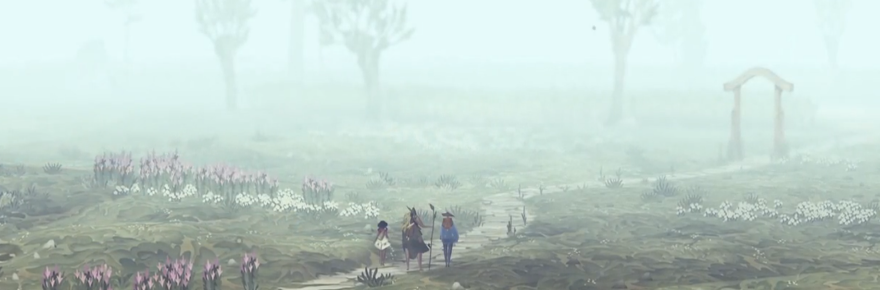

Visions of Mana is not experimental or nostalgic in any way. It is and remains an assertion that Square Enix still knows how to create worlds filled with myth and melody. The Mana franchise was largely dormant and viewed mainly with nostalgia. It was viewed and has come to be viewed as a relic and artifact of the 16-bit era that was filled with magic, splendor, and grandiose. On the other hand, among the new action role-playing games, it is among the few games that still have support for the previous generation of consoles, and you can safely get it if you buy cheap PS4 games. It can summon and harness the atmosphere of Secret of Mana and Trials of Mana while still being designed for an audience that won't put up with outdated, clunky mechanics or any form of superficial sentimental nostalgia.
It is hard to talk about the Mana series without talking about history. At one point, Mana was considered alongside the likes of Final Fantasy. The difference was that Mana had a co-op approach, which made it a bit lighter than its contemporaries. Furthermore, Mana had a beautiful, painterly style. While Final Fantasy branched out to the worlds of blockbuster cinema, Mana appeared to linger in the back of everyone’s memory. Whenever it resurfaced, it never demanded any attention. That has now changed with the release of Visions of Mana. The edition is now far from any symbolic tribute.

The game takes the approach of nostalgia as a seasoning rather than the main dish. Anything beyond that is sheer slander. Gone is the unnecessary romance. Visions of Mana and its forebear, Trials of Mana, maintain a healthy relationship between nostalgia and the past. Trials of Mana relied a bit too much on the past, whereas Visions of Mana makes certain to move forward.
The mark of Mana has always been the ability to conjure dreamlike yet grounded landscapes, rooted in nature yet steeped in magic. Visions of Mana embraces this ethos. The flora is lively without veering into garish excess, and the skies are filled with colors that are both wondrous and attainable. Overflowing with charm, they are designed to beckon the eye.

The act of moving through and ‘interacting’ with this charm is a form of immersion. There is no conquest or savage survival, just awe and discovery. This is what separates Mana from the darker fantasy series: it is not attempting to dominate with a sense of dread but mesmerize with a sense of awe and wonder. In a field that is often classed with grit and gloom, Visions of Mana dares to beacon light.
A Mana game has always possessed rhythm, and this rhythm is a strange one, somewhere in the middle between fully real-time and turn-based. Such an uncertainty is no longer the case. There is a flow to every attack, spell, and movement. These flows mark a refinement of what Trials of Mana’s remake hinted at yet never quite achieved.

Fighting in the game feels more like a dance than just a show: it's an art. The game gives a much more pleasant experience compared to the messy character button slapping sounds, just like the rhythm in the Kingdom Hearts series, but without the extra noise. Yes, the combat is faster-paced than in the old-school Mana, but it retains the feeling of being in a world where magic is an integral part of the environment.
Having characters like Mana would never rely on characters like those Shakespeare wrote in his dramas. Instead, Visions of Mana follows this archetype trend of Mana, but with added depth. The characters portrayed in the game are still overly simplistic, as there is no sign of melodrama, suggesting a different persona.
Visions of Mana revives this notion, placing the player within a cadre of allied characters who provide both gameplay variety and emotional richness. It augments the narrative of the solitary chosen one, placing the ideal of collective intent of a group of people whose purpose is to protect and restore the world. It evokes nostalgia, yet at the same time, compels each player to place themselves in a state of sweet daydreaming as it highlights the fact that the soundtrack is not a simple reiteration of old composition threads.
The exploration themes evoke a gentle pastoral warmth, the battle tracks instill a sense of haste as opposed to violence, while key narrative moments are punctuated with swelling crescendos that approach a sense of ritual. The music is not merely the backdrop, but rather the essence around which the world is built. The soundtracks have always been the essence of the world, as this franchise has always done.

Vanishing art technologies and culture have almost completely forgotten Mana, a Super-Nintendo-era title. Visions of Mana enjoys the privilege of both nostalgia and visual appeal. It does not aim to do everything. For example, it does not portray the solemnity and prestige of The Witcher and does not seek the relentless expanding and complex nature of Final Fantasy XVI. Instead, it focuses on expanding its identity – a joyful fantasy.
It completely stands out in a market brimming with cynicism.
Although the game wonderfully fits the theme and atmosphere, shooting stars and meteors served as obstacles to success. In a classic “Mana” game, the levels delivered are expected, but it simplifies narration. There are too many main and supporting characters as archetypes. Almost all of them come off as too basic and close, but sometimes manage to break past those boundaries.

Another potential shortcoming is pacing. Pace is complex in a game like this, where some bits tend to lose focus. For what it is worth, the game tends to repeat during its attempts to remain approachable. As a result, the game becomes borderline simplistic in design and hence, charming, despite its slightness. While they are not game-breaking issues, they are the components that probably keep the game from being a masterpiece of modern reinvention. More likely than not, it will remain a well-balanced, timid masterpiece in its representation and beauty.
In this age, nostalgia is almost a business model. Countless franchises, ranging from the weakest to the strongest, return in a futile attempt to capture the attention of players expecting a nostalgic experience. What differentiates Visions from all this is how it does not simply repeat the past. This is also not a museum piece modernized for new platforms. Especially its core philosophy of fantasy being a celebration of nature and friendship.

While Final Fantasy overshadows as a spectacle and Dragon Quest is still as traditional as it gets, Mana here is something far more finessed: it is an invitation to daydream. By putting their resources into Visions of Mana, the publisher is willing to bet on a brand many thought was utterly neglected.
In the case of Mana, they didn’t have to be perfect, and luckily, they weren’t expecting to be perfect. In terms of suggestion, their objectives were clear and unambiguous, and their triumphs, remarkable. They have eliminated the shackles of nostalgia, replaced with Mana’s ethereal feeling, and instead, have perfectly blended a game that is contemporary in action, yet with an aura that is everlasting.
As the years have passed, they have easily lost track of time, lost in lively, mesmerizing woods, accompanied by tunes shrouded in history, something they have deeply yearned for. In a more congested market that is filled with heavy, dark fantasies, newcomers still have the opportunity to digest a marketable composition that highlights the Mana series and sets itself apart.

It’s not the big turning point that shifts the most for those who buy PS5 adventure games, nor the creative risk that changes the most. It’s something far less common—a true sequel that stubbornly refuses to be a relic, a piece of gratitude and delight that resonates more with emotions than with reason. It doesn’t floor you at every instant, yet it captivates you at just enough of them to remind you of the significance of this franchise and the reason why it still matters.
Ultimately, in the case of Visions of Mana, it is almost perfect to assume that it is a vision, not of the glories of the past, but of the present. It doesn’t attempt to reclaim its position in the action RPGs of today’s world by howling the loudest, but rather, by singing the most beautifully. It may not change the genre’s evolution, but it still shows that Mana is worth hearing and the world is worth observing.