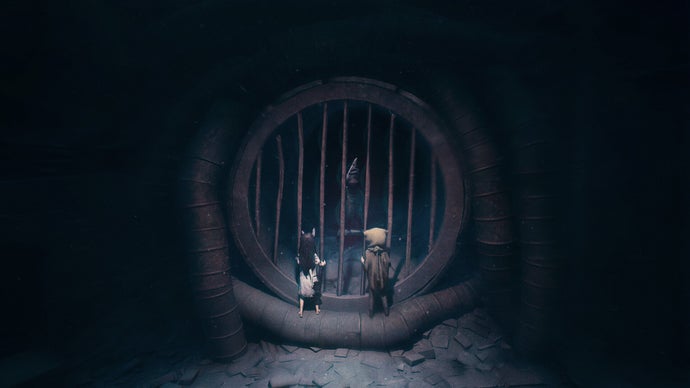
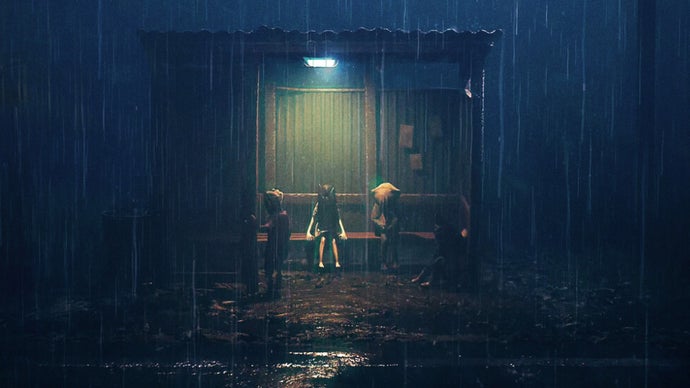
In an industry pestered by calls to "think of the children", Tarsier’s games are useful reminders that children can be utterly depraved in ways no coddling adult would ever dream. Later in Reanimal, the developer’s latest, strictly 'co-optional' horror game, two kids rip an eyeball out of a massive, sunken horse skull and shove it into what I sincerely hope is the eyesocket of a slumbering whale. Somehow, this is necessary to advance.
It’s the kind of thing that would only occur to children, because children do not reason like 'we' do, those disgusting creeps. They sense that they exist in a world that isn’t for them: a world of baffling laws, high shelves, and everyday monstrosity; a world they’re required to 'grow into' by means of repeated shedding and sprouting and subjection - milk teeth and pubic hair and doing your goddamn chores. So they instinctively come up with ways to screw with the system, twist its horrible logic against itself. Why not push a horse’s eyeball into a whale?
What is the meaning of Reanimal's ending? The ending to Reanimal's story is largely up to interpretation, but there is fun to be had trawling through all the theories out there. The story toys with many themes, but it does revolve around the girl and the nightmarish creature we finally see at the end of the game: the sheep. There's also a secret ending you can unlock by interacting with all five coffins found throughout the game. Here's what to expect from both endings, though only read on if you're happy to know what happens at the end of Reanimal, as this guide contains major story spoilers.
While in Early Access, Titan Quest II already displays the hallmarks of a future action RPG classic. You take control of a Greek warrior on a small island tasked with hunting down a legendary griffon. It’s a compelling hook, and while you eventually succeed in the hunt, the narrative quickly takes a turn for the worse as ancient threats emerge. Of course, every great adventure needs a bit of world-shattering chaos to get the momentum going.
While the core combat follows classic ARPG standards – clicking on enemies and managing active abilities – the skill system stands out as something truly special. You begin by selecting one of five mastery trees, each featuring an expansive list of unique skills and passives to upgrade as you level. As you invest points, you unlock sub-slots that allow you to modify how abilities function, such as adding extra projectile casts or fundamentally changing a skill’s elemental property.
The experience becomes truly interesting once you unlock your second mastery, providing a massive array of options to mix and match abilities as you see fit. This dual-class synergy creates deep complexity, yet the game remains accessible because you can respec your points as often as you like. This ensures that if you find a new piece of legendary equipment you want to test, or simply want to see how a specific skill performs, you can do so without any penalty or hassle.
You do all of this while traversing a beautiful Greek world teeming with monsters and myth, underscored by an atmospheric soundtrack and grand visual spectacle. It is a fantastic experience already, and the scope will only improve as more content and masteries are added throughout development. This is already a stellar action RPG, and it is clearly destined to get even better from here.
From the team that rattled our nerves with Little Nightmares I & II, REANIMAL is shaping up to be Tarsier Studios’ most devastating horror effort yet. The game chronicles a brother and sister’s harrowing journey to rescue their missing friends and escape an island teeming with unspeakable terrors.
Be sure to bookmark this guide, as we cover all the essentials, including the release date, preorder bonuses, deluxe edition details, gameplay mechanics, the latest trailer, and PC specifications.
REANIMAL Release Date
REANIMAL is officially confirmed for a full release on February 13, 2026. It will launch on PlayStation 5, Xbox Series X|S, Nintendo Switch 2, and PC (via Steam and the Epic Games Store). As of this writing, there are no plans for a release on other platforms.
REANIMAL Pre-order Bonus
Players who choose to preorder REANIMAL can access a selection of bonus items, including the following:
Muttonhead Mask: A cosmetic item for the main protagonists that provides a stylish, yet unsettling, sheep-inspired look.
Foxhead Mask: A cosmetic item for the main protagonists featuring a distorted fox aesthetic, perfect for blending into the island’s nightmarish atmosphere.
REANIMAL Special Edition
In addition to the regular version of the game, developer Tarsier Studios and publisher THQ Nordic have confirmed that REANIMAL will be available in a Deluxe Edition. This version includes a range of digital bonuses and additional content for players looking to expand their experience beyond the base game.
Deluxe Edition
REANIMAL base game
Preorder Bonus: Muttonhead & Foxhead Masks
Season Pass: Grants access to three paid, story-based DLC expansions (release dates to be announced)
REANIMAL Friend’s Pass
Tarsier Studios has confirmed that horror is best shared. Much like the system in games like It Takes Two, REANIMAL features a Friend’s Pass that lets you experience the entire nightmarish journey with a partner using only one purchased copy of the game.
Friend’s Pass Features
One Copy, Two Players: Only one person needs to own the full game to invite a friend to play the entire campaign online for free.
Full Access: Your co-op partner simply downloads the dedicated “Friend’s Pass” client to join your session, eliminating the “buy-in” barrier for your teammate.
Solo Flexibility: While the game is built for co-op, you can still play 100% solo with an AI companion if your partner isn’t available.
Note: While the developers are working hard to have this feature ready for day one, they have stated that the Friend’s Pass may arrive shortly after the initial launch on February 13.
REANIMAL Story
The narrative follows two orphaned siblings trapped within a twisted, demonic version of their former island home. Tasked with rescuing three missing friends, the duo must navigate a nightmarish archipelago while avoiding grotesque animal-human hybrids – horrors birthed from the darkest recesses of their own minds. Heavy stuff, indeed.
REANIMAL Gameplay
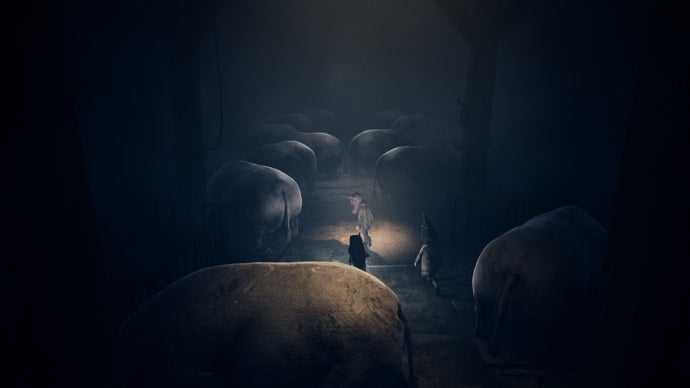
If you’ve dipped your toes into the Little Nightmares series, Reanimal’s core mechanics will feel instantly familiar. Built from the ground up for cooperative play, it utilises a single cinematic camera that keeps both players in the frame. This system reinforces a palpable sense of tension and claustrophobia that would be lost in a traditional split-screen view.
While engineered with a “co-op first” philosophy, solo players aren’t left behind; the second sibling is controlled by AI in the absence of a partner. These characters are more than just aesthetically different; they possess bespoke traits and skills that must be used in tandem to overcome deadly traps and “brain-tickling” environmental puzzles.
Much like Tarsier’s previous hits, the gameplay relies on a three-part loop. Since traditional combat is non-existent – your tormentors are far larger and more dangerous than the children – stealth is the primary focus. You will spend significant time lurking in shadows, crawling under objects, and waiting for the precise moment to move.
When you aren’t playing “hide and seek,” you’ll be navigating physics-based puzzles. These require constant cooperation; for example, one player might need to distract a lurking horror while the other dashes for a lever to unlock a door.
The final pillar of the loop consists of cinematic chase sequences. These require players to outrun pursuing aggressors while reacting quickly to obstacles in their path. Again, anyone with cursory experience in Little Nightmares will have a clear idea of what to expect here.
However, Reanimal does introduce a major shift: boat travel. This allows the duo to explore the archipelago in full 3D, navigating between islands. It is a stark contrast to the linear, 2.5D side-scrolling perspective that defined Tarsier’s earlier work.
PC Specifications
Leveraging the power of Unreal Engine 5, Reanimal utilises cutting-edge environments, advanced shadow effects, and dynamic lighting to craft the visceral horror and creeping dread that are hallmarks of Tarsier Studios. Despite these high-end visuals, the PC requirements are surprisingly accessible.
Additional Notes: Broadband Internet connection required
Where Can I Watch The Latest Trailer?
Brief yet impactful, the latest trailer offers a glimpse into one of February’s most anticipated releases. It showcases the exploration, puzzle-solving, and stealth pillars of the game’s design. The footage also highlights the thick, “cut-it-with-a-knife” atmosphere, anchored by a sinister, WWII-style radio briefing. You can watch the full trailer above.
Silence. Two crouched shapes silhouetted in the moonlight, breath held tight as something stirs. A torch beam slices through the shadows; strange grasping limbs slide into view; tension mounts, hearts pound, and then suddenly a voice cuts in, "Hang on a minute, I'm just gonna run to the loo."
I know I say this a lot, but I’m genuinely surprised that Tides of Tomorrow flew completely under my radar. You’d think with a career covering the games industry, I would be aware of almost every video game that’s on the horizon, but sometimes you can end up missing the trees for the forest.
However, I knew this would be something interesting when CGM’s Dayna Elieen messaged me, “K CAN WE PLEASE TALK ABOUT TIDES OF TOMORROW,” since she doesn’t often message me in all caps unless something is genuinely good. I’ve repeatedly said that the Indie scene is infinitely more interesting than the “AAA” one because of the bold choices developers make to advance the medium. Tides of Tomorrow is one such example of this.
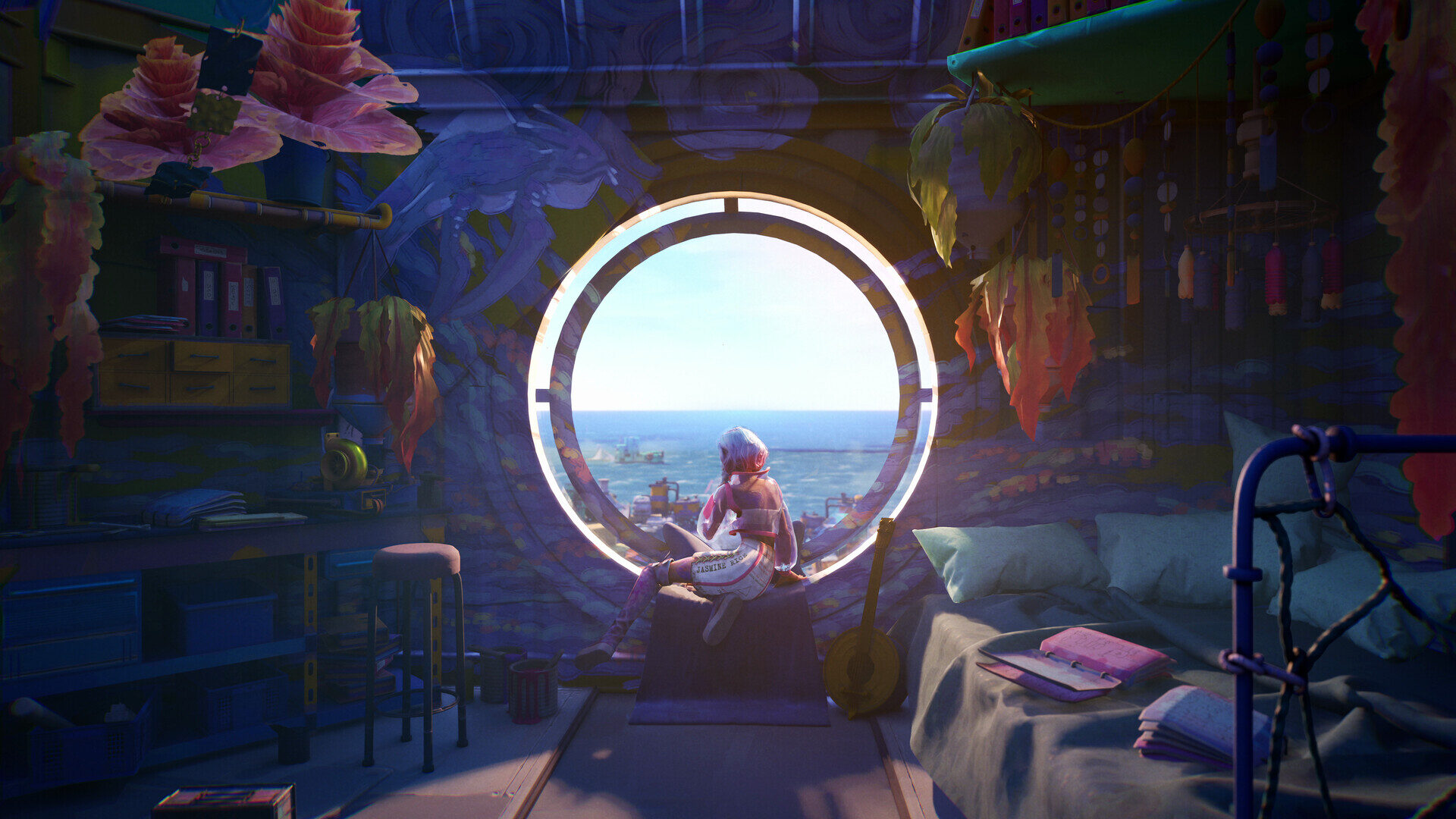
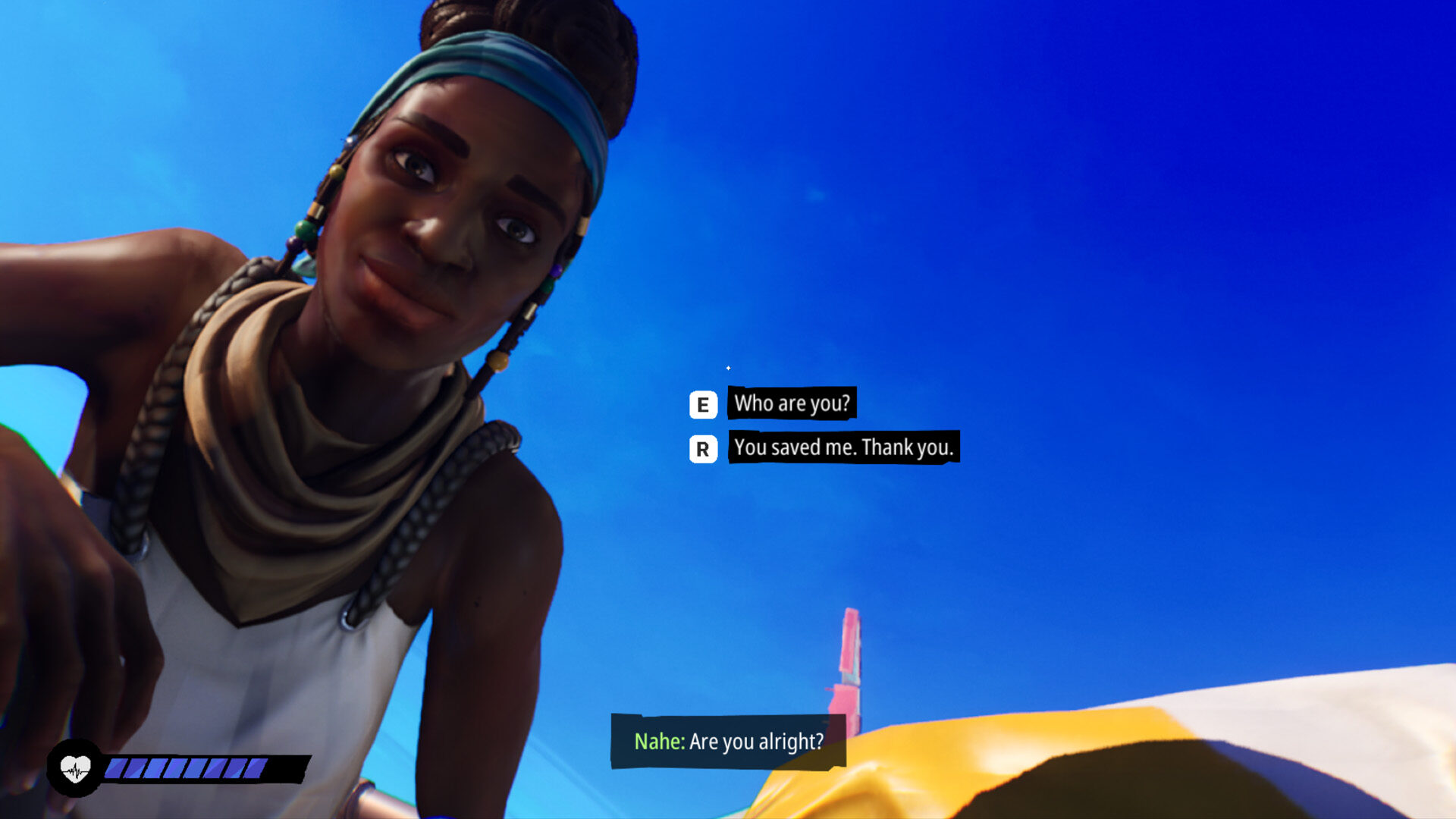
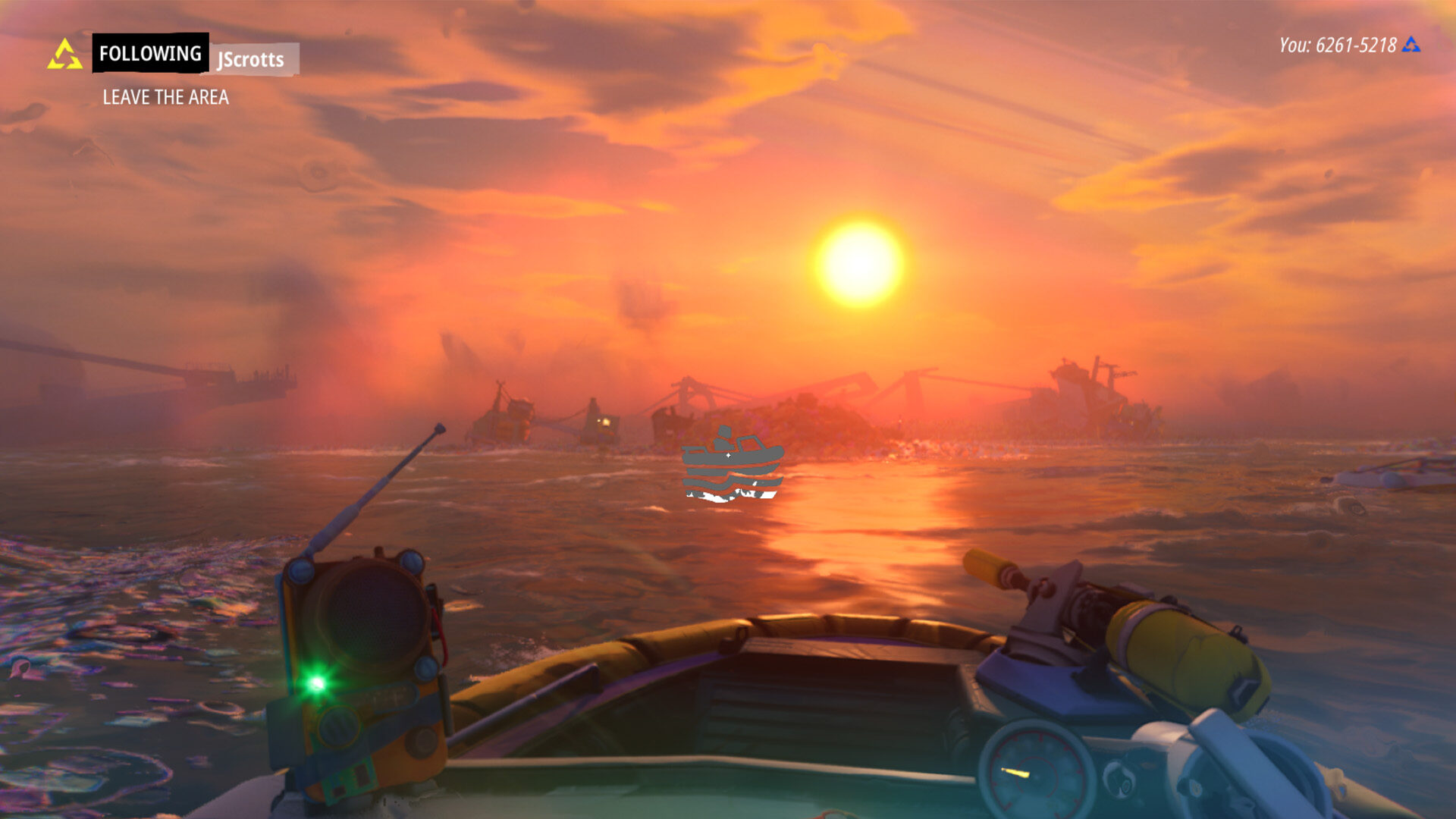
Developed by DigixArt, the studio behind Road 96 and Lost in Harmony, Tides of Tomorrow is a narrative adventure set in a vast, flooded world that has been all but destroyed by plastic pollution in the oceans. Players take on the role of a Tidewalker—unique humans who are able to connect with each other and harness visions of past events—suffering from the disease known as “Plastemia,” which is slowly killing them.
Players must navigate the world, fighting for not only their own survival, but the fate of the remaining mankind. Their choices will shape the world and potentially build a new one, or possibly destroy what little is left. It may sound simple, or like so many games that have come before it, but Tides of Tomorrow differentiates itself with its main gameplay mechanic: asynchronous multiplayer.
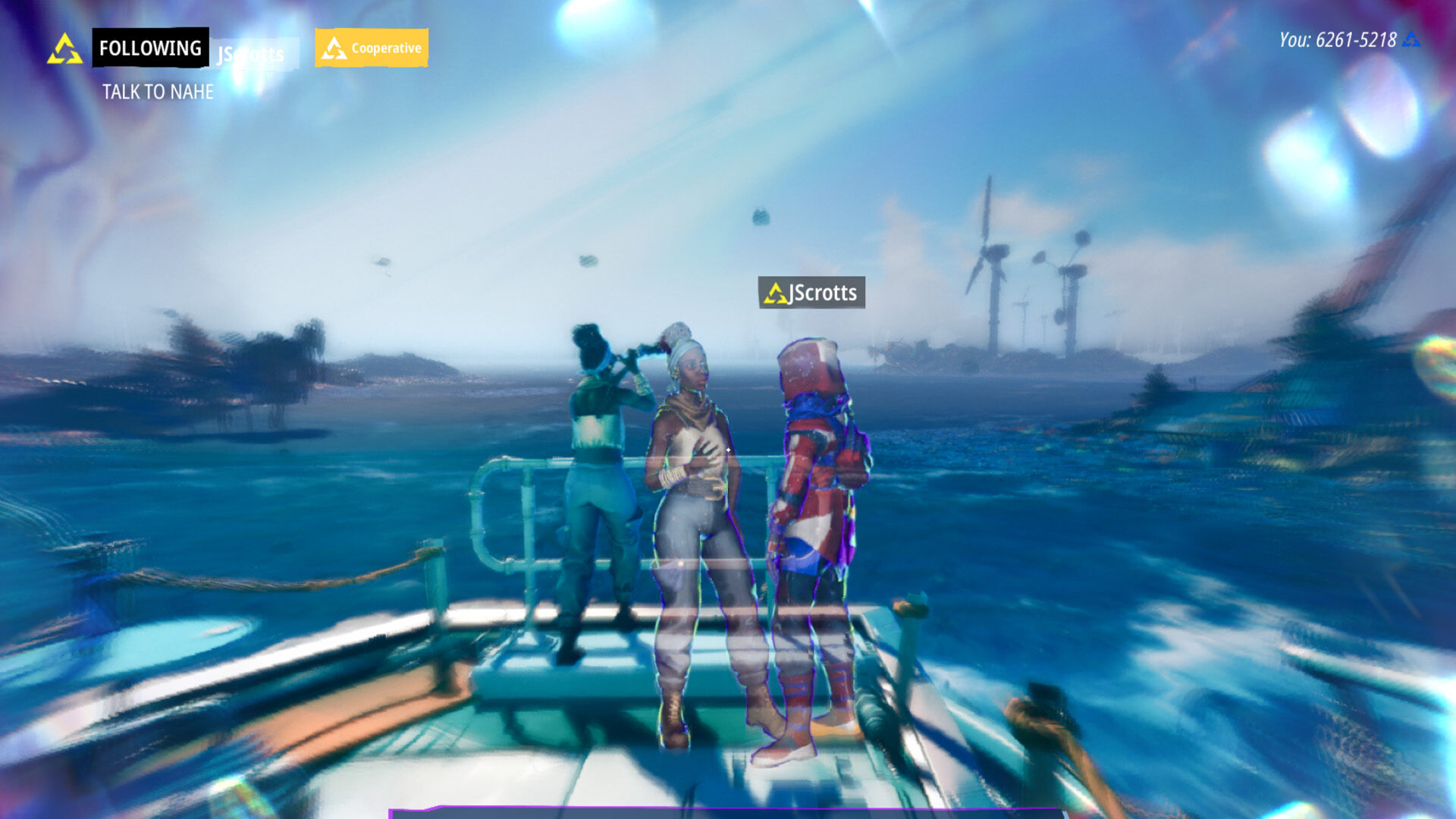
When players begin their game, they can choose to follow another player. As you play, you’ll be able to see what choices your followed player made both in dialogue and in action, how it affected the story and allow you to make decisions accordingly. You can either follow in their wake or attempt to diverge and see what new waters await you.
It’s an incredibly interesting idea that works on a lot of unique levels. In the moment-to-moment gameplay, it functions like a positive version of Dark Souls’Messages system, where players are actually trying to guide each other instead of sending them into bottomless pits. But in the macro-design, it connects in a meta way to the game’s overall narrative by allowing players to learn from each other’s mistakes and try to forge a better path forward.
“Even though my time with Tides of Tomorrow was relatively brief, I’m genuinely impressed with what it’s doing. “
In the early moments of the game, I needed to collect some scrap in order to help one of the characters who was trying to guide me. There was a bunch littered around, but one of them was placed on a memorial to those who had died from Plastemia. By using my Tide-O-Vision, I was able to see that the player I was following had been reprimanded for taking some scrap that was on the monument.
In that moment, it gave me some pause to consider how else I could approach my current situation that wouldn’t put me in bad standing with the local population. Going forward, I tried to be extra considerate with my decisions, all while trying to navigate a whole that was being shaped by another player. It made the experience so incredibly interesting, as you can tangibly see how events were shaped by the person who came before you, and how I now had to move through newly opened doors as others were closed by another player.
And what’s even more interesting is that players are not bound to another player for the entirety of their journey. At certain critical moments, players can choose to follow others, giving them the freedom to explore other perspectives and follow different threads of fate. Digixart clearly wants Tides of Tomorrow to be a deeply social game as players can share game seeds with one another, and there’s a big push for players to follow their favourite streamers—expanding the experience to a much broader platform.
Even though my time with Tides of Tomorrow was relatively brief, I’m genuinely impressed with what it’s doing. Not only is it creating an interesting world and telling an engaging story with truly resonant themes, but it’s doing so with such an interesting and dynamic gameplay hook that it genuinely keeps you involved. It’s going to be really exciting to see how Tides of Tomorrow connects and challenges players.
If I were the foreman of an game refinery, I might be dabbing my forehead in anticipation right now because there is a lot coming down the pipeline in 2026. You may be looking at the telltale bulge of Grand Theft Auto, but I'm more focused on the amount of damn fine horror we've got in the plumbing.
A game like Titan Quest II doesn’t really lend itself to pastoral pursuits too well, so you would be forgiven for thinking that something called a Forge mastery would be a bit comparatively dull. However, the Forge mastery line coming to the multiplayer-optional ARPG acts a little bit differently – and with a more mythical […]
I was already looking forward to new Tempest Rising update Superior Firepower, which introduces highly requested superweapons to 2025's strongest Command and Conquer spiritual successor. But developer Slipgate Ironworks has gone one step further, sneaking in something even more exciting: a third playable faction. That's right, the Veti are finally in our hands courtesy of the public test branch for one of the best RTS games of the year, and we've got two full weeks to test them out and offer feedback.
The next Tempest Rising update is taking what was already my pick for the best RTS of 2025 to a new level. The Slipgate Ironworks game has clearly pulled plenty of inspiration from the iconic Command and Conquer series; you need only look at its leading factions to see that. But while the international peacekeepers of the GDF and the revolutionary Tempest Dynasty are both very well-equipped to battle each other in the war for resources and control, they've been missing one of the most essential pieces of C&C history: superweapons.
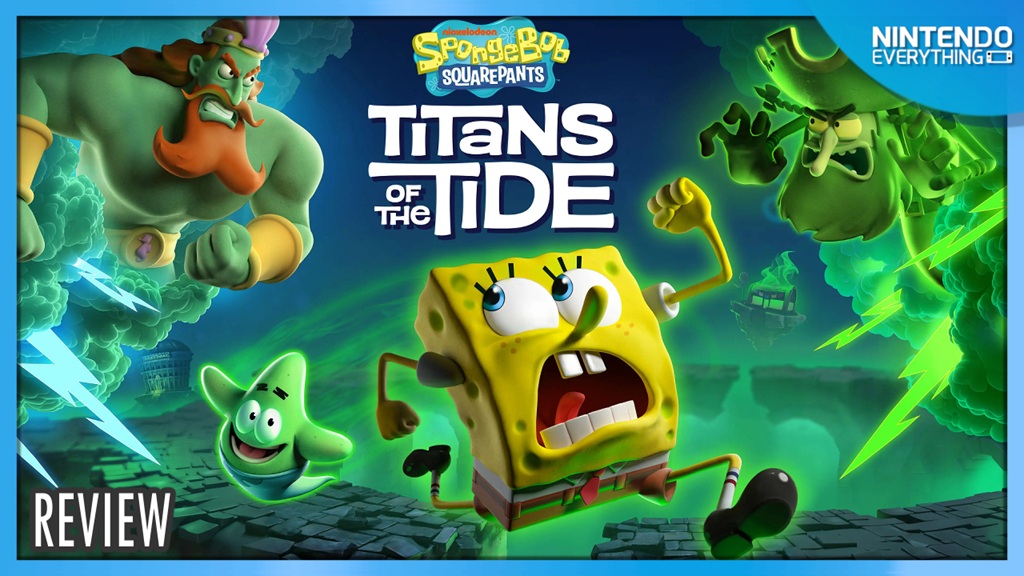
System: Switch 2 Release date: November 18, 2025 Developer: Purple Lamp Publisher: THQ Nordic Are ya ready kids? Everyone’s favorite absorbent and porous fry cook is back in a new 3D platforming adventure. With Battle for Bikini Bottom and The SpongeBob SquarePants Movie Game both considered cult classics of the GameCube era of gaming, and this style of SpongeBob game...
Publisher THQ Nordic and developer Tarsier Studios announced a release date for REANIMAL, their new cooperative horror adventure game. The new co-op horror game is launching across Windows PC (via Steam), Xbox Series X|S, Switch 2, and PS5 on February 13th, 2026. Here’s a rundown on the previously announced game, plus a trailer: WHAT IS REANIMAL? The original creators […]
Paraglacial and THQ Nordic have released the first full gameplay reveal for Fatekeeper, offering an eight-minute, unbroken look at the studio’s atmospheric first-person action RPG. After its debut during the THQ Nordic Showcase in August, this new video delivers the most detailed glimpse yet into the rugged, mystical world perched high in the mountains above […]
Similar to Nic (RPS in peace), I am both beguiled and maybe just a little riled by how much Tarsier’s Reanimal looks like the studio’s previous Little Nightmares games. Once again, it’s a game about small children in sinister headgear travelling through a collapsed and raggedy storybook world of ogres and abductors. Still, Tarsier have a magnetic capacity for icky monster designs – shout out to Spider Sheep in the trailer there, who absolutely won’t be getting an eye-popping animated Marvel spin-off – and Reanimal is something of a departure once you peel back the layers of suppurating flesh.
System: Switch 2 Release date: November 18, 2025 Developer: Purple Lamp Publisher: THQ Nordic Are ya ready kids? Everyone’s favorite absorbent and porous fry cook is back in a new 3D platforming adventure. With Battle for Bikini Bottom and The SpongeBob SquarePants Movie Game both considered cult classics of the GameCube era of gaming, and this style of SpongeBob game...
Tarsier, the studio behind the much-loved Little Nightmares 1 & 2, has announced a 13th February release date for its brand-new horror adventure Reanimal. And if you need a little something to keep the impatience for its arrival at bay, a demo is available from today on Xbox Series X/S and PS5.




 5 2400G / Intel® Core