Normální zobrazení

Received before yesterday

Super Bomberman Collection Is a Multiplayer Blast

22. Únor 2026 v 15:00

Super Bomberman Collection review playtest Siliconera

Recent shadowdrop release Super Bomberman Collection brings back some classic Bomberman games, some for the first time outside Japan, and we’re happy to see it! But if we’ve learned anything from modern retro compilations, the quality is extremely dependent on execution. So how does this one do?

The package contains the five Super Bomberman games, all originally released on the Super NES and Super Famicom, as well as two bonus Famicom games. The later Super titles didn’t originally release outside Japan and have received localizations here, which is a nice touch! Frankly, though, these are fairly language-agnostic games and you probably would have been fine.

Putting these five games together in one collection might feel a bit redundant! And it is, to a degree. The advantage is in two ways. The first? Historical value. The game makes it easy to look at what power-ups are added in each one, and preserving all five is good regardless. The second is that you can choose your favorite variant. Each of these changes does color the experience, and through either taste or nostalgia, you’ll likely have a favorite.

super bomberman collection screenshot
Image via Konami

If you’re having trouble deciding, though? We’d recommend going straight to 5. It has almost all the things from the other games, and there are options to configure it however! And as such a late Super Famicom game that other staff at Hudson were probably already working on Mario Party during development, it really takes advantage of the hardware. If it drops the ball on anything? Maybe it’s aesthetics. It’s trying really hard to do a robot/sentai thing in a way that a lot of the selectable characters feel same-y.

It’s also true that each of these games has a solo campaign. The franchise’s bread and butter is its competitive play, but there’s a dedicated group of people who really embrace the single-player arcade levels. And these are good ones! We’ve spent a while playing, and we are undeniably bad at them but there’s a puzzly element to taking on risky opponents in an optimal order.

When it comes to gallery modes in retro compilations, our usual stance is that it’s a great effort of preservation! But we don’t spend a lot of time with that stuff. Super Bomberman Collection’s “unbox” mode feels a lot more robust, though. With the detail and ability to virtually open the box and pull out the manual, it captures a bit more of the nostalgia of the originals.

this is a weird level with multiple layers but Hudson was quirky like that back in the day
Image via Konami

While it doesn’t have built-in functionality for this sort of thing, Super Bomberman Collection takes advantage of system-level multiplayer features like Switch 2’s GameShare and Steam’s Remote Play Together. How well does it work? Better than you’d think! We spent our time testing it out on Switch 2, and didn’t experience any of the frequent connection issues we usually get. What’s more, it’s the sort of game that can weather some minor hiccups if you get them, and it also doesn’t look too bad in the windowed GameShare screen.

Super Bomberman Collection, developed by Red Art Games and published by Konami, is out now on Switch 2, Switch, PS5, Xbox Series and Steam. Physical editions of the game will launch on August 25, 2026.

The post Super Bomberman Collection Is a Multiplayer Blast appeared first on Siliconera.

Death Howl’s Gameplay and Narrative Help It Fit on Switch

21. Únor 2026 v 21:00

Death Howl’s Gameplay and Narrative Help It Fit on Switch

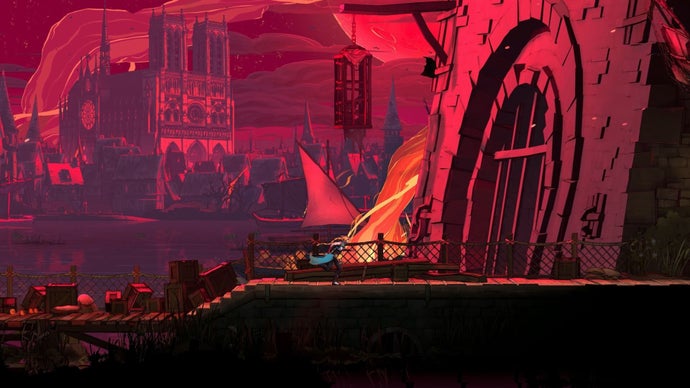
Death Howl is one of those unique strategic roguelikes that someone could play for 15 minutes for five hours straight, and it means the Switch version couldn’t come soon enough. I thoroughly enjoyed this brutal game when I played it on the PC. But there’s something about the nature of it that makes the gameplay loop and narrative beats feel highlighted so well here.

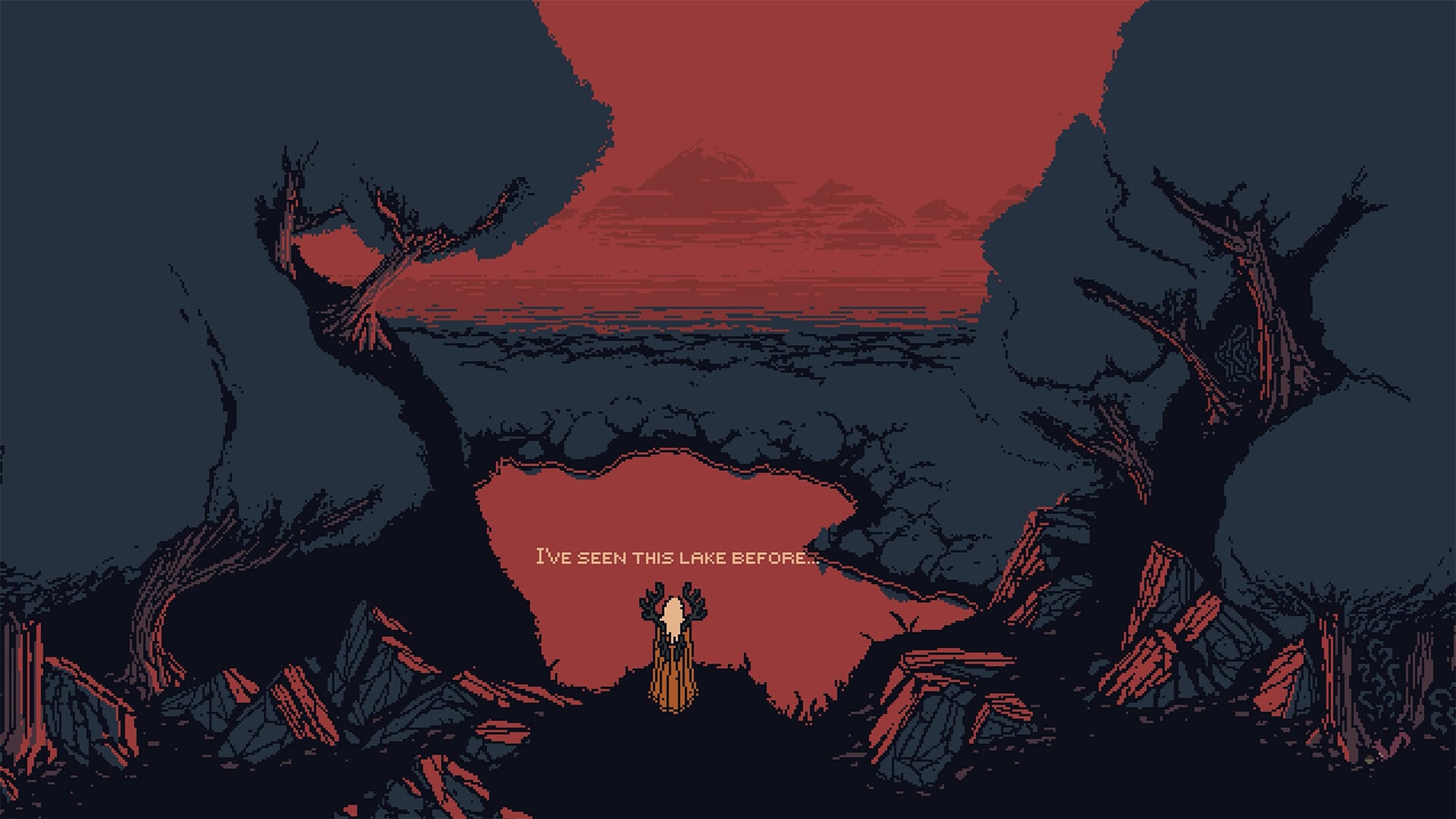
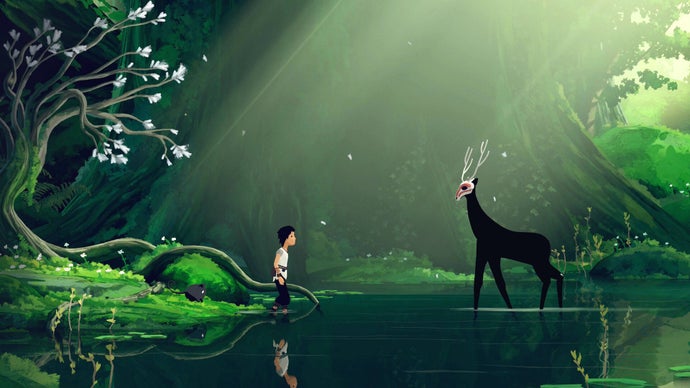
As a quick refresher, Death Howl is a strategic roguelike with a nearly monochromatic kinds of color palettes and melancholy story. Based on Scandinavian folklore, we follow a grieving mother named Ro searching the other side for her dead son Olvi who was stolen away from her. This means traversing different areas, facing all sorts of entities and beasts with abilities she gathers. 

https://www.youtube.com/watch?v=FGF-v--wGhk

The narrative is fantastic. There are so many themes running through it. Revenge is a critical one, since there’s a central stag figure associated with her son’s death and apparent abduction. Not to mention she’s angry with Death itself over the loss. Coming to terms with the situation is another, since this is a journey about grief and clearly she’s going through the bargaining and depression stages while also being angry about everything and denying that this is a situation that can’t be undone. But there’s also this veil of uncertainty over everything. Due to the use of symbolism and design choices, Ro is an unreliable narrator and there are gaps in our knowledge as players. Which means part of the motivation that keeps us going is to finally know the truth of it all. Having the game on the Switch makes it easy to keep going so we can absorb the information and take in what possible truths could be hinted at as we play.

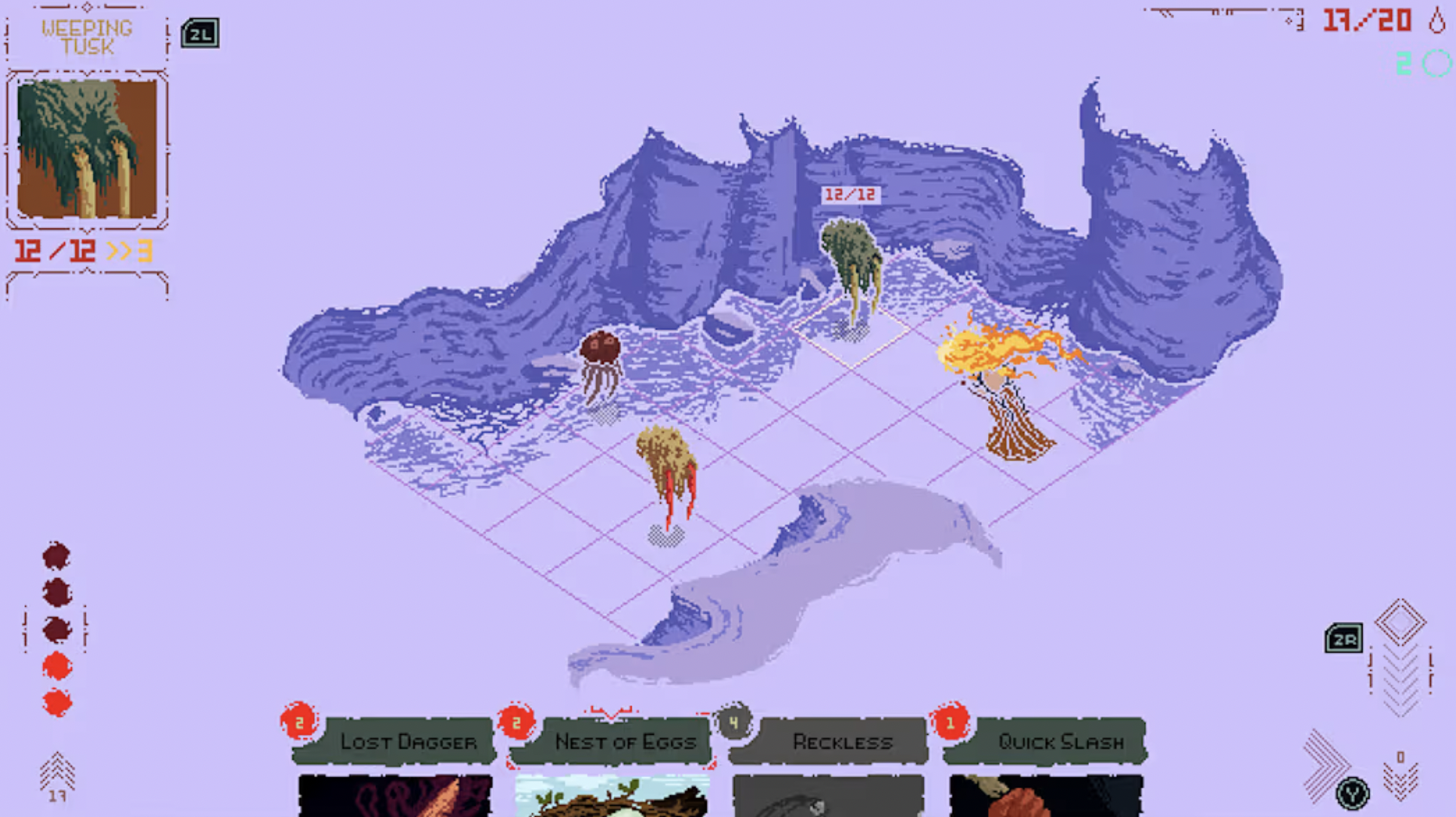
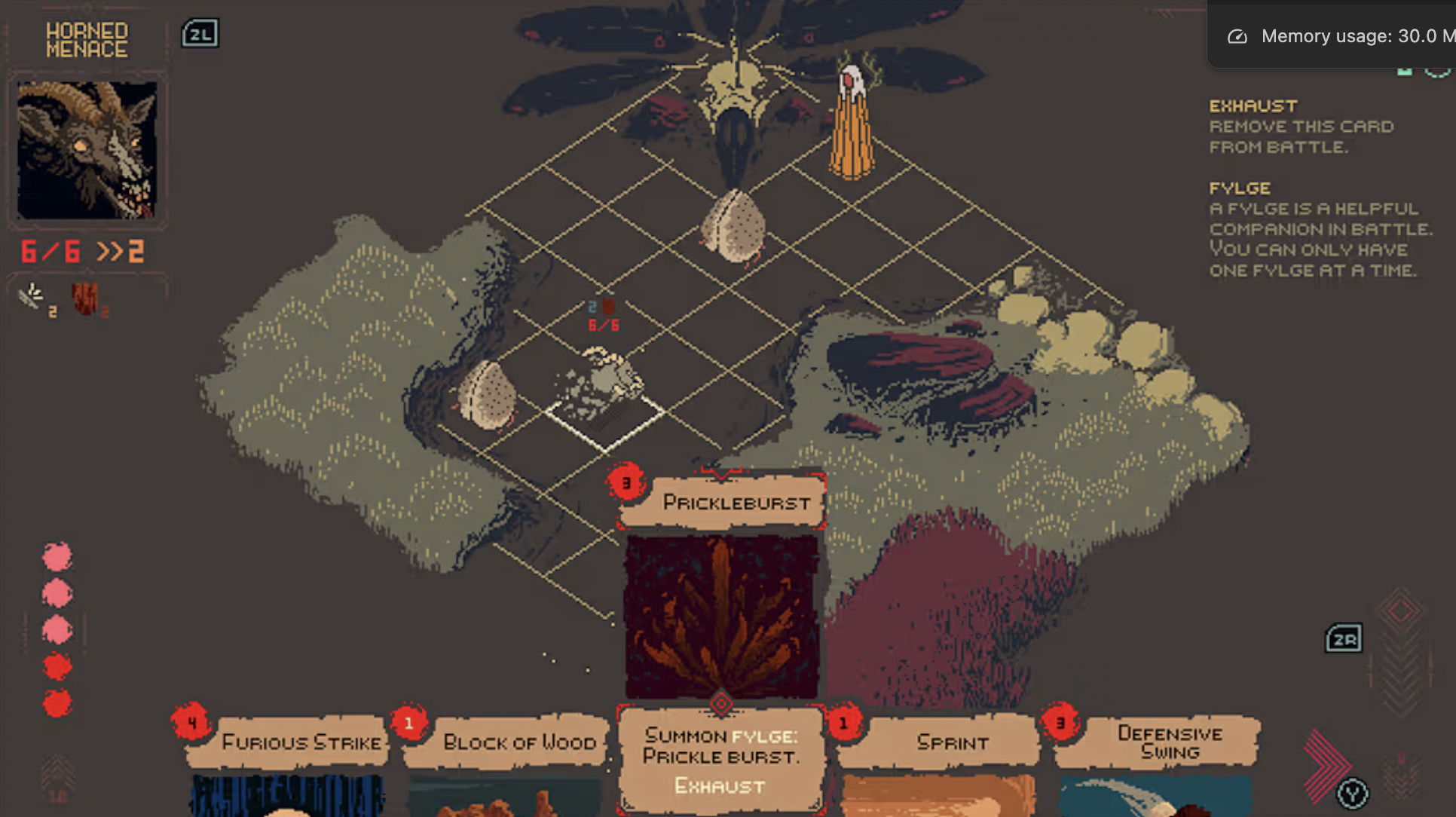
The Switch also makes for a good way to appreciate the art direction in Death Howl in the same way that the Steam Deck and other handheld gaming PCs do. This is a strategy game with sprite-based designs, an isometric perspective of the board, and limited color palettes for each region. Actual spirit designs play with shading and color options to depict details that wouldn’t otherwise be possible with the limitations. When there are effects from actions and spell usage, we see intricate animations. While it is possible to view these and take away the excellence, I feel like having it in handheld mode where you could really take a moment to look closer at details.

Image via The Outer Zone

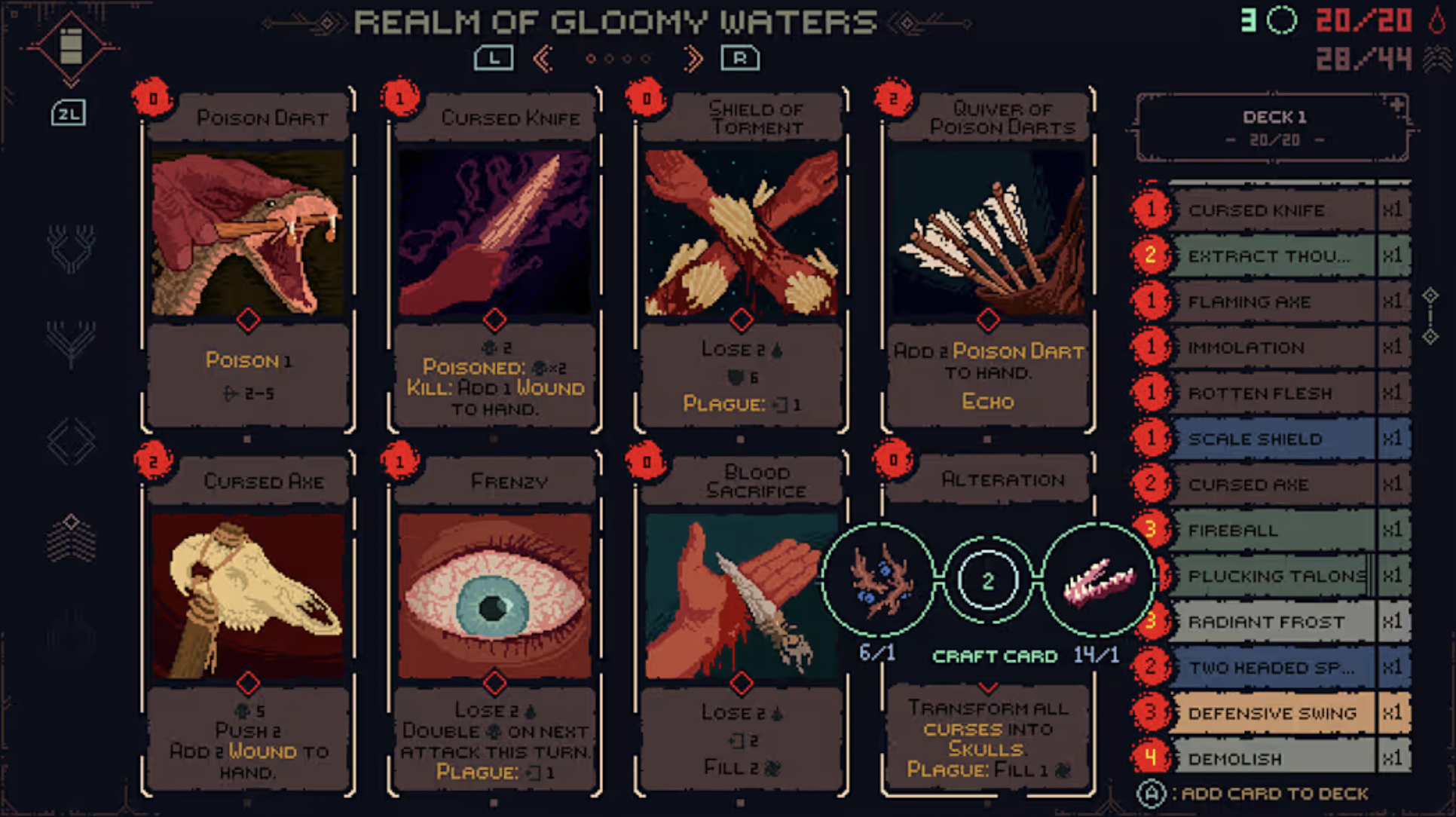
It also helps that the Switch port is a great version of Death Howl. Given how text-heavy it is for cards and combat, the color and font choices make it clear even when the lettering is little. It’s almost always clear and legible. Pair that with the great controller-based scheme carried over from the PC release, and it is quite comfortable to play.

Handhelds are a good fit for roguelike games, and the artistic direction, narrative, and gameplay of Death Howl make it feel especially strong on the Switch. It’s a great port that plays well on the system. The nature of the storyline makes it a perfect game to play in a darkened room. Since the gameplay encourages deck experimentation and strategic decisions, you can really get cozy and experience it. It feels exceptionally at home here.

Death Howl is available on the Switch, PS5, Xbox Series X, and PC. 

The post Death Howl’s Gameplay and Narrative Help It Fit on Switch appeared first on Siliconera.

Square Enix Video Says ‘NieR: Automata to Be Continued’

20. Únor 2026 v 18:00

Square Enix Video Says NieR: Automata to Be Continued new game anime book

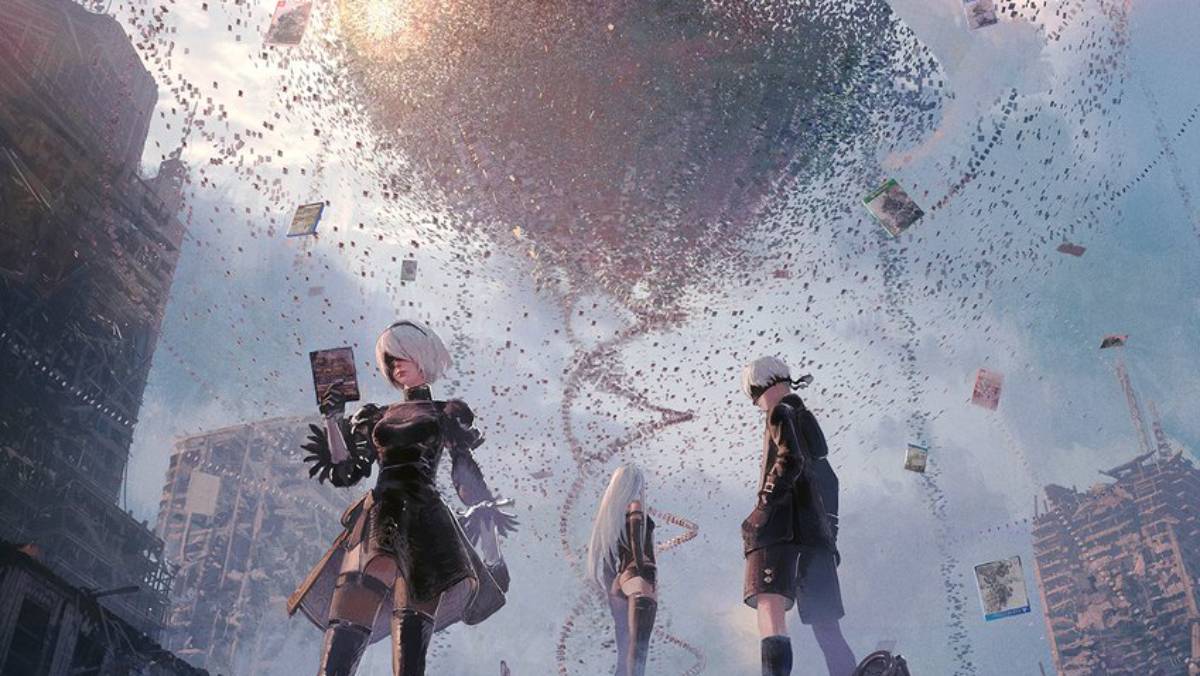
Square Enix shared a special PV video on YouTube that ended with the phrase “NieR: Automata to be continued.” This suggests we could see a new NieR: Automata project, though the vagueness means it is uncertain if it could be related to the anime adaptation, a game, or book. Additional statements also confirmed current sales figures for that game and NieR Replicant

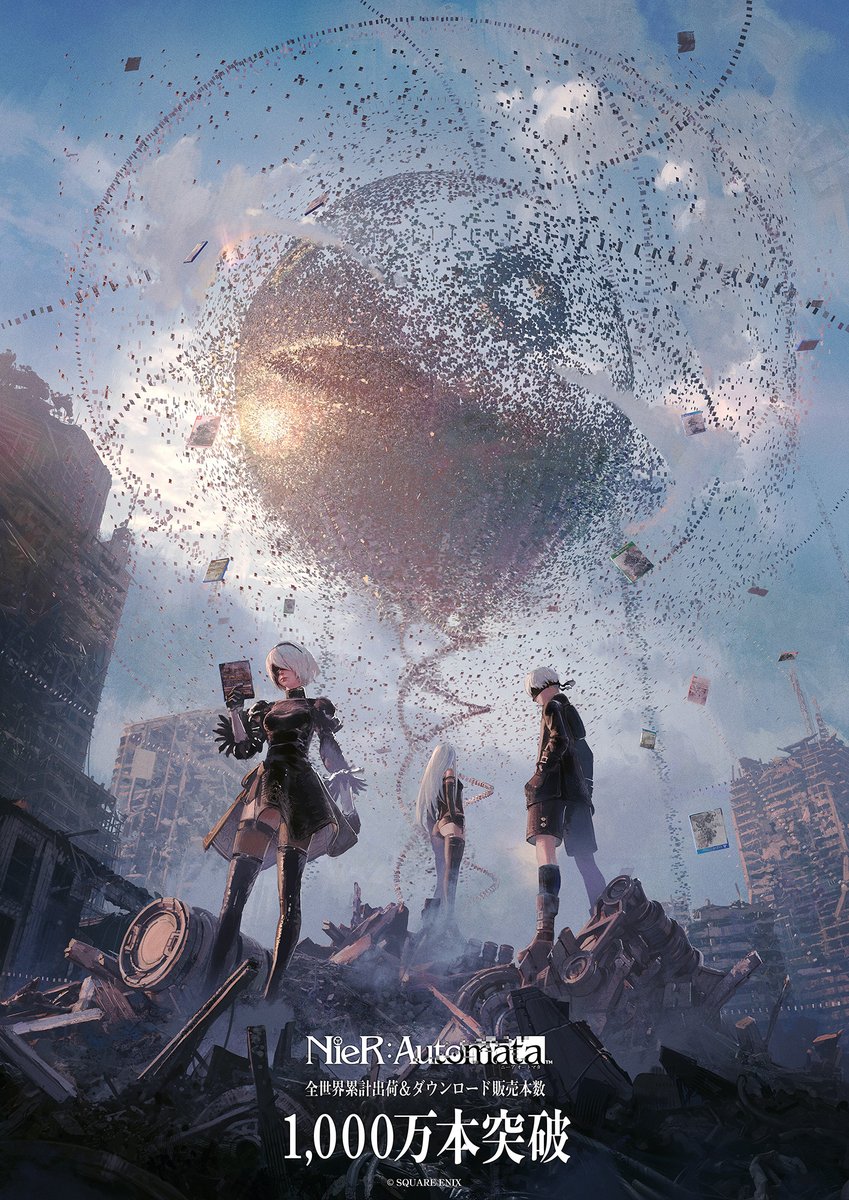
First, here’s the “NieR: Automata to be continued” announcement video suggesting a new project like a game or other form of media is in the works. It’s specifically designed to honor the fact that this game passed 10 million units sold physically and digitally worldwide. That applies to the Switch, PS4, Xbox One, and PC versions of the game. At the 5:48 mark of the PV, the screen scrambles and the ominous text suggesting more is in development shows up.

https://www.youtube.com/watch?v=Wyn1b_5bw-M

Square Enix also shared new key art on social media honoring the sales milestone. That features 2B at the forefront, with 9S right behind her and A2 at the back.

Square Enix Video Says NieR: Automata to Be Continued new game anime book
Image via Square Enix

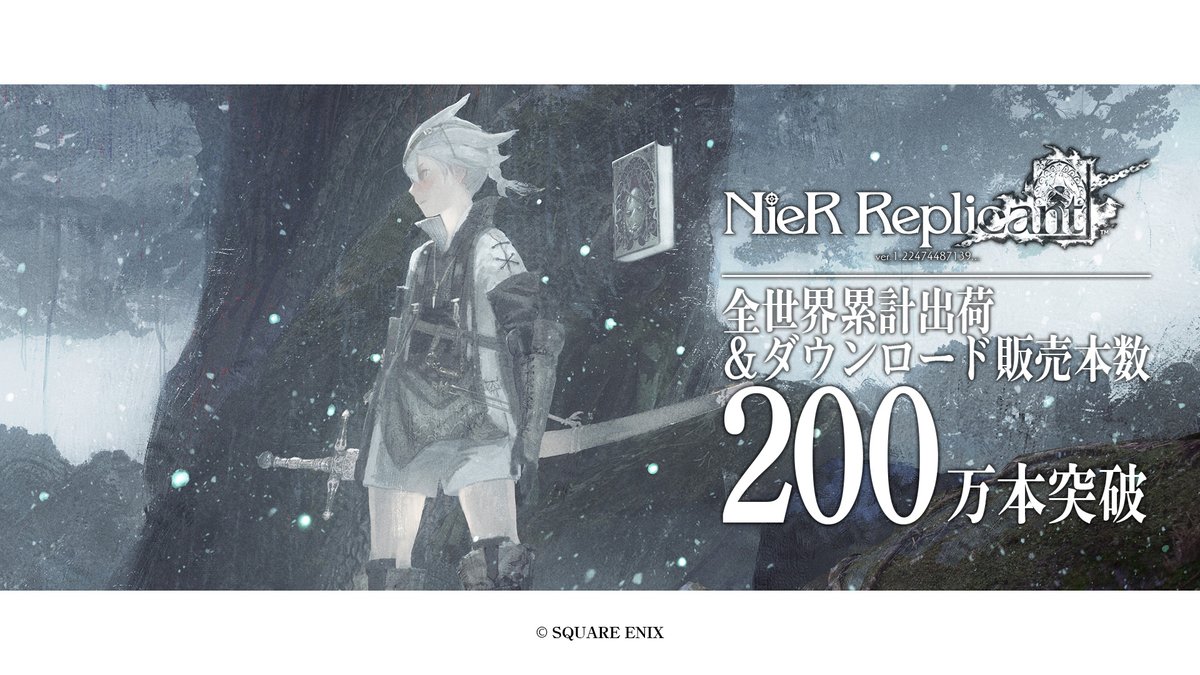
As for the new sales figure update for NieR Replicant ver.1.22474487139, that wasn’t accompanied by a special video. Square Enix just took to social media to share the update. It’s now at two million copies sold worldwide digitally and physically. That takes into account the PS4, Xbox One, and PC copies.

There is a piece of art shared to commemorate that, however.

Image via Square Enix

NieR: Automata is available on the Switch, PS4, Xbox One, and PC, the anime is on Crunchyroll, and Square Enix’s books division handled a number of spin-off books worldwide.

The post Square Enix Video Says ‘NieR: Automata to Be Continued’ appeared first on Siliconera.

Pokemon FireRed and LeafGreen and Pokemon Presents Dated

20. Únor 2026 v 16:00

Pokemon FireRed and LeafGreen and Pokemon Presents Dated

Some Pokemon Day 2026 reveals appeared ahead of the actual event on February 27, 2026, and it involves Switch releases of Pokemon FireRed and LeafGreen and a Pokemon Presents showcase stream. The presentation will air first at 6am PT/9am ET/3pm CET, and the digital GBA games will show up on the eShop after.

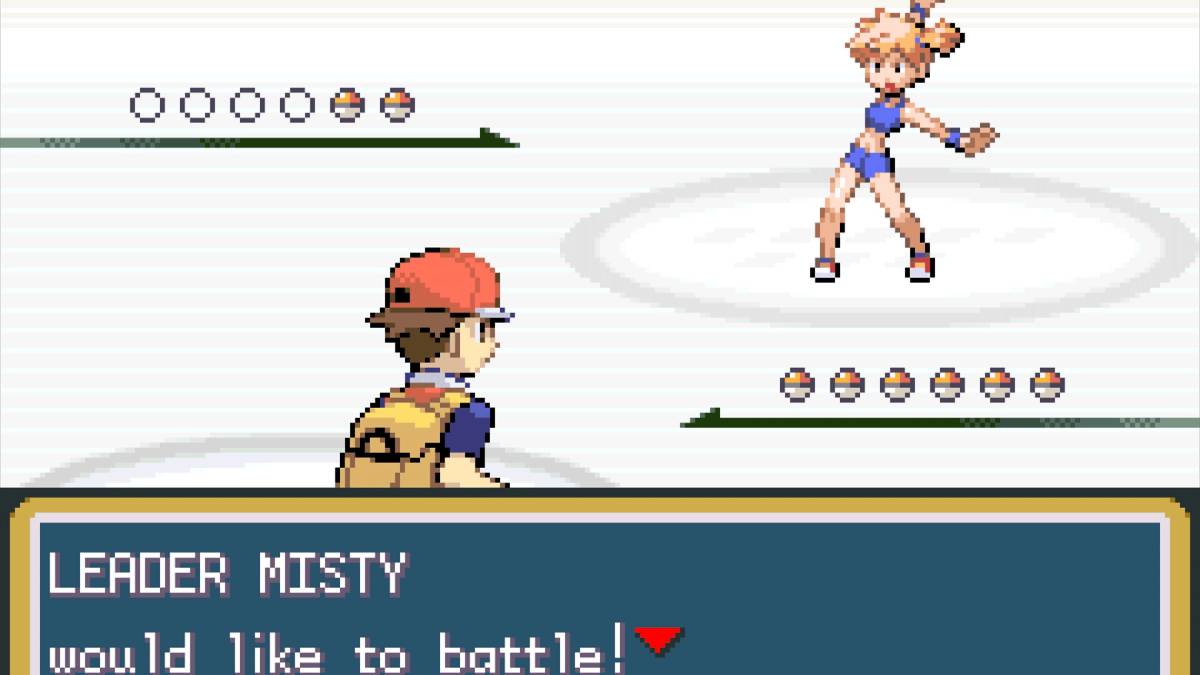
In the case of the Pokemon FireRed and LeafGreen Switch releases, there are a few details about these versions. They will be $19.99 each, and the eShop pages for both are live. These will be the exact JRPGs we remember. However, if you want different languages, like English, French, or Spanish, those will be separate purchases instead of an option you select from a menu in-game. (Italian and Japanese aren’t available in the North American eShop.) The Sevii Islands will be present in-game. If you want to battle or trade other people, it is only going to be possible via local multiplayer, and there is no Pokemon Home support at launch. They are both confirmed Switch 2 compatible.

Here’s the official trailer:

https://www.youtube.com/watch?v=k8c_C4vfUMo

As for the Pokemon Presents 2026, there are fewer details about that. We know the time and date. We know it will be on Twitch and YouTube. Presumably, these two Switch versions of the GBA JRPGs will also appear in a spot during it as a reminder of their release after the stream as well.

Pokemon FireRed and LeafGreen will come to the Switch and be playable on the Switch 2 on February 27, 2026, and they are also available on the GBA. 

The post Pokemon FireRed and LeafGreen and Pokemon Presents Dated appeared first on Siliconera.

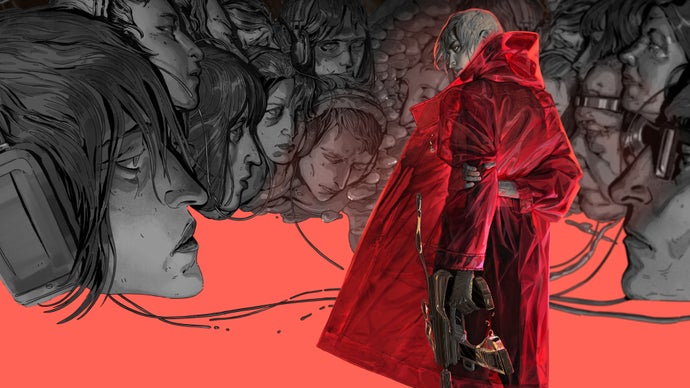
ZA/UM's Zero Parades is Schrodinger's Disco Elysium follow-up, and it keeps yelling at me about communism

"Since the last round of EMTERR ‘stabilisation’, they’ve been trying to force us lifers out," the phantom line engineer tells Zero Parades protagonist Hershel Wilk. "We can’t be fired, not easily, but they can take away the work that made us stay in the first place,” he continues. “I have two options. I could falsify my reports and declare line 9 safe for construction anyway, or I could quit. Either way, the company can’t lose."

Approximately 15 minutes later, I’m talking to a monkey sat atop a pile of goods in a random abandoned house. "YOUR PRESENCE IS WEAK. FATE DELIVERS ME AN UNWORTHY ADVERSARY," it says, before declaring its name to be the KING OF TRADE. Immediately, one of the voices in Herschel’s inner chorus, dubbed Statehood, starts shouting back about needing to defeat the forces of capitalism.

Both of these are scenarios I ran into while playing the Next Fest demo of the spy CRPG finally emerging from ZA/UM, following years of reported bad times and discord at and around the Disco Elysium studio. Both of them feel simultaneously like encounters you could plausibly have run into in the original Disco, and like they could just as easily be pale imitations dressed up to resemble that first game’s much quoted trenchcoat of surrealist detecting.

Read more

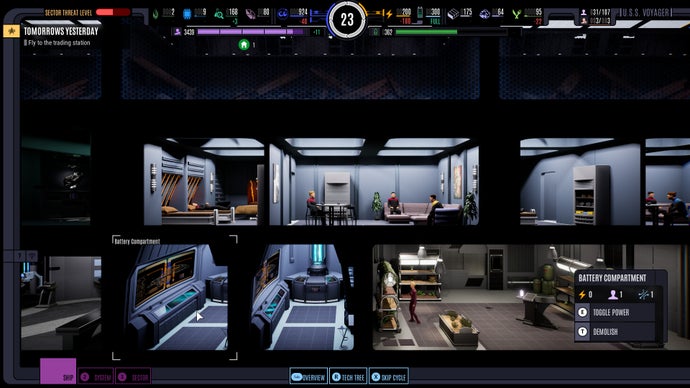
Star Trek: Voyager - Across the Unknown's survival RPG retelling inspires many emotions, but mostly makes me feel old

Back when Star Trek: Voyager – Across the Unknown was announced, we knocked it for offering zappy muzak in place of the TV show’s official theme. Gamexcite and Daedalic have added the theme, now, and I sort of wish they hadn’t. “Help!” I screeched to my bedroom walls, as the rousingly sorrowful opening bars wafted from the speakers like nitrous oxide. “A videogame is making me feel something! It is making me feel like 31 years have passed, and I can still remember Neelix getting drunk on water. I still remember the Doctor’s first words. I still remember blowing up the Caretaker Array rather than using it to insta-warp home.”

Read more

Nintendo Switch 2 owners dodged a price hike at launch, but a shortage nobody saw coming may finally force the company’s hand in 2026

22. Únor 2026 v 22:15

Nintendo Switch 2 owners may have avoided a price hike at launch, but that could be about to change. A major component shortage is now pushing costs up across the gaming industry in 2026. The Switch 2 already launched in June 2025 at a higher price than the original Switch, and nobody wants to see it go up further.

According to Gaming Bible, a combination of tech industry problems looks set to force Nintendo into raising prices for the Switch 2 this year. Accessories for the console have already become more expensive, even though the console itself has stayed at its launch price. Nintendo has been managing manufacturing costs against tariffs, but a new and bigger problem has now emerged.

The main issue is a widespread RAM shortage affecting technology manufacturing right now. AI data centers are consuming huge amounts of memory, and companies that used to supply RAM to console makers are now sending most of their production to large AI facilities. This has left companies like Nintendo, and even the makers of the Steam Deck, struggling to get the memory they need.

The RAM shortage driven by AI demand is making it harder for Nintendo to hold the line on Switch 2 pricing

RAM is not only scarce, but its price has also risen sharply. Nintendo has been absorbing these extra costs to keep the Switch 2’s price stable so far, but it is unlikely they can continue doing this as the year goes on. A well-known leaker called CentroLeaks recently commented on the situation, sharing information that suggests price hikes are on the way.

The problem is widespread enough that it could even affect the release of the PlayStation 6, with rumors pointing to a possible delay as late as 2029. This shows just how serious the RAM shortage is across the entire gaming industry, not just for Nintendo. Nintendo has also been in the news recently after a thumb in one of its ads sparked an AI controversy, showing that the company has had no shortage of attention in 2025.

According to Bloomberg Nintendo is considering raising the price of Switch 2 later this year due to memory shortages and Sony is considering delaying PS6 to either 2028 or 2029.https://t.co/Bax6MimBGp

— Centro LEAKS (@CentroLeaks) February 16, 2026

It is not yet clear exactly how much Switch 2 prices will increase, but the jump could be large enough to make the console difficult for many families and gamers to afford. The current pricing window does appear to be closing, based on everything pointing in that direction right now.

For anyone who has been thinking about buying a Nintendo Switch 2, getting one sooner rather than later may be the smarter move. Those curious about the Nintendo Switch 2 gaming experience may find it worth acting on now before costs rise. The longer people wait, the more likely they are to feel the impact of these rising costs.

Overall, while Nintendo has done a reasonable job of shielding customers from price increases up to this point, the scale of the RAM shortage makes further delays to a price hike seem unlikely. The combination of AI-driven demand pulling memory supply away from gaming hardware and the added pressure of tariffs creates a difficult situation for the company to manage through 2026.

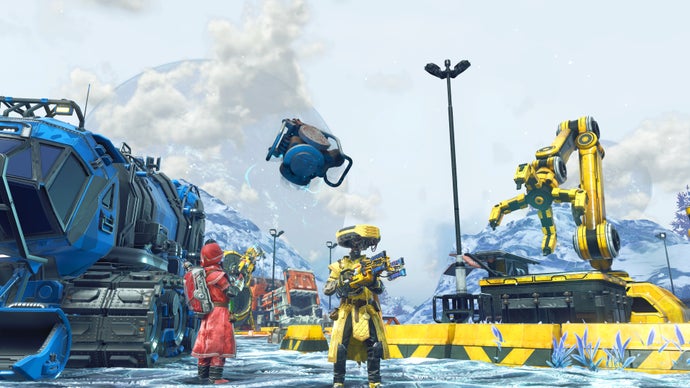
Pretty platformer sequel Planet of Lana II gets a pretty good Steam demo tomorrow, ahead of its surprise March release

Planet of Lana II, Wishfully’s followup to their tremendous puzzle-platformer original, punched our news mouths with a double hit of announcements last week. First, it’s got a release date of March 5th 2026, a mere three weeks from now, and second, there’s a Steam demo coming even sooner, on February 11th. An embargo lift means I’m now at liberty to share my thoughts on said demo, and can report that it’s exactly the same as the demo given to press last year, and as such, you can already read what I said about it here and here. Still, eh? Release date, eh?

Read more

Pokémon Fire Red & Leaf Green are coming to the Switch next week!

20. Únor 2026 v 09:04

Having suddenly appeared on the Nintendo eShop, Pokémon Fire Red and Leaf Green are coming to the Nintendo Switch and Switch 2 next week on 27th February – that’s Pokémon Day, which will have a traditional stream with new announcements, for which this was no doubt meant to be a surprise.

The games are priced pretty highly, set at £16.99 / $19.99, but also have the quirk of having distinct versions released for every language that they were shipped in.

The reason for this, per the eShop store page, is that “Because this version replicates the way the game was originally released, each language version is separate and there are no in-game options to change the language.” That’s an unnecessary complication for modern gamers, and honestly doesn’t make too much sense, but it hopefully won’t catch too many people out.

These Game Boy Advance remakes of the original game are rare enough to be prized possessions amongst game collectors, if you can find an original cartridge – it will be a great way to mark the Pokémon franchise’s 30th anniversary, that’s for sure.

The remakes updated the originals with the graphics of the GBA era – also making it so that Green was the pairing to Red, instead of Blue as it had been for the original western release – and added the Sevii Islands to visit, while bringing some other improvements like a contextual tutorial, save game recaps, and ties to the other Game Boy Advance and GameCube Pokémon games. Fire Red and Leaf Green also came with a special wireless adapter for local link play, and since wireless is now built into everything you own, this will also be supported on Switch.

Most importantly for the here and now, these games will have support for Pokémon Home added to them, so Pokémon caught in this game can be brought through to the newer titles.

Review: Revolgear Zero (Nintendo Switch)

22. Únor 2026 v 17:25

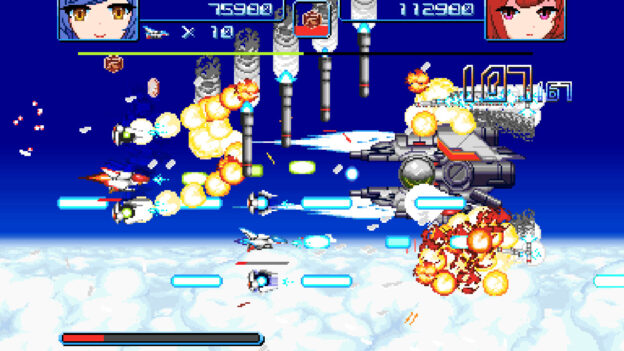
If you’re looking for speedy shmup action, Revolgear Zero has you covered. It offers a solid variety of enemies and weapons in which to take them down effectively. Co-op play makes the game even more fun, but glitches prevent me from giving as broad a recommendation as I first thought.

What little story there is doesn’t really get a proper mention until the closing credits (evidently, there are six endings). All you have until then is the cryptic “Grant a new legend to the cosmic warriors who survived the fiercest  battles.” But when I was asking myself what was happening, I also had to remind myself that this genre doesn’t need a coherent tale attached to it.

Revolgear Zero has four levels of difficulty, covering a wide range of gamers. Whether you’re looking to ease your way in or you want threats to the extreme, the game has you covered. As somebody who was reaching for his glasses and pausing to crack his knuckles, after a few minutes of play, guess which difficulty I started with?

Difficulty assistance comes in the form of co-op. I appreciate this, as a surprising number of shmup games overlook co-op for unknown reasons. But beyond an aid to the challenge, it’s just so much more fun flying, shooting, and strategizing with a buddy. So much that I’d add or subtract half a point to my final score depending on whether you’re going solo or with a friend.

I touched on enemy variety briefly in my introduction. You’ll see mechanical ones (large and small), organic threats, and even the stages themselves, soon proving a potential danger. Some scroll both vertically and horizontally, with portions of the background damaging you with a touch. At certain points, you will be less focused on shooting than on finding a safe spot to camp out and wait for your opening.

As far as the weapons, I won’t waste time trying to describe each in my limited word count. Firstly, because many are variants that most shmup fans are already familiar with. Secondly, because half the fun is experimenting with different combinations and loadouts. It’s one of the game’s strengths, figuring out your own favorite combos, which likely will differ if you’re playing alone or with a friend. They also change depending on the stage, whether you’re in more open areas or tight spaces. Earning weapon upgrades (collect every coin you can) and being able to flip between them on the fly can be the difference between victory and a game over.

Visually, Revolgear Zero starts a tad bland in the sky, but gets much better the further you advance. It introduces a much greater variety of colors, different effects, parallax, and more. It’s not a cutting-edge look by any means, but it is a pleasing one. The music rocks, complementing the graphics to deliver an aesthetically pleasing audio/visual package. There’s no slowdown either, even when the screen is filled with bullets and coins.

Unfortunately, there are game-crashing bugs. More than once, the game shut down after finishing a stage. Once, I was prompted to share the info with Nintendo. The second one was the generic “There was a problem, and the software needed to close.” Revolgear Zero is still a good release, but my recommendation comes with caveats. It’s not a must-own.

Revolgear Zero goes beyond the token shoot’ em up in many ways. Its weapon system has depth, and what it lacks in length, it makes up for in replayability. It’s a fun game to play solo, and even more fun in co-op. I’ll keep an eye on Bikkuri Software and hope their next Nintendo release will have its glitches ironed out.

The post Review: Revolgear Zero (Nintendo Switch) appeared first on Pure Nintendo.

Review: Dark Auction (Nintendo Switch)

20. Únor 2026 v 15:02

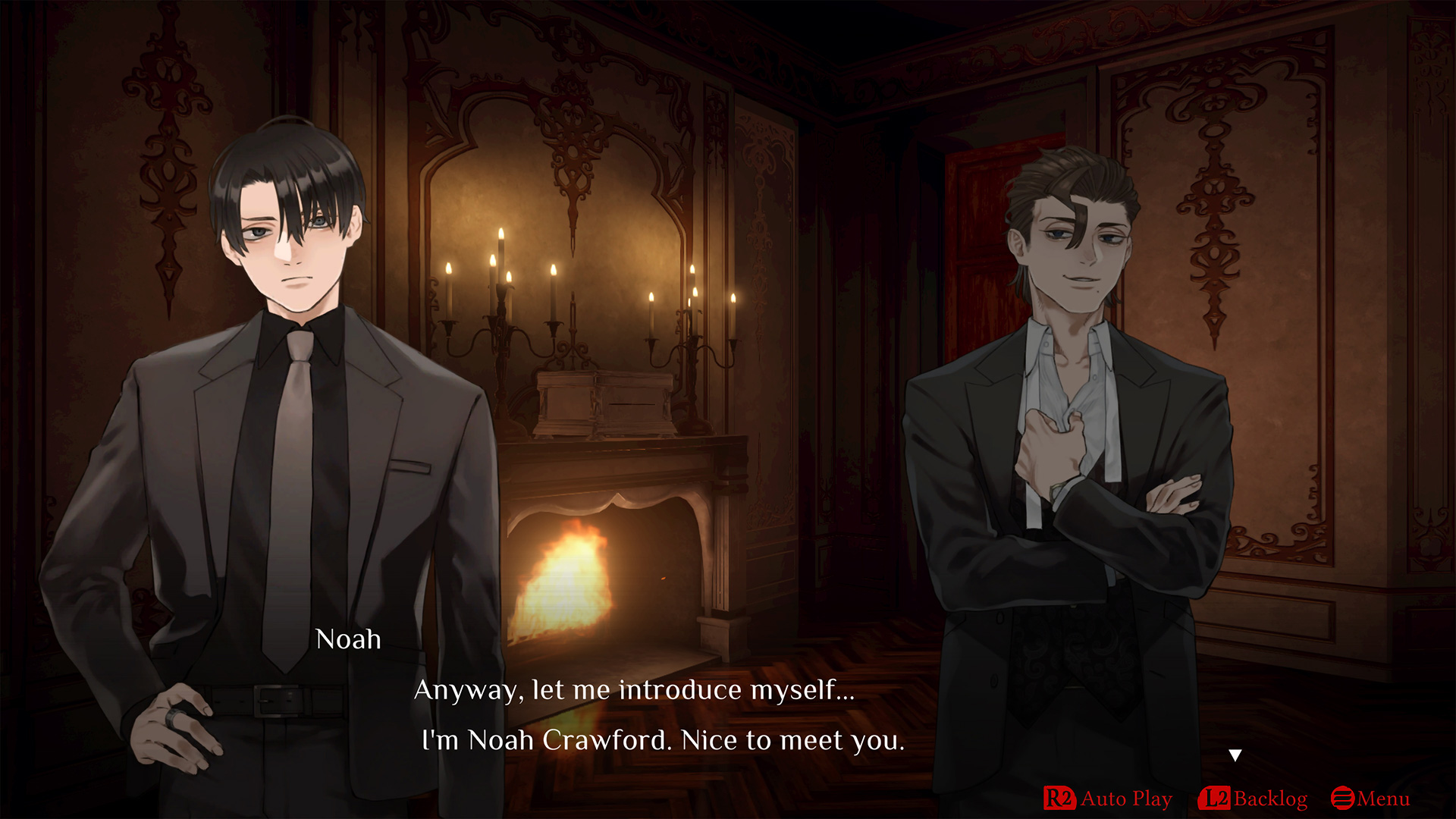
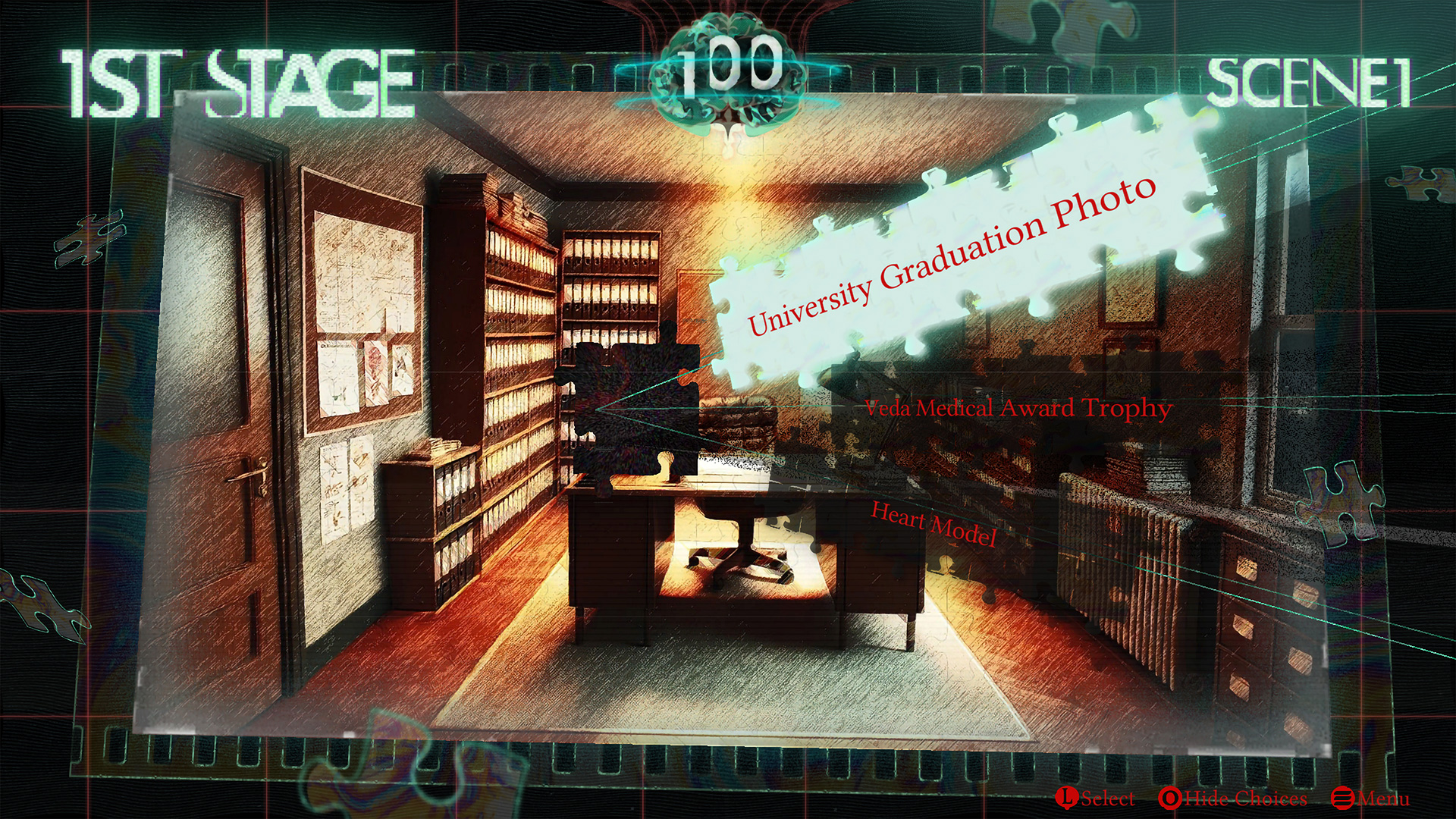
Dark Auction is a point-and-click adventure game. You play as Noah, a young man who, due to his father’s unusual lifestyle, is led to a mysterious castle in which a secretive organization is hosting an auction. Upon entering the castle, he finds himself trapped and sworn by document to serve the auctioneer’s orders. The game consists of memory-based puzzle games and dialogue options, as well as a lot of reading. Parts of it feel more graphic novel than point-and-click, but if you keep with it, it’s pretty good.

Dark Auction’s story is the most compelling part of the game. The playthrough is fun, but heavily controlled, as most of it involves moving around only to speak with characters or to explore/interact with objects.

The story, however, keeps things interesting. It takes place after WWII, mentioning a “Dictator X,” and placing emphasis on how it’s affecting the lives of the generations following it.

Dark Auction starts with Noah Crawford heading to the castle to search for his dad, Leonard. We find out that Leonard is known for his mysterious lifestyle and interest in auctions and history. However, when Noah arrives at the castle, he’s met with his father’s death, as well as a million questions, none of which are answered right away. Instead, Noah finds himself in conversation with “Parrot Man” (who is, of course, a man with a pigeon head). He makes it clear that he’s the Auctioneer, and that whatever happened to Leonard could just as easily happen to Noah. It’s through his threats that Noah agrees to stay for the auction, working under Parrot Man and following his orders.

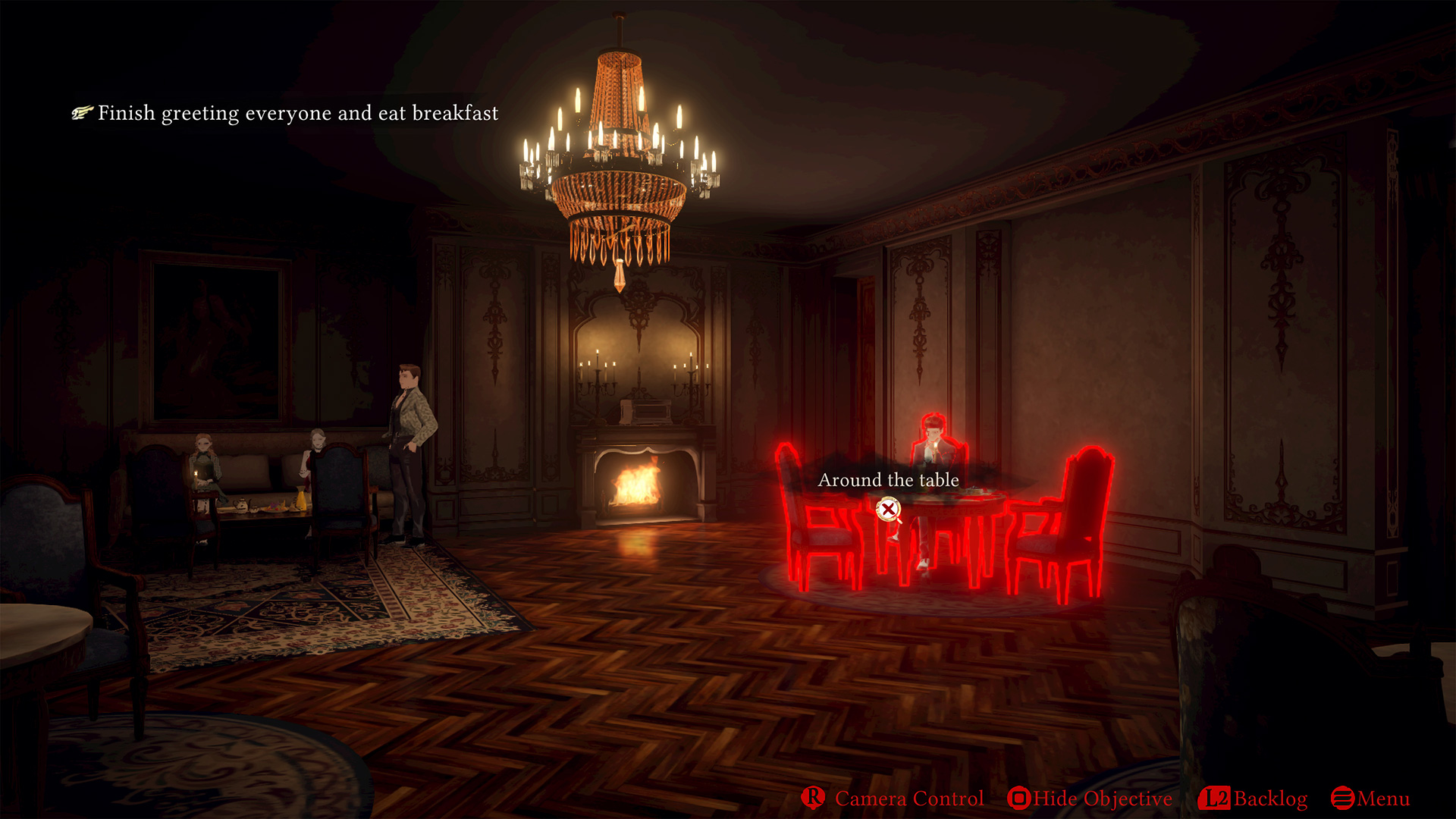
While there, Noah meets a group of characters, all of whom are there for the auction for their own reasons. There’s a young girl with bright blue eyes, an older woman who’s an actress, a doctor, a librarian, a nobleman, and another man who’s more built and athletic. Noah’s first order is to get to know each of the guests.

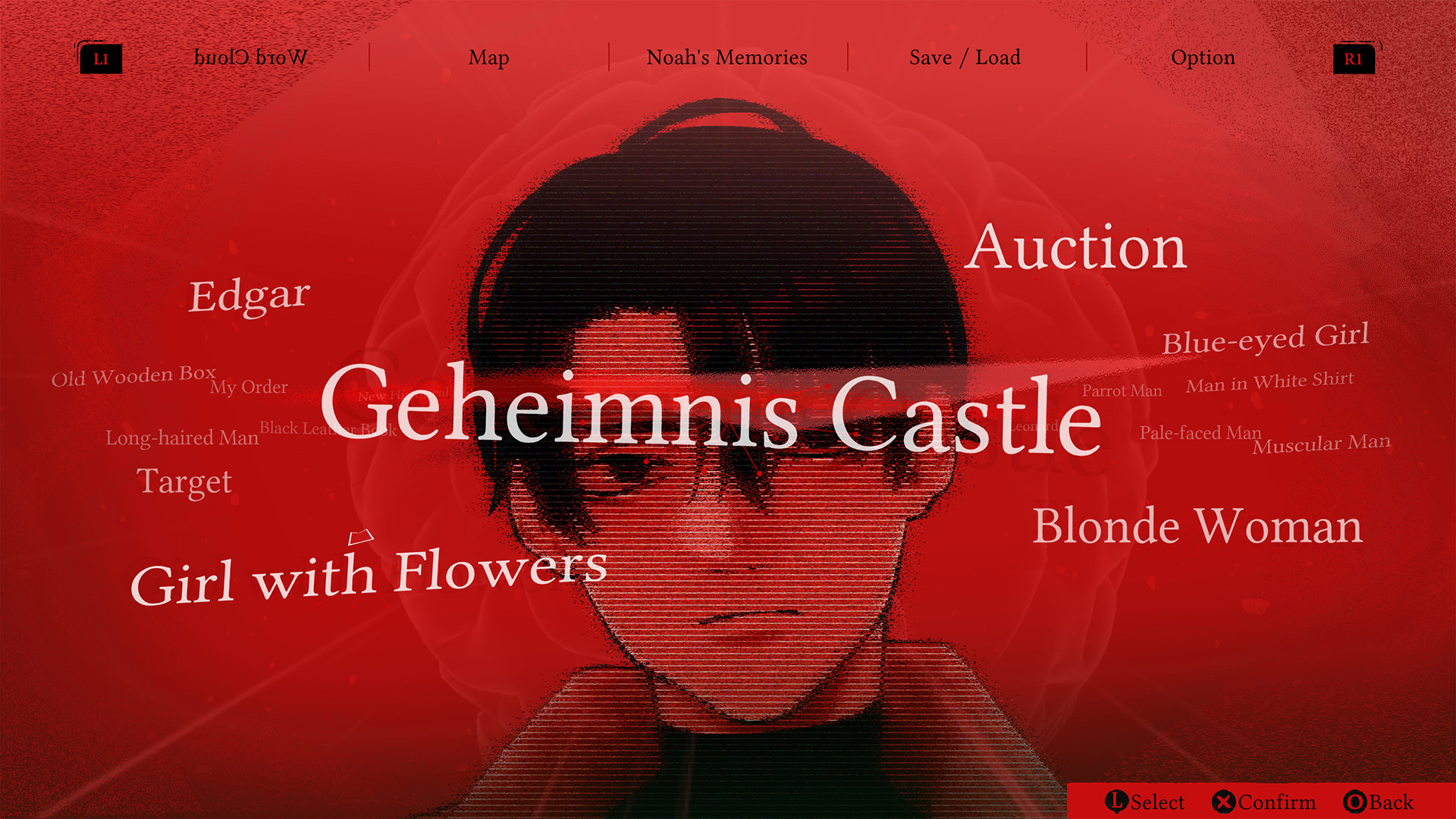
As he does so, more issues arise, and more orders are made. As the story progresses, you’ll find yourself being quizzed on the knowledge you’ve gained. This happens first after the prologue, after your first night at the castle. Before going to bed that night, Noah wants to keep track of what he’s learned by asking himself rhetorical questions that you answer. This happens again after you’ve met all of the quests. The Parrot Man asks you if you recall their names. However, if you ever find yourself stuck, there is an option to go back to Noah’s memories (an option in the menu) to figure out the answers to some of the questions.

The game carries this energy on as you continue to unlock the castle and auction’s secrets, as well as your dad’s. You continue to explore the castle, you continue to talk to guests, and you continue to complete orders and solve puzzles. As you continue to play, you’ll also begin to notice that it’s quite hard to mess up in the game. A lot of Noah’s dialogue will lead you to the right conversation, no matter what choice is made, and a lot of hints are dropped in the game.

You also don’t have much freedom to move away from where you need to be. This doesn’t present much challenge, instead creating a relaxing environment in which you can really follow the story and appreciate its creativity and depth.

Dark Auction is also very well written and full of music and scenery that help add to its eerie and confusing atmosphere.

Playing Dark Auction feels like playing in an escape room, but with more mystery, suspense, and oddities. It does a great job at building its story, and it answers most of the questions it presents. It’s a perfect game for those who enjoy easy controls and an in-depth narrative, taking the best parts of a graphic novel and combining them with the simplicity of a point-and-click adventure.

The post Review: Dark Auction (Nintendo Switch) appeared first on Pure Nintendo.

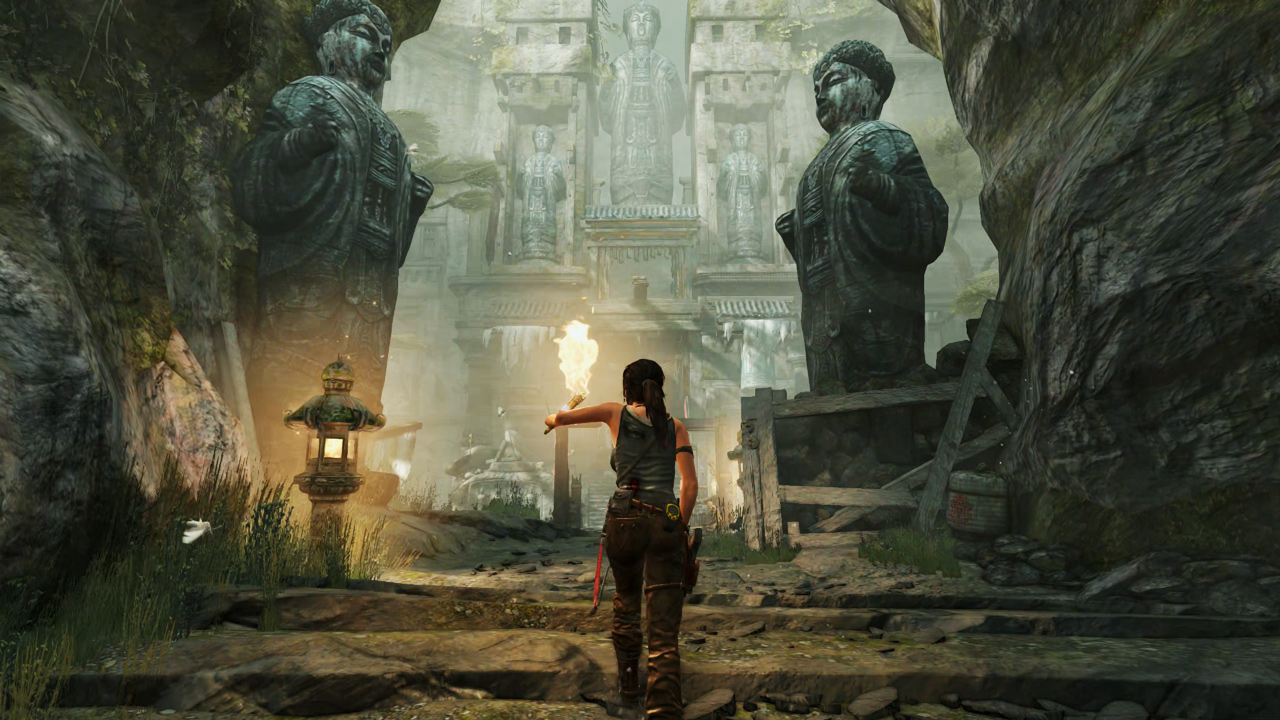
Review: Tomb Raider: Definitive Edition (Switch 2)

20. Únor 2026 v 14:26

Straight away, there are multiple things I don’t like about Tomb Raider: Definitive Edition. I didn’t like them when I reviewed the Macintosh release in 2014, and I don’t like them now. But with the initial shock of Lara’s dark turn a decade out of the way, it’s easier to enjoy the game for what it is. (And it’s why we’re publishing a review so far behind its November 2025 release.)

Should I get my personal gripes out of the way first? This is not a Tomb Raider game, at least not in the classic sense. The series reboot from Crystal Dynamics and Square Enix removed pretty much everything that made Lara unique and made her…well, “gritty” is probably the official term, but aren’t all action gaming heroes gritty?

They also removed the tombs, mostly. The original games (most of which are now available for the Switch) were set in magnificently constructed tombs that tested your dexterity and puzzle-solving skills much like a classic Zelda dungeon. Sure, there were tigers and dinosaurs and bats to kill along the way, but the action mainly served to break up the challenging puzzles. That’s been flipped in Tomb Raider: Definitive Edition, where the tombs have been relegated to sidequests. You stumble upon them in the jungle and spend a few minutes inside, but they feel like they’re getting in the way of the game instead of being the game. They’re like the shrines in Breath of the Wild.

All of this is driven by a coming-of-age story about archaeology graduate Lara and her desire to sail into the Dragon’s Triangle to search for the lost kingdom of Yamatai. This is one of those islands protected by malevolent weather patterns. They tear up Lara’s ship, scattering the survivors and forcing Lara to reunite with them and find a way off the island. I’ll leave the rest of the story to your discovery, but will say it’s all pretty hammy (and acted out accordingly) in the way that makes some of those made for Syfy Channel movies so fun to watch.

So, I’m clearly down on the development decisions. But those are all a matter of personal preference, and they don’t really affect the gameplay, which is quite thrilling when it kicks into gear.

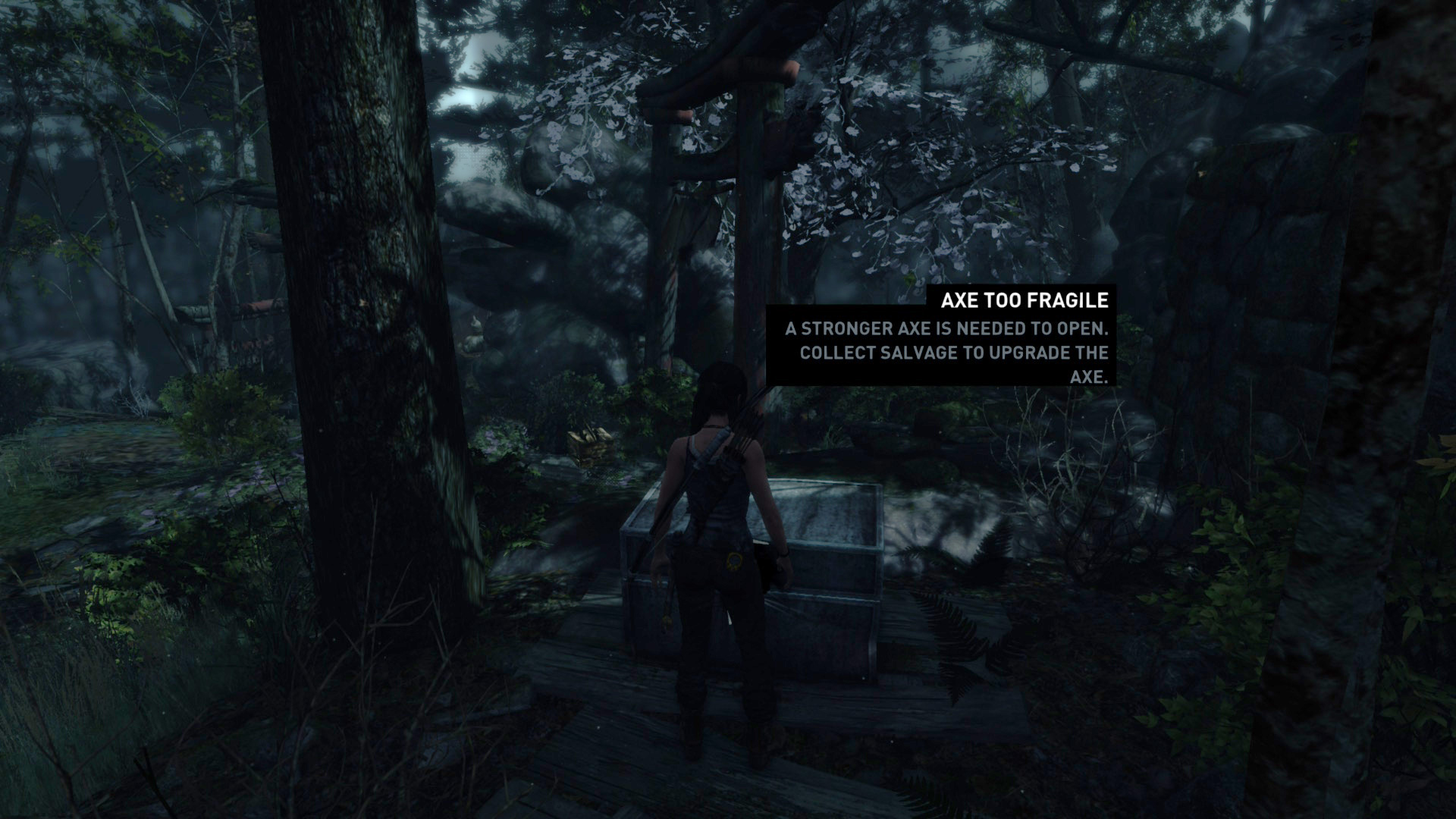
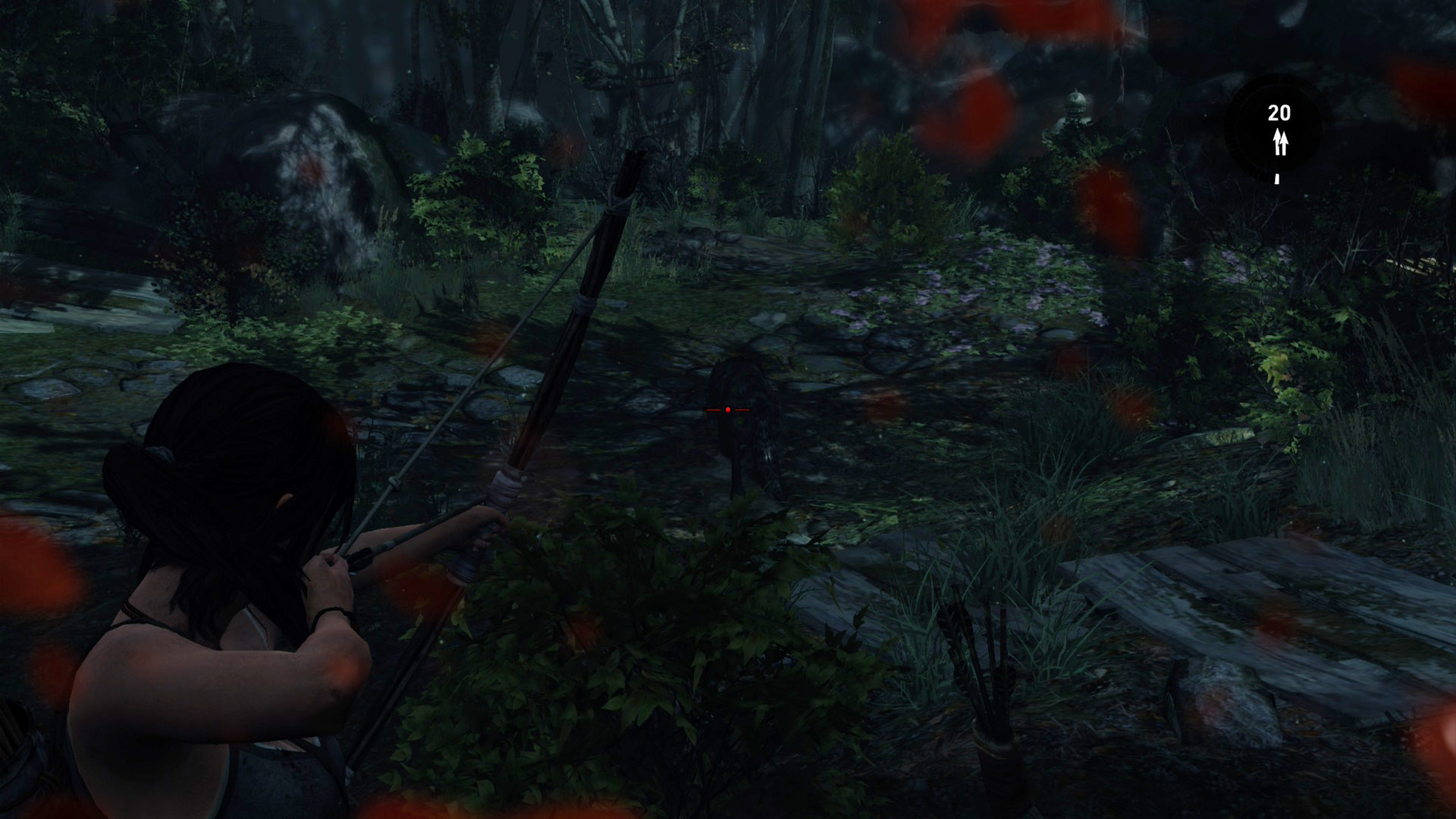
Tomb Raider: Definitive Edition is billed as an action/adventure, but the word “survival” should be included. From the very start, Lara has to hunt for food, craft her own tools, and get up from falls that, in an actual human, would break multiple bones and deliver concussions that even the NFL couldn’t ignore. In the aforementioned tombs, you often can’t locate the hidden treasures because you haven’t yet developed the right tool or skill to access them.

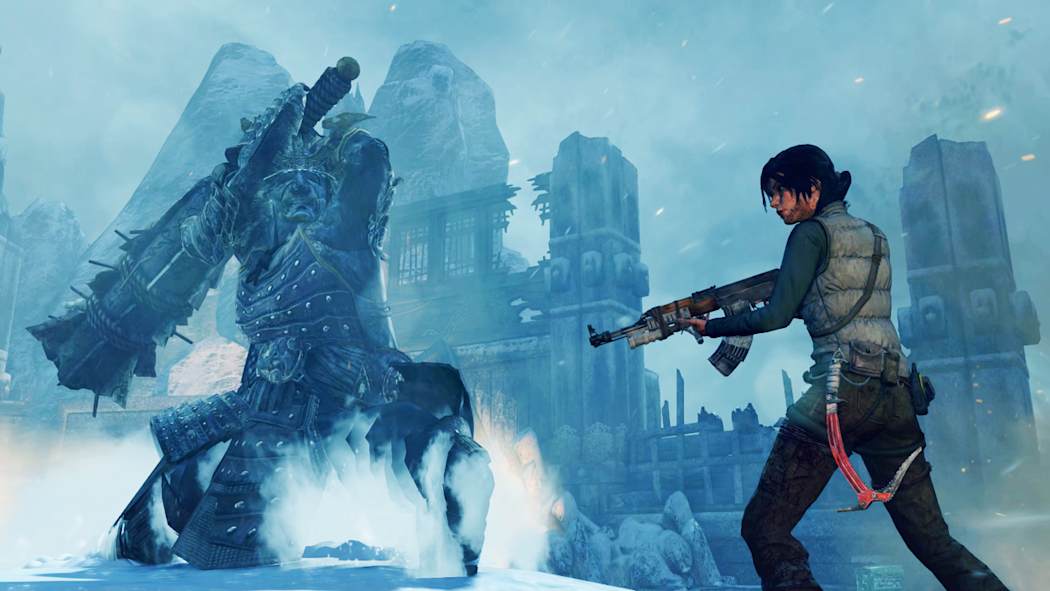
Docked mode screen capture adjusted for clarity.

Instead, you follow Lara through the plot points and action sequences. These are fun, and often quite intense; a solid mixture of combat, button mashing, button timing, and stealth. Everything moves along at a great clip when it’s not being slowed down by cutscenes and material grinding. And although every plot twist is met with a “well, of course,” the game still provides some segments of incredible impact. In one segment in particular (and if you’ve played the game, you know to what I’m referring), the gameplay, tension, cinematography, music and, yes, acting, are so expertly delivered that ​​it’s likely to stick with you for as long as you’re playing games. It’s moments like this that helped me look past what I wanted the game to be and to appreciate it for what it is.

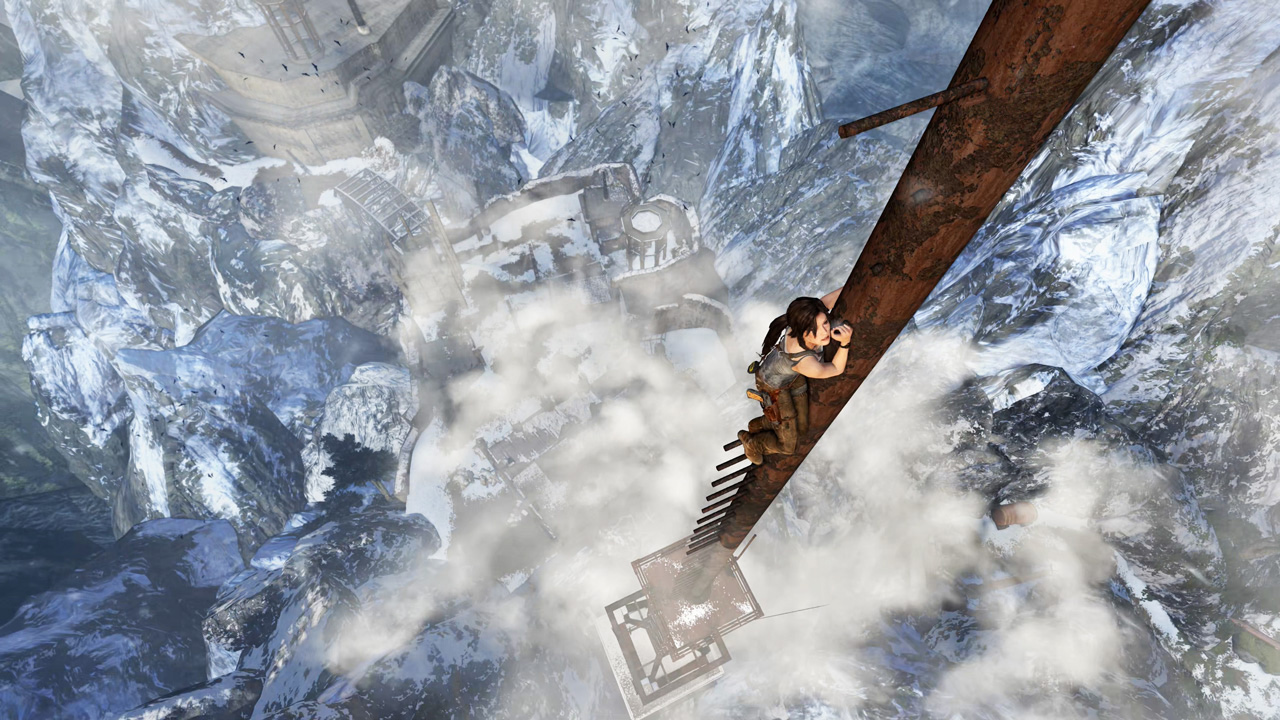
Having played this game before, I already knew all of this. So, what does the Switch 2 bring to the table? Not as much as I’d hoped. The game plays at 60fps, but the visuals themselves still feel like they’re a generation behind. This is exacerbated on the original Switch, where 30fps is the best you’ll get. These benchmarks on both systems are achieved in handheld mode, too, which is fantastic. Maybe that’s why Aspyr didn’t take full advantage of the Switch 2’s hardware to give us visuals closer to the other modern console releases.

What they did take advantage of were gyro and Joy-Con mouse controls, neither of which add anything to the gameplay. The mouse functionality actually interferes with it, I’d argue. The game is much easier to play with Pro Controller, so don’t even bother taking the Joy-Con off of the system.

Docked mode screen capture adjusted for clarity.

Aspyr also made the great decision to aggressively price the game; both the Switch and Switch 2 version of Tomb Raider: Definitive Edition are only $19.99. Oddly, there’s no upgrade price between the two. Considering the Switch 2 version really just offers better framerates and enhanced visuals, there’s therefore no reason to get it again if you’ve already played it on the Switch.

But it is a game worth playing if you never have (or haven’t since the original release). Lara Croft purists such as myself may be put off by this… “modern” version of the gaming icon? “Gritty?” “Vulnerable?” Pick whatever term you want from Screenwriting for Dummies, I suppose. It may define the character, but it doesn’t define the gameplay. For that, “entertaining” is an apt choice.

The post Review: Tomb Raider: Definitive Edition (Switch 2) appeared first on Pure Nintendo.

Review: Broken Sword – Shadow of the Templars: Reforged (Nintendo Switch)

19. Únor 2026 v 12:01

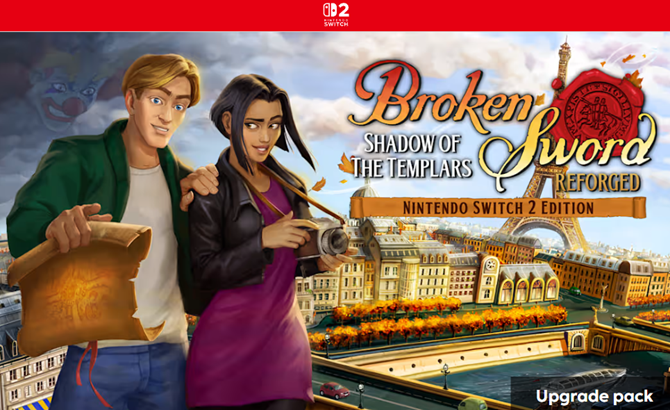
Late ’90s Paris—an auspicious time and starting point for my all-time favorite globetrotting graphic adventure: Broken Sword. This Reforged version is “substantially enhanced,” with improvements varying in quality, especially for purists like myself. But with options to play the original (and, in my eyes, virtually flawless) game, it makes any of my gripes inconsequential. Reforged offers the best of both worlds.

I readily disclaim my nostalgia for this game, having first played it in my late teens on the Sony PlayStation. Despite some long load times, that 1998 port introduced me (and other console gamers) to what would become a long-running series. Nintendo players may know the game from even later ports on the GBA (see my retro review in PNM Issue #32) or the Director’s Cut versions on DS and Wii. The latter were popular with those unfamiliar with the original game and just getting into the genre. That’s much less so with existing fans (for reasons too numerous to discuss here), but Revolution Software has acknowledged this, excising those weaker updates to focus on the superlative original.

Broken Sword is a story-driven game with an explosive start, literally. There is a bomb blast at a sidewalk cafe, and American tourist George Stobbart gets caught in it. His early motivations may seem limited (not unheard of for this genre). Is it a sense of justice stemming from his law studies and/or survivor’s guilt? More likely, he’s just an inquisitive man on vacation looking for adventure without an itinerary or restrictions on his time and expenses. Being able to partner with a pretty photojournalist certainly helps, too.

Nicole Collard is your non-playable support—a shutterbug George admires and builds chemistry with as the adventure progresses. While she may seem passive (especially compared to George, who is actively traveling historical and cultural crossroads), she has some fun surprises up her sleeve that I won’t dare spoil for first-time players. The relationship between her and George builds organically.

Their initial search to learn more about the deceased cafe victim and his killer (disguised as a clown) soon leads to a mystery whose origins lie in the Middle Ages, the scope and threat of which are hard to imagine. The Knights Templar make for a popular topic in books, movies, and more now (and rightly so), but decades ago, not as much. Broken Sword was a pioneer that encouraged many gamers to learn more about history.

Truly tying all these threads together is the plethora of side characters (and George’s interactions with them). There is no such thing as a lesser NPC in Broken Sword, as even those of limited importance still leave a positive impression. Even seemingly mundane exchanges lead to entertaining, often funny, and memorable results. It’s one of the reasons the Director’s Cut faded after its honeymoon period, as gamers let the devs know these nonessential interactions were, in fact, essential insofar as their contribution to the game’s charm and challenge. Are you showing the greasy tissue you found in the sewer to every character you meet? If not, you’re missing out.

The character vocals impressed the heck out of me in my younger years. Now I better recognize some voice actors in dual roles and their stereotypical accents. Nonetheless, I’m still impressed. Highlights include Rolph Saxon as George and most of the Irish dialects. Modulation stands out, and with subtitles on, you won’t miss a beat. Of course, the vocals are only part of the audio package. The late Australian composer Barrington Pheloung’s orchestral score lives on, chiming in at leading points during the cinematic adventure, making it even more music for your ears. My lone musical issue (though small enough to have no impact on my score) is that the fiddle player in the Irish pub seems slightly off, with overly loud music and choppy transitions between tunes. Some of this may simply stem from growing up with the PlayStation version, where the character got removed (he gives no dialogue). You can do a quick settings adjustment, though, and perhaps a patch will polish this or grant the option to remove it entirely.

But beyond the audio, it’s the game’s visual presentation likely to attract the attention of most players (as well as the most in this review). The original Don Buth Studios art has been redrawn in high definition, and you can flip between both styles instantly with the tap of a button. The joy I get from combing through each screen and studying every change, no matter how small, might be hard for many to understand, but it’s real all the same. Reforged is at its best when staying faithful to the timeless beauty of the original, making subtle enhancements feel natural. A few of the earliest examples are the animated intro, which has never looked better. Now, some cars travel along the city streets, which feels right. Another is the cafe where the explosion took place. While always appearing blown up, it now has even more damage at the site where the bomb sat. Again, it feels right. One more is the character of Flap, described by George as a “gorilla” gangster. He’s gained a few inches to better match his brawny description.

Reforged is less successful when it deviates more than is needed from the original. For example, while I appreciate the autumn foliage lining the block of Nico’s apartment, other color choices in the redrawn scenes feel more like “Paris in the Spring.” The lighting can also be too much or too little—the Hotel Ubu chandelier in one instance and the sewers in another. In the effort to create realism, some details and grittiness that shone through in the original get lost. The redrawn Crune Museum (a singular instance, thankfully) barely resembles the original, especially during the daytime scenes. Warm colors and textures are replaced by something best described as if Sam’s Club built a museum in their Tire & Battery Center; it’s an odd choice. 

Thankfully, these gripes are ultimately nullified with the inclusion of the original presentation accessible on the fly (something the Director’s Cut predecessor lacked on Nintendo hardware). Of course, less experienced Broken Sword players, like my wife, might prefer the new version, and I understand that. Heck, I often prefer the new version myself. But don’t hesitate to compare and tinker with settings, especially if playing in handheld mode, where the original shines brightest.

The puzzles reflect the time of the original release. In 1996, the percentage of the global population having cell phones and Internet access was small enough to be counted on one hand. Calling from public telephones and getting info from print is George’s way. You’ll manage a good-sized inventory and talk to everyone you meet about everything you can think of. Those coming from the Director’s Cut version may find it jarring to have more options to work with, but the extra challenge also brings extra charm. However, I’d think long and hard about picking the “Story” experience over “Classic,” at least at the start. Broken Sword – Shadow of the Templars: Reforged having the option is great, but will you soon regret the hints and hotspots? 

You can die attempting to solve certain puzzles, but autosaves (and manual ones) lessen having to replay too much. Thankfully, the cursor works very well, even at the default setting, which is paramount for some puzzles that require quick timing or can lead to death. You can also play in handheld mode with a capacitive stylus. Impatient gamers may welcome the option for speedier movement. That said, except for the previously mentioned puzzles built around quickness, Broken Sword isn’t a fast-paced game and is best enjoyed at a pace to savor everything it offers. Oh, and did I mention among point-and-click games, Broken Sword has a puzzle that is the GOAT?

Broken Sword – Shadow of the Templars: Reforged respects the fans who helped make it a commercial success. But it also invites new players to discover the game (and, by extension, the franchise) that, for many, has become the genre leader. Don’t be turned off by the awful menu icon, the spoiler screenshot in the listing, or any other marketing blunders. The game itself is outstanding.

It’s the compelling interplay of thrilling story, memorable characters, enjoyable puzzles, and stunning presentation that ensures Broken Sword – Shadow of the Templars: Reforged will become a top choice for a new generation of players. Let’s hope the sequel (and the rest of the series) finds a home on Nintendo hardware. It’s 2024, and my game of the year is a graphic adventure first released in 1996. Go figure.

Switch 2 version notes:

Peruse the eShop, and you’ll also see Broken Sword – Shadow of the Templars: Reforged – Nintendo Switch 2 Edition. The full game is $29.99, which remains a fair deal. But, if you already own the original, the DLC is just $4.99 ($2.99 on sale). Hard to complain about that.

But what are you actually getting if you go the Switch 2 route? Well, you’re getting an already great-looking game, now 4K docked or 1080p in handheld mode. These are pretty sweet upgrades, and I was able to pick out some new details that I overlooked last time.

The other new addition is mouse controls. Given that’s how Broken Sword was first conceived, these are natural. Comfortable and working as expected, their integration serves as an example for other Switch 2 games.

The post Review: Broken Sword – Shadow of the Templars: Reforged (Nintendo Switch) appeared first on Pure Nintendo.

Review: Maid of Salvation (Nintendo Switch)

17. Únor 2026 v 15:32

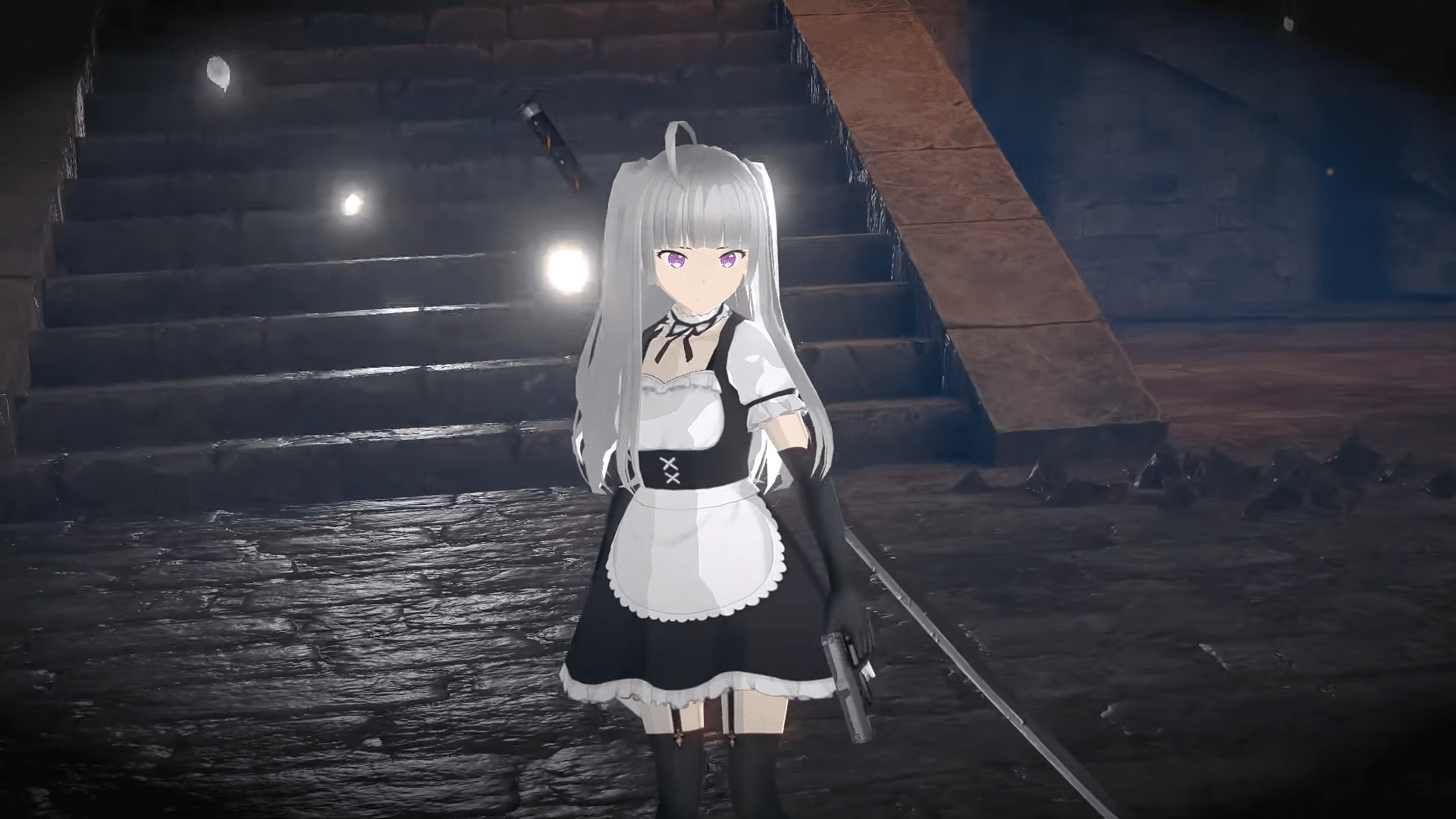
When your hotel maid carries a five foot sword in one hand and a gun in the other hand, don’t forget to tip! In the case of our game today, you don’t really have anything to worry about. Yes, the main characters are maids in Maid of Salvation; as in young female and as in wearing old-school, black and white outfits. The weapons they wield are for destroying monsters, however, so you’re safe (unless you’re some sort of malevolent being).

Welcome to purgatory. Your job as one of the Maids is to guide fallen souls (fiends) to a state of purification so they may continue their passage to the next plane of existence. It is also your job to dispatch various monsters and fiends which have fallen so low they can’t be purified (hence the big sword and the handgun). The game calls your first blade the Maid’s Katana even though its size looks more like a Nodachi, but we’ll let that debate go and just accept that it looks cool and does its job with style. The game is a variation of a dungeon crawl with all the typical elements: finding your way around a mazelike level, encountering monsters (and dispatching them with extreme prejudice), collecting valuable resources, levelling up, gaining new skills, facing off against Bosses, and so on.

Movement and weapon controls are a mix of sticks and buttons for attacks, parries, and jumps. You will want to become as fluent with this as soon as possible, unless you like dying frequently. One thing I found to be different from most default settings is the use of the A and B buttons in menus—B is select and A is exit. This may be backwards from most games, but it isn’t a hindrance; you may accidentally exit an option, but you can get back to the decision point easily. The left side buttons are used to scroll through your list of stuff (left or right) and to use the current item (up button). Be careful when using these buttons as you might accidentally consume a potion instead of moving your character about as with other games.

The game does have a story to follow, but it is a bit anemic. There are some tropes you will have anticipated, and the delivery is, shall we say, less than spectacular. Most of the story will be communicated in text, the spoken portions are mostly sighs, grunts, and giggles. It isn’t horrible, but it seems there wasn’t a lot of effort put into this aspect of the game. The story can be mostly ignored in favor of running around and killing monsters, but you may find a few useful bits of information if you pay attention.

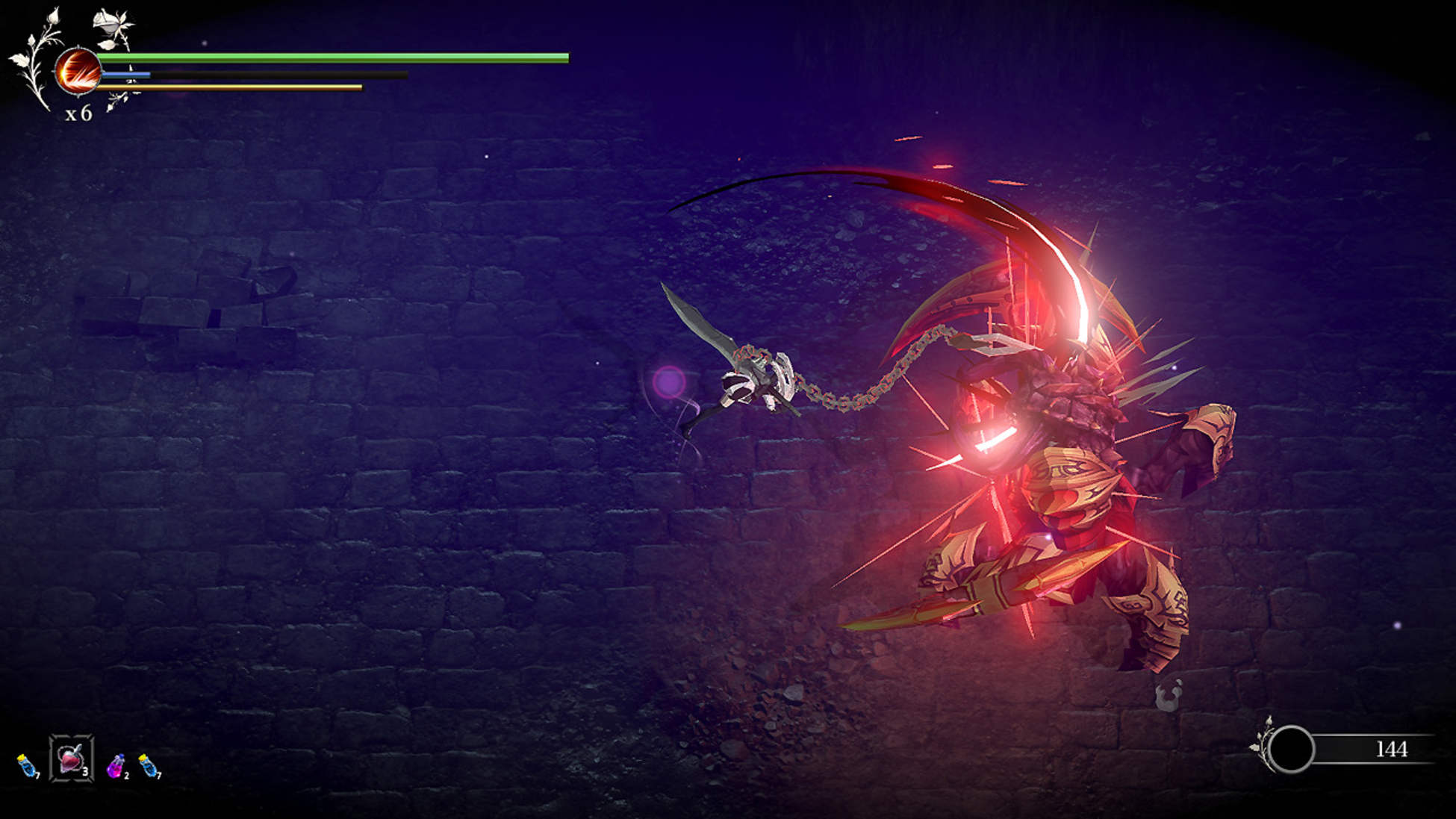
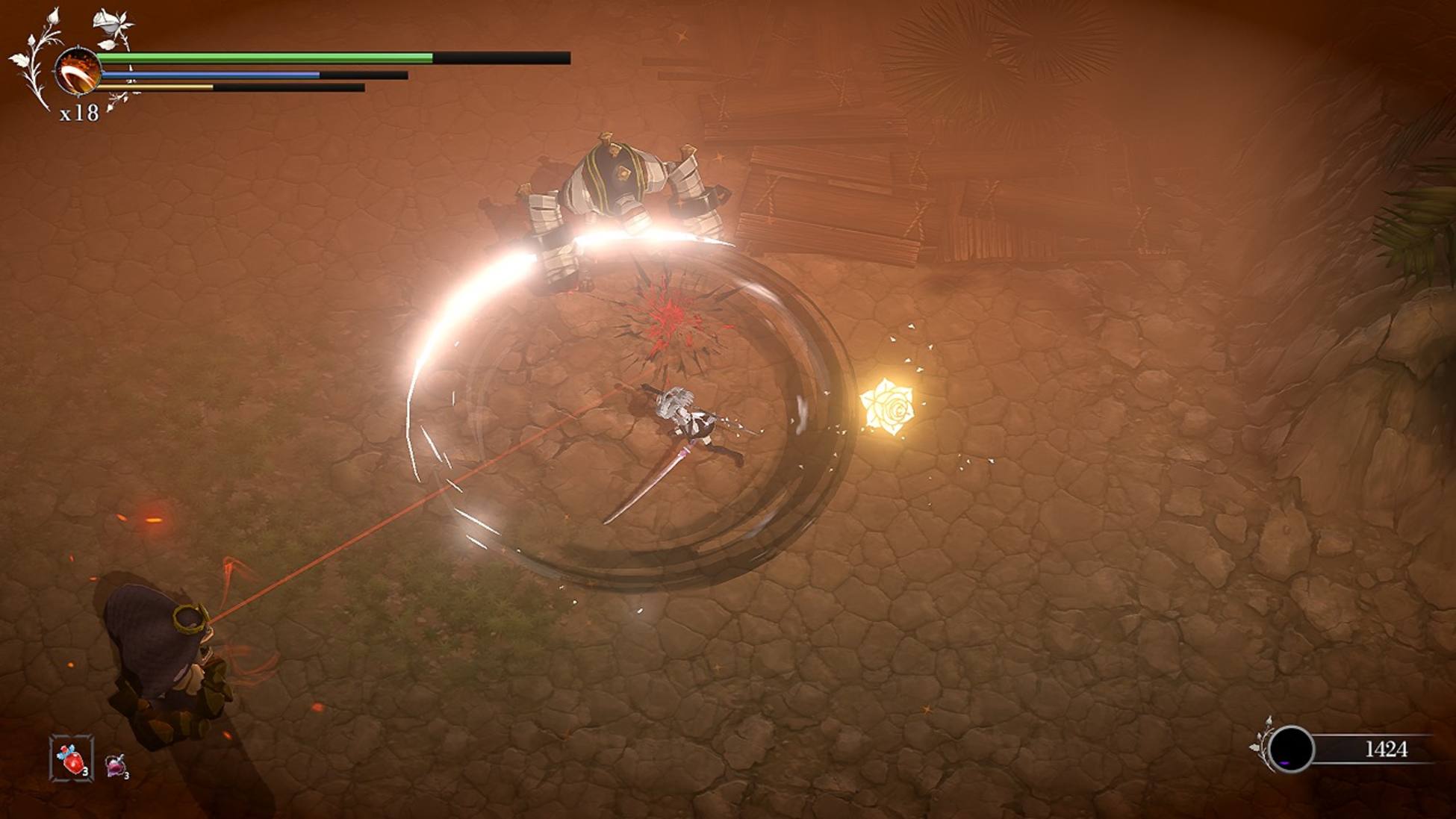
The visuals are a mixed bag. There are some elements which look good, and the combat sequences have some flair, but this is muted by the camera viewpoint. The camera is stationed well above your character in a top-down, isometric approach, so you never get a lot of detail in the visuals. The developers came up with some interesting monsters and character designs, but everything is far enough away from the camera that the full effect is lost in the distance.

There are some conversation encounters and you can see a close-up of some of the other characters. Here, the rendering is well done and easy to see. The various Maids in the Sanctuary all look very similar, but, as with any unified organization, this is to be expected. Whether this minimal level of distinction is good or bad is a matter of personal preference, so I’ll leave this in your capable hands.

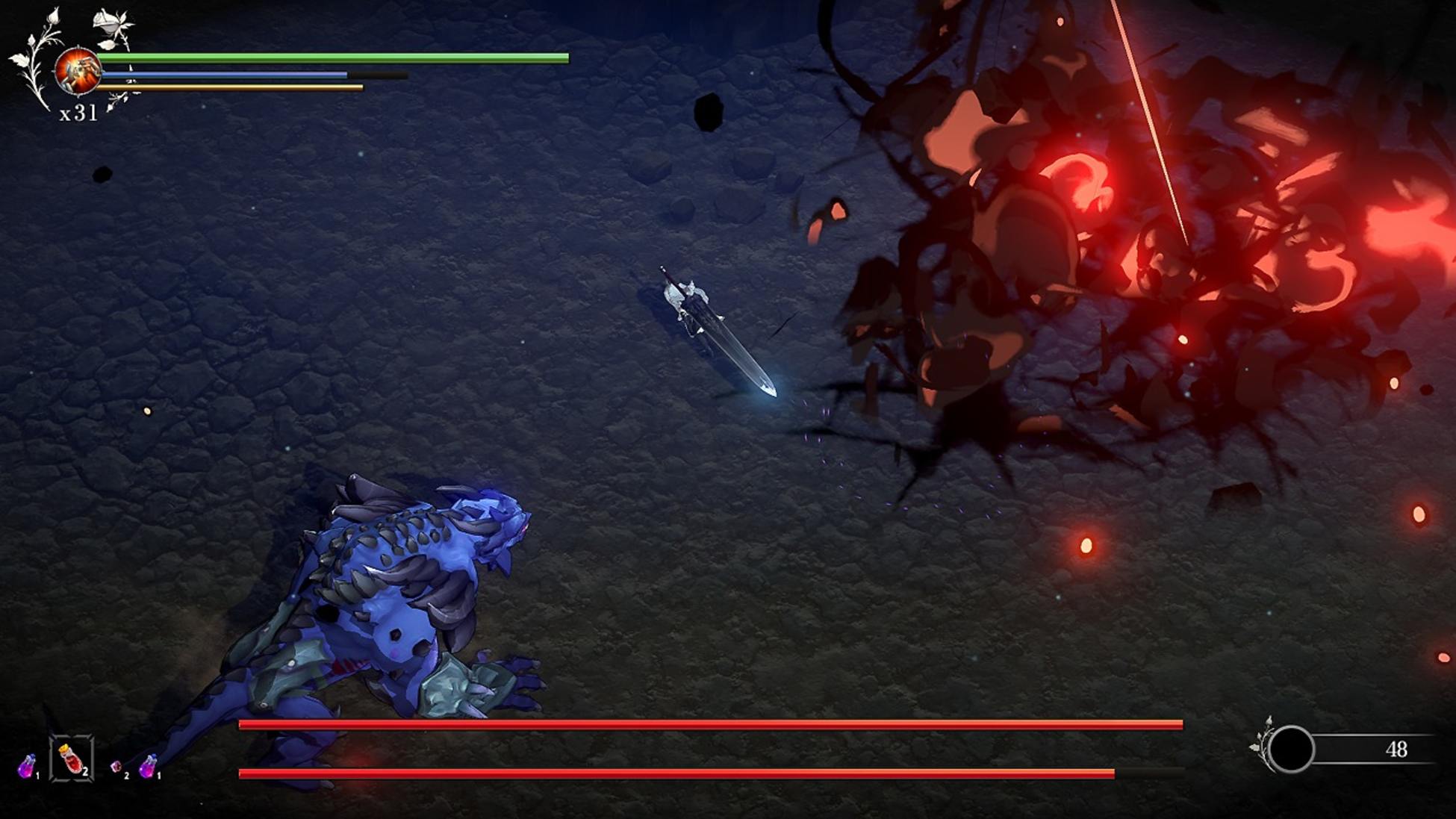
Combat can range from a simple matter of trimming the weeds (OK so it’s really a fire breathing pod-plant thing, but it’s still green) to large and elaborately rendered Bosses. There is plenty of sword swinging, dodging and dashing about, parrying, jumping, and charging, so there is plenty of action in the action sequences.

There are a handy pair of statues at more than one location; the one on the left is for leveling up, the one on the right is for saving progress.

When you are done leveling up, don’t forget to use the + button to access your equipment, etc. It is in this menu you can access your skills. There is an expansive skill tree where you can spend available resources on skills. The tree is not a free-for-all; you have limited options. There are a few Core Skills, but you can only get new core skills when you have developed enough of the previous Core skill branches.

Back to the statues. There is a set of statues in each level as well as in the Sanctuary. While you are in the Sanctuary, you can get information, take on side quests, and use the level/save statues. There are portals to the other levels, and a large, ominous pit. There is also the obligatory store where you can sell or buy equipment. So, all the normal elements are present in the game.

The music is well done, conveying the appropriate brooding tension or eerie quiet you want in each section of Purgatory. The sound effects are also well done…with one personal exception. The sound of footsteps when you are running around are not equally spaced in time. The cadence is a bit off, which left me with the impression the Maid is running with a limp. Odd, but it is easily ignored.

This is a good game that I enjoyed playing, but there is a lot of level grinding required to gain enough skills and improve your stats.

The game could also use a little help with the puzzles and hints regarding areas you can’t access. In the UI, there are some icons which seem to hold a specific meaning, but you can’t access them or reveal information about them. It lends a little confusion to the player, and left me feeling like I was missing out on something.

Maid of Salvation has a lot of things going for it, but it could be better with a little more polish, a little more substance, and a little more detail.

The post Review: Maid of Salvation (Nintendo Switch) appeared first on Pure Nintendo.

Review: Cassette Boy (Nintendo Switch)

13. Únor 2026 v 00:19

Cassette Boy is a puzzle RPG for the Nintendo Switch. It features a top-down perspective, ticklish brain teasers, and a pixel-based world. Is it worth exploring?

The story follows the adventures of an unnamed character who looks away from the moon, causing it to disappear. Your goal is to set things right again. The entire premise of Cassette Boy is centered around this concept of “if you can’t see it, it doesn’t exist”. 

What this mantra means in practice is that when an enemy is covered by an object, it’s no longer there, allowing you to safely walk by. Our protagonist sports a pair of headphones that grants the ability to rotate the world at will. The clever part is that you can rotate the environment to make things appear and disappear based on the current perspective, hiding enemies and showing pathways.

Cassette Boy - Nintendo Switch

This allows the developers to create all sorts of puzzles involving blocked paths, hidden gates, and fun with switches. There are some real brain teasers present, and they’re fun to solve. Cassette Boy also features optional bonus stages, providing longevity if you’re after more to do beyond the main quest.

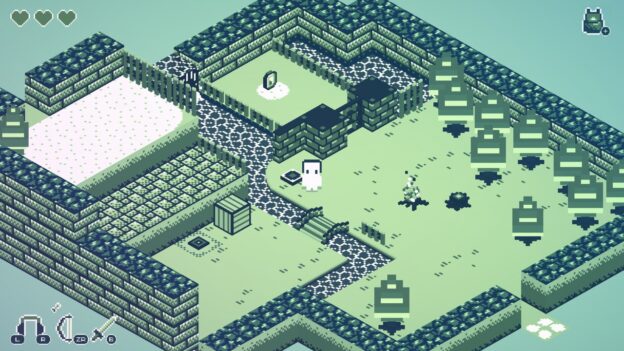
Aesthetically, Cassette Boy sports a retro look that’s strongly reminiscent of the Game Boy era. The green-tinged monochromatic look will spark nostalgia for older gamers, though it can make it tricky to see things clearly while you’re hunting for those secret paths.

This puzzle mechanic and deliberate retro style combine to create a cute adventure set in a virtual world. The simple story and dialogue keeps things moving briskly, though I found the writing to be a little too cryptic for my liking. As a result, I didn’t find myself bonding with most of the characters, though there are some interesting designs and personalities to interact with. 

Cassette Boy - Nintendo Switch

There’s a light RPG element at play, too, with our hero sporting a number of weapons à la the Legend of Zelda. You can swing your sword, fire an arrow, or plant a bomb as you work through enemies. At times, these enemies felt like a distraction from the main quest, not quite integrating with the overall puzzle mechanic. At other times, the rotating screen is useful to remove pesky enemies you’d prefer not to deal with. There are some fun boss fights thrown in for good measure, keeping you on your toes as well.

Cassette Boy is a short game, but the price is reflective of the time you’ll spend in this pixelated world. You’re in for about a four-hour adventure, depending on how long you take to solve the puzzles and whether you take on the optional challenges and collectibles. There’s also a free demo available, so give it a try to see if it’s your style before diving in fully.

Overall, Cassette Boy is a unique little adventure that will keep you thinking over the course of its short runtime. The classic look sparks nostalgia for older gamers, with a sweet story that could have been fleshed out further.

The post Review: Cassette Boy (Nintendo Switch) appeared first on Pure Nintendo.
Review: Forestrike (Nintendo Switch)

11. Únor 2026 v 22:43

Forestrike is a new fighting game on the Nintendo Switch, and it’s not your typical fighting game. Instead of rushing in and mashing buttons, it wants you to slow down and think. You play as, well… Yu; a skilled martial artist who has the ability of foresight, letting you test strategies repeatedly before actually attempting them.

The way it works is simple; you can either practice a level as many times as you’d like, or take it on for real. Practicing lets you experiment and find the perfect sequence of moves without dying. It’s a pretty cool concept that makes the combat feel more like a puzzle.

Combat is still challenging, even with the practice option. Most encounters throw multiple enemies at you, each with different behaviors and attacks. Some charge, some hang back and shoot, and some do a little bit of everything. As you progress, you’ll also unlock new techniques and abilities from martial artist masters, and between fights you can pick perks from cards to tweak your strategy. I usually lean offensive, but you can mix and match to find what works best. Getting the timing right and landing combos feels incredibly satisfying once everything clicks.

The cards themselves aren’t part of the fights, they’re rewards you get for completing battles. After clearing a fight, you’re presented with three cards, each granting a new technique or a small, permanent boost. You pick one, and it becomes part of your loadout for the next encounter. But if you fail, you restart and lose everything you gained, so foresight and practice really matter.

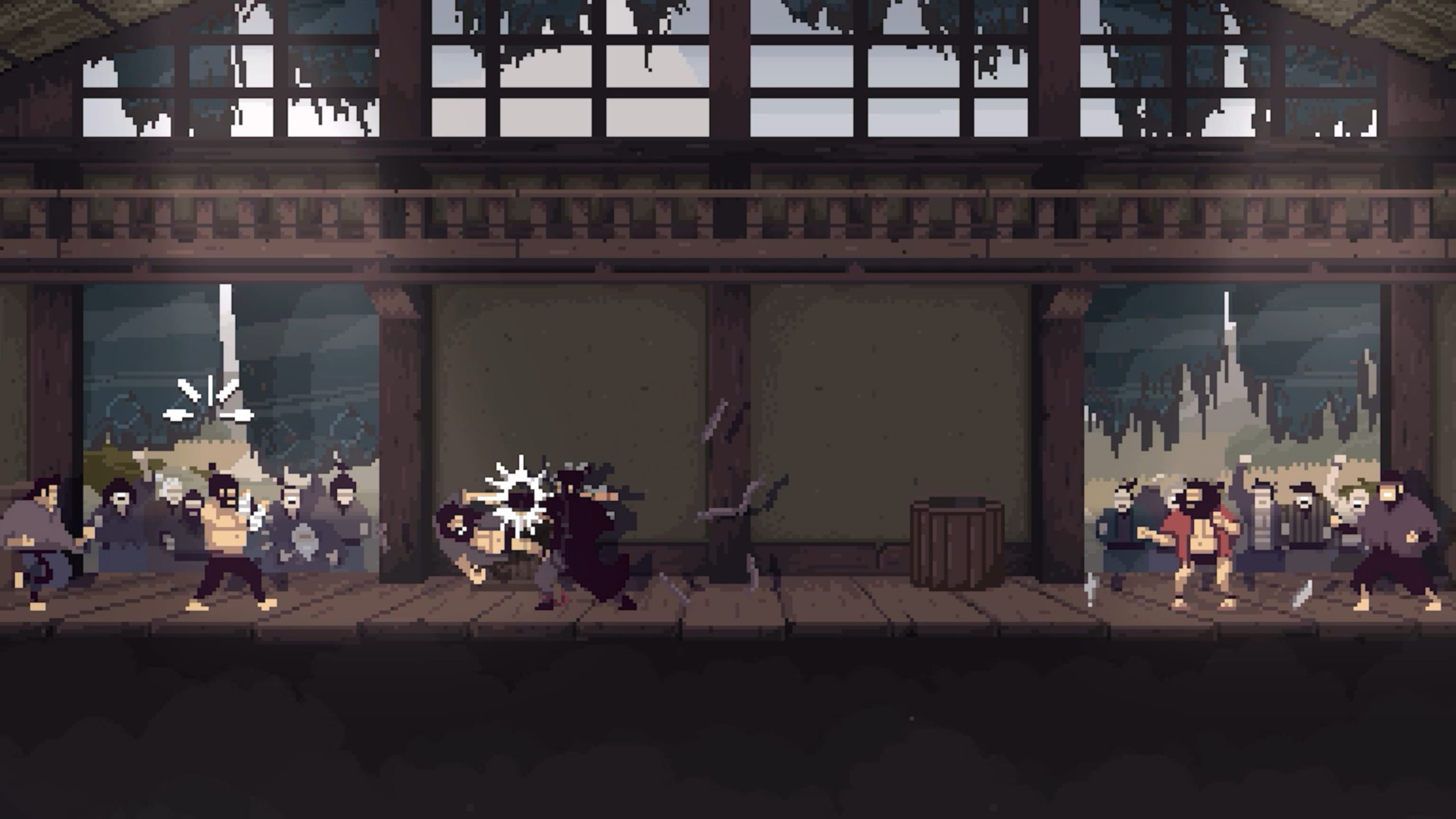
Forestrike looks and sounds great for what it is. The stylized visuals are smooth and easy to read. Enemies move clearly, and the animations make fights feel lively. The soundtrack is energetic without being annoying, and the sound effects make every hit feel satisfying. It’s simple and fits the martial arts vibe perfectly.

Overall, Forestrike is a fun and satisfying fighting game. The foresight mechanic makes each encounter feel unique, and the combination of practice, strategy, and careful timing keeps the gameplay rewarding. It can be challenging, but in a good way, and experimenting with moves and cards adds a lot of variety. If you enjoy martial arts, or just want to try something a little different on the Switch, Forestrike is definitely worth checking out.

The post Review: Forestrike (Nintendo Switch) appeared first on Pure Nintendo.
Fight, Fall, Repeat In Stillborn Slayer

20. Únor 2026 v 10:24
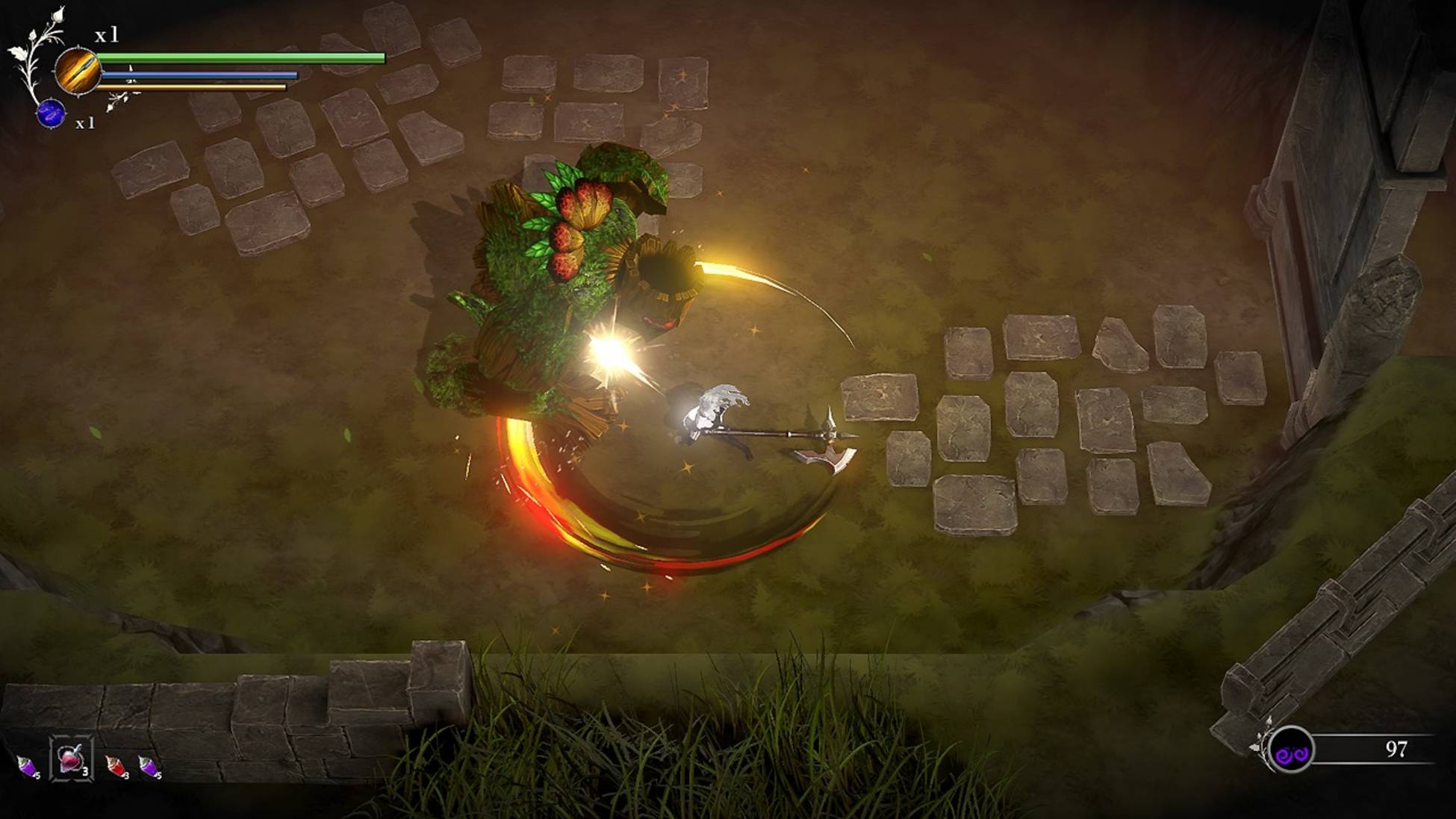
Stillborn Slayer arrives on console today, delivering a grim blend of fast-paced combat, procedural progression, and dark fantasy atmosphere across Xbox Series X|S, Xbox One, PlayStation 5, PlayStation 4, and Nintendo Switch.

The post Fight, Fall, Repeat In Stillborn Slayer appeared first on TheXboxHub.

❌