
Multiplayer vacuum party game Roombattle (yes) opens a Steam demo ahead of March 25 launch


Rather than informing the player, ARC Raiders aim for them to be lost in the game. Its lack of a mini map is not a blunder. It's the intentional design to ensure players care about the game and not surface. Instead of being passive skimmers, they should be active participants in a world of uncertainty. The footsteps, machinery sounds, and distant activities should be enough to guide players in a direction.

This ability to be so susceptible to sound should be considered. For most shooters, noise is a tactical nuisance. Here, it is a question of existence. A reckless dash over gravel can leak your position, while going through your inventory is an almost guaranteed call to battle. You are not evaluating whether the environment will allow the luxury of organization. You are taking a bold gamble. The pause needed to control resources is not a neutral moment.
The outcome is a rhythm that is close to horror. Waiting, scavenging, and hiding in ruined buildings to avoid the ARC's mechanized movements is more about survival horror than other forms of extraction. Unlike other worlds, this one is constructed through control, simulating a post-apocalyptic world with no need for splendour. Rather than convenience, the game wants players who buy PS5 shooting games to understand the tension that comes with fragile existence.
If the environment is unwelcoming, the players will be unpredictable. This game relishes the mystery of human behavior, where cooperation is momentarily rewarding. ARC Raiders focuses on the paradox of trust, which is needed and always vulnerable. This is where teamwork is achievable, but very rarely. I remember times when a handshake was a sign of loyalty that would later be on the other end of.

Players' moral codes are vicious, not because the game requires it, but because the systems permit it. Teammates may casually watch you bleed out, not out of malice, but out of careful calculation, realizing your gear is worth far more than your life. Of course, you are left to suffer the feeling of utter betrayal, only to find pity in yourself for the incredible sensation of outsmarting your opponent and claiming the resources by sheer opportunism.
But the most powerful emotion is not in the betrayal, not in the targeting, but in the sheer act of existence. The sheer act of "Returning to Speranza" after a stressful run is pure electric relief. It is not the mere looting of the loot; it is the looting yourself, protecting oneself in a designed system that is meant to take it away. The ARC Raiders, in this sense, is a game in which the morals of the players who buy PS5 games are explored at length, with the ease of exploitation at their fingertips. It's a game where the players' instincts are out in the open.
In the case of ARC Raiders, the Progression is anything but instant. It is the Skill Tree that contains the most branches and requires the most patience. The tree that contains the most branches is divided into Condition, Mobility, and Survival. Conditioning reinforces endurance, Mobility, and survival, improving the efficiency of resources.

Mobility, specifically Stamina, becomes the most crucial focus early in the game. Without it, the player becomes vulnerable, incapable of escaping and repositioning themselves.
This grind is purposeful. It slows character growth to ensure that progress feels earned and not granted. This, however, starkly contrasts with the selection and upgrade of weapons and workstations, which are done instantly. While the Skill Tree is a long-term investment, the arsenal is a source of instant gratification. Unlocking a new weapon or a crafted tool can radically change a run, providing instant reward amidst slow developmental change.
The imbalance of grind and instant reward captures the essence of the philosophy of the game: Increments define survival, instant adaptation defines it. Players need to manage the trajectory of progress strategically, while bursts of tactical advantage need to be realized. Resilience, however, is built over time, while survival is defined within moments.
In ARC Raiders, crafting is not a choice- it is an imperative. The workstations act as the transformation tool, while blueprints located in the field unlock potential. The process resembles Fallout, where weapons are makeshift, yet feel obligatory. Players are able to upgrade their workstations, which in turn expands the arsenal and enables the crafting of new tools and weapons, forcing players to scavenge and manage resources.
The arsenal has a range of options, but its true strength stems from how it adapts. There's a need for strategic variation. Different environments, ARC presence, and even the actions of other players call for a distinct approach. A weapon effective in the open may struggle in tight corridors, and a weapon effective in one run may be useless in another.
"This loop" scavenge, craft, adapt"anchors the game 's identity." It's not about gaining resources. It's about how you can prepare for the unpredictable. This resource loop becomes a meditation on adaptability. It's a simulation of the fact that having the right gear, at the right time, is what counts in order to survive.
The term "casual" has been used for ARC Raiders, and it has been called a "casual extraction shooter." That label, while contradictory due to how tense and difficult the game can be, serves a purpose. Other games in the genre do not.
One example is the free loadouts offered after each failure. While most other extraction shooters punish defeats with total destruction, ARC Raiders hands you a lifeline. This design choice does not trivialize the challenge; it preserves the loop. Players are able to engage and return to try again without the tremendous defeat of having to restart from scratch.
This level of forgiveness does not remove difficulty. Consider the Rocketeer, a higher-tier ARC unit. Players will have to pay more ARC coin and prepare more, as each is harder to obtain. Progression and adaptation are still required. However, by easing the consequences of failure, it expands access without losing the level of tension. The "casual" label does not reflect a lack of challenge, but a design philosophy that celebrates the persistence over punishment approach.
ARC Raiders is more than an extraction shooter. It is as much an analysis of human behavior as it is a simulation of scavenging in a world after a cataclysm. It is also a study in survival. The immersion comes from the absence of " no mini-map, no hand-holding," players are required to exist in the world. The morality of the game is cruel; it exposes the mysteries of trust and betrayal that exist in multiplayer spaces. Although the progression is centered on long-term resilience, it is also deliberately grindy, forcing the player to strike a balance of immediate adaptation. The crafting loop is strategic, and the player is subjected to a demanding level of foresight and variation. The game is also forgiving, which is a redefining feature of accessibility to a genre that is often punitive in nature.

What manifests from the above is a gaming experience that simply "feels alive," lacking in spectacle, yet abundant in tension. Every sound is significant, every choice made has consequences, and every "run" is a new tale of fragility and resilience. You do not "play" ARC Raiders as much as you "dwell" in it. You have not only made the journey to Speranza; you have also understood that conquering a system is not the primary objective; rather, it is the stories you bring along from your journey that matter.

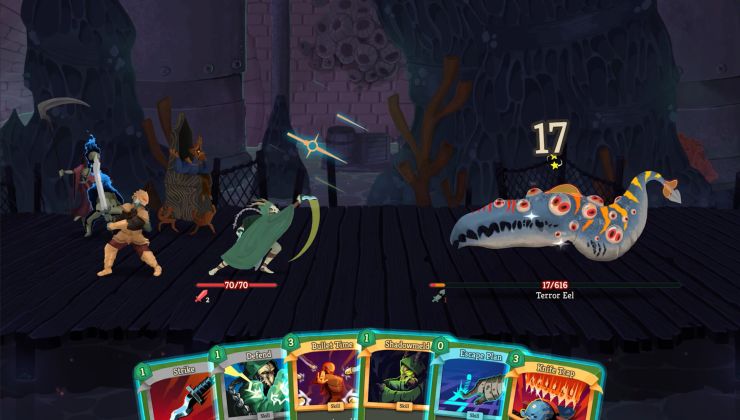
Read the full article on GamingOnLinux.
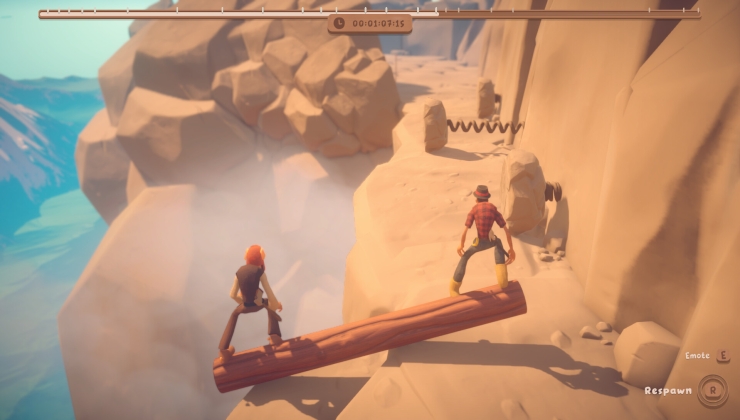
Read the full article on GamingOnLinux.
From the team that rattled our nerves with Little Nightmares I & II, REANIMAL is shaping up to be Tarsier Studios’ most devastating horror effort yet. The game chronicles a brother and sister’s harrowing journey to rescue their missing friends and escape an island teeming with unspeakable terrors.
Be sure to bookmark this guide, as we cover all the essentials, including the release date, preorder bonuses, deluxe edition details, gameplay mechanics, the latest trailer, and PC specifications.
REANIMAL is officially confirmed for a full release on February 13, 2026. It will launch on PlayStation 5, Xbox Series X|S, Nintendo Switch 2, and PC (via Steam and the Epic Games Store). As of this writing, there are no plans for a release on other platforms.

Players who choose to preorder REANIMAL can access a selection of bonus items, including the following:
In addition to the regular version of the game, developer Tarsier Studios and publisher THQ Nordic have confirmed that REANIMAL will be available in a Deluxe Edition. This version includes a range of digital bonuses and additional content for players looking to expand their experience beyond the base game.

Tarsier Studios has confirmed that horror is best shared. Much like the system in games like It Takes Two, REANIMAL features a Friend’s Pass that lets you experience the entire nightmarish journey with a partner using only one purchased copy of the game.
Note: While the developers are working hard to have this feature ready for day one, they have stated that the Friend’s Pass may arrive shortly after the initial launch on February 13.
The narrative follows two orphaned siblings trapped within a twisted, demonic version of their former island home. Tasked with rescuing three missing friends, the duo must navigate a nightmarish archipelago while avoiding grotesque animal-human hybrids – horrors birthed from the darkest recesses of their own minds. Heavy stuff, indeed.
If you’ve dipped your toes into the Little Nightmares series, Reanimal’s core mechanics will feel instantly familiar. Built from the ground up for cooperative play, it utilises a single cinematic camera that keeps both players in the frame. This system reinforces a palpable sense of tension and claustrophobia that would be lost in a traditional split-screen view.

While engineered with a “co-op first” philosophy, solo players aren’t left behind; the second sibling is controlled by AI in the absence of a partner. These characters are more than just aesthetically different; they possess bespoke traits and skills that must be used in tandem to overcome deadly traps and “brain-tickling” environmental puzzles.
Much like Tarsier’s previous hits, the gameplay relies on a three-part loop. Since traditional combat is non-existent – your tormentors are far larger and more dangerous than the children – stealth is the primary focus. You will spend significant time lurking in shadows, crawling under objects, and waiting for the precise moment to move.
When you aren’t playing “hide and seek,” you’ll be navigating physics-based puzzles. These require constant cooperation; for example, one player might need to distract a lurking horror while the other dashes for a lever to unlock a door.
The final pillar of the loop consists of cinematic chase sequences. These require players to outrun pursuing aggressors while reacting quickly to obstacles in their path. Again, anyone with cursory experience in Little Nightmares will have a clear idea of what to expect here.

However, Reanimal does introduce a major shift: boat travel. This allows the duo to explore the archipelago in full 3D, navigating between islands. It is a stark contrast to the linear, 2.5D side-scrolling perspective that defined Tarsier’s earlier work.
Leveraging the power of Unreal Engine 5, Reanimal utilises cutting-edge environments, advanced shadow effects, and dynamic lighting to craft the visceral horror and creeping dread that are hallmarks of Tarsier Studios. Despite these high-end visuals, the PC requirements are surprisingly accessible.
 5 2400G / Intel® Core i5-9400F RX 480 / NVIDIA® GeForce® GTX 1060 5 3600X / Intel® Core i7-7700K RX 6600XT / NVIDIA® GeForce® RTX 2060
Brief yet impactful, the latest trailer offers a glimpse into one of February’s most anticipated releases. It showcases the exploration, puzzle-solving, and stealth pillars of the game’s design. The footage also highlights the thick, “cut-it-with-a-knife” atmosphere, anchored by a sinister, WWII-style radio briefing. You can watch the full trailer above.
The post Everything You Need To Know About REANIMAL appeared first on Green Man Gaming Blog.
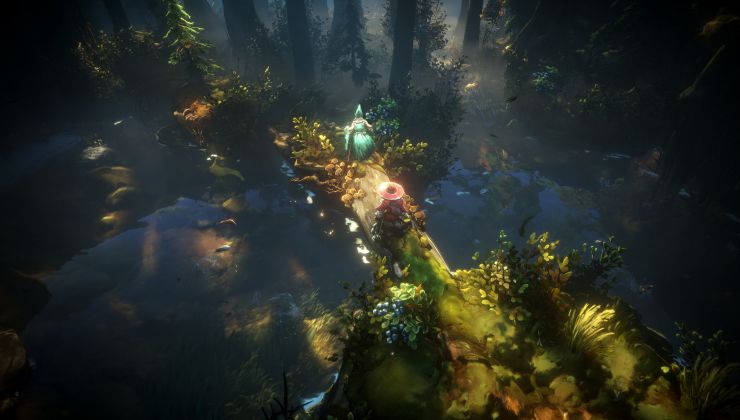 .
.
Read the full article on GamingOnLinux.
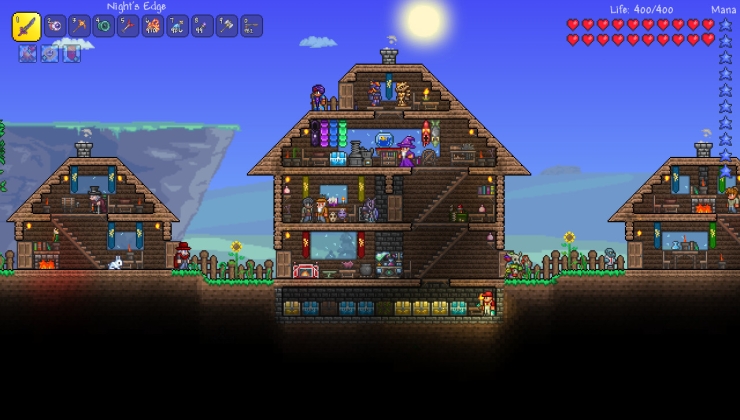 .
.
Read the full article on GamingOnLinux.
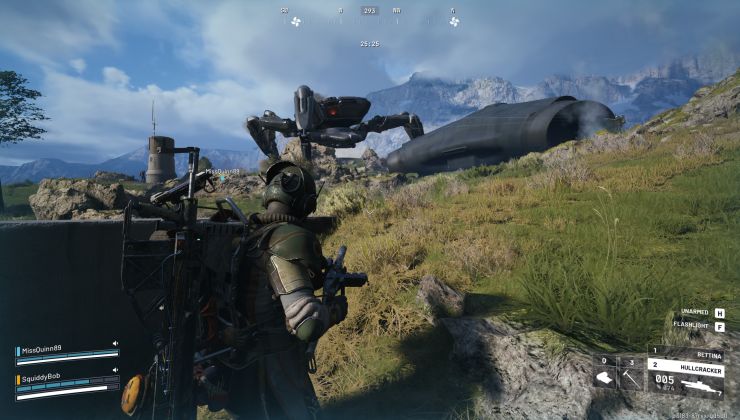 .
.
Read the full article on GamingOnLinux.
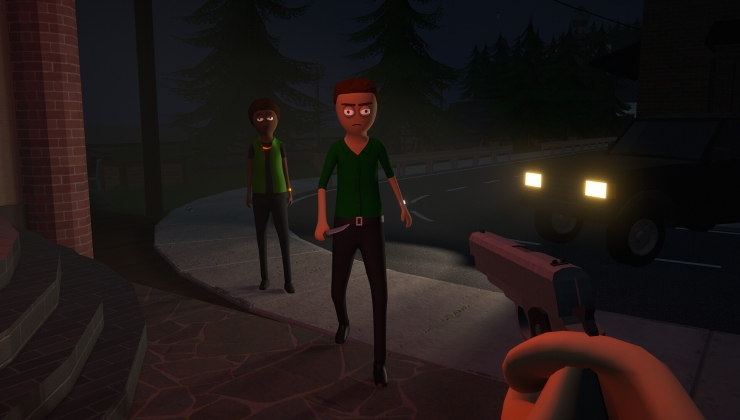 .
.
Read the full article on GamingOnLinux.
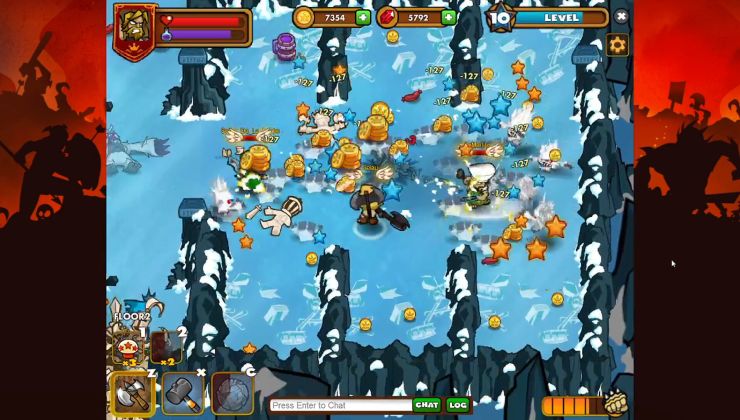 .
.
Read the full article on GamingOnLinux.
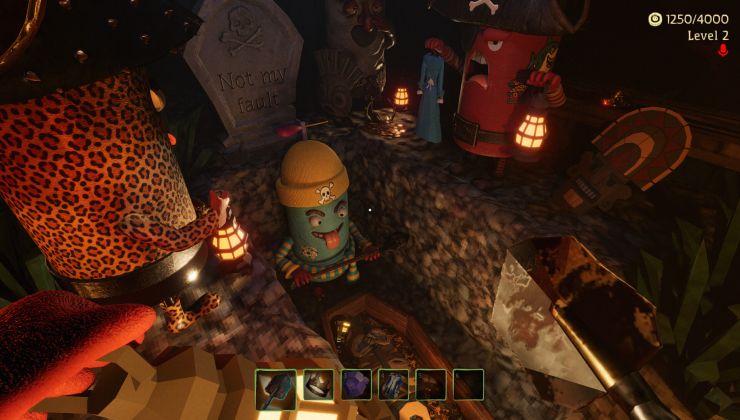 .
.
Read the full article on GamingOnLinux.


If you’re already gearing up to smash heads with friends and the anticipation for MARVEL Cosmic Invasion is hitting critical levels, then there’s only one real fix: more beat ‘em ups. The genre has evolved in all the best ways, and it’s genuinely lovely to see something so deeply satisfying back in full force.
If you want a few games to dive into ahead of launch, we’ve rounded up the best titles like MARVEL Cosmic Invasion below. This list has some incredible picks, both new and old, so let’s hop into it.

Castle Crashers is getting on a bit now, but it remains wonderfully charming and a huge amount of fun anyway. A wave of post-launch content expanded its look and piled on even more bonkers brawls. You’re technically saving a princess, but really, it’s about being the most slapstick heroes the kingdom has ever seen.

Young Souls puts you in control of two rebellious twins battling their way through an entirely different world. It boasts a lovely art style, brilliantly interesting characters and an exceptional combat system too. The only downside is that it sticks to local co-op, but if you’re playing with someone at home, that’s hardly an issue.

Absolum is an absolutely incredible beat ‘em up roguelike that has a lot going on. Not only is the story sublime, but there’s also a frog warrior who surfs on their own staff. The depth here is absurd, and if you want the most modern possible take on hitting things a lot, this is it.

Lost Castle 2 is massively slept on, despite being one of the coolest 2D action games in recent years. It has you carving through wildly cool monsters and levels to reach the titular castle, though the stronghold itself remains tantalisingly out of full reach while development continues. Combat lands somewhere between a 2D Monster Hunter and pure build-crafting chaos, with every weapon offering a totally different feel and some frankly absurd endgame setups.

The Last Friend stands apart because it mashes beat ‘em up action with tower defence, and also, you get to save a bunch of dogs. You’ll lay down multiple defensive lines of towers before wading into battle to rescue as many fluffy friends as you can using your fists. It’s cute, fun and a brilliant change of pace.

Streets of Rage 4 is the de facto classic beat ‘em up with a sharper, more modern edge. It played a huge role in reviving genre appetite for so many players. Dotemu’s signature flair—both visually and in combat—cements it as one of the best the genre has ever seen. If you’re craving over-the-top violence in a grounded, more realistic setting, nothing scratches the itch quite like this one.
Whether you’re here for couch co-op chaos, ridiculous weapon builds, or just the primal joy of hitting things a lot, the beat ‘em up genre has more than enough to keep you busy until MARVEL Cosmic Invasion arrives. From slapstick castles and frog-surfing roguelikes to genre-reviving classics, there’s something here for every kind of brawler fan. So grab a buddy, clear some screen space, and dive into the mayhem — because if anticipation hits hard, these games hit harder.
The post Top Games Like MARVEL Cosmic Invasion You Can Play Right Now appeared first on Green Man Gaming Blog.