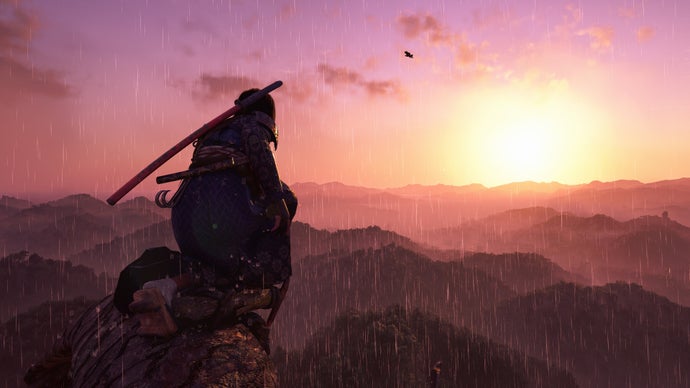
Video game updates are an incredibly funny thing, mostly because I come from a time where they weren't a thing at all, apart from the odd second printing that patched some things here and there. Which is why my humerus has been particularly tickled by the news that a new Assassin's Creed Shadows has arrived today that, amongst a couple of other things, add in the ability to simply let you jump.
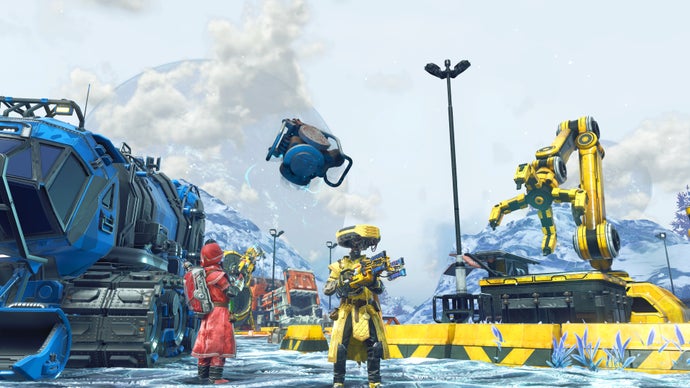
Look at all the mess lying around. You can't move for discarded detritus on the planets of No Man's Sky. Good news, then, that the space sandbox's latest update delivers a gravity gun and interstellar rubbish collection lorries that'll help clean those worlds up a bit.
His many personal faults notwithstanding, H.P. Lovecraft’s writings continue to cast a profound shadow over the horror genre. While his own views were reprehensible (even by the standard of his time) the continuing fascination with cosmic horror can be seen across many media. Big Bad Wolf are the latest developers to take influence from this mythos in their upcoming horror adventure game Cthulhu: The Cosmic Abyss, but have moved away from the beaches of Innsmouth and out to sea to take advantage of the thalassophobia (fear of deep water) that underlines much of Lovecraft’s work.
Cthulhu: The Cosmic Abyss begins in 2053 with you playing as Noah, an investigator charged with following the trail of a missing colleague who finds that an occult cosmic threat is spreading across the world. His investigations lead him to a mining facility located deep within the Pacific Ocean wherein he discovers that the missing miners have stumbled upon a passage to R’lyeh. So far, so Lovecraftian, and I was impressed by how well the content I played in the preview build slotted into the wider Mythos whilst also maintaining an identity of its own.
The Cosmic Abyss is played out through a first-person perspective, but this is no action shooter and combat plays no real role in this game. There were no direct engagements with enemies during the section I got to play, though there was still plenty of threat and dread. The full version promises some confrontations with unknown horrors that will require quickness of thought rather than trigger finger to survive. This fits perfectly with cosmic horror as no small part of the terror comes from your insignificance in the face of the unknowable.
With no combat to speak of, the gameplay mechanics instead revolve around investigation and puzzle solving, with a focus on a mind palace method of connecting clues that is reminiscent of Frogwares’ Sherlock Holmes games. In order to interact with the environment you can call on your AI companion, Key, who can scan, assess, and record the information that you acquire. This digital compendium can be called up in order to make connections between clues and objects that you scan, reveal deeper insights and even give you the direct solution to riddles.
The Unreal Engine 5 powered graphics are breathtaking at times, with the scale of the underwater environment being overwhelming. Relatively early on you have to venture outside of the submersed facility to explore a mysterious labyrinth and even though there was no pressure of oxygen limits in place I found the whole section almost unbearably tense. This wasn’t helped by my stubbornness in trying to brute force my way through when a more direct route via further investigations was the more efficient solution.
Major puzzles and obstacles in the world of The Cosmic Abyss will often have more than one solution with the main division between each being the effect they have on your sanity. Leaning into the world of R’lyeh for answers will drive you further into madness whereas presumably more rational and scientific solutions will help keep you sane. This mechanic was hinted at in the preview but I look forward to seeing its full effects in the full game.
As is often the case with early preview builds, there were a few small bugs and glitches, but these were refreshingly infrequent with the game just a couple months from release in April. One that took me a while to work out was that the controls would occasionally revert to AZERTY (to match the Big Bad Wolf’s keyboards as a French studio) so I couldn’t move forward. For a while I thought this was a deliberate effect in keeping with the classic Eternal Darkness’ manipulation of your controls, but checking with the team, it became clear that this was just a bug. Rebranding it as a feature wouldn’t be the worst idea, though!
The world of Cthulhu: The Cosmic Abyss has certainly got its claws into me and I’m eagerly awaiting getting stuck into the full version when it launches in April. What I’ve seen so far promises a twisting and tense narrative that will challenge the grey cells rather than the trigger fingers and, as such, should be a truly cosmic horror experience.
Any conversation about the best indie developers must include Capybara Games. With a catalogue that stems from Might & Magic: Clash of Heroes, through Superbrothers: Sword & Sworcery EP, to Don’t Starve: Shipwrecked, they consistently turn out the kind of games that stay with you long after you’ve finished playing. Battle Vision Network is set to be their latest, continuing in the vein of previous puzzle-infused games like Clash of Heroes, Critter Crunch, and Grindstone, and just like everything that’s gone before, it looks like it’s going to sink its way into your synapses and have you playing out moves while you’re trying to drift off to sleep.
Battle Vision Network is a tactical puzzle Roguelike battler, with teams competing in an intergalactic contest for glory. Dan Vader, Capy’s Creative Director tells us, “A Roguelike run of the game is framed as a season of this sport, and of this spectacle that is the BVN show.” He continues, “At the start of the game there’s only one team available, but as you progress you unlock more teams and more captains, each with their own playstyle and abilities.”
You can see that play out in the gameplay trailer, where a piece of toast shaped like a cowboy faces off against a skeleton in a rainbow cape – that’s Texas Toast vs. Rainbow Sparkle, obviously. It’s not just extremely bright and vibrant, but there’s the same sense of humour and quirky art direction that made Grindstone so memorable.
Dan tells us that Battle Vision Network is a spiritual successor to Might & Magic: Clash of Heroes, and anyone who’s played that classic title will be able to see the same gameplay threads running through BVN, with two teams made up of different units facing off in turn-based combat.
Different units have unique abilities and uses, such as Todd Thumb. This little finger fella can be stacked into a row of three, which sends a large thumb-based attack straight at the opposition. As you progress through a run, you draft more and more units into your team, until you’ve got a full roster, with a host of different abilities that will give you a variety of tactical options to choose from.
As you complete rounds, you’ll earn Bucks, which you can spend on upgrades for your team, or to upgrade specific units. You’ll also gain a Penant Flag through each round, choosing between three enhancements for your team, and leaning into that Roguelike structure and the random factor that can turn a mediocre run into a mammoth success.
Battle Vision Network began life as a mobile-first, PvP, season-based concept, and Capybara were originally working with Netflix to bring it to their mobile game library. However, in 2024, it became clear that Battle Vision Network wasn’t fitting into Netflix’s overarching plan, and Capy were thankfully able to reassess and rework the game, altering how players progress, shifting the focus to a single-player campaign, more like Grindstone and Might & Magic: Clash of Heroes.
Dan honed in on some of the key changes when coming from a mobile title, saying, “OK, we’re going to make a PC widescreen game, and we know that kind of audience soaks up complexity and depth, and experimentation and optimisation, and we can lean into that. And for us, we’re getting older, I have a family, I have a very demanding job, I don’t get to play as many 100-hour RPGs as I used to, so it’s emerged over the years that I really love run-based games, because they’re bite-sized. I can pick them up, I can play a little bit, have a little run, or pause a run, and I don’t feel that I haven’t made a dent in the game. So, we were really enthusiastic to explore our mechanics in that format that we were loving, anyway.”
One of the main differences over Clash of Heroes is that your Captain isn’t just an icon in the corner of the screen, they’re a physical unit with their own abilities, effects and place on the board. They can make the difference between failure and success, but you’ll need to know when and how to utilise them to maximise their impact.
Beyond the gameplay, fans of previous Capybara Games will be delighted to learn that the soundtrack is a collaboration between two of their previous composers: Jim Guthrie, who penned the soundtrack for Superbrothers: Sword & Sworcery EP and Below, and Sam Webster, who wrote the soundtrack for Grindstone. BVN could well be amongst the best-sounding games of 2026, just on that legacy alone.
Battle Vision Network is set to launch initially on PC and the team are targeting being Steam Deck Verified, which seems like the perfect way to experience the puzzling action. As a huge fan of their previous games, BVN has dropped its way straight into my most-wanted list.
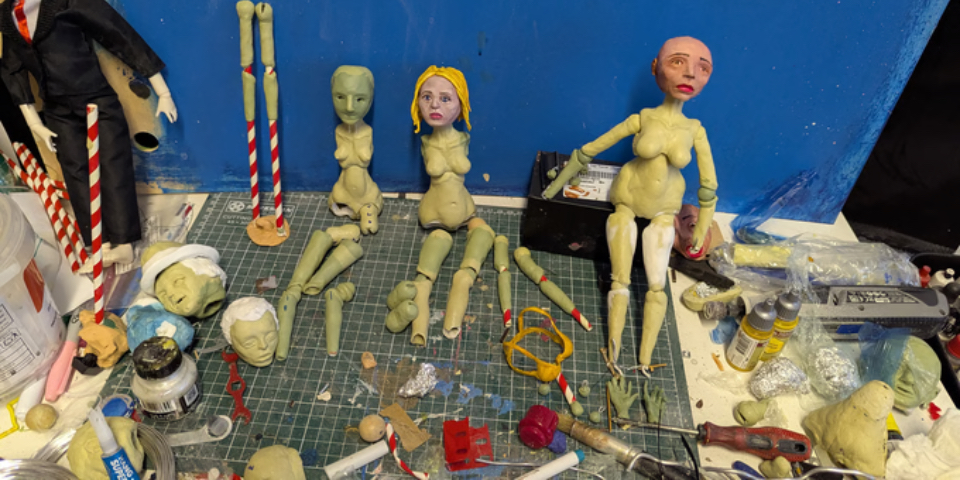
The stop-motion aesthetics of previous games by two-man dev team Talha and Jack have always been uniquely striking, with 2024’s Judero being the title that really gained critics’ and players’ attention. Judero’s take on Scottish folklore combined the handcrafted art of Jack King-Spooner with the coding prowess of Talha Kaya to produce a title that was brimming with humour and style. The duo followed this up with the fun mining game, Mashina, last year, and are now back with a Kickstarter campaign for a surreal and disturbing horror game called Abide. I had the opportunity to sit down and share a virtual coffee and conversation with the pair to find out more.
TSA – Thanks for talking to us. I’m not used to these virtual interviews, but how are you doing?
Talha – Good, good, very excited, very anxious (all of the things) about our new game.
TSA – How is the Kickstarter going so far?
Jack – It’s tracking very closely with the timelimit. Midway point we were midway, and now 64% through we’re 64% funded so it’s going to be tight. It’s different every time; there tends to be a slight flurry towards the end as people who have wishlisted it will get notifications towards the end ‘hey this is finishing’, but it’s not something I want to bank on or anything like that.
TSA – Is the Kickstarter an all or nothing situation for the game?
Jack – It’s all or nothing basically. The other options are work on it part-time and get a zero-hour contract job or try getting a publisher but there’s a whole kind of smorgasbord of things that go along with that and a lot of publishers would just not consider this kind of game at all.
TSA – That’s the problem with being actually original in a way. Also some of the more challenging aspects of the game given the current climate with titles like Horses and Vile: Exhumed
Jack – Yeah, with both of those games it’s kind of baffling that they should be deplatformed from marketplaces.
TSA – What’s your background interest in horror, Jack? I see your dissertation was on extreme horror?
Jack – It was on Kristeva’s idea of the abject and how it ties to visual media and also lots of Lacanian writing about the cinema screen.
[Jack and I went on for quite a while about these psycho-analytical approaches to horror which I’ll spare you here!]
I’ve always had this thing about storytelling and horror and what that says about the present culture and how it can be seen in retrospect. Violence was so in vogue with things like Saw and Hostel. Does this media desensitise you? Are people trying to be desensitised?
TSA – That all tracks with the tangible nature of your art and games. It’s uncanny as it’s very unreal but also uses real handmade materials. With Judero I’m constantly moving between appreciating the beauty of the models and being repulsed by some of the more grotesque aspects.
Your Kickstarter highlights that you’ve consulted with clinical therapists to make sure that the difficult topics you’re including are treated correctly. This speaks to wanting to engage with horror more deeply rather than use it just as an aesthetic.
Jack – I think this is a conversation to be had, an aspect of shock is the unexpected but there’s another type of shock that Abide is about, like the splash of cold water. The horror of the truth which is getting parsed through some of the conversations I’m having with psychologists who have worked with offenders and people who have been in controversial situations. Sometime being honest to these things can amplify the horror.
[Jack and I now went on another long tangent about the history of psychology…]
Lots of horror is just big men with knives are scary – oooh but one of the ways that Abide feels so fresh is that it has a really strong metatext that is coming through as I’m researching it and writing it.
TSA – It’s interesting to hear that you’re digging deeper than the basic jumpscare tropes of so much horror gaming.
Jack – I wouldn’t dismiss the importance of jumpscares though. They are an important tool and can be really interesting in the way they build up with the music and atmosphere etc.
Talha – When it comes to the whole mechanical game design of a horror game there is a lot of stuff that is very animalistic. This whole conversation is making me think that when there is an intellectual base to it than that jumpscare can have more meaning behind it. But when you’re making the game it is just a tool, to keep the player entertained.
TSA –I’m interested in your creative process. Do you make the models etc first or do you have the game outline in mind?
Jack – The game idea comes first and then the artstyle doesn’t necessarily make the game better or worse, it’s just the artstyle. There’s an interpretable element to the art – I mean, with a horror game it’s really fun to make it out of dolls because that’s a trope. Spooky dolls. When you’re making it, everything kind of feeds into itself and becomes part of the creative practice.
Talha – It is trickier to prototype this game because you already need a really well made and decorated house and you need the characters so there is a huge time budget for art and assets.
TSA – This has been a fascinating and wide-ranging conversation. Thank you both for taking the time to talk to me about all of this. Good luck with the Kickstarter and I can’t wait to get hands on with Abide!
The Kickstarter for Abide runs until the 28th February with digital copies of the game being available from the £12 pledge. Speaking to Jack and Talha highlights to me just how crucial these kinds of genuine artistic approaches to gaming and horror are in a world that is becoming increasingly commodified and handed over to Generative AI. I would urge you to check out the Kickstarter and pledge if you are able.
Coming up on a decade since the debut of Transport Fever, Urban Games have figured a few things out about their transport simulation series. Years of post-launch support, added features and working with their community is leading to their most ambitious game yet, when Transport Fever 3 launches this year.
Sticking with their in-house game engine, they’re able to roll a bunch of features and ideals from where Transport Fever 2 has ended up into Transport Fever 3 on day one. That means that this will be a fully synchronous release across PC, PS5 and Xbox Series X|S, when TF2 rolled into the console station a few years after PC, and it also means that cross-platform modding, which was only added to TF2 in 2024, will also be there on day one.
If you’re in it for the economic simulation, then Transport Fever 3 promises even greater depths than before. There’s over a century of transportation history here, starting in 1900 with the city, buildings and cars you see all changing and evolving as you carry on through to 2030. That means there’s over 290 vehicles, ranging from buses and trucks, through ships, planes, trains and even new cargo trams and helicopters. Cargo trams are a particularly interesting one, having been used in Eastern Europe to bring cargo into city centres instead of noisy, smelly trucks – something you’ll need to keep tabs on now, as every citizen in the map is fully simulated with places to work, shop and live, and their happiness will depend on pollution, noise levels and traffic jams.
And you’ll have a fresh appreciation for cargo in this game, as there are now 35 cargo types and it is now no longer handled automatically. If TF2 was all about money, then in TF3 it’s just one of many things to manage.
All of this will add new depths to the transport simulation sandbox, but TF3 will lean further into the tycoon gameplay and story objectives to overcome through a campaign of eight maps. Each one picks a particular period in history and takes inspiration from real events, using these missions as a way to introduce new concepts and keep things varied – there could be competition against an AI, a countdown mission with a timer, and more.
We sampled two of the levels, first heading to Mardi Gras in 1906, but finding that the city has been partially flooded and ruined by a storm. This is purely a narrative conceit here – while this game now has a day/night cycle and weather effects, they are purely cosmetic so as not to add crazy variables to the simulation – but it means that Mayor LaFontaine, the helpful Andrew and Miss Baker are banding together to rescue this year’s festival. LaFontaine wants a new hotel, while Miss Baker pushes him and you to help represent the black community and less wealthy, and Andrew’s just happy to be helpful.
Setting up transport routes, repairing roads and bridges and shuffling the good around that each objective needs gradually gets you used to the user interface, though it’s initially a little unclear how to go about certain tasks. I accidentally clicked through and sold off a couple horse and carts when cancelling an unneeded line, instead of having them sent back to the depot, and when I wanted a ship to go between collecting fish and shrimp, returning to dock between each, it took me a moment to realise I couldn’t drag the stops into a different order and had to set things up a different way.
But with Mardi Gras rescued, I could turn my attention to another festival in need, some sixty years later, with a somewhat legally distinct rendition of Woodstock. Now it’s a local sheriff and an enthusiastic rock organiser who will have to put aside any of the very surface level differences to make this a success, oh and Andrew’s still there to help out, though he’s now a bit of an old-timer.
The objectives have grown in scale by this point, so you need a bunch more wood to construct the stage, and the growing encampment needs plenty of food (and veggie food too, please) which is over on the other end of the map. Do you just get a truck to drive it across, or use the port nearby to ship it to the nearest town for trucks to pick up? It all builds up to a festival that’s as successful as you can make it accommodate people.
I feel that these narrative missions and tycoon gameplay will really help make Transport Fever 3 more accessible. I often find myself at a bit of a loose end when simply presented with a sandbox, so while that absolutely remains, having both a way to ease players into the simulation, and to give objectives in an intelligent way that keeps you more engaged will be great.
You probably know Milestone best for their long lineup of motorcycle racing games, from MotoGP through Ride and on to Motocross, but that’s not where the studio started. No, the studio’s big break came in 1995 with the arcade-style racing game Screamer, which went toe-to-toe with Ridge Racer as a PC alternative. Over a trio of games in the 90s, the series drifted towards more rally racing, before petering out at another studio, but now in 2026? Screamer’s back, and it’s a refreshing new take on the arcade street racer.
The immediate and most obvious shift from the 90s is that the graphics are so very different. Obviously, they are massively higher fidelity, there’s none of the early 3D polygon wibble, and the gameplay is built around more nuanced physics and handling models… but the art direction has shifted towards anime cutscenes, and there’s a drama-filled story to sink into alongside.
Michele Caletti Creative and Development Director discussed the game’s blend of visual styles: “We took inspiration from things like Akira, from Ghost in the Shell, from Bubblegum Crisis, from Cyber City Oedo, from Cowboy Bebop, and many more, but one of the things that we had to take a very strong decision was not to make the game cel shaded.
It would have been the easy choice – It’s an anime, so you make the game cel shaded – but if you do so, you have to oversimplify some details, you cannot go into fine details with cel shading. So the art direction was bold enough to try to blend the anime and the realistic or quite realistic rendition of the world. And then take some other moves like that there’s not onlythe city setting, there are many other settings that try to portray a different but familiar world.”
You know it’s anime sci-fi when you have a dog that can drive a car.
The Tournament is a long-running illegal street racing competition, but this latest edition is for a huge $1 billion prize, drawing in teams from all kinds of backgrounds. For the Banshee PMC, Hiroshi, Roisin and Frederick are looking for revenge on Anaconda Corp and their distinctly fascist-coded leader, Gabriel. The best way to get close is to enter the same tournament, with the possibility that Gabriel’s demise could be made to look like an accident… But it’s also a story that won’t take itself too seriously. I mean, there’s a dog that can drive a car, and whose owner has fitted it with the same universal translator that everyone else uses to communicate using their native tongues – “This is another choice that we made early,” Michele said, “because we wanted to have cultural melting pot of different characters, of different ethnicities and this was important to convey the fact that in this near future the culture is something like what we have today, but even more diverse, even more varied.”
They won’t be the only team that you race as, though, with five teams competing and the story hopping back and forth, putting you in control of various racers, cars and their specific abilities. Even in the opening few story chapters, there’s races where you just need to finish, where you’re driving as a team, where you’re regularly jumping via cutscenes between different cars.
“We wanted to go away from the pure racing focus and jargon and dialogue and always thinking, always about [winning].” Michele explained. “So you see the characters are not even dressed like drivers, because they are something else, then they are drivers. So their goal is to win, yes, but everyone has also another goal. So you will see that during the story, they’re focus shifts towards their inner goal. Then you’ll be playing in the role of all the characters of the game. So everyone has the goal to be first, yes, but from different perspectives.”
What’s particularly striking about the racing is how it reimagines the controls. The right and left trigger make you go and stop, of course, and the left stick is for turning, but drifting is on the right stick, you have a timing minigame for upshifts to give you boost charges, and those feed into a bull-rushing attack to destroy other competitor cars.
It’s quite a lot to get a handle on, and the way you can counter-steer while drifting felt a bit like rubbing my head and patting my tummy at the same time, so it makes sense that the story mode adds these concepts one at a time. When you wrap that around the mix of lavishly produced anime cutscenes and the character portrait dialogue scenes, though, that does lead to a pretty slow feeling rollout over the course of the opening hour or two. I was really waiting for it to give me all of the gadgets and toys to play with.
Michele admitted “The story takes you that slowly, yeah. It takes hours to get to all the mechanics in place, and the point is, you’re never thrown multiple things together to you.”
He continued, “We thought and we discussed a lot about how to lay out the default controls, how to favour the most intricate actions, because you might want to do strange stuff and we want to allow you to do so. I think we’ve reached the balance where it’s not overwhelming. Give yourself some time to get into the mechanics and it’s not about much about the fingers, but the strategy in order to understand and being in control of when to do things, not to overuse the systems.”
The macguffin that makes all of this possible is the ECHO, a device fitted to each and every car like a super sci-fi MGU-K from Formula 1. Fitted by Gage on behalf of the tournament’s enigmatic host Mr. A, it gradually accumulates Sync, both passively over time and when tapping the Active Shift to shift up a gear in time with the rev limiter – don’t worry, it’s still an arcade game and you won’t be asked to downshift at all. This builds up to grant you boost charges, which you can then deploy, and even strengthen by holding and releasing with another mini timing challenge.
As you Boost, this takes that energy and transfers it over to the second meter of the ECHO device, building up Entropy. This gives you charges to use defensively, to create a temporary shield for a few moments, or to unleash as a Strike, boosting forward again and destroying any car that you hit from behind. Save up the Entropy to fill out the meter, and you can enter into Overdrive, putting you in a much longer-lasting Strike boost that can blast multiple rivals into smithereens, and eventually leaves you vulnerable to destruction just from hitting a wall. You can technically outlast the Overdrive, but I would explode my car every time…
That’s where the ECHO’s final trick comes in, as destruction just respawns your car and body, and gets you racing again. There’s no moral quandary over whether or not this new car and person is the same as the one that died – Milestone seem to be leaving that philosophical debate to the Ship of Theseus and the Star Trek teleporter – and instead it’s just a canny way of keeping the action rampaging along.
“We didn’t want to have this pattern of side-striking the cars,” Michele said. “We tried different things like because the hot part is that it’s easy to strike on a straight, it’s harder to strike into a corner, so the more the intricate the trucks, the more it’s complicated to strike. But we experimented with many things like a semi-automatic strike that drives you toward your opponent, but it didn’t work. We tried something like a seeking missile, but it didn’t work. So we ended up with this where you’re still in control, so you if you hit, you feel like you’ve done it. If you miss, you understand what you have done wrong.”
It all blends into a rather unique take on the arcade racer. Combat is direct and to the point, with just the Strike as your only option for attack – no side-swiping and no missiles or energy abilities like in Wipeout or Blur – and there’s a technical depth to master with the drifting and boost timing, not to mention juggling energy.
In one race, I was able to break away in the lead, conserving my boosts in a way that meant I couldn’t be caught, but it felt much more likely to be caught in the middle of the pack and really have to scrap and fight. That ties in very well with the team race mode, with duos or trios battling for victory. This isn’t about the first across the line, and it’s not even just the combined finishing positions that determine the winning team, as every KO also awards points, so that the highest-placed racer might have finished eighth and outscore the winner that didn’t have a single KO to their name.
After adapting to its style of racing, Screamer really started to speak to me. I’m definitely curious to see how the game will blend together its anime narrative and single-player racing scenarios, but that combination of racing and combat? Well, it makes perfect sense for anyone who watched the F1 movie.
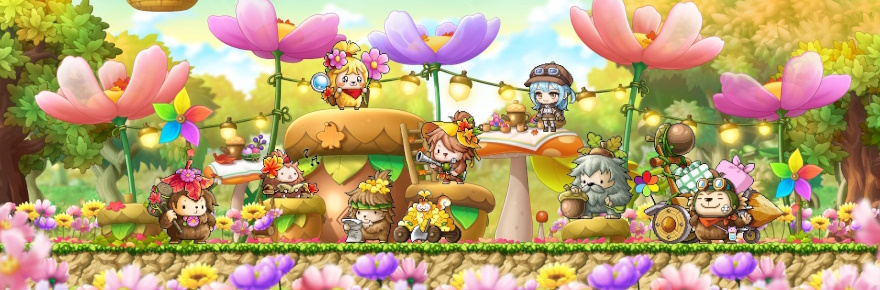
If someone was keeping track of MMORPG gaming achievements that encompassed all of your online career, would you have earned that special award that said that you — yes you — had tried and played a 2-D MMO at some point in your life? There aren’t a lot of them out there, but it’s not […]
Trans Theft Horso tasks you with picking up your brother’s hormones in a western story full of crime, adventure, and trans joy. This game is a quirky point and click style adventure...
We Stay Behind follows a journalist meeting the people who refuse to leave a town that’s going to be destroyed by a comet. Ever wonder what it would be like to live...
Plush Party is a claw machine-inspired game where you and your friends need to avoid a giant claw to keep yourself alive. I’ve played a lot of couch party games, but is...
Jake Solomon, a decorated game designer known for his work at Firaxis on games like XCOM and Marvel Midnight Suns, has announced that his studio Midsummer is going to close. In doing so, he also shared a pre-alpha look at the "Life Sims + The Truman Show" game the studio was making, called Burbank.
Crimson Desert has slowly but steadily become one of 2026's open world games to watch out for, and with a March release date now locked, lots of people are seriously starting to consider making a trip to Pywel soon. At the same time, veterans might have reservations about jumping in at launch based on Black Desert Online's MTX-heavy model.
Hello and welcome back to our regular feature where we write a little about the games we've been playing. This week, Bertie plays a classic but finds himself getting a bit bored; Marie adopts a black cat called Salem; Tom can't get out of the menus; Victoria makes a young child cry; Dom Platinums a game and feels very smug about it; and Connor finds an inventive way to play two MMOs at once.
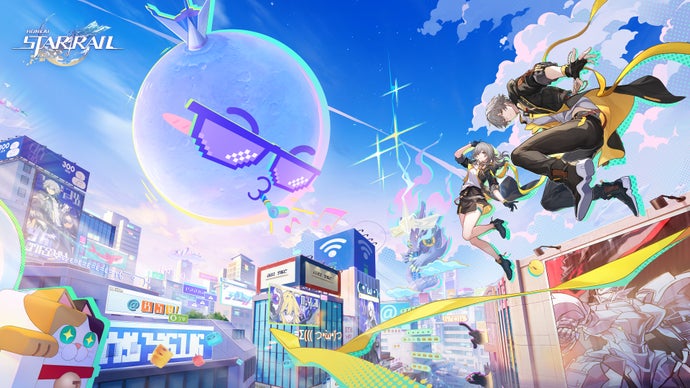
HoYoverse just wrapped up a big Honkai: Star Rail Special Program. We’ve been waiting for this one for a couple of weeks now thanks to a delay, but the developer has finally delivered all the news on Version 4.0, which will arrive February 13.
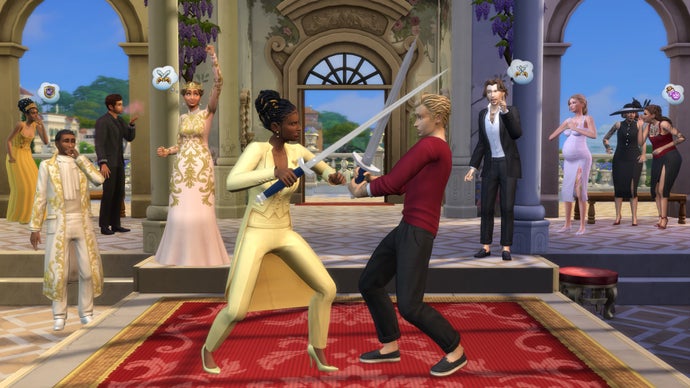
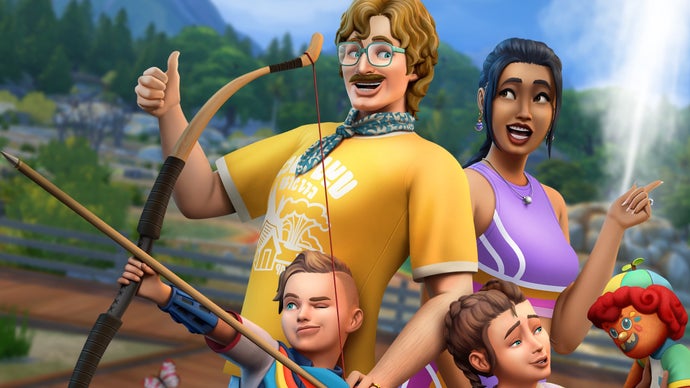
The Sims 4 developers recently promised an exciting year for the game, and the franchise as a whole, and we just got an early look at one of those first events. After some light teasing, the developer unveiled Royalty & Legacy, the game’s next expansion.
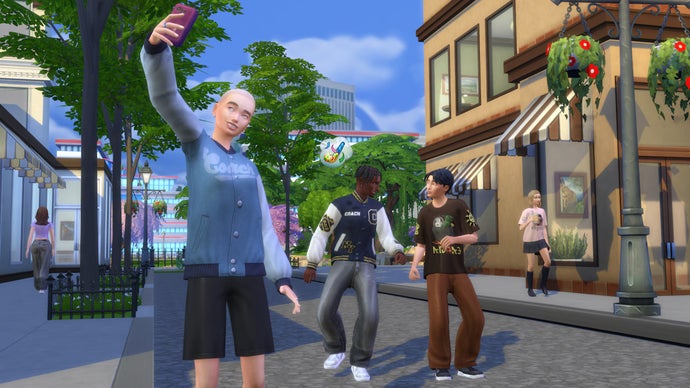
The Sims 4’s first update of the year is here, though it may not be quite what you might have expected. The game’s latest patch mainly centres around a collaboration with Coach, the luxury fashion brand.
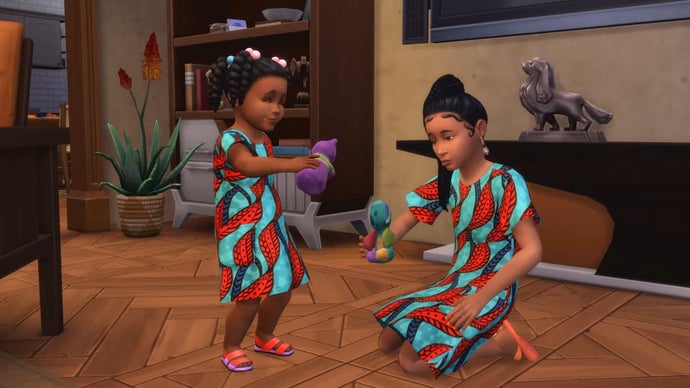
In their (slightly belated) new years message to players, the developer of EA’s The Sims series of games has lightly addressed concerns about its future within the publisher in a wide-ranging letter to the community.