Doubling or tripling street-level outlays without harming sales would, you’d think, make a lot of gaming gear makers – especially their accounting departments – very happy indeed. But as those chips have become a scarce commodity at the supplier level, even the bigger hardware businesses are being squeezed as well, and it shows. Razer can’t decide how much their next laptops should cost. Valve are running out of Steam Deck stock and delaying the new Steam Machine. Zotac Korea called the RAM shortage an existential threat. But what of the industry’s smaller players – those producers of the niche, the quirky, the retro?
The stop-motion aesthetics of previous games by two-man dev team Talha and Jack have always been uniquely striking, with 2024’s Judero being the title that really gained critics’ and players’ attention. Judero’s take on Scottish folklore combined the handcrafted art of Jack King-Spooner with the coding prowess of Talha Kaya to produce a title that was brimming with humour and style. The duo followed this up with the fun mining game, Mashina, last year, and are now back with a Kickstarter campaign for a surreal and disturbing horror game called Abide. I had the opportunity to sit down and share a virtual coffee and conversation with the pair to find out more.
TSA – Thanks for talking to us. I’m not used to these virtual interviews, but how are you doing?
Talha – Good, good, very excited, very anxious (all of the things) about our new game.
TSA – How is the Kickstarter going so far?
Jack – It’s tracking very closely with the timelimit. Midway point we were midway, and now 64% through we’re 64% funded so it’s going to be tight. It’s different every time; there tends to be a slight flurry towards the end as people who have wishlisted it will get notifications towards the end ‘hey this is finishing’, but it’s not something I want to bank on or anything like that.
TSA – Is the Kickstarter an all or nothing situation for the game?
Jack – It’s all or nothing basically. The other options are work on it part-time and get a zero-hour contract job or try getting a publisher but there’s a whole kind of smorgasbord of things that go along with that and a lot of publishers would just not consider this kind of game at all.
TSA – That’s the problem with being actually original in a way. Also some of the more challenging aspects of the game given the current climate with titles like Horses and Vile: Exhumed
Jack – Yeah, with both of those games it’s kind of baffling that they should be deplatformed from marketplaces.
TSA – What’s your background interest in horror, Jack? I see your dissertation was on extreme horror?
Jack – It was on Kristeva’s idea of the abject and how it ties to visual media and also lots of Lacanian writing about the cinema screen.
[Jack and I went on for quite a while about these psycho-analytical approaches to horror which I’ll spare you here!]
I’ve always had this thing about storytelling and horror and what that says about the present culture and how it can be seen in retrospect. Violence was so in vogue with things like Saw and Hostel. Does this media desensitise you? Are people trying to be desensitised?
TSA – That all tracks with the tangible nature of your art and games. It’s uncanny as it’s very unreal but also uses real handmade materials. With Judero I’m constantly moving between appreciating the beauty of the models and being repulsed by some of the more grotesque aspects.
Your Kickstarter highlights that you’ve consulted with clinical therapists to make sure that the difficult topics you’re including are treated correctly. This speaks to wanting to engage with horror more deeply rather than use it just as an aesthetic.
Jack – I think this is a conversation to be had, an aspect of shock is the unexpected but there’s another type of shock that Abide is about, like the splash of cold water. The horror of the truth which is getting parsed through some of the conversations I’m having with psychologists who have worked with offenders and people who have been in controversial situations. Sometime being honest to these things can amplify the horror.
[Jack and I now went on another long tangent about the history of psychology…]
Lots of horror is just big men with knives are scary – oooh but one of the ways that Abide feels so fresh is that it has a really strong metatext that is coming through as I’m researching it and writing it.
TSA – It’s interesting to hear that you’re digging deeper than the basic jumpscare tropes of so much horror gaming.
Jack – I wouldn’t dismiss the importance of jumpscares though. They are an important tool and can be really interesting in the way they build up with the music and atmosphere etc.
Talha – When it comes to the whole mechanical game design of a horror game there is a lot of stuff that is very animalistic. This whole conversation is making me think that when there is an intellectual base to it than that jumpscare can have more meaning behind it. But when you’re making the game it is just a tool, to keep the player entertained.
TSA –I’m interested in your creative process. Do you make the models etc first or do you have the game outline in mind?
Jack – The game idea comes first and then the artstyle doesn’t necessarily make the game better or worse, it’s just the artstyle. There’s an interpretable element to the art – I mean, with a horror game it’s really fun to make it out of dolls because that’s a trope. Spooky dolls. When you’re making it, everything kind of feeds into itself and becomes part of the creative practice.
Talha – It is trickier to prototype this game because you already need a really well made and decorated house and you need the characters so there is a huge time budget for art and assets.
TSA – This has been a fascinating and wide-ranging conversation. Thank you both for taking the time to talk to me about all of this. Good luck with the Kickstarter and I can’t wait to get hands on with Abide!
The Kickstarter for Abide runs until the 28th February with digital copies of the game being available from the £12 pledge. Speaking to Jack and Talha highlights to me just how crucial these kinds of genuine artistic approaches to gaming and horror are in a world that is becoming increasingly commodified and handed over to Generative AI. I would urge you to check out the Kickstarter and pledge if you are able.
We’ve all been there. You’re dragging yourself through another so-so gaming year, playing the same old titles, all while telling yourself that it’s about to get a lot more interesting, because a game you’ve been eyeing should come out before too long. And almost as if you jinxed a cosmic trickster, the next day you […]
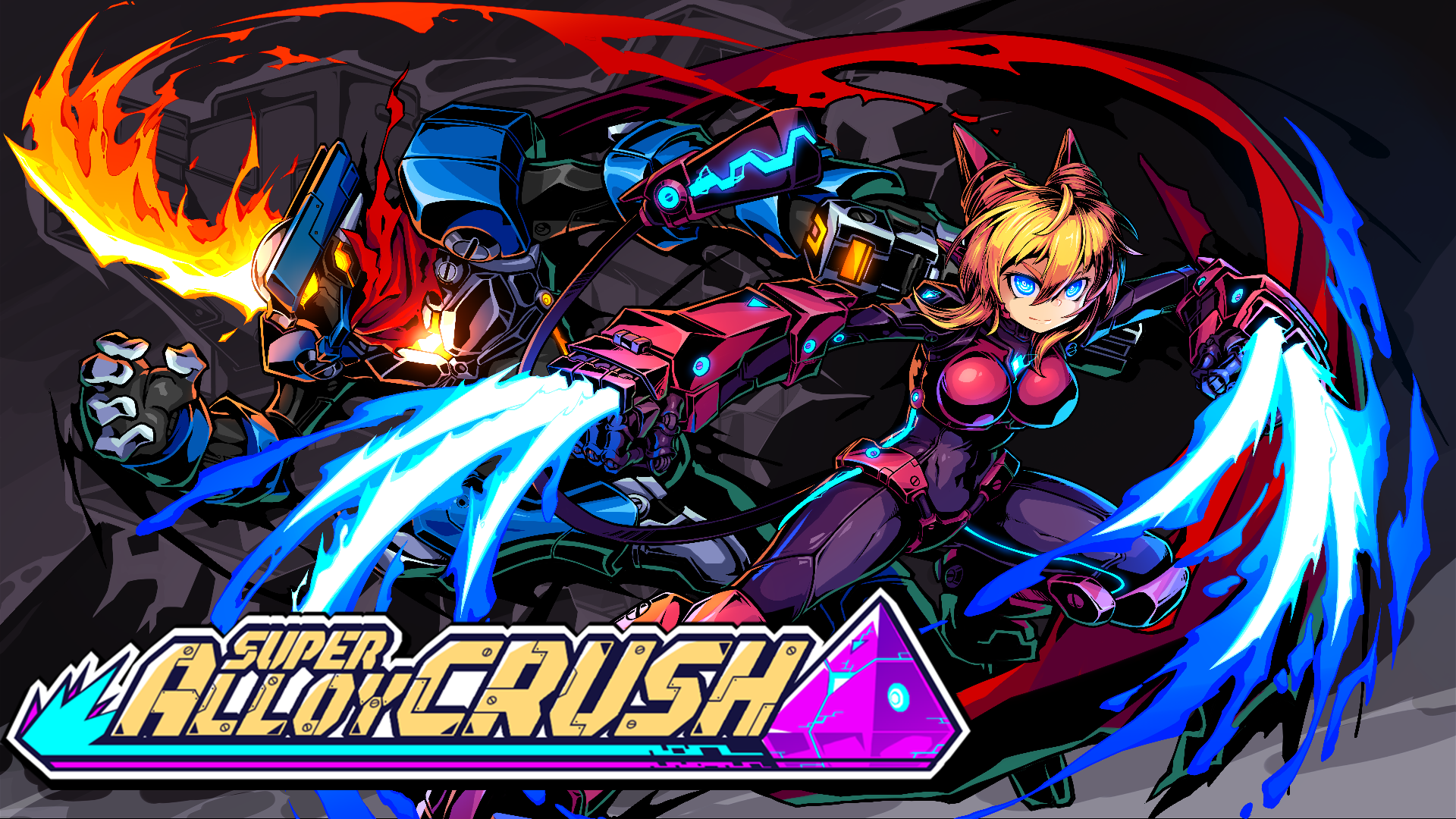
Super Alloy Crush is an upcoming 2D sci-fi beat 'em up. It currently has no announced release date, but a demo is available on Steam. The game is being developed by Alloy Mushroom, a two-person team based in China. I spoke with one half of the duo, who goes by the pseudonym "Mabi Mogu" (which means "paralyzed mushroom"). . What’s
SUPERJUMP
Tell me a bit about yourself. How long have you been developing games, and how did you get into the business?
Mabi Mogu
We are a two-person team called “Alloy Mushroom.”
I (Mabi Mogu) am an indie game designer. I started working in indie game development 12 years ago and created The Vagrant and Super Alloy Ranger. Right now, I’m working on my third project.
My teammate, the programmer Iceprite, is also an excellent indie game developer. Before we worked together, he independently developed Touhou Mystery Reel, and I think he’s really impressive.
What got me into the indie game industry was when my friend and I saw Steam Greenlight and thought that maybe we could do it too. So we started making The Vagrant from there.
Source: Press Kit.
SUPERJUMP
You go by “Alloy Mushroom” online. What’s the story there? Is it linked to your Super Alloy games?
Mabi Mogu
Alloy Mushroom was a name I came up with while developing Super Alloy Ranger.
At that time, I was working on the game completely on my own, and when it was ready to be released, I needed a “studio name.” So I took Paralysis Mushroom (Mabi Mogu) and gave it a “Super Alloy” twist, which is how Alloy Mushroom was born.
SUPERJUMP
In that case, where does the name "paralysis mushroom" come from?
Mabi Mogu
It's an item from Monster Hunter. It's a poisonous material used to craft tranquilizer ammo.
SUPERJUMP
Moving on to the game itself, what’s the elevator pitch for Super Alloy Crush? How would you sum it up in a single sentence?
Mabi Mogu
My goal was to create a two-player side-scrolling action game inspired by Monster Hunter, Devil May Cry, and Mega Man, and I’ve been working toward that vision as much as I can.
Source: Press Kit.
SUPERJUMP
This is the second game in the series, following on from Super Alloy Ranger, which was released back in 2022. What lessons did you learn from the previous game, and what’s different about this installment?
Mabi Mogu
The story continues from Super Alloy Ranger, but the gameplay is completely different.
The most obvious difference is that there are no traps and no contact damage. In this game, you fight enemies head-on and focus on chaining combos together. It’s a side-scrolling action game that puts a strong emphasis on fast, hack-and-slash combat.
On top of that, it includes some roguelike-style modes designed for replayability.
Unlike Super Alloy Ranger, this time I really wanted to create a game that players can enjoy playing over and over again.
SUPERJUMP
Tell me about some of your inspirations. I can see there’s a bit of Mega Man’s DNA in Super Alloy Crush. What else have you drawn from while designing Super Alloy Crush?
Mabi Mogu
The Mega Man influence is easy to spot at first glance, but in reality, a lot of the design this time was inspired by the great move sets and combat systems from games like Street Fighter, Devil May Cry, and Dungeon Fighter Online.
Many of the skills, mechanics, and combo ideas came directly from what those games do so well.
Source: Press Kit.
SUPERJUMP
Combat in beat ‘em up games always needs to feel satisfying. What steps have you taken to ensure that fights in Super Alloy Crush feel engaging?
Mabi Mogu
On my side, I focused on making enemies actually react when they get hit.
I didn’t want players to feel like enemies were solid blocks of steel stuck to the ground. Instead, I wanted them to be able to knock enemies around, launch them into the air, and control the flow of the battlefield through their own actions.
SUPERJUMP
The game has two characters with different playstyles. There’s Kelly, who attacks from range with a blaster, and Muu, who fights up close using energy claws. Is it difficult balancing the game, knowing that players can approach levels in two very different ways?
Mabi Mogu
It was definitely very challenging. In a close-combat system where enemies react to hits and can be launched into the air, characters who can control enemies with bullets easily become too powerful.
So we had to constantly tweak things, like making melee combat more mobile and flexible to make up for its shorter range, while also giving ranged characters some real trade-offs and limitations.
Source: Press Kit.
SUPERJUMP
What made you settle on the names “Kelly” and “Muu” for your protagonists?
Mabi Mogu
The name Kelly comes from a place in China, a city in Guizhou Province. When I first heard it, I thought, “Oh, I like that. It sounds really nice.”
As for Muu, I wanted the name to feel a little strange and unique. What I didn’t expect was that a lot of English players would associate it with the sound a cow makes, like “moo.” But honestly, I kind of like that.
SUPERJUMP
The early access demo has been out since 22nd January. What sort of feedback have you gotten about the game so far? Has it inspired any major changes?
Mabi Mogu
Community feedback was incredibly helpful. Based on that, we added moving attacks for Kelly, adjusted the combat pacing, improved enemy AI, and refined a lot of small details.
We also made many balance changes to the game’s stats, and all of this helped make the gameplay feel much smoother and more satisfying.
Source: Press Kit.
SUPERJUMP
After Super Alloy Crush releases, do you think you’ll keep releasing future games in this series, or do you have other projects in mind?
Mabi Mogu
Game development is our job and our passion. If possible, we would absolutely love to keep adding more content to Super Alloy Crush, and make a third Super Alloy game!
We also have plenty of other ideas constantly flowing from our creative passion. Who knows what might come next?
Hermitcraft is one of the largest Minecraftserver franchises in the game's history. Since 2012, dozens of YouTube's most prolific Minecrafters have consistently banded together to put entertaining, family-friendly content out onto the Internet's bandwaves. Season Eleven of Hermitcraft began in November of 2025, and now, three months in, the results of their labors are staggering. Nearly all the Hermits have made tremendous progress on sprawling megabases that beggar the mind, and are already starting work on complex minigames or finding ways to catapult players halfway across the world.
iJevin has been a Hermit since 2013, participated in ten seasons, and is currently building a pirate-themed base. Welsknight joined Hermitcraft in 2016, has participated in eight seasons, and is currently working on a Japanese village to call his home. Both were more than happy to discuss their experiences with Hermitcraft in the past, plans for the current season, and where they see the Hermits going in the future.
Both interviewees were given the same questions separately; their answers have been edited for clarity
SUPERJUMP
What are your goals and plans for this season of Hermitcraft?
Welsknight
My main goal is just to be more active throughout the season than I have been in recent years. I’m planning to build a sprawling feudal Japanese castle town to serve as my main base, with an industrial area thousands of blocks away for all of my various farms.
Jevin & Welsknight avatars. Source: Author.
SUPERJUMP
Is there anything you're looking forward to in particular in this season? Like playing around with new Minecraftupdates, or shops and minigames from other Hermits?
Jevin
As with any new season, there is a lot of anticipation. Of course, things like Minecraft updates are fun to play with, but I'm much more interested in the happenings on the server: The new builds and games being built (such as TangoTek's Decked Out 3), plus all the hilarious shenanigans.
Welsknight
TangoTek’s Decked Out 3 will almost certainly be a highlight of the season once he finishes it. Beyond that, I’m just looking forward to all the random interactions and spontaneous shenanigans.
SUPERJUMP
What are some of your favorite moments and builds from last season? Regarding this season's builds, what are you planning to do, similarly or differently?
Jevin
I loved the things I built last season. From the forest to the castle, I was extremely happy with the results. Each season, I strive to do things differently, and this season is no different. The theme this year is pirates!
Welsknight
Despite being inactive for a good chunk of the season, I’m pretty happy with how my fantasy castle turned out in the end. I’ll be following a lot of the same design methodology for my castle this season.
Source: Hermitcraft Wiki.
SUPERJUMP
Jevin, this is your tenth season of Hermitcraft. Does it feel like it's been that long? What's it like, being part of a community and seeing it evolve over the years?
Jevin
Being a Hermit is fascinating. Working alongside some of the most talented Minecrafters is very interesting. At any given point, you can look around and just be floored. The counter to that is I always need to invest and reinvest my skills to keep up. Sometimes it can be stressful, but it's good stress.
SUPERJUMP
Welsknight, for you its been eight seasons; does it feel that long?
Welsknight
No, it doesn’t. The years have flown by. It’s incredible to see how Hermitcraft has grown and evolved into such a prominent part of the greater Minecraft community, and I’m also really proud of how positive and wholesome the Hermitcraft community is despite its popularity. It’s really special.
Jevin's Season 11 pirate ship. Source: Hermitcraft Wiki.
SUPERJUMP
What are your thoughts on Hermitcraft and its history? Did you ever see it becoming as popular and impactful as it's become today?
Jevin
When I joined Hermitcraft all those years ago, I never imagined it would get to this point. I'm just so proud of everyone involved.
Welsknight
When I first started playing Minecraft, some of my largest influences as I learned how to build were GoodTimesWithScar, BdoubleO100, and Keralis. Countless other people learned how to play the game from watching Etho, or learned all about the technical side of Minecraft from people like Mumbo Jumbo or Docm77. It’s wild to me that not only am I playing on a server with those people today, but also that Hermitcraft as a collective has been such a big influence and source of inspiration to Minecraft players all over the world.
SUPERJUMP
Where do you see Hermitcraft's future?
Jevin
As for the future, it's hard to say. I just know I'll continue to keep putting my best foot forward.
Welsknight
I don’t think about that too much. I imagine we’ll be around for a long time. I just like to enjoy the ride.
Special thanks to Jevin and Welsknight for this interview
There are very few things the vast majority of humanity can agree on: food is one of them. We all eat, and we all enjoy good food. And then there's music. We all hear or feel it, and we all enjoy it to some degree.
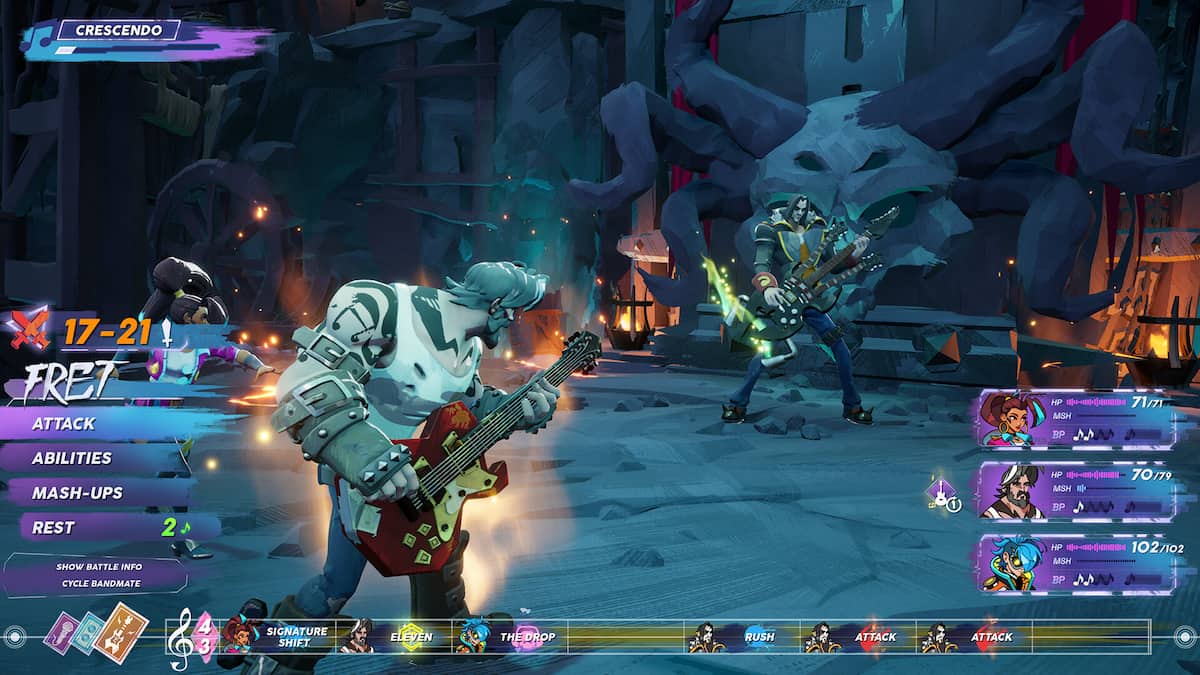
Everything about the upcoming RPG People of Note is influenced by music and how it brings people together. The names, the gameplay, the storyline, just about everything you could imagine is themed around music or just a fun music pun. The turn-based combat features musical instruments as weapons, and it's even rhythm-based (think Expedition 33-like QTEs when it comes to dealing max damage on attacks) in its very nature.
Image via Annapurna Interactive
The game's locations are all themed around music (like Durandis, the city of rock and roll, pictured above), and it's all so incredibly tongue-in-cheek and dripping with whimsy. The game is an ode to the art form of music itself, and "music is the DNA" of the whole game, according to what creative director Jason Wishnov told me in a group interview presentation earlier this month.
People of Note stars a young woman named Cadence, a pop music singer who's out to make a name for herself as a musician and win a contest to earn fame and fortune... but she needs a band. She's eventually joined by a classic rocker named Fret (yes, EVERYTHING is a music pun) on their journey of creating a band that's a mash-up of genres to create something special and new. The group eventually fills out with EDM DJ Synthia and rapper Vox, and they all combine their different music styles to work together throughout People of Note's events.
Exploring Durandis in an early-access hands-on demo, I quickly came to see how this game truly was crafted by bona fide music nerds. There's a shop called 3 Stores Down (a la the band 3 Doors Down), I found an armor piece called Tom Petticoat (no Heartbreakers were found), and even pet an elongated corgi called, you guessed it, an accorgion (like an accordion). And that's just record-scratching the surface.
On their journey, Cadence and crew will visit themed locations and regions for genres like the aforementioned rock, plus EDM, rap, and K-pop, with each region featuring its own fitting battle theme. The combat is classic JRPG style. As Wishnov said, the game is heavily inspired by the likes of Final Fantasy 9 and 10, Chrono Cross, and even The World Ends With You, but it's still musical throughout. The turns are called Stanzas, visually represented at the bottom of the screen during combat so you can plan your attack.
Image via Annapurna Interactive
And as mentioned before, the active rhythm-based combat, where you must time a button press with a visual circle closing on itself (this is optional and can be turned off if you so choose), is reminiscent of the hugely popular Expedition 33. But this game has been in development way before last year's game of the year launched.
The combat gameplay is supplemented with puzzles, with several in the demo themed around directing lasers to bounce across a room to reach an endpoint to move on to the next objective, but I think a lot of the fun will be based on combining different abilities and genre mashups to min-max battle success.
Wishnov said that People of Note has been in development for "five to seven years," with a maximum of 15 people working on it at any given time. It definitely has the vibe and feel of a passion project by people who truly love music and everything about it.
The demo I played featured one really cool musical cutscene between Cadence and Fret, but the majority of the dialogue is delivered Hades-style with static animations speaking back and forth, and silent chat bubbles with NPCs you meet around town. The fully 3D animated scenes are meant for special, "emotional climax" moments, but Wishnov said that there are "several" throughout the full experience.
To bring home these important moments, People of Note's voice cast is quite impressive, with some characters having both a voice actor and a singing actor (Cadence's voice is Heather Gonzalez, while her singing is done by an artist named LEXXE, for example), with several notable actors on board. The list includes Jason Charles Miller, Erika Ishii, Debra Wilson, and more.
Image via Annapurna Interactive
The demo I played will be available in Steam Next Fest starting on Feb. 23, so I encourage everyone to try it out if they're a fan of music, JRPGs, or games in general. It launches on PC, PS5, Xbox Series X|S, and Nintendo Switch 2 on April 7.
Tomaszkiewicz spoke to us at the Gamescom conference about The Blood of Dawnwalker, the upcoming vampire game that he — and many other former Witcher 3 developers — have started their own company to build.
He was explaining the game’s time system, which will force players to make tricky decisions. There are a limited number of hours in every in-game day, and you only have a set number of those days to save your character’s abducted wife.
Tomaszkiewicz told us: "First of all, we wanted it to feel like the time matters. You know, there is this feeling of urgency to objectives. And we wanted you to actually think, ‘Do I want to do this? Or do I want to do that? How do I want to spend this resource?’
"At the same time, we don't want this artificial pressure that will stop you from exploring the world, for example, right? You do get clear communication from the game at every point."
Indeed, we did see this mechanic at play in a hands-off Gamescom demo. We saw that certain actions, like committing to a side quest, will spend a certain amount of your time, which the game flags to you nice and clearly.
Tomaszkiewicz said, "As you could have seen in the build, for example, the quest objectives tell you like how many time segments are you gonna spend if you're gonna finish these objectives. Sometimes, specific dialogue options can lead to spending time segments."
"We call it ‘time as a resource,’" Tomaszkiewicz added. He also clarified that, "Just standing in one place is not gonna cost you any time. So, the time is kind of waiting for you to perform these actions."
If you’re looking for a comparison point to make this system make sense in your mind, Mateusz Tomaszkiewicz mentions Persona, and his colleague/brother Konrad Tomaszkiewicz points to the first two Fallout games from the nineties.
Konrad Tomaszkiewicz, the game director and CEO of developer Rebel Wolves, chimed in and said, "Spoiler alert, but we're speaking about it in the interviews; your main goal in the game is to help your abducted family.
"And you know that, in some time, something can happen to them. And you cannot build the proper tension, and emotions, if you know that they'll be there forever. You cannot do, story-wise, this thing. That's why we added the system to show you that the clock ticks, and stuff will happen."
"Our game structure is totally different than the games you know," Konrad Tomaszkiewicz added.
But we couldn’t help but wonder, what happens if you don’t save your family in time? Is it a full ‘game over’ situation?
Mateusz Tomaszkiewicz teased, "We don't wanna spoil it for the players. I would say, we treat it more as a choice and consequence thing, than a game over thing. This much I can tell you."
We got to see a lengthy hands-off demo of the game, and the time-spending system did look pretty cool, although we're sure it will take some getting used to.
The game’s day-night cycle also impacts your gameplay options. By day, the player-character (a 14th century chap by the name of Coen) can walk around like an ordinary person and try to talk or punch his way through situations.
By night, he becomes a form of vampire with added stealth, traversal and combat options. But if you wait until nighttime to do everything, you’ll be wasting valuable time and your family will inch closer to peril.
It looks like a fun game, and we very much look forward to getting our hands on it. Watch this space, and we’ll be sure to bring you more coverage as the release nears.
The Blood of Dawnwalker will release in 2026 for PC, PS5 and Xbox Series X/S. You can wishlist the game now.
Clair Obscur: Expedition 33 hits the ground running and rarely lets up, but the first moment that it really knocks the wind out of players’ lungs takes place at the end of Act One. If you’ve maintained even a cursory awareness of the GOTY-hoovering French melancholy simulator, you probably know what I’m talking about by now. But there was a more innocent time last year when we all had no idea what we were in for. Creating a moment that left everyone gobsmacked, said lead writer Jennifer Svedberg-Yen, was about more than just a single scene. It worked because of all that came before and, yes, after.
Clair Obscur spoilers follow.
Fresh off winning an Outstanding Achievement In Story distinction at last week’s DICE Awards in Las Vegas, Svedberg-Yen explained how the Clair Obscur team managed to make the death of Gustave – up until that point the player character – feel earned and emotionally resonant. This meant striking a delicate balance between foreshadowing and restraint so that players wouldn’t see it coming from a mile away.
"We wanted to make some meaningful moments so that when it came to the time of his death, you could feel the characters,” Svedberg-Yen told Aftermath. “So for instance, we have sort of a bookend where we have Gustave in his first encounter with Renoir on the Dark Shores when the whole team dies. Then we go through his arc and his travels, and now at the end, we come back to that moment. And now we can see Gustave in the second encounter, the change from that first instance. I think that was what we wanted to set up. So we were very intentional about the places in which we made certain moments, right?"
Gustave’s relationship with Maelle – short lived though it ended up being in actual game hours – was also key to making Gustave’s death land. “For those who come after” needed to be more than just a catchphrase.
"The conversations with Maelle, setting that up – those solo moments, those moments when we talk about 'For those who come after' and what that means,” said Svedberg-Yen. “We were very careful to have all of those so that when it came to this moment, we didn't necessarily give it away, but there are specific things that tie back. When [Gustave] says 'For those who come after' to Maelle [just before Renoir kills him], she says 'Run' because that calls back to their conversation when he's like 'If you see somebody, you'd better run' and she said 'I'm only running if you run.' So all of those things were sort of building to that point."
In Svedberg-Yen’s eyes, those story and character beats found their purpose pretty naturally; gameplay proved trickier.
"[Not spoiling] was more of a consideration on the gameplay side,” she said. “I noticed some players realizing that Gustave's skill tree is much smaller. We still made a broader skill tree that was locked, but it was still significantly smaller. I think maybe we needed to make it even bigger."
Fortunately, Clair Obscur’s then-burgeoning community was cool about it.
"I saw a Reddit thread [where someone was like] 'I think my game is blocked or buggy because I'm not unlocking any of Gustave's skills. What's going on? Do I need to reset?'” said Svedberg-Yen. “And people just all jumped in and said 'Don't worry. It's story locked. You'll get it. Act Two is amazing. Gustave becomes [overpowered]. You will not believe the skills you get.' Everybody kept it going, and they didn't spoil it for other people. ... It was at least several weeks before [Gustave’s death] became more widely known."
But there is an argument to be made that Gustave’s strongest moments come in Act Two, even if he’s not around to see them. While many games treat death with a carelessness that borders on cavalier, Clair Obscur gives its cast room to mourn, exhale, and adjust to their new shared reality – albeit only just a bit in what is still a time of immense peril.
"I didn't want it to just be 'OK, he's gone, and now we continue as if nothing has happened,'” said Svedberg-Yen. “But on the other hand, when you are in this life-and-death situation and there's a bigger mission, you have to go on, right? I imagine that this is probably true for a lot of folks who have been in difficult situations where you need to keep pushing on. So we wanted to bring up that contrast, where Lune is saying, 'We have to press on.' Because death is such a constant in this world, and yet, this death is different. Death is something we're used to, but each one is unique in the impact it has on us. ... So writing it, I really tried to think about each character – their relationship to Gustave and also their relationship to the mission – and how they think about death.”
Even in Clair Obscur’s world of near-constant grief, Svedberg-Yen wanted a sprig of closure to see the light of day. Ultimately, Maelle and the rest of the party find a place to bury Gustave’s prosthetic arm and reflect on who he was to them.
“To me, it was really important that we had the burial, that there was a little bit of closure,” she said. “Because it just felt intuitively wrong if we continued on without acknowledging that moment."
Blue Prince, as outlined by our own Chris Person in fittingly meticulous detail, is a marvel. It’s also a game whose ending has proven elusive both structurally and thematically. But there is a light at the end of the epically lengthy tunnel – at least for creator Tonda Ros.
When I asked Ros at DICE in Las Vegas last week if Blue Prince’s brain-pulverizing labyrinth contained any remaining secrets, he reacted with a coy smile.
“[Players] have certainly mined it pretty well,” he told Aftermath. “Now, is that well enough? I’m gonna leave that for future generations to answer.”
But Blue Prince will get one last major update before Ros gracefully bows out.
“There is a little bit still coming that I’m working on – some final touches on the game before I button it up and move on to more projects,” he said. “So even if the people mining [for more secrets] currently turn up empty handed, there will at least be something on the horizon that they can look forward to.”
This is not to say that Ros feels like he asked players to solve a puzzle sans all the pieces at launch. His goal was to release something that felt complete in a sense that harked back to bygone days; updates, in his mind, are about polish and clarity.
"I really wanted to get it all in for launch, and I feel like that was my ultimate desire, because I really like the old-school games where they put it out there, and that's the game,” he said. “It's definitive from day one. It's on a disc, and it's timeless. Obviously we have a big temptation in the modern world: You can continually update and tinker with your things, and oftentimes maybe tinker too much, and you'll start dividing your audience. So I really tried my hardest, but it's my first game. Ultimately, it wasn't worth the crunch. ... [I decided to] focus on bugs and catch up on my own time afterwards. But it's gonna be one big final update, and then it's gonna be final forever."
Blue Prince’s last update, Ros said, will not stray from the game’s current path; the plan is just to refine what’s already there.
"Nothing I'm going to do will fundamentally change any of the narrative according to the structure,” said Ros. “It's mostly just polish details. There'll be a couple more cinematics because I didn't have time to do all the cinematics I planned. I really want to put everything I wanted into the game. ... So I'm gonna finish my vision on the cinematics, and that'll provide more details for people. But fundamentally, I made sure from day one that all the puzzles were in the game – all the narrative and overall structure."
There’s a reason Ros wasn’t able to include absolutely everything he’d mapped out in Blue Prince’s release version: He was already working himself to the bone.
"I was working, I think, 80 hours a week for eight years straight," he said.
Whatever comes after, he added, will necessarily dial things back at least a bit in terms of ambition.
"Blue Prince will likely be the most ambitious game I ever make, because I don't think I physically can do this again,” Ros said. “It was an incredibly long journey, so it might take as much time [to make my next game], but I certainly won't be working as hard. ... That's just not sustainable now. It's a young man's game."
Still, Ros, a filmmaker who decided to devote eight years of his life to his first major video game project, hasn’t burnt himself out on games yet.
“The recognition [Blue Prince has received] certainly helps the decision, but I think I did fall in love with game development,” said Ros, who had just received the DICE game design and independent game awards. “I come from a filmmaking background, but game development just suits me really well. It’s fun to take your time and to be able to fulfill your vision without the stress of running a set. I just kind of love it right now, so I’ll continue doing it as long as I find it enjoyable.”
Back in 2023, a (slightly) more innocent time before Microsoft ravaged its games studioswith layoffs and made itself into a BDS priority target, Blizzard held a competition: To promote Diablo IV’s second season, it raffled off a PC "infused with real human blood in its liquid cooling" as part of a blood drive seeking 666 quarts of the red goop that keeps us all alive. I was desperate to know more. How much blood? Whose blood? Can blood reliably and sustainably cool a PC? And, again, whose blood?
At the time, answers proved elusive. Blizzard PR failed to reply to my requests for additional details, and a person I reached out to at Corsair – an expert, albeit not with regard to this particular PC – did not seem interested in discussing the infernal blood engine’s more theoretical aspects. So, dejected, I called off the hunt. But then, last week, via the replies to a Bluesky post by freelance writer (and occasional Aftermath contributor) Jay Castello, I learned that the winner of the competition had semi-recently surfaced on Reddit. Once again, the game was afoot.
Turns out, Blizzard’s diabolical blood PC went to a streamer who goes by the handle Storms888. He received it at the tail end of November 2023, and – despite or perhaps because of the blood – it’s still going strong.
“The PC is virtually perfect,” Storms888 told Aftermath. “I haven't seen any drops in performance since the day I got it. … It’s incredible for streaming/recording. Right now I've been streaming Battlefield 6 at ultra settings with easily over 200+ [frames per second].”
Unsurprisingly, given that pure, thick, coagulation-prone blood seems like it’d be an awful coolant, there’s probably some smoke and mirrors happening here.
“It appears that the coolant is mostly regular standard coolant and that they had added red blood cells inside of it,” said Storms888. “They did not specify what the ratio was, but it's dark red.”
Storms888
Whose blood, though? Sadly, that, much like blood, is unclear.
"There is not [information about who exactly the blood came from]," Storms888 said. "There was a donor slip that specifically said it was a confirmed blood sample/donation, but that was all."
But OK, say something goes wrong, or the blood-tinged coolant loses its luster, as all things do with time? Don’t worry: Blizzard thought of that.
“[Blizzard] did not specify any need to replace it,” said Storms888, “although they did give me a replacement vial/bottle of blood. ... This did leak a ton though. I had to put the bottle in a separate bag.”
For reasons that probably should be obvious by now, upgrading the blood PC is out of the question.
“I have not upgraded it,” said Storms888, “and yes, the custom nature of it does play a role. I don't want to change any aspect of it for the novelty factor – would love to give this to my future kids some day – as well as the technical limitations, since the CPU and GPU have custom water blocks mounted on them, and I'm not experienced with messing with those.”
But Storms888 also doesn’t think he’ll need to start thinking about buying a boring, bloodless PC any time soon.
“I will keep using it until a [Nvidia] 4090 [graphics card] and [Intel] 14900k [processor] are no longer serviceable for modern games. So I assume at least for the next 7-10 years,” he joked. “Overall I am still shocked to this day that I won it. The majority of my life I've had absolutely terrible computers. … This genuinely has been a life-changing experience, and it's opened up so many doors for me professionally with streaming.”
Compared to the PAXes or even MAGFests of the world, Awesome Games Done Quick is itsy bitsy. Around 2,000 speedrunners and fans mill about in Pittsburgh’s Wyndham Grand hotel, with a theater where speedruns take place serving as the obvious centerpiece. Other attractions – like an arcade, a game room with consoles and PCs, and a small artist alley – exist, but they feel more like brief breaks from the 24/7 speedrun deluge than fully fledged alternatives. The entire event spans just a handful of rooms across two floors. Some might view this as a downside, but I find it refreshing.
There’s an intimacy to AGDQ that makes it feel uniquely cozy. If you make a friend, you will run into them again. Runners and hosts are accessible and friendly. Vocal audience participation during runs is common. The vibe is slumber party, with some audience members going so far as to wear pajamas to late-night runs.
In my few days attending, I’ve also come to appreciate the event’s focus: There’s one main thing pretty much everyone is here for, so we all have a shared destination and set of hyper-specific discussion topics. The standard model of a video game convention (or comic convention, or anime convention) lends itself to sprawl and bloat. They can even be actively unpleasant to attend – squirming seas of people shuffling between halls, attempting to extract amusement from vast selections of activities that rarely rise above the level of Fine.
AGDQ, in its current state, lacks unnecessary flab. This makes sense, considering that it began as a group of 20 friends in founder Mike Uyama’s mother’s basement. It was not born as a convention, even as it has since bolted on some of the format’s more common trappings. But that was 2010 and this is now; AGDQ attracts tens of thousands of concurrent viewers across Twitch and YouTube, and the organization behind it now employs over 100 people.
GDQ, meanwhile, is now far more than just one event, with AGDQ joined by Summer Games Done Quick, as well as a series of smaller charity marathons hosted by satellite organizations like Frame Fatales and Black In A Flash. Every non-event week, meanwhile, GDQ hosts regularly scheduled “Hotfix” programming, with two themed shows each weekday as well as weekend specials. There’s more to speedrunning than GDQ, but it has, in many ways, evolved into a one-stop shop for the average person’s speedrunning needs.
What does this growth mean for the event that started it all, though? GDQ director of operations Matt Merkle doesn’t plan to shy away from further expansion and experimentation.
"We've already actually expanded,” he told Aftermath. “The artist alley is a new addition. We just started that last summer. We have amazing artists supporting the event – the stuff they do for us to advertise the event. We wanted to bring them into the event and let people purchase their works. ... I think it's been fantastic. The community really loves that artist alley, and we'll continue to grow that as we get into bigger hotels that can support it."
But Merkle is cognizant of the fact that he’s in possession of bottled lightning.
“Obviously speedrunning is gonna be the primary focus of the event for the foreseeable future,” he said. “But we'll always continue to experiment with different things. Over the summer, we had a live concert, which was really cool to do for the first time. ... We definitely continue to experiment so that when people come back to the event year after year, they have something new to experience on top of the stuff that they know and love."
The show’s format, Merkle added, helps it nimbly avoid some of more traditional conventions’ biggest pitfalls.
“The event lasts for seven days rather than three or four, so you have plenty of time to experience the entire event – to go around and enjoy yourself,” he said. “We don't focus on panels as much as other conventions, so people aren't focused on just getting in lines and waiting for the panel they want to see most or something. Because we control the growth and ensure that there's always plenty of space and time to do everything, it makes it so you don't feel rushed, you don't feel cramped. You feel that you have space to do what you want and hang out with your friends."
Even as AGDQ continues to grow and attract more attendees, Merkle wants to preserve the show’s unique vibe.
“Intimacy is a core part of it,” he said.
That intimacy – and a rigorous set of rules – means people feel safe at AGDQ. This comes through whether you’re in attendance or watching along from home. What other video game event, after all, boasts “trans rights” as its rallying cry? Merkle recognizes the importance of maintaining that core component of the event as well.
“If you’re harassing anybody in our community or making people feel uncomfortable, we don’t want you here,” he said. “I think the community has come to expect that type of vibe at this event, and that’s why we have so many people that feel safe to come to these events. … We take it seriously.”
Last week, Warframe’s hotly anticipated Old Peace update launched, kicking off a saga that digs into the very foundations of the nearly 13-year-old game’s lore. Of course, like clockwork, servers immediately took a tumble, resulting in crashes, outages, and chat issues. But why has this pattern become so predictable with online games? Especially when developers are well aware that a storm of their own making is on the horizon?
During a Game Awards-adjacent event celebrating The Old Peace’s launch last week, I asked creative director Rebb Ford.
"You've gotta spin up capacity,” she told Aftermath, referring to the practice of paying money to a distribution partner for additional servers ahead of or during moments when many players will be trying to access content. “You're allowing so many connections. We're an always-online game, right, so every time a player does something, there's a server call. There's something that needs to be verified server and client side. … Login, mission complete, anything that needs to talk to us to say 'You did this, you did that’ – it happens to us at a volume level that's very hard to account for."
In The Old Peace’s case, Digital Extremes was ready for a stampede the moment it opened the gates, but not quite ready enough.
"We actually didn't fall over as much as I thought we would,” said Ford. “That's when we realized 'Oh, we didn't think this was gonna be bigger than TennoCon [Warframe’s annual convention that often drives record player numbers].' We spun up IRC servers, we spun up things just to deal with volume. But sometimes you just cannot be prepared enough when you didn't predict it to be the third-best day in the history of the game. That was an error on our part, but it's not so much a tech error; it was an anticipation error. We fixed it very quickly."
The ability to quickly rectify server issues is also the result of preparation – in some cases years of preparation.
"One of our most important things to do is make sure people can get the content as fast as possible,” said Ford. “With Warframe, when we have the build or the update, we release it to our distributing partners, and we do something called a pre-heat of our CDN, or content delivery network – which is basically us saying 'People shouldn't all be fetching the game data from one node.' Because that will take forever. It'll get congested. So we distribute it, and this is through years of network partner shopping, working with really good network partners. We have content servers in 16 or 17 central population hubs."
The pre-heat, Ford explained, ensures that the whole network doesn’t hinge on a single point of potential failure.
“So sometimes you'll be going in the Philippines instead of being routed to our deploying headquarters, which is Ontario,” she said. “We pre-heated our server structure across the globe so that people can fetch [new content] quicker, and that takes a lot of load off.”
But that’s only one stair in what Ford characterized as a winding staircase of individual, overlapping needs.
"So that's the first point of failure: Can you download the game at all?” she said. “Second point of failure is: Can you login at all? When that happens, that all comes to us through login capacity. That one, you just have to spin up more capacity. Then you have the question of 'Can people play missions?' So you can kind of see the staircase: Can you download the game? Can you login to the game? Can you play the game? And each one of those is a slightly different sector of stability."
In Warframe’s case, elements can function independently, but if they’re not all working in conjunction, players quickly begin to see the seams.
“A lot of people can be logged into the game, and that's cool, but if you can't play, [then there's a problem],” said Ford. “It's like Maslow's Hierarchy of Needs. Can you chat? You don't need chat to play the game, but chat servers run independently. Those were hit the hardest [on Old Peace launch day], and we fixed it fairly fast by spinning up more capacity."
Games are complicated, as is the process of distributing them to millions of different computers with as many hardware configurations as there are stars in the sky. You will not be surprised to learn, then, that many other things can also go wrong.
“We have issues where we release new code in this build, and then maybe one piece of code fires every second on a heartbeat,” Ford said. “And sometimes we find these heartbeats, and we're like 'What is pinging the servers every second on the second,' and we're like 'It's the new title system we put in,' for example. ‘It's checking against server-client to issue you a title, but it's doing it in a way where we were unsure because it's checking all this indexed stuff.’"
Warframe has been around for over a decade and regularly pulls in tens – or in Old Peace launch day’s case, hundreds – of thousands of concurrent players. Nonetheless, said Ford, Digital Extremes still frets about The Ramifications as though it were a much smaller company.
"We still feel very young and scrappy, and we're like 'Can we even afford $600 more per month in capacity?'” she said. “That's the kind of question we ask ourselves on launch day. And then we're like 'Just do it! Just do it!'"
Warframe’s servers weren’t quite able to withstand the sheer weight of years’ worth of anticipation on launch day, but Ford was relieved that they didn’t go down for “hours and hours,” which would’ve necessitated a suitably less jubilant speech at the launch event in LA.
"It's exciting. It's thrilling. Everyone did an amazing job,” she said. “We asked our team to do the impossible with this update, so even though those little hiccups happened, we had two speeches prepared – funeral or the celebration – and we undoubtedly got to do the celebration."
Japanese gaming publication 4Gamer recently caught up with Makoto Shibata and Hidehiko Nakajima to talk about the upcoming Fatal Frame 2: Crimson Butterfly Remake. The pair were asked why they decided to remake the game and the answer was simply that fans were pleased with the other remasters of Maiden of Black Water and Mask… Read More »Koei Tecmo talks about why it decided to remake Fatal Frame 2
Climbing has always been a fundamental pillar for communicating verticality and freedom of movement in video games. Still, it was only a couple of years ago that it began to take center stage in this medium.
The connection between climbing and playing games goes to the very essence of the sport. In 2009, climber Kelly Cordes wrote about The Fun Scale, a concept that he heard in 2001 from another climber. The scale separates the fun you have with certain activities into three types: Type I fun, which is pure, immediate fun, or, in his words, "enjoyable while it's happening." Type II fun is "fun only in retrospect, hateful while it's happening" (every Dark Souls fan knows this type of fun). Type III fun is horrible in the moment, and it isn't even fun in retrospect, but it might give you a sense of achievement.
Although some fights in the Elden Ring DLC were definitely Type III Fun... Source: Steam
The Fun Scale has become a fundamental concept in game design, and almost every game attempts to balance the three types to achieve a satisfying flow between difficulty and reward, tension and release.
In previous generations of consoles, climbing meant finding weak spots in giant enemies in Shadows of the Colossus, hiding places in Assassin's Creed, or secret tombs in Tomb Raider.
Everything changed with the arrival of The Legend of Zelda: Breath of the Wild for the Nintendo Switch in 2017, where the protagonist Link could try to climb any surface in the game world. The result was impressively effective; the feeling of freedom and accomplishment once you reached the top of a mountain was unmatched. It also added an extra degree of danger to the protagonist's adventure. If Link ran out of stamina during his climb, he would let go of the wall and fall into the void, usually resulting in his death.
Climbing is also a great way to add verticality to a game. Source: Press Kit
However, climbing remained a means to an end, a transitional action on the way to the place where the adventure resumes. Besides planning your route, climbing in Breath of the Wild, as in most video games, consisted of mindlessly pushing the joystick forward, erasing all the complexities and challenges that the real-life sport offers.
In the ensuing years, a series of events would raise the public's interest in the sport in ways never seen before.
In 2018, the documentary Free Solo, directed by Elizabeth Chai and Jimmy Chin, was released. The story of climber (and absolute madman) Alex Honnold's quest to climb El Capitán without any protective equipment, such as a harness or ropes, had us all on the edge of our seats for its entire 96-minute run. The film received numerous awards, including Best Documentary Feature at the following year's Oscars.
The inclusion of the sport in the 2020 Summer Olympics also helped bring the unorthodox sport into the mainstream, with more than 30 climbing gyms opening per year in the US and a 58% increase in visits to climbing gyms in the UK since 2019.
PEAK takes advantage of all the collaborative and cooperative elements of real-life climbing. Source: Press Kit
Since Breath of the Wild, there has been an interest in video games with more realistic climbing mechanics, perhaps responding to the desire of climbers to see the challenges they encounter on the wall reflected in the games they play. Games such as PEAK, born from the collaboration between indie studios Aggro Crab and Landfall, which has sold over 10 million units to date, or White Knuckle, which combines the need to climb with the need to escape from a monster chasing you from below, have dominated conversations in the gaming world in recent months.
I decided to reach out to the developers of some of the upcoming climbing video games to try to understand the effort to create a game that simulates, or is inspired by, this particular sport.
Climbing, Translated
New Heights, by Wikkl, took on the challenge in 2023 of portraying the mechanics of climbing a real wall as realistically as possible. I spoke via Zoom with the studio's co-founder, Guido Boogaard, to ask him about his vision for this new trend and whether it is possible to translate a sport into code.
New Heights. Source: Press Kit
SUPERJUMP
Where did the interest in making a realistic climbing video game come from?
Guido Boogaard
Can you guess?
SUPERJUMP
I guess you climb.
Guido Boogaard
[Laughs] Yes, I climb. But seriously, it started as just a sketch, because there was nothing before. Now there are more [games about climbing], but in the past, all the climbing was automatic. If you think Breath of the Wild, it's quite enjoyable, but it's all automatic.
Which is a shame, because climbing itself is a puzzle game. I mean, climbing in real life is a puzzle game; it's a very video game-like sport. I do other sports, and climbing is one of the most similar to a video game.
So I thought, why hasn't this puzzle been translated into a computer game? And then there's the audience issue. Climbers are generally millennials and young people, so they are more likely to play video games.
But then I realized that making a game is incredibly difficult; I'm literally still working on the climbing system.
SUPERJUMP
Thinking about what you said about the audience, why do you think climbing has become so popular in that sector?
Guido Boogaard
There's the puzzle aspect, but I also think it's popular because you can do it with your friends, and it's not... Well, it is competitive, but in a different way.
It's also not a team sport, like soccer or hockey, where you have to be much more committed. And maybe people are more interested in nature than before, because of all the electronic, almost dystopian, stupidity we're getting into. So maybe it helps with that. It helps me, at least.
Nature in New Heights is beautifully rendered in a realistic style. Source: Press Kit
I like being in nature, which completely contradicts the fact that I'm making a climbing video game. But I want to translate this interest into my other interest, which is computer games.
SUPERJUMP
Looking at the game, it's very easy to imagine myself doing all the different movements, applying all the different pressures. How did you manage to translate the feeling of climbing in real life into a video game?
Guido Boogaard
It's very complicated. First, in real life, you have a lot of control. Just standing up and walking is incredibly difficult for a human, which is why children learn it when they are already one year old. So [in the game] we have to make it a little easier than in real life.
So the character will do their best to get into the position you want them to be in. That's the first thing. The second thing is to calculate whether you can actually do that, whether you are in a position that allows for this movement. So if you're above a hold, you can push; if you're below one, you can pull. It's pure vector math. An incredible amount of vector math.
We calculate everything we can, and it's going to look a little rough at times, because if you look at climbing in real life, it's a little rough.
Total Freedom
Cairn, from The Game Bakers, was one of the most anticipated video games of 2025, before it got delayed to January 2026. It combines realistic climbing simulation, survival elements, and an intimate narrative. Its Marketing Manager, Lauranne Caudaro, and the game's Creative Director, Emeric Thoa, kindly wrote to me in response to a few questions I asked them.
Source: Press Kit
SUPERJUMP
What were the inspirations for combining climbing with survival?
Emeric Thoa
Cairn is the last entry in what we call our freedom trilogy. In Furi, you fight to "live free," and in Haven, you fight to be "free to love whoever you want."
This latest entry concludes the trilogy with a powerful theme: overcoming your limits and achieving total freedom. That's what alpinism is in real life, too. Why do people climb mountains? What makes them feel the need to risk their lives to reach the summit?
It's always been fascinating to me, and it makes a great video game pitch in my opinion. It's simple, but extremely concrete. You're at the bottom, and you see the goal.
The survival mechanics work along with the realistic climbing simulation to immerse you into the ascent. You need resources for the ascent (climbing gear, but also food and water). But it’s not a 100% “collect and craft” survival game; survival supports the main mechanics, which are climbing and planning your route.
SUPERJUMP
The game has a mix of stylized graphics and realistic mechanics. What was the process for deciding the game's level of realism?
Emeric Thoa
Stylized art directions are a part of our studio’s DNA. It helps our games stand out from other games, but it also means the graphic style never gets old. That’s why we asked comic book artist Mathieu Bablet to join the team and work on Cairn.
Amidst the different climbs, you can enjoy the tranquility of your camp. Source: Press Kit
The stylized art direction drives home the fact that Cairn is a realistic simulation, set in a fantasy world. It reinforces the idea that Cairn (like all our games) is a journey into a different world.
SUPERJUMP
I was wondering if anyone on your team does outdoor or indoor bouldering, or if the realism of the climbing is achieved only by studying.
Emeric Thoa
The whole team has tried climbing. We went to a workshop in Chamonix, in the French Alps. There, we did rock climbing on the cliffs, learned climbing techniques, talked to mountain guides, and to Elizabeth Revol, who’s an alpinist who did several 8000m climbs. We also hiked, all the way up to 3840m high at Aiguille du Midi, face to face with the summit of Mont Blanc. It was a lot of fun and a lot of learning to apply in the game (and a good deal of sore muscles too!)
SUPERJUMP
Do you think that the proliferation of climbing games is happening naturally? Or is it following a trend (IRL or in video games)?
Lauranne Cauduro
Climbing is definitely trending, and going back to what Emeric was saying, climbing gives you a very clear goal; you see a summit, and you have to reach it. I think this translates extremely well in terms of gameplay, and games like Peak, Celeste, or Bread and Fred are great examples! But it’s still a very fresh idea, there’s not that many games really focusing on climbing, and definitely none that do it like Cairn, with a focus on realistic climbing and climbing at the core of the experience!
Far From the Summit
Another reason behind the success of these types of games is "kinaesthetic design." This game design technique allows developers to make the player mimic the actions of the characters on-screen, resulting in more immersion. It's not rare to finish an ascent in PEAK with sore hands, tired from holding the controller triggers in order not to fall, just like a climber has to hold a grip on the mountain wall.
Been there. Source: Cairn Press Kit
However, if the past years in the video game industry have taught us anything, it's that there's always room for reinvention and innovation. This emerging genre of climbing video games is far from having exhausted all its potential.
Developers seem to have found an activity that perfectly suits the sensibilities of a considerable niche of players, mixing challenge with personal rewards that go hand-in-hand with self-improvement beyond simply leveling up.
This past November, Frontier Developments provided a general outline of updates coming through December 2025 and into early 2026 for Elite: Dangerous, including the intriguing arrival of operations, a repeatable multi-step encounter for up to four players that blends ship combat and FPS combat that’s slated to arrive early this year. We now have a […]
The fact that ARC Raiders’ use of generative AI development tools for its creation, particularly for its voice work, is a sticky wicket for many shouldn’t come as a surprise in the age of rising slop tides. Still, Embark Studios CEO Patrick Soderlund is not backing down and continues to defend the decision in an […]
You may not believe this, but I didn’t really want to write this column about Final Fantasy XIV because it is entirely based on a game of telephone that is going to disappoint someone down the line. Let’s take a moment to recap. Back a couple of weeks ago, Naoki Yoshida (producer and director of FFXIV) gave […]
Eidos’ iconic Thief franchise returns later this week with Thief VR: Legacy of Shadow. PlayStation LifeStyle spoke with Vertigo Games Principal Designer Nick Witsel and Eidos-Montréal Creative Director Steven Gallagher to learn more about the PS VR2 game. It arrives on PlayStation 5 tomorrow, December 4, 2025.
“Step into the shadows in Thief VR. You are Magpie, a cunning thief orphaned by Baron Northcrest and shaped by the streets. Use VR mechanics to steal, evade, and outsmart the City’s forces. Your goal? A relic in Northcrest’s vault, which uncovers a far greater artifact with a powerful legacy,” says the official description.
Check out our discussion with the duo below, plus some exclusive concept art from the stealth game.
(Photo Credit: Vertigo Games)
PlayStation LifeStyle: One of the reasons why the original Thief games were so innovative was the freedom players had in how they chose to approach gameplay. How does Thief VR: Legacy of Shadow give players agency in how they choose to play and engage with enemies?
Nick Witsel: Indeed, Thief’s approach has always been about providing players with obstacles and a multitude of methods to overcome them. Thief VR: Legacy of Shadow continues this tradition. Levels are provided with multiple paths to your objective, where you need to cleverly figure out which way works best for you. Guards pose the biggest threats, and while you have plenty of tools in dealing with them, everything carries risk. For instance:
Using your blackjack requires that you get close and also leaves you with an unconscious body that might be found.
Throwing an object to create a distraction could result in unwanted attention from other guards.
You could unlock a nearby door and go around, but you might be spotted while picking the lock.
And it’s in weighing these options and deciding what to do that you immerse yourself into the role of the Master Thief.
VR adds a real tactility to the action, especially getting to use the different tools, and sneaking around feels very natural. How does that immersion help the stealth gameplay?
Steven Gallagher: VR is awesome for peeking around corners or over walls, but it’s especially good at quickly checking your surroundings without needing to stop focusing on whatever sneaky business you’re up to. Let’s say you’re trying to quickly pick a lock and slip through a door before a pesky guard you can hear nearby spots you. This is a vulnerable position for a thief to be in with your back to potential danger and unable to quickly check if you’re alone.
Playing a first-person stealth game like this on a screen like a TV or a monitor, you’re usually forced to just hope for the best or disengage and turn your body to be sure you’re still safe. VR, however, allows you to naturally look around as you would in real life while keeping your hands and intention focused on what you’re doing. I find being stealthy in Thief in VR to be a very intuitive way to play, which is a big reason why it’s so enjoyably immersive.
(Photo Credit: Vertigo Games)
The Thief lore is surprisingly rich, as fans know. What was Maze Theory’s approach to the game’s story and getting to view this world in a new, more up-close way?
Witsel: Thief VR: Legacy of Shadow is a game made by fans of the franchise. There were a lot of elements we wanted to cover, whilst also ensuring new players wouldn’t feel lost. Telling the story from Magpie’s perspective, who is relatively new to the City and still has plenty to learn, allows us to introduce players to the setting in a natural way, while also allowing us to involve some familiar faces and voices to guide their way.
It was so exciting to hear Stephen Russell in the trailer. How was it working with Stephen to get Garrett’s sense of humor into this game and bring back such a beloved character?
Witsel: He’s still got it. Garrett was back. It was like this big puzzle piece that completed the picture. It’s been an incredible privilege to work with him.
(Photo Credit: Vertigo Games)
Thief veterans will know what to expect, but what’s your best advice for newcomers who are checking this out first because it’s in VR?
Gallagher: I guess remember that you’re a thief, not a fighter. You can defend yourself if the worst happens, but it’s better to be one step ahead of trouble so you don’t find yourself in it. The immersive nature of VR gives you all you need to be a master sneak thief, so stay sharp, keep your eyes open, and stick to the shadows. They’ll never see you coming.
The original PSVR hardware led to a lot of ports that weren’t as good as the PC counterparts. What impressed the team the most about PlayStation VR2 hardware?
Witsel: The OLED lenses are fantastic at conveying the strong and moody atmosphere of Thief’s lighting. Light and dark play a crucial role in the experience, so we can definitely recommend the PSVR2 Headset for this game.
Walton Goggins has arrived in Fallout 76. Yep, you read that right! Prime Video's Fallout TV show is crossing over with the video game franchise that birthed it in a pretty major way.
Goggins's iconic TV character The Ghoul is hosting a new bounty hunting feature, which is available in the game now (ahead of Fallout season 2).
That bounty hunting feature dropped in a big new update, Burning Springs, which also adds a new region to the north-west area of the map.
This new region, Ohio, has been inspired by Fallout 3 and New Vegas, to make sure it thematically resonates with the vibe of Fallout season 2.
One of the key points of interest in this new region is Highway Town, where you’ll find The Ghoul doing some shady business in a bar called The Last Resort. He has a huge stack of bounties to hunt, and you’re gonna help him do exactly that.
To get ahead of the game on this one, Radio Times Gaming travelled to New York City to chat with two of the key developers of Fallout 76 about this exciting new development. So, how did they end up getting The Ghoul himself?
Fallout 76 creative director Jonathan Rush told us: “So, it kind of happened organically. You know, with the new region, we wanted to figure out what the tentpole feature of the new update would be, and something that captured the spirit of that region and also the broader strokes of player feedback came to be bounty hunting, right?”
Rush continued: “And so, who better to host a bounty hunting feature than Walton Goggins? As The Ghoul. I mean, there's nothing better. So yeah, Walton Goggins, of course, being a big fan of Fallout, being a big fan of the games, this was a very, very easy fit to have this character be in this update.
“It was great getting the script written out. There were some writers on our side and a writer on the show side, and they were collaborating there and getting the script into a good place. And, of course, that all comes together once Walton Goggins has that, as like a starting point, and he then really crafts that into his own character, which is The Ghoul.”
What was it like, then, actually seeing Goggins in the booth delivering lines as The Ghoul? “It's amazing,” Rush admitted. “It was amazing watching him record these lines. I found it just astonishing, seeing how quickly he could just transform into The Ghoul, and you're not hearing Walton Goggins anymore. You're hearing The Ghoul. To me, that was just magical.”
Jumping into the game ourselves, we tried to exhaust the dialogue options with The Ghoul to see what has brought him to Appalachia. After some probing, he did obliquely refer to a bounty that he followed out here, but he doesn’t get into details.
“We don't really explain why he's there,” Rush told us. “He's simply there being The Ghoul. He's The Ghoul, as we would expect. He's The Ghoul, doing something that The Ghoul would do, with bounty hunting.
“And so, taking it even further than that for this patch, for this update, didn't really seem wholly necessary. That's not to say that, perhaps, down the road, we learn more, or maybe we don't. But that's part of, I think, the allure, it's the mystery of The Ghoul.
During our couple of hours of playtime with the new update, the bounty system revolving around The Ghoul proved to be very playable and enjoyable indeed.
There are two different types of bounties you can pick up from The Ghoul — there are smaller ‘grunt hunts’ that you could happily handle on your own, and there are larger ‘head hunts’ that function more like raid battles, with other online players joining you to take on a more powerful enemy as a group.
In both of these bounty types, there was a lot of humour to be found in the gameplay. The first grunt hunt we took on was just a scientist wandering around (very Fallout season 1 vibes), who didn’t put up much of a fight. This, in itself, was quite comical as we turned our very well-armed level 300 characters against him.
One of the most memorable head hunts that we faced featured a very powerful old lady in a suit of souped up power armour. This was much trickier, even with a whole group of level 300 players. It’s a very good sign that, every time someone started a head hunt, I immediately wanted to drop what I was doing and join in with the fun.
Certainly, The Ghoul feels right at home in Fallout 76, and it makes sense in the Fallout timeline that he would be alive and active at this point in the overarching story. Bring it on!
Pathea Games, the studio behind the 'My Time At' titles, just unveiled their most ambitious game yet, an open world steampunk fantasy action RPG titled The God Slayer. It's only the latest Chinese developer to go full triple-A action RPG after Game Science (Black Myth: Wukong), Leenzee Games (Wuchang: Fallen Feathers), Ultizero Games (Lost Soul Aside, although that one didn't turn out so well), and S-GAME for the upcoming Phantom Blade Zero. You can read an overview of The God Slayer in our dedicated article. Here, we're publishing an exclusive interview with Pathea's Business Development Director, Yongjin (Aaron) Deng, who […]