The MOP Up: Star Trek Online’s Chimerans start adapting — and that’s bad news for you
22. Únor 2026 v 22:00




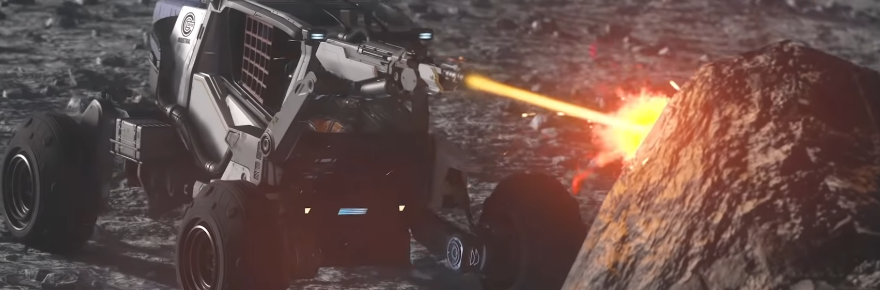
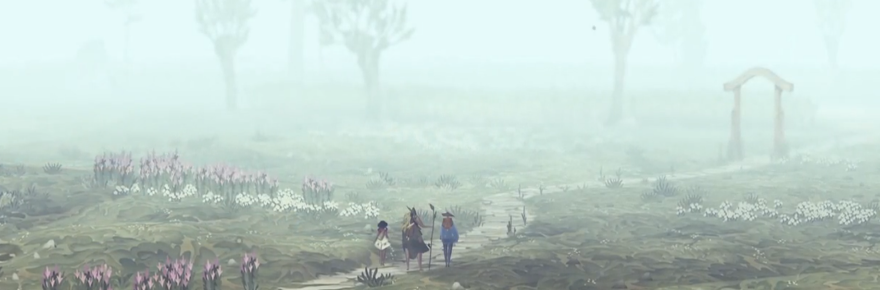


Rather than informing the player, ARC Raiders aim for them to be lost in the game. Its lack of a mini map is not a blunder. It's the intentional design to ensure players care about the game and not surface. Instead of being passive skimmers, they should be active participants in a world of uncertainty. The footsteps, machinery sounds, and distant activities should be enough to guide players in a direction.

This ability to be so susceptible to sound should be considered. For most shooters, noise is a tactical nuisance. Here, it is a question of existence. A reckless dash over gravel can leak your position, while going through your inventory is an almost guaranteed call to battle. You are not evaluating whether the environment will allow the luxury of organization. You are taking a bold gamble. The pause needed to control resources is not a neutral moment.
The outcome is a rhythm that is close to horror. Waiting, scavenging, and hiding in ruined buildings to avoid the ARC's mechanized movements is more about survival horror than other forms of extraction. Unlike other worlds, this one is constructed through control, simulating a post-apocalyptic world with no need for splendour. Rather than convenience, the game wants players who buy PS5 shooting games to understand the tension that comes with fragile existence.
If the environment is unwelcoming, the players will be unpredictable. This game relishes the mystery of human behavior, where cooperation is momentarily rewarding. ARC Raiders focuses on the paradox of trust, which is needed and always vulnerable. This is where teamwork is achievable, but very rarely. I remember times when a handshake was a sign of loyalty that would later be on the other end of.

Players' moral codes are vicious, not because the game requires it, but because the systems permit it. Teammates may casually watch you bleed out, not out of malice, but out of careful calculation, realizing your gear is worth far more than your life. Of course, you are left to suffer the feeling of utter betrayal, only to find pity in yourself for the incredible sensation of outsmarting your opponent and claiming the resources by sheer opportunism.
But the most powerful emotion is not in the betrayal, not in the targeting, but in the sheer act of existence. The sheer act of "Returning to Speranza" after a stressful run is pure electric relief. It is not the mere looting of the loot; it is the looting yourself, protecting oneself in a designed system that is meant to take it away. The ARC Raiders, in this sense, is a game in which the morals of the players who buy PS5 games are explored at length, with the ease of exploitation at their fingertips. It's a game where the players' instincts are out in the open.
In the case of ARC Raiders, the Progression is anything but instant. It is the Skill Tree that contains the most branches and requires the most patience. The tree that contains the most branches is divided into Condition, Mobility, and Survival. Conditioning reinforces endurance, Mobility, and survival, improving the efficiency of resources.

Mobility, specifically Stamina, becomes the most crucial focus early in the game. Without it, the player becomes vulnerable, incapable of escaping and repositioning themselves.
This grind is purposeful. It slows character growth to ensure that progress feels earned and not granted. This, however, starkly contrasts with the selection and upgrade of weapons and workstations, which are done instantly. While the Skill Tree is a long-term investment, the arsenal is a source of instant gratification. Unlocking a new weapon or a crafted tool can radically change a run, providing instant reward amidst slow developmental change.
The imbalance of grind and instant reward captures the essence of the philosophy of the game: Increments define survival, instant adaptation defines it. Players need to manage the trajectory of progress strategically, while bursts of tactical advantage need to be realized. Resilience, however, is built over time, while survival is defined within moments.
In ARC Raiders, crafting is not a choice- it is an imperative. The workstations act as the transformation tool, while blueprints located in the field unlock potential. The process resembles Fallout, where weapons are makeshift, yet feel obligatory. Players are able to upgrade their workstations, which in turn expands the arsenal and enables the crafting of new tools and weapons, forcing players to scavenge and manage resources.
The arsenal has a range of options, but its true strength stems from how it adapts. There's a need for strategic variation. Different environments, ARC presence, and even the actions of other players call for a distinct approach. A weapon effective in the open may struggle in tight corridors, and a weapon effective in one run may be useless in another.
"This loop" scavenge, craft, adapt"anchors the game 's identity." It's not about gaining resources. It's about how you can prepare for the unpredictable. This resource loop becomes a meditation on adaptability. It's a simulation of the fact that having the right gear, at the right time, is what counts in order to survive.
The term "casual" has been used for ARC Raiders, and it has been called a "casual extraction shooter." That label, while contradictory due to how tense and difficult the game can be, serves a purpose. Other games in the genre do not.
One example is the free loadouts offered after each failure. While most other extraction shooters punish defeats with total destruction, ARC Raiders hands you a lifeline. This design choice does not trivialize the challenge; it preserves the loop. Players are able to engage and return to try again without the tremendous defeat of having to restart from scratch.
This level of forgiveness does not remove difficulty. Consider the Rocketeer, a higher-tier ARC unit. Players will have to pay more ARC coin and prepare more, as each is harder to obtain. Progression and adaptation are still required. However, by easing the consequences of failure, it expands access without losing the level of tension. The "casual" label does not reflect a lack of challenge, but a design philosophy that celebrates the persistence over punishment approach.
ARC Raiders is more than an extraction shooter. It is as much an analysis of human behavior as it is a simulation of scavenging in a world after a cataclysm. It is also a study in survival. The immersion comes from the absence of " no mini-map, no hand-holding," players are required to exist in the world. The morality of the game is cruel; it exposes the mysteries of trust and betrayal that exist in multiplayer spaces. Although the progression is centered on long-term resilience, it is also deliberately grindy, forcing the player to strike a balance of immediate adaptation. The crafting loop is strategic, and the player is subjected to a demanding level of foresight and variation. The game is also forgiving, which is a redefining feature of accessibility to a genre that is often punitive in nature.

What manifests from the above is a gaming experience that simply "feels alive," lacking in spectacle, yet abundant in tension. Every sound is significant, every choice made has consequences, and every "run" is a new tale of fragility and resilience. You do not "play" ARC Raiders as much as you "dwell" in it. You have not only made the journey to Speranza; you have also understood that conquering a system is not the primary objective; rather, it is the stories you bring along from your journey that matter.

Wccftech recently attended a remote press presentation in which French developer DON'T NOD (Life is Strange, Vampyr, Banishers: Ghost of New Eden, Lost Records: Bloom & Rage) unveiled an extended preview of Aphelion, their upcoming sci-fi narrative-driven adventure game, showcasing two early chapters that introduced the game's hostile alien world and the mechanics that will define the experience. The presentation was led by Dimitri Weideli, executive producer, and Florent Guillaume, creative director, who walked us through gameplay and then answered some questions. In this article: A Desperate Mission Gone Wrong Set in 2062, Aphelion tells the story of astronauts Ariane […]
Read full article at https://wccftech.com/dont-nod-aphelion-preview-alien-isolation-inspired-sci-fi-adventure/
There's something about a survival horror game that's supposed to make your palms sweat and your pulse race, right? You expect to feel like you're barely scraping by, adrenaline coursing through your veins as you limp toward your next objective. 'The Callisto Protocol' tries hard to deliver on that promise. It places you in the blood-streaked boots of Jacob Lee, a man whose only goal is to escape the hellish prison of Black Iron on Jupiter's moon, Callisto. But here's the thing: for all its spine-chilling aesthetics and brutal combat, this game isn't quite the nightmare fuel I wanted it to be.

Instead, it's more like a beautifully made haunted house where the scares never quite land, but the lights and set design keep you walking through anyway.
If there's one thing The Callisto Protocol nails, it's the vibe. Every corner of Black Iron Prison feels suffocatingly oppressive. The air hangs heavy with tension, and the distant hum of malfunctioning machinery makes it clear you're trapped somewhere that's long past redemption. The snowy expanses outside are just as grim. Callisto itself seems to exhale an icy breath, with wind whipping around you as snow piles on dilapidated structures. The lighting deserves special mention—whether it's flickering fluorescents in a dark hallway or the faint glow of bioluminescent spores in an alien-infested tunnel, every scene feels meticulously crafted.

But for all its craftsmanship, I never truly felt afraid. Unsettled? Sure. Occasionally tense? Yeah. But scared? Not even once. And for a survival horror game, that's kind of a problem. Fear is the beating heart of this genre, and The Callisto Protocol's atmosphere, while gorgeous, feels more like a heavy blanket than a shocking jolt to the system.
Now, let's talk about the combat—the meat and bones (sometimes literally) of the gameplay. Right off the bat, melee combat takes center stage here, which is unusual. Normally, melee is a last resort in survival horror, but The Callisto Protocol flips the script. You're constantly dodging and countering, feeling every swing and impact like you're actually there. And I'll admit, those first few encounters feel raw and visceral in a way that's hard to shake.

But then it starts to drag. The dodge mechanic, while intuitive at first, becomes predictable, almost mechanical. Most enemies telegraph their moves so obviously that fights turn into a rinse-and-repeat cycle of "step left, swing pipe, repeat." And don't get me started on the GRP, the telekinesis glove that's supposed to add depth to combat. Sure, it's fun at first to hurl enemies into strategically placed spike walls or industrial fans, but after the 20th time, it starts to feel like the game's designers just couldn't think of more interesting ways for me to use it.
Resources are scarce, and every encounter feels like a gamble. Do you spend your last few bullets now or save them for a bigger threat later?
Jacob's journey through Callisto isn't exactly a narrative masterpiece, but it gets the job done. The basic setup—a prison outbreak leads to horrifying mutations—is nothing new, but it's the grim atmosphere that keeps you invested. As Jacob, you're constantly scavenging for scraps of information about what caused the outbreak and why. Jacob himself is a pretty blank slate, and while the supporting cast tries to inject some emotion into the story, their arcs feel more like set dressing than meaningful threads. And honestly? Sometimes that's enough.

The Callisto Protocol doesn't shy away from violence. It's the kind of gore that makes you wince the first few times but eventually feels more like a gimmick than a genuine shock factor. Personally, I found it less horrifying and more gross, where I would have certainly preferred the other way around. While this observation is probably a matter of test that should not stop those who buy PS5 horror games, I believe that it doesn't really add to the atmosphere, and I couldn't help but feel like it was trying too hard to impress me with its blood-soaked brutality.

Debatable. I prefer survival games more like Death Stranding 2: On the Beach, and horror games more like Resident Evil 4. The Callisto Protocol is not for everyone. Its visuals and atmosphere are top-notch, creating a world that's as stunning as it is oppressive. But the gameplay—especially the combat—starts to feel like a chore after a while. And without genuine scares to keep the tension high, the whole experience feels a bit hollow. Just don't expect to be looking over your shoulder when you turn the game off. Because for all its effort, The Callisto Protocol feels more like a chilling stroll than a heart-pounding sprint through the dark.