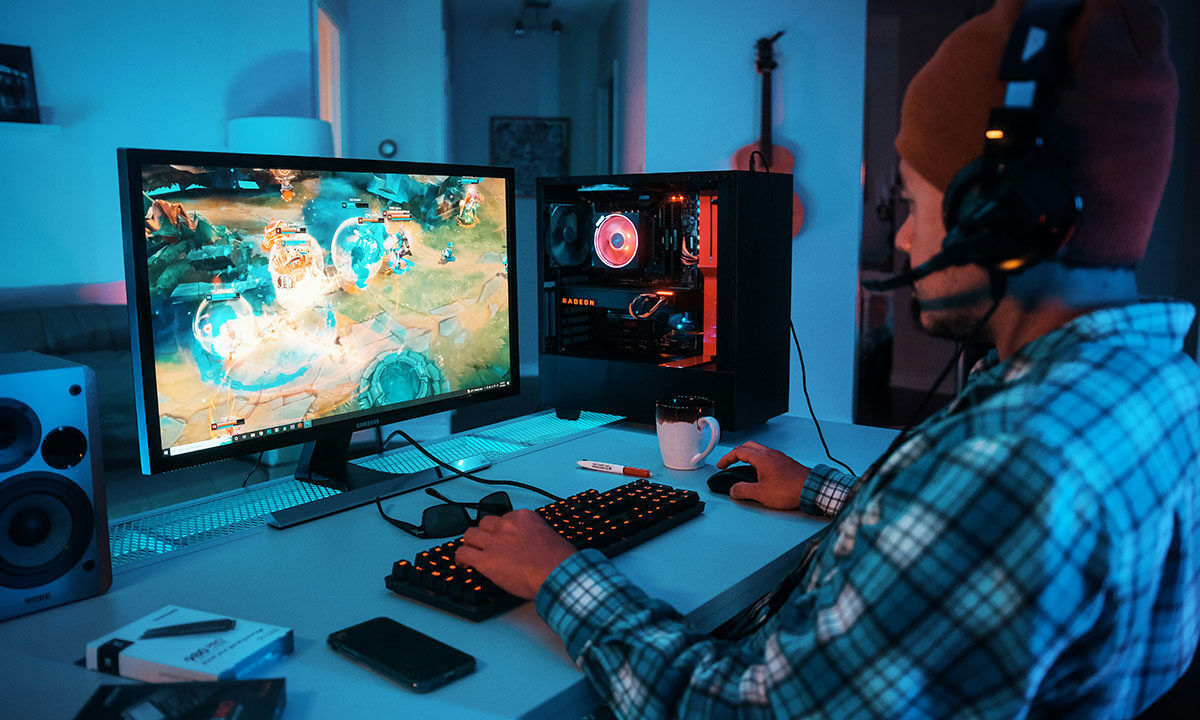
While headlines warn about the risks of AI, the technology also offers remarkable benefits. One of the biggest advantages is its ability to process and analyze data at lightning speed and to put that information to practical use. Real-time data can make video games more fluid, responsive, and immersive than ever before, offering players experiences that adapt to their style and preferences in the moment.
As games become more complex and connected, the amount of data being generated has grown exponentially. Every movement, decision, and interaction can be captured and analyzed, enabling developers to understand not just how games are played but also why players behave as they do. This insight is at the heart of modern game design.
What Are Real-Time Analytics?
As the name suggests, real-time analytics involves analyzing data streams as they are generated. This continuous analysis allows systems to respond almost instantaneously, producing insights or outcomes with impressive accuracy. But what does this mean for players, developers, or even entertainment platforms beyond gaming?
For developers, real-time analytics provide immediate feedback on performance, balance, and engagement. If a particular level proves too difficult or a feature isn’t being used as intended, adjustments can be made quickly, sometimes without players even noticing. This ability to fine-tune experiences on the fly helps keep games enjoyable and relevant long after launch.
Enhancing Personalized Experiences
Online platforms are increasingly using real-time analytics to tailor experiences for individual users. For example, a platform may observe which types of games a player enjoys most or which challenges they respond to eagerly. This data can inform recommendations, highlight new content, and adjust difficulty levels to match the player’s skill level, making every session feel personalized and engaging.
Personalization also plays a role in retention. Players are far more likely to return to a game that feels fair, rewarding, and aligned with their preferences. By recognizing patterns in behaviour, developers can create progression systems, rewards, and events that feel timely rather than generic.
Even the online casino industry, though not the focus here, provides an illustrative example. Some review platforms now rate sites using real-time data, so the top online casinos in competitive markets like Canada are ranked based on factors such as user engagement, game variety, and promotional offerings. This demonstrates how immediate insights can improve both the service and the player experience.
Dynamic Gameplay and Strategy
Real-time analytics also transform how players interact with games. In many competitive games, whether strategy-based or team-oriented, field or map conditions can change rapidly. Real-time data allows game mechanics, AI opponents, or in-game events to adjust dynamically, creating more realistic and challenging scenarios. Players can adapt their strategies on the fly, making decisions informed by constantly updating information.
In multiplayer environments, this can also support fairer matchmaking. Analytics help ensure players are matched with others of similar skill levels, improving competition and reducing frustration. This balance is essential for keeping online communities healthy and engaged.
This has clear advantages: gameplay becomes more engaging, decisions are more meaningful, and strategic depth increases. However, it can also create pressure. Players may feel compelled to act quickly, sometimes sacrificing thoughtful planning in favour of an immediate response. Balancing speed and strategy is part of the modern gaming challenge.
Predictive Insights and Preparation
Where real-time analytics truly shine is in preparation and anticipation. Data on player behaviour, environmental changes, or evolving game conditions can be analyzed in advance of critical moments. This allows players to make better-informed decisions, anticipate opponents’ moves, and adjust tactics effectively. The result is smarter gameplay and more satisfying outcomes.
From training modes that highlight weaknesses to live dashboards that track performance trends, analytics are becoming a powerful tool for improvement rather than just observation.
Conclusion
Where real-time analytics really do win out is when they are used in the run-up to a contest. There are many factors that can affect the outcome, from sudden announcements about player injuries to changing weather forecasts.
By taking these into account, it not only gives an indication about what the result will be, it also leads to better prediction of odds and, if the odds go your way, an even bigger payout if you win.
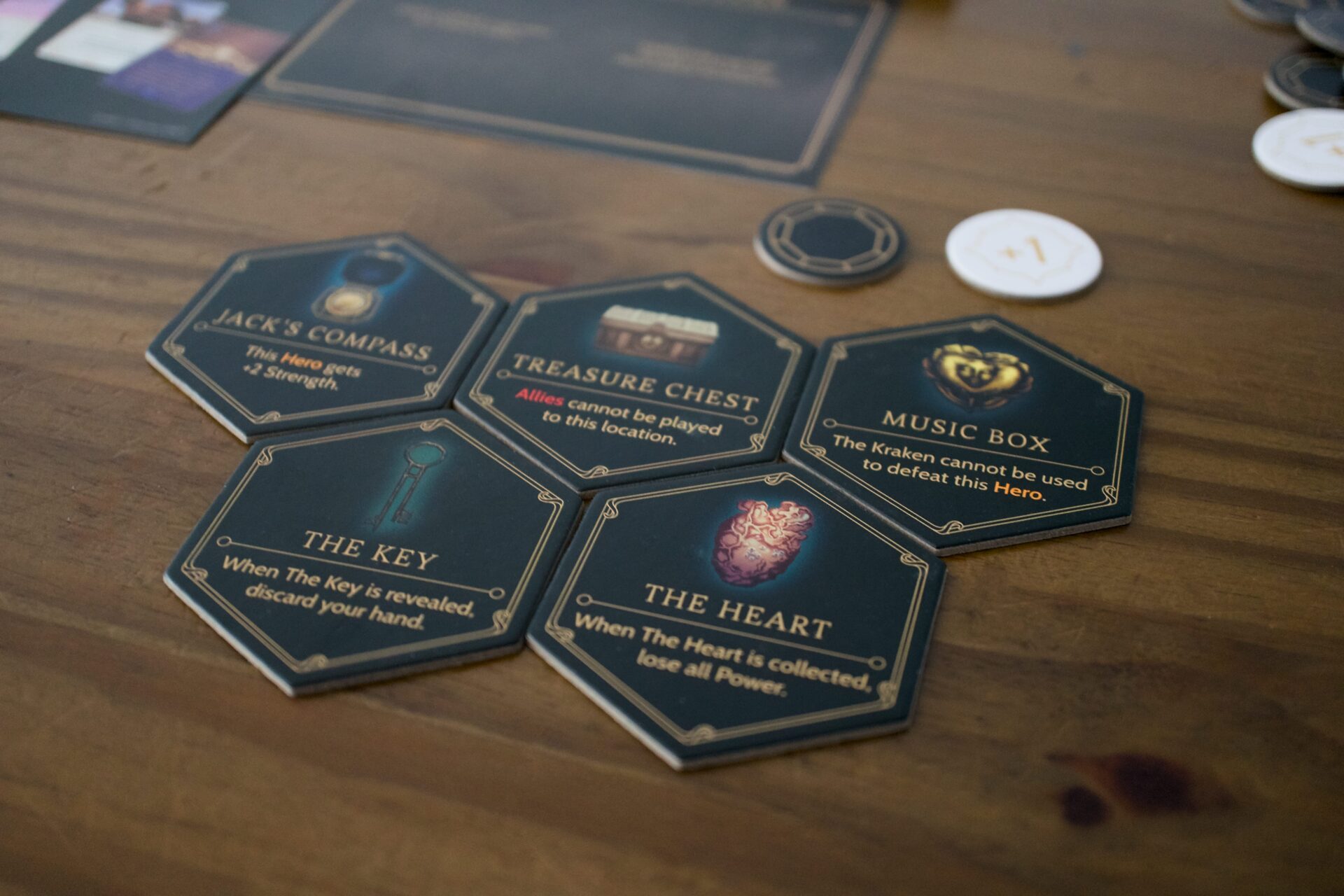
In 2026, people are now searching for more family-friendly games that offer meaningful ways to reconnect. Moreover, digital entertainment series still has its own place. Thus, several households are rediscovering the timeless moment of tabletop games. Tabletop games are more engaging and time-consuming, ranging from classic board games to immersive role-playing and beyond.
These tabletop games have become a go-to choice for family entertainment throughout generations. These games are more interesting and far better than just passing the time. They improve communication, critical thinking, shared memories, and laughter. Such qualities are enough to strengthen our family bonds. Whether you want to enjoy a cozy weekend or a holiday gathering, tabletop games offer a wide range of happiness.
Why Tabletop Games? 9 Reasons To Choose
Here is a compiled list of 9 reasons to choose tabletop games for your next family gathering.
1. Bring Families Together
Choosing tabletop games isn’t just easy to manage, but also brings everyone under one roof. Families enjoy physical play and strengthen their bonds. This could be the best choice for big families to discourage device use during gatherings. Tabletop games need participants to sit together, engage, and interact directly with one another. Games like murder mystery games, trivia challenges, and board games create shared experiences. These experiences naturally spark discussion and storytelling.
2. Suitable for All Skill Levels and Ages
Tabletop games are quite adaptable and inclusive. These games are designed for youngsters, teens, adults, or even mixed-age groups. That’s why they are making a good choice for families with different ages and interests.
3. Improve Critical Thinking and Problem-Solving
Tabletop games are among the finest ways to develop cognitive skills. Tabletop games offer a wide variety in which players can think strategically to solve problems. Puzzle-based and logic challenges are a good choice for sharpening reasoning skills. However, other strategy games improve foresight and planning.
4. They’re Built To Promote Communication & Social Skills
Effective communication is fundamental to the success of tabletop games. Players engage in explaining strategies, asking questions, negotiating, and sometimes persuading others. These interactions are crucial for gameplay. Also play a significant role in cultivating essential social skills in both children and adults.
Games that incorporate storytelling, role-playing, or teamwork enhance players’ communication skills. For younger participants, these games can improve vocabulary and listening skills.
5. Best Option to Create Memorable Shared Experiences
Tabletop games differ from passive forms of entertainment. That’s why they require active player participation. This engagement helps create memorable experiences that families often discuss long after the game has ended.
Tabletop games often lead to memorable experiences. These can include unexpected victories, amusing errors, and dramatic plot twists. These narratives play a significant role in strengthening family relationships. Also, fostering a sense of togetherness among players.
6. They Provide Screen-Free Entertainment
With growing concerns about screen time, families are enthusiastically exploring fun, screen-free activities. Tabletop games offer a delightful way to connect and engage without the distractions of our digital world!
Engaging in board or card games brings families together, fostering connection and fun! This delightful break from screens can lower stress, boost attention, and promote healthier habits. It’s a fantastic way to bond!
7. Educational Enough Without Learning
Tabletop games excel in educating. They’re enough to provide entertainment, including math, language, history, strategy, and logic to make learning enjoyable.
Kids thrive when they’re having a blast! Fun games that incorporate counting, reading, and problem-solving effortlessly boost their academic skills. While diving into exciting stories, they sharpen their ability to analyze, spot patterns, and think outside the box. Learning can truly be a joyful adventure!
8. Ideal for Occasions and Gatherings
Tabletop games are perfect for family get-togethers, holidays, birthdays, and special occasions. They offer a fun way to bring everyone together and ease any awkward moments that can happen in bigger groups. Playing games helps break the ice and encourages guests to mingle and connect more comfortably. Cooperative and party-style games are especially great, as they promote teamwork and lots of laughter, making your gatherings even more lively and memorable.
9. They Are Reusable and Cost-Effective
Compared to many other types of entertainment, tabletop games are a fantastic and affordable choice. Just one game can bring you years of joy and can be played again and again without losing its charm. Unlike movie tickets or digital subscriptions that you have to buy repeatedly, tabletop games are a one-time purchase that you can enjoy over and over. Plus, many games offer exciting replay value with different strategies, outcomes, or storylines to explore.
Tabletop games truly deserve their spot as a popular choice for family fun. They bring loved ones together, encourage learning and communication, and help create wonderful shared moments that can be cherished long after game night ends.
In a world where digital entertainment often takes center stage, tabletop games offer a delightful, engaging alternative that can help bring families closer together.
By incorporating tabletop gaming into your family routine, you’re not just having fun; you’re creating special connections, joyful memories, and cherished traditions that will last for many years.
In the world of online entertainment, innovation now moves alongside regulation. You can feel the difference. The platforms you use have become more stable, transparent, and responsive without losing their creative edge. This reflects a shift toward compliance-driven technology stacks that treat regulation as infrastructure rather than interruption. France and neighbouring markets have advanced more slowly, while Germany’s approach to governance and technology integration keeps it at the forefront of digital services.
You interact with platforms subject to EU-level frameworks, such as the Digital Services Act, and to national enforcement. Here, governance is embedded directly into systems rather than added at the margins. Content moderation, identity verification, accessibility, and reporting run continuously in the background, providing a more reliable and professional experience. For operators, compliance technology underpins sustainable growth, demonstrating how structured governance can support creativity, interaction and long-term trust.
The regulatory framework driving platform technology
Germany’s compliance architecture is built on layered obligations that affect nearly every interactive platform you use with a meaningful user base. The Digital Services Act introduced ongoing risk assessments, transparency reporting, and formal complaint-handling processes for digital intermediaries. National laws further expand these duties, particularly regarding content moderation speed, tax transparency, and consumer protection.
You may never see these systems directly, but they influence how platforms log your interactions, flag violations and document decisions that affect your account or content. Today, developers design systems in which regulatory logic runs alongside core functionality, rather than being added later. Accessibility requirements taking effect in 2025 have also reinvigorated interface design, improving how you navigate platforms using different devices or assistive technologies. Together, these rules dictate the technical foundations behind the experiences you engage with daily.
Compliance innovation within regulated entertainment ecosystems
Germany’s compliance stack has become a practical test of operational maturity within regulated entertainment sectors. Licensed casinos operate under strict identity verification, age controls and behavioural monitoring obligations that directly affect how you onboard and play. The list of German online casinos at CasinoBernie illustrates how operators can integrate regulatory tooling while maintaining smooth gameplay and a user-friendly experience.
These platforms rely on automated identity checks, transaction monitoring and centralized reporting dashboards to remain compliant while keeping interaction flows smooth. From your perspective, this results in faster verification, clearer limits and more predictable platform behaviour. As a result, industry discussions increasingly frame compliance engineering as a competitive advantage rather than a burden; when governance systems are built into the product, you benefit from stability without feeling constrained by regulation.
How compliance technology influences user experience
Compliance technology in Germany is increasingly shaping the user experience of interactive platforms. Accessibility standards have led to cleaner interfaces, clearer navigation paths and better compatibility and collaboration across platforms, devices and assistive tools. Meanwhile, automated content moderation systems help keep communities you participate in active while reducing exposure to harmful behaviour, with you benefiting from faster report responses and more consistent rule enforcement.
Transparency requirements also influence design decisions, providing clearer explanations of moderation outcomes, account actions, and data usage, which together contribute to the predictability and fairness many users now expect. From the platform side, compliance tools generate real-time insights into risk patterns and behaviour, allowing adjustments without disruptive redesigns. As a result, innovation often accelerates rather than slows, while your experience improves quietly over time.
Competitive effects of Germany’s compliance-first approach
Germany’s digital compliance domain has also reinvigorated competitive dynamics across interactive entertainment. Large platforms face heightened scrutiny under EU competition and market fairness rules, while smaller operators gain clearer entry paths through standardized compliance expectations. For developers, this reduces ambiguity around legal obligations and supports more predictable product planning. As a user, you can access a broader range of platforms that offer localized services without sacrificing professionalism.
Interoperability expectations and data governance rules encourage modular system design, enabling platforms to expand across regions with minimal disruption. In this context, compliance technology vendors have become integral partners in this ecosystem, supplying adaptable tools that keep pace with regulatory change, resulting in competition driven by quality, reliability, and user trust.
Compliance as a catalyst for future platform growth
Looking ahead, Germany’s compliance-centric technology stack positions interactive entertainment platforms for long-term resilience and that resilience directly affects you. Regulatory focus is expected to expand into areas such as algorithmic accountability, youth protection and real-time risk monitoring, with platforms that already operate continuous compliance systems adapting more smoothly to these shifts. For you, this likely means services that progress steadily rather than through disruptive corrections.
Developers increasingly treat compliance tooling as core infrastructure, similar to security or performance optimization, which supports faster innovation cycles and more confident experimentation within defined boundaries. Germany’s situation shows that strong governance, when supported by modern technology, creates conditions in which platforms can grow responsibly while delivering experiences that feel stable, transparent, and future-ready.
Vital stats
Compliance drives broader entertainment growth: Germany’s video games market, encompassing games, hardware and online services, generated around €9.4 billion in revenue last year, with online gaming services within that rising 12% year over year, signalling how structured compliance and governance support dynamic segments of interactive entertainment.
Regulation enhances user safety: German authorities reviewed over 1,700 websites and initiated 231 prohibition proceedings last year, illustrating how tech-driven compliance protects users.
Compliance improves experience and competition: Transparency and accessibility rules under the Digital Services Act give you clearer moderation and account actions, while smaller operators can compete confidently, creating a more professional and trustworthy ecosystem.
When we think of superheroes from the Great White North to have emerged from the panels of popular comic books, there are a handful that come to mind. In particular, Wolverine and Deadpool of the Marvel repertoire. However, there is one that is often overlooked in favour of his more illustrious compatriots, despite being the ultimate Canadian hero.
Captain Canuck is an iconic figure from the independent comic scene in Canada. He is the perfect counterpart to the star-spangled backside of Captain America. Ever since his introduction in 1975, he has come to define the industry in the nation and represent everything it means to be a Canadian citizen. He’s multilingual, polite, and granted superhuman powers by an alien race.
It is notable that, other than the previously mentioned Deadpool and Wolverine, there is a real dearth of Canadian heroes in the mainstream zeitgeist. It leaves us wondering, is there potential for Tom Evans, Darren Oak, and David Semple – the Captain’s civilian identities – to break the mould and become a household name, especially in a time of comic book media saturation?
Reports of Comic Book Media Fatigue Greatly Exaggerated
The establishment of the Marvel Cinematic Universe ushered in an entirely new ecosystem of superhero cinema. Prior to the first movie in the Avengers franchise, film and TV based on comic book IPs were sporadic. There were attempts to establish franchises, including Sam Raimi’s Spider-Man series and Ang Lee’s Hulk, but the MCU introduced a revolving door of characters and released media on a regular basis for the first time.
That has led to a deluge of content, including sprawling movie franchises, serialized TV shows, and games. Even at the casino, you can find superhero-themed slot games like Thor Infinity Reels. It became the most common theme in the media of the 2010s and 2020s, leading some to claim that fatigue was setting in among mainstream audiences. A number of below-par releases from both Marvel and DC only seemed to underline this.
Though it seems premature. The Fantastic Four: First Steps may have seen a slightly underwhelming box office, but it still broke half a billion internationally. Not only that, but it received largely positive reviews and was seen as a return to form for the MCU. Coupled with the improving reception for James Gunn’s DC universe and Superman, it seems the industry is no longer on life support.
Where Would Captain Canuck Fit Into This Landscape?
The concept of a Captain Canuck movie has been kicked around Hollywood – or its Canadian counterpart – for years now. In 2011, Mind’s Eye Entertainment announced it was looking to develop a treatment for a movie based on the iconic hero, though it never came to pass. Since then, however, there have been a number of adaptations in other formats.
A 2013 web series proved popular, which has led to both a live-action and an animated TV series being announced in the 2020s. Demand is clearly there for the Canadian to save all Canadians. However, the drive to complete projects is lacking, or funding is yet to materialize to get them over the line and released to the public.
It’s clear to see, though, that many are growing tired of seeing stories that have been told time and again. There are diminishing returns on rehashes of superheroes like Captain America and other members of groups like the Avengers, the Justice League, and the Suicide Squad. Instead, people are excited for lesser-told stories and new characters – there’s a reason the Miles Morales Spider-Man is leading the way with the Spider-Verse series. Captain Canuck could be one of these new characters.
We will have to wait and see whether any major studios will take a chance on Canada’s answer to Superman and Steve Rogers. However, with movies like the Toxic Avenger remake finally seeing the light of day, it seems like it could be the time for the greatest Canuck to hit the big screen.
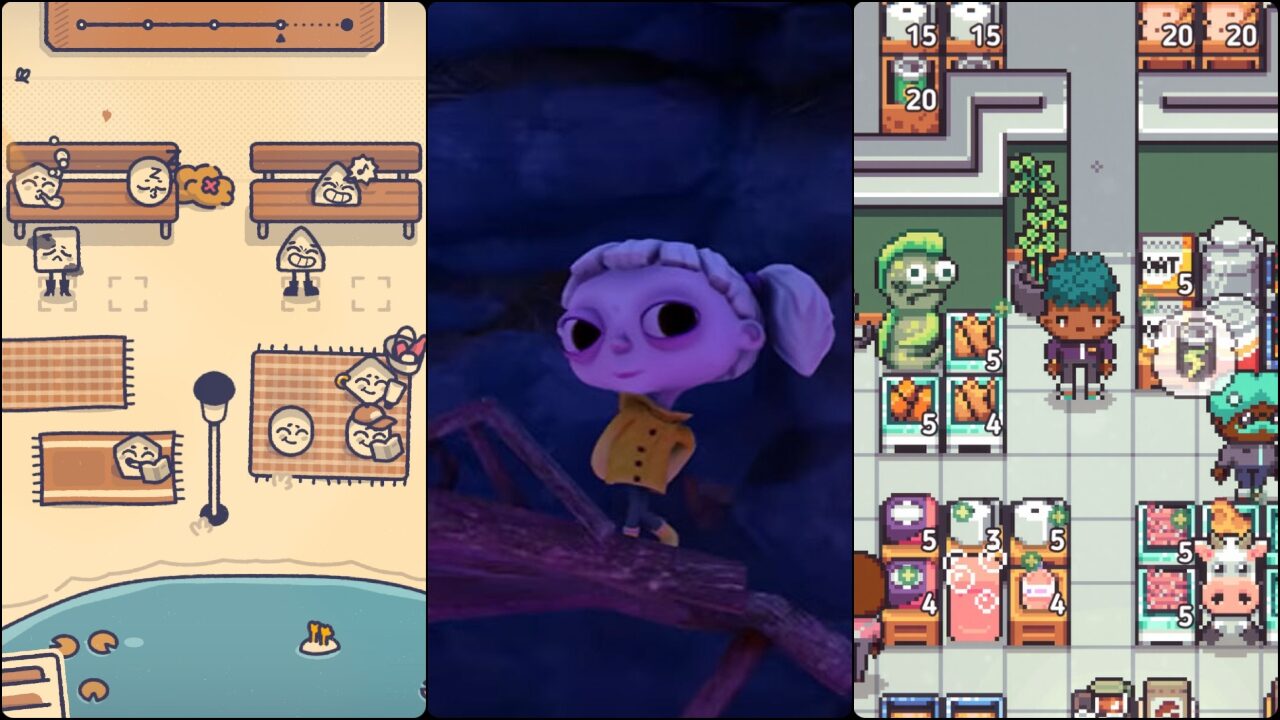
The gaming industry has witnessed a quiet revolution over the past decade. While major publishers pour hundreds of millions into blockbuster releases, indie studios have carved out a space where narrative innovation thrives. These smaller teams are producing some of the most emotionally resonant and creatively ambitious interactive experiences available today, often outpacing their larger competitors in ways that matter most to players.
The Creative Freedom Advantage
Independent developers operate without the constraints that typically govern major studio productions. AAA publishers answer to shareholders, marketing departments, and risk-averse executive boards. Every design decision passes through multiple approval layers, each one potentially diluting the original creative vision. Indie teams face their own pressures, certainly, but they maintain something invaluable: control over their artistic direction.
This autonomy allows smaller studios to tackle subjects and themes that big publishers routinely avoid. Mental health, grief, identity, and moral ambiguity feature prominently in indie narratives. The willingness to explore uncomfortable territory has produced works that resonate on a deeper level than many big-budget alternatives. Players increasingly seek experiences that challenge them emotionally rather than simply entertain them mechanically.
Immersion Beyond Graphics
ctrl alt DEAL
The digital services sector has broadened significantly in recent years. Users now engage with interactive experiences across multiple platforms, from narrative-driven applications to various online services. Live casino at BetMGM UK and similar interactive digital services demonstrate how design principles focused on user engagement and atmosphere have become standard across the industry. What unites these varied digital experiences is a focus on immersion, the feeling of being present within a crafted environment where interactions feel meaningful and immediate.
Indie game studios understand that immersion does not require photorealistic graphics or celebrity voice actors. Atmosphere emerges from cohesive design, thoughtful pacing, and attention to detail. A hand-drawn art style can convey emotion more effectively than motion-captured performances when executed with purpose. Small teams often consist of people who have worked together for years, developing a shared aesthetic language that permeates every aspect of their work.
Financial Realities and Creative Risks
The economics of independent development differ fundamentally from AAA production. A small studio might operate on a budget that a major publisher spends on marketing alone. These financial limitations force creative problem-solving. Developers learn to do more with less, finding innovative ways to convey narrative information without expensive cutscenes or elaborate set pieces.
Lower budgets paradoxically enable greater risk-taking. When a project costs millions rather than hundreds of millions, experimental mechanics and unconventional stories become viable. Failure, while still painful, does not threaten the existence of parent companies or result in mass layoffs. This safety net allows developers to pursue genuinely original ideas rather than iterating on proven formulas. For many indie teams, securing a release for major consoles like Sony PlayStation represents validation of their creative vision, a milestone that once seemed reserved exclusively for established studios with substantial backing.
Player Agency and Meaningful Choice
Sea of Stars
Modern audiences have grown sophisticated in their understanding of interactive narrative. They recognize the difference between genuine choice and the illusion of agency. Many AAA games offer branching paths that ultimately converge on the same conclusion, giving players the appearance of control without its substance. Independent developers, working with smaller scopes, can craft experiences where decisions carry real weight.
The best indie narratives integrate choice into their core design rather than treating it as a superficial layer. Players make decisions based on incomplete information, face consequences that emerge organically from their actions, and live with outcomes that feel earned rather than arbitrary.
Sustainability and Future Trajectories
The independent development scene faces its own challenges. Visibility remains difficult in an oversaturated market. Many talented teams struggle to break through the noise, regardless of their work. Success stories inspire new developers, but sustainability requires more than artistic vision.
Looking forward, the distinction between indie and AAA may blur further. Some independent studios grow into mid-sized companies, while major publishers occasionally greenlight smaller experimental projects. The real question is whether creative freedom and narrative ambition can scale, or if they remain fundamentally tied to the constraints and flexibility that define independent development at its best.
Even the most casual gaming fans have come to appreciate the number of advancements that have taken this industry by storm in recent times. From the continuing emergence of artificial intelligence to the role of in-game rewards such as NFTs, we are living in a brave new world.
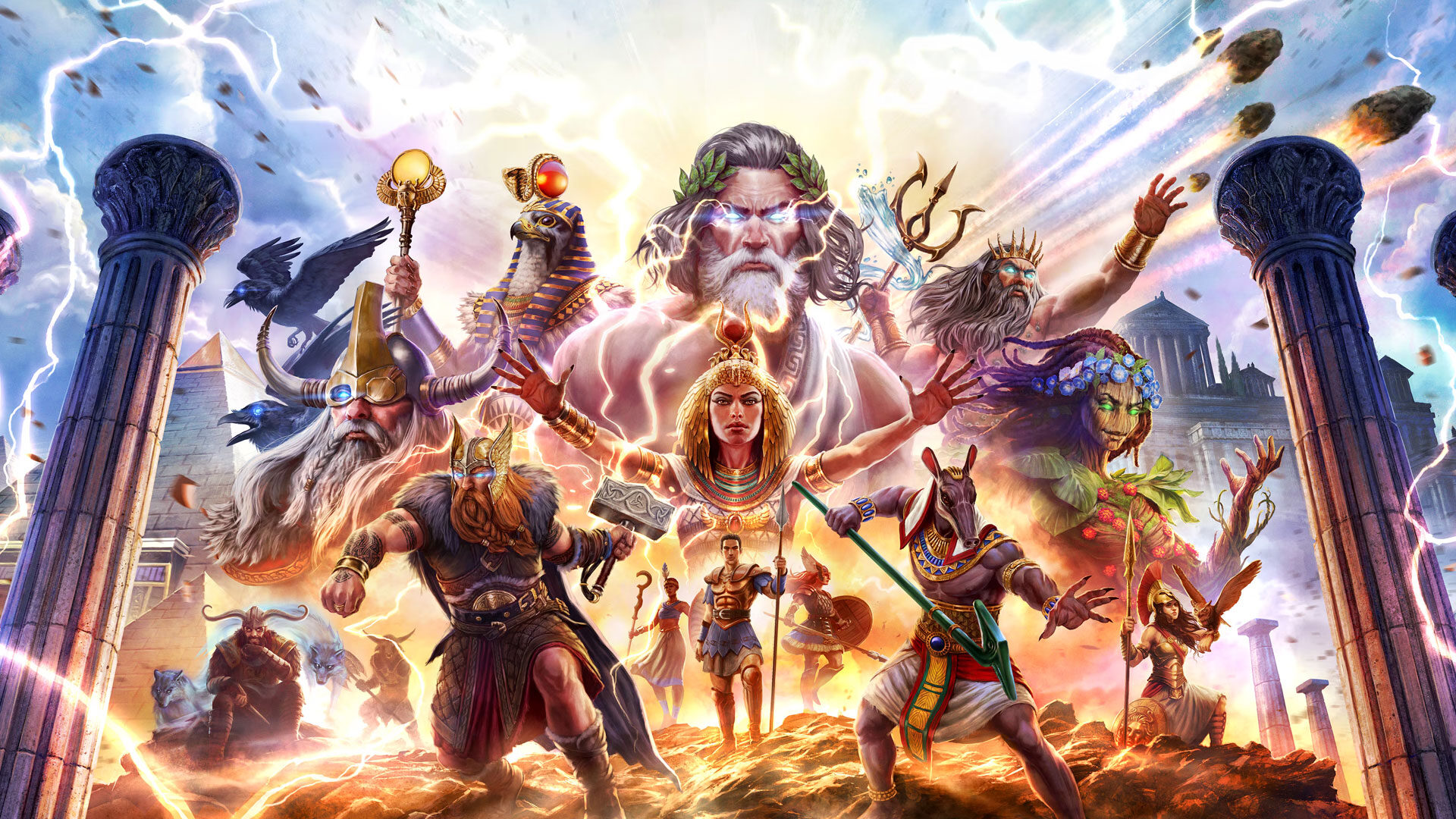
However, some themes appear to stand the test of time. This is particularly relevant when discussing the role that mythology still plays. Why do ancient narratives continue to captivate audiences? What is their primary appeal? How are developers attempting to bridge the gap between mythology and 21st-century reality? Let’s see what the experts have to say on the matter.
Catering to a Massive Demographic
We will begin by highlighting the pragmatic side of the equation. The fact of the matter is that games associated with ancient themes tend to resonate with an extremely wide audience. They are not hampered by cultural nuances, and they rarely cause any type of offence with the players themselves. These are the reasons why developers tend to gravitate to this genre. One example of the success that can be achieved involves the Book of Dead slots franchise. Offering rich historical overtones and enabling players to take on the role of a daring explorer, this title clearly illustrates why mythology continues to enjoy such prominence throughout the iGaming community.
The Psychological Side of Things
Familiarity is another metric that ultimately determines the popularity of any game. While players do indeed love novelty, they also require comfort if they hope to make the most out of the experience. The good news is that ancient themes can tap into both sides of the proverbial spectrum. Consider some of the sentiments that such games will often employ:
Jealousy
Heroism
Conflict
Redemption
Transformation
Everyone can identify with these feelings, and they can be used to create “anchor points” within a larger narrative. Even entirely fictional games illustrate this fact (remember the success enjoyed by the Zelda series made for the Nintendo Entertainment System).
Ideal for Game Developers
This lesser-known observation likewise deserves a fair amount of attention. The appeal of any game is partially determined by the visuals that software engineers employ. In the case of ancient mythology, these professionals are provided with a rich palette of possibilities. Timeless architecture, well-known symbols, bold colours, and stunning iconography are some options at their disposal. Consider the striking image of Zeus wielding a thunderbolt, or Egyptian hieroglyphs found within a slots wheel. These are two well-known examples.
The Power of Escapism
World of Tanks
Developers are also provided with a fair amount of latitude during the developmental process. For instance, they may choose to combine two separate ancient cultures to create an entirely new timeline. This notion of artistic “escapism” continues to attract a new generation of talent, and it has resulted in a handful of crossover titles.
One example involves a recent iteration of World of Tanks. Programmers have decided to include elements of Viking lore alongside the tank battles themselves; essentially bridging the gap between the ancient and the modern. This is also likely to attract a wider audience base; never a bad thing when it comes to overall commercial success.
Learning (Literally) from the Past
The digital gaming community has followed a series of trends since the so-called “golden days” of the late 1980s, and 1990s. One of these involves taking advantage of the momentum associated with previous commercial success stories. Two franchises immediately come to mind:
Dungeons & Dragons
The Lord of the Rings
Both enjoyed a great deal of critical acclaim, and they have become legends throughout the online gaming ecosystem. So, it makes perfect sense that the next generation of developers will continue to leverage the possibilities.
The Surprising Role of Education
There are also times when certain types of games can be used as educational tools. They may summarise the history of an ancient culture, explore creation myths, or teach children about the importance of basic morality. Unlike some other genres, ancient themes tend to be suitable for all age groups; yet another reason why they have become ubiquitous throughout the online gaming marketplace.
We can now begin to appreciate why timeless narratives are not going away any time soon. Even with the emergence of technological breakthroughs (such as augmented reality headsets), these topics are indeed here to stay. Whether you are a fan of the latest slots titles, you enjoy playing a few rounds of solitaire offering an Egyptian theme, or you are simply hoping to keep abreast of the latest gaming trends, timeless stories will continue to dominate.
The 2026 release calendar is already being shaped around a handful of titles that attract disproportionate attention. Some have fixed dates, others sit in broad windows, but together they give the coming year a clearer outline than usual this far in advance.
At the centre of that picture is Grand Theft Auto 6, joined by high-profile projects such as Marvel’s Wolverine, Resident Evil Requiem, IO Interactive’s new Bond game, and Nioh 3, with longer-term heavyweights like The Witcher 4 and The Elder Scrolls VI hovering on the horizon. Taken together, they show how 2026 is already being treated as a defining year for the current console generation.
Marvel’s Wolverine and the Superhero Solo Spotlight
Away from GTA 6, Marvel’s Wolverine has become one of the most closely watched titles on the 2026 slate. Developed by Insomniac Games, the project sits in the same broad universe as the studio’s Spider-Man series but narrows its focus to Logan rather than a wider ensemble of characters.
Early material points to close-quarters combat, quieter stretches of exploration, and a tone that leans toward grounded violence instead of city-wide catastrophe. Studio interviews have described a self-contained narrative rather than an open-ended structure, positioning Wolverine as a single-player showcase at a time when large service-led projects remain prominent.
Analysts link the game to a wider shift in the superhero genre. After several years dominated by shared universes and crossovers, studios in film and games are testing smaller, character-driven pieces. Wolverine is frequently cited as a key test of that approach on current-generation hardware, particularly for high-profile licensed characters.
Resident Evil Requiem Extends Capcom’s Revival
Horror has its own flagship in Resident Evil Requiem, which returns to a reimagined Raccoon City with a new cast and a slightly altered angle on familiar events. Capcom has shared limited story information, but promotional material highlights narrow corridors, dynamic lighting, and enemy behaviour that responds more aggressively to noise and movement.
Requiem follows a sequence of remakes and sequels that have rebuilt Resident Evil’s critical standing. Updated versions of Resident Evil 2 and Resident Evil 4 showed that there is room for modern retellings that respect original structures while adjusting pacing and systems. New entries now arrive with an assumption that the series will continue balancing nostalgia with revision rather than simply repeating past formulas.
Preview reports have drawn attention to sound design and environmental detail. Subtle audio cues are being used to direct attention, while more granular damage modelling aims to reinforce the sense of vulnerability that defined earlier entries. For horror fans, Requiem has become one of the early anchors of the 2026 schedule.
GTA 6: A New Vice City at the Center of the Map
Rockstar’s next open world has dominated online discussion since its first trailer appeared. The move to a modernized Vice City, an apparent focus on dual protagonists, and glimpses of beaches, highways, and high-rise districts have all contributed to a long build-up that stretches well beyond a normal marketing cycle.
Community reaction has extended beyond routine speculation. Forum threads and social media posts sketch out imagined itineraries across the fictional city, including rooftop pools, nightlife strips, and multi-floor leisure hubs filled with bright screens and digital distractions. References to free online slot games appear regularly in those conversations, used as shorthand for the quick, browser-based experiences that often sit alongside longer sessions with big releases.
Publishers have taken notice of the game’s pull. Industry calendars already show competing projects moving away from November 19, with some studios looking to early 2027 instead. For GTA 6 itself, Rockstar has released relatively few follow-up details, yet each short clip produces another round of trailer breakdowns and frame-by-frame analysis, reinforcing the sense that Vice City will dominate the closing months of 2026.
007: First Light and IO Interactive’s Espionage Experiment
Another 2026 title attracting sustained interest is 007: First Light, the James Bond project in development at IO Interactive. The studio, best known for its modern Hitman trilogy, has described the game as an origin story that focuses on a younger Bond still finding his place within the intelligence services.
That premise sets First Light apart from previous Bond adaptations, which have often depicted a fully formed agent at the height of his powers. IO’s track record offers a further point of reference. The Hitman series constructed dense sandboxes built around routine, surveillance, and improvised solutions, and observers widely expect similar design principles to inform Bond’s first missions in the new game.
For the licence, the project represents an opportunity to reposition the character for a generation more familiar with stealth hybrids than traditional film tie-ins. Investors and followers have tracked progress closely, with IO expanding its studio footprint and confirming that the Bond game will remain a central focus for the company across several years.
Nioh 3 & the Mid-Year Contenders
Outside the biggest names, a group of mid-year releases is building its own following. Nioh 3, from Team Ninja, is the clearest example. The action RPG series has developed a reputation for fast, demanding combat, and early demonstrations of the third entry highlight a revised stance system that allows players to switch between a disciplined samurai style and a faster, evasive ninja form.
Preview coverage suggests that this mechanic alters the rhythm of encounters, encouraging rapid adjustments mid-fight rather than long stretches in a single stance. For returning players, that shift reads as both a challenge and a natural extension of earlier systems. It also helps Nioh 3 stand apart in a landscape where many action games share similar upgrade paths and equipment loops.
Other mid-range titles, including smaller science fiction projects and independent horror releases, are still finalizing their positions on the calendar. Many are expected to announce firmer dates once the largest franchises have locked in their own windows, leaving the middle of 2026 as one of the more flexible stretches of the year.
Late-Year, Long Shot Heavyweights
On the outer edge of 2026, a different group of projects continues to attract attention despite uncertain timelines. The Witcher 4, still early in development at CD Projekt, appears regularly in forward-looking reports. Official statements have avoided fixed commitments, yet followers routinely reference 2026 as a potential point for a first substantial reveal rather than a confirmed launch window.
The Elder Scrolls VI occupies a similar position. Developers at Bethesda Game Studios have described it as a long-term effort, and interviews continue to frame the project as a distant goal rather than an imminent release. Legal filings and platform documentation have nevertheless connected the series to the 2026 to 2027 period, leading some analysts to treat late 2026 as an optimistic boundary rather than a realistic target.
A Crowded Year Before It Starts
In unison, the mix of confirmed launches and distant possibilities gives 2026 a busy outline well before the year begins. Grand Theft Auto 6 anchors the schedule in November, while projects such as Marvel’s Wolverine, Resident Evil Requiem, 007: First Light, and Nioh 3 offer contrasting tones across the earlier quarters.
The final calendar will almost certainly change. Delays, platform decisions, and shifting budgets are likely to move some of these games into different months or different years, while unannounced titles will fill in the gaps. For now, though, the combination of a new Grand Theft Auto, high-profile licensed projects, and long-running series in transition explains why attention has already settled on 2026.
Into the Breach was a major inspiration for its elegant strategy!
I think they nailed things by having players move units around to defend, all while granting very limited resources. You have to think about how to really defend objectives and just survive.
It’s not a necessarily a kill everything type of game.
Board games were also an inspiration. There are dexterity board games like Catacombs or Flick ’em Up! – and even the little paper football game you may have played back in grade school.
I also heard about the early development of Hearthstone; they asked:
“What could we do in a digital environment that we can’t do in a physical environment with a card game?”
I tried to do the same thing with Bounce Castle.
What can I do with a kind of billiards or a mini golf-style of gameplay, but something that you couldn’t do in real life?
That’s where things like explosions and pits that you can throw things into come into play.
I tried to kind of combine all of these things and bring it together with the art style of games like Card Hunter from back in the day, or Paper Mario.
That’s where a lot of the inspiration came from!
Gamers Heroes
Absolutely!
So I know the Steam Playtest has been going on for a little while, and that it’s going to be extended.
Have you noticed any insights from players?
I mentioned my aggressive approach that didn’t end well, but were there any instances on the opposite end?
Any MVP plays or things you never thought of doing that basically broke the game?
Chris Stevens
I do really appreciate when people get in there and try to break the game!
Being a game that uses physics, there’s an avenue for that.
While we try to protect against most of it, it is one of those things where one can find a way to really mix things up – that’s how you know you’re doing a good job.
One of the interesting things I noticed from Playtests is that there’s really two types of players…
There are the players that really want to go in for precision, and then there are the players that are okay with being chaotic.
It’s interesting the way that they view the Wizard character in particular right now during the Playtest.
If you’re a precision character, the Wizard is useless to you – but if you’re someone who can embrace the chaos, the Wizard character is the best.
What I found was that some players would do a lot of their precision plays first, then using the Wizard to clean up.
However, other players would look at the board and be like,
“This is not a good state. I’m just going to gust everything with the Wizard and then clean up from there.”
It was interesting to watch these two different play styles!
When I saw that you could really go at it with two different play styles and find success, I thought this was like an idea worth really pursuing.
The best thing I learned to do with Unity is embracing its way of doing things.
Coming from a software engineering background, I had my kind of preconceived notions as to how to work with the code.
When it came to working with the engine’s components like prefab, scriptable objects, and other tools, delegates, and whatnot that Unity provides…
Once I really embraced that, it became very smooth sailing.
The physics have been great to work with.
There are certainly some quirks…
One of the things I like to note – for any other developers interested – Bounce Castle is a 3D game that uses 2D physics.
The game itself is designed more like up on a wall.
I like to say that it’s not like a board game on a table; it’s more like a board game on a wall because it’s using “X” and “Y.”
Anyway, Unity has been really great, and I couldn’t do without it.
Gamers Heroes
I saw on the Bounce Castle splash screen that you credited two voice actors!
I love voice actors – they bring so much life to games.
There’s a lot still under wraps, but what’s it been like working with Ian and Katarina?
Chris Stevens
They’ve been great!
So Ian is a close friend of mine who has a great voice for Viking-like characters – I had him come in and do some of those.
And Katarina – I just happened to find her as I was hanging out in a game dev Discord. I just instantly heard her voice, and said:
“You would be perfect for these characters!”
She does the Goblins, the Archer, the Wizard, and soon we’ll reveal that she’s the Queen and Bishop. She’s been great.
It’s been really fun letting them be creative; I tried to be as hands off as possible. It’s kind of like nudging the flow of a river, as opposed to a straight direction.
Are there any particular lines or moments you’re especially proud of?
Chris Stevens
We don’t have actual words – a lot is more guttural-like!
Once it got to the point of being integrated into the game, and you saw the characters responding – that was the moment things started to click.
When showing it to them, they were like:
“Oh, let me make a couple tweaks to this one, or do a little different take over here.”
That’s when it was the most fun!
When we recorded Ian’s parts, he just came over and used my setup here.
That was fun, just because we could go back and forth doing Keanu Reeves impressions for the night!
We’re like:
“It’s got to be more surfer dude.”
Just having fun!
Gamers Heroes
I see you’ve got a killer setup too!
Since they’re on the call, what’s it been working with Violet Moon – and Scarlet Moon for that matter?
Violet Moon [David Bruno]
You don’t have to answer that! [laughs]
Gamers Heroes
You can be diplomatic! [laughs]
Chris Stevens
Seriously, they’ve been true.
It’s funny, because where I’ve struggled the most has changed as the project progresses.
What I keep butting up against with this project is:
“Oh wow, I’m not as prepared for this part as I thought I might be.”
But then I have this attitude of:
“Well, if I’m not good enough, I’m going to find somebody who is!”
And I was lucky enough that [Violet Moon’s] David Bruno found me, and then we started from there.
I had been in need of marketing and community outreach help for a while.
I tend to be off social media in general myself, so it was an avenue. It was an area I was not very prepared for, but he’s put a structure around it that is understandable.
It put a lot of structure to the just kind of nebulous space I was in.
I felt like I was just dropped into an ocean before, and David has let me know where to go from here.
Gamers Heroes
I totally understand! You’re safe in loving hands.
Violet Moon [David Bruno]
Going back to the voices, I absolutely love the Archer. I want a sound test – it’s just the cutest little sound.
I am definitely one of those people that does the Force Push with the Wizard and cleans up after!
That was my strategy too! I thought to myself, “Okay, I see how this is going!”
Violet Moon [David Bruno]
I immediately leveled up with the Wizard and then tried to expand that skill set first.
Chris Stevens
Yeah!
I get the feedback that the Wizard needs a buff, that they can’t do enough with it.
And then some people that say: “The Warrior is useless; I just all Wizard all the way.”
I’m glad it can fit both!
Violet Moon [David Bruno]
It’s fun once you start learning how to use them to combo off one another!
Chris Stevens
There’s going to be more of that too!
There are a lot more abilities coming out that are going to have synergies between them, as well as teams that have passive abilities that suggest a particular play style.
One of the teams we have art of on our Instagram is the Viking team, which consists of one big Viking King and then two Shield Maidens.
The Viking King himself can’t move on his own but has attacks, whereas the Shield Maidens can move, but don’t have attacks on their own.
So the idea is that it’s kind of like a cue ball; you’re kind of nudging him into positions so that he can do these big AoE attacks, all while using the Maidens to push him alongside the other units.
Gamers Heroes
You just segued to my last question!
I know we’ve got the Steam Playtest, but I saw there’s going to be new regions and chambers, enemies and challenges, and characters and abilities.
You’ve already talked about a little bit about them, but what else are you looking to add between now and release that you can talk about right now?
Chris Stevens
We’re looking at like the next demo, and then Early Access followed by its full release.
The playtests will continue after the Graveyard Playtest is over, with us doing Playtests for both the Castle and Forest Regions.
This will be closely aligned with what the demo is going to look like, but, but there’s going to be more content and more abilities in the demo.
What I’m hoping to have ready for the demo – which I guess this is going to become a promise! – is to have the Viking team playable for one region.
For those things, we’re really making an example of what the full game is going to have to offer. This includes multiple teams beyond the two that will be seen in the demo and four regions, along with a final region that will be the final boss fight.
Basically, expect a lot more content in both the regions and the teams – and a lot of unlockable stuff!
Gamers Heroes
I look forward to experiencing it!
I know this is a super, super busy season – thank you for giving me these heartfelt responses, and just letting me do a deep dive with you!
Letting players become the worst of the worst, Warhammer 40,000: Darktide’s Hive Scum Class is looking to pack personality and power when it launches December 2.
Taking on the esteemed mantle of the diabolical animatronic Toy Freddy, we recently spoke with Professional Voice Actor Kellen Goff ahead of Five Nights at Freddy’s 2 – learn more with our interview.
We recently had a heart-to-heart with professional voice actor Ryan Colt Levy ahead of Chainsaw Man – The Movie: Reze Arc’s release – learn more with our interview.
With the recent release of Sacrum Romanum, Gamers Heroes recently spoke with Conqueror’s Blade Producer Yiqui Bai regarding this new expansion, its devout community, and its stellar optimization – learn more with our interview.
Hot off the heels of its new Steam demo, Gamers Heroes recently asked Cult of Blood’s development team at Dusty Box questions around its survival horror roots, its modernized classic gameplay, and even the team’s favorite scary movie – learn more with our interview.
To get the most out of your PS5 gaming experience, it’s helpful to explore different peripherals that boost comfort, performance, and immersion. The categories below highlight what to look for when upgrading your setup.
Headphones
When choosing headphones for your PS5, always confirm that the model you select supports full console compatibility, including in-game audio and chat. Features like surround sound or 3D audio help improve spatial awareness, making it easier to detect movement, footsteps, or environmental cues.
Decide whether a wired or wireless model fits your playstyle; wireless headsets offer freedom of movement, while wired options typically eliminate latency concerns. If you frequently use voice chat, prioritize clear microphone quality. Comfort, padding materials, and overall weight also matter during longer gaming sessions.
Controllers
A well-designed controller can significantly affect gameplay accuracy and comfort. Look for ergonomic shapes that support natural hand positioning, especially for extended play. Adjustable triggers, programmable buttons, and customizable profiles allow players to fine-tune their controls based on personal preferences or specific game genres.
Low-latency connectivity ensures that inputs register quickly and reliably. Features like motion control, vibration feedback, and built-in audio support add extra layers of immersion.
Players interested in expanded functionality may explore options such as the PS5 Controller, which is often considered by those seeking additional flexibility beyond the standard layout.
Monitors and TVs
Your display is one of the most important parts of your setup. Smooth gameplay and sharp visuals depend on choosing a monitor or TV that supports key performance features. For the best experience, look for:
4K resolution for clear, detailed visuals
120Hz refresh rate for smooth on-screen motion
HDMI 2.1 support, enabling features like Variable Refresh Rate (VRR)
Low input lag, essential for fast-paced or competitive gaming
Match the screen size to your room layout to avoid eye strain and maintain comfortable viewing distances.
Other Setup Considerations
Connectivity
Reliable connectivity is crucial, especially for controllers and audio devices. High-quality USB-C cables support stable charging and pairing, while wireless devices should maintain strong and consistent signal performance. Ensuring a stable connection prevents interruptions and helps maintain responsiveness during gameplay.
Immersive Features
Many peripherals now include features designed to enhance immersion, such as:
Haptic or vibration feedback
Motion sensors
Built-in speakers
Customizable LED lighting
These features aren’t required for every gamer but can make gameplay more dynamic and engaging depending on the titles you play.
Customization
Customization features give players greater control over their gaming setup. Some controllers allow remapping buttons, adjusting trigger sensitivity, or creating custom profiles for different games. Accessories may also include replaceable thumbsticks, adjustable headbands, or lighting options that let you personalize the look and feel of your setup.
Build Quality
A durable setup reduces long-term wear and improves overall comfort. Look for accessories made with reinforced materials, well-designed grips, and components built to withstand repeated use. Sturdy construction helps ensure that your peripherals continue performing well across hundreds of hours of gameplay.
Conclusion
Building the right PS5 setup involves selecting peripherals that match your comfort, performance, and immersion needs. From choosing a high-quality headset to selecting a display with low input lag and smooth refresh rates, each component plays a role in enhancing gameplay.
Controllers also make a significant difference, and options like the PS5 Controller may appeal to players who want more control customization. By choosing your peripherals thoughtfully, you can create a gaming environment that feels more responsive, immersive, and personalized to your playstyle.
The gaming industry is always hiring, and it’s a great place for students who are good with technology to work. If you want to get better at your technical skills, there are a lot of jobs in the gaming industry.
If you want to get better at your technical skills, there are a lot of jobs in the gaming industry. These jobs include making games, designing games, and working with technologies like AI and augmented reality. If you like technology, you might want to work in the gaming industry. It has many chances to grow and deal with problems.
The Heart of the Business: Game Developer
One of the most important jobs in the gaming industry is being a game developer. Game developers are the ones who make video games from start to finish. They use a lot of different programming languages, game engines, and tools to make virtual worlds real. Most of the time, students who want to make games need to have studied computer science, software engineering, or a related field.
Part of a game developer’s job is to:
writing code that is easy to read, fast, and well-documented;
working with other artists, designers, and coders;
setting up the game’s rules and interactive parts;
testing and debugging to make sure the final product doesn’t have any bugs.
Things You Need to Know to Make Games:
Knowing how to code in C++, Java, or Python.
Familiarity with game engines such as Unity, Unreal Engine, or Godot.
Good at paying attention to details and solving problems.
Familiarity with the software development lifecycle and agile methods.
There will probably always be a need for game developers. Game companies want people who can make new, high-quality games that use the latest technology to its fullest.
Students who become interested in game development often start by gradually expanding their knowledge, taking specialized courses, and exploring different tools used in the industry. To keep up with this progress while managing their academic responsibilities, they sometimes look for helpers who can handle routine workloads, and they often review recommendations through students forum to understand which support options work best for their homework tasks. As they gain more experience, this approach helps them stay consistent and build stronger practical skills.
Game Designer: Making the Game Fun for Players
Game designers have a lot of say over how the game will play, what the story will be, and what players will see and do. They work on the game’s structure, which includes the levels, characters, story, and rules. Game designers use their creativity and technical skills to come up with the systems and mechanics that make the game fun. Game developers write the code.
Here are the main things that a game designer does:
coming up with the main ideas and mechanics of the game;
making levels, puzzles, and tasks;
writing clear instructions for how to use game features, and working with developers to make sure the design is put into action the right way.
Things you need to make games:
A lot of imagination and a good eye for how things should look in games.
Being able to use game design software like Adobe Creative Suite or Blender.
Knowing how to make user experiences and how players think.
Knowing how to use scripting languages to create game prototypes.
Students who like to mix creativity with technology can change the future of gaming and get people all over the world to play by designing games.
Game Tester: Making Sure the Game is Fun and Works
It’s important to test games while you’re making them. Game testers are very important because they make sure the game works right, has no bugs, and gives players a good time. They are responsible for testing different parts of the game, such as how well it works, how stable it is, and how much fun it is to play.
Some of the most important things to do are:
finding bugs, glitches, and errors while playing;
giving feedback on how the game works and how it feels to play;
working with developers to fix bugs;
testing different platforms and devices to make sure they all work together.
Some people might not think that a job in game testing is as exciting as others, but it lets you help with the development process and make sure the final product is of high quality.
Testing games requires these important skills:
A keen eye for detail and the ability to spot problems quickly.
Knowledge of gaming software and platforms.
Good communication skills to give clear feedback.
To test games well, you need to be patient and keep trying.
Testing games can help students who are interested in technology get into other areas of game development or quality assurance.
3D Artist and Animator: Bringing Games to Life
The way video games look is very important to 3D artists and animators. They make the characters, places, and things that players can interact with, which makes the game world look interesting. Along with still pictures, they also make animations that bring these things to life.
A 3D artist and animator does the following:
making 3D models and textures for things like characters, props, and settings;
putting characters and things in places and moving them around in a way that looks real;
working with designers and developers to make sure that the art assets fit perfectly into the game.
3D artists and animators should know how to:
Being good at using 3D modeling and animation software like Blender, Autodesk Maya, or ZBrush.
Knowing how to use lighting, textures, and different ways to render.
Good artistic skills, like being able to see details and proportions.
Ability to work as part of a team with people from different fields.
This job is great for students who like both technology and the arts and want to use their creative ideas in video games.
AI and Machine Learning Engineer: Making Games Smarter
As video games get more complicated, AI is becoming more important for making NPCs act like real people and making the game more fun for players. AI and machine learning engineers make the models and algorithms that let game characters act smart, change based on what players do, and keep the game fun and interesting.
What engineers who work with AI and machine learning do:
making algorithms that tell NPCs what to do and how to act;
using machine learning to change the difficulty of a game based on how good the player is;
using procedural generation to make games seem more real.
What AI and Machine Learning Engineers Should Know:
A solid understanding of data science, algorithms, and statistics.
Knowing how to write code in languages like C++, Java, or Python.
Familiarity with AI libraries and frameworks like TensorFlow and PyTorch.
Knowledge of reinforcement learning and neural networks.
Students who are interested in cutting-edge technology can help shape the future of gaming by following this career path and learning more about AI.
Sound Designer and Composer: Making Sounds That Get You Interested
Sound designers and composers make the sounds in video games, like music, sound effects, and voice acting, to make the game more fun for the player. They try to make the game world feel real and connect with players on an emotional level, which makes the game more fun and interesting.
A sound designer’s main jobs are:
making sounds for people, places, and things that happen;
writing new music that fits the mood of the game;
adding voice acting to the game by working with voice actors.
Sound designers need to have these skills:
Being able to work with digital audio workstations (DAWs) like Pro Tools, Ableton Live, or Logic Pro.
A good understanding of music theory and how to write music.
The ability to think creatively and make sound and visuals work together.
You need to be able to talk to game designers and developers clearly.
People who like both sound and technology can work in game audio, where they help make soundscapes that are always changing and draw you in.
Pushing the Limits: Careers in Virtual Reality (VR) and Augmented Reality (AR)
The rise of augmented reality (AR) and virtual reality (VR) has created new jobs in the game business. Developers of VR and AR make environments that players may experience with special devices like headsets and controllers.
Developers are responsible for the following in this field:
producing VR and AR experiences that are both immersive and easy to use;
leveraging motion tracking, spatial audio, and real-world objects to make games more exciting;
collaborating with hardware makers to make sure that different devices perform as well as they can.
What you need to know to make VR and AR:
You should know about VR and AR hardware platforms like the Oculus, HTC Vive, and Microsoft HoloLens.
Knowing how to use development tools like Unreal Engine or Unity.
Good at programming, especially in C++ and C#.
Knowing the rules of interactive design and spatial computing.
Students who are proficient with technology can work on the newest games thanks to VR and AR.
Exploring Exciting Careers in the Gaming Industry
If you like technology, there are a lot of jobs in the gaming industry that you can get. You can be successful in a lot of ways, like by making immersive environments, creating advanced AI algorithms, or trying out new technologies like VR and AR. The need for skilled workers in this field will only grow as gaming platforms keep changing. Students who want to work in the gaming industry can do so in a field that is growing quickly and help shape the future of interactive technology and entertainment.
The pace of online gaming evolution has been tremendous — from single-player browser-based games to multiplayer immersive digital worlds. Online gaming is now an indubitable cornerstone of the entertainment industry and has fundamentally transformed how individuals engage with, consume, and learn digital content. As the advancement of technology continues to evolve, the impact of online gaming will continue to propel gaming to heights of modern entertainment that were inconceivable two decades ago.
The Transformation of Entertainment by Online Gaming
The integration of online gaming from a niche hobby to popular entertainment is unprecedented. The accessibility of online gaming is fueled by high-speed, mobile cloud technology that allows gamers to have access to thousands of games from their devices anywhere and at any time.
The entertainment industry has been reshaped by online gaming in the following significant ways:
User accessibility: Real-time, collaborative, and competitive gaming is now possible for players from any geographical location around the world.
Generated content: Players have the option of creating their own customized gaming experiences within many modern games.
Gaming participation: Players are required to actively participate and make game-plan decisions, which is a stark contrast to other passive entertainment options.
Platform interoperability: Seamless gaming is now a possible reality across mobile devices, browsers, desktop computers, and gaming consoles.
Gaming is and has become a growing digital ecosystem overflowing with narratives, protagonists, quests, and community.
Increasing Preference for Casual and Browser-Based Games
While top-tier competitive gaming brands take, dominate, and lead the esports world, the myriad of casual and browser-based gaming brands attract and entertain millions who enjoy easy, instant, and fault-free gaming. Browser-based gaming franchises, like PuzzleFree.Game continue to entertain users of all age demographics.
These games are an array of puzzle-based and brain-friendly games that target younger users, younger audiences, and adult audience members.
Several of the more casual gaming brands enjoyed massive global franchises, cited among casual gaming global audiences, users, and include and describe these:
No hassle instant gaming access for users with zero downloads, installations, and upgrades.
Gaming access over all demographics with its global gaming users with zero age and skill access.
Zero-session gaming access over all demographics is a unique feature that makes these games perfect for taking short breaks.
Ideal games for mental paralysis, refreshment gaming.
Present-day casual gaming brands and franchises showcase that one doesn’t have to be a complete gamer to enjoy gaming online.
Gaming Online As a Social Conduit
Online gaming’s ability to unite and connect its users is one of its unique features.
How Online Gaming Improves Socialization:
Creating Transnational Friendships
Cooperative Tactics
In-Game Events and Celebratory Activities
Communal Challenge and Achievement Participation
Gaming communities participate in socialization much like social media platforms among younger Canadians.
The Part of eSports in Contemporary Entertainment
Esports have become a multi-billion-dollar sector of entertainment. These organized events are comparable to traditional sports as they fill large venues and have cash prizes. They have become a major entertainment activity as they are streamed and have millions of viewers.
eSports impacts entertainment by:
Professional broadcasting
Advertising and sponsorship
Gaming and social media Influence
Career opportunities in gaming
Live Twitch and YouTube Gaming streaming enhances entertainment value by providing live commentary, interviews, and behind-the-scenes peeks.
Cognitive and Educational Benefits
Gaming has a reputation for being unproductive; in fact, many modern games are quite the opposite, particularly strategy, simulation, and puzzle games.
Benefits of online gaming are:
Increased problem-solving
Better focus and memory
Enhanced strategic planning
Increased hand-eye coordination
Games focus on logic to provide a mix of entertainment and learning to improve cognitive skills. These are particularly helpful for skill development.
The Economic Impact of Online Gaming
Over the last decade, the digital economy has seen a massive influx of online video games. These games can generate revenue through merchandise sales, content creation, game development, and in-game purchases. Video games are a huge contributor to the digital economy.
The most significant revenue stream includes:
Subscription services
Microtransactions and in-game purchasable content
In-game digital advertising
In-game digital marketplaces
Game developers are beginning to push the outer limits of entertainment and continue to develop products featuring AR, VR and AI.
Conclusion
The online video gaming industry is a massive entry point into online gaming. Video games now offer a huge range of entertainment services, from competitive and gamified experiences to a multitude of options in games featuring casual and competitive pieces. Video games have the ability to unite people and players, cultivate a collective skill, and influence digital culture. Video games are a stimulator of the digital economy culture.
Selling digital products online is a huge stimulator of the digital economy and offers people and players a competitive and gamified experience in a casual and competitive mass. Gaming technology is expanding online digital entertainment, and the value of gaming technology will further online digital entertainment for years.
New routines are forming around the ways people use devices and platforms together. Small gadgets shape how we stay connected and how content moves between places. Simple tools allow faster replies and smoother sharing across apps. People expect immediate access to what matters without fuss. New habits push makers to design clearer ways to link devices and accounts. Everyday tech now blends with social spaces to shape choices and time use. This change asks for better harmony between tools and networks to make life easier for users everywhere.
Seamless Device Integration
Modern products aim for smooth links between gadgets and services. A cross platform syncing sits at the heart of this approach to keep content consistent. Designers focus on intuitive flows that let users pick up where they left off. Clear notifications guide action without creating overload or confusion. Small settings let people tune how their items share data. Security checks protect user items while keeping tasks simple and fast. This blend of ease and protection helps users stay productive and present.
Content Creation Trends
Creators now rely on compact tools for fast production and sharing. • Short, polished clips gain attention across multiple profiles and audience groups. • Quick edits on handheld devices raise the bar for visual storytelling tasks. • Template-driven posts speed up publishing while keeping a unique brand tone intact.
Social Sharing Habits
People share moments with purpose and choice. Platforms encourage meaningful posts over long streams. Communities form around shared interests and frequent micro updates. Algorithms highlight timely posts that spark conversation and further sharing. Notifications aim to bring people into threads that interest them most. This rhythm creates new routines for how and when people post.
Privacy Control Options
Users demand clear settings that protect personal details without complex steps. • Granular controls let people choose who sees what across app collections. • Simple permission prompts prevent broad data sharing by default or mistake. • Regular privacy reviews help people stay informed about connected services and apps.
Attention Economy Shifts
Attention now moves across short content bursts and deeper long-form pieces. Brands must offer value quickly while also building trust through longer-form material. Measurement tools track which moments spark return visits and which fade fast. Notification design must respect user time so attention becomes a shared resource. Better curation helps reduce noise while keeping relevant content visible.
Commerce Through Apps
Social channels now host lightweight shopping paths that feel native and direct. Shoppable posts connect product details with checkout flows in fewer steps. Trust signals and clear return policies build confidence for first-time buyers. Small tools let creators tag items while keeping their voice intact. Payment options must be simple, secure, and familiar to reduce friction.
Emerging Interaction Modes
New inputs expand how people respond and engage with content. • Voice snippets and short live clips invite honest, quick reactions from followers. • Gesture-driven controls allow hands-free browsing in focused moments of use. • Context-aware prompts suggest the right action based on recent activity signals.
Future Ready Habits
People create routines that blend tools, platforms, and personal goals. Lightweight automation handles mundane tasks so users can focus on meaningful connections. Cross-account organization helps manage identity across multiple social spaces. Regular pruning of notifications keeps attention healthy and intentional. Education about safe sharing supports long-term well-being and a healthy online presence.
Connected Life Solutions
Reviewing the threads that tie devices and social spaces shows clear paths to improvement. Build products that prioritize simple sync flows, clear privacy options, and respectful notification rules. Encourage creators to craft useful, honest content that rewards attention. Offer users straightforward controls that reduce accidental sharing while keeping access fast. Promote tools that support mental wellness by limiting overload and by encouraging brief breaks. Adopt standard hooks that make cross-account moves easier and more secure. Embrace cross-platform syncing to keep content consistent while letting people choose how to connect. These steps will help tech and social spaces form a healthier long-term fit for daily life.
Resource management isn’t just a gaming thing. It’s a life skill that students learn every time they play. Managing inventory in Minecraftor balancing budgets in Civilization VI creates natural learning moments. These digital experiences build thinking patterns that help with school and everyday life.
The Psychology Behind Gaming and Learning
Games create safe spaces to fail. Students can try things, mess up, and try again without real consequences. This builds toughness and smart thinking. When a player runs out of healing potions in The Legend of Zelda, they learn to save resources for big moments. That same logic works for managing time before exams or spreading study hours across subjects.
Players get better at solving problems through gaming. Students who played commercial video games improved in flexibility, creativity, and communication skills. These aren’t just theories. They’re real improvements that show up in just eight weeks of regular play.
The quick feedback in games speeds up learning. Students see what happens when they waste resources right away. They change their approach and try new things. This cycle of choice, result, and change happens faster than in regular classrooms.
Levelling Up Your Studies
Students who crush resource management games use the same brain for schoolwork. Games teach you to level up, manage what you have, and upgrade smartly. College projects work the same way once you see the pattern. Think of a big assignment like a multi-level game.
Early stages are about collecting basic stuff and learning the mechanics. Middle parts get harder and need combining what you gathered. Break your project into checkpoints. Educational experts at the best literature review writing service reported that students working on larger tasks benefit from structured planning tools to map out their game plan. That ensures each phase builds on the last without overwhelming the player. Finishing each piece unlocks the next challenge. That’s like progressing through worlds in a game.
Games split resources into three types: stuff that comes back, stuff that’s limited, and stuff you use once. Students can use this same system. Your daily energy recharges like health bars. Time in a semester is fixed like inventory slots. Big chances come once like facing a rare boss. Sorting things this way makes it like a strategy you can actually handle.
Real Games Teaching Real Skills
The Oregon Trail started educational gaming in the 1970s. Players managed food, medicine, and money while crossing America. The game taught history alongside resource planning. Modern versions continue this tradition with more depth. Students learn that preparation stops problems and that balanced planning beats hoarding.
Minecraft changed sandbox learning. The game needs no set goals but demands constant resource awareness. Players mine materials, craft tools, and build structures. Each action costs resources and time. Students naturally pick up project management skills. They learn to break big goals into smaller steps. The game’s difficulty modes teach adaptation as resource shortage increases pressure.
Strategy games like Civilization VI and Cities: Skylines model entire societies. Players balance economic growth, population needs, and building development. These games show complex systems where every choice creates effects. Students learn to think ahead and consider long-term results. The games reward planning over quick decisions.
Civilization VI
Core Skills Games Develop
Video games build multiple abilities that help directly in school:
Priority ranking: Players always evaluate which tasks matter most and tackle them in the right order
Trade-off thinking: Every resource spent on one goal means less for others, teaching natural cost awareness
Risk handling: Games present calculated risks where students learn to weigh rewards against losses
Flexible planning: When strategies fail, players must shift quickly and create backup plans
Patience: Saving powerful items for key moments teaches waiting and strategic timing
Information juggling: Managing multiple resource streams at once improves mental handling
These skills grow over time. Students who regularly play resource management games show better academic performance across subjects. They approach homework strategically, split study time effectively, and handle project deadlines with more confidence.
Understanding Resource Types
Games teach sorting systems without being obvious. Renewable resources come back over time, like health in many RPGs. Limited resources exist in set amounts but can be found, like boosting gold efficiency or any different materials. One-use items give benefits once and disappear, like potions or special powers. Students unconsciously use these groups for academic resources. They treat daily energy as renewable, semester time as limited, and key chances as one-use.
Building Decision Habits
Resource management games create mental patterns for choices. Players develop rules for when to spend, save, or invest resources. These patterns move to school contexts. Students learn to spot valuable opportunities, avoid wasteful spending, and keep reserves for surprises.
Developing Self-Awareness
Games naturally build awareness of your own thinking. Players constantly check their resource levels and adjust plans. This self-monitoring moves to school settings. Students get better at recognizing their own limits and asking for help early.
The Classroom Integration Challenge
Kerbal Space Program
Smart teachers bring games into lessons with great results. Kerbal Space Program teaches physics through spacecraft design. Students manage fuel, mass, and path calculations while learning orbital mechanics. The game makes abstract ideas concrete and testable right away. Failures become learning chances rather than bad grades.
Factorio introduces systems thinking and automation ideas. It has all the principles that a learning game should have, according to Harvard Business School study. Players design production chains, improve logistics, and solve resource blocks. These challenges mirror real engineering and business problems. Students develop thinking skills without traditional coding lessons. The game rewards efficiency and punishes waste, teaching smart resource use naturally.
Schools trying esports programs report surprise academic benefits. Students in competitive gaming programs show better time management, team work, and goal-setting behaviours. The practice schedules and performance reviews used in esports move directly to academic preparation strategies.
From Virtual to Reality
Gaming skills move to real life through several paths. Games create strong mental links between resource management and good outcomes. These links stay outside gaming. Students who master inventory management in The Elder Scrolls V: Skyrim naturally apply similar organizing systems to their school materials and study resources.
Games also make strategic thinking about daily choices normal. Players used to weighing options in Stardew Valley approach real planning with similar thinking. They consider multiple factors, predict outcomes, and choose the best paths. This analytical mindset becomes habit rather than effort.
The social parts of multiplayer games add another layer. Working together on resources in games like Overcooked or Don’t Starve Together teaches communication, sharing tasks, and trust. Students learn to coordinate with teammates, split responsibilities, and support each other’s roles. These teamwork skills directly boost group project performance.
Looking Forward
Overcooked 2
Gaming’s role in education keeps growing. As games get more advanced, they model more complex systems. Students today engage with the same simulations that professionals use for training. The gap between fun and career development tools shrinks every year. Tomorrow’s workers will need the flexible thinking and resource management skills that games naturally build.
Adding gaming ideas to educational design speeds up. Adding game mechanics to non-game contexts helps, but full games offer deeper engagement. Students benefit most when games are part of balanced educational approaches, adding to rather than replacing traditional methods.
Resource management skills from gaming provide foundations for lifelong learning. Students who master these skills early gain advantages that grow throughout their education and careers. The virtual challenges they overcome today prepare them for the real challenges they’ll face tomorrow.
You know that feeling when the world fades away and it’s just you, the buttons, and the screen? You lose track of time. Every move feels like instinct. That’s not a fluke: that’s flow. The best game designers in history built that feeling on purpose, and it’s the same pulse driving digital experiences today, from indie titles to high-end simulators.
The Modern Flow Chase
That sense of rhythm and reward isn’t confined to the arcade anymore. It’s the design heartbeat of almost every successful digital experience. Modern platforms are built around unbroken momentum: instant feedback, visible progress, and that smooth cause-and-effect loop that keeps users in the zone.
On Steam, achievement systems deliver instant gratification. Badges unlock the moment a milestone is hit, bright visuals flash, and a sound cue celebrates the win. This quick recognition keeps players striving for the next goal and mirrors the constant feedback cycle that once kept hands glued to joystick buttons. It’s a pure example of digital flow.
Mobile games like Fortnite and Genshin Impact use the same design DNA. Their loot box and gacha systems combine suspense and instant reward: animation reveals, rarity colours, and sound bursts that deliver the same emotional rush arcades once perfected. Each small victory creates a loop of anticipation and reward that keeps players engaged, focused, and hungry for “just one more round.”
This design logic of speed, fairness, and instant feedback now defines digital platforms far beyond gaming. The best online casino sites operate with the same flow-driven philosophy: instant deposits and withdrawals keep momentum alive, provably fair blockchain systems remove doubt from each result, and real-time bonuses or loyalty rewards mirror the rapid gratification loops players know from gaming. Every feature is built to prevent downtime and sustain immersion, the same way a perfectly tuned arcade cabinet keeps the action continuous.
Streaming platforms like Spotify operate on a similar rhythm. Every tap triggers a near-instant result. Songs change without delay, playlists adapt automatically, and personalized recommendations appear the second a track ends. This frictionless continuity keeps listeners engaged for hours without noticing time pass. Features like autoplay, “Discover Weekly,” and live visualizers all echo the same reward loop: instant response, subtle feedback, and the illusion of endless motion.
Whether it’s unlocking a badge, revealing a rare drop, watching a payout confirmation flash across the screen, or queuing up another track, the emotional payoff is identical. Clear goals, immediate feedback, and that irresistible rhythm of action and reward.
The Original Flow Machines
Before anyone used terms like “UI design” or “user engagement,” arcade developers were building flow into every coin slot. The early eighties were a masterclass in rhythm and response. Pac-Man, Tetris, and Galaga all worked because they hit the perfect balance between simplicity and intensity. You always knew the goal. You always saw the result. And the better you got, the faster things moved.
In those cabinets, you didn’t just learn flow, you embodied it. The loops were short, the stakes were instant, and the satisfaction was physical. Those blinking lights and sound bursts were designed to trigger tiny hits of dopamine every time you made progress. Modern research backs this up. Fast feedback loops keep the brain in a focused yet relaxed state, creating the mental sweet spot that gamers call being locked in.
How Modern Games Keep Flow Alive
Today, the tools have changed, but the goal is the same. Game developers still chase that delicate balance of challenge, clarity, and control.
Adaptive pacing: Games now adjust in real time. Miss too many shots, and the game might subtly ease the pressure. Nail every combo, and the difficulty spikes in response. You are always pushed, never punished.
Feedback layering: From subtle controller vibrations to instant score flashes, every action earns a reaction. This constant micro-feedback keeps players motivated without overwhelming them.
Minimal friction: Smooth menus, fast loading, and responsive controls keep players from dropping out of flow. Lag is the enemy. The best titles remove it entirely.
It’s the same design theory that made Street Fighter II timeless: fast input, fast reward, and a loop that never breaks stride.
Why Flow Still Matters
For players, flow is more than a buzzword. It’s what makes a game stick. You can polish graphics, add DLC, and layer on storylines, but without flow, a game falls flat. The same goes for any platform that depends on user engagement; the core principle remains universally true. Flow is what keeps gamers grinding for hours, streamers hitting “Go Live,” and coders tweaking emulators late into the night. It’s what keeps people coming back, not because they have to, but because they want to.
Psychologists say flow sits right between boredom and anxiety, just enough challenge to stay sharp, just enough reward to stay hooked. Flow happens when a person’s skills align with the challenge at hand. If that balance slips, the mind shifts into other states: relaxation when it’s too easy, anxiety when it’s too hard, or boredom when there’s no stimulation at all. It’s why Tetris still feels good after forty years, why Rocket League works without dialogue, and why every great modder chases that perfect sync between control and chaos when tuning an emulator build.
Bringing It Back to the Arcades
If you’ve ever built or modded your own cabinet, you already understand the principle. It’s about rhythm. Too fast, and players burn out. Too slow, and they drift away. The perfect cabinet finds the groove: sound, speed, and challenge locked together in harmony.
That same groove drives the best modern games, mobile apps, and digital experiences that stretch far beyond the old arcade floor. The medium has changed. The goal hasn’t. Designers still want you to forget time, to stay in the moment, to keep pressing Start one more time. Flow isn’t just part of gaming. It’s the essence of it.
When every second counts, a slow connection can turn victory into frustration. Whether you’re exploring vast open worlds, competing in ranked matches, or streaming your gameplay live, your internet speed can make or break the experience. But what does “fast enough” actually mean when it comes to gaming?
Below, we’ll unpack how much speed you really need, why stability often matters more than raw numbers, and how fast the internet has become essential not only for traditional gaming but also for digital entertainment.
The Importance of Fast Internet
A fast, stable connection is the backbone of modern gaming. It’s not just about downloading large files or updates; it’s about real-time interaction. Every time you shoot, dodge, or move in a multiplayer game, that data must travel to a server and back almost instantly. The smoother the exchange, the fairer and more enjoyable your match will be.
That same principle applies to other digital experiences built around precision and immediacy. For example, streaming services rely on a seamless connection so films and TV shows don’t buffer, and the same goes for streaming music or podcasts. In online gaming, speed plays a key role, not only in gameplay but also in transactions.
Many modern online casino sites now feature same day withdrawals, enabling users to access winnings within hours instead of days. With trusted payment systems and tighter verification, players enjoy faster access to their money and a more seamless overall experience. However, just as a low-latency connection keeps gamers competitive, a fast connection is needed to ensure these processes are quick and to keep digital entertainment efficient and frustration-free.
Ultimately, fast internet isn’t only about speed; it’s about maintaining momentum. When every click, bet, or action happens without delay, you stay in control of your experience.
What Speed Do You Actually Need?
When people ask how fast their internet should be for gaming, they’re often surprised to learn that bandwidth (measured in megabits per second, or Mbps) isn’t the main issue. Most online games use very little data, usually 1–5 Mbps during active play. What matters most is latency, often called ping.
Ping measures the time it takes for your action to reach the game server and return a response. Anything under 50 milliseconds is considered excellent; 50–100 ms is average; beyond 150 ms, you’ll start to feel lag. Imagine pressing a button to shoot in a first-person shooter, and the shot registers half a second later; that’s high latency at work.
Still, bandwidth does matter if you’re gaming while streaming, downloading updates, or sharing a household with others. For a single player, 25 Mbps is typically fine. For families or roommates using multiple devices, aim for 100 Mbps or higher. This ensures everyone can play, stream, or video call without bottlenecks.
The Role of Stability and Ping in Competitive Play
In competitive gaming, whether that’s Fortnite, Valorant, or FIFA, stability is everything. A brief internet drop or spike in latency can mean missing a critical moment. That’s why professionals and streamers often use wired Ethernet connections instead of Wi-Fi, which can suffer from interference.
Think of it like a live concert feed: even a slight delay between audio and video ruins the rhythm. The same goes for gaming. High ping creates desynchronization between what you see and what’s happening in real time, giving opponents an unfair edge.
Some players invest in gaming routers or Quality-of-Service (QoS) server settings that prioritize gaming traffic. Others opt for fibre-optic internet, which offers lower latency and symmetrical upload/download speeds, ideal for live streaming on platforms like Twitch or YouTube.
Downloading, Streaming, and Cloud Gaming
While gameplay itself doesn’t demand huge speeds, downloading and streaming are a different story. Modern games regularly exceed 100 GB, meaning a slow connection can turn setup into an overnight chore. A 500 Mbps connection can download that in under half an hour; a 50 Mbps line might take three hours or more.
Streaming adds another layer. If you’re broadcasting your gameplay in 1080p, you’ll need at least 5 Mbps upload speed; for 4K, closer to 20 Mbps. Cloud gaming services like Xbox Cloud Gaming or NVIDIA GeForce Now are even more demanding. Since the game runs remotely, every frame is streamed to your screen. For smooth 1080p cloud play, you’ll want at least 25 Mbps and a ping under 40 ms.
When Speed Makes the Difference
Consider competitive racer Max Verstappen, who quit a virtual 24-hour event after a server issue caused a disconnect, proof that even elite players can’t outrun lag. eSports organizers spend heavily on network reliability for the same reason: one hiccup can cost results and prize money.
At home, the effect is quieter but real. One player on 1 Gbps fibre finishes a huge update in minutes; another on basic DSL waits close to an hour. Over time, that gap shapes habits. Faster setups mean more play, less frustration, and fewer technical snags. In gaming, streaming, and other digital pastimes, instant and reliability have become the baseline; delays are deal-breakers.
I think this has been coming for a long time. But I have to admit something: I’m going to stop focusing on my video game blog for now. The truth is, I don’t get the same enjoyment out of the hobby anymore. In this article, I’ll explain what’s happening and what this means for the blog. I’ve been feeling burned out on writing about games, and at the same time I’ve fallen in love with other creative hobbies. This wasn’t the easiest article to write, but I’d rather set the record straight than leave things hanging. So—thank you for reading, and let’s dive into something a bit more personal for a change. As always, feel free to share your thoughts in the comments below.
Creative hobbies and their curse
Ever since I first got internet access, I’ve been creating content online. From old-school websites and goofy YouTube videos, to small amateur games and drag-and-drop music projects—I loved making things. And I loved playing video games.
Fifteen years ago, I decided to start a personal blog. At the time, my family was small, but we had a big circle of family friends, and I was tired of repeating the same stories over and over. Facebook was just starting to take off in my area, so I began posting my life experiences there. Eventually, my gaming articles started to get traction, and when I felt comfortable, I switched over to English. That was back in 2013.
I loved writing the blog. I met a lot of people, discovered unique games, and even got to know developers while learning about the ins and outs of game creation, release, and translation. But around the summer of last year, something shifted in me. At first I thought it was just burnout—but it went deeper than that.
The thing about creative hobbies is that they’re wonderful, but they carry a risk: what once felt like fun can start to feel like an obligation. That’s exactly what happened to me. Instead of enjoying the games I played, I kept thinking, “How can I review this?” That mindset started to dominate everything.
I even felt guilty replaying games I had already reviewed—games I genuinely wanted to return to—because I told myself I “needed a new article.” I planned to write two articles a week this summer to get back into the groove, but since June I’ve struggled to write anything or fully enjoy the games I play.
And then there’s the plagiarism issue. Over the years, I’ve had my content stolen and copy-pasted onto other blogs—sometimes just for ad revenue, other times with no credit at all. I’ve filed over 150 complaints, and now I’m even seeing sites translate my work and claim it as their own. Honestly, it wears on you. I bet this very article will be copy-pasted somewhere too.
I’m not quitting
Here’s the thing: I still love writing about games. And I do want to return to it. But right now, it feels too forced.
So instead, I’ve been slowly rediscovering gaming for myself again—playing just to play. And you know what? I’m enjoying it. I’m finally breaking out of the mindset of “I need to review this game” or “I need to play this for my readers.” That mindset drained the fun out of everything. I was skipping tutorials, fast-forwarding past slower parts, and dropping games too early just because they didn’t seem review-friendly.
Meanwhile, I’ve been juggling a full-time job and other hobbies I really enjoy: translating open-source software into Dutch, streaming with my buddy Klamath, working on a theater group’s website, and most recently—creating AI roleplay chatbots.
That last one, honestly, has been my biggest passion this year. Since February 2025, when I made my first serious bot on Moescape.AI, I’ve been hooked. I’ve always loved writing stories and exploring twists on existing ideas, and bots have given me a whole new outlet for that creativity. It’s taught me a lot about pacing, dialogue, and storytelling from different angles. It’s also made me appreciate the art of writing even more.
But I’ll stop myself here, otherwise I’ll ramble about that forever.
The future
So am I quitting writing gaming articles? Yes… and no.
I’m putting the blog on the back burner. That means there’ll be long gaps between articles. I won’t stick to a schedule or force myself to publish twice a month. If I play a game and feel like writing about it, I will. If not, that’s okay too.
My goal is to rediscover what drew me into this in the first place. Maybe I’ll return to regular writing someday, or maybe I’ll wrap this journey up with a bow. Right now, I’m leaning toward the former—but we’ll see.
In the meantime, I want to give space to all the other things I enjoy—streaming, AI art and chatbots, translation, and creative projects outside of gaming articles. Exploring more has helped me appreciate the process of creating again. And honestly, I feel more fulfilled that way.
Writing this article feels bittersweet. I had big plans for celebrating 15 years of blogging, but the enjoyment wasn’t there anymore. Instead, I’ll focus on what excites me now. Maybe new gaming articles will pop up here and there—but they won’t be the main focus anymore.
Thank you all so much for the support over the years. This journey has been unforgettable, and I’m grateful to everyone who’s read, commented, and encouraged me along the way. I hope to find a better balance moving forward, and I’ll keep you posted.
And with that, I’m going to wrap up this article and thank you for reading it. I hope you understand where I’m coming from, and I hope you enjoyed reading it, too. I hope to be able to welcome you in another article, but until then, have a great rest of your day and take care.
It’s that time of year again, a full year has passed. Normally, I publish these articles a lot sooner, but I took full advantage of my Christmas break… And after that, I had some problems with my internet connection. But now I’m back. And it’s about time I talk about my top 10 games I have played in 2024. The rules of this list state I don’t have to have beaten the game. Yet, I must have played the game for the first time from January 1st, 2024. This means that games released before 2024, but I have only started to play in 2024 are fair game. This list is my personal opinion, and I’m open to hear your opinion on my picks. Feel free to also add your own list down in the comment section. So, here we go, the big list. A list that I always have trouble in creating at the end of the year. As an editorial note, the listed platform in this article is the platform I played the game on. Not all the platforms the game released on. The date after it, is the release date for said platform.
#10 – Persona 5 – Tactica (PlayStation 4 – November 2023)
I have played Persona 5 Royal and Persona 5 Strikers and I fell in love with the cast of Persona 5. And then, a new game got released with the Persona 5 cast and I jumped for joy.
The gameplay might not be my most favorite style of playing, but the game is quite addictive. It’s basically Persona in a Fire Emblem jacket. I’m now mid-way through the game but got distracted by other games. I can’t wait to finish this game in 2025. The story is quite well written. It is an amazing spin-off story for Joker and the gang.
Now, I won’t go too much in depth since I’m planning to write an article about this game. So, I’ll talk more in depth about this game soon. But, now… it’s time to save Joker from his forced wedding.
#9 – Slay the Princess – The Pristine Cut (Nintendo Switch – October 2024)
How do I explain this game without spoiling it too much? Slay the Princess is a game where you almost Groundhog Day your way through the same story. You walk up to a cabin, where you go to the basement to Slay the Princess.
According to the narrator, the Princess is a danger to the existence of the world. So, you have been sent to slay her. But, depending on the questions you ask, the decisions you take and even the order of your actions… The ending is different.
The story is just insane. It keeps you on edge what will be different in the next round. And the humor and writing in this game is just amazing. The voice action is just amazing. It brings the black, gray and white art to live and pulls you in the atmosphere quite well.
So, if you enjoy narrative games that mess with your head and expectations, give this game a try. Since, it’s a really good one.
#8 – Another Code – Recollection (Nintendo Switch – January 2024)
Cing was an amazing developer that sadly went bankrupt. They developed amazing games on the Nintendo DS and Wii like Another Code – R & Little King Story. But to me, the Another Code set of games is one of their best work.
When we got a total remake in 2024, I wanted to play it right away. I convinced my streaming friend Klamath to play this game with me live on stream. I have to tell you, they did the two games justice. I’m so glad that these two games saw the light of day again.
While I have beaten the originals, the new and improved version is just amazing. It has a strong message and is a blast to play through. Although it sounds like a boring setup, it’s a game full of surprises. It is a more relaxing and charming game. It is more grounded and keeps things realistic. The characters are well written and set in a charming world.
Trying to manage a community isn’t an easy task to do. It’s a fun challenge to do in a game. That’s why management simulators are so popular.
But, combine that with the old school internet from the time I was a young kid, I am beyond intrigued. So, we have to report and clean up personal websites and projects? As a creative, I have my own place on the internet. I can share my opinions there. This hits close to home.
I wrote my opinion on this game in my review. If you want to know more about this game, I highly recommend that you give my review a read.
Now, there is a sequel in development called DreamSettler. If that’s created with the same love and care for that time period, and it matches the devotion this game has for its time period, it will be thrilling. We are going to be in for a wild ride.
Sometimes, all that I need is a good open world game with unique mechanics. A world where you have to survive and explore. This year, Palworld brought that to me.
At first, I was skeptical. I thought: “This is going to be a monster catching game and nothing too much more.” But the more this game got developed, this more things got added that gave more depth to the game. More fun things to do, more polish to the game.
I have lost countless hours during this summer playing this game. It was an amazing time sink for the base game that is already here. A lot more is coming in the future. I wonder what the final game will be.
#5 – The Legend of Zelda – Echoes of Wisdom (Nintendo Switch – September 2024)
Okay, this might be an upset. Usually, I place new Zelda games quite high on my list. But, this time I place it right in the middle. This year had a lot of amazing games. I had a lot of fun with this title in 2024.
I dropped it for now. I got distracted by other games and I forgot that I was playing through this game. I have placed it on my top 10 list. It rightfully deserves a spot on that list. I want to finish this game for real.
Since, the concept of Echoes of Wisdom is just amazing. What I love most is that this is a totally new 2.5D Zelda game like the classic games. I hope that the reception of this game is enough for Nintendo to still make 2.5D and 3D Zelda titles. Since, both have their place in the market and with this amazing title.
#4 – Spirit Hunter Chapter 3: Death Mark II (Nintendo Switch – February 2024)
The Spirit Hunter series is one of the best horror visual novel series. This game ensures you don’t need to have played the original Death Mark. It’s excellent because you can still understand what’s happening in the story.
The game takes a lot of steps forward and makes the game have more meat around its bones. Walking around in the locations is a lot more fun in this title.
Some game mechanics are underused. For example, the jumpscares and the padding aren’t always present in this game. Things like the Soul Health are barely used. But, the battles with the actual spirits are even more amazing in this title. Especially with the randomness of your attack failing. It gives a more tense and realistic spin on battles.
Now, I’m hoping so hard that a 4th chapter will be released. Since the concept of this game is just beyond amazing. The writing is always great and the overall mystery is built up so nice. So, if anyone of Experience Inc, would be reading this… We want more!
I love writing small stories as a hobby. Since the summer of 2024, I wanted to give those AI roleplay apps a chance. And I’m happy that I did. MoeScape AI is a platform that really clicked with me and with the amazing community around it… I just feel in love.
My brain often gets creative. When this happens, there is a fun bot waiting for me. I can play around with the idea. And if there isn’t a bot that fits the idea, it’s easy to make one. The control that Moescape gives you is beyond amazing. You can easily make a knowledge base. There are various AI models to choose from. With each update, it gets better.
Something I really like is how open the staff is on the Discord. Like, they tell you when things are down. Or when certain decisions need to be taken. Like filtering certain things on the platform due to restrictions from Apple or Google. But, they have a less filtered platform as well. So, they have Moescape and Yodayo. If you go premium, your account is premium on both platforms, and it’s amazing.
#2 – Indiana Jones and the Great Circle (PC – December 2024)
Okay, now. This is going to ruffle some feathers. I am a giant Indiana Jones fan. I placed one of the best Indiana Jones games in 2nd place on my game of the year list?
Now, that’s not because this game is bad or didn’t impress me enough. But, it wasn’t the game that made my year. Sadly enough, it released too late in the year for that.
I know it’s a strange reason. However, I feel like there is one game that pushed the boundaries more within its respective genre.
This game is a blast to play through. I feel that it deserves all the accolades it’s getting. It’s an amazing piece in the Indiana Jones franchise. It’s a love letter to the fans. I’m just thankful that the game turned out this amazing.
When I have beaten the game, I’ll for sure write an article about it. Since on the streams, a lot of random and enjoyable banter is happening. And truly, if you want to see amazing speedruns of this game, check out the_Kovic on his Twitch channel. He has deep knowledge of the game’s inner workings. He shares a lot of interesting insights during the streams.
Now, prepare yourself for an article on this game in the future. Since, I have a lot of things I still want to say and I’m keeping them all for the article.
Honorable mentions
This list wouldn’t be complete if I shout out various other games I have played in the past year. Not every game made the cut. I still wanted to mention those games that made the long list but didn’t survive the selection process.
Cave Digger 2 (PC), Buckshot Roulette (PC), Refind self (Nintendo Switch), Castlevania Dominus Collection (Nintendo Switch), Death Trick: DoubleBlind (Nintendo Switch), Dragon Quest Monsters – The Dark Prince (Nintendo Switch), Eiyuden Chronicle: Rising (Nintendo Switch), Ciel Fledge -A Daughter Raising Simulator- (Nintendo Switch), New Super Lucky’s Tale (Nintendo Switch), CrisTales (Nintendo Switch), One More Dungeon 2 (Nintendo Switch), Monster Hunter Rise (Nintendo Switch), This is not my Neighbor (PC) and Tomb Raider I-III Remastered (Nintendo Switch), Everloop (PC)
#1 – Shadow Gambit: The Cursed Crew (PC – August 2023)
If there was one game that blew me away, that’s Shadow Gambit – The Cursed Crew. The way how it’s built and is the final swansong of the amazing development studio Minimi, it’s just fantastic.
The voice acting is top-notch. The story is excellent. Several game mechanics are seamlessly worked into the game world and the story. But that’s not all, this game has a mindblowing modding tool.
The little attention to detail this game does and the balancing is just mindblowing. The freedom you have to tackle each mission, and it just works. It’s balanced and doesn’t feel unfair. It also doesn’t feel like you made it too difficult by choosing the wrong characters. It also never becomes too easy, where one character makes sure you automatically win the game or the mission. Every character has their use. And you have 8 characters in the base game and 2 get added via the DLC.
I can gush for a long time about this game. If you are interested in a more in-depth article, I highly advise you to read my review linked higher.
This was 2024
I might have written fewer articles in 2024 because a lot of personal things where going on. I have written only 19 articles in 2024. One of the biggest reasons is that I’m just putting more time into finding the right writing style. This has a lot to do with it.
I have been dedicating more time to various other projects. These include contributing to open source projects, translating open source projects, and streaming with Klamath. I am also working on projects for my local acting group. It takes time and effort and I’m enjoying those things quite a lot.
Outside of that, I turned 31 years old in 2024 and life just gets busier with various things. And because of that, I’m also playing less games. At first, I felt guilty that I’m publishing so few articles… But after two years of writing fewer articles, I now dedicate more time to each one. I feel a lot more content with the content I’m placing on my blog here.
I feel that my content only improved over the years. Not only that, I feel more content with my writing. It doesn’t feel like I’m pressuring myself to play a new game every week or two to write about. I can take my time to play the games I want. I also write about the topics I find interesting.
I think I’m finally finding the right rhythm for everything and that’s what I felt that 2024 was for me. Now, this year 2025 is going to be the year I’m writing for 15 years. Before I rebranded in 2013 to this blog, I write a personal life blog that started mid 2010. So, I’m going to celebrate this year with a few special articles. And I have been preparing and brainstorming idea’s for that in 2024.
But thank you everybody for the amazing support in 2024. It was a blast to see how people interacted with my articles and the new friends I made. I can’t wait to see what’s going to happen next. Like I said earlier, I feel prouder of the things I have been putting out. I hope you are enjoying things as well. Thank you for the support this year and I hope to see you in the future. So, for now, have a great rest of your day and take care.