A premium, endless cyberpunk space shooter arcade game! Control a starfighter, upgrade weapons in the hangar, and battle alien overlords in infinite sectors!...
Who’s ready for a Cryptic MMO round-up? Let’s kick off this hootenanny in Champions Online, where a pair of events are running in June: the Nightmare Invasion (with new rewards) and a smaller Qliphothic Bonus Event. Both of these are active through the first two weeks this month. Then over in Star Trek Online, Cryptic […]
So in the last entry in this Warframe frame guide series, I expressed joy that we had reached a point where all of our frames were at least reasonably good. This time, sadly, we are in misery. I’m not going to bury the lede here: Even though I quite like two of these frames, none […]
It’s the last stop for Destiny 2, and that means that Moment of Triumph is all about cleaning up lingering elements for players. Have you found yourself wishing that all of the subclasses had the same number of aspects? The patch brings three new aspects to reach exactly that parity, with new abilities for all of […]
In the wake of Destiny 2’s imminent collapse, MOP’s Chris and I were musing on which games would benefit most from the exodus of players who will eventually leave when given no fresh content or even seasons on a loop (a bizarre choice, but Sony clearly enjoys leaving money on the table or we wouldn’t […]
We’re back to once more do our monthly Star Citizen duty and summarize the spaceship sandbox’s past, present, and future development plans as the billion dollar project inches onward through its multi-year alpha. We begin with the past, or more specifically the game’s May progress report, which called attention to the work needed to bring several […]
Star Trek Online’s Chimerans prove to be more adaptive foes after this past week’s patch: “You will now see them gaining resistance to all damage types, once per damage type they receive.” Yeah, good luck with that you non-adapting space captains! And this is just the beginning of the rest of the news! Read on for a […]
Thinking about No Man’s Sky beings images of flight, space, and starships. So when Massively OP’s MJ learned that the new expedition was based on the ground — and only the ground — she was intrigued. It turns out that for this one, the task is to clean up a planet. Now that’s something MJ […]
Yes, we’ve got news from a Star Wars Galaxies emulator that isn’t SWGL for you all today. This time we’re highlighting Star Wars Galaxies Restoration III, the mashup CU/NGE variant that had a 1.0 release in 2022, which is preparing to launch its new Shatterpoint major content update for the classsic sandbox. “Shatterpoint introduces unique content and mechanics, turning […]
It takes all kinds for internet spaceship sandboxes like Star Citizen to hum, and one of those kinds is the industrialist player: the rock cruncher, the space trucker, the material and manufacturing magnate. If you’ve felt as if this aspect of the game is lacking, then maybe some planned updates from CIG will ease your […]
While Massively OP’s MJ already celebrated on Star Trek Online’s 16th anniversary, the actual event had not started yet. Now that it is running, she obviously has to celebrate again! But this party won’t be all fun and games (despite Q’s meddling). Starting with the new episode Curse of Phrygia then moving on to The […]
Time to kick up your feet and listen to a classic MMO tune! This week’s pick is We All Lift Together, a popular shanty from, oddly enough, Warframe and written by Keith Power. Give it a listen and see if you’re not whistling it for the rest of the day! And if you have any […]
Robert Frost’s poem The Road Not Taken was published in August of 1915, and it has endured an immense popularity since then. Many people can quote the last couplet of the poem (“I took the one less traveled by, and that has made all the difference”), and for years the title alone conjures images of […]
This week’s Massively Overthinking is inspired by a tweet I saw from SMITE, of all games, where the Hi-Rez devs asked players to propose one god to delete from the game. Obviously, this is not a serious proposition, but in the aggregate, the answers can kinda show a trend in what people are tired of, […]
If your first thought when hearing about Marathon’s March 5th release date was how that would immediately clash with Destiny 2’s plans for a major update for Renegades on March 3rd, well good news! It’s not going to get in the way anymore because Bungie is delaying that update for nearly four months. Wait, no, that’s the opposite of […]
Rather than informing the player, ARC Raiders aim for them to be lost in the game. Its lack of a mini map is not a blunder. It's the intentional design to ensure players care about the game and not surface. Instead of being passive skimmers, they should be active participants in a world of uncertainty. The footsteps, machinery sounds, and distant activities should be enough to guide players in a direction.
This ability to be so susceptible to sound should be considered. For most shooters, noise is a tactical nuisance. Here, it is a question of existence. A reckless dash over gravel can leak your position, while going through your inventory is an almost guaranteed call to battle. You are not evaluating whether the environment will allow the luxury of organization. You are taking a bold gamble. The pause needed to control resources is not a neutral moment.
The outcome is a rhythm that is close to horror. Waiting, scavenging, and hiding in ruined buildings to avoid the ARC's mechanized movements is more about survival horror than other forms of extraction. Unlike other worlds, this one is constructed through control, simulating a post-apocalyptic world with no need for splendour. Rather than convenience, the game wants players who buy PS5 shooting games to understand the tension that comes with fragile existence.
The Enigma Of Player Morality
If the environment is unwelcoming, the players will be unpredictable. This game relishes the mystery of human behavior, where cooperation is momentarily rewarding. ARC Raiders focuses on the paradox of trust, which is needed and always vulnerable. This is where teamwork is achievable, but very rarely. I remember times when a handshake was a sign of loyalty that would later be on the other end of.
Players' moral codes are vicious, not because the game requires it, but because the systems permit it. Teammates may casually watch you bleed out, not out of malice, but out of careful calculation, realizing your gear is worth far more than your life. Of course, you are left to suffer the feeling of utter betrayal, only to find pity in yourself for the incredible sensation of outsmarting your opponent and claiming the resources by sheer opportunism.
But the most powerful emotion is not in the betrayal, not in the targeting, but in the sheer act of existence. The sheer act of "Returning to Speranza" after a stressful run is pure electric relief. It is not the mere looting of the loot; it is the looting yourself, protecting oneself in a designed system that is meant to take it away. The ARC Raiders, in this sense, is a game in which the morals of the players who buy PS5 games are explored at length, with the ease of exploitation at their fingertips. It's a game where the players' instincts are out in the open.
The Skill Tree and the Grind of Progression
In the case of ARC Raiders, the Progression is anything but instant. It is the Skill Tree that contains the most branches and requires the most patience. The tree that contains the most branches is divided into Condition, Mobility, and Survival. Conditioning reinforces endurance, Mobility, and survival, improving the efficiency of resources.
Mobility, specifically Stamina, becomes the most crucial focus early in the game. Without it, the player becomes vulnerable, incapable of escaping and repositioning themselves.
This grind is purposeful. It slows character growth to ensure that progress feels earned and not granted. This, however, starkly contrasts with the selection and upgrade of weapons and workstations, which are done instantly. While the Skill Tree is a long-term investment, the arsenal is a source of instant gratification. Unlocking a new weapon or a crafted tool can radically change a run, providing instant reward amidst slow developmental change.
The imbalance of grind and instant reward captures the essence of the philosophy of the game: Increments define survival, instant adaptation defines it. Players need to manage the trajectory of progress strategically, while bursts of tactical advantage need to be realized. Resilience, however, is built over time, while survival is defined within moments.
The Resource Loop: Crafting, the Arsenal, and the Workstation
In ARC Raiders, crafting is not a choice- it is an imperative. The workstations act as the transformation tool, while blueprints located in the field unlock potential. The process resembles Fallout, where weapons are makeshift, yet feel obligatory. Players are able to upgrade their workstations, which in turn expands the arsenal and enables the crafting of new tools and weapons, forcing players to scavenge and manage resources.
The arsenal has a range of options, but its true strength stems from how it adapts. There's a need for strategic variation. Different environments, ARC presence, and even the actions of other players call for a distinct approach. A weapon effective in the open may struggle in tight corridors, and a weapon effective in one run may be useless in another.
"This loop" scavenge, craft, adapt"anchors the game 's identity." It's not about gaining resources. It's about how you can prepare for the unpredictable. This resource loop becomes a meditation on adaptability. It's a simulation of the fact that having the right gear, at the right time, is what counts in order to survive.
The term "casual" has been used for ARC Raiders, and it has been called a "casual extraction shooter." That label, while contradictory due to how tense and difficult the game can be, serves a purpose. Other games in the genre do not.
One example is the free loadouts offered after each failure. While most other extraction shooters punish defeats with total destruction, ARC Raiders hands you a lifeline. This design choice does not trivialize the challenge; it preserves the loop. Players are able to engage and return to try again without the tremendous defeat of having to restart from scratch.
This level of forgiveness does not remove difficulty. Consider the Rocketeer, a higher-tier ARC unit. Players will have to pay more ARC coin and prepare more, as each is harder to obtain. Progression and adaptation are still required. However, by easing the consequences of failure, it expands access without losing the level of tension. The "casual" label does not reflect a lack of challenge, but a design philosophy that celebrates the persistence over punishment approach.
Conclusion: A Simulation of Human Fragility
ARC Raiders is more than an extraction shooter. It is as much an analysis of human behavior as it is a simulation of scavenging in a world after a cataclysm. It is also a study in survival. The immersion comes from the absence of " no mini-map, no hand-holding," players are required to exist in the world. The morality of the game is cruel; it exposes the mysteries of trust and betrayal that exist in multiplayer spaces. Although the progression is centered on long-term resilience, it is also deliberately grindy, forcing the player to strike a balance of immediate adaptation. The crafting loop is strategic, and the player is subjected to a demanding level of foresight and variation. The game is also forgiving, which is a redefining feature of accessibility to a genre that is often punitive in nature.
What manifests from the above is a gaming experience that simply "feels alive," lacking in spectacle, yet abundant in tension. Every sound is significant, every choice made has consequences, and every "run" is a new tale of fragility and resilience. You do not "play" ARC Raiders as much as you "dwell" in it. You have not only made the journey to Speranza; you have also understood that conquering a system is not the primary objective; rather, it is the stories you bring along from your journey that matter.
Wccftech recently attended a remote press presentation in which French developer DON'T NOD (Life is Strange, Vampyr, Banishers: Ghost of New Eden, Lost Records: Bloom & Rage) unveiled an extended preview of Aphelion, their upcoming sci-fi narrative-driven adventure game, showcasing two early chapters that introduced the game's hostile alien world and the mechanics that will define the experience. The presentation was led by Dimitri Weideli, executive producer, and Florent Guillaume, creative director, who walked us through gameplay and then answered some questions. In this article: A Desperate Mission Gone Wrong Set in 2062, Aphelion tells the story of astronauts Ariane […]
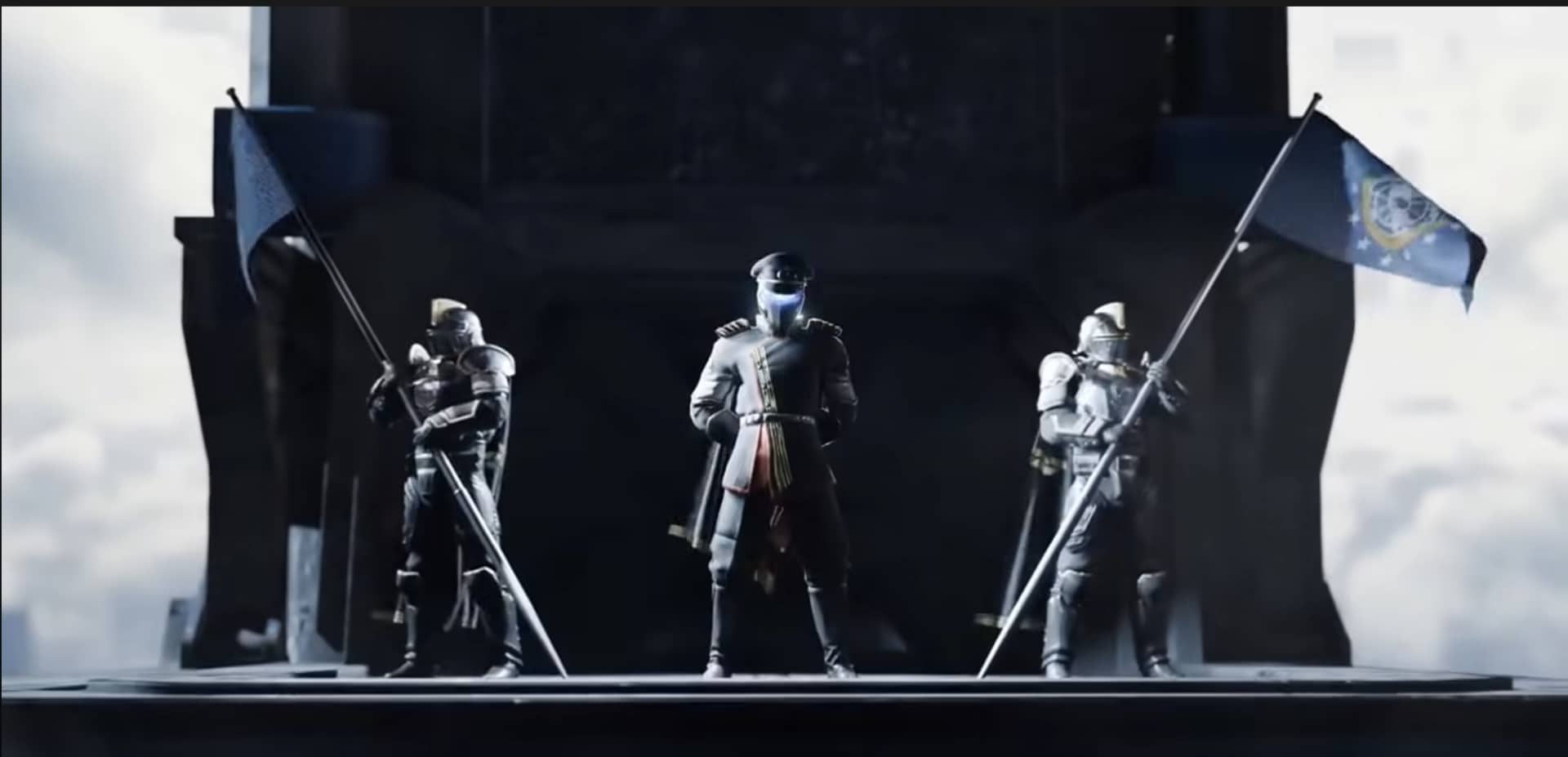
The recent collapse of Penta planet into a cold, dark void marks a surreal turning point in thezz Helldivers 2 Galactic War. It represents the second time in less than two years that High Command has decided the best way to secure a world is to ensure it no longer exists. While the average Helldiver celebrates the sheer spectacle of the Democracy Space Station (DSS) and its orbital power, any veteran with a sense of irony can see the hilarious contradiction at the heart of Super Earth’s foreign policy. We are witnessing the ultimate “if I can’t have it, no one can” tantrum on a planetary scale.
Helldivers 2 – Another planet destroyed
The Ghost of Meridia
The precedent for this cosmic demolition was set months ago with the destruction of Meridia. Back then, the justification was biological necessity. The Terminid Supercolony had turned the planet into a pulsating hive so dense it threatened to contaminate the surrounding sectors like a cosmic infection. The solution was the deployment of Dark Fluid, which squeezed the planet into a purple, unstable singularity. It was a desperate move by a Federation backed into a corner, but it proved that High Command was willing to burn the house down to kill the bugs.
Helldivers 2 – Time for celebration of another planet liberated and destroyed
The Penta Precedent
Penta, however, feels different. This wasn’t a frantic act of containment; it was a demonstration of the Star of Peace superweapon. By folding the planet into a stable black hole, the Ministry of Truth did more than just eliminate an Automaton stronghold. They effectively removed a piece from the board to spite the opponent. The irony is staggering: we are told we are “liberating” these sectors for the glory of the Federation, yet our primary strategy has shifted toward deleting the very real estate we are supposed to be conquering. We are essentially fighting a war for territory by making sure there is less territory to fight for. It is the purest form of Managed Democracy—managing the map until there is nothing left for the enemies of freedom to stand on.
Helldivers 2 – Moment of planet Penta destruction
Gameplay as Scorched Earth
From a gameplay perspective, this scorched-earth policy is a fascinating way to handle map fatigue and Major Orders. Usually, in live-service games, the map is a static background that resets every few weeks. In Helldivers 2, the map is a living document that can be permanently edited by the community’s collective will. When the player base voted to obliterate Penta, we weren’t just choosing a mission; we were choosing which part of the galaxy to erase from the game files forever. It is a rare example of Arrowhead Game Studios allowing the players to permanently break the world in the name of the narrative.
A Galaxy of Voids
There is something darkly comedic about a Federation that claims to be building a future while it systematically turns its own solar systems into a collection of gravitational anomalies. At this rate, the “future” won’t be a thriving empire of colonized worlds, but a very large, very empty map of black holes. We aren’t just winning the war against the Bots and Bugs; we’re winning the war against geography itself. As the DSS reloads for its next target, one has to wonder how much of the galaxy will be left to inhabit once the mission is finally “accomplished.”