Zobrazení pro čtení

Life Is Strange: Reunion Preview—Blast From The Past
Life Is Strange: Reunion Preview—Blast From The Past

Poor Max Caulfield—the original protagonist of Life Is Strange has hardly ever been able to catch a break. Now, the time-rewinding heroine is about to face her ultimate challenge in Life Is Strange: Reunion, and after a brief hands-on preview, it’s clear that she at least won’t be facing it without her oldest ally.

When we last saw Max in 2024’s Life Is Strange: Double Exposure, she had settled into a new position as an artist-in-residence at Caledon University in Lakeport, Vermont. When tragedy befell her new best friend, Safi, Max discovered a new ability which allowed her to “shift” into an alternate timeline where Safi was still alive, and discover the truth behind her would-be killer. The game ended on some unresolved business, which Reunion will apparently seek to close off, but another layer of paradoxical problems will plague Max along the way.

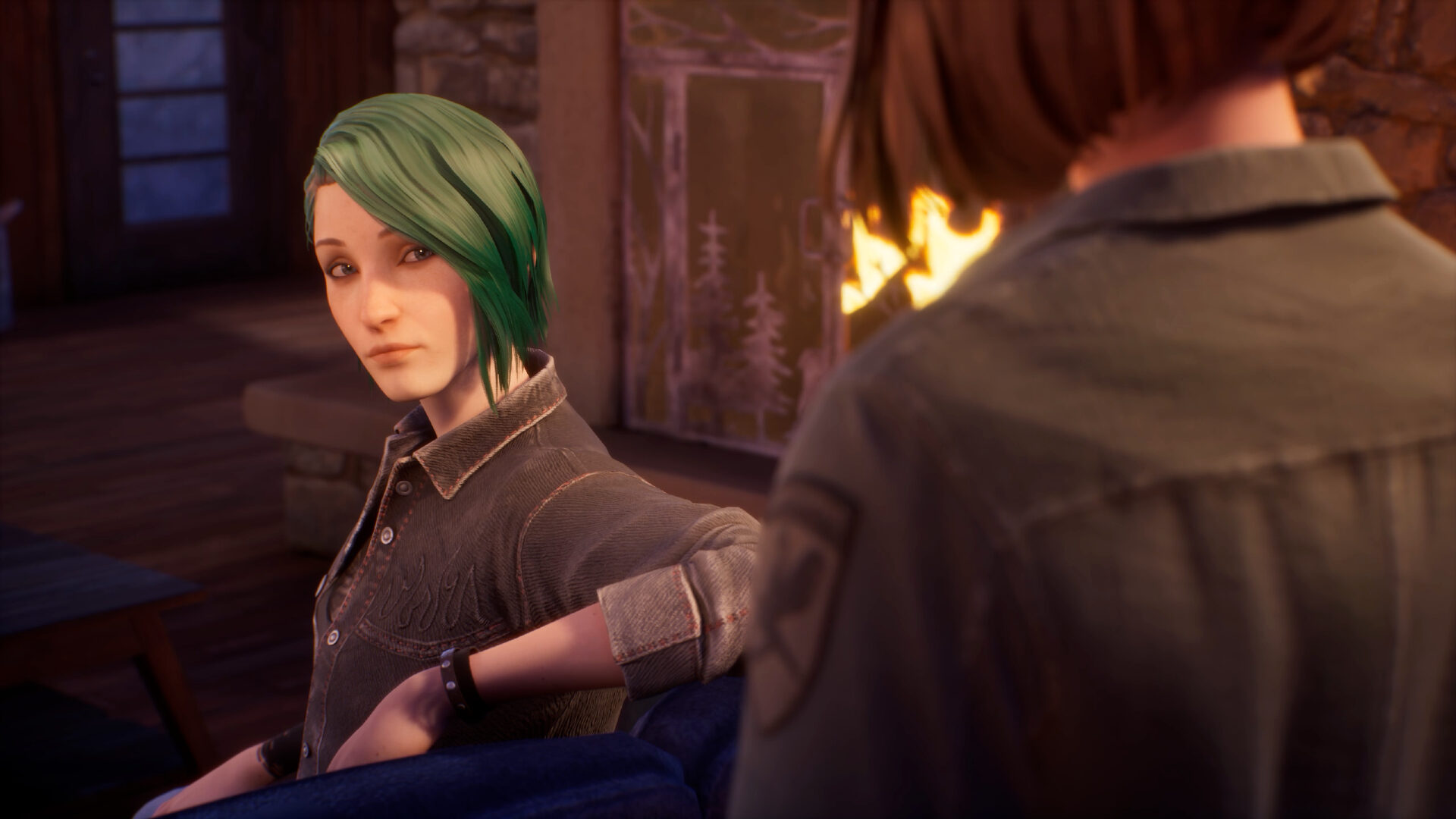
As yet another mysterious disaster threatens to take away the things Max holds dear, a blast from the past will appear in her new life at Caledon: Chloe Price.

Depending on the choices you made (or consider canon) from previous games, Chloe might be alive but estranged by Max. Or, the events of Life Is Strange: Double Exposure may have shunted an alternate version of Chloe into Max’s reality, with memories of the destruction of Arcadia Bay and their time on the road together… and nightmares of dying on the bathroom floor at Blackwell Academy from the original game. Either way, players will have to control both characters and utilize their particular skills to solve the mystery that’s threatening Caledon.

“Fans will be delighted to see that rewind works much the same in Life Is Strange: Reunion as it always has.”

Life Is Strange: Reunion essentially offers four possible backgrounds, based on two different choices: if Max and Chloe romanced or were just close friends, and if Chloe lived or died. During a hands-on preview with the game ahead of its release next month, I was able to hop into the game with my personal choice from the first game—romanced, and Chloe died—and see how these factors affect the story.

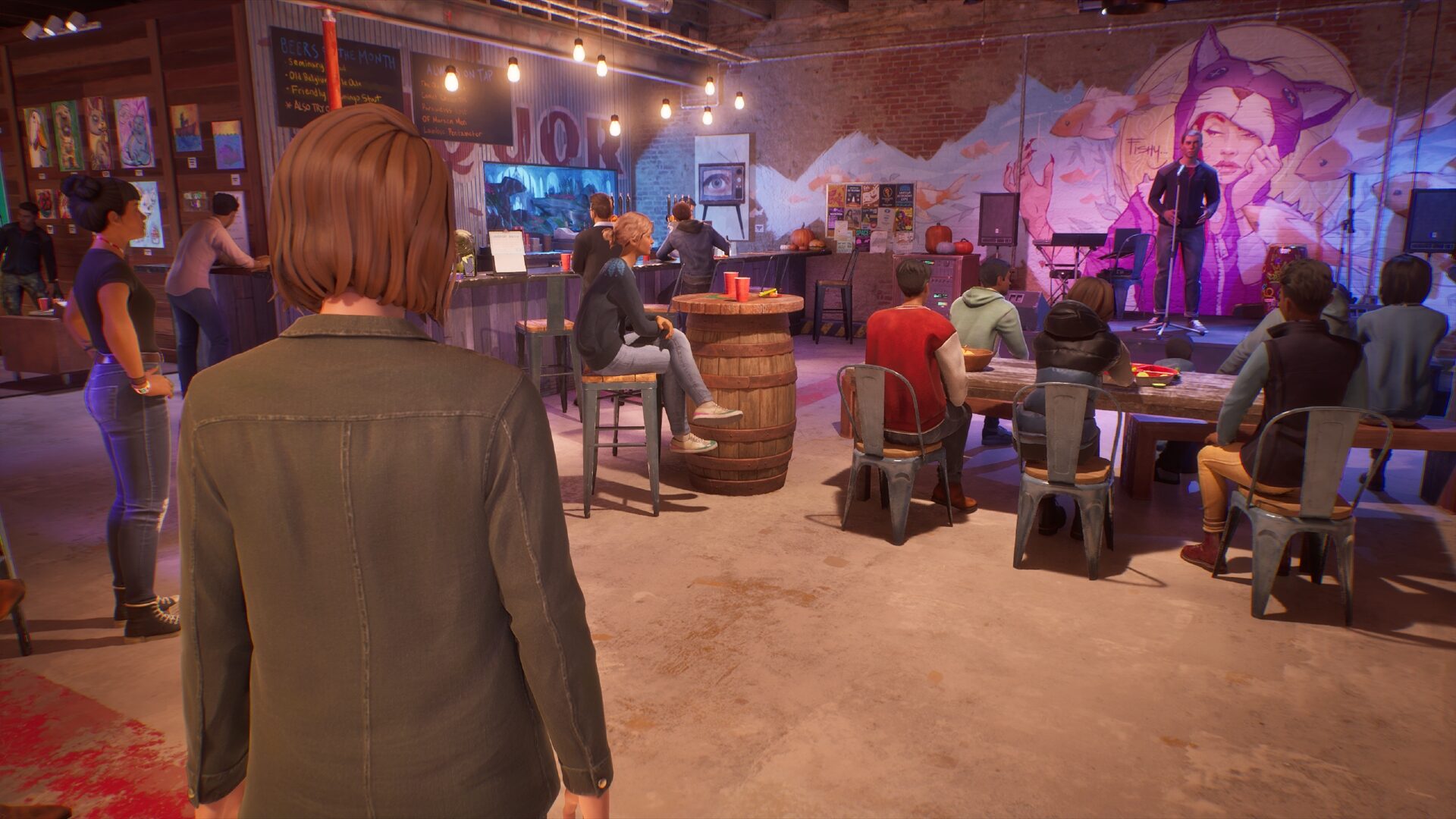
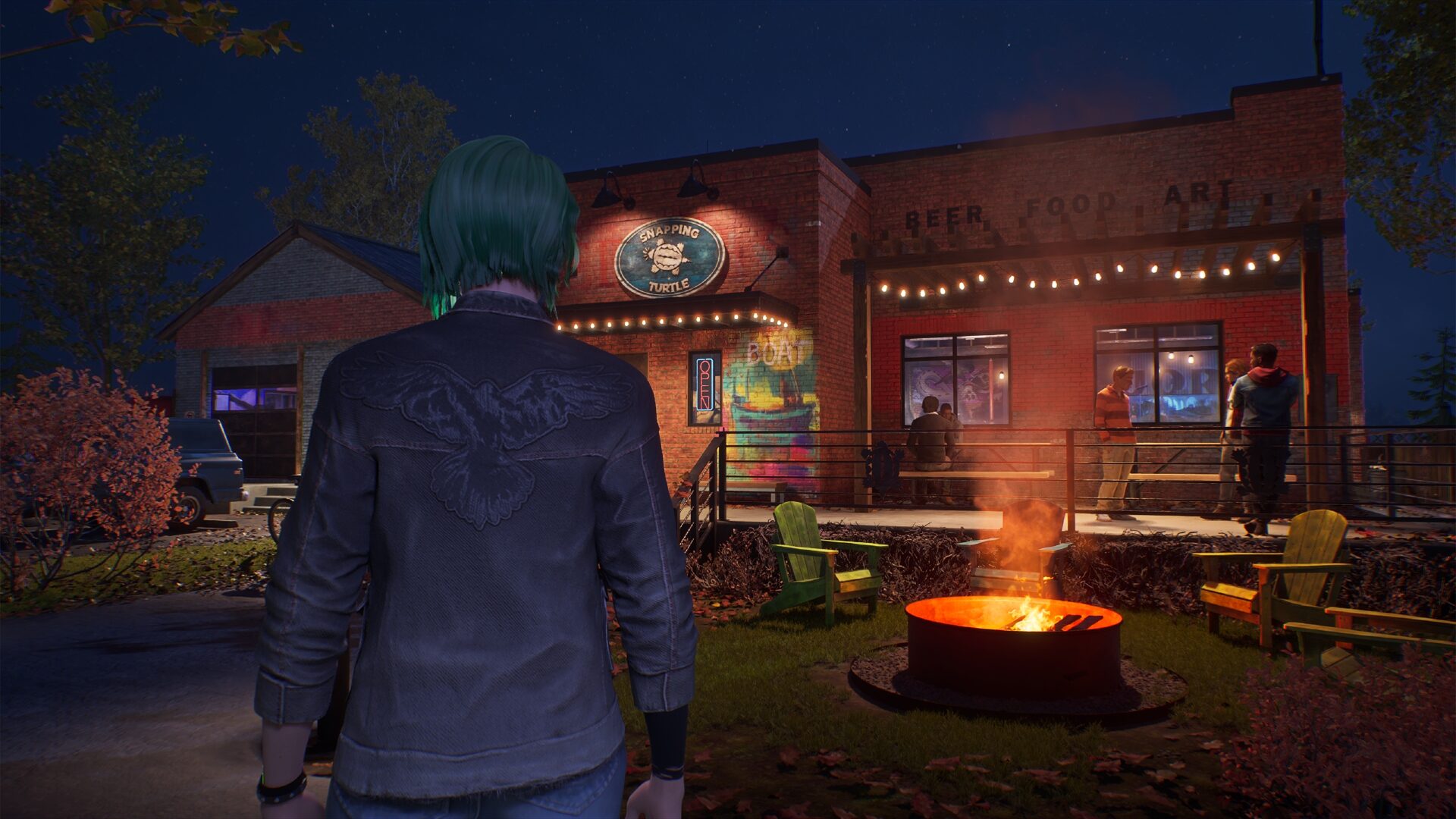
In a segment that feels like the end of the first chapter, I explored the familiar Snapping Turtle bar from Double Exposure, first as Chloe and later as Max. This included interacting with familiar Caledon faces—some welcome (Amanda) and others unwelcome (Lucas)—and using both protagonists’ powers.
Life Is Strange: Reunion Preview—Blast From The Past

Max’s rewind ability from the first game is back in full form, allowing her to rewind conversations while retaining knowledge and items. Fans will be delighted to see that rewind works much the same in Life Is Strange: Reunion as it always has, right down to the familiar spiral gauge that shows your position on the timeline. There were at least two great opportunities to use it to Max’s advantage at the Turtle, and zipping back in time with a pocket full of secret information still feels like a conversational cheat code.

Later in the preview, a life-or-death timed segment put the mechanic and Life Is Strange‘s mystery-solving through its paces. While Double Exposure used the “shift” power to great effect, it is satisfying to get Max through a dire situation with good old-fashioned time tampering.

Chloe’s featured mechanic (calling it a “power” is a bit aggrandizing) for Backtalk came into play later. She may be about ten years older, but even as an adult Chloe still has her rebellious side, and arguing with a security guard is a tantalizing target for her. As before, the key is to use what you’ve noticed in the environment or about the target of your Backtalk beforehand, and bring it to bear.
Life Is Strange: Reunion Preview—Blast From The Past

Admittedly, as the first part of the exchange was shown in the trailer, it was like starting with the answer key in front of me, but nonetheless, I felt a pang of nostalgia for the days of hurling barbs at Chloe’s stepdad, David, in the previous games. This ability is much more restricted than Max’s rewind, which can essentially be used at will, so it will be interesting to see how else it comes up in the full game.

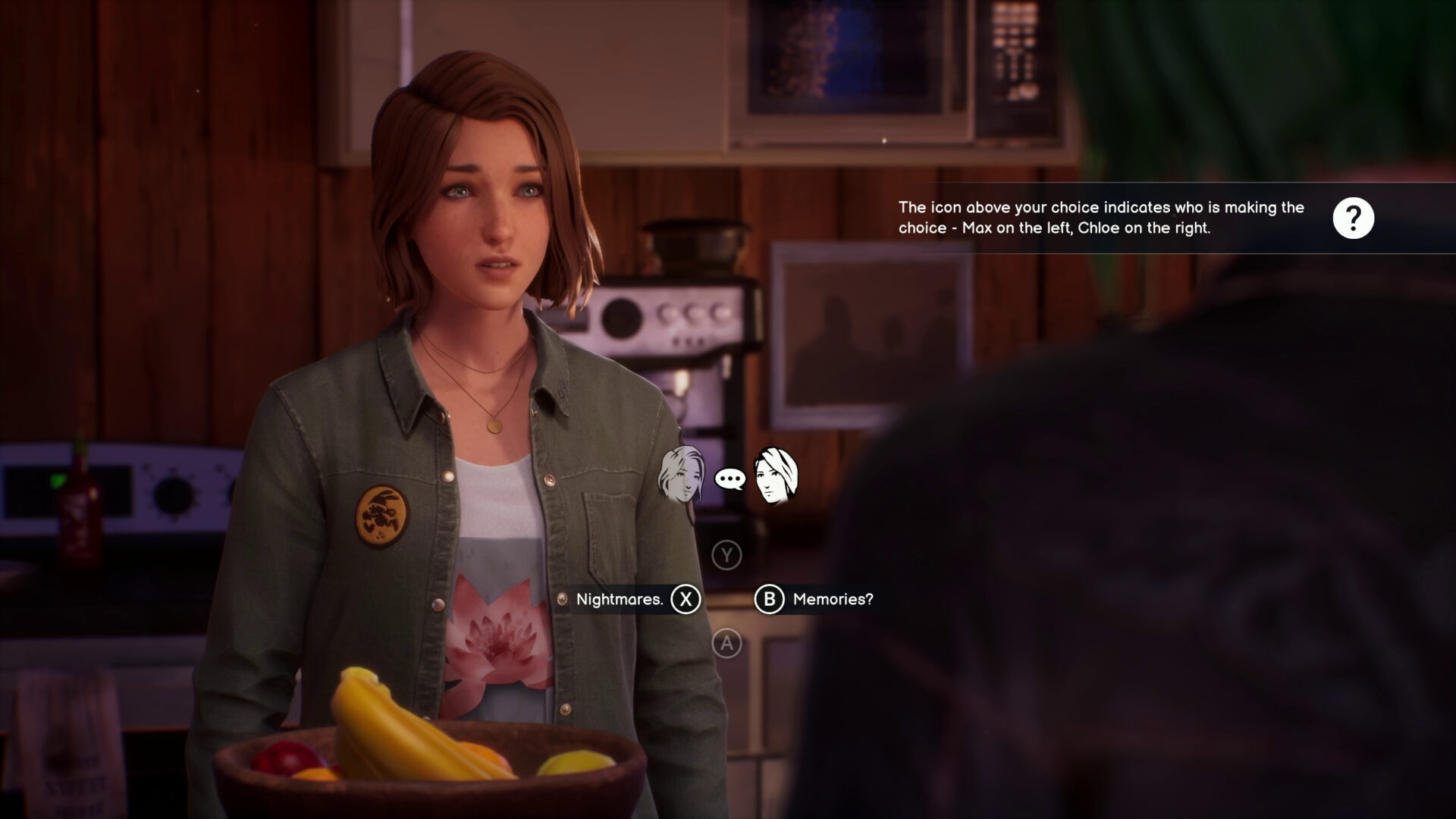
Dialogue and choices are the core of the franchise, but for the first time, Life Is Strange: Reunion will feature two simultaneous protagonists, and naturally, Max and Chloe have a lot to talk about. Instead of keeping players firmly rooted in one of the two, such pivotal conversations between the two leads shift between them, depending on the choices being made. There’s a visible cue showing the focus shifting to either Max or Chloe, and while dialogue options are on screen, the game highlights which character is making the choice.

I was impressed with how this setup allowed me to make decisions on behalf of both characters in a way that felt authentic to their story. Devoted players have shaped their own take on the characters’ relationships over three games’ worth of choices by this point; bringing Chloe back into the picture but denying her any chance at player agency would’ve made the whole exercise moot. Thankfully, judging by the key conversation following their reunion (which was also teased during the reveal livestream), Deck Nine has put a lot of thought into how it would handle having two heroines.
Life Is Strange: Reunion Preview—Blast From The Past

My short hands-on time with Life Is Strange: Reunion flew by, and even with a small cross-section of the full experience, my mind was left buzzing, pondering the possibilities. It remains to be seen if other choices made during Double Exposure, like having Max romance or flirt with Amanda or Vinh, will be eligible to carry forward, but the implications of each of the four main situations between Max and Chloe alone have me itching to see the same conversations from another side.

Based on this slice of Max’s tumultuous life, it seems like Life Is Strange: Reunion is poised to make good on all the things Double Exposure set up and left on the table, while also doing right by the events of the first games. It’s been hard to bite my tongue and not give anything away through the course of this article, either regarding the new mystery or the implications from previous games.

One particular allusion, regarding David, gave me hope that this game could truly bridge the eras… but we’ll have to wait just a bit longer to dive into the game and see what other ancient history gets dug up along the way, as Max and Chloe’s fight to secure their future’s saga comes to an end.

Life Is Strange: Reunion launches March 26 on PlayStation 5, Steam, and Xbox Series X|S.
  •  

WWE 2K26 Feels Bigger and Bolder at Creator Fest Preview Event

Hands-On With WWE 2K26 From WWE Headquarters

I have watched professional wrestling since I was four years old. My first autograph came from Hacksaw Jim Duggan. Ted DiBiase interrupted the signing to tell Duggan he was going down later that night. I have lived through countless eras and grew up watching wrestlers whose children now thrive in the industry. After four decades as a fan, I had a first-hand experience unlike any before, stepping inside WWE headquarters to attend the WWE 2K26 Creator Fest.

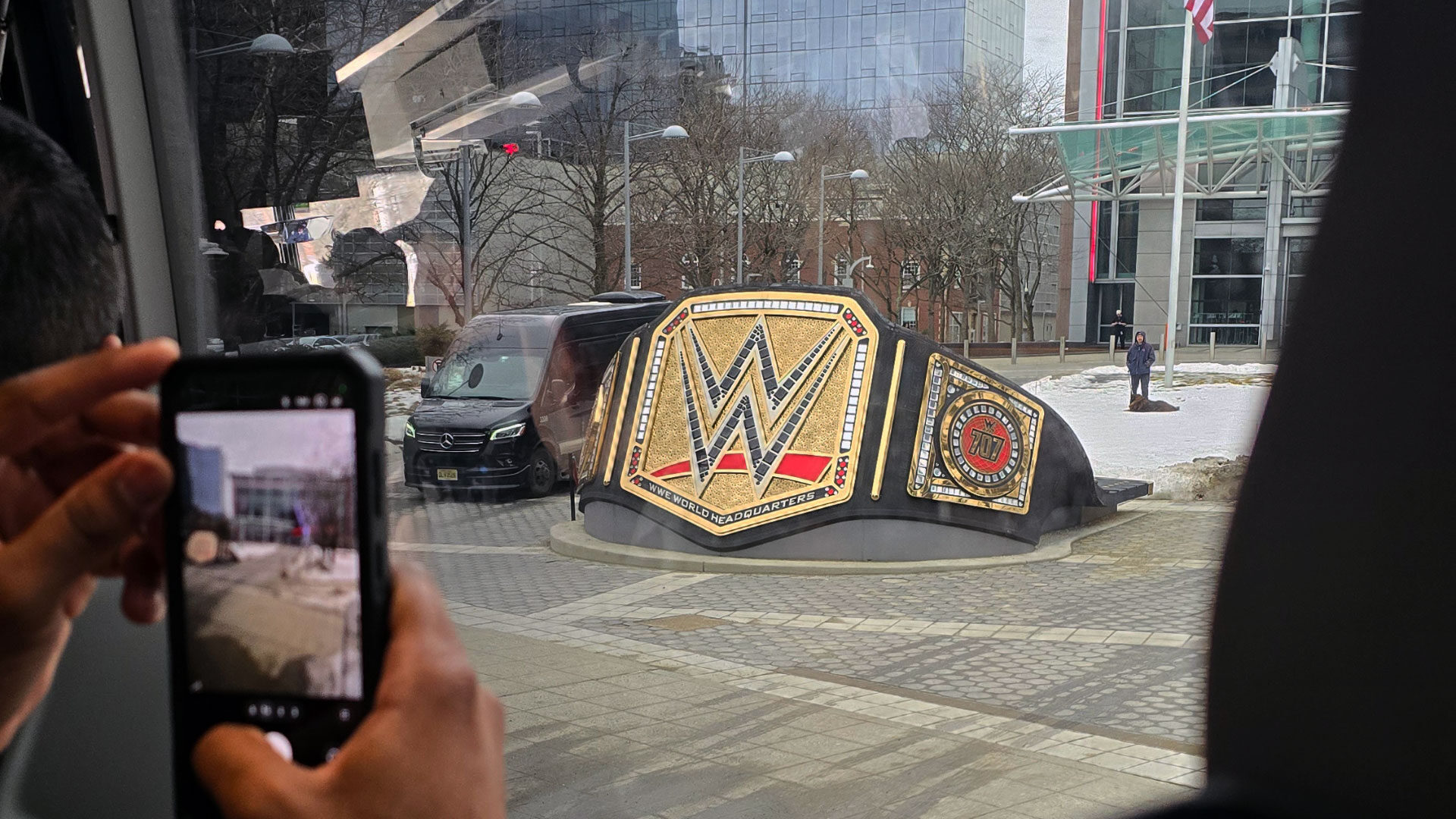
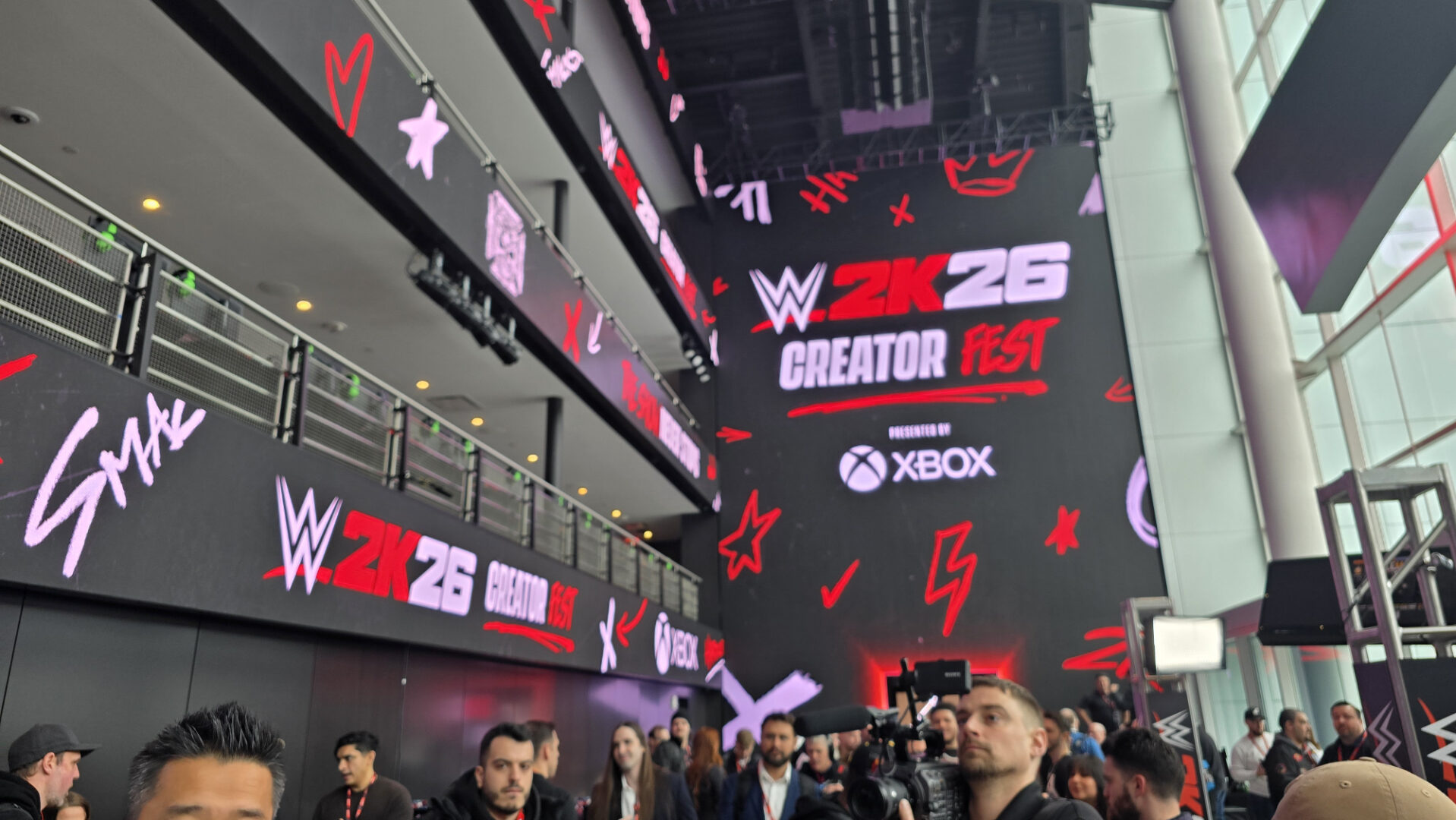
At 8:30 a.m. on Feb. 19, I boarded a bus alongside more than 100 fellow creators and members of the press, with two buses making the trip from Manhattan to Stamford, where WWE’s headquarters is located. A large championship belt display and the prominent WWE logo stand out among the otherwise sterile office buildings that surround the facility. I felt a giddiness rooted in childhood and adolescence as I stepped into the building.

Hands-On With WWE 2K26 From WWE Headquarters

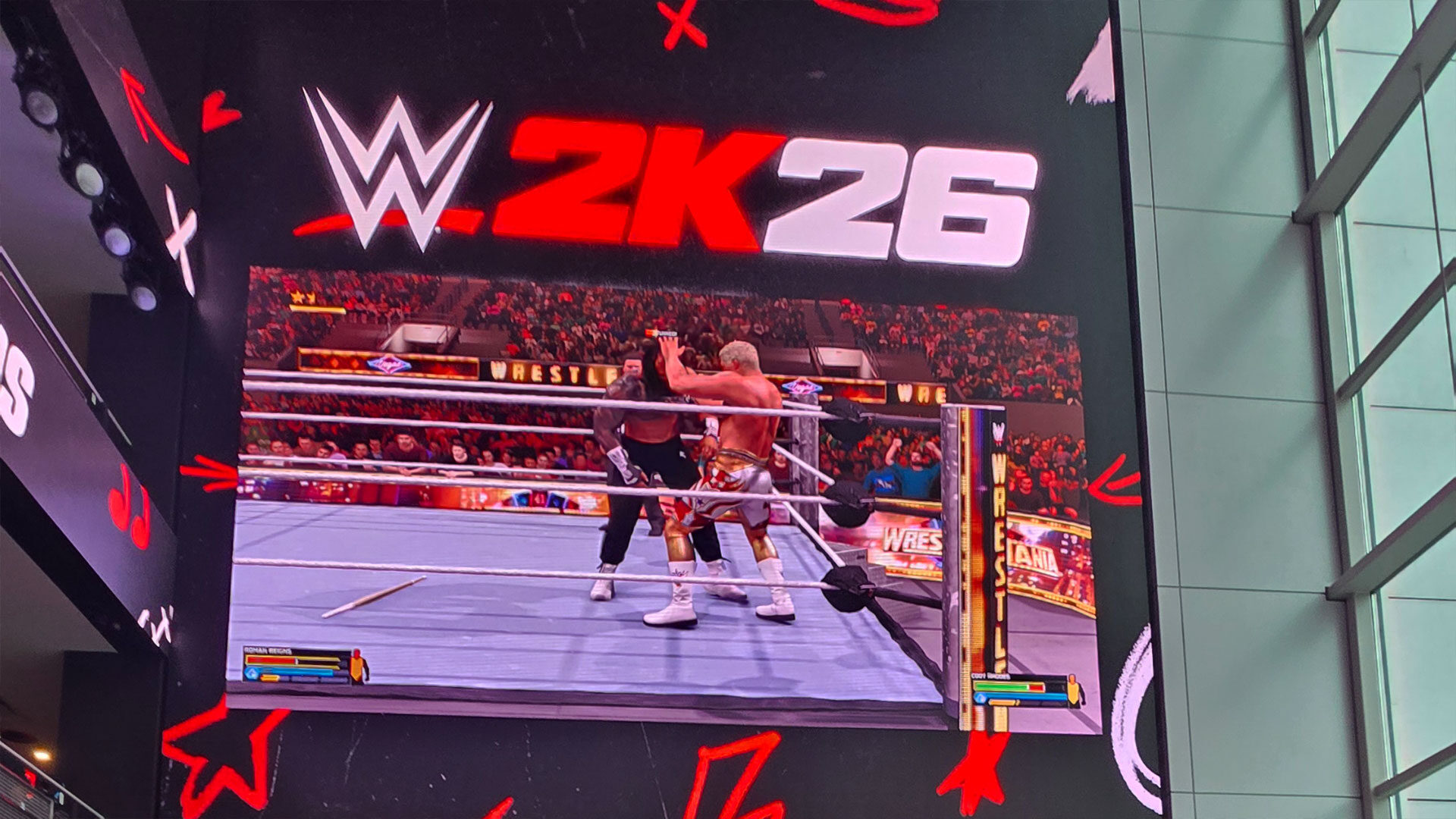
We entered the building via a red carpet set up for the day’s events. The atrium is massive, featuring an impressive mural of the larger-than-life Andre the Giant that stands more than four storeys tall. An LED wall, similar to one of WWE’s stage entrances, flashed images of the WWE 2K26 cover, while walkways on every floor were lined with gaming stations for attendees to try the game.

“After four decades as a fan, I had a first-hand experience unlike any before, stepping inside WWE headquarters to attend the WWE 2K26 Creator Fest.”

As organizers reviewed the rules for the day, “The Oracle,” Paul Heyman, made a surprise appearance to trash-talk the rules themselves. It was an early sign of the energy and spectacle to come. We took our seats and launched our copies of the game, capture cards ready, eager to experience the new features WWE 2K26 promised to deliver.

I began with standard matches to acclimate myself to any gameplay changes from the previous instalment. The differences were subtle but intuitive. Chain wrestling largely functioned the same, and the mechanics for kicking out of pins and reversing manoeuvres remained responsive. There are now more options available before a match begins. Players can trigger additional entrance effects, choose face or heel reactions while walking to the ring and decide whether to start the match with a handshake, a cheap shot or a classic stare-down.

Hands-On With WWE 2K26 From WWE Headquarters

I began with an Extreme Rules match to give myself more freedom to explore without the risk of an early loss. I also wanted to try one of the new weapons: thumbtacks. Scattering them across the ring and slamming an opponent onto them produces a visceral reaction. Each individual tack remains visible in the wrestler’s skin, with light reflecting off the metal. The detail makes the moment feel as impactful as it does in a live event.

I cycled through a wide range of WWE 2K26 wrestlers while browsing the expansive roster. I did not want to spend too much time deciding who to select, though I made sure to try a few favourites, including Cody Rhodes, CM Punk and Kane, to see their entrances. Choosing a classic Kane character model for the return of the Inferno Match struck a nostalgic chord. The updated Inferno Match mechanics, which involve building the flames and forcing an opponent into them, were particularly enjoyable.

The Three Stages of Hell match also returns in WWE 2K26 and provided one of the standout moments of Creator Fest. A 2K26 tournament took place during the event, though I opted not to participate. The final was a Three Stages of Hell match, structured as a best-of-three series with each fall contested under a different stipulation. The competitors were so evenly matched that the bout ran long enough to make the return bus schedule feel uncertain.

Hands-On With WWE 2K26 From WWE Headquarters

The Dumpster Match closely resembles a Casket Match in structure but references a specific period in WWE history during the Attitude Era, when Cactus Jack and Terry Funk, competing as Chainsaw Charlie, faced The New Age Outlaws. The inclusion of the “I Quit” match, in which the referee checks on a competitor while players use button combinations to avoid conceding, also recalled the brutal encounter between Mankind and The Rock.

“With limited time and frequent trips up and down the stairs to catch another superstar’s entrance or grab a quick bite, I managed to sample each of the available game modes.”

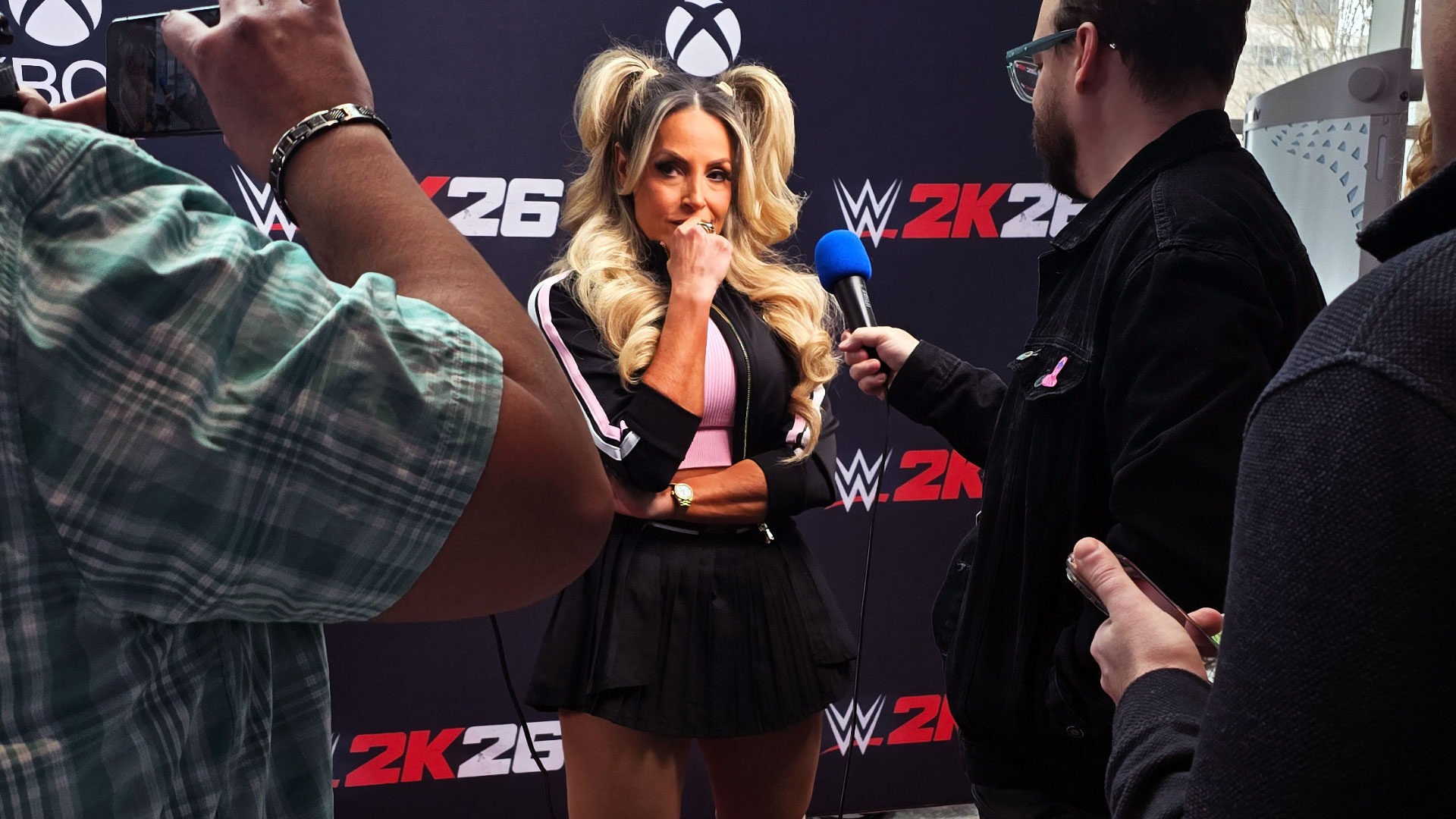
It was during a test run of the “I Quit” match that the unpredictability of the event revealed itself. The LED wall shifted, and the entrance music for Trish Stratus hit as she made her way out. Numerous wrestlers were in attendance, including Oba Femi, Joe Hendry, Iyo Sky, Penta, Jacob Fatu, Paul Heyman, Undisputed Champion Drew McIntyre and World Heavyweight Champion CM Punk, who also serves as the cover athlete for WWE 2K26. Many others were present to promote and discuss the game.

In addition to the performers, WWE SmackDown commentator Wade Barrett, one of the voices featured in WWE 2K26, attended the event. I also caught a glimpse of longtime WWE executive Bruce Prichard, whom I first knew as “Brother Love.” Wherever you looked, today’s top stars were either conducting interviews or playing the game alongside creators, which made it hard not to feel a little envious of those stationed on the main floor.

Hands-On With WWE 2K26 From WWE Headquarters

With limited time and frequent trips up and down the stairs to catch another superstar’s entrance or grab a quick bite, I managed to sample each of the available game modes. A deep dive into any single mode was not realistic given the schedule, so I opted for breadth over depth.

WWE 2K26’s 2K Showcase: Punked focuses on the career of CM Punk, guiding players through key moments with specific in-match objectives. Progressing through the mode highlights different eras of Punk’s presentation, from his earliest appearances to the version audiences see weekly on streaming platforms.

The Island is the mode furthest removed from traditional WWE presentation. In this setting, your created wrestler — built using a robust creation suite too expansive to detail here — enters “The Island,” joins one of three factions and competes for dominance in a semi-post-apocalyptic environment.

Hands-On With WWE 2K26 From WWE Headquarters

MyRise, the story mode in WWE 2K26, centres on a comeback narrative. Players step into the role of a wrestler returning after a long injury layoff. Each decision shifts your character between fan favourite and rule breaker, allowing for multiple story paths and varied experiences on subsequent playthroughs.

My preferred modes are those that put players fully in control, and MyGM delivers exactly that. Draft wrestlers, book matches — including intergender bouts and contests featuring up to eight competitors — and assign talent to promotional segments. There is added strategy involved, as an injured wrestler will be unable to appear for a scheduled promo. The objective is to build the most successful WWE brand within the company.

The day concluded with what I previously would have described as a 14-year-old version of myself’s dream scenario. We were given a behind-the-scenes tour of WWE headquarters, where bronze statues of legendary performers line the halls. Displays featuring full costumes and props from The Undertaker’s career were highlights, and although photography was not permitted, it took considerable restraint not to reach for my phone.

Hands-On With WWE 2K26 From WWE Headquarters

Meeting rooms were decorated with vintage ring skirts from classic pay-per-view events. One hallway displayed nearly every championship belt in the company’s history. We also toured a large production studio capable of shooting content in a fully virtual environment, including the cold open delivered by Triple H during the 2026 Royal Rumble. A full-sized ring served as an unconventional meeting space, positioned beneath a towering mural of wrestlers created for the Netflix launch.

Setting aside the excitement Creator Fest generated for creators and journalists — no easy task — my enthusiasm for WWE 2K26 stands on its own merits. I spoke with Creative Director Lynell Jinks of Visual Concepts and noted that, despite the warm reception to last year’s instalment, the team could have opted for only minor updates and still satisfied much of the audience. Instead, they chose to expand and refine the experience. This year, it appears the winners are the players.

  •  

Aramatus Preview — A Gothic Roguelike Worth Checking Out

Aramatus (PC) Demo Preview — A Gothic Roguelike Worth Checking Out

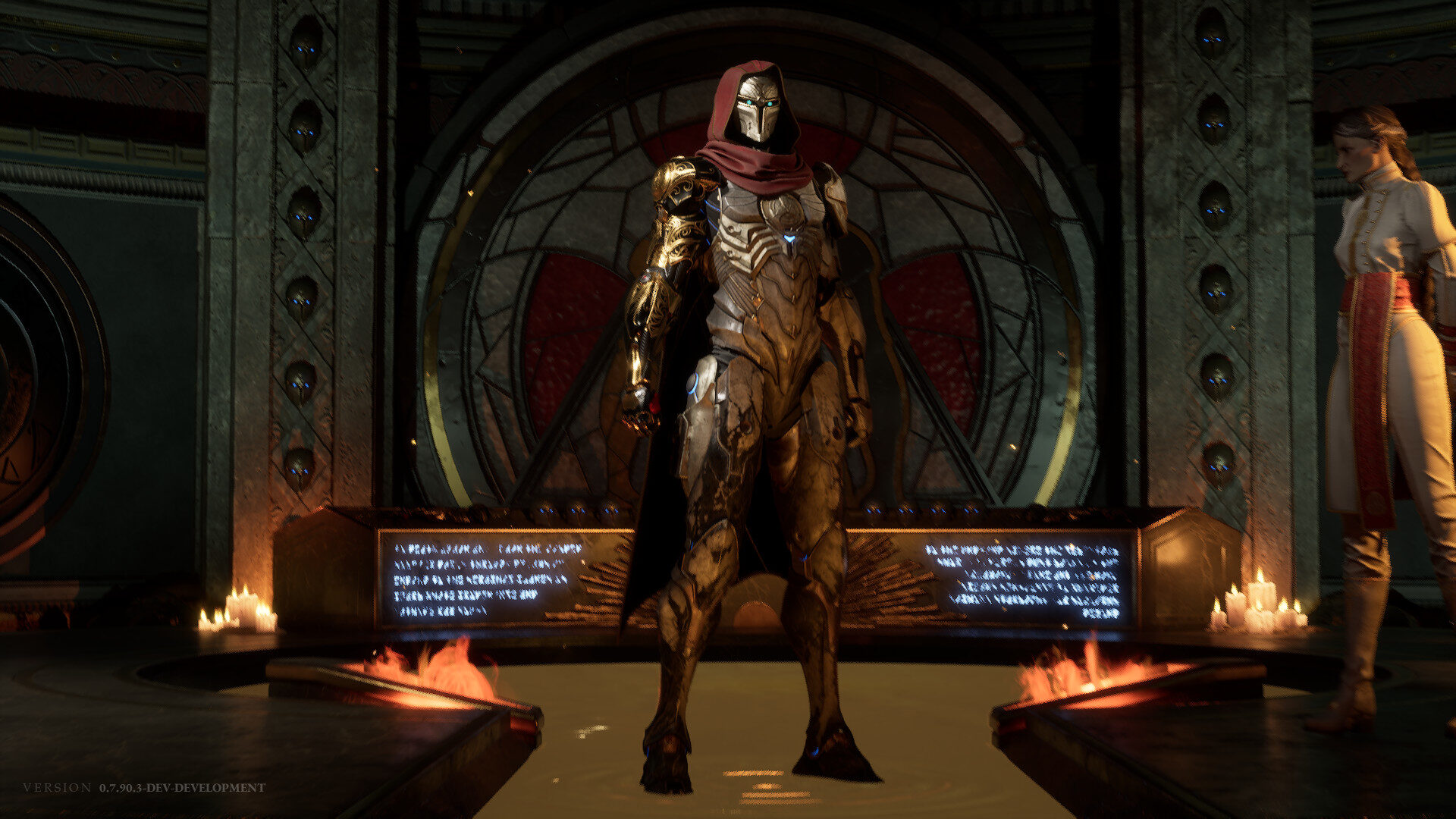
Aramatus immediately caught my eye, as I consider myself a big fan of the roguelike genre. These days, it seems like most roguelikes tend to rely on 2D graphics, while Aramatus features fully realized 3D graphics powered by Unreal Engine, set in a post-apocalyptic Paris overrun by demons, making it something I wanted to check out when given the opportunity.

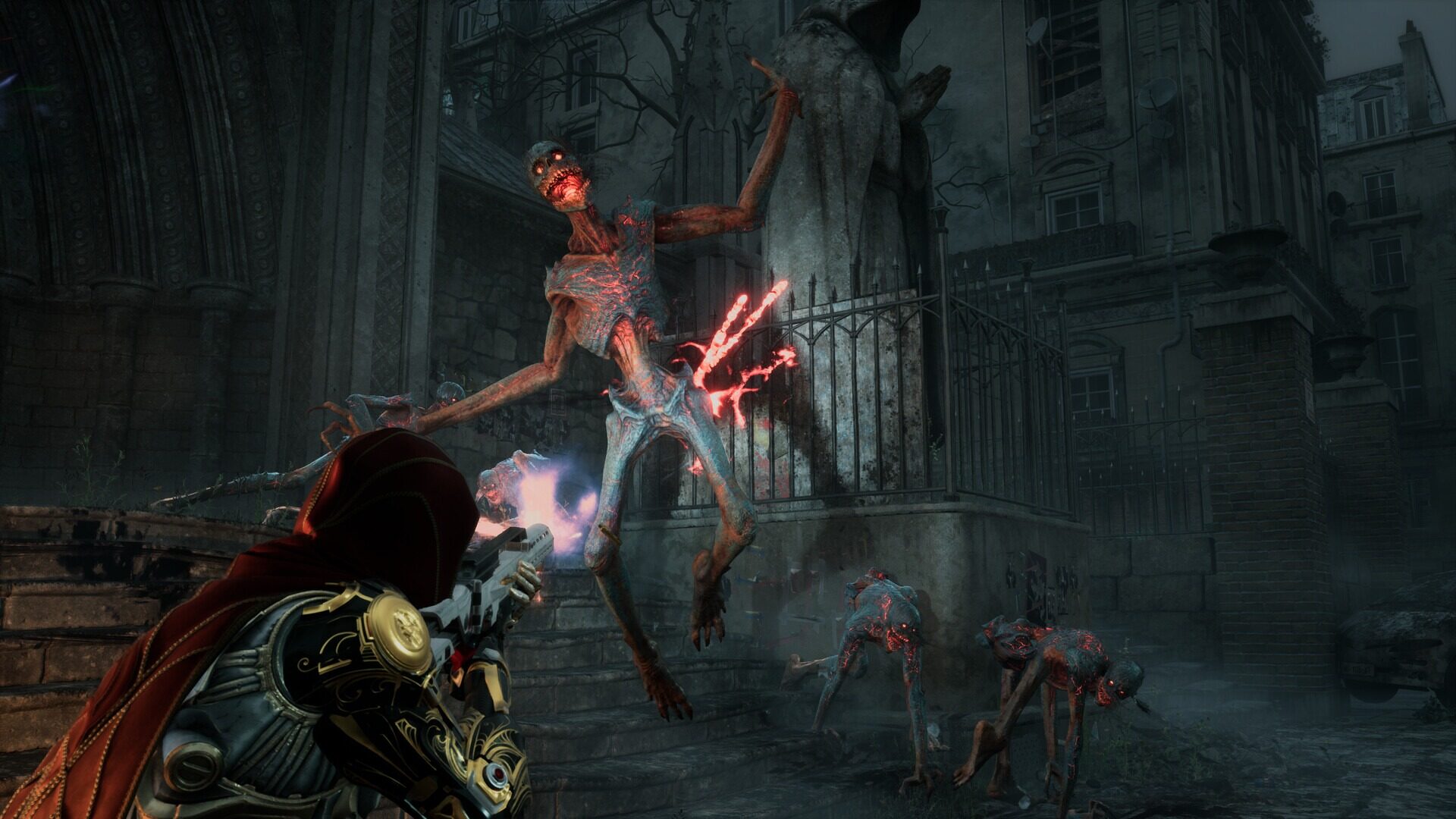
One of my favourite roguelike games is Returnal, which I fell in love with on the PlayStation 5 back in 2021. At a glance, Aramatus borrows the fast, frenetic third-person shooter action of the former, with Counterplay Games Inc. adding its own unique twist. Aramatus is set in a demon-infested Paris, where a cataclysmic event known as the Vanishing has transformed the most promising of humanity into demons. Players assume the role of a gunslinging immortal, summoned to earth by a holy order in the hopes of eliminating the demon scourge.

Aramatus (PC) Demo Preview — A Gothic Roguelike Worth Checking Out

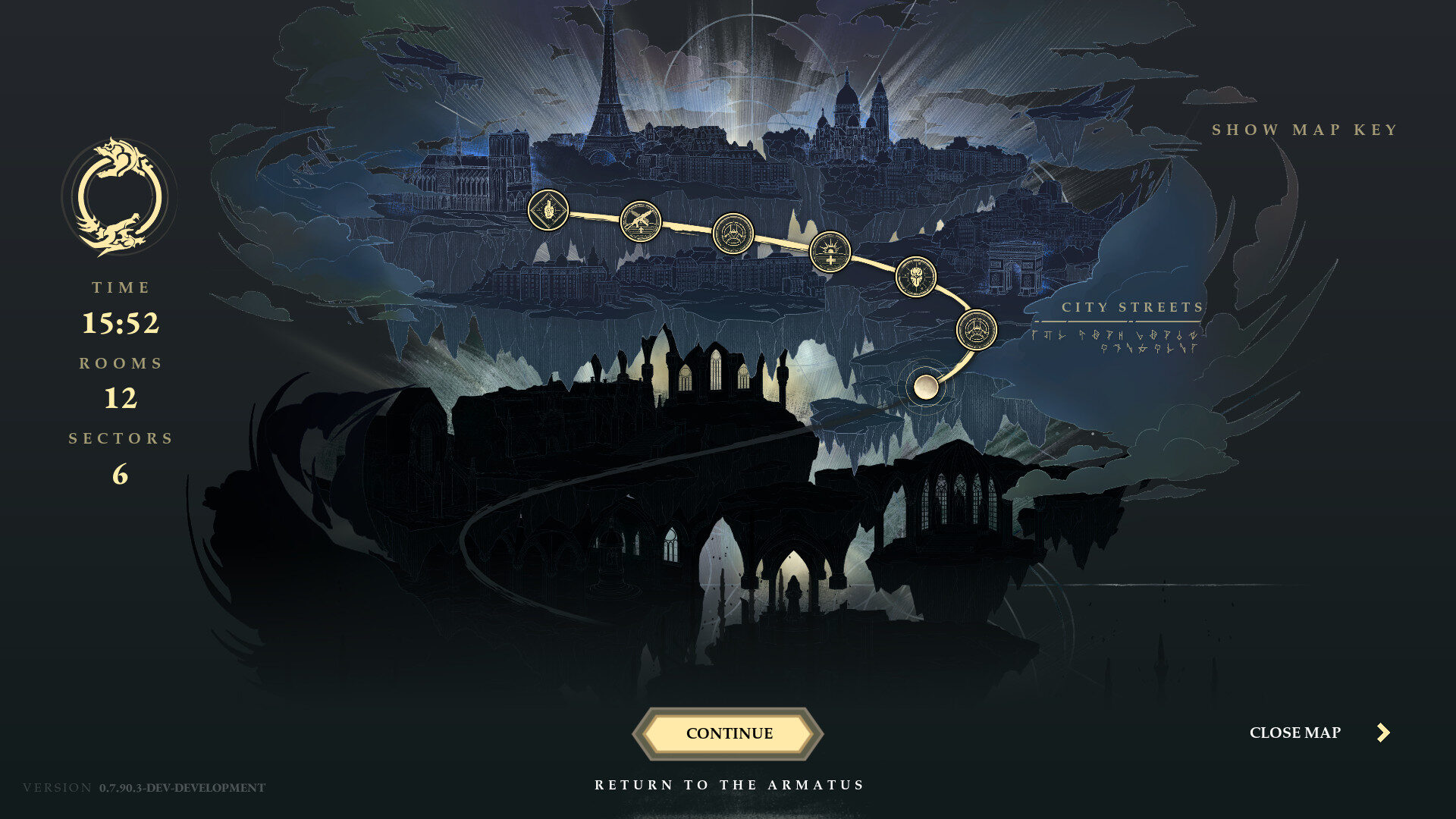
I was given access to the first biome in Aramatus, which consists of roughly 13 rooms and eight sectors. Sectors serve as the primary combat zones within the biome, while the total room count also includes the interstitial spaces between hostile encounters. These transitional areas function as pit stops, where players receive a random boon, such as weapon upgrades, secondary abilities or healing pools, along with other RNG-based modifiers.

“At a glance, Aramatus borrows the fast, frenetic third-person shooter action of the former, with Counterplay Games Inc. adding its own unique twist.”

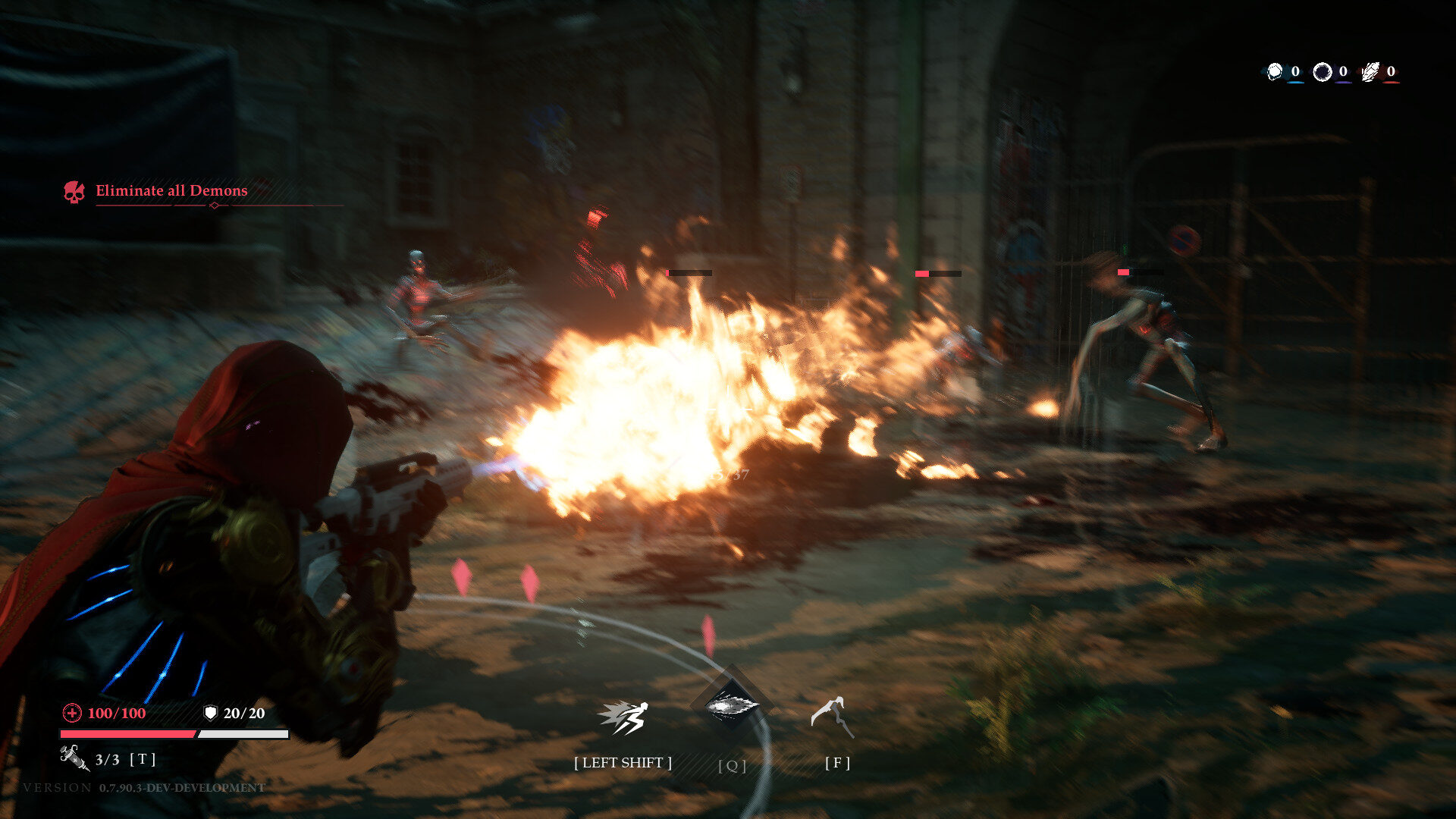
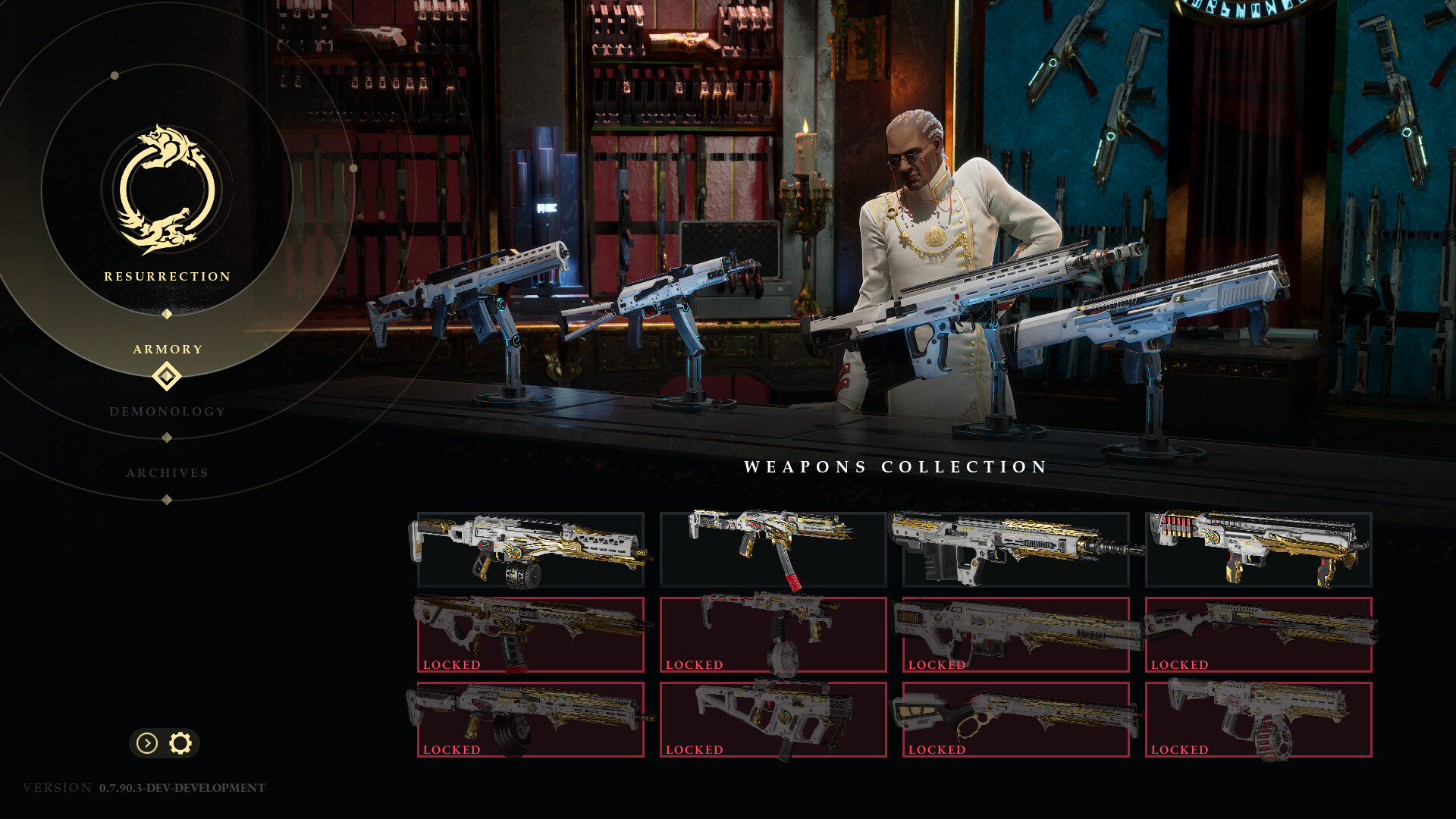
In Aramatus, players can wield a range of modern firearms, including automatic rifles, shotguns, precision weapons and submachine guns. Weapons are divided into tiers, which determine their effectiveness as well as their secondary firing modes. Secondary fire adds variety by introducing both practical and fantastical abilities, such as grenade launchers, flamethrowers and energy-based sonic blasts. Players also have access to a powerful melee option in the form of a scythe, which, like a weapon’s secondary fire, operates on a cooldown timer.

Aramatus (PC) Demo Preview — A Gothic Roguelike Worth Checking Out

Augmenting your toolkit further, in addition to the powerful melee and secondary fire mode of your weapon of choice, Aramatus features unique special attacks that players can earn by clearing rooms. With only the first biome currently playable, I was only able to discover two of the unique power-ups, including a Max Payne-style bullet time augment and a devastating groundpound AoE attack.

Progressing deeper into the first biome of Aramatus unlocked additional enhancements for my special abilities. These included an extended radius for my ground pound and increased damage per second for my firearms, depending on proximity to enemies.

Other notable upgrades I encountered during my time with the Aramatus demo included homing-style shots, extra melee charges and additional projectiles that trigger after landing a hit. Ideally, the full release of Aramatus will introduce even more over-the-top upgrades that allow players to push builds to their limits, as those moments of excess are often what make roguelikes so compelling.

Aramatus (PC) Demo Preview — A Gothic Roguelike Worth Checking Out

As far as the first biome is concerned, Aramatus presents a contemporary Paris transformed by medieval and Gothic-inspired characters and demonic creatures. The setting blends modern architecture with otherworldly corruption, creating a striking visual contrast. The art direction is strong, featuring stylized character designs that lend the game a comic-book aesthetic while remaining grounded in a recognizable real-world environment.

“Death can come quickly in Aramatus, though players begin each run with three charges of a health-replenishing item that can help offset mistakes.”

Gameplay is fast and responsive, with each weapon offering distinct advantages suited to different situations and playstyles. Secondary attacks feel impactful and can often determine the outcome of an encounter. Death can come quickly in Aramatus, though players begin each run with three charges of a health-replenishing item that can help offset mistakes. That said, falling into pits frequently caused moments of disorientation, which were sometimes compounded by enemy mobs closing in for a swift defeat. With further balancing ahead of release, these scenarios may become less punishing.

Aramatus (PC) Demo Preview — A Gothic Roguelike Worth Checking Out

From a technical standpoint, Aramatus performs well and delivers strong visuals, with the exception of some noticeable judder early in the experience, likely related to shader compilation. I was also unable to get the game to recognize my controller, whether using XInput or Steam’s controller override. These issues are expected to be addressed as development continues toward release. On the subject of controls, keyboard and mouse input felt responsive and intuitive, and will likely remain my preferred way to play the game.

Overall, the short vertical slice of Aramatus that is playable is already promising and something that fans of the roguelike genre should definitely keep on their radar.

  •  

Preview: Starsand Island Is Built on a Solid Foundation

Preview: Starsand Island Is Built on a Solid Foundation

When I first played Starsand Island, it was early in development, not all the different types of professions were ready, and the build felt like a work in progress. Now that the game is properly in early access, it feels far more cohesive. Yes, not everything is there yet and I can’t live my virtual life to the fullest. Some balancing definitely needs to be done. But it does feel more pulled together and ready to go than it originally did. 

As a quick refresher, Starsand Island is about moving to a rural community your character is already loosely connected to in order to start a new life. Previously, they’d only visited due to their grandpa living there. Now they inherited the home and, after a friend named Solara helps them settle in, they work on becoming part of the community.

https://www.youtube.com/watch?v=P5h-VhOriYs

The biggest change I noticed between my initial Starsand Island experience and this return to the early access build is that there’s substantially more here. The Crafting, Exploration, Farming, Fishing, and Ranching professions feel much more fleshed out than before, with especially farming and fishing offering more variety in terms of yields, ranching adding more animal husbandry options, and many more recipes available when it comes to making things. These feel pretty full right now, though admittedly I haven’t completed any of the professions at this point. All of these seem advanced enough that I suspect I wouldn’t miss too much in 1.0 if I try and go ahead and do as much as possible now.  

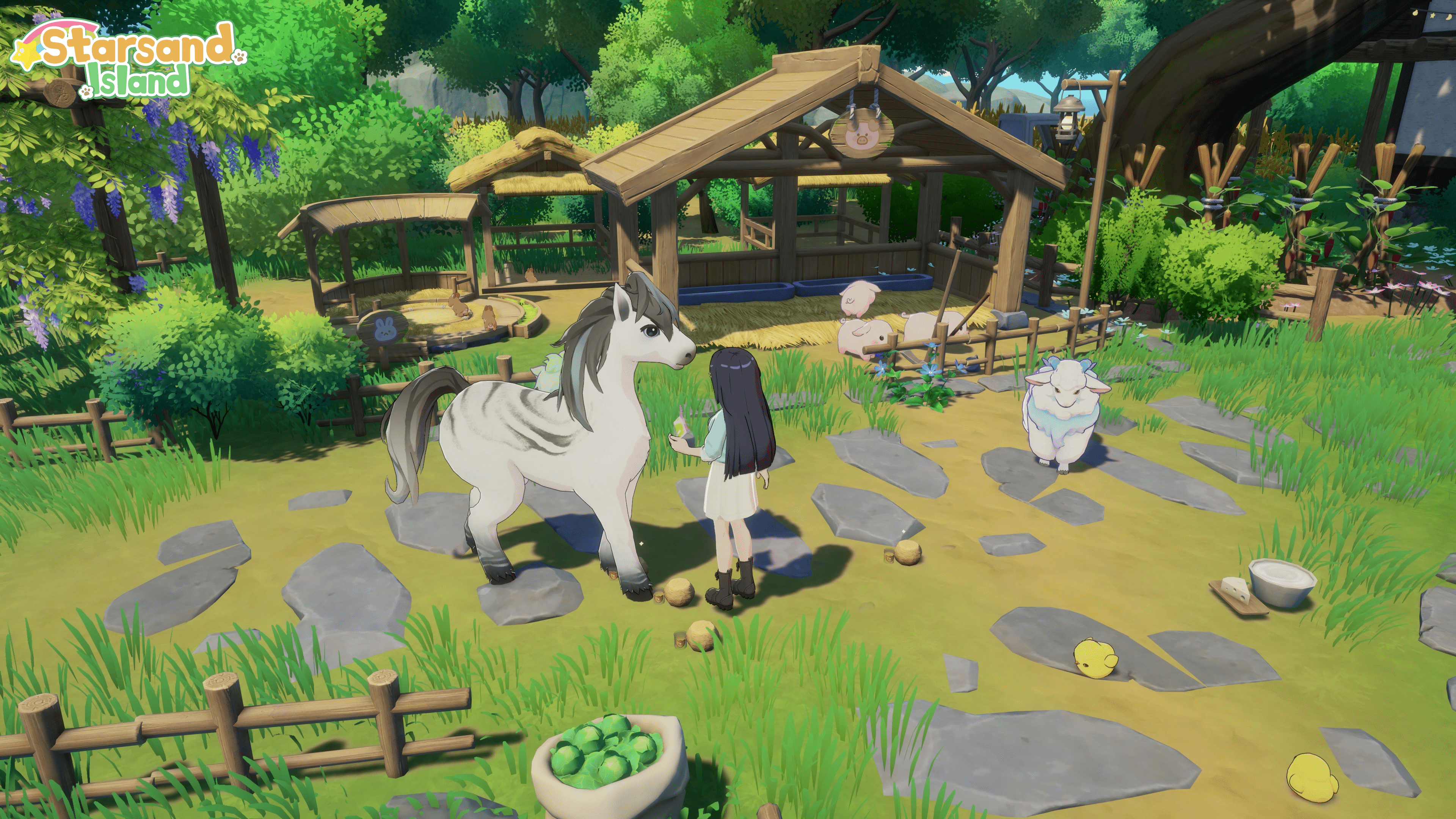
Some professions did really hook me in now in this build. Especially with the Farming and Ranching lines. It seems very easy to get settled, and the range of crops and animal is great right now. There are hybrids possible, if you spend enough time playing, and greenhouses are already present. Like getting to Expert Rancher and accessing the alpaca and ostrich are helpful for the extra eggs, feathers, and wool, not to mention riding them is quite cute. And the DNA element to it is helpful for breeding purposes, should someone focus on that lifestyle. However, I will note that exploration’s combat does seem to still need work. While bows are present as a weapon, adding a nice ranged option, there’s still not much there. We could use more enemies, as well as mechanics like dodging.

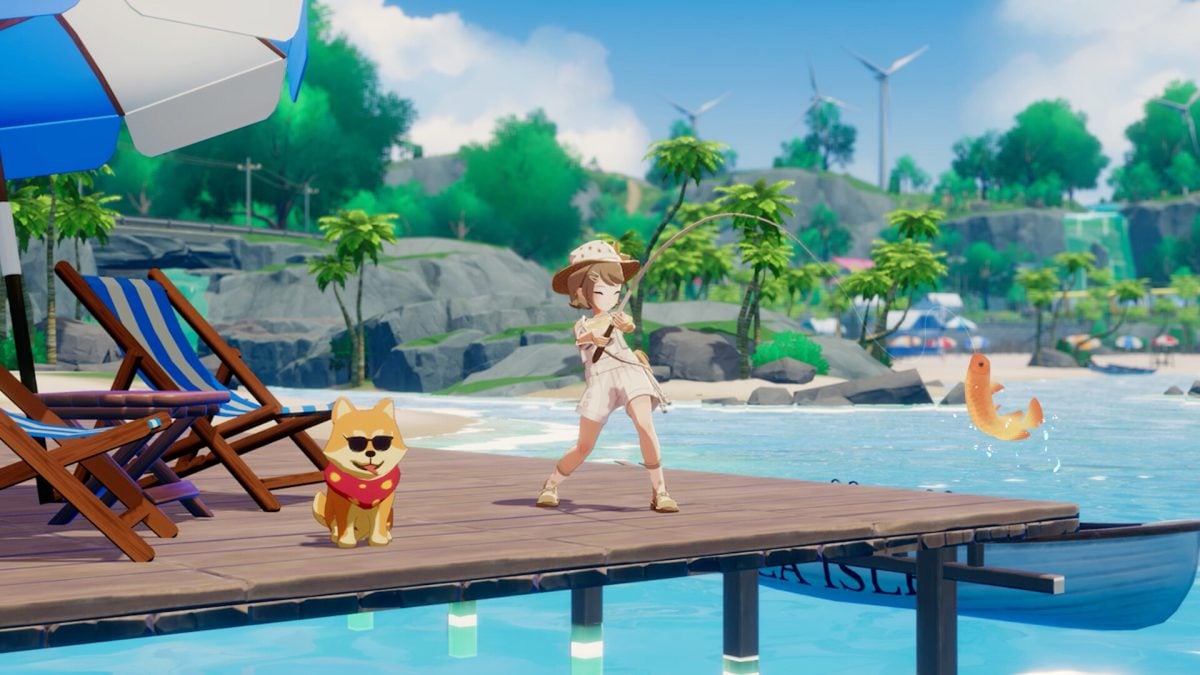
While the profession changes in Starsand Island probably the first and most obvious area to get a glow-up in early access, the relationship element feels pretty good right now too. This applies to both animals and people. The pet system reminds me a bit of Harvest Moon: Animal Parade, in that you aren’t just buying a new buddy. I mean, yes, Woof and Wow Pets does offer them. But we also adopt wild animals by befriending them and reaching basically three hearts. This means you’re going to need to work to get the fox or squirrel to be a friend. 

Images via Seed Sparkle Lab

As for the human relationship element, it does feel pretty fleshed out even now in Starsand Island. There’s a decent number of love interests at 15 total (8 bachelorettes and 7 bachelors). These feature voice acting, though there’s not much yet, and there are more appearances in quests and interactions with folks that made me want to give gifts and check in daily. In some cases though, I felt like some of the folks were just pretty faces. There isn’t enough to them yet to make them lovable. However, it does seem like that could change. The team stated there will be more to the dating system come April 2026. I would like and hope to see marriage and kids in the endgame too. 

However, I will say some stuff doesn’t feel completely balanced or 100% set yet. This is an issue acknowledged on the Steam product page and in the roadmap. I would like a little better performance when really racing through on mounts or on an item like a skateboard. Some character models could be adjusted a little. Getting your house and land built up does take a lot of time, and it doesn’t feel like it’s quite designed for us to get to the point of a massive complex with a home we could have a romance option move into yet. I do wonder if we might see rebalancing progression and development updates, since the crafting part does feel stronger than the pre-launch build I played and the team did mention that’s in the roadmap.

Starsand Island is essentially coming along, with the early access version showing a lot of progress from the initial build I played. There’s a lot more to every profession in the game, though exploration could use a bit more additions and adjusting. Romance is starting to seem more viable, and pet adoption is enjoyable. Some rebalancing would be great, but the foundation for the 1.0 version later this year seems pretty stable.

Starsand Island is in early access on the PC and Xbox Series X on February 11, 2026, and a full launch that also includes Switch 2 and PS5 versions is set for Summer 2026.

The post Preview: Starsand Island Is Built on a Solid Foundation appeared first on Siliconera.

  •  

Cthulhu: The Cosmic Abyss brings investigation to the fore in a way that you’ll love(craft) to see

His many personal faults notwithstanding, H.P. Lovecraft’s writings continue to cast a profound shadow over the horror genre. While his own views were reprehensible (even by the standard of his time) the continuing fascination with cosmic horror can be seen across many media. Big Bad Wolf are the latest developers to take influence from this mythos in their upcoming horror adventure game Cthulhu: The Cosmic Abyss, but have moved away from the beaches of Innsmouth and out to sea to take advantage of the thalassophobia (fear of deep water) that underlines much of Lovecraft’s work.

Cthulhu: The Cosmic Abyss begins in 2053 with you playing as Noah, an investigator charged with following the trail of a missing colleague who finds that an occult cosmic threat is spreading across the world. His investigations lead him to a mining facility located deep within the Pacific Ocean wherein he discovers that the missing miners have stumbled upon a passage to R’lyeh. So far, so Lovecraftian, and I was impressed by how well the content I played in the preview build slotted into the wider Mythos whilst also maintaining an identity of its own.

The Cosmic Abyss is played out through a first-person perspective, but this is no action shooter and combat plays no real role in this game. There were no direct engagements with enemies during the section I got to play, though there was still plenty of threat and dread. The full version promises some confrontations with unknown horrors that will require quickness of thought rather than trigger finger to survive. This fits perfectly with cosmic horror as no small part of the terror comes from your insignificance in the face of the unknowable.

Cthulhu: The Cosmic Abyss – station investigation

With no combat to speak of, the gameplay mechanics instead revolve around investigation and puzzle solving, with a focus on a mind palace method of connecting clues that is reminiscent of Frogwares’ Sherlock Holmes games. In order to interact with the environment you can call on your AI companion, Key, who can scan, assess, and record the information that you acquire. This digital compendium can be called up in order to make connections between clues and objects that you scan, reveal deeper insights and even give you the direct solution to riddles.

The Unreal Engine 5 powered graphics are breathtaking at times, with the scale of the underwater environment being overwhelming. Relatively early on you have to venture outside of the submersed facility to explore a mysterious labyrinth and even though there was no pressure of oxygen limits in place I found the whole section almost unbearably tense. This wasn’t helped by my stubbornness in trying to brute force my way through when a more direct route via further investigations was the more efficient solution.

Cthulhu: The Cosmic Abyss – object observation with Key

Major puzzles and obstacles in the world of The Cosmic Abyss will often have more than one solution with the main division between each being the effect they have on your sanity. Leaning into the world of R’lyeh for answers will drive you further into madness whereas presumably more rational and scientific solutions will help keep you sane. This mechanic was hinted at in the preview but I look forward to seeing its full effects in the full game.

As is often the case with early preview builds, there were a few small bugs and glitches, but these were refreshingly infrequent with the game just a couple months from release in April. One that took me a while to work out was that the controls would occasionally revert to AZERTY (to match the Big Bad Wolf’s keyboards as a French studio) so I couldn’t move forward. For a while I thought this was a deliberate effect in keeping with the classic Eternal Darkness’ manipulation of your controls, but checking with the team, it became clear that this was just a bug. Rebranding it as a feature wouldn’t be the worst idea, though!

Cthulhu: The Cosmic Abyss – strange growth

The world of Cthulhu: The Cosmic Abyss has certainly got its claws into me and I’m eagerly awaiting getting stuck into the full version when it launches in April. What I’ve seen so far promises a twisting and tense narrative that will challenge the grey cells rather than the trigger fingers and, as such, should be a truly cosmic horror experience.

  •  

Arkheron Preview – The glorious battle royale lovechild of Diablo and Hades

Arkheron is doing something we all love in gaming, putting a fresh twist on something familiar. Coming from Bonfire Studios, a team founded by ex-Blizzard Creative Officer Rob Pardo, and whose influence runs through World of Warcraft, Diablo III and Overwatch, Arkheron is a PvP multiplayer dungeon crawler, with teams of three attempting to make it to the top of the tower, slicing their way through enemies and opposing teams, as the playable space shrinks. A team-based, dungeon-crawling battle royale? It’s a brilliant mix.

Arkheron centres around the relics. Each player has four empty slots: two weapons, a Crown and an Amulet, and you fill these by looting treasure chests as you climb the tower. Each relic has its own unique powers, or individual weapon types, and while there are common-level versions, what you’re really looking for are Relics that belong to an Eternal.

There are eight Eternals in the game right now, each with four unique Relics and corresponding abilities. If you collect all four from the same Eternal, you can transform into them, gaining a fifth, ultra-powerful special move as well, giving you a distinct advantage, and, as an added bonus, making you look incredibly cool too.

What it does mean, however, is that you’re stuck as that Eternal for the rest of the match, and that might not be the best choice. There are literally thousands of possible combinations for the gear here, and that includes further bonuses for carrying a split pair of same-type equipment. It’s a dizzying level of customisation, and I can see players really digging into the swirling range of possibilities when Arkheron launches.

You have to get to the top of the Tower first. Every team is dropped into the bottom floor with an expanding field of view letting you see other team drops and enemies, giving you a decent picture of where you want to join the battle. Our team – led by the exceptionally cool Bonfire Studios team member, Raph, – was consistently patient, waiting to see how the map was panning out before making the leap, and that seemed to work well in terms of giving us time to start building up an armoury.

Each floor of the tower is filled with CPU-controlled enemies for you to work your way through, clearing areas so that you’re free to ransack the heady assortment of treasure chests. There’s different levels of chest, so you’ll find plenty of mundane, run-of-the-mill weapons, amulets and crowns, in the lowest level, while the Eternal gear tends to be tucked away in the rare ones that you’ve really had to work for.

As you’re decimating the various enemies on each floor, you’re earning currency to use in the shop. These contain consumables and a selection of gear, too, but they’re also focal points for all of the other teams, and you can suddenly find yourself embroiled in a melee, just because you wanted to pick up some health. We found that a hasty retreat wasn’t so much cowardly as efficient, and we repeatedly lived to fight through another few floors after spying an enemy team and legging it in the other direction.

You can hear enemy footsteps ringing out through the gothic halls, so there’s a nice and clear audible indicator of which way you want to go, much like in other Battle Royales. Running and hiding remains my favourite tactic in PUBG, and I can do that here too, so I was well at home.

I loved the hack-and-slash combat here, though. A mix of Diablo and Hades-esque weaponry and movesets, makes this feel like a multiplayer version of those incredible games, and that is as enjoyable as it sounds. The weight and variety of different weapons and abilities has been tuned really well, and while things definitely become chaotic when you’re facing off against an enemy team, it never felt unwieldy. There’s a few quirks to playing with a controller – there’s not quite the expected level of control, with the controller replicating the way you move with a mouse and keyboard – but I still found myself having a whale of a time.

The battle royale element really comes into play when it starts funnelling the fifteen teams together. At points you have to retreat to the safety of a nearby Beacon, the only thing that will protect you from the Abyssal Storm. Lower floors have plenty of Beacons, but as you climb higher, there are fewer and fewer, leading to an inevitable brawl at the top with a final remaining team.

There’s plenty of customisation too, though thanks to the isometric view during each round, the best view you’ll have of your character, and your teammates, is on the prep screen before you head to the tower. Still, the art direction is really strong throughout, and the Eternals in particular are particularly characterful.

Our hands-on time gave a tantalising glimpse of Arkheron’s possibilities. If you’ve got a steady team of friends to party up with, enjoy the action of games like Hades and Diablo, and love the competition and gameplay loop of a battle royale, you should definitely keep an eye on Bonfire Studios’ first game.

  •  

Battle Vision Network Preview – The culmination of Capybara’s puzzling craft

Any conversation about the best indie developers must include Capybara Games. With a catalogue that stems from Might & Magic: Clash of Heroes, through Superbrothers: Sword & Sworcery EP, to Don’t Starve: Shipwrecked, they consistently turn out the kind of games that stay with you long after you’ve finished playing. Battle Vision Network is set to be their latest, continuing in the vein of previous puzzle-infused games like Clash of Heroes, Critter Crunch, and Grindstone, and just like everything that’s gone before, it looks like it’s going to sink its way into your synapses and have you playing out moves while you’re trying to drift off to sleep.

Battle Vision Network is a tactical puzzle Roguelike battler, with teams competing in an intergalactic contest for glory. Dan Vader, Capy’s Creative Director tells us, “A Roguelike run of the game is framed as a season of this sport, and of this spectacle that is the BVN show.” He continues, “At the start of the game there’s only one team available, but as you progress you unlock more teams and more captains, each with their own playstyle and abilities.”

You can see that play out in the gameplay trailer, where a piece of toast shaped like a cowboy faces off against a skeleton in a rainbow cape – that’s Texas Toast vs. Rainbow Sparkle, obviously. It’s not just extremely bright and vibrant, but there’s the same sense of humour and quirky art direction that made Grindstone so memorable.

Dan tells us that Battle Vision Network is a spiritual successor to Might & Magic: Clash of Heroes, and anyone who’s played that classic title will be able to see the same gameplay threads running through BVN, with two teams made up of different units facing off in turn-based combat.

Different units have unique abilities and uses, such as Todd Thumb. This little finger fella can be stacked into a row of three, which sends a large thumb-based attack straight at the opposition. As you progress through a run, you draft more and more units into your team, until you’ve got a full roster, with a host of different abilities that will give you a variety of tactical options to choose from.

As you complete rounds, you’ll earn Bucks, which you can spend on upgrades for your team, or to upgrade specific units. You’ll also gain a Penant Flag through each round, choosing between three enhancements for your team, and leaning into that Roguelike structure and the random factor that can turn a mediocre run into a mammoth success.

Battle Vision Network began life as a mobile-first, PvP, season-based concept, and Capybara were originally working with Netflix to bring it to their mobile game library. However, in 2024, it became clear that Battle Vision Network wasn’t fitting into Netflix’s overarching plan, and Capy were thankfully able to reassess and rework the game, altering how players progress, shifting the focus to a single-player campaign, more like Grindstone and Might & Magic: Clash of Heroes.

Dan honed in on some of the key changes when coming from a mobile title, saying, “OK, we’re going to make a PC widescreen game, and we know that kind of audience soaks up complexity and depth, and experimentation and optimisation, and we can lean into that. And for us, we’re getting older, I have a family, I have a very demanding job, I don’t get to play as many 100-hour RPGs as I used to, so it’s emerged over the years that I really love run-based games, because they’re bite-sized. I can pick them up, I can play a little bit, have a little run, or pause a run, and I don’t feel that I haven’t made a dent in the game. So, we were really enthusiastic to explore our mechanics in that format that we were loving, anyway.”

One of the main differences over Clash of Heroes is that your Captain isn’t just an icon in the corner of the screen, they’re a physical unit with their own abilities, effects and place on the board. They can make the difference between failure and success, but you’ll need to know when and how to utilise them to maximise their impact.

Beyond the gameplay, fans of previous Capybara Games will be delighted to learn that the soundtrack is a collaboration between two of their previous composers: Jim Guthrie, who penned the soundtrack for Superbrothers: Sword & Sworcery EP and Below, and Sam Webster, who wrote the soundtrack for Grindstone. BVN could well be amongst the best-sounding games of 2026, just on that legacy alone.

Battle Vision Network is set to launch initially on PC and the team are targeting being Steam Deck Verified, which seems like the perfect way to experience the puzzling action. As a huge fan of their previous games, BVN has dropped its way straight into my most-wanted list.

  •  

Transport Fever 3 Preview – Getting the goods from Mardi Gras to Woodstock

Coming up on a decade since the debut of Transport Fever, Urban Games have figured a few things out about their transport simulation series. Years of post-launch support, added features and working with their community is leading to their most ambitious game yet, when Transport Fever 3 launches this year.

Sticking with their in-house game engine, they’re able to roll a bunch of features and ideals from where Transport Fever 2 has ended up into Transport Fever 3 on day one. That means that this will be a fully synchronous release across PC, PS5 and Xbox Series X|S, when TF2 rolled into the console station a few years after PC, and it also means that cross-platform modding, which was only added to TF2 in 2024, will also be there on day one.

If you’re in it for the economic simulation, then Transport Fever 3 promises even greater depths than before. There’s over a century of transportation history here, starting in 1900 with the city, buildings and cars you see all changing and evolving as you carry on through to 2030. That means there’s over 290 vehicles, ranging from buses and trucks, through ships, planes, trains and even new cargo trams and helicopters. Cargo trams are a particularly interesting one, having been used in Eastern Europe to bring cargo into city centres instead of noisy, smelly trucks – something you’ll need to keep tabs on now, as every citizen in the map is fully simulated with places to work, shop and live, and their happiness will depend on pollution, noise levels and traffic jams.

And you’ll have a fresh appreciation for cargo in this game, as there are now 35 cargo types and it is now no longer handled automatically. If TF2 was all about money, then in TF3 it’s just one of many things to manage.

Transport Fever 3 New Orleans

All of this will add new depths to the transport simulation sandbox, but TF3 will lean further into the tycoon gameplay and story objectives to overcome through a campaign of eight maps. Each one picks a particular period in history and takes inspiration from real events, using these missions as a way to introduce new concepts and keep things varied – there could be competition against an AI, a countdown mission with a timer, and more.

We sampled two of the levels, first heading to Mardi Gras in 1906, but finding that the city has been partially flooded and ruined by a storm. This is purely a narrative conceit here – while this game now has a day/night cycle and weather effects, they are purely cosmetic so as not to add crazy variables to the simulation – but it means that Mayor LaFontaine, the helpful Andrew and Miss Baker are banding together to rescue this year’s festival. LaFontaine wants a new hotel, while Miss Baker pushes him and you to help represent the black community and less wealthy, and Andrew’s just happy to be helpful.

Transport Fever 3 Mardi Gras

Setting up transport routes, repairing roads and bridges and shuffling the good around that each objective needs gradually gets you used to the user interface, though it’s initially a little unclear how to go about certain tasks. I accidentally clicked through and sold off a couple horse and carts when cancelling an unneeded line, instead of having them sent back to the depot, and when I wanted a ship to go between collecting fish and shrimp, returning to dock between each, it took me a moment to realise I couldn’t drag the stops into a different order and had to set things up a different way.

But with Mardi Gras rescued, I could turn my attention to another festival in need, some sixty years later, with a somewhat legally distinct rendition of Woodstock. Now it’s a local sheriff and an enthusiastic rock organiser who will have to put aside any of the very surface level differences to make this a success, oh and Andrew’s still there to help out, though he’s now a bit of an old-timer.

Transport Fever 3 Festival camper

The objectives have grown in scale by this point, so you need a bunch more wood to construct the stage, and the growing encampment needs plenty of food (and veggie food too, please) which is over on the other end of the map. Do you just get a truck to drive it across, or use the port nearby to ship it to the nearest town for trucks to pick up? It all builds up to a festival that’s as successful as you can make it accommodate people.

I feel that these narrative missions and tycoon gameplay will really help make Transport Fever 3 more accessible. I often find myself at a bit of a loose end when simply presented with a sandbox, so while that absolutely remains, having both a way to ease players into the simulation, and to give objectives in an intelligent way that keeps you more engaged will be great.

  •  

Screamer Preview – How Milestone built their arcade racer for combat

You probably know Milestone best for their long lineup of motorcycle racing games, from MotoGP through Ride and on to Motocross, but that’s not where the studio started. No, the studio’s big break came in 1995 with the arcade-style racing game Screamer, which went toe-to-toe with Ridge Racer as a PC alternative. Over a trio of games in the 90s, the series drifted towards more rally racing, before petering out at another studio, but now in 2026? Screamer’s back, and it’s a refreshing new take on the arcade street racer.

The immediate and most obvious shift from the 90s is that the graphics are so very different. Obviously, they are massively higher fidelity, there’s none of the early 3D polygon wibble, and the gameplay is built around more nuanced physics and handling models… but the art direction has shifted towards anime cutscenes, and there’s a drama-filled story to sink into alongside.

Michele Caletti Creative and Development Director discussed the game’s blend of visual styles: “We took inspiration from things like Akira, from Ghost in the Shell, from Bubblegum Crisis, from Cyber City Oedo, from Cowboy Bebop, and many more, but one of the things that we had to take a very strong decision was not to make the game cel shaded.

It would have been the easy choice – 
It’s an anime, so you make the game cel shaded – but if you do so, you have to oversimplify some details, you cannot go into fine details with cel shading. So the art direction was bold enough to try to blend the anime and the realistic or quite realistic rendition of the world. And then take some other moves like that there’s not onlythe city setting, there are many other settings that try to portray a different but familiar world.”

Screamer – anime cutscene

You know it’s anime sci-fi when you have a dog that can drive a car.

The Tournament is a long-running illegal street racing competition, but this latest edition is for a huge $1 billion prize, drawing in teams from all kinds of backgrounds. For the Banshee PMC, Hiroshi, Roisin and Frederick are looking for revenge on Anaconda Corp and their distinctly fascist-coded leader, Gabriel. The best way to get close is to enter the same tournament, with the possibility that Gabriel’s demise could be made to look like an accident… But it’s also a story that won’t take itself too seriously. I mean, there’s a dog that can drive a car, and whose owner has fitted it with the same universal translator that everyone else uses to communicate using their native tongues – “This is another choice that we made early,” Michele said, “because we wanted to have cultural melting pot of different characters, of different ethnicities and this was important to convey the fact that in this near future the culture is something like what we have today, but even more diverse, even more varied.”

They won’t be the only team that you race as, though, with five teams competing and the story hopping back and forth, putting you in control of various racers, cars and their specific abilities. Even in the opening few story chapters, there’s races where you just need to finish, where you’re driving as a team, where you’re regularly jumping via cutscenes between different cars.

“We wanted to go away from the pure racing focus and jargon and dialogue and always thinking, always about [winning].” Michele explained. “So you see the characters are not even dressed like drivers, because they are something else, then they are drivers. So their goal is to win, yes, but everyone has also another goal. So you will see that during the story, they’re focus shifts towards their inner goal. Then you’ll be playing in the role of all the characters of the game. So everyone has the goal to be first, yes, but from different perspectives.”

What’s particularly striking about the racing is how it reimagines the controls. The right and left trigger make you go and stop, of course, and the left stick is for turning, but drifting is on the right stick, you have a timing minigame for upshifts to give you boost charges, and those feed into a bull-rushing attack to destroy other competitor cars.

Screamer side swiping in racing

It’s quite a lot to get a handle on, and the way you can counter-steer while drifting felt a bit like rubbing my head and patting my tummy at the same time, so it makes sense that the story mode adds these concepts one at a time. When you wrap that around the mix of lavishly produced anime cutscenes and the character portrait dialogue scenes, though, that does lead to a pretty slow feeling rollout over the course of the opening hour or two. I was really waiting for it to give me all of the gadgets and toys to play with.

Michele admitted “The story takes you that slowly, yeah. It takes hours to get to all the mechanics in place, and the point is, you’re never thrown multiple things together to you.”

He continued, “We thought and we discussed a lot about how to lay out the default controls, how to favour the most intricate actions, because you might want to do strange stuff and we want to allow you to do so. I think we’ve reached the balance where it’s not overwhelming. Give yourself some time to get into the mechanics and it’s not about much about the fingers, but the strategy in order to understand and being in control of when to do things, not to overuse the systems.”

Screamer strike attack

The macguffin that makes all of this possible is the ECHO, a device fitted to each and every car like a super sci-fi MGU-K from Formula 1. Fitted by Gage on behalf of the tournament’s enigmatic host Mr. A, it gradually accumulates Sync, both passively over time and when tapping the Active Shift to shift up a gear in time with the rev limiter – don’t worry, it’s still an arcade game and you won’t be asked to downshift at all. This builds up to grant you boost charges, which you can then deploy, and even strengthen by holding and releasing with another mini timing challenge.

As you Boost, this takes that energy and transfers it over to the second meter of the ECHO device, building up Entropy. This gives you charges to use defensively, to create a temporary shield for a few moments, or to unleash as a Strike, boosting forward again and destroying any car that you hit from behind. Save up the Entropy to fill out the meter, and you can enter into Overdrive, putting you in a much longer-lasting Strike boost that can blast multiple rivals into smithereens, and eventually leaves you vulnerable to destruction just from hitting a wall. You can technically outlast the Overdrive, but I would explode my car every time…

That’s where the ECHO’s final trick comes in, as destruction just respawns your car and body, and gets you racing again. There’s no moral quandary over whether or not this new car and person is the same as the one that died – Milestone seem to be leaving that philosophical debate to the Ship of Theseus and the Star Trek teleporter – and instead it’s just a canny way of keeping the action rampaging along.

“We didn’t want to have this pattern of side-striking the cars,” Michele said. “We tried different things like because the hot part is that it’s easy to strike on a straight, it’s harder to strike into a corner, so the more the intricate the trucks, the more it’s complicated to strike. But we experimented with many things like a semi-automatic strike that drives you toward your opponent, but it didn’t work. We tried something like a seeking missile, but it didn’t work. So we ended up with this where you’re still in control, so you if you hit, you feel like you’ve done it. If you miss, you understand what you have done wrong.”

Screamer overdrive

It all blends into a rather unique take on the arcade racer. Combat is direct and to the point, with just the Strike as your only option for attack – no side-swiping and no missiles or energy abilities like in Wipeout or Blur – and there’s a technical depth to master with the drifting and boost timing, not to mention juggling energy.

In one race, I was able to break away in the lead, conserving my boosts in a way that meant I couldn’t be caught, but it felt much more likely to be caught in the middle of the pack and really have to scrap and fight. That ties in very well with the team race mode, with duos or trios battling for victory. This isn’t about the first across the line, and it’s not even just the combined finishing positions that determine the winning team, as every KO also awards points, so that the highest-placed racer might have finished eighth and outscore the winner that didn’t have a single KO to their name.

After adapting to its style of racing, Screamer really started to speak to me. I’m definitely curious to see how the game will blend together its anime narrative and single-player racing scenarios, but that combination of racing and combat? Well, it makes perfect sense for anyone who watched the F1 movie.

  •  

RuneScape announces the removal of auras and a shift of their benefits to in-game items

RuneScape is once again continuing to outline its series of overhauls and updates that are couched in its Road to Restoration efforts, and this time it’s talking about auras. Or more specifically, the elimination of them in the MMORPG’s next update. According to feedback from players, auras create more problems than they’re worth, imposing time pressure […]
  •  

Pantheon Rise of the Fallen eyes its February patch for next week – here are the preliminary patch notes

Pantheon: Rise of the Fallen has been using several weeks to post blogs, lore, and design previews of its update due in February, but none of them provided a release date beyond… well, February. As of the MMORPG’s most recent post, we now have a release window of sometime next week as it goes through internal testing, […]
  •  

Star Wars Galaxies rogue server Restoration preps new mechanics and updates to the galactic civil war

Yes, we’ve got news from a Star Wars Galaxies emulator that isn’t SWGL for you all today. This time we’re highlighting Star Wars Galaxies Restoration III, the mashup CU/NGE variant that had a 1.0 release in 2022, which is preparing to launch its new Shatterpoint major content update for the classsic sandbox. “Shatterpoint introduces unique content and mechanics, turning […]
  •  

WoW Classic has begun testing Mists of Pandaria’s Escalation campaign

Just because there’s a big question mark looming over the long-term future of 2019’s WoW Classic doesn’t mean that there aren’t things to do in the meanwhile. Adventurers going through the Mists of Pandaria expansion can look forward to Escalation coming out soon, especially considering that it went up on the PTR this week. “The […]
  •  

Elder Scrolls Online aims to make 17 mounts available to purchase with gold next month

March 9th is shaping up to be a significant boon for Elder Scrolls Online’s community, as ZeniMax is prepping Update 49 and an array of player-requested improvements. These include free build changes, account-wide outfit slot unlocks, an increase to the furnishing limit cap, cheaper bag and bank space expansion, and a whole ton of mounts […]
  •  

Mortal Online 2 plans its next test server for plate armor and VoIP changes

Mercenary Plate is just too darn good in Mortal Online 2. That isn’t intentional, but it is how things have shaken out, hence why the next patch that’s going into public testing on February 25th will involve stat normalization for plate armor. No one wants to pick armor that’s just not going to be good in […]
  •  

EverQuest II plans a beta test for GU131 Gerion’s Reckoning in March

Remember back in January when EverQuest franchise players were miffed that Daybreak had decided to skip a roadmap for EverQuest and EverQuest II in 2026, out of a stated desire to avoid “redundancy”? At the time, Daybreak’s Jenn Chan said that the studio would still be putting out its traditional two game updates and an […]
  •  

World of Warcraft hypes up next week’s Midnight early access with previews of its Prey system and Haranir race

There’s a lot to wrap your head around in regard to World of Warcraft’s upcoming Midnight expansion, including what’s the deal with its new allied race and Prey system. Fortunately for us, Blizzard posted a couple of informative overviews of both of these features in case you’re a little behind the curve. The Haranir allied […]
  •  

First Impressions: Witchspire has charming visuals and promise, but the demo is a bit rough

The moment I first saw Witchspire was a thing, I knew the exact people in my life for whom the title alone was an alluring promise. I’m not exaggerating with that; there are people who mean the world to me who are here precisely for big witch hats, witch cottages, and everything that goes along with endless […]
  •  

Spellcaster Chronicles Preview– A Bold but Divisive MOBA Shift

Quantic Dream is entering the MOBA space was never going to be neutral. This is a studio historically known for authored consequences and controlled narrative arcs, now producing a 3v3 arena title in Spellcaster Chronicles coming to early access on Steam February 24th 2026. The premise is mechanically coherent, if philosophically unusual: reduce hero complexity, lower…

The post Spellcaster Chronicles Preview– A Bold but Divisive MOBA Shift appeared first on Invision Game Community.

  •