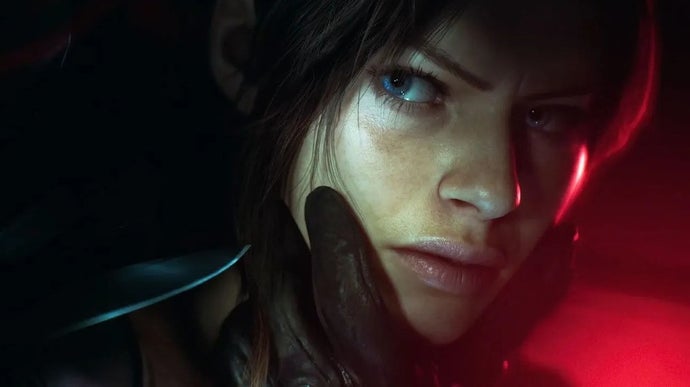
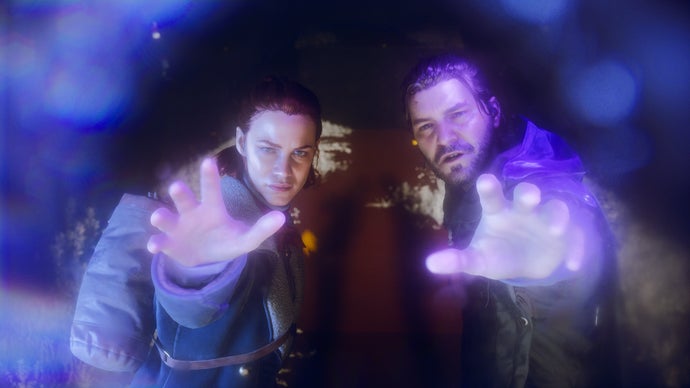
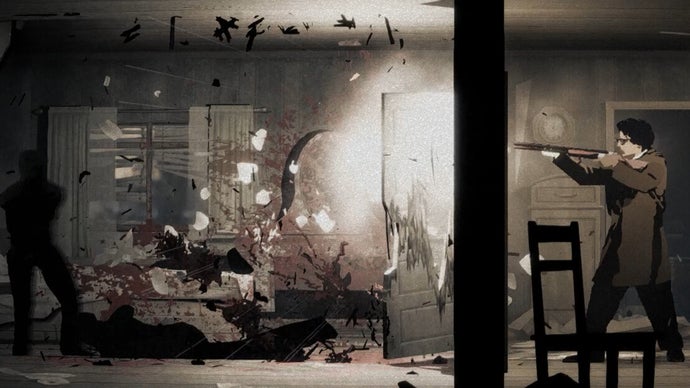
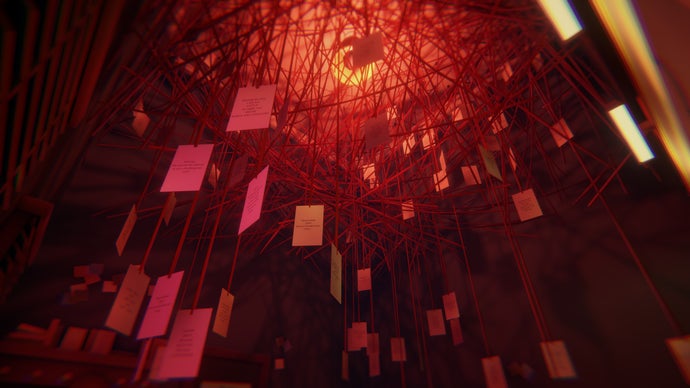
My Little Cafe Nightmare has you serving up coffee and decorating a haunted cafe full of ghostly customers who want a drink. When it comes to cute and cozy, sometimes a spooky...
HIGH A satisfying blend of inventory management, score chasing, and uneasy horror atmosphere.
LOW It could be a grind to see all available options.
WTF All the deformed rats.
TRANSCRIPT:
Hi everyone! Eugene Sax here with another review from GameCritics.com.
There is a satisfaction in running an organized shop — everything in a neat and efficient order, and exactly where I need it to be when customers ask. Fortune Seller takes that feeling and also makes it a tense puzzle, knowing my life will be forfeit if I’m not as efficient as possible in selling to those who come to my shop…
In this roguelike shopkeeping simulator, players have a set of items they can sell to every customer who comes through their door. Customers have limited storage space, so players must fit items into their inventories as best they can. The goal is to sell enough to cover the debt for the landlord of this shop, which increases each day — but fail to make enough cash, and the landlord will take flesh instead.
It’s not all about organization though, as the types of items sold will be important as well. Items have different classifications — organic, antique, and junk, to name just a few. For each customer, there will be spots in their storage which give increased value to an item if it matches the desired item type. An antique item could sell for 100 dollars on its own, but will earn an increased 200 dollars if placed on a marked “antique” spot in the customer’s storage. Items can also have different qualities that affect item value. A Flame item will increase the value of everything above or below it in storage, while a Wave item will increase the value of everything to the left and right of it. Players need to leverage all of these descriptors efficiently in order to earn enough that day.
Between days players will buy items and tools to help out with the ever-increasing debt — more items for the shop, magic spells, or tarot cards. Magic spells can give items attributes, create new items, or destroy unwanted items. Tarot cards work similar to Joker cards in Balatro, each one having a unique effect depending on how it’s used. One tarot gives bonus money for each item sold to a customer, while the reverse gives a bonus only if they fill the customer’s storage perfectly.
There’s a lot going on in Fortune Seller, but there are plenty of reminders for each individual attribute and visual indicators for how it affects a customer’s storage. However, it does a smart thing by not telling the player exactly how much their items will sell for. Each item has a base price, but the increases earned from any of modifiers applied remains unknown, which gives a level of tension and excitement — the player never knows how much money will be earned until the sale is final.
While Fortune Seller is a gripping shopkeeping experience, I do have a few small gripes, though.
For example, there are some instances that refer to a “item stack”, but I have yet to find anywhere the term is appropriately explained. It hasn’t stopped me from completing multiple runs, but I have to wonder if I’d get further in Endless mode if I knew what it meant.
Another issue is how grindy it can be. From the start, players have one set of starting items, and more will unlock through the course of play. After eight hours put into it and multiple completed runs I’ve only unlocked two additional starting item sets out of the possible twelve. Compared to other, similar games, these unlocks are coming at a ridiculously slow pace.
In the end, Fortune Seller‘s strange atmosphere kept me engrossed and organizing items was more satisfying than I would have expected. I’m still going to keep working at this shop for a while even after finishing several runs, but it’s always a challenge to avoid paying my rent in flesh to a shadowy landlord.
For me, Fortune Seller gets 8 perfectly-filled storage boxes out of 10.
Disclosures: This game is developed and published by Kiwick. It is currently available on PC. This copy of the game was obtained via publisher and reviewed on the PC. Approximately 8 hours of play were spent playing the game, and multiple runswere completed. There are no multiplayer modes.
Parents: According to the ESRB, Fortune Seller is rated T and contains Blood and Mild Violence. While nothing is specifically gruesome on screen, it does reference the landlord killing the player with statements like “I guess your flesh will have to do.” There is a Tarot effect called “bloody” that will give a card a dripping red glow on it. The blood is more implied here than in other games, but it’s still maybe not for the younger audience.
Colorblind Modes: Colorblind Modes are not present.
Deaf & Hard of Hearing Gamers: This game offers subtitles, but subtitles cannot be altered and/or resized. There are no relevant audio cues needed for gameplay. The game is fully accessible.
Remappable controls: Controls are not remappable, and there is no control scheme. I used mouse for everything — selecting and rotating items, confirming sales, making selections, etc. Shift is used if players need more info on specific items (reviewing attributes for example). Controller is supported — A selects whatever the player is hovering over (or confirming in menus), B cancels selection or goes back in menus, X will sell items in storage, Y will reroll inventory or sell items, Right bumper/left bumper changes tabs in menus or rotates selected items, Right trigger gives more info on items.
LOW This combat system was not designed for bosses.
WTF Is that statue bleeding light when I hit it?
Legacy of Kain: Defiance is the fifth — and until very recently, anyway — final entry in the Legacy of Kain franchise, which tells the story of… well, it’s kind of confusing.
In Blood Omen, a petty nobleman got turned into a vampire, and at the end of the adventure, the player got to choose whether to end the world or save it. Canonically, the end happened and vampires started running things. This led to disaster for everyone, forcing Kain’s lieutenant Raziel to try and destroy his former master across the two Soul Reaver entries. Time-travelling shenanigans in the story there created a new timeline in which Kain had to battle a nefarious empire’s to rise to power, which largely formed the plot of Blood Omen 2. Finally we arrive here, at Defiance, in which the two leads chase one another through time in an attempt to wrap up the story in satisfying fashion.
Suffice it to say, Defiance‘s story was absolutely baffling at times, especially since the last time I played through the series was when they were originally released over two decades ago. I’m reminded of the original PS1 Metal Gear Solid, and how it offered a novella’s worth of text for anyone interested in catching up on the story of the NES-era Metal Gear 1 and 2 before hitting play. The basic timeline feature this game offers doesn’t get nearly granular enough.
As a remake of the original 2003 release, the gameplay is as good as it ever was, but that’s not exactly a compliment. In controlling two vampires, the player has access to a wide arrange of magical powers. Kain can turn into a cloud of bats to travel from one area to another and use powerful telekinesis to toss enemies around like ragdolls, while Raziel has a set of elemental abilities to switch between, as well as the ability to move into the spirit realm in order to see puzzles from a different angle.
Defiance’s levels are built around two main gameplay mechanics – puzzles and combat. I found the puzzles to be the better experience, although that may owe partially to nostaliga for how games used to be designed. Said puzzles generally involve moving blocks and manipulating switches via psychic powers or elemental devices. Players can also use light powers to shatter dark doors, and vice versa. There’s nothing too taxing here, but the charming retro quality had me smiling as I smashed a drawbridge mechanism to open up a new path or channel power to a vent so that it would have enough energy to toss me into the air.
The combat hasn’t aged quite as well. Kain and Raziel have similar movesets, so it’s not like I had to relearn a bunch of abilities with every character swap at the start of a new chapter, but the actual meat of combat is unsatisfying. Enemies swarm around at all times, and the special abilities that allow for crowd control take far too long to charge up. It winds up being a question of constantly trying to make enough room so that a given enemy can be focused on long enough to put them down. The only tool in the arsenal that allows the player to do that is the telekinetic shove, and the targeting system is so wonky that it only works about half of the time.
On the plus side, at least I didn’t have to fight against a terrible camera at the same time. While the original version featured a camera system built around fixed angles that swooped back and forth as the player moved around the screen, this remaster puts those angles at the whim of one of the thumbsticks, and it’s a revelation. Being able to lock the camera took all almost all of the torture out of the many platforming sequences, just as being able to spin the camera around during fights allowed me to see where off-screen attacks were coming from – a situation which made combat in the original frequently unbearable. Players can switch to the original camera system if they want to, but I can’t imagine why anyone would.
I can’t say the same about the upgraded graphics that the remaster offers, though. Flipping back and forth between the original graphics and the modern version is accomplished with the tap of a button, a process so seamless it doesn’t even affect the framerate.
While the HUD is far more readable than the original, and the textures are obviously more detailed, some of the graphical adaptation choices are a little confusing. The main issue is that the enemies look bland and interchangeable. Where the first release featured foes that were clad in garish greens, purples, and yellows, the new version offers muted tones and enemies that tend to blend into the background. Yes, the models are more detailed, but the enemies themselves are more forgettable, and considerably less entertaining to look at. I reached a point where I found myself flipping to the classic graphics whenever a fight started because the blood-soaked combat makes more sense if the gore is being splattered in a field of equally extreme hues.
Legacy of Kain: Defiance is an interesting choice for a remake, because it starkly shows just how far we’ve come in the field of third-person action adventure, and the unlocked camera completely transforms the experience, making it feel indistinguishable from any number of current indie platformers being built with the PS2 aesthetic. It’s too bad the developers couldn’t similarly rescue the combat, given that a full half of the playtime is about slaughtering foes.
When Defiance was originally made, developers had largely figured out how 3D platforming should feel, and the only real hurdle that remained was being willing to trust the player with the camera. Combat still had a long way to go at that time, though, and it’s in the stumbling, awkward fights that Defiance shows its age. It’s an interesting curiosity, but anyone considering loading it up should be ready to slog through some truly annoying fights.
…Also, be sure to bring along a plot synopsis and list of characters – it’s a necessity.
Rating: 5.5 out of 10
Disclosures: This game is developed by Crystal Dynamics and PlayEveryWhere and published by Crystal Dynamics. It currently available on PC. This copy of the game was obtained via publisher and reviewed on the PC. Approximately 12 hours of play was devoted to the single-player mode. The game was completed. There are no multiplayer modes.
Parents: This game was rated M by the ESRB, and it features Intense Violence, Blood and Gore. There are only villains in the world of Defiance. The evil empire/church are horrible monsters, but so are the playable vampire and wraith who oppose them. One of the first things that happens in the game is that Kain arrives in the dungeons, finds the empire’s victims chained to walls, and announces that it’s dinnertime.This is bleak, unpleasant, and absolutely not for children.
Colorblind Modes: The game does contain colorblind modes.
Deaf & Hard of Hearing Gamers: I played almost the entire game without sound and encountered zero difficulties. All dialogue is subtitles, but the subtitles cannot be resized. The game is fully accessible.
Remappable Controls: Yes, the game’s controls are remappable.
Google has deemed Doki Doki Literature Club (DDLC) inappropriate for sale on Google Play and the Android App Store. Developers Dan Salvato and Serenity Forge shared a message about this update, as shown below. Other gaming stores like Steam still have DDLC up, and no so-called activist groups have campaigned against the deconstructive visual novel. MSN tried to reach out to Google for comment; as of May 1, 2026, no one from Google has responded (no surprise if you know how Google's customer service and PR are nonexistent).
Source: X/Twitter.Spoilers ahead for Doki Doki Literature Club.
Doki Doki Literature Club is a psychological horror story disguised as a fluffy visual novel. You play a teenage high schooler convinced to join his childhood friend's poetry club, or they won't have enough members. Then the game starts to glitch, and you realize one of the club members is trying to change the narrative. That's not a good thing as glitches increase and dead bodies appear.
A few years ago, while at home during lockdown, I started a Weirdness Bingo with friends to track strange news. We had to stop it in 2024 because weird news stopped being funny. I don't think any of us would have predicted Google trying to impose its morality through the "Terms of Service" by removing DDLC from its store. The gaming community outrage has started, as have discussions questioning why they chose this game, which came out in 2017, and not others with similar themes.
Self-Fulfilling Prophecies
Clearly, Google has never heard of the Streisand Effect, let alone played DDLC; they've just ensured more people will look up the game and call them out for applying arbitrary policies. People may also question whose bright idea it was to flag THIS game. One of the biggest twists in the game is that messing with the game files unleashes the rest of the story. Mess with them too early, and you get a downer ending off the bat. Do nothing, however, and you end up stuck. You have to find that perfect balance with trial and error unless you use a walkthrough. There's such a symbolic coincidence; Google deleting access only makes things worse for them, as it does for Monika.
If Google wanted to avoid controversy, it shouldn't have chosen one of the most viral indie games from the late 2010s. Going after Doki Doki Literature Club is like a kid tossing a rock at a wasp nest, and the wasps have Wi-Fi. The game was an odd-duck success, a Western development crew's deconstructive take on the Japanese visual novel genre. It also has serious discussions about mental health and cyclical abuse. The game keeps these discussions fairly tasteful and has allowed players to discuss them. Ergo, it has violated no policy.
"Dead Dove, Do Not Eat," and Doki Doki Literature Club
If you know anything about DDLC, you know that it's not a cute, child-friendly game. The trigger warnings cover self-harm, onscreen emotional abuse, and graphic suicide scenes. While the terror takes over an hour to reveal itself to the player, it exists. Once the code opens Pandora's box, you can't close it. You can only see DDLC as horror.
Sure, we have the adorable sleepy childhood friend accompanying the snarky player character to school and inviting him to a poetry club. And the game shows a hilarious scene where another NPC tosses cupcakes like frisbees. The first image that I saw, however, showed the childhood friend very dead, courtesy of YouTube streamer compilations. It convinced me not to play the game since imagery related to suicide upsets me. I did, however, get the gist from gamer videos and analysis.
(Left to right) Natsuki, Yuri, and Monika. Source: Steam.
It feels like Google doing this removal a decade after the game's release is akin to a fanfic reader complaining that a fan fiction had unsettling content after clicking the Archive of Our Own Content Policy. Hours of YouTube content cover both the twist and its meaning. Did they somehow ignore the "Mature 17+", "Dead Dove, Do Not Eat", and trigger warnings? "Dead Dove" refers to a fanfiction description tag warning that a story is going to be super horrific, and - brace yourself - the sitcom Arrested Development provided the namesake meme.
Google is banking on the fact that so many people use its services and won't switch to other search engines, emails, or video-sharing sites. It's the same reason why they thought adding AI filters to YouTube would be adopted, but they have never seen irate video game fans.
Restore Monika, Sayori, and the Others
I'm not a DDLC fan in the sense of "ride-or-die hyperfixation", but I oppose these power plays on principle. The company that once used the slogan "Don't be evil" has kowtowed to arbitrary rules that benefit oligarchies.
The slippery slope of censorship starts with one deletion, one controversy, and then another. In this tumultuous present, we can't turn a blind eye when an institution takes a ride down the slope. That's why we should restore the save files and the stories that led to them.
It's somehow been 12 years since we first got the pants scared off us in the excellent survival horror adventure Alien: Isolation, but we're finally getting another go-round with the powerful, unkillable xenomorph.
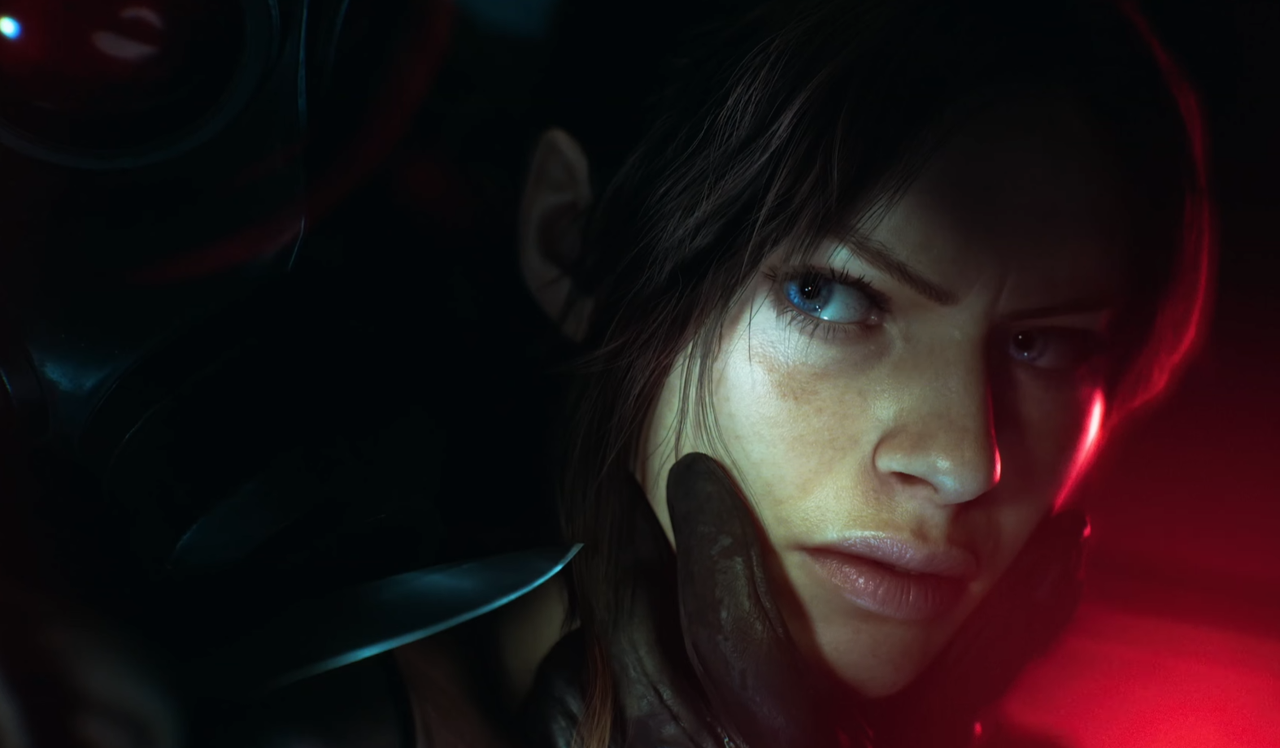
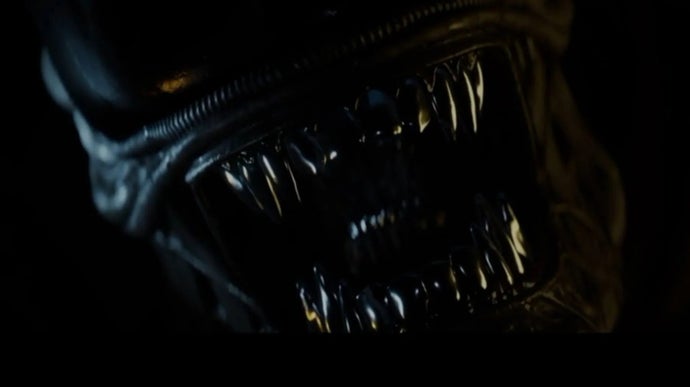
At Summer Game Fest, we got our first teaser for Alien: Isolation 2—and even though it doesn't show us much, what it does show looks great.
We're leaving the space stations behind, as the sequel is set on a planet this time, though that doesn't mean we're going to be completely free of the atmosphere and chills of the original game.
"This time we're unleashing the alien on an unsuspecting colony world," said Ana Sopikova, art director at Creative Assembly. "From the claustrophobic confines of the colony itself to the exposed and storm ravaged landscapes surrounding it, Kurosaki Station is a new hunting ground for the ultimate apex predator.
"Players will face a desperate struggle to survive and escape, and we cannot wait to show you more in the future."
Unfortunately, the new Steam store page for Alien: Isolation 2 doesn't give us a whole lot more information, or even an idea of a release window beyond "Coming soon." The screenshots are all labeled "Pre-alpha capture," which doesn't suggest a release is right around the corner.
This year's Summer Game Fest stream opened with a good amount of applause for Resident Evil Veronica, a remake of Dreamcast game Resident Evil — Code: Veronica.
Code Veronica is especially ripe remake material since it's notoriously easy to inadvertently softlock yourself in the original. The series hadn't quite undergone its mid-aughts action-movie reinvention (though this is arguably where that direction started to emerge, what with the John Woo-inspired CG opening), so you were still grappling with awkward tank controls and at the mercy of brutal encounters that really stung if you hadn't conserved your ammo and ink ribbons—the only way to save your game.
Despite the quirks, it's a standout horror game on the Dreamcast, and even though it eventually made its way to other consoles with the Code: Veronica X remaster, it never made it to PC.
Given how past REmakes have gone, I wouldn't be surprised if this cut all the funny business and reimagined Veronica with less finicky controls, amped up by modern Capcom's snazzy visual tech and the original's puzzle-heavy exploration.
No gameplay footage came with the creepy cinematic, but we know the remake is planned to release in 2027. With rumors of a Resident Evil 0 remake also on the way, I'm hopeful that future REmakes will focus on games that shine despite some rough qualities, and therefore benefit most from reinvention, rather than the all-time greats that play perfectly fine even now.
The PC Gaming Show returnsSunday, June 7 at 12 pm PDT! Visit the show's Steam page to wishlist your most anticipated games and get more information on how to tune in for the big reveals.
Creative Assembly and Sega have screened the first proper trailer for Alien: Isolation 2, confirming in the process that the new xenomorph horror game is set on a planet. A planet of windy trees, thick fog, and much wreckage. There is a cage with the bars cracked and bent outward. I'm pretty sure they weren't keeping spare fuel cells in there.
The zombies are eating well this summer. Capcom have revealed the much-rumoured remake of Resident Evil: Code Veronica, originally released on Dreamcast a billion centuries ago in 2000.
And with that the Summer Game Fest is over. At least, the official Geoff Keighley showcase - there are still many more streams over the weekend. I wouldn't say there were many surprises, but it was excellent to get a first look at games like Alien Isolation 2, Fumito Ueda's genAtlas, and Guild Wars 3.
If you don't want to watch through the full two hours. Below you will find every everything announced for PC at Summer Game Fest 2026.
Control Resonant, Remedy’s first foray into hacky and slashy character action, has a release date: it’s September 24th 2026, and there’s a new story trailer to prove it. Another case of the games industry playing Dodge the GTA 6? Maybe, maybe not, though this September is getting awfullycrowded, with Konami just announcing that Silent Hill: Townfall is out on the very same day.
Either way, dates are okay and everything, but I’m more concerned with Control Resonant’s system requirements, which have quietly appeared on the game’s Steam page with no apparent mention elsewhere. And, well, hope you’ve got 100GB of free SSD space.
Set in a town that's equal parts Silent Hill and Twin Peaks, Silver Pines puts you into the gumshoes of private investigator Red Walker as he tracks down missing musician Eddie Velvet. The investigation hits a slight hiccup when ravenous monsters that want to eat your flesh down to the bones start to impede your enquiries.
We've known about the sidescrolling metroidvania for a while, but it's now got a Steam demo you can play and a release date you can hunger for. October 8th, the creepiest 8th day of the month in the year.
I am intrigued by Farsight, a nervy (if trendily) liminal space explorer announced at Not E3’s Horror Game Awards Showcase. It tugs on a fear I’ve never had, but will probably start thinking about at every future Specsavers visit: being dragged into that distant red-roofed house shown in optometry exams, and hunted by the spooks within.
However, I’ve also recently been made aware of another first-person, eye-related psychological indie thriller, Time to Wake Up. And, well, this one has a Steam demo, so...
Back in February, Remedy appointed Jean-Charles Gaudechon as its new CEO following last year's FBC: Firebreak flop. This quickly raised some eyebrows given Gaudechon's tenure at EA, a game studio that's had its fair share of controversies over the years thanks to its business practices. After all, Remedy are meant to be this quirky, Finnish game studio that does things their own, weird way, such an appointment felt out of step. But, in a recent interview, Gaudechon made it seem like he's not about to "change the DNA" of a place like Remedy (even if he does still want to bring more money in by expanding in other ways).
SAW: Genesis is a 3v1 multiplayer horror game set a century before Jigsaw where three Accused must escape procedurally generated trap filled mazes while one Judge orchestrates their rehabilitation through pain and sacrifice. Set in grim World War I aftermath, matches pit physically vulnerable Judges who control from shadows against collaborative Accused teams racing against time before their will crumbles.
Invokyr is a Jumanji inspired co op horror game where up to four players become trapped in a haunted house by a cursed board game and must roll dice to survive its summoned terrors.
In Invokyr you scour the shifting labyrinth of rooms across jungle ice mountain and oversized toy chest biomes to recover special dice that can heal hide or hinder your pursuers although … Read More
THE WELL IS NOT EMPTY is a first-person horror exploration game where you descend into abandoned tunnels to discover why your community’s water source has mysteriously dried up and investigate the unsettling sounds echoing from below.
In THE WELL IS NOT EMPTY you navigate through claustrophobic passages filled with ancient machinery and evidence of forbidden rituals. Your mission requires manually powering generators to illuminate darkened … Read More