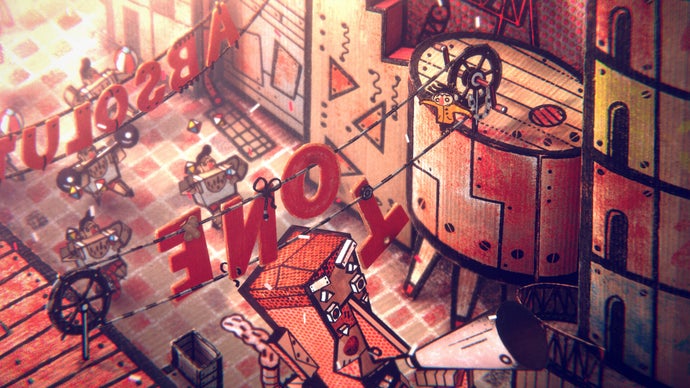
Czech indie developers Amanita Design – creators of Samorost, Creaks and Machinarium, among other marvels – have released a demo for Phonopolis, their 3D cardboard adventure about a young man called Felix who is trying to save a city brainwashed by massive loudspeakers. Protected by his headphones, Felix is on a mission to stop the authoritarian Leader from issuing the Absolute Tone, which will “strip every citizen of their humanity forever”. Seems like a thing to avoid!
In the Venn diagram comparing WoW Classic and Lord of the Rings Online, there’s a large overlapping section that simply says “chill gameplay.” And that’s probably why I appreciate both titles: because they feed that need I have to slow down, drink in the game world, and focus on a long leveling journey with no […]
Would you like to have your design skills immortalized in Skull and Bones? Then you’re in luck because that opportunity is available during an official second anniversary contest, which will grant creative fans of the piratical playground the chance for their custom sail and emblem to be a part of the game. From now until March 8th, […]
Robert Frost’s poem The Road Not Taken was published in August of 1915, and it has endured an immense popularity since then. Many people can quote the last couplet of the poem (“I took the one less traveled by, and that has made all the difference”), and for years the title alone conjures images of […]
This week’s Massively Overthinking is inspired by a tweet I saw from SMITE, of all games, where the Hi-Rez devs asked players to propose one god to delete from the game. Obviously, this is not a serious proposition, but in the aggregate, the answers can kinda show a trend in what people are tired of, […]
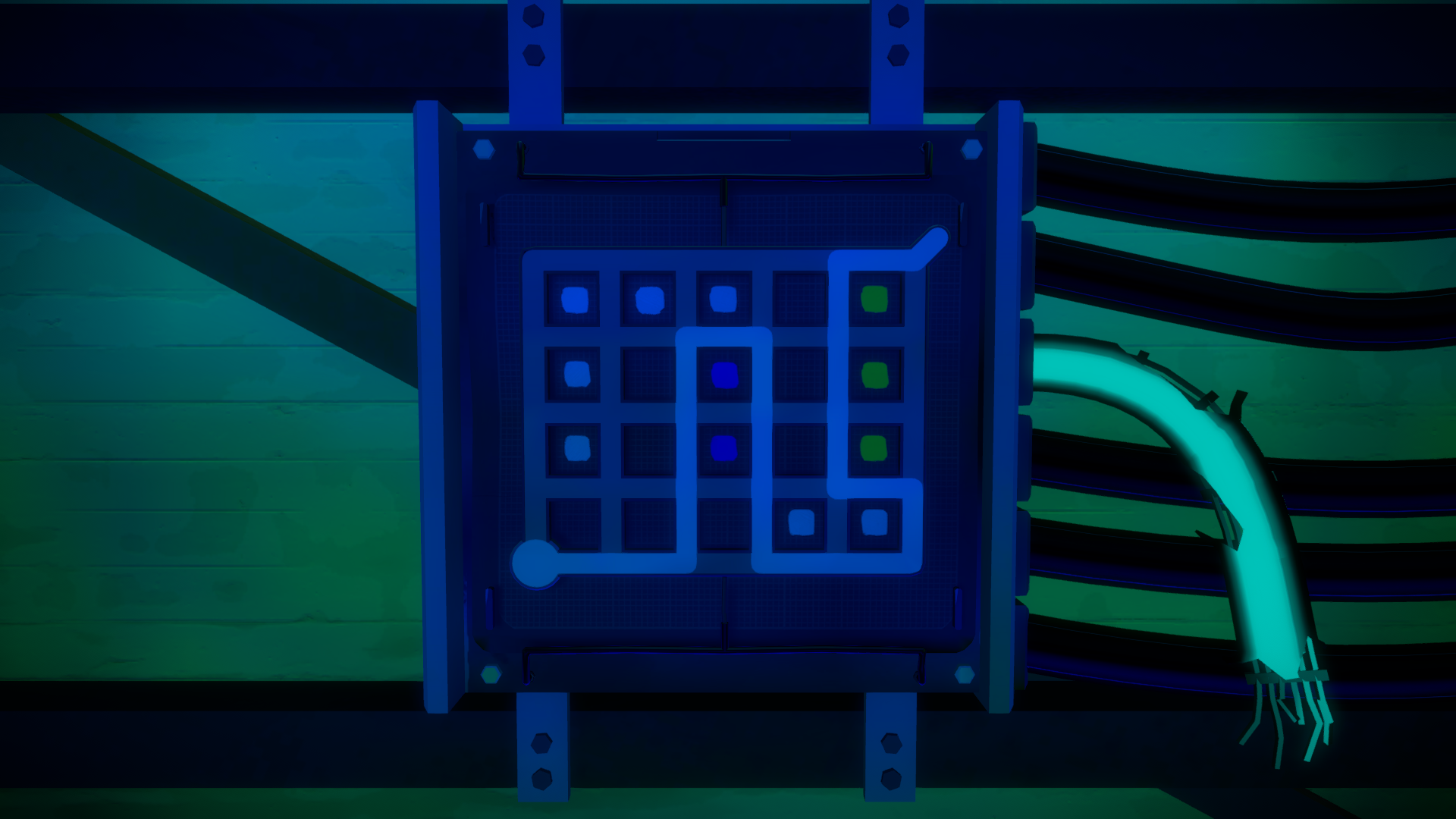
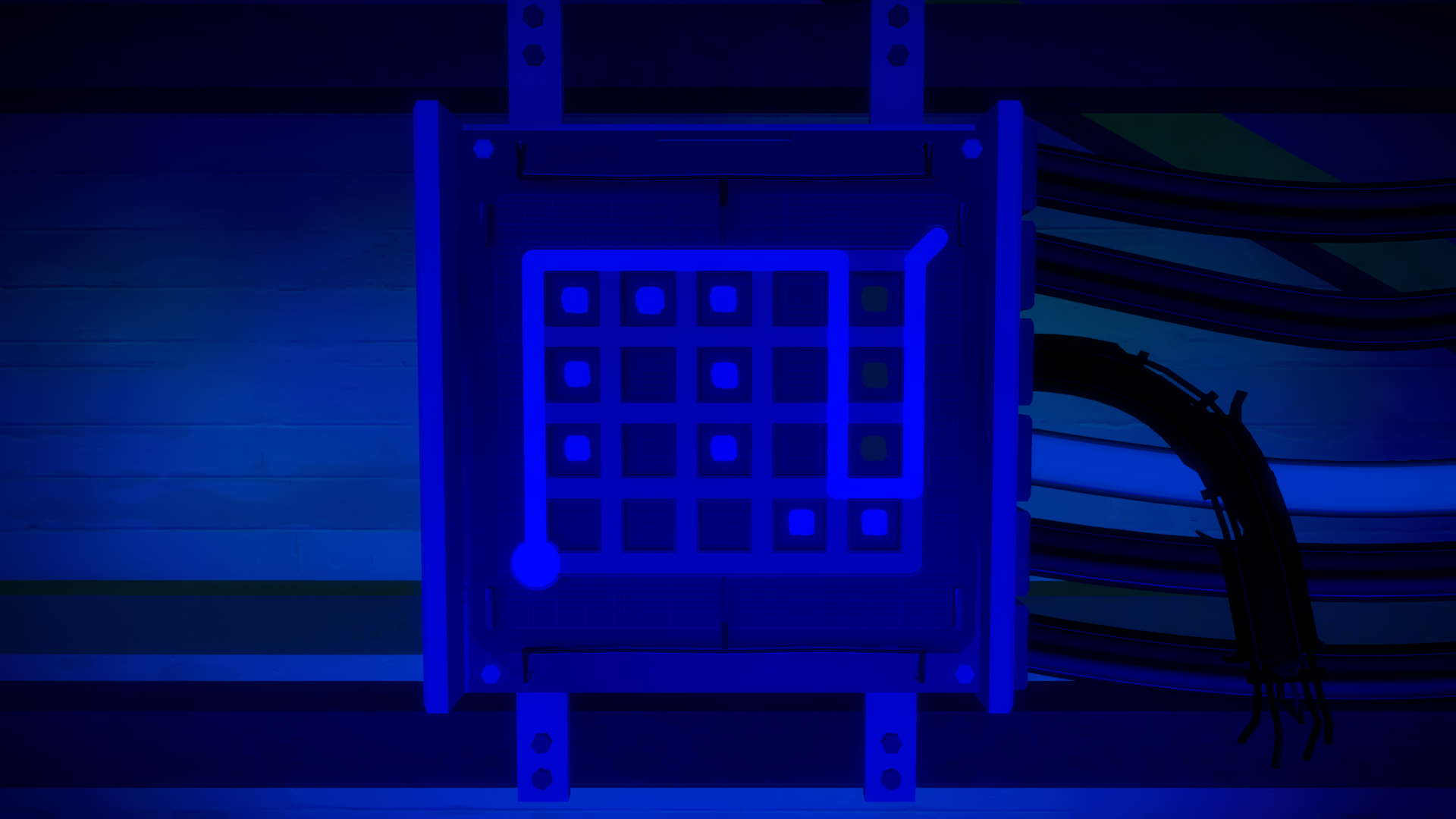
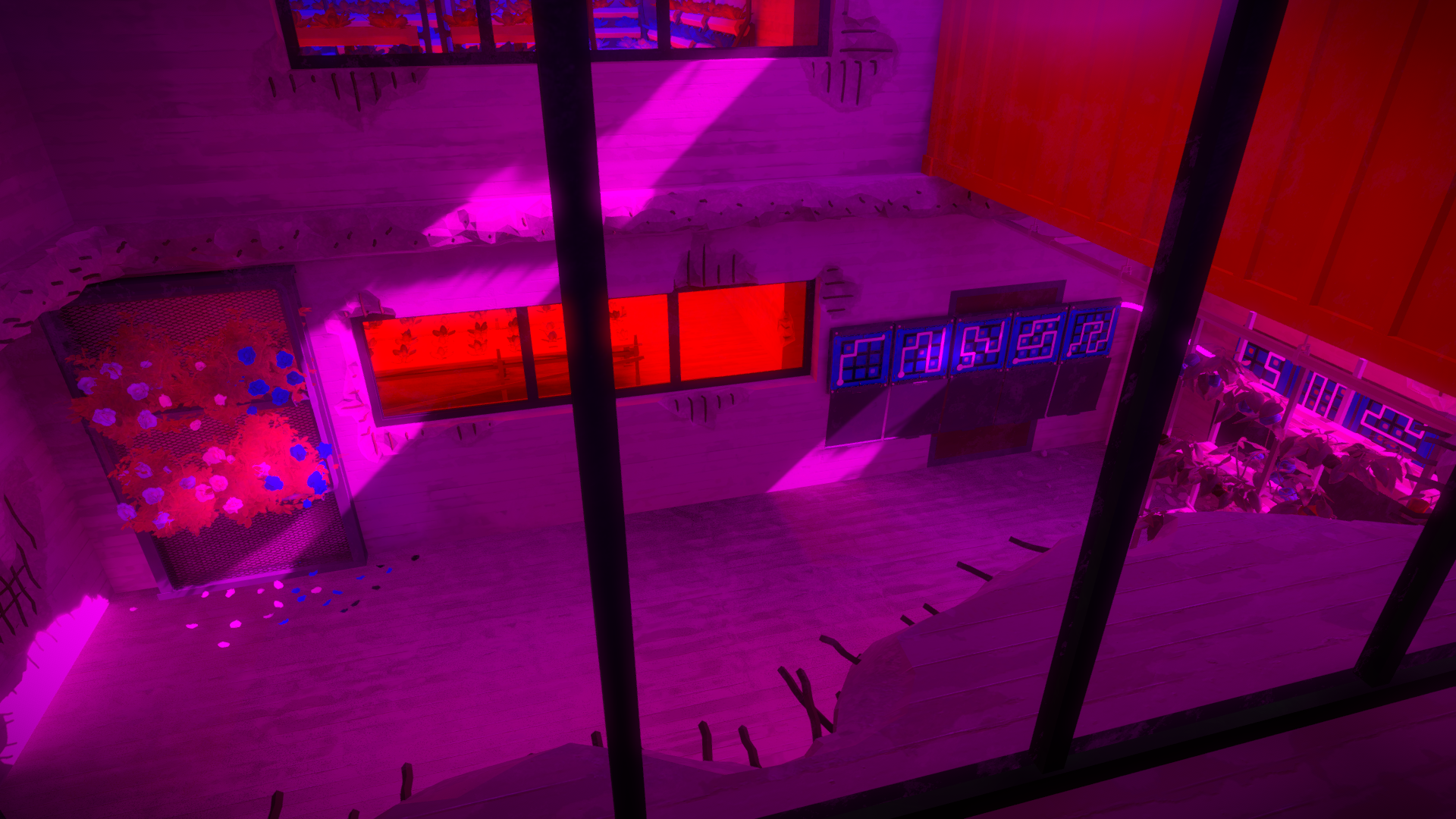
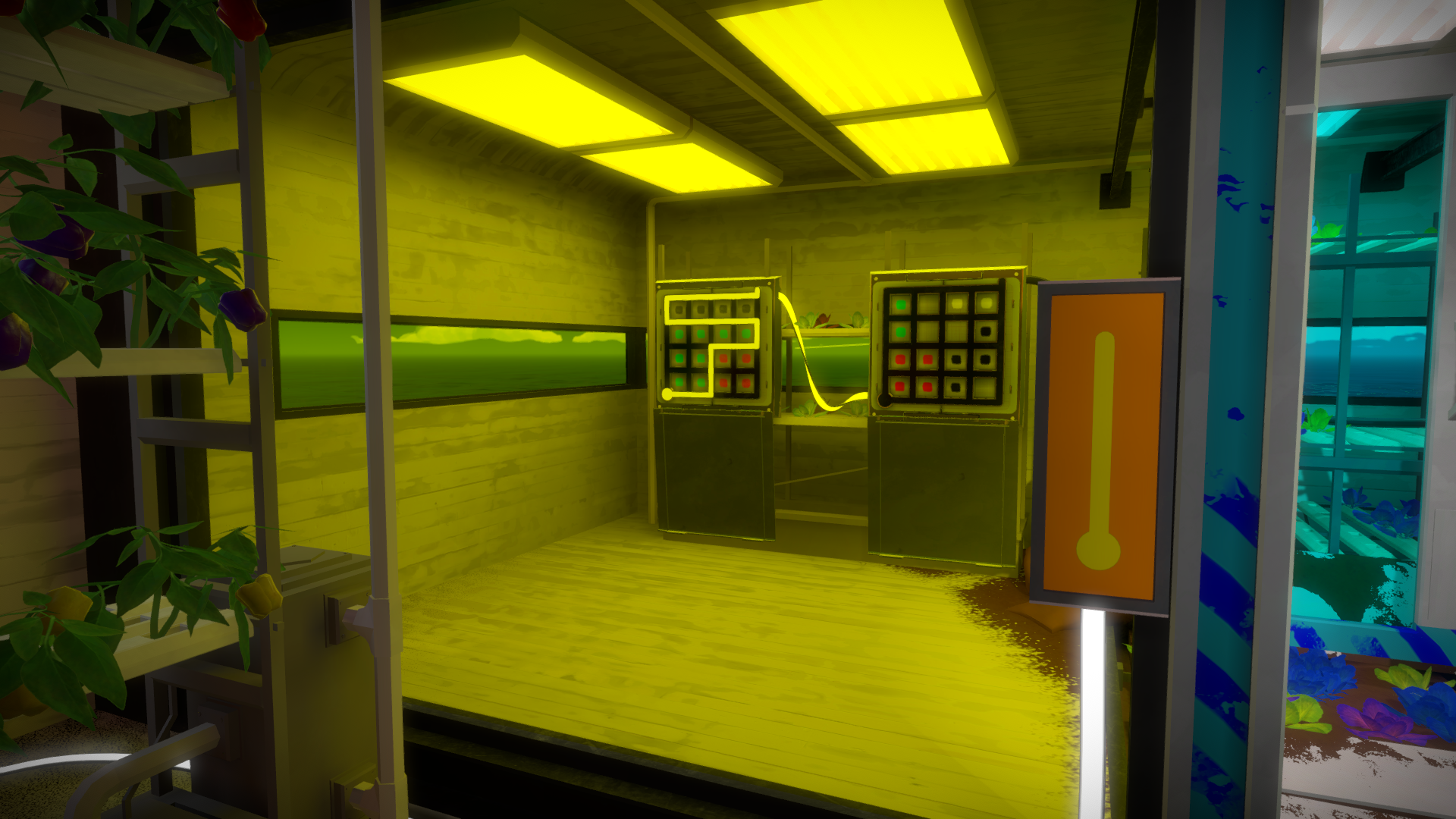
The Witness is one of the few video games, even within the puzzle genre, that has epistemological questions at the core of its game design, such as "what is knowledge?" "How can we know something?", and "What are the limits of what we can know?" At the same time, this game is also one of the first in its genre to be a 3D open world, and it is the first to attempt to reconcile a complex progression of puzzle mechanics with freedom of exploration in an open world without any tutorial or interaction with NPCs. Our goal in this essay is to show how the gaming experience in The Witness is closely related to logic and epistemology.
First of all, it is important to clarify that The Witness does not offer answers to the epistemological questions. It is the job of philosophers to propose solutions and to precisely formulate theoretical problems, while the role of artists like Jonathan Blow (director, designer, and writer of The Witness) is to reveal issues in an inspiring yet vague way and to show perspectives on how to look at them. In this sense, while its gameplay is enjoyable enough for puzzle fans to enjoy it solely for its puzzles, The Witness is also a remarkable expression of video games as art, and can be appreciated for both aesthetic and conceptual reasons.
This essay is divided into three sections: first, we will address the logic and knowledge of The Witness; second, we will discuss archaeological interpretations during the exploration of the Island; third, we will analyze epistemological commentary in audio logs, videos, and metafictional elements.
Table of Contents
I. Logic and Knowledge I. i. Knowing-that and knowing-how I. ii. Formal puzzles, empirical puzzles and logical reasoning II. Archaeological interpretation III. Metafiction and intertextuality
I. Logic and Knowledge
I. i. Definition of Knowledge
This section argues that The Witness stages an epistemological experience in which players acquire non-linguistic propositional knowledge through rule discovery, hypothesis testing, and logical abstraction. Before addressing the specific puzzles or audiovisual and narrative strategies of The Witness, it is necessary to clarify what kind of knowledge the game deals with. In classical epistemology (based on Plato's Theaetetus), knowledge (Stanford Encyclopedia of Philosophy, 2017) has often been defined as justified true belief: to know something is
to believea proposition (e.g., to believe that "The Witness is a videogame"),
the proposition being true(by correspondence theory of truth, this means that there exists an object called "The Witness" and that this object is classifiable in the category of what is called a "video game," according to some definition of video game), and
that belief being supported by some form of justification. For example, it is found that The Witness is classified as a game in an app store. Note that the definition does not require strong empirical justification or a formal demonstration.
Although contested in contemporary philosophy, particularly through Gettier-style counterexamples that question the adequacy of justification in certain supposed knowledge, this classical definition remains a useful conceptual framework as a starting point, as well as for distinguishing knowledge from mere opinion, guesswork, or habit. In this section, our focus will not be on the notion of truth. It is worth mentioning that it is possible to apply other theories of truth besides correspondence theory to interpret the epistemological experience in this game.
At first glance, the player's epistemological experience in The Witness seems far removed from the classic definition of knowledge. The game has no NPCs or dialogue, offers no explicit propositions to be true or false, no textual statements of rules, and not even direct explanations that could be classified as beliefs or justifications. No phrase tells the player "this is how the puzzle works" or "this scenario is a city." However, throughout the experience, the player undeniably acquires knowledge: which lines are allowed, which restrictions matter, which visual elements inside and outside the puzzle space are relevant and which are merely decorative. This apparent paradox forces us to be more precise about the types of knowledge involved.
A useful starting point is the traditional distinction between knowing-that (propositional knowledge) and knowing-how (practical or procedural knowledge). Much of The Witness clearly involves knowing how to solve certain types of puzzles, all inspired by maze puzzles. However, reducing the player's learning to the mere acquisition of skills would be to ignore that the game design compels the player to develop a conscious understanding of the rules.
Solving a panel by mechanically reproducing a pattern is not equivalent to understanding it, and the game is carefully designed to expose this difference: players who rely solely on imitation or trial and error quickly reach a point where they can no longer progress, as more complex problems require the player to have abstracted a general rule from the initial puzzles of an area. Of course, as an open world, the player can choose to abandon that type of puzzle and explore another part of the Island, but they will also face similar obstacles in that other place. What is indirectly required is not just how to solve the problem, but an implicit understanding of why certain actions by the panel are correct.
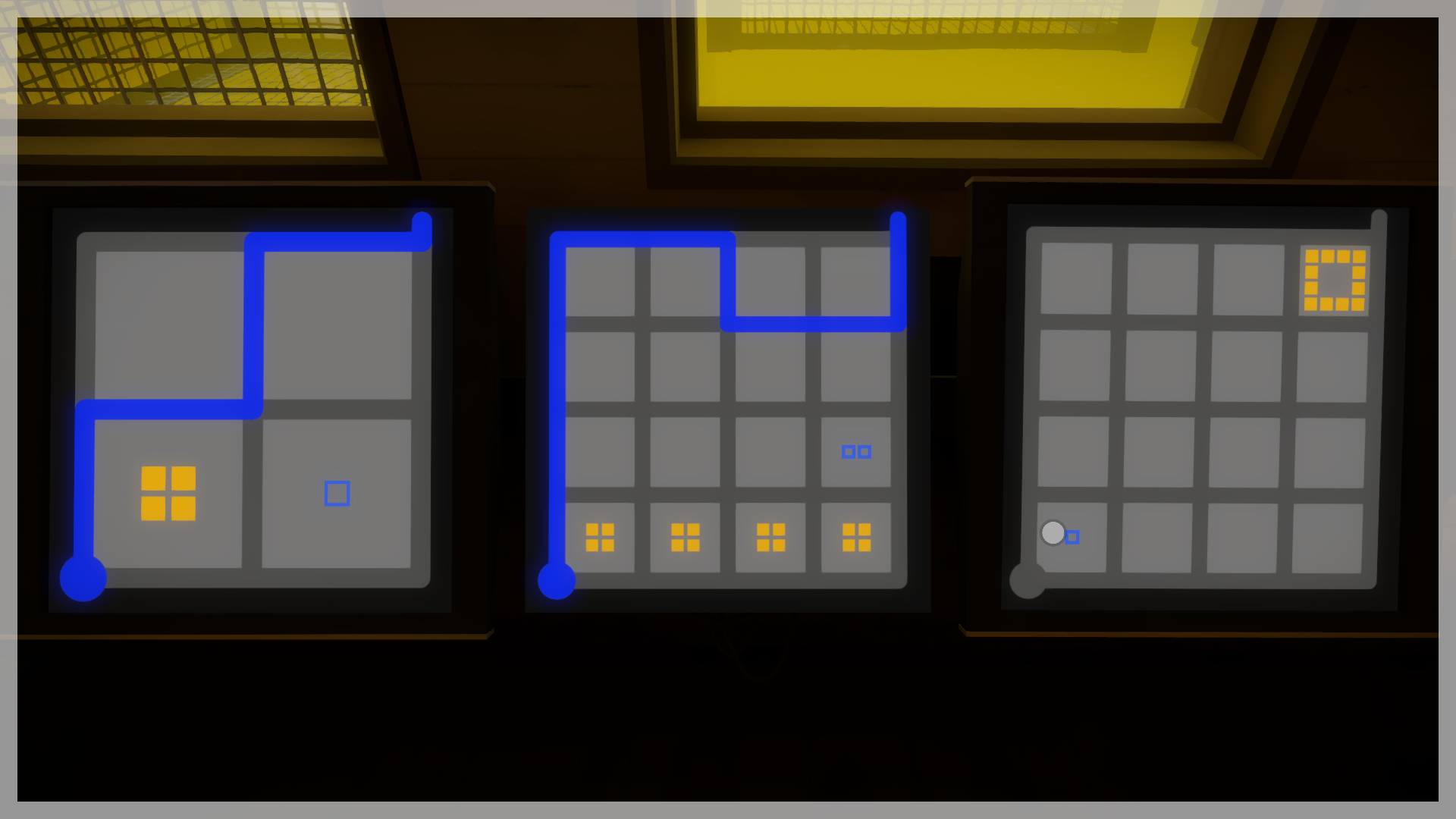
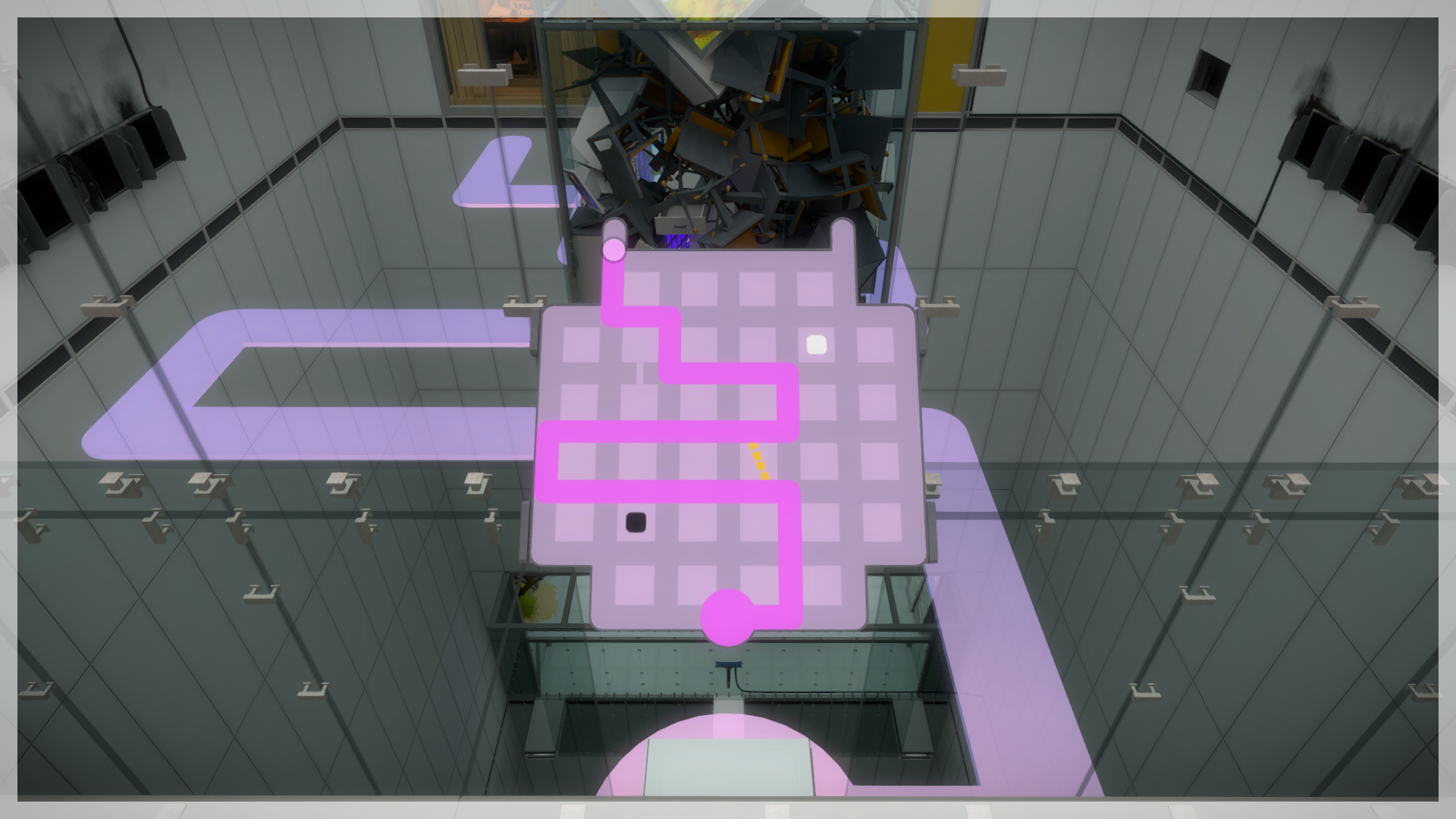
The series of puzzles in the image on the right assumes that the player has understood the rules of the puzzles on the left and introduces certain blue squares as an extra element of difficulty, which obeys another implicit rule of operation. Source: Thekla / Author.
In this sense, The Witness involves a form of propositional knowledge that is never linguistically articulated. Although never formulated as sentences, the rules inferred by the player have determinate truth conditions and generality, which justifies treating them as propositional in content, even if not in form.
I. ii. Formal puzzles and Empirical puzzles
The player formulates hypotheses (for example, that a certain symbol imposes a restriction, or that a certain spatial relationship matters) and tests them in the point-and-click intervention spaces of the game world, which function as empirical testing spaces. When a solution based on a rule hypothesis works consistently in different contexts, the player's belief about that rule gains justification. Interestingly, as with empirical tests in real sciences, it is often not easy to ascertain whether a hypothesized rule is "true" or whether it worked by coincidence, while there is another rule behind it. In general, the puzzles in this game can be categorized as follows:
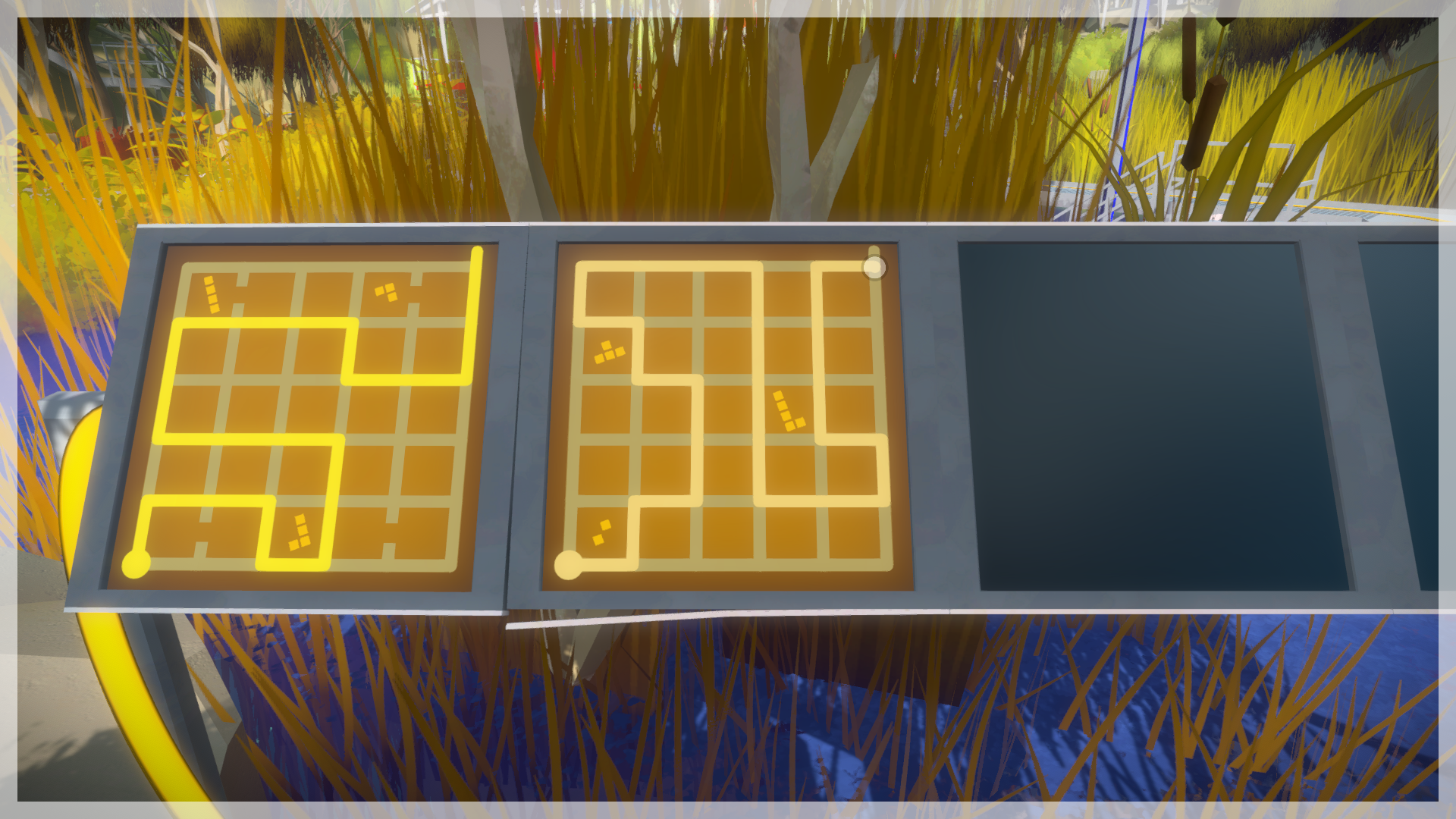
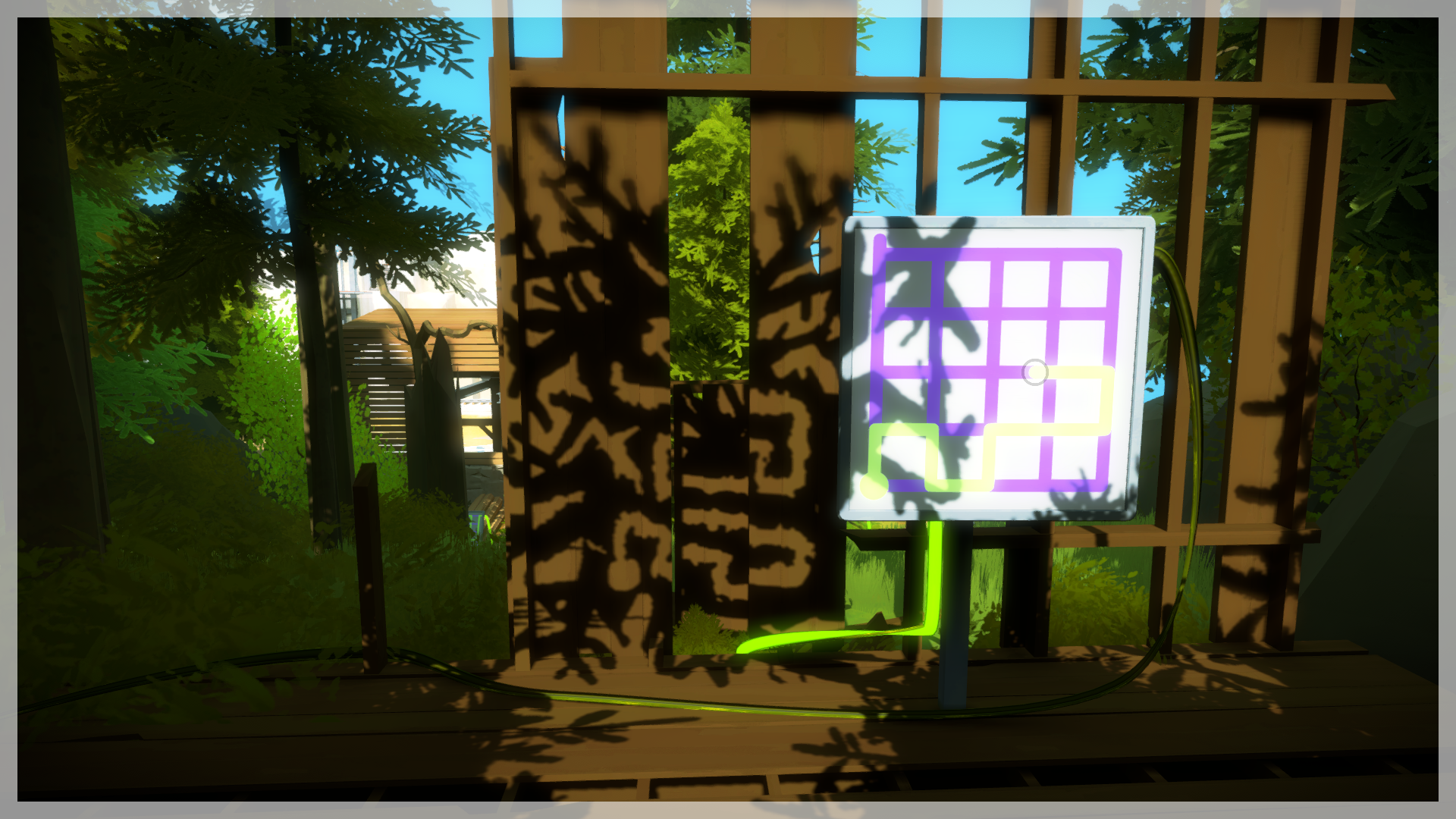
Formal puzzles: these can be solved using the syntactic rules governing the symbols on the panel. Example: the puzzles in the previous image, which can only be solved by considering the Tetris Block rule (you must use the line to draw the shape of the Tetris icon, and subtract yellow squares from the icon proportional to the number of blue squares on the panel).
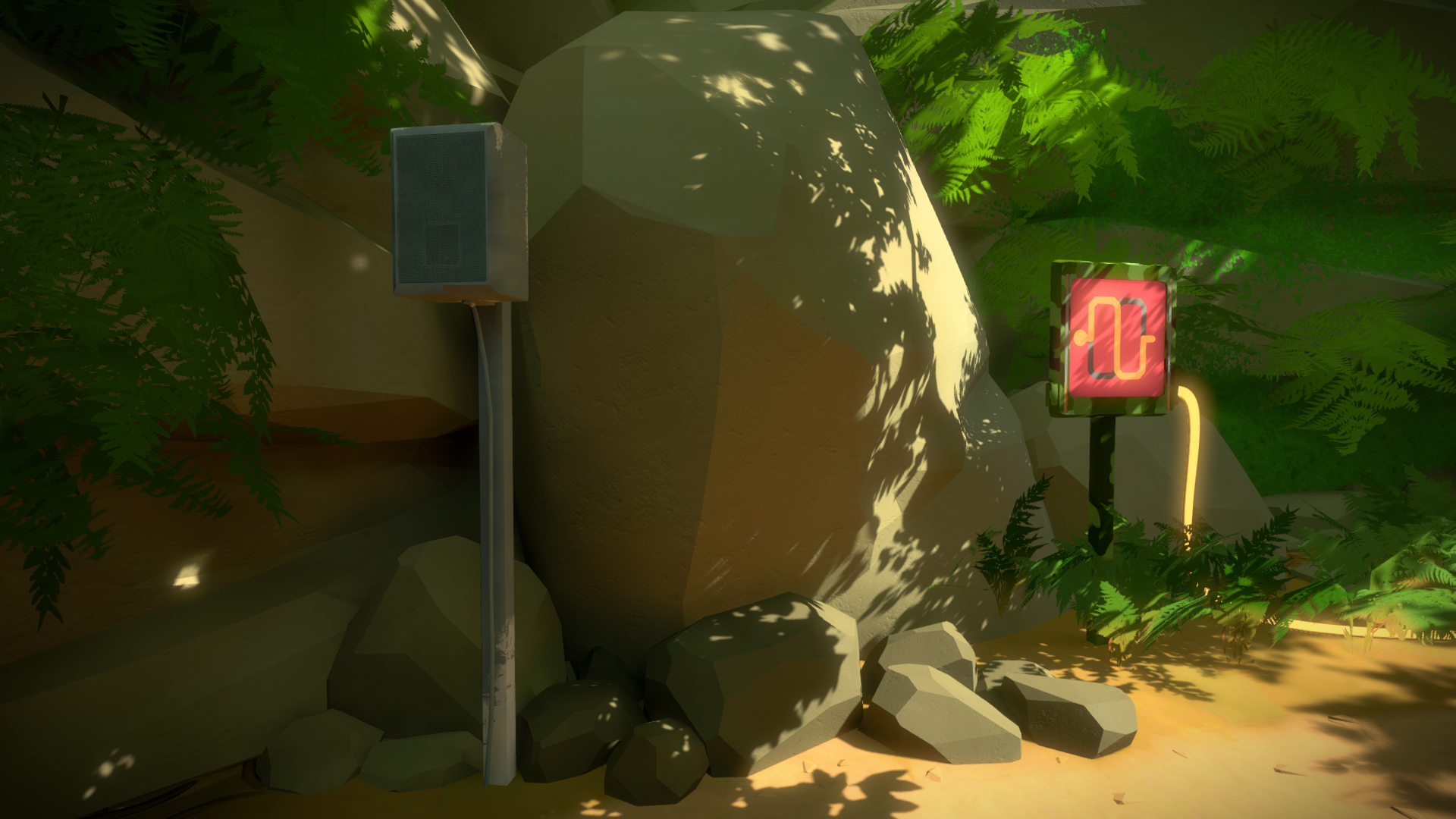
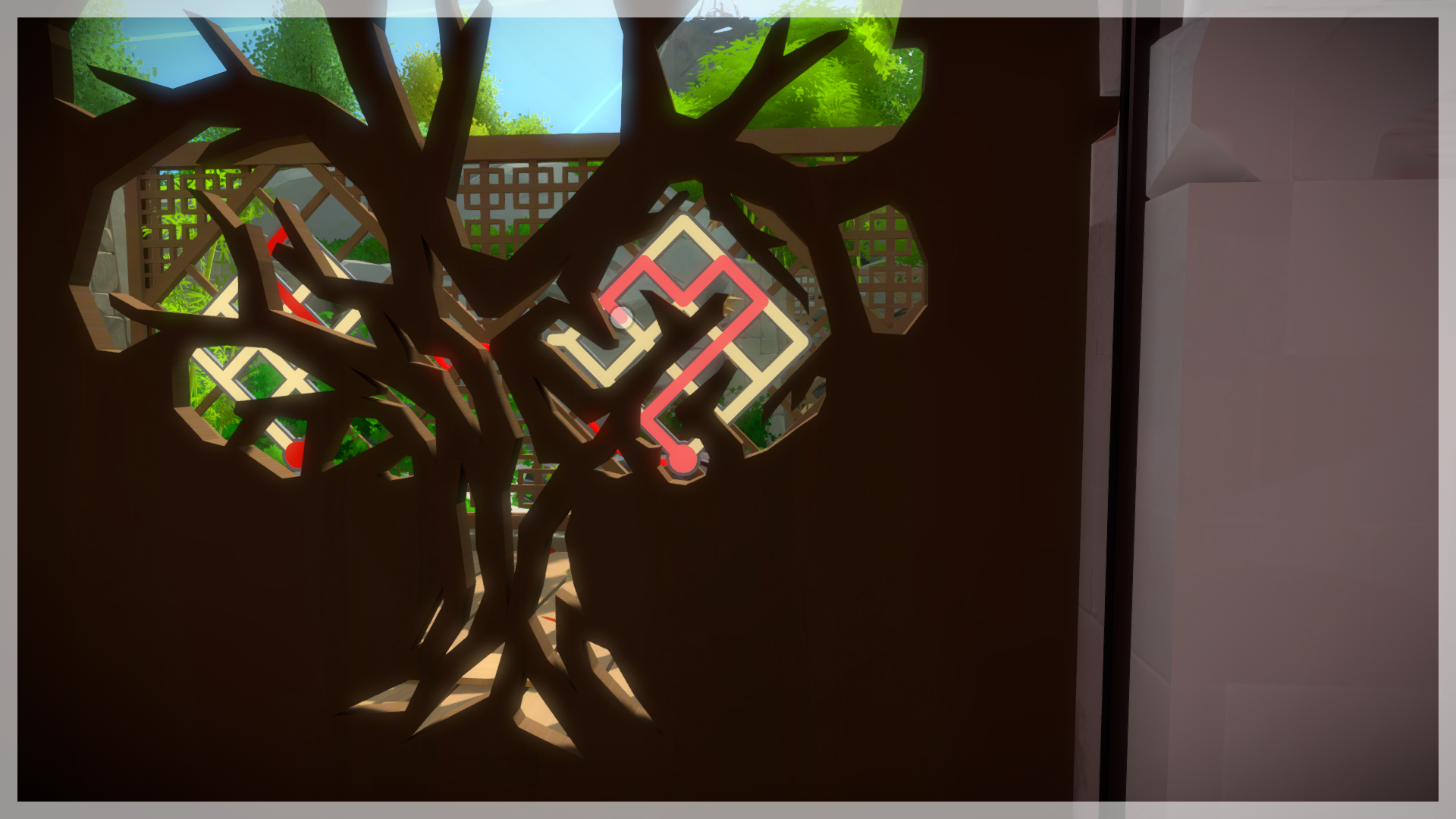
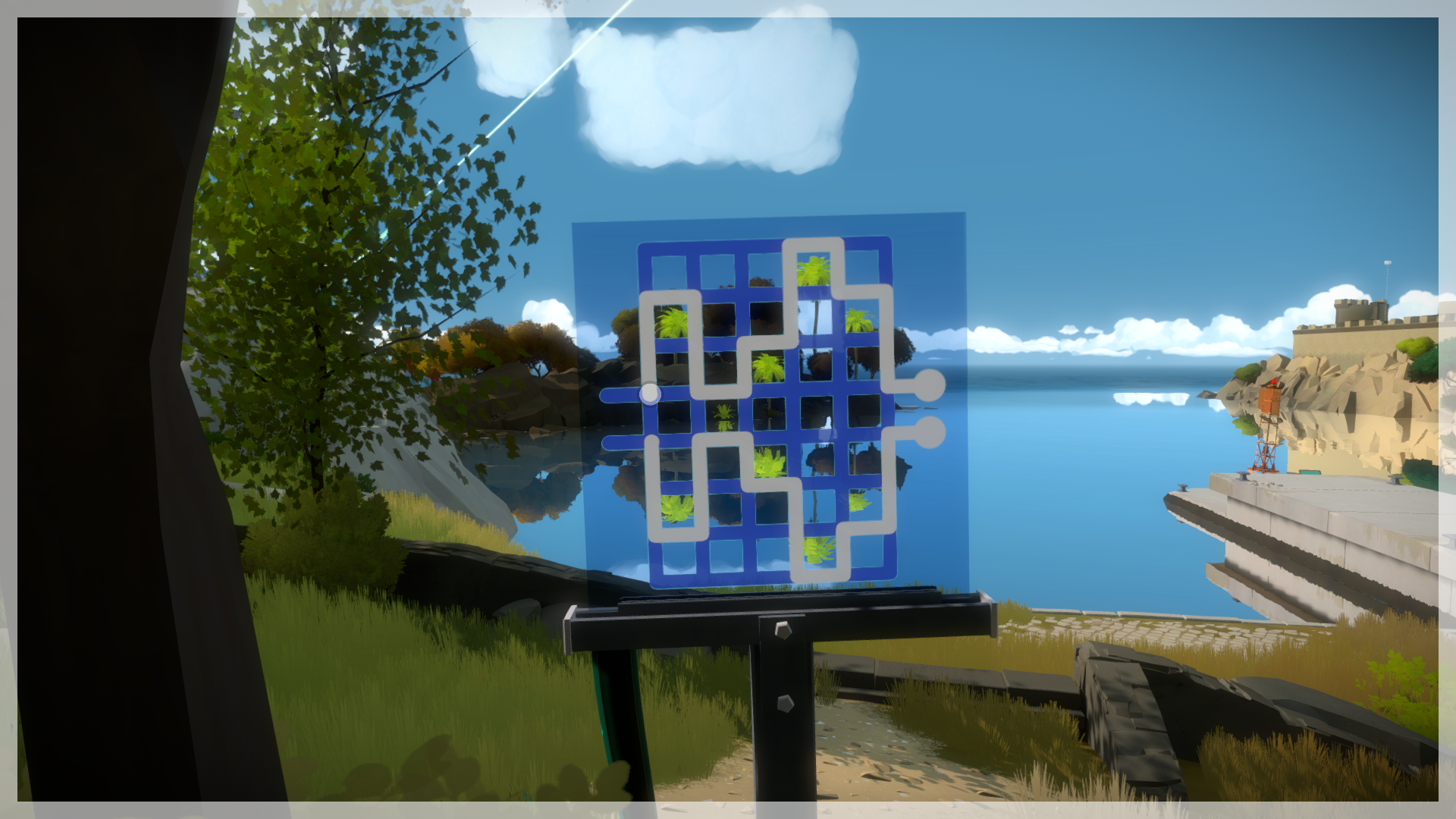
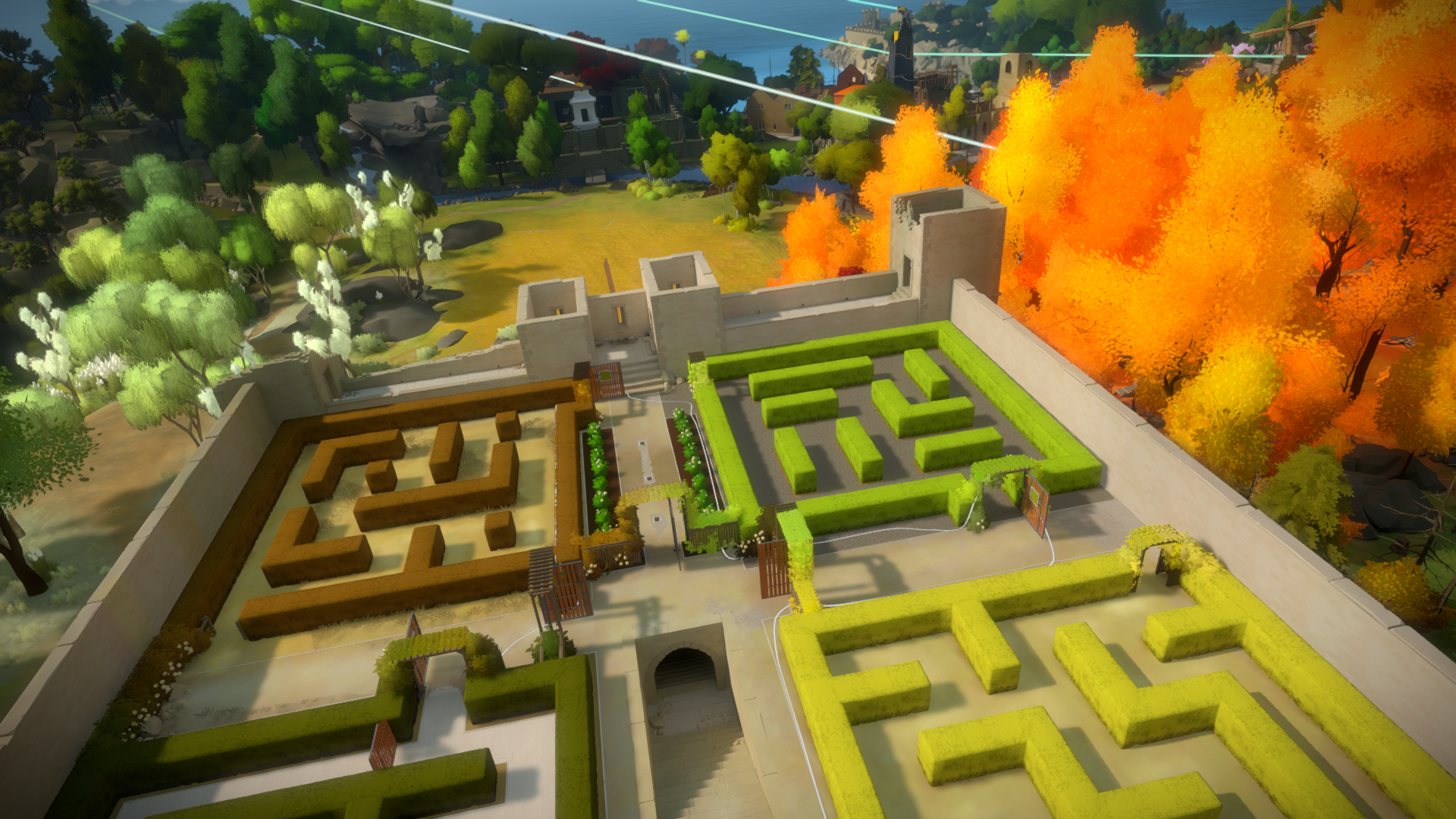
Empirical puzzles: these require the player to investigate the environment around the panel and relate the space of logical possibilities on the panel to visual or auditory elements outside the panel, including the color and angle of the lighting falling on the panel, or even trees, branches, and other objects that can be visually related to the maze puzzle.
Examples of empirical puzzles in The Witness. In these cases, solving the puzzles requires taking into account environmental factors, such as musical patterns (mixed with noise), reflection, lighting, shadow, representation, point of view, overlapping, and symmetry. Source: Thekla / Author.
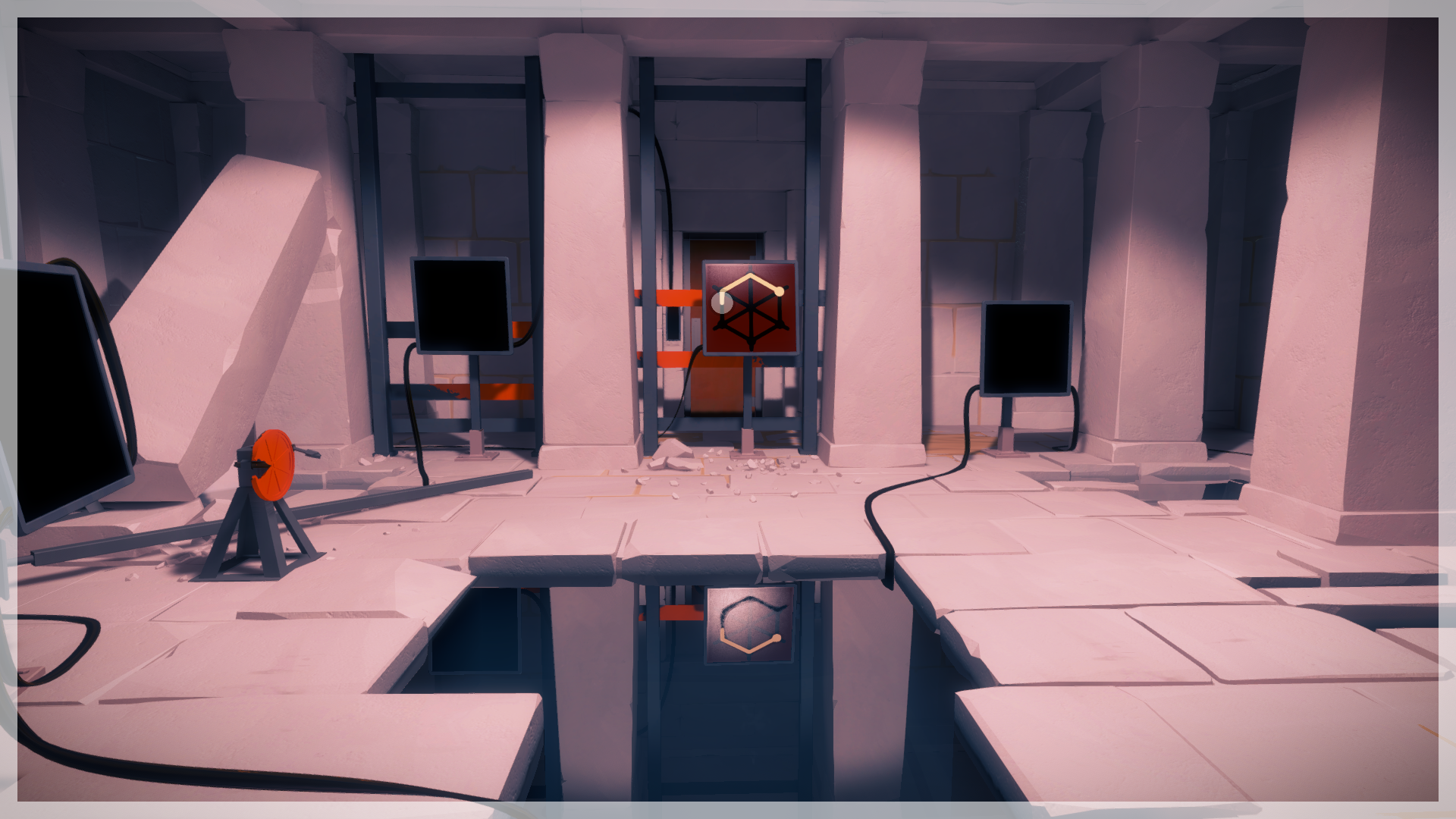
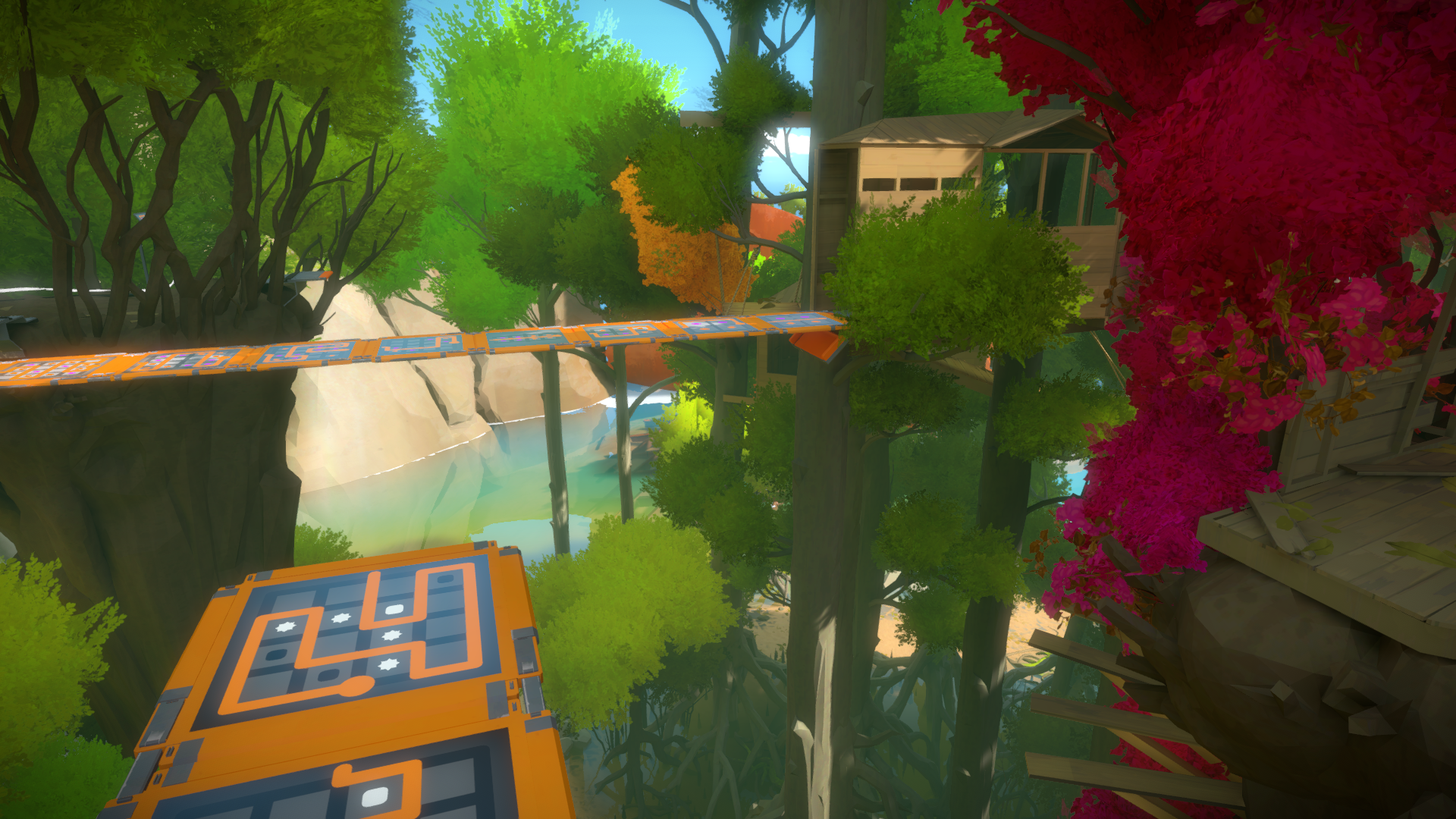
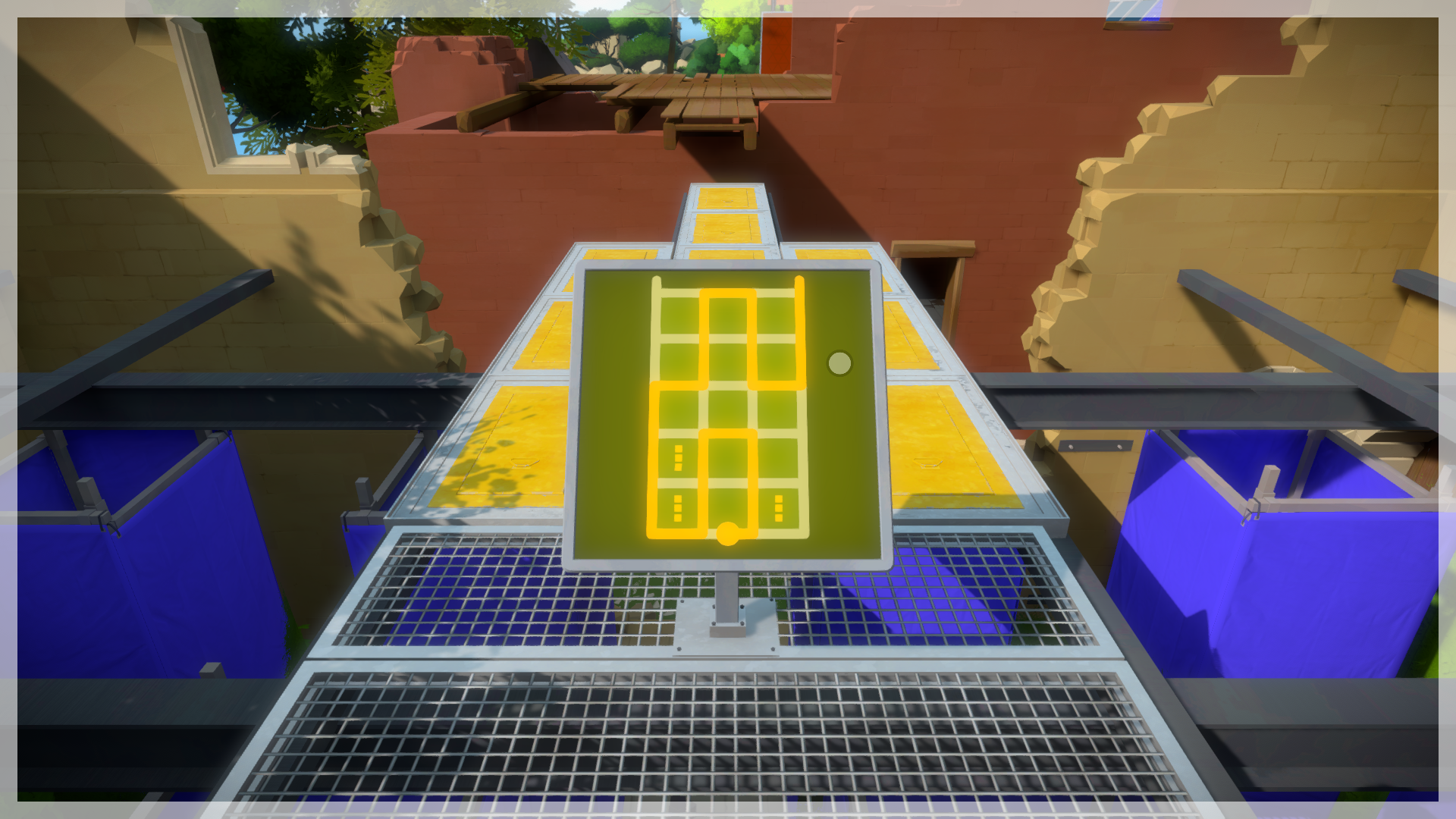
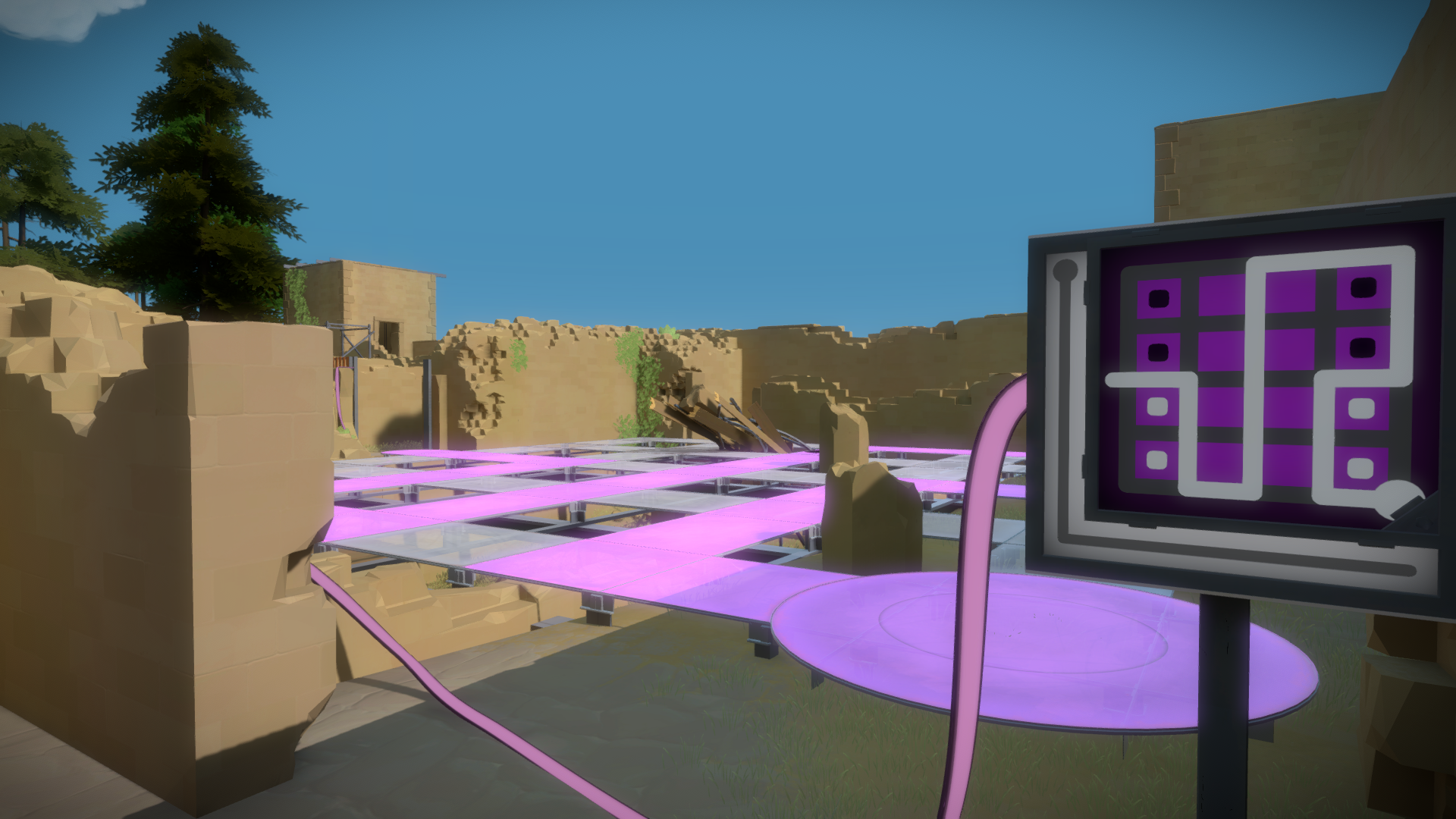
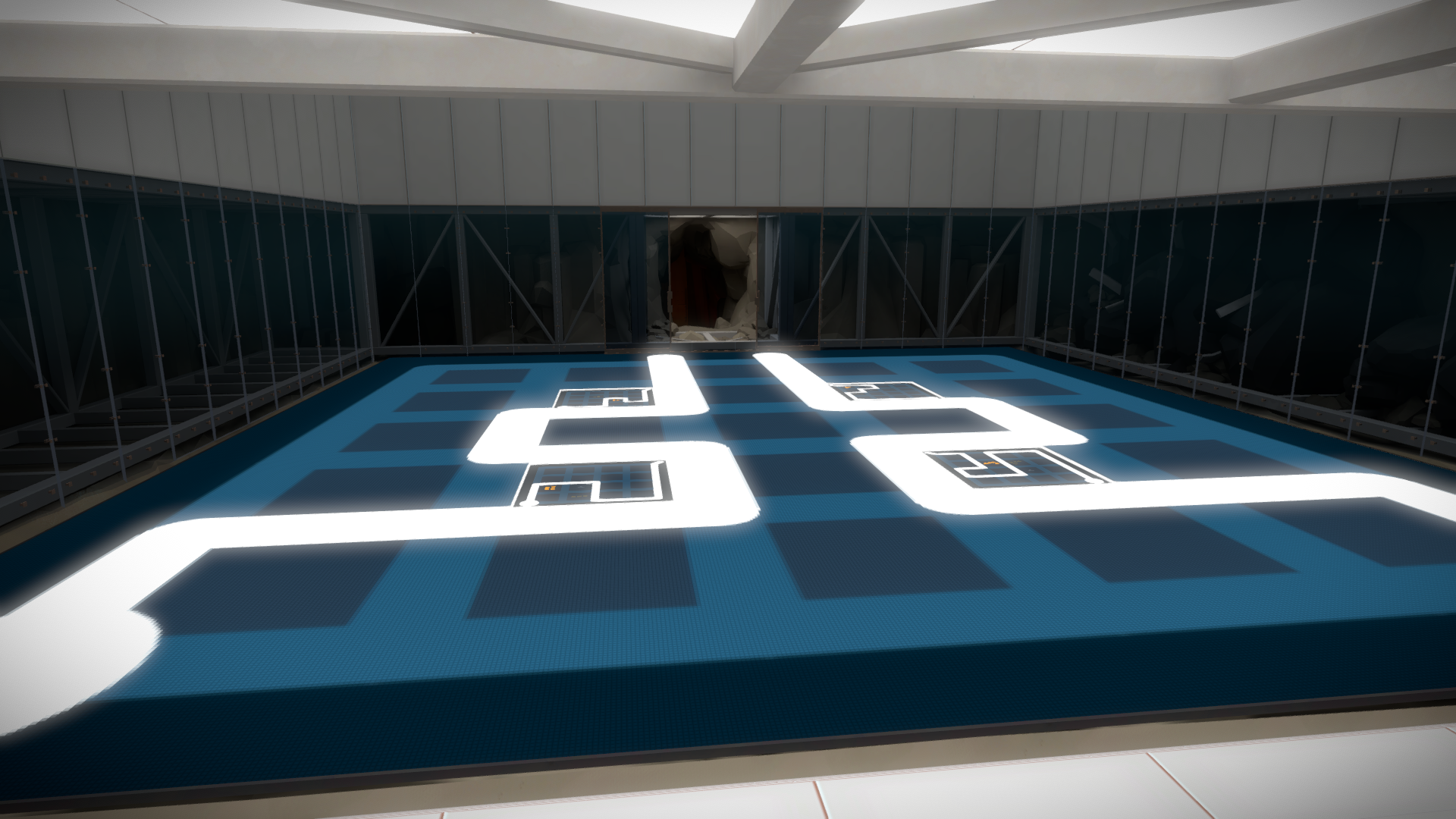
Several formal puzzles in The Witness do not have a single solution; they are non-linear puzzles, a concept discussed by Josh Bycer in The Philosophy of Video Game Puzzle Design here at SUPERJUMP. Although the resolution of formal puzzles is independent of the experience within the environment, in some cases, there are formal puzzles whose possible solutions directly affect movement within the environment, as each solution will result in the construction of a bridge that can provide access to different areas. Furthermore, there are formal puzzles whose solution directly affects a higher-order puzzle (usually represented by a larger-scale maze puzzle).
Examples of puzzles with possible solutions that result in different bridges that can provide access to a certain area. Source: Thekla Inc. / Author.
Examples of maze puzzles directly related to other maze puzzles. The example on the right is a metapuzzle. Source: Thekla / Author.
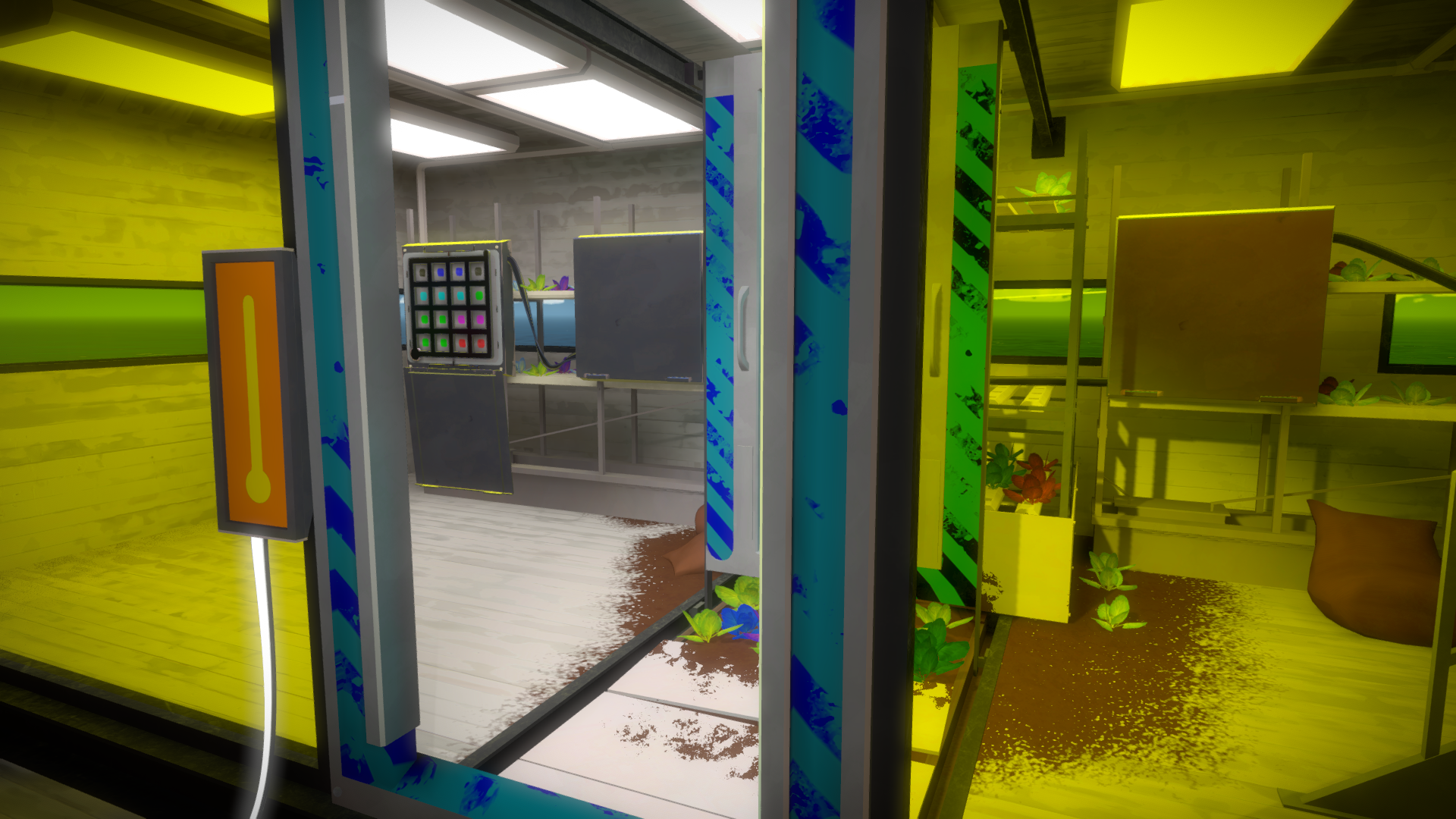
In my piece at SUPERJUMP from 2022, The Reasoning Behind Video Game Puzzle Design, we discussed the differences between deductive, inductive, and abductive reasoning in puzzles. The empirical puzzles in The Witness frequently require inductive or abductive reasoning; that is, they presuppose experimental testing of hypotheses or an investigation of the function of certain objects or effects in the scenario. Let's take as an example the puzzles involving colored stones on the panels and colored lighting in the scenario. In a scenario with this type of puzzle, the player will easily infer that there is something intentional in the emphasis on rooms with colored lighting. Upon realizing that the colored lighting modifies the colors of the stones on the panels, the next step will be to test the hypothesis that this is part of the puzzles in that area.
On the other hand, in the case of formal puzzles, once the rules of the symbols on the panels are known, deductive reasoning (typical logical-mathematical reasoning) is all that is needed to solve them. Formal puzzles in the game can, in principle, be modeled within a Boolean or constraint-satisfaction framework. Consider the equation "A v B". Assuming the classical definition of "v" (or), this equation is not satisfied if A = false and B = false, but it can be satisfied by three choices of values: (1) A=true and B=false; (2) A=false and B=true; (3) A=true and B=true. Logical equations like this can be mapped onto the language of maze puzzles.
Starting from a subset of the symbols (like Suns) used in The Witness, Chris Patuzzo developed an interesting method for drawing a parallel between the formal mechanics of the game and Boolean Satisfiability (SAT), in Reducing Boolean Satisfiability to The Witness (MakerCasts, 2016).
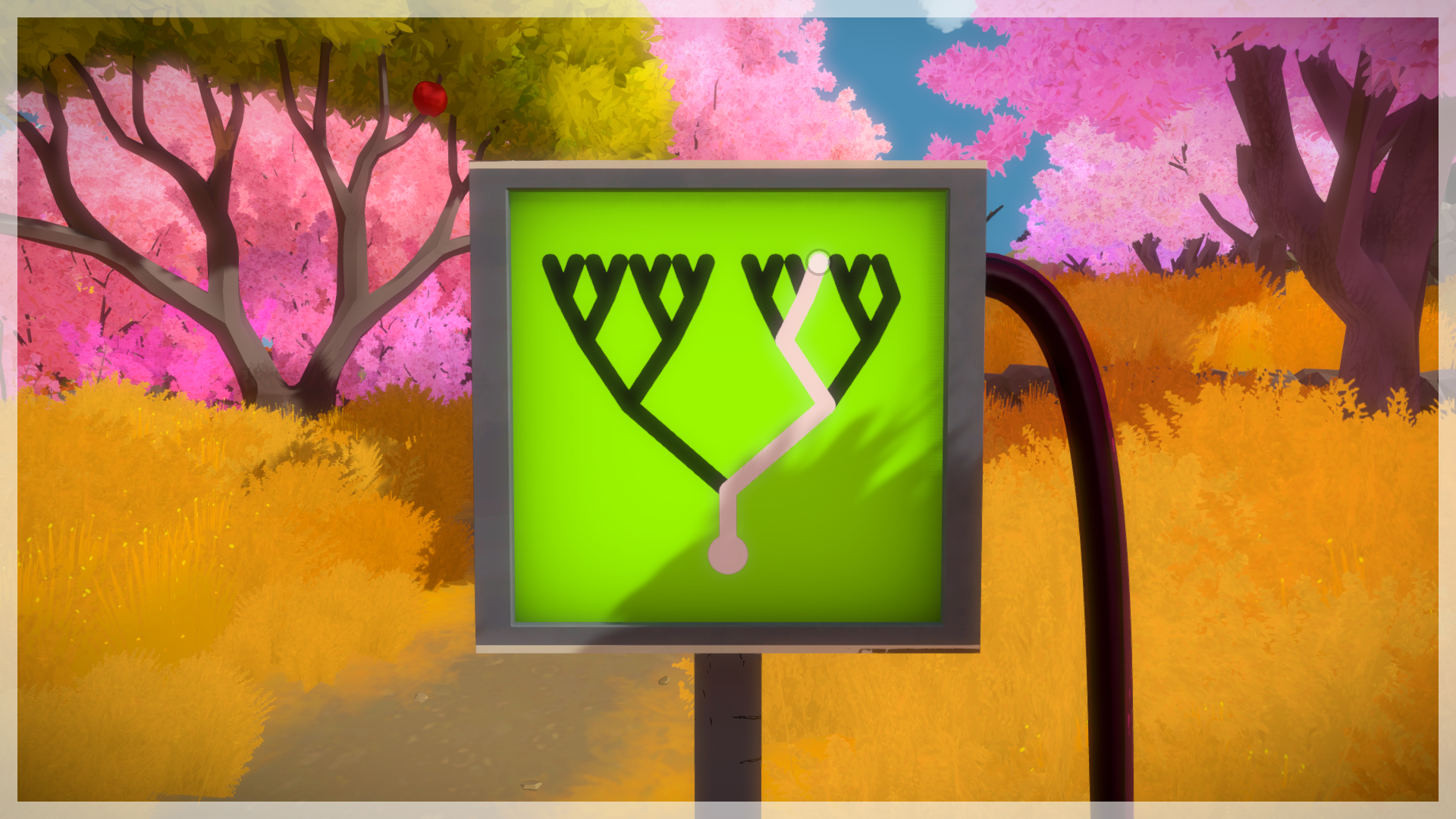
The way to solve a SAT problem is by choosing between true and false for each of the variables in the equation. There's a notion of 'choice'. What does it mean to 'choose' something in a Witness puzzle? What's the corresponding action for choosing? Well, the only influence a puzzler has over a Witness puzzle is to choose their path from start to finish. Do I go North, East, South or West at this junction?
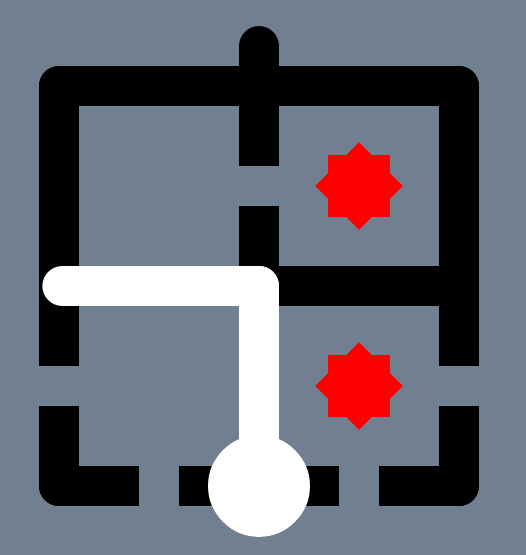
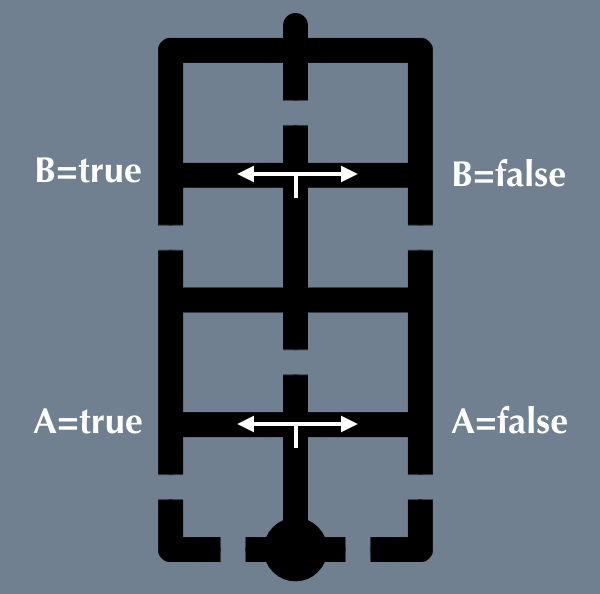
So perhaps we could model variables as forks in the road that the puzzler must choose between. Taking the left fork could correspond to A=true and the right fork could be A=false. Now let's try to put this together with our Suns idea. Let's invent a red Sun to represent the first clause. In our SAT problem, if assigning A=true satisfies the clause, we should design our puzzle so that the Sun is paired up. If they choose to go right, the clause has not been satisfied so this should be an incorrect solution to the puzzle:
— Chris Patuzzo (MakerCasts, 2016)
Left panel: Fork representing A=true. Center panel: Fork representing A=false. Right panel: Stacking forks. Source: Chris Patuzzo (MakerCasts, 2016).
In this first section, we discussed how logic and knowledge work in The Witness to solve puzzles, but the gameplay experience is not limited to that. Open-world exploration allows the player not only to solve puzzles in different orders, but also to freely interpret the traces of different historical periods scattered across the Island.
II. Archaeological Interpretation
From a first-person perspective, the player is projected as an idealized observer walking through a virtually static world; their avatar (with a human shadow) cannot jump or directly touch objects in the environment. In this sense, The Witnessprovides a dense and contemplative experience of an extended present, one that is largely detached from narrative futurity, as well as vestiges of a past without explicit chronology. In this context, Ian Bogost's reading of the role of the player fits perfectly: "In videogames, the player’s hands operate the lost instruments of the designer’s tiny secret society. A player is the archaeologist of the lost civilization that is the game’s creator" (quoted in Kotaku, 2010). Bogost’s metaphor of the player as archaeologist resonates not merely at the level of game mechanics, but at the level of epistemic posture.
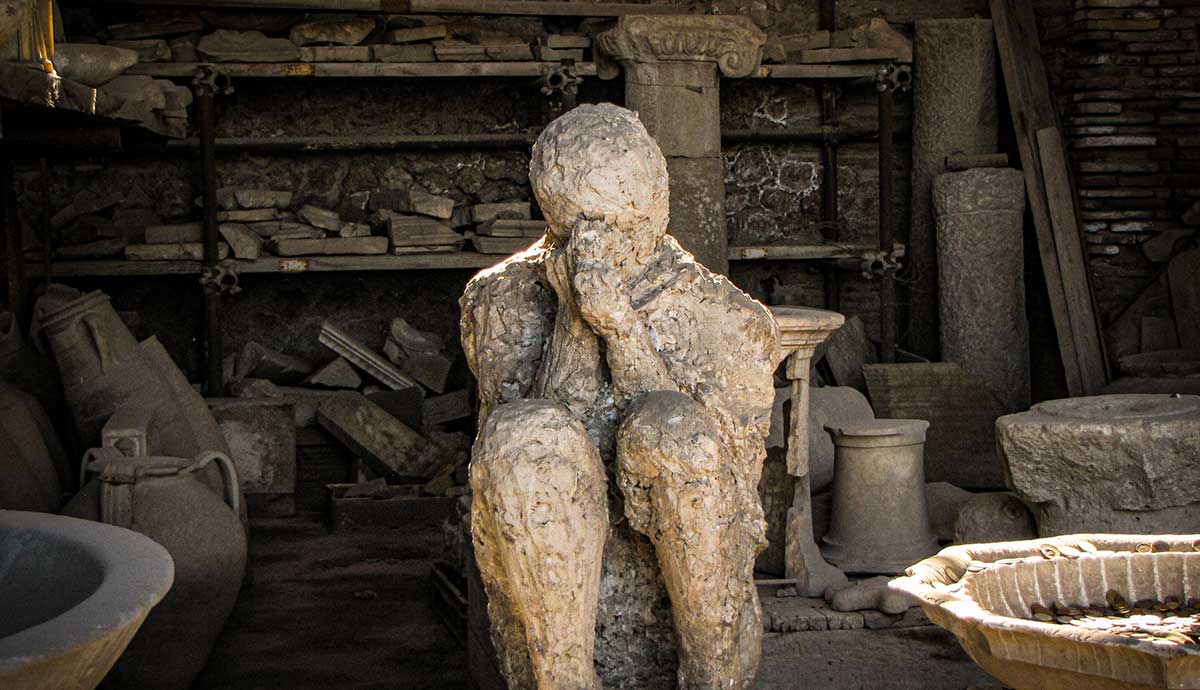
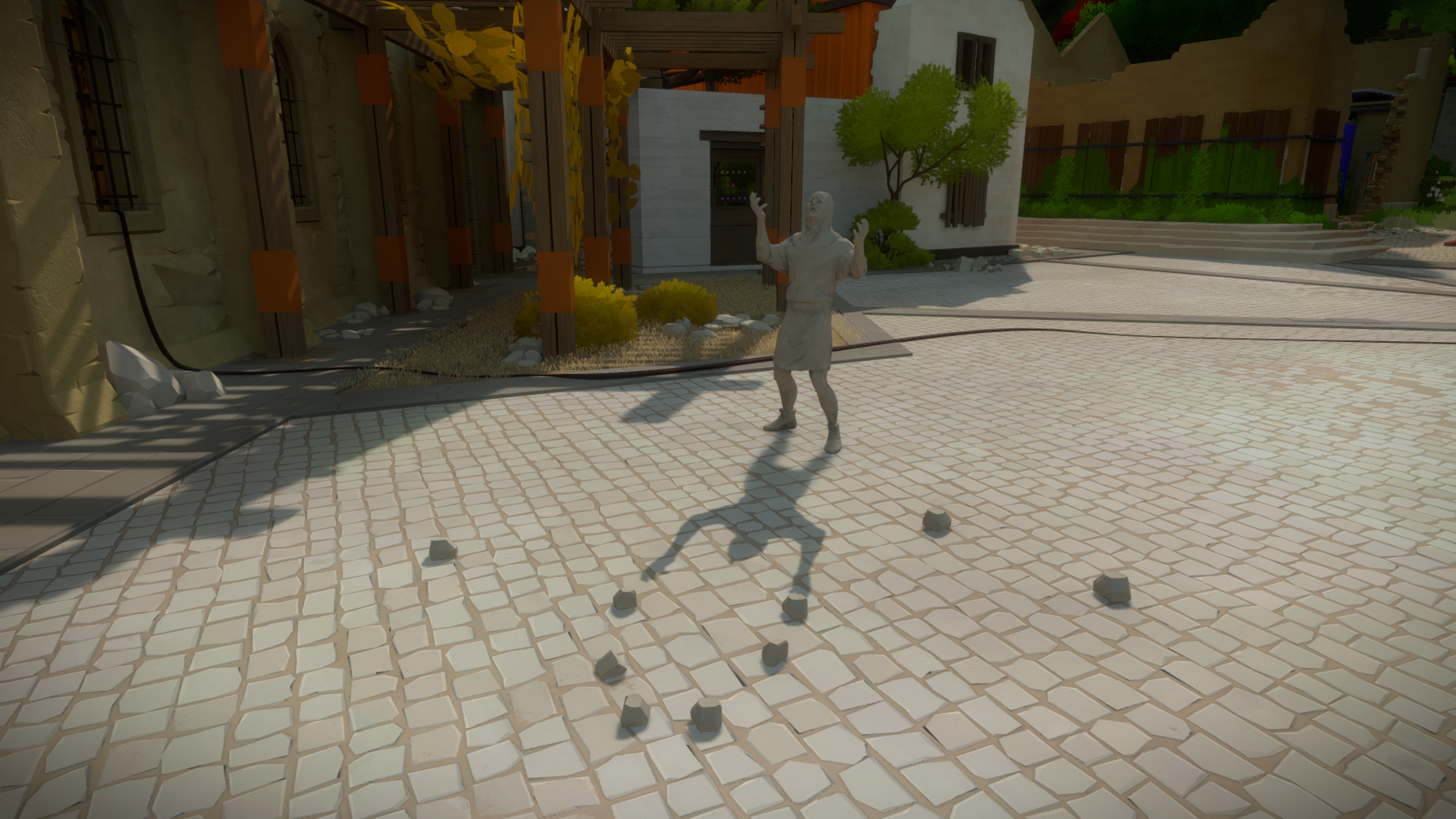
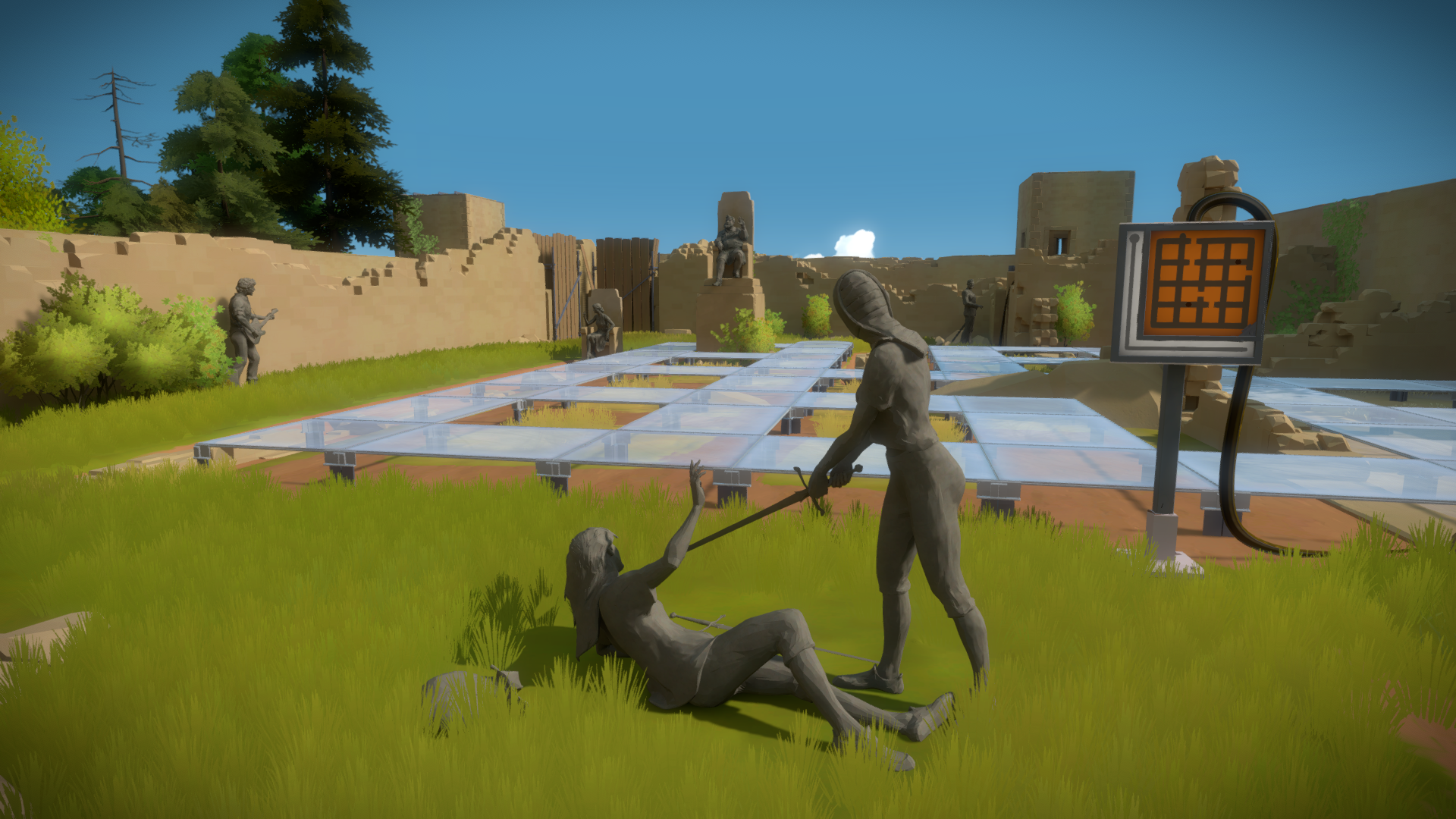
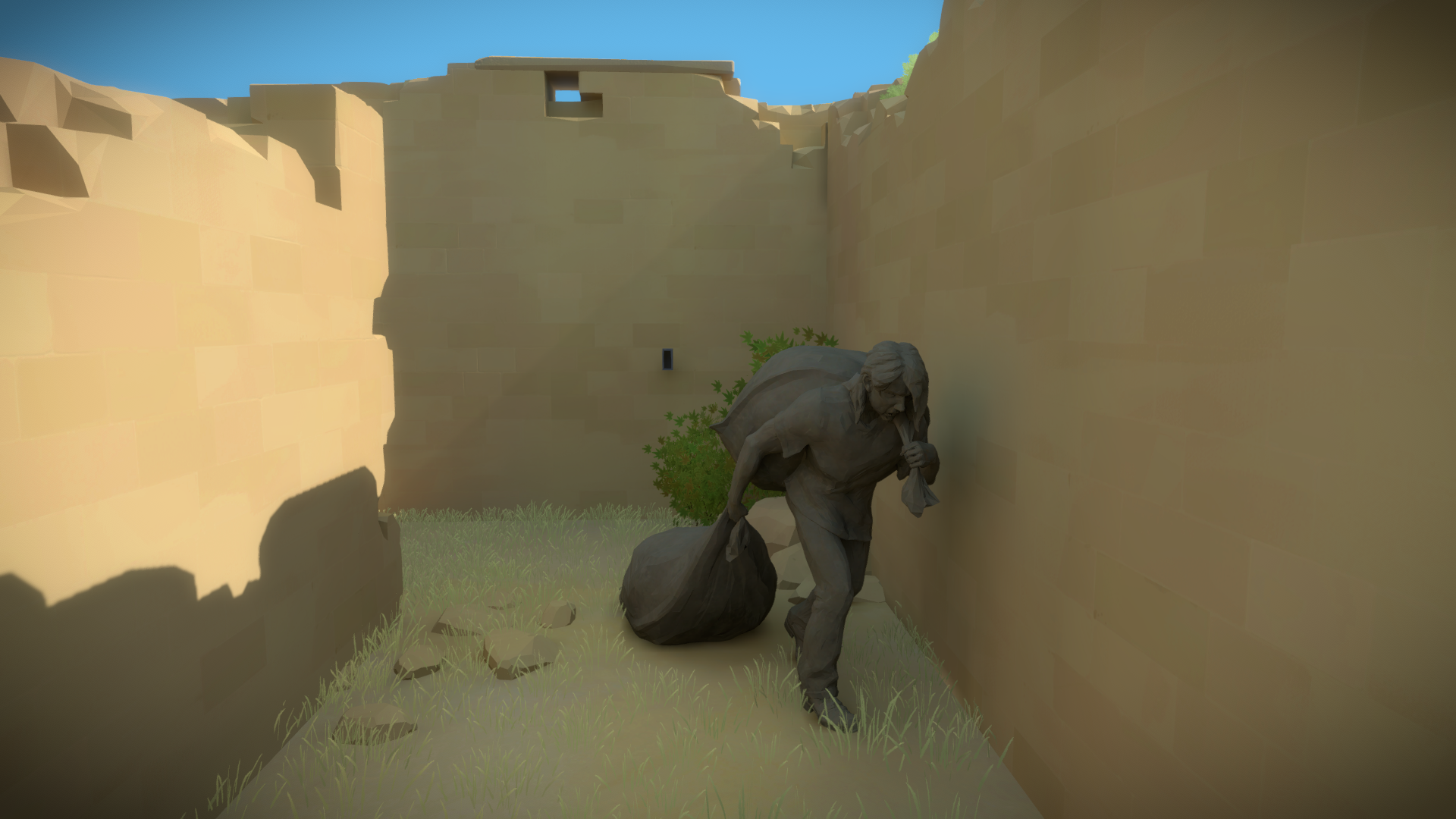
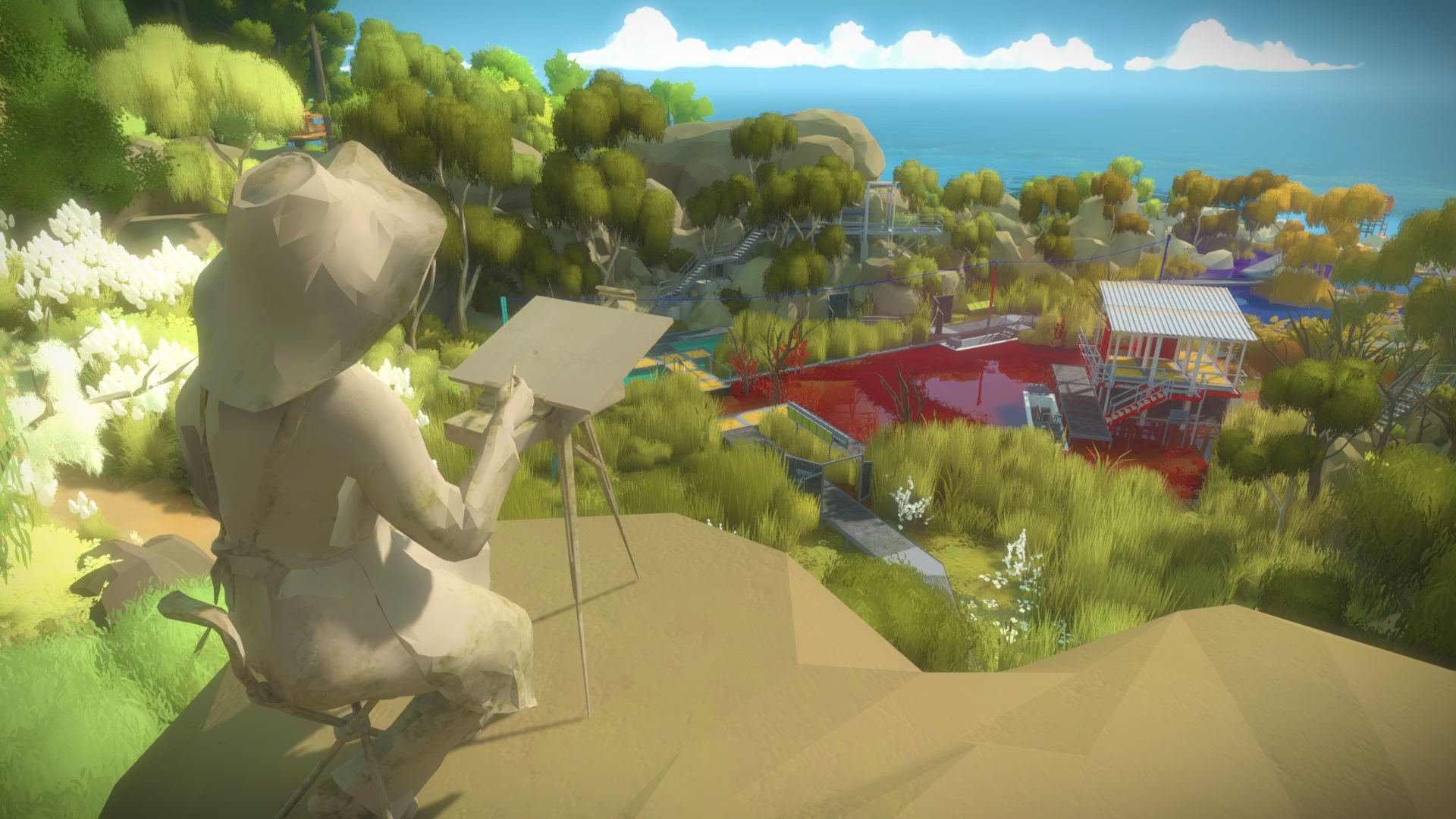
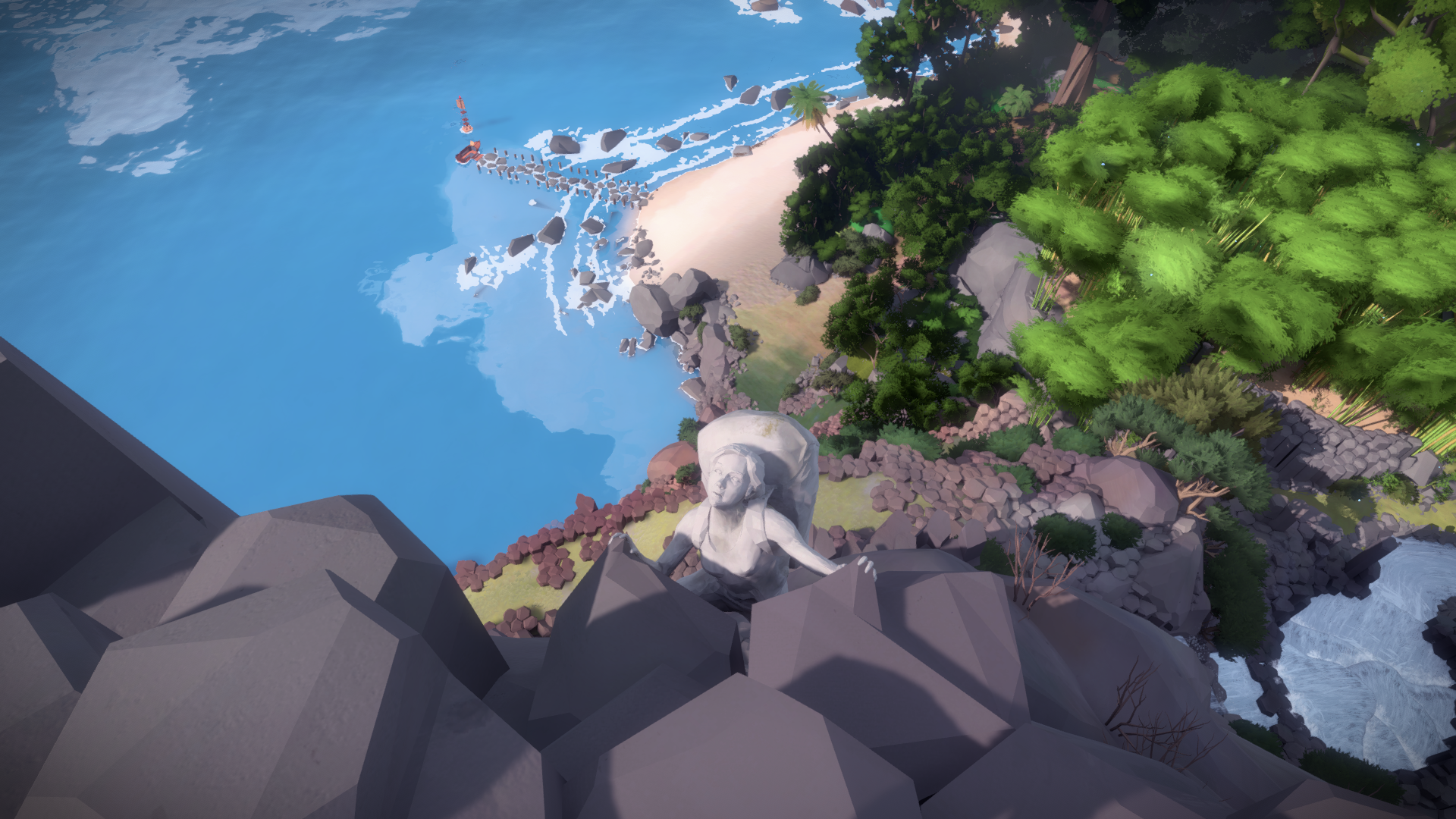
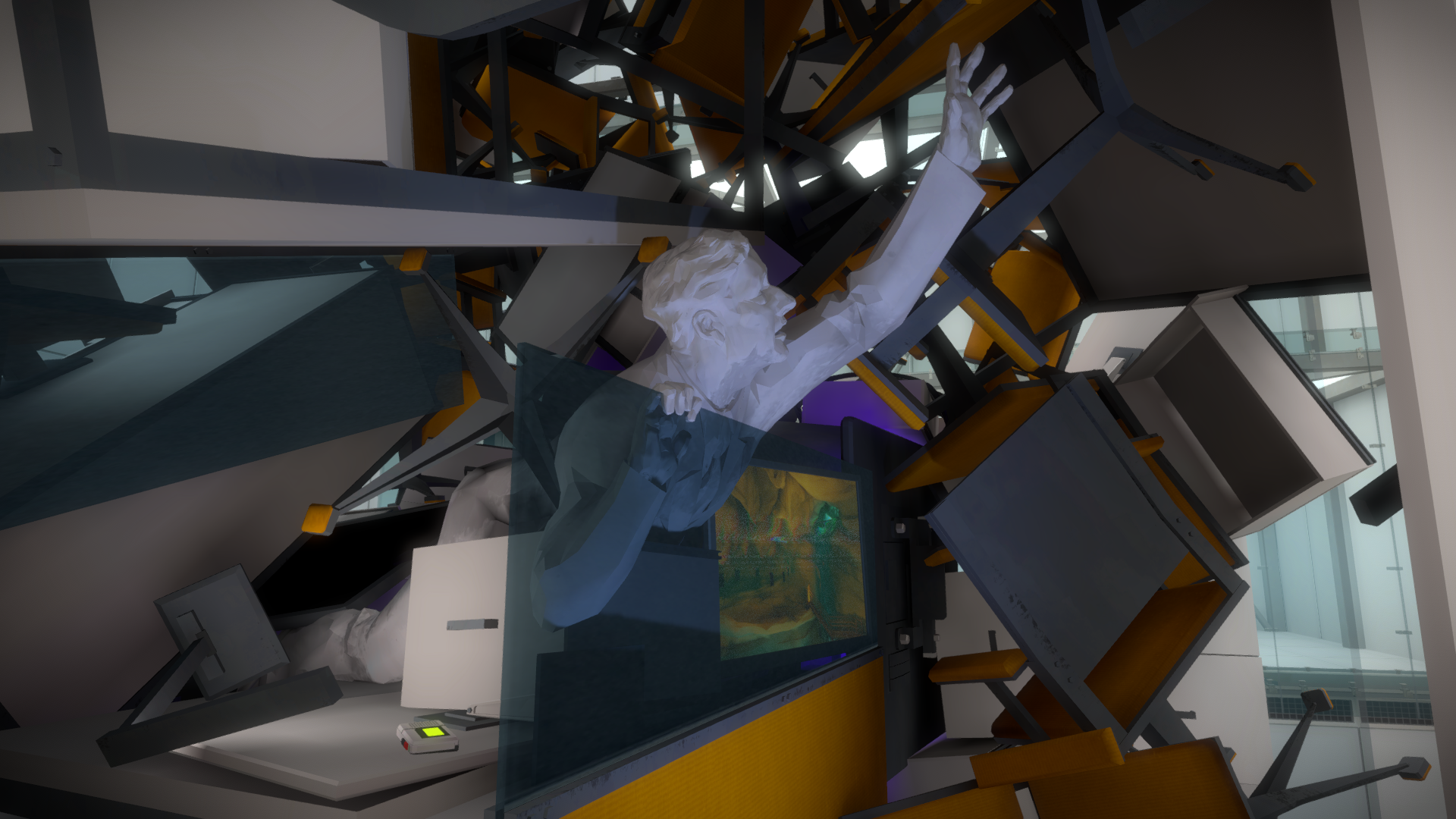
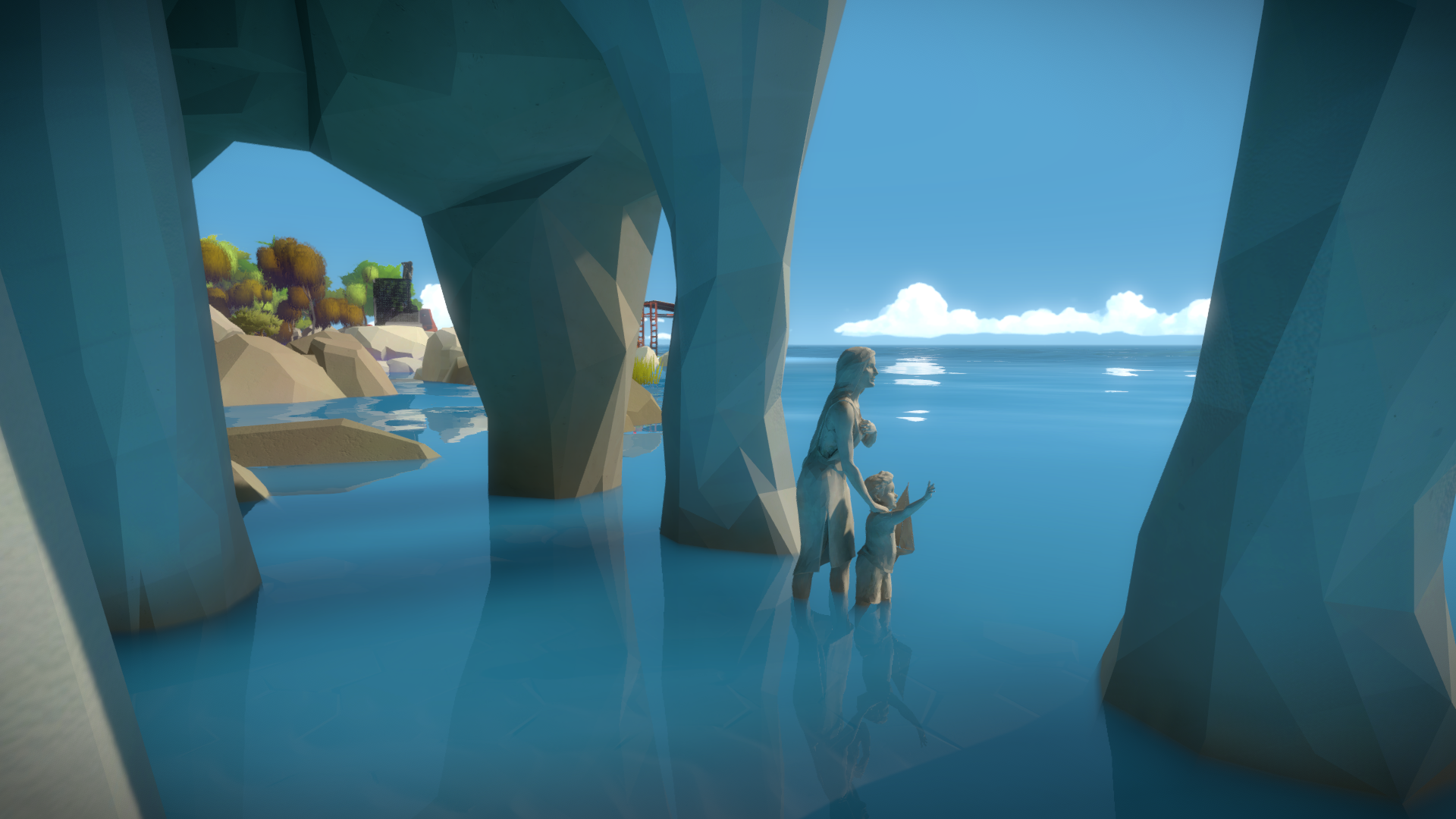
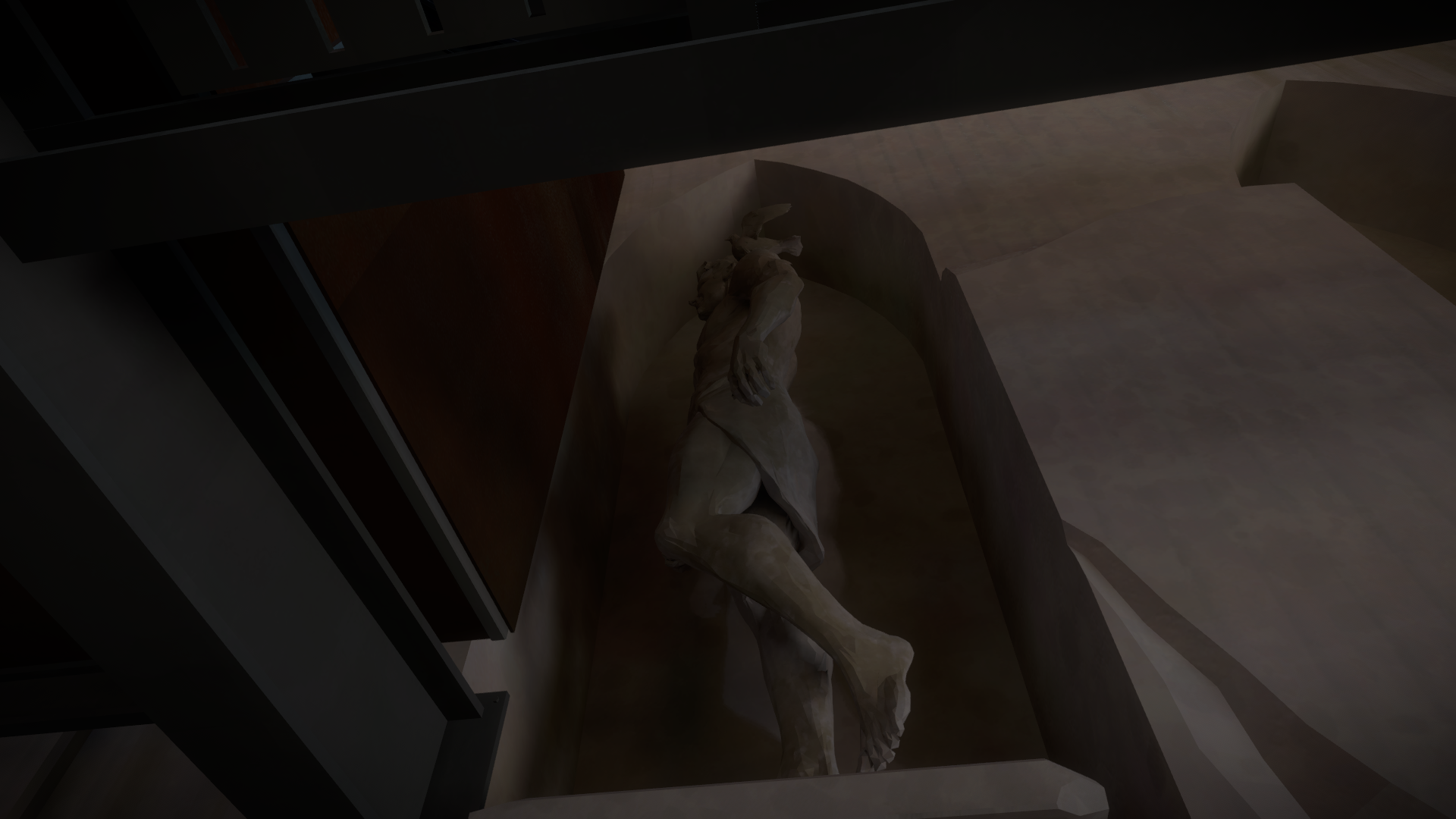
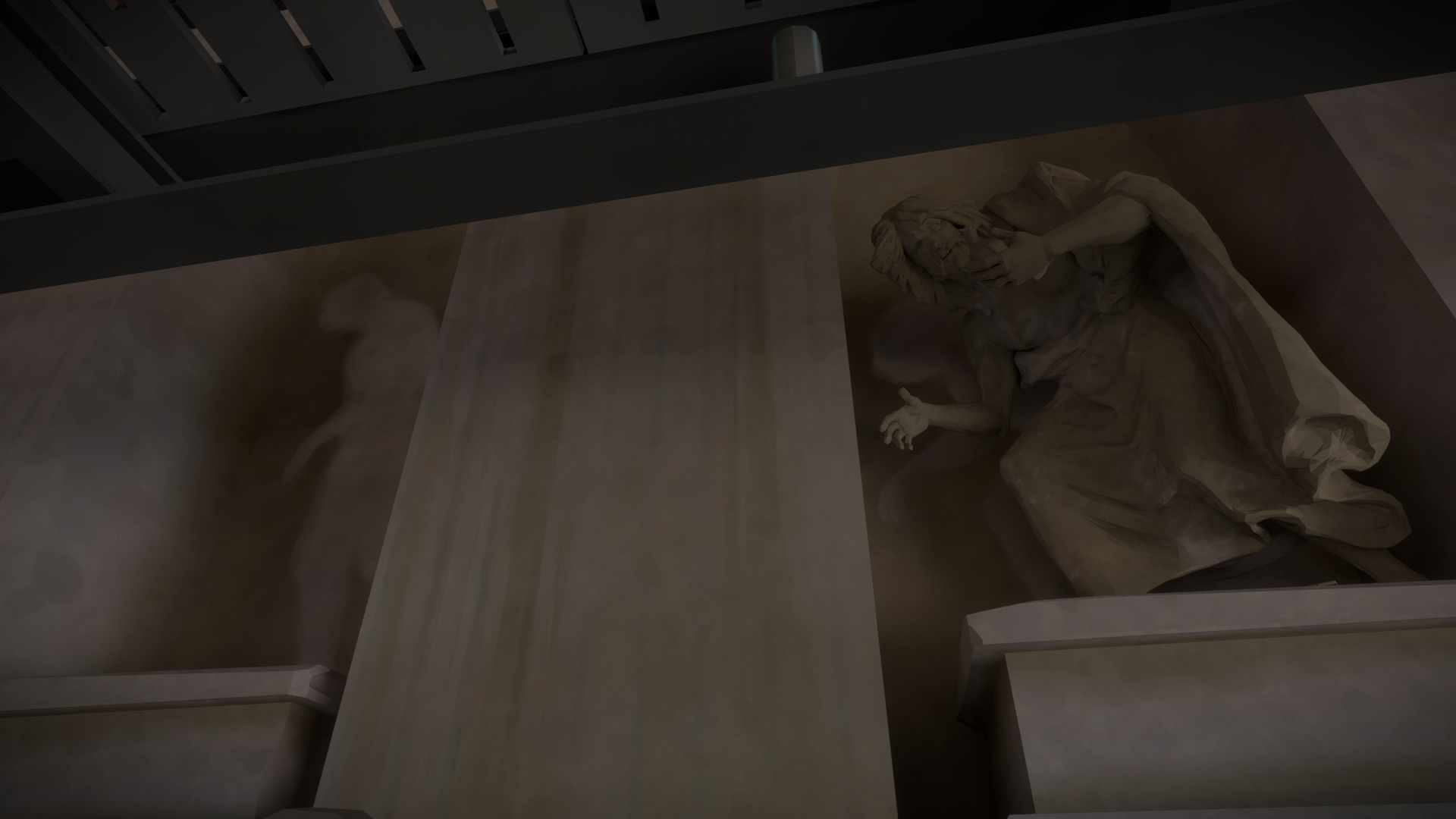
The presence of petrified human figures reinforces this archaeological logic. These figures, frozen in postures that suggest everyday activities, evoke archaeological sites such as Pompeii, where bodies function as material traces of lived practices rather than as narrative characters. In The Witness, these petrified individuals serve as silent evidence of past actions, gestures, and intentions. Their placement within the landscape invites conjectures about what people once did in those locations, how they interacted with the environment, and what kinds of practices were considered meaningful. Yet, as in interpretative archaeology, such conjectures remain interpretative rather than demonstrative. This stands in sharp contrast to the epistemic regime governing the panel puzzles.
Petrified human bodies in the ruins of Pompeii. In 79 CE, the Vesuvius volcano in Southern Italy erupted, destroying settlements around it and taking the lives of up to 16,000 residents. Sources: Peter's big adventure / The Colector.
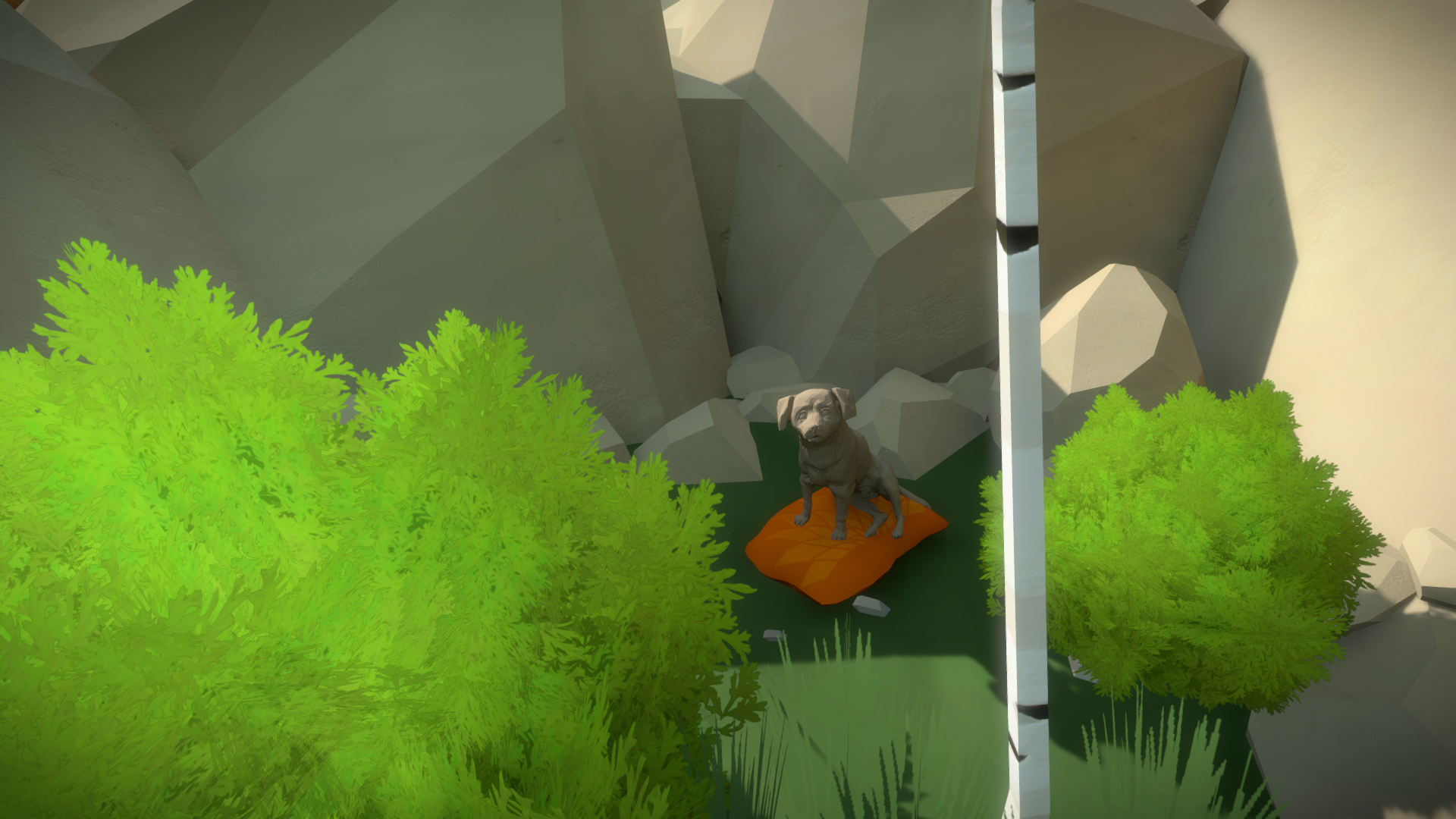
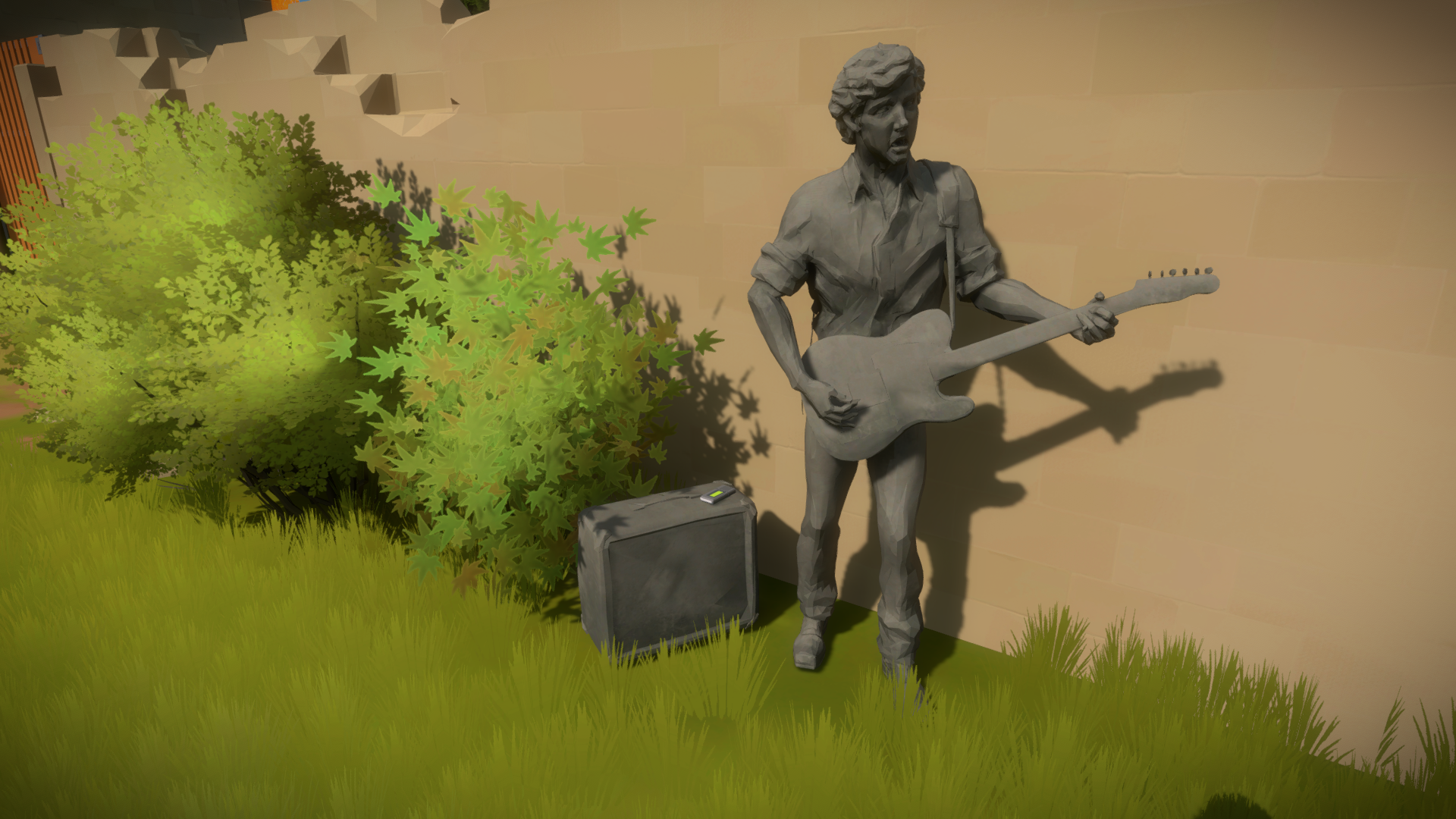
A petrified modern domestic dog and petrified people who apparently lived in different historical periods. Source: Thekla / Author.
Outside the panels, the player is no longer confronted with well-defined problems whose solutions are mechanically verifiable. Instead, the environment presents itself as a dense field of material traces: ruins, abandoned structures, statues, inscriptions, unfinished buildings, and scattered artifacts whose meaning is never explicitly articulated. The material remains suggest multiple layers of the past, but these can only be contemplated; the player can only reconstruct their meaning through interpretation.
This mode of engagement closely aligns with the principles of interpretative archaeology as developed by Ian Hodder: "an interpretive postprocessual archaeology needs to incorporate three components: a guarded objectivity of the data, hermeneutic procedures for inferring internal meanings, and reflexivity." Interpretative archaeology, as articulated by Ian Hodder within postprocessual archaeology, rejects the notion of material culture as a neutral repository of facts.
A series of paintings and sculptures that can be interpreted as an allusion to human evolution. Source: Thekla / Author.
For Hodder, meaning is not extracted from objects as if it were hidden within them; it is produced through the interaction between observer and material culture. In The Witness, the material culture of the fictional world is intimately linked to the material culture of the real world in which the player and the creator reside. The player’s interpretive freedom is itself historically situated, shaped by modern archaeological and museological ways of seeing. The island is thus not merely interpreted as a past world, but as a past legible through contemporary epistemic habits.
Based on our knowledge of real-world human history, we can interpret the objects (rails, abandoned chairs, drawings, ruins, etc.) in such a way as to reconstruct multiple anthropic interventions throughout the past: an ancient civilization, the settlement of a native tribe, the construction of a medieval village, the establishment of a port with industrial technology, an exploration expedition in the mountains, the appropriation of the island as a tourist destination, etc. However, the game never confirms whether these layers correspond to a linear historical progression, a coexistence of traditions, or a symbolic juxtaposition. In Hodder’s terms, the stratigraphy is meaningful but underdetermined. This underdetermination is not a failure of historical reconstruction, but the very epistemic condition through which the game stages archaeological knowledge.
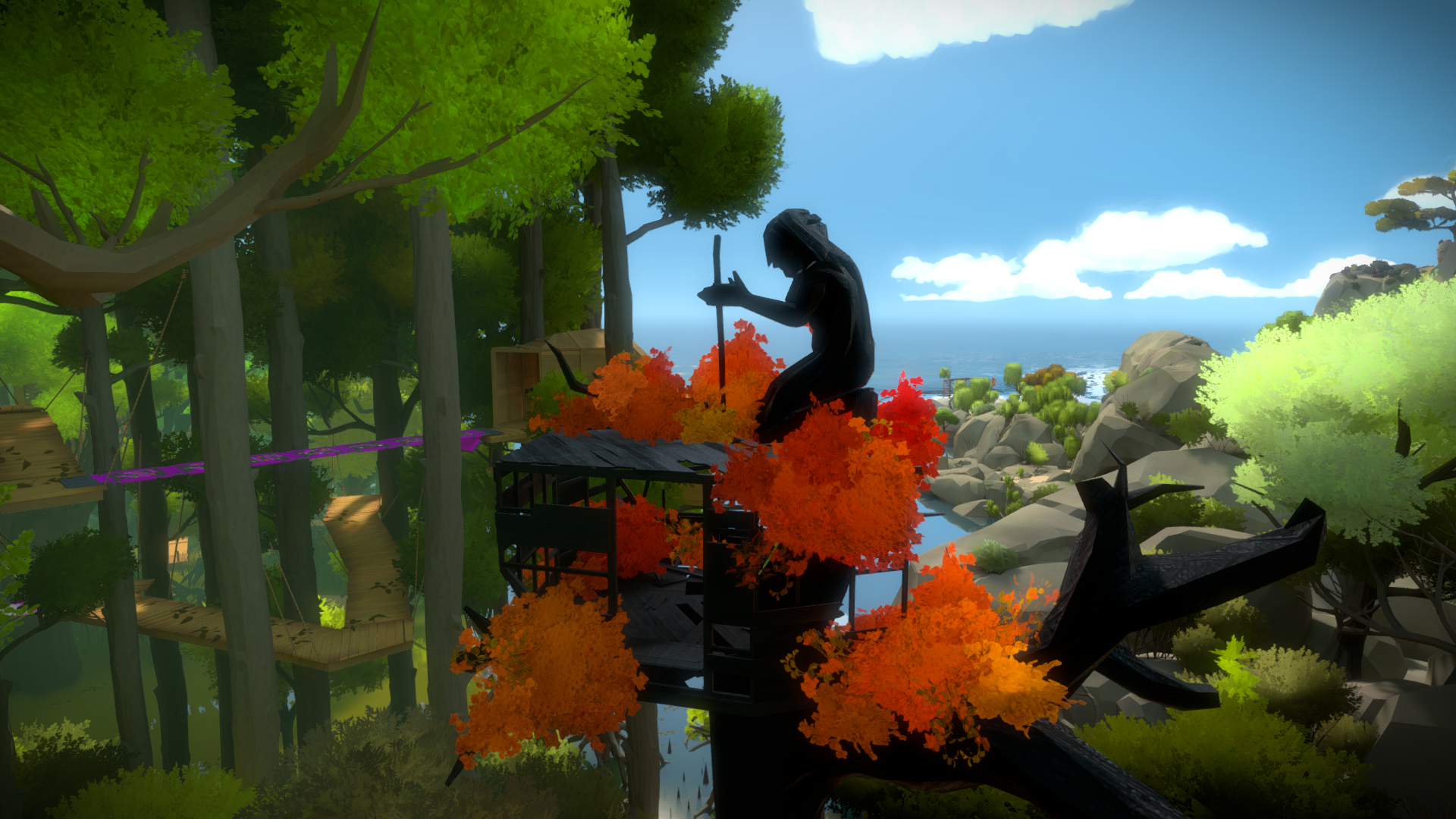
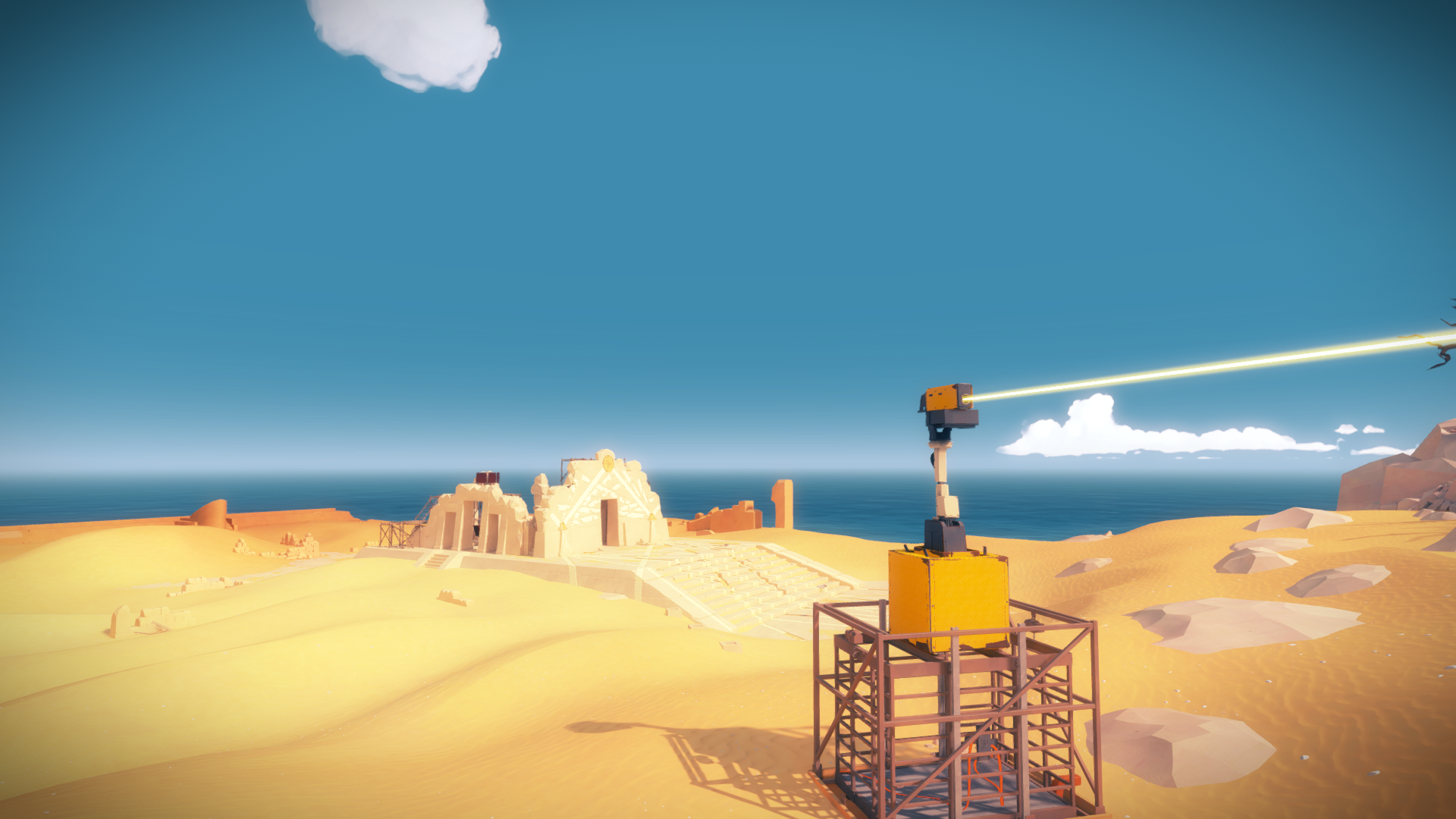
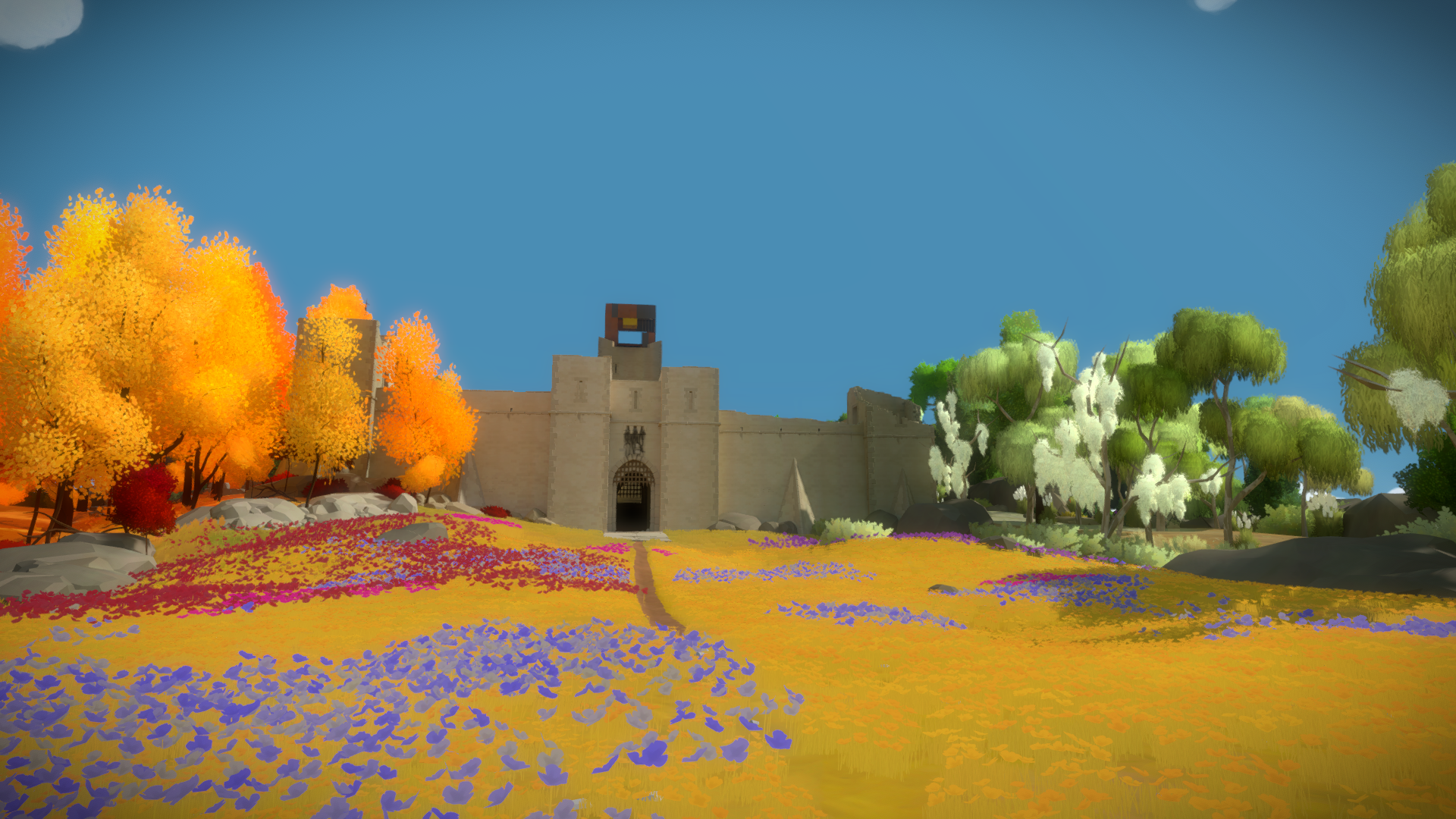
Architectural structures that allude to a tribal society that lived in trees (left), ruins of an ancient civilization (center), and a medieval castle (right). Source: Thekla / Author.
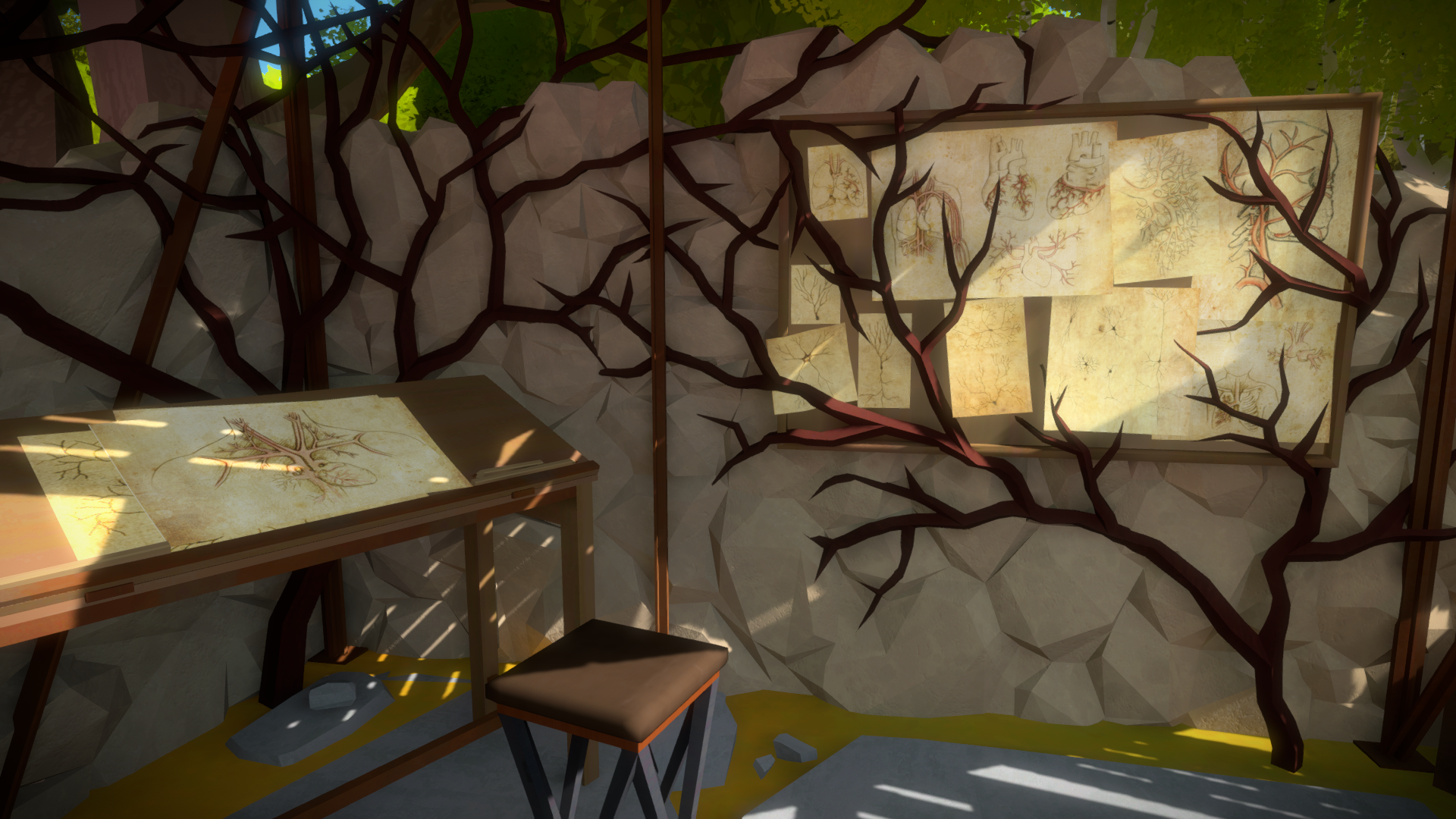
Typical Renaissance sketches (left); industrial infrastructure elements (center); objects of modern tourism (right). Source: Thekla / Author.
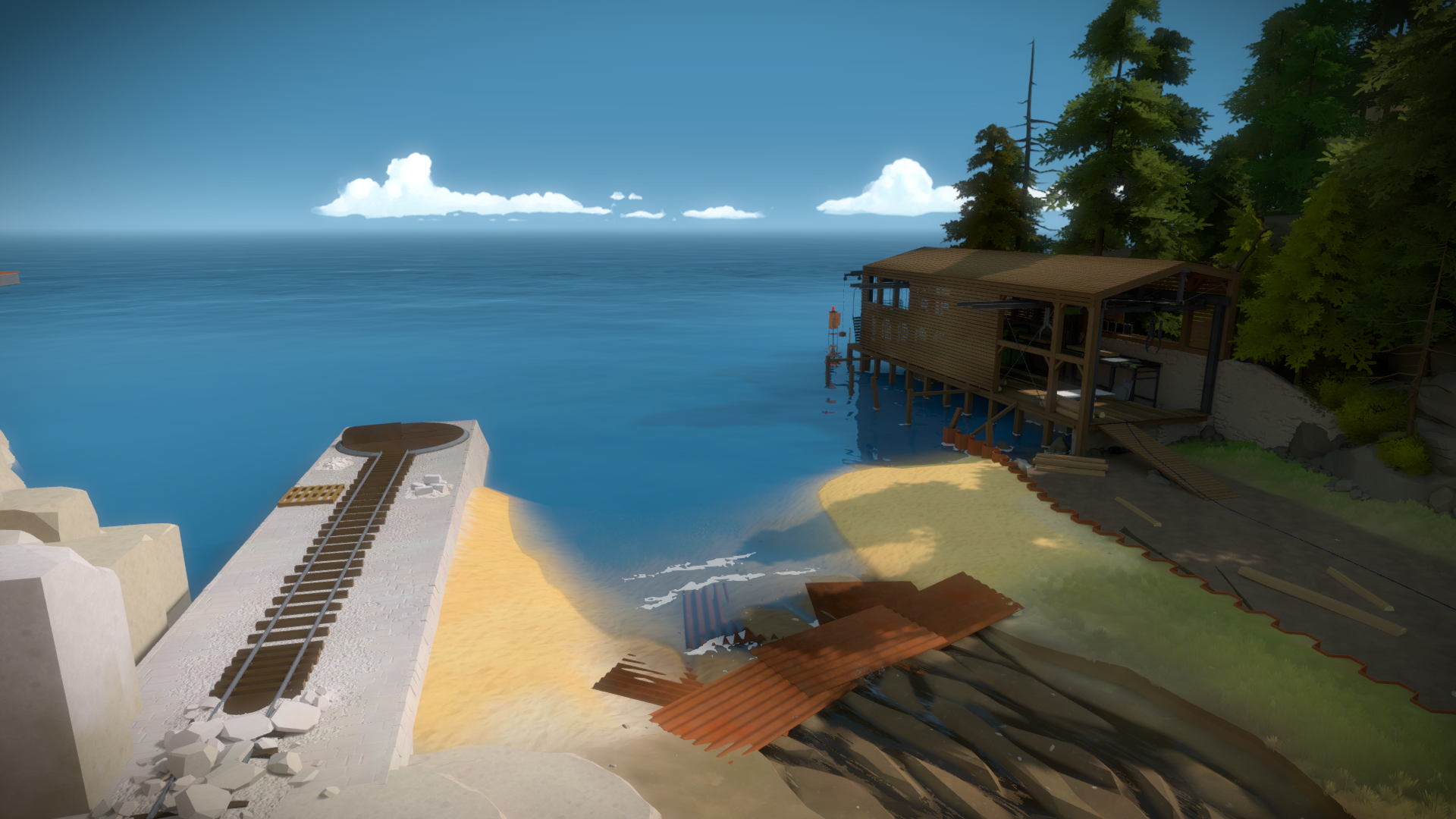
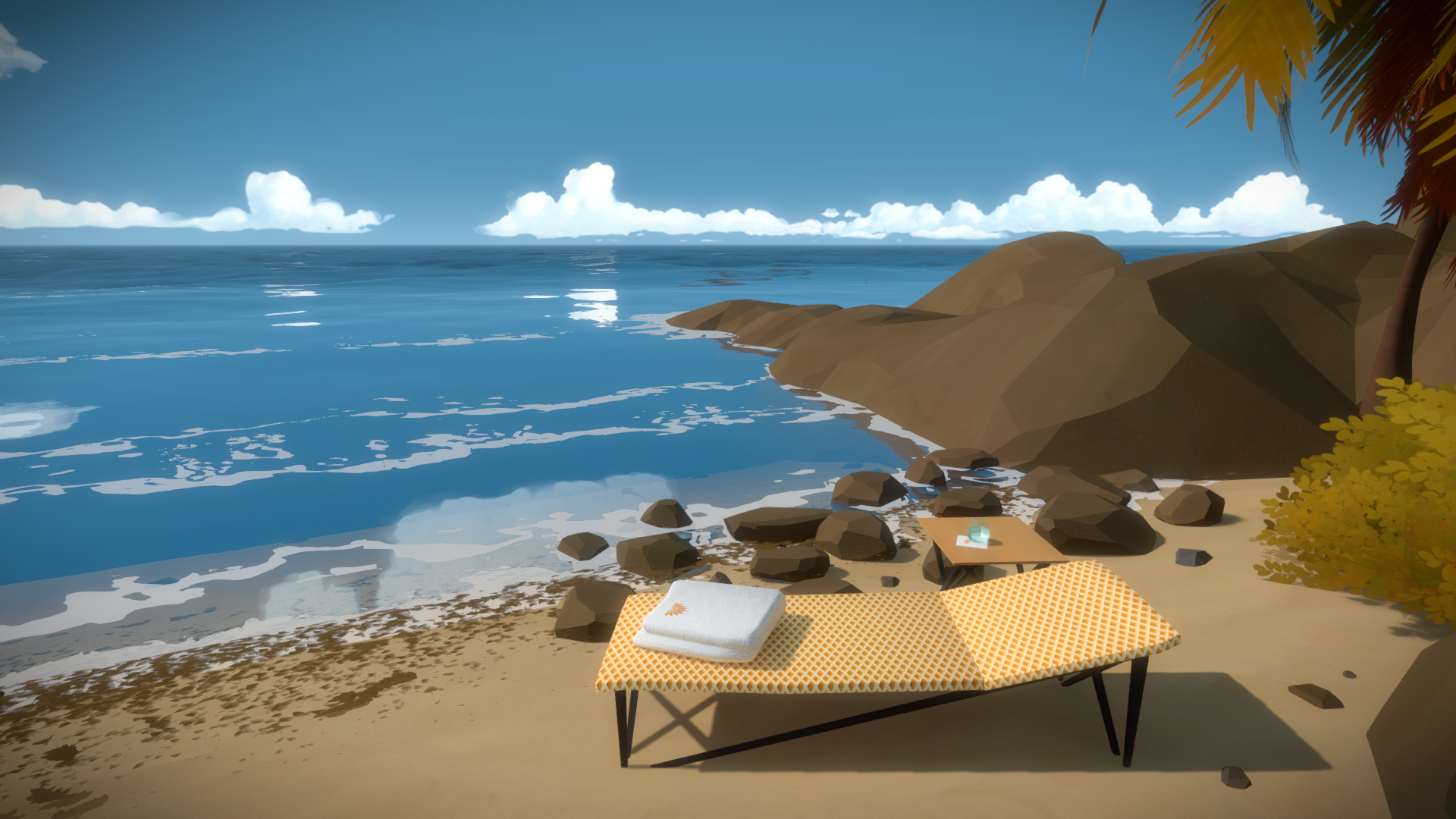
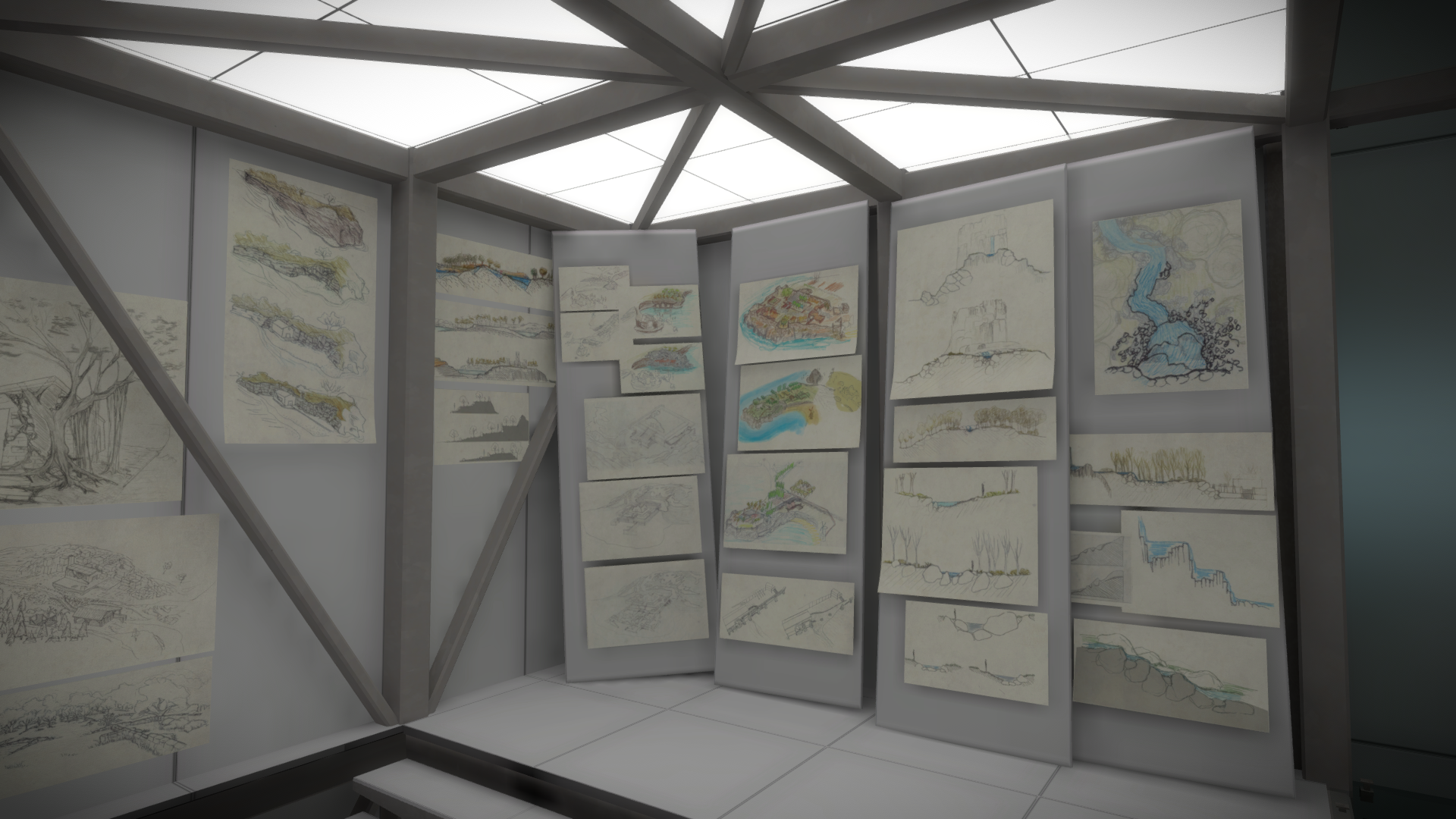
The game's audiovisual production directly engages with real-world island references. Most of the ambient sounds were recorded during a walk around Angel Island in San Francisco Bay. Blow's team also collaborated with a landscape architecture firm, Fletcher Studio, to develop the environments for The Witness. In The Witness: Designing Video Game Environments (2017), Fletcher Studio explains that the Azores archipelago (known as Europe's secret islands) served as inspiration for the game.
The layers of different cultures, from ancient civilizations to the Portuguese monarchy, to present day fishing villages, proved most analogous. Available aerial imagery was collected from the Azores and then collaged together to create a fictional Island in plan, now with topography, beaches, water bodies, etc.
[...]
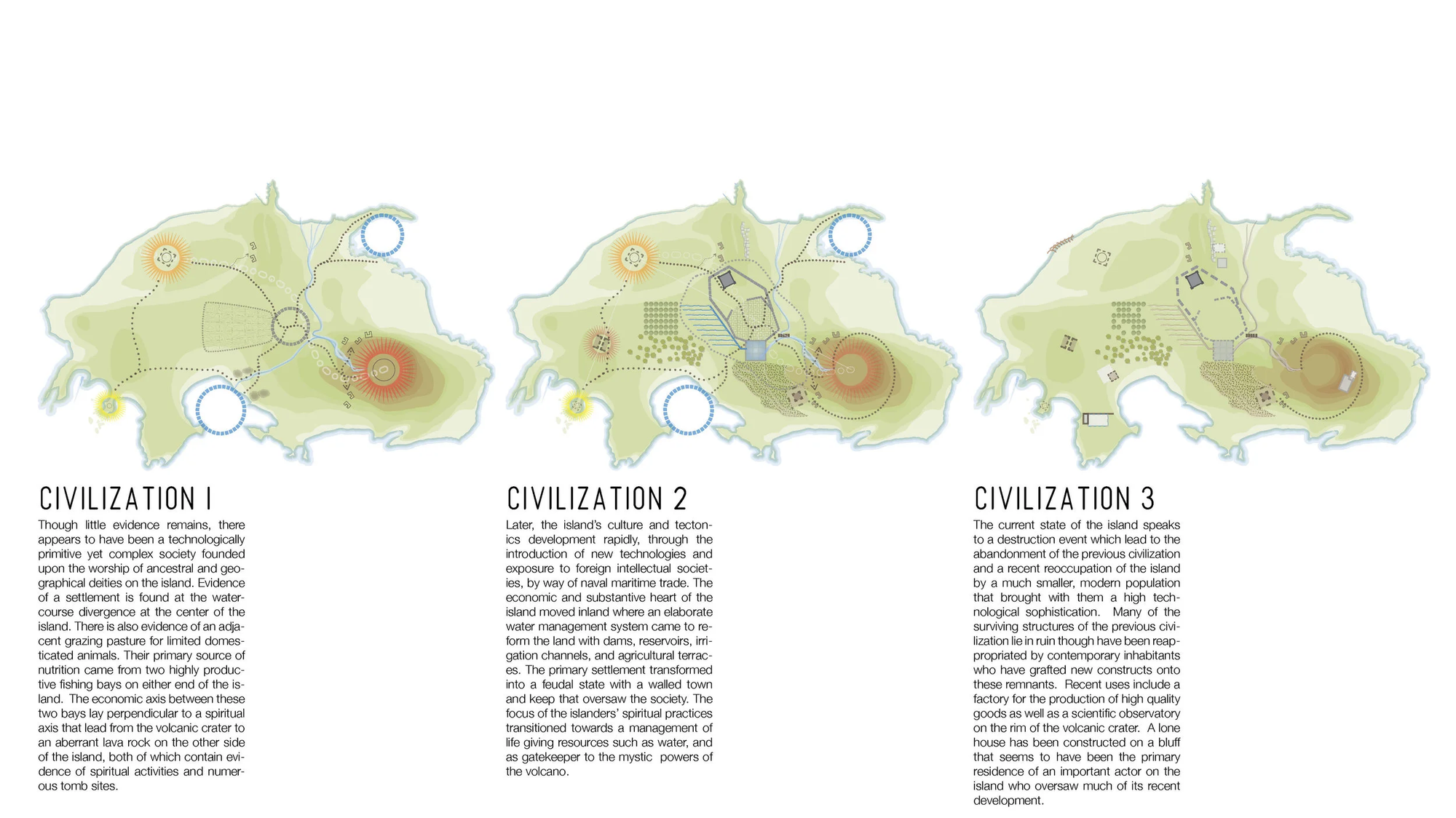
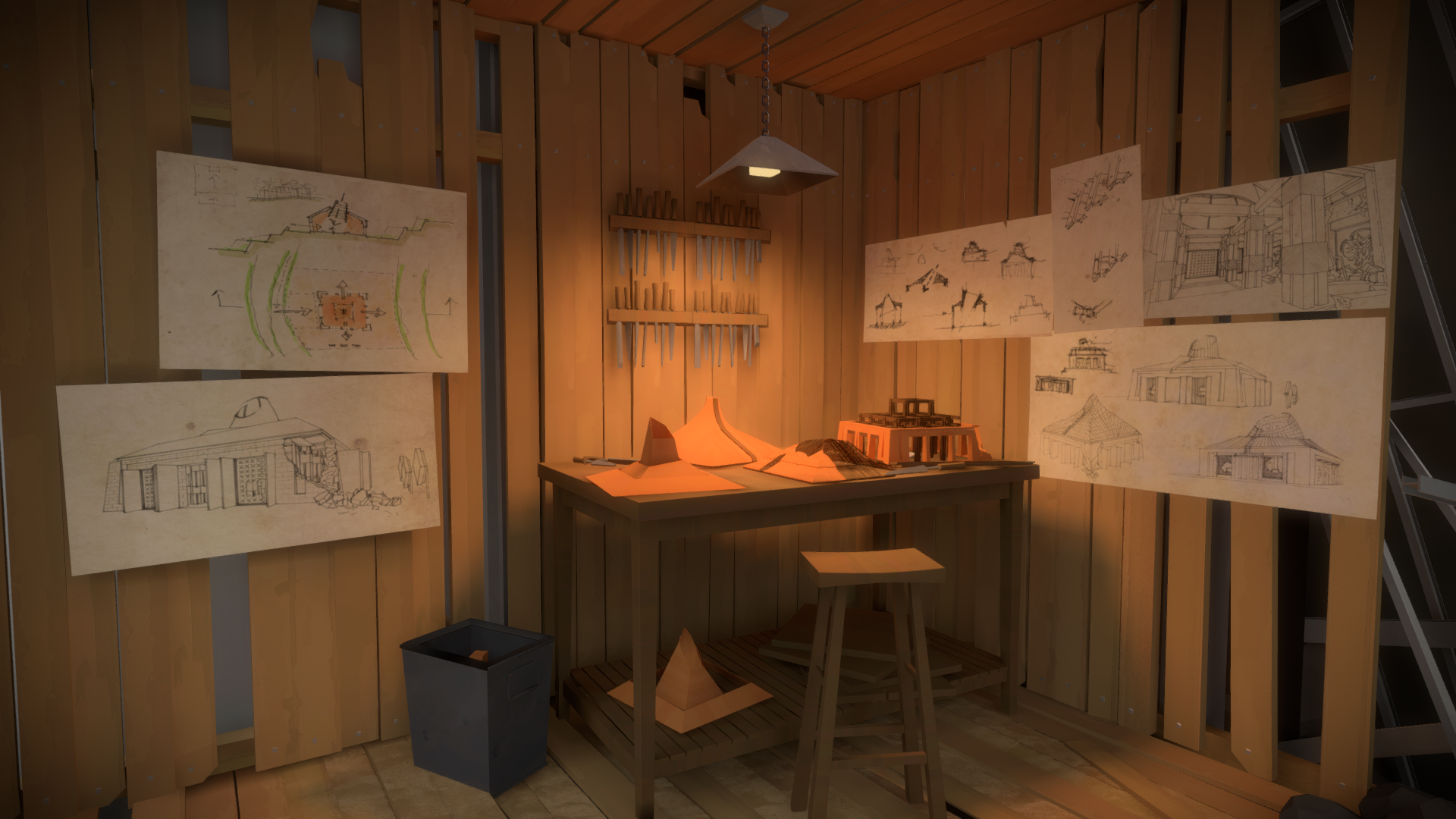
In the beginning, the island was a cultural tabula rasa. In order to make sense of the existing and constantly introduced structures and spaces, it’s cultural history had to be written. The projective devices that we had developed, were applied to the Island in reverse. The past was divided into three successive epochs, which we termed Civilizations (CIV’s) One, Two and Three. A simple description of each was developed, and then a larger matrix, was produced that related to each in terms of infrastructure, architecture, and landscape. Each of these three categories had their technologies, agriculture, religion, and cultures. Materially, each epoch had its own techniques of building, based on assigned resources and technologies, with each CIV methodologies and products growing more refined over time.
Three fictional civilizations. Source: Fletcher Studio, 2011.
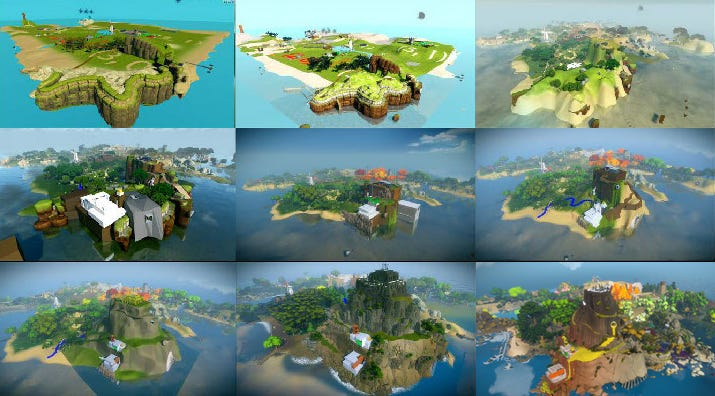
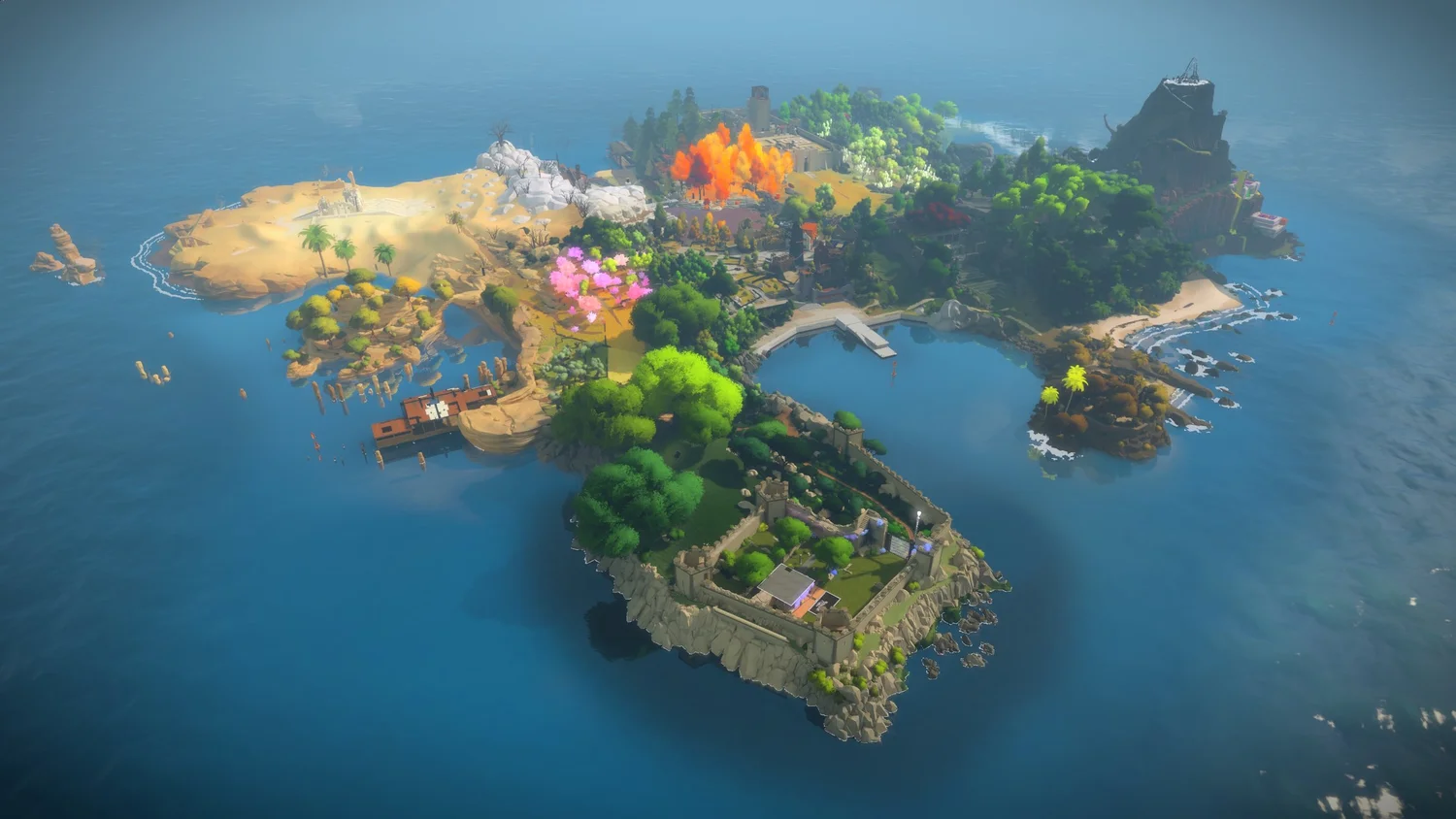
From left to right: evolution of the Island through time; The Witness Island at the time of game publishing. Source: Fletcher Studio / Thekla, 2010-2014.
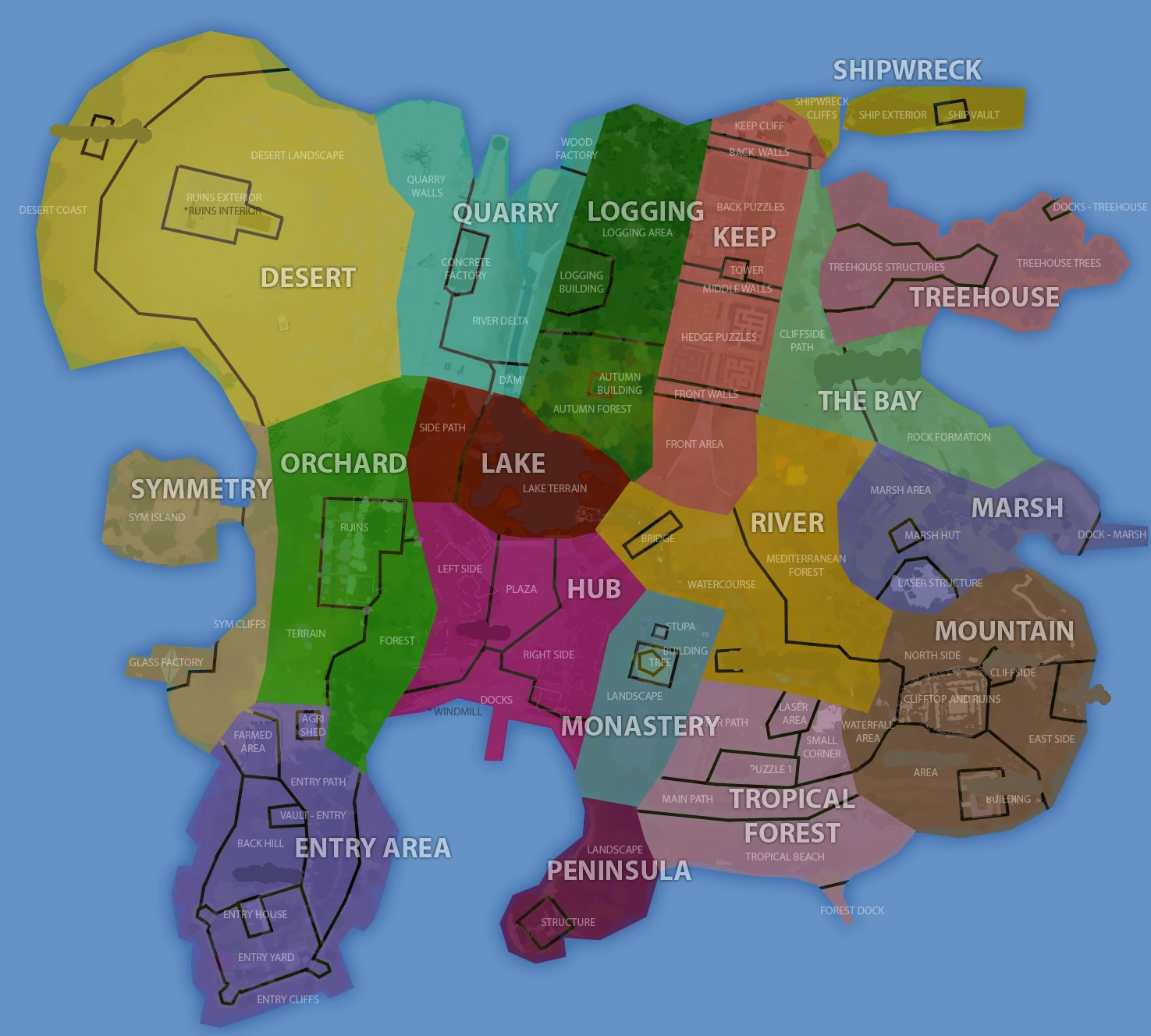
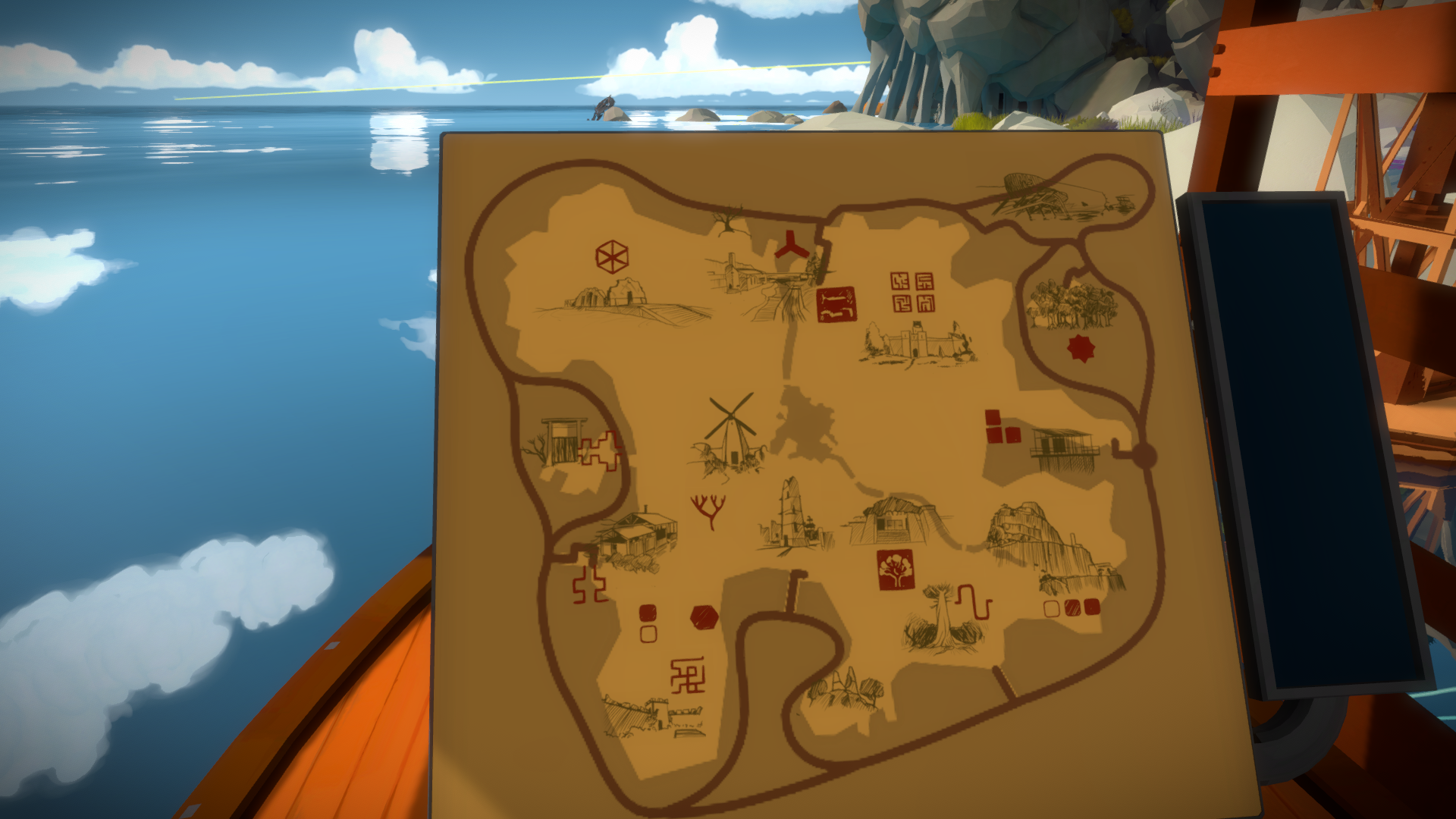
From left to right: map of Island zones; Island map attached to the boat that serves as a vehicle in the game. Source: Thekla / Author.
Ironically, the meticulous predesign of fictional civilizations does not resolve interpretive ambiguity, but actively produces it. In this sense, the game mirrors Hodder’s critique of positivist archaeology: even exhaustive documentation and planning do not eliminate interpretation. Unlike formal puzzles, there is no possible final reconstruction of the island's history, nor a privileged account that resolves conflicting interpretations; archaeological knowledge remains provisional. Knowledge, in this context, is not measured by correctness but by interpretative coherence.
The Witness juxtaposes two distinct modes of knowledge: formal, rule-governed knowledge and archaeological, interpretative knowledge; consequently, the difference between solving problems and understanding worlds. Although the distinction is analytically useful, the game occasionally blurs that boundary. This tension is central to the metafictional and intertextual elements in the game.
III. Metafiction and Intertextuality
While the formal puzzles and the archaeological reading of the island structure two distinct epistemic regimes within The Witness, the game introduces a third and more reflexive layer of knowledge through its metafictional and intertextual elements. These elements are primarily conveyed through audio logs, short video recordings, and, most strikingly, through the final sequence of the game, which destabilizes the ontological status of the island itself.
The audio logs scattered throughout the island consist of excerpts from philosophers, scientists, artists, and religious thinkers, ranging from Plato and Heraclitus to Simone Weil, Feynman, and contemporary writers. These recordings function as intertextual fragments, disconnected from each other and from any explicit justification within the game. Their arrangement is deliberate, but not instructive: they are neither rewards nor keys; instead, they operate as epistemic provocations. Listening to a quotation about perception, certainty, or illusion after struggling with a sequence of puzzles does not resolve the puzzle retroactively; it reframes the player’s understanding of what they have been doing all along. In this sense, the recordings function less as narrative exposition and more as meta-commentary on the act of knowing itself (in addition to related topics, such as faith and skepticism).
Location of the audio log with a quote from Heisenberg. Source: Thekla / The Witness Wiki.
The physicist Wolfgang Pauli once spoke of two limiting conceptions, both of which have been extraordinarily fruitful in the history of human thought, although no genuine reality corresponds to them.
At one extreme is the idea of an objective world, pursuing its regular course in space and time, independently of any kind of observing subject; this has been the guiding image of modern science.
At the other extreme is the idea of a subject, mystically experiencing the unity of the world and no longer confronted by an object or by any objective world; this has been the guiding image of Asian mysticism.
Our thinking moves somewhere in the middle, between these two limiting conceptions; we should maintain the tension resulting from these two opposites.
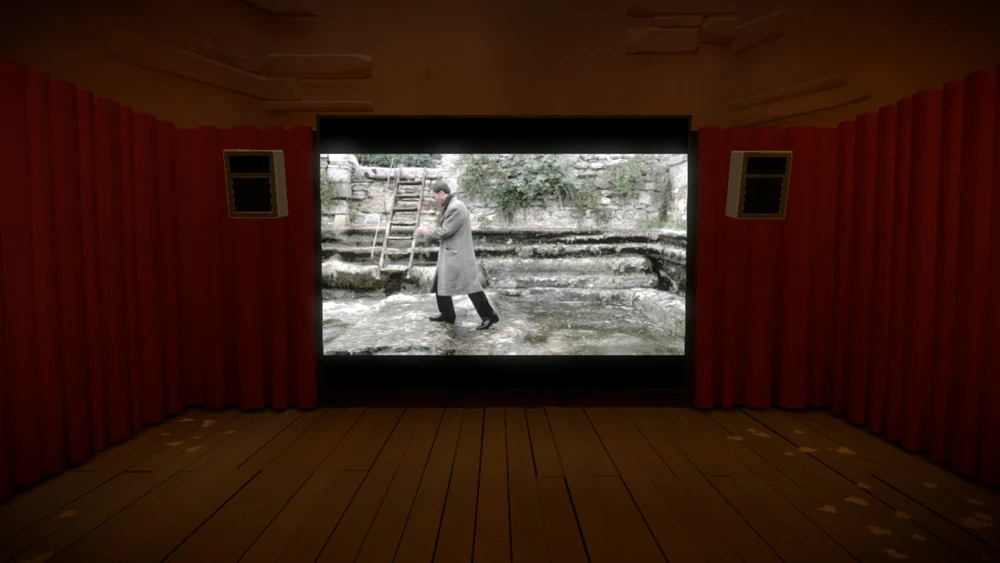
A similar function is performed by the short video recordings accessible in certain locations. These videos show real people (often scholars or artists) speaking directly to the camera about themes such as attention, learning, perception, and the limits of understanding. The abrupt shift from the stylized, silent world of the island to these unmistakably real audiovisual artifacts creates a moment of ontological friction.
The player is reminded that The Witness is not merely a fictional world to be decoded, but an object designed and embedded within the epistemological problems discussed in the real world. This ontological friction is revisited and developed in the final part of the game, where the fictional and the real progressively merge until the player reaches the creator's real world.
Andrei Gorchakov in the final segment of Nostalgia (1983) by Andrei Tarkovsky. This film and other videos can be viewed at the Windmill, located east of the Orchard. Source: Thekla / The Witness Wiki.
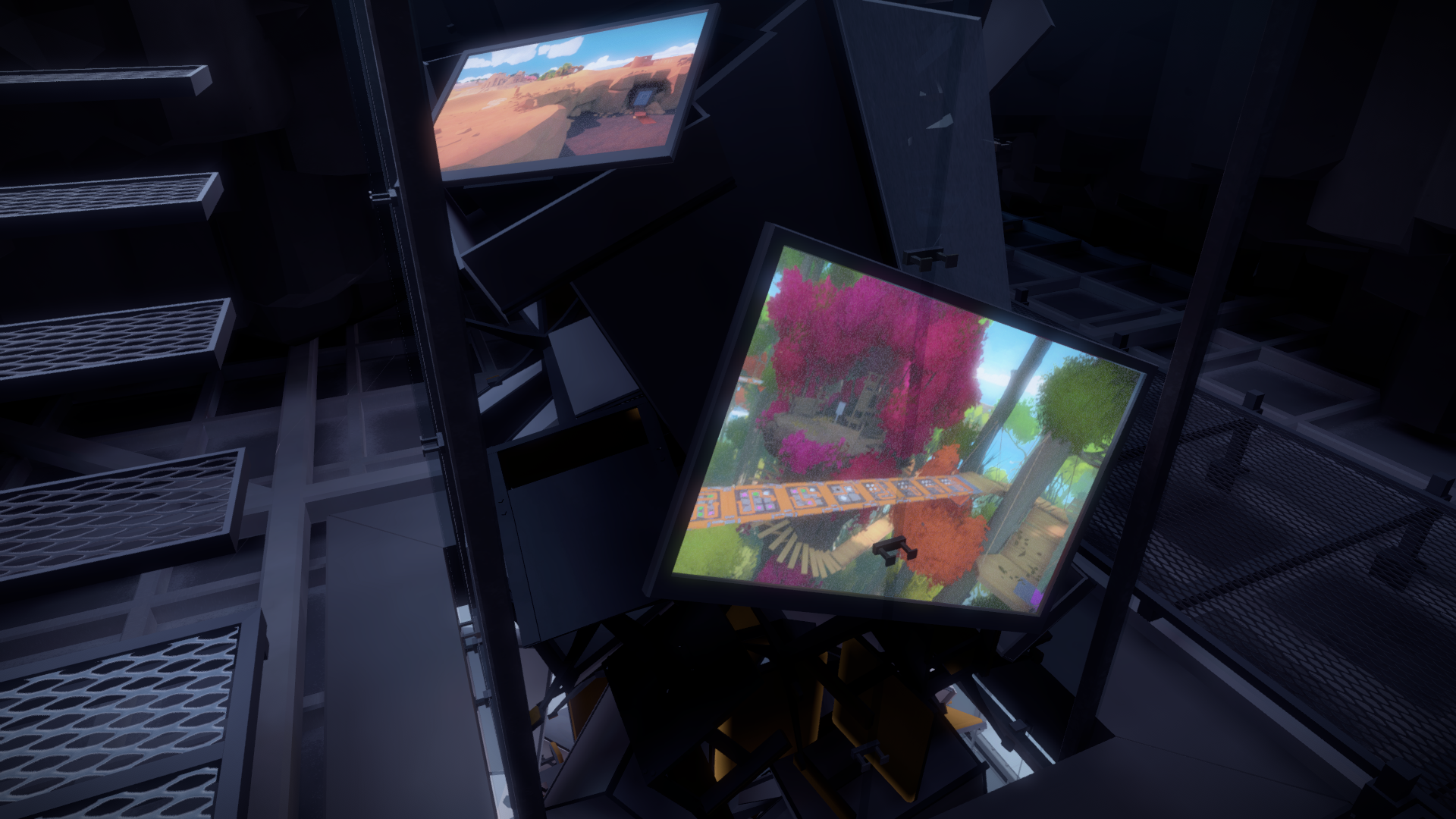
Images from the final part of the game, featuring footage and design sketches of the island and some puzzles. Source: Thekla / Author.
The ending can be understood as a form of metadesign disclosure. Throughout the game, the player has been encouraged to infer rules, reconstruct histories, and interpret traces, all while remaining within the diegetic boundaries of the island. The final sequence retroactively reframes this entire process: knowledge, here, is no longer about mastering mechanics or reconstructing fictional pasts, but about recognizing the conditions under which understanding takes place. The conclusion exposes the player to the limits of comprehension, forcing them to recognize the structures through which meaning becomes possible in a fictional world.
This essay set out to show that The Witness is not merely a sophisticated puzzle game, but a carefully constructed epistemic experience in which different modes of knowing are staged, contrasted, and ultimately problematized. The game operates as an experimental space in which the player is invited to enact, test, and reflect upon distinct epistemological attitudes, temporality, empirical perspectives, types of logical inference, and levels of logical complexity.
In the first section, we examined how logical knowledge structures the core gameplay. The panel puzzles require the player to infer abstract rules, formulate hypotheses, and justify beliefs through repeated testing. Although these rules are never linguistically articulated, they exhibit propositional structure, generality, and determinate truth conditions. The second section shifted focus from formal problem-solving to environmental interpretation, framing the island as an object of archaeological inquiry. Here, knowledge is no longer validated by mechanical correctness, but by interpretative coherence. In the third section, we examined how metafictional and intertextual elements further destabilize epistemic certainty. The player is prompted to recognize not only what they know, but how their ways of knowing have been shaped.
By intertwining logic, archaeology, and metadesign within a single interactive framework, the game provides a dense space for reflection on epistemic questions and stages a progression, not toward truth, but toward epistemic self-awareness.
There’s something relaxing about decorating in a virtual world. In my latest livestream, I spent an hour inside AvatarLife, an OpenSim alternative to Second Life, working on my platform in the sky. No quests. No chaos. Just pure creative energy.
My goal was simple: make the space feel peaceful.
The first thing I did? Add more sakura trees. You can never have too many cherry blossoms, right? I spread them around the platform and instantly the space felt softer and more alive. After that, I placed more flowers across the ground to fill in empty areas. It’s amazing how much small details change the mood of a build.
One practical addition was an invisible wall around the edges. Since the platform floats high in the sky, visitors could easily fall off. Now they’re safe, even if they get a little too curious exploring the edge.
I also cleaned things up by removing rocks I wasn’t using and adding a couple of benches. The benches made the space feel more welcoming, like somewhere you’d actually sit and relax.
The biggest challenge? Finding the perfect centerpiece.
I tried placing a campfire, but it didn’t match the calm garden vibe I was going for. I removed it pretty quickly. I considered adding a pond, but I couldn’t find one that fit. I even checked out a river kit at the Omni Outlet, but it just wasn’t what I had in mind.
So most of the stream became a creative experiment, placing trees, moving objects, adjusting layouts, and seeing what felt right. And since uploading textures costs AV$, I worked with what I already had.
Even without a final centerpiece, the platform feels closer to becoming my dream sky garden.
If you’re curious about AvatarLife and want to start building your own virtual escape, check out my link. And if you enjoy cozy creative streams, coffee donations are always appreciated ☕
There’s an idea that adventures are like trains. Each train car is a scene that has an obstacle. You need to overcome the obstacle in the train car before you move onto the next train car. When you get to the last train car the adventure is over. You get off the train at the station and then get on another train to have another adventure. Doing this repeatedly gives you a campaign. All the GM needs to do is keep providing trains and all the players need to do is keep getting on them. Classic. Simple. Easy. Nothing wrong with it.
But what if we don’t just look at creating trains with a series of train cars for PCs to overcome? What if we provide something that is happening? Something that will have a distinct end if the PCs don’t get involved. What if that something has a variety of potential endings depending on: how the PCs get involved, the choices they make, and how those choices have an impact on the something that’s going on? That’s designing a situation.
The “Situation” in RPGs
I like to think of the situation as a moment of instability in the ongoing narrative where multiple forces want incompatible outcomes and time or pressure will push events forward whether the PCs act or not. I don’t think of a situation as a scene, or an encounter, or a plot point. I see it as an evolving problem. By reframing adventure design to fit this idea we can craft and facilitate games where there is a lot of choice, unexpected outcomes, and tension beyond someone living or dying.
The Five Essential pieces of a Situation
One. Something Is Already Wrong
A situation begins in motion. The problem exists before the PCs get involved and it doesn’t wait for them to get involved. If nothing is currently happening, you do not have a situation yet.
I don’t think of a situation as a scene, or an encounter, or a plot point. I see it as an evolving problem.
The thieves guild has stolen the art pieces from the gallery and two of the pieces are magical artifacts that are wards against demonic entities, but they can be corrupted to help summon a powerful demon.
A necromancer has built up their undead forces and is sending them into the town to steal resources and assassinate people.
A CEO of a company has been murdered and it looks like a retired serial killer is back at killing.
Practice this by coming up with problems in your own games that exist without having the PCs involved.
Two. There Are Competing Interests
At least two entities want different things, and those desires cannot all be satisfied at once. These entities may be people, factions, creatures, institutions, environments, or abstract forces like law or tradition. One of these competing interests should be the PCs and a GM should make it personal to one or more PCs if possible… and it’s almost always possible.
The thieves want money for the pieces they stole. The gallery wants their items returned. The PCs would like to get paid for recovering the items and keep them from being used for evil purposes. A group of evil cultists wants two of the stolen items because they hold significant spiritual and magical significance to their cult and their goals of summoning their demonic patron. A group of protectors want the two specific items returned because they understand the power they hold and don’t want the demonic patron summoned.
The necromancer wants revenge on the town since he believes he was wronged in being removed from the magic guild for lack of skill and then being kicked out of his home by his parents for his failure. The town wants to exist in peace. The necromancer’s parents want to live. The PCs live in the town and would like their homes to not be destroyed by undead.
A secret society group organized the murder because they want a CEO in their organization to gain a lucrative contract. A husband wants out of the marriage and to gain the money from the deceased’s will. The serial killer is upset someone is using their MO. The PCs are friends of the deceased CEO and want justice and the previous victim of the serial killer before they stopped killing, was the brother of one of the PCs.
Practice this by taking the problem you came up with and figuring out who the competing interests are and what they want. Make one of them the PCs and decide how you can make it personal for them.
Three. Pressure Exists Independent of the Players
Time, danger, scarcity, or attention applies pressure that escalates the situation. If the players do nothing, the situation changes on its own. This creates tension and a sense of urgency. While things escalate it’s worth asking yourself and maybe even jotting down a note or two about how far an interest will go to achieve their desire and when they’ll back off. What’s too much? When is desperate action their only recourse? That way you can understand how the pressure will push these interests when deciding how things progress and have a better idea of what to do when the PCs apply their own pressure.
The thieves will hold a black market auction to sell off the goods, making it potentially harder for the PCs to recover the items. The GM knows the auction will happen in three days and the evil cult will purchase the two items of power. This would make it difficult if not impossible for the items to be recovered.
The necromancer is gathering power and once he locates and then retrieves enough resources, he’ll raise the skeletal dragon and attack. This would put the town and its people at great risk.
If the PCs do nothing then their friend’s murder will go unsolved and the company will eventually be sold off and dismantled. The serial killer will track down the actual killer and deal with them, putting the spotlight on a prominent society family. Now let’s take a slightly different road and ask what happens if the PCs try to solve the murder since it’s very personal to them. The secret society will try to dissuade the PCs with money, influence, and violence, to get them to back off. Even if the PCs don’t back off the secret society is working to tie up loose ends, and if the PCs take too long the clues and proof of wrongdoing dry up and the murder becomes unsolvable.
Practice this by deciding how the situation ends if the PCs do not get involved. How will the different competing interests fare when the situation resolves itself? Many games have mechanics, formats, or frameworks for how things can escalate. If the game you’re running doesn’t have methods for escalation, just write down a couple of ways you think the situation escalates and what drives those escalations. You should give yourself at least two escalations that can be felt in the setting so the PCs have a way to know what’s going on.
Four. The Outcome Is Not Predetermined
A situation does not assume its ending. Throwing down, talking, switching sides, letting go, success, and failure are all possible outcomes. The GM can think about consequences but their time is better spent understanding how the competing interests think and react when pressured, so when the PCs act the competing interests act in a manner that suits the narrative in the game. People only do something to their ultimate doom or demise when they’re desperate and have no other recourse. It’s worth giving it some thought to when an interest has had enough and will decide to take a different path. Last thing on this: while it’s ok to telegraph potential danger and pay it off when appropriate, this kind of play isn’t about set piece scenes you’re driving the game towards. It’s about making choices matter on a larger narrative scale.
The thieves want to sell the goods at auction, make their cash, and then disappear. The cult wants the special items. We know these things will happen if the PCs do nothing. But when the PCs grab one of the thieves off the street and bring them back to their base of operations to get information out of them, things start changing. The other thieves want their friend back. They attack the PCs base to get their friend. The PCs have already moved their friend to a safe house, though. The Thieves bail, understanding that they can’t recover their friend so they have no reason to fight further. With their friend missing they decide to disappear with the items and sell them later. The PCs get the location of the thieves base. Unfortunately they fail the roll to get to the base before the thieves go to ground. The evil cult doesn’t get the items but the PCs don’t recover them so they don’t get paid and the thieves get away.
The PCs only have so much time before the necromancer is ready to attack and they have to decide if they’re going to defend the town from these assassinations or look for the necromancer in his lair within the complex beneath the town. How they interfere with the necromancer’s preparations can alter the necromancer’s plans, maybe even causing the necromancer to take their leave and look to seek revenge another day. Maybe they encounter the necromancer and taunt them enough to infuriate them to the point of attacking early without the skeletal dragon. If the PCs inform the town of what kinds of forces the necromancer has and where they’ll come from, then the town will be better prepared to weather the attack.
There are plenty of things happening here. Will the PCs discover who killed their friend and bring them to justice? Will they root out the secret society and bring them to light? Will they find out who the serial killer is and what will they do, especially if the serial killer has been helping them to find the actual killer? Will the secret society tie up all their loose ends and get away with it all? Will the secret society of the rich and powerful sacrifice a few members to keep their secrets? Any of these things can lead to the end of the scenario.
Practice this by asking yourself what the potential outcomes you can see are. If you can’t see more than two then you don’t have enough competing interests with differing desires, ways for the situation to escalate, or moments when a competing interest decides their current desire can’t be satisfied by the way they’re doing things and either need to escalate or deescalate their influence on the situation.
Five. The PCs Actions Change the Setting and Ongoing Situation
Even when the players “solve” the current situation it should change the setting in some meaningful ways. Their choices shift alliances, have costs, create future problems, and can impact how the setting views the PCs. They can even create the next situation from the complications and costs of the PCs previous choices. Even if the next situation doesn’t have a direct relationship to the previous situation, those events should have had a lasting impact on the setting.
The PCs fail to recover the items but their actions cause the thieves to delay selling the items. The thieves go into hiding. The evil cult can’t use the items to their advantage. The people who run the art gallery are disappointed and do not see the PCs as competent allies, this hurts the PCs reputation among the upper class.
The PCs find the necromancer deep in his lair as he’s just finished raising his skeletal dragon, and they manage to defeat the dragon and the necromancer. The undead attacks stop on the town but the town never knows about the PCs heroics. Conversely the town never learns about the underground complex beneath the town and the PCs have a new base of operations they can finish exploring and then use going forward.
The PCs learn who the actual serial killer is, but work with the serial killer who’s in a position of authority and catch the real killer of their friend. The real killer is jailed as are some of their conspirators, but this provides the actual serial killer a promotion to a higher position of authority. The company that was going to get the large contract is implicated in the conspiracy of murder and their CEO is arrested and their company takes a huge hit financially. It’s not a complete win but it’s better than nothing.
Practice this by answering some of the questions that arise from step four, kind of like a game of make believe in your head. Once you do, ask yourself how the setting would change if those questions you just answered happened.
Not Much Different, Just Different Choices
Situations aren’t much different from other kinds of adventures. There’s just more narrative choices to be made instead of mechanical choices. Instead of which spell to use we ask “What do these interests do?” Instead of spell lists we have desires and how far these interests are willing to go. As the situation evolves you just do the thing that feels like the most reasonable and enjoyable action that interest would take. When the dust settles, make sure things have been affected. The fact that ttrpgs have these features is a strength and we shouldn’t be afraid to utilize that strength. If you do decide to practice these ideas, I’d love to see what you come up with in the comments. Each of the examples I’ve provided is a very cribbed notes version of games I’ve run. The third example is from the AP on the polygamero.us site called Skritches. All episodes are out right now for you to listen to. Now I’m off to find some stew from the stew pot. I heard we just threw in some JT and Vecchione in there and that makes for some savory stew. Later.
One of WoW Classic’s big movers-and-shakers hinted that he’s deeply involved with some big stuff behind closed doors — projects that might portend to the Classic Plus experience that fans hope to hear announced this year. Josh “Aggrend” Greenfield wrote a lengthy post on Twitter sharing his shift in roles from game production to game […]
Every time people discuss new things they would love to see in long-running MMORPGs, I see at least a few people speculating about things that aren’t just not happening but would fundamentally break the game. And it always makes a little twitch start up right behind my eye. It’s not that I don’t understand the […]
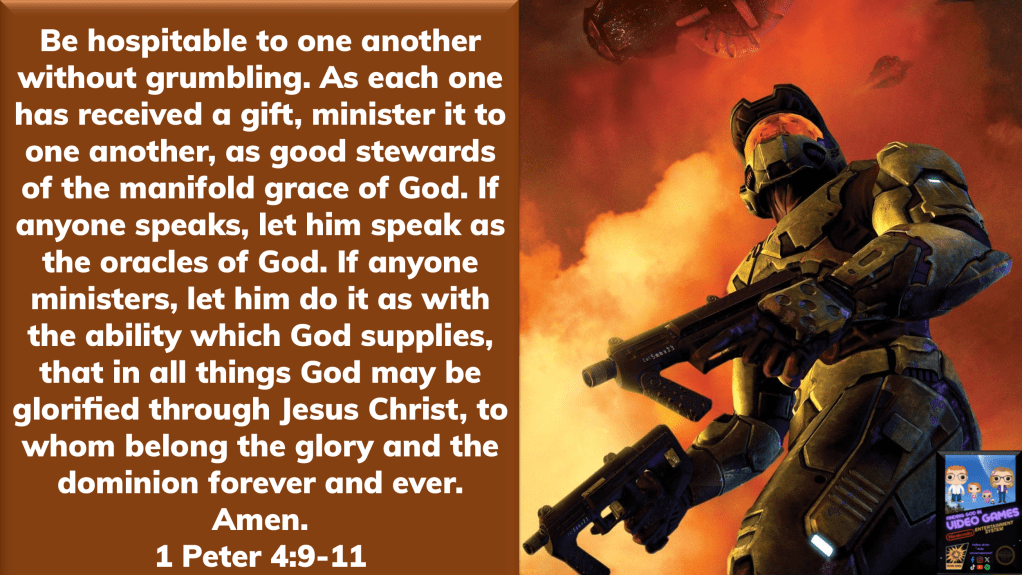
For all of Master Chief’s advantages over his video game peers, he possesses a “limitation” that most of them don’t share. While gaming protagonists like Solid Snake carry an entire armory with them into their respective battles, the Chief is only able to carry two weapons at a time… apparently his armor doesn’t share the same pocket design as Snake’s sneaking gear. But what may seem like a disadvantage is really just a difference between the games they are in and the unique nature of their adventures… the Chief wouldn’t have any use for a cardboard box in the places his story takes him. An unlimited arsenal of equipment choices sounds nice, but the Master Chief’s “limited” load-out has always been more than enough for him to win the day.
The uniqueness of each of our callings for the Lord means that every one of us will be equipped differently for our respective missions… some of us have received talents in speaking, writing, or sharing songs while others have been gifted with earthly resources or serve Him in positions of high visibility to grow the kingdom. Instead of wishing we were chosen for different missions in life or that we possessed the “pockets” of gifts that others received, let’s open our eyes to the callings we were actually given. He didn’t design us with limitations… He crafted each of us for a purpose.
Be hospitable to one another without grumbling. As each one has received a gift, minister it to one another, as good stewards of the manifold grace of God. If anyone speaks, let him speak as the oracles of God. If anyone ministers, let him do it as with the ability which God supplies, that in all things God may be glorified through Jesus Christ, to whom belong the glory and the dominion forever and ever. Amen. 1 Peter 4:9-11
Who has saved us and called us with a holy calling, not according to our works, but according to His own purpose and grace which was given to us in Christ Jesus before time began. 2 Timothy 1:9
Like us? Follow us on Instagram, Twitter, Facebook, Spotify, TikTok, or YouTube for our articles, podcasts, and videos!
Facebook: Finding God in Video Games
Twitter: @FindingGodIn_VG
Instagram: Finding God in Video Games
Podcasts onSpotify/Apple/Google: Finding God in Video Games
I preordered the new Samsung Galaxy XR Headset. My primary reason for wanting this device was seeing the pass through ability and native Google play store apps so knowing Google Translate would be part of this, I envisioned being able to translate my Japanese Otome games into English with a larger screen and with less...
Hotel Barcelona is one of those games that everyone really needs to experience for themselves. I'm not suggesting that this is one of those absolute must-have AAA releases; it's no Ocarina of Time or Halo (although mind you, there are perfectly valid reasons for not liking either of those games!) Instead, this is one of those innately polarising games where reviews are all over the place, and so each player needs to make up their own mind about it. This is no surprise, given that the game is the product of a dream collaboration between two of the most controversial game creators today. These equally enigmatic creators each impart their unorthodox game development styles and philosophies upon the game. To step into Hotel Barcelona is to step into a truly one-of-a-kind meeting of the minds.
In an age of big budgets and high production values, the expectations heaped upon video games have never been higher. Everything from a glitch-free experience to the professionalism of the voice acting comes under microscopic scrutiny. Game developers have also become less daring and adventurous (unless your name is Hideo Kojima, that is). There was a time when big game publishers were not afraid to take risks, to sell game design choices that were quirky yet innovative, and they appreciated the value of catering to niche audiences to build a cult following.
This unhindered approach to game development and design really peaked during the sixth console generation, with SEGA's Dreamcast setting the example and Nintendo's GameCube and Sony's PlayStation continuing to be a haven of cool ideas. Not every game needed to score a 90% average on Metacritic to be deemed a success, as it was simply enough to create a compelling title for its intended audience.
Source: Press Kit.
Nowadays, you'd be hard-pressed to find such experiences from big publishers, but there's certainly no shortage of these flawed but creative efforts from up-and-coming developers in the indie scene. There's still a void when it comes to new ideas from true industry veterans, but thankfully, there are two names who continue to march to the beat of their own drum: Goichi Suda (a.k.a Suda51) and Hidetaka Suehiro (a.k.a Swery65).
As game directors, both have incredible resumes, but if one title were to define their respective game development philosophies, then for Suda51, it would be No More Heroes, and for Swery65, it would be Deadly Premonition. These signature titles have garnered a loyal fan following over the decades, and the impact these games have had on the gaming zeitgeist can't be understated.
They are unique in their directorial styles and yet so alike. One thing is clear: their games are all about the profound intangibles, as these games often have subtext within the narrative and game design that tap into a gamer's psyche like no other. As experiences, these are games that challenge the very notion of 'play' in video games, and not only that, they challenge the idea of what it means to be a 'gamer'.
They've always gotten along as comrades in the same industry, but fans have often wondered what would happen if they collaborated on a project. In fact, some wondered if such a thing were even possible, simply because Suda51 and Swery65 are just too alike. Could two uniquely creative volcanoes find compromise and balance when bringing highly volatile ideas together as one?
Turns out, it was possible after all, and the end result of bringing two mad geniuses together to create a video game is Hotel Barcelona.
Source: Press Kit.
A fundamental commonality between the pair is also evident here: their games are unapologetically 'janky'. This 'jankiness' is evident in the gameplay systems that are often simple and effective, but lack fluidity and polish, especially in combat and shooting. The graphics aren't AAA quality either, instead emphasising artistic expression over texture mapping polish. Not only that, but the performance rarely hit a stable 60 frames per second. Some wonder if these passionate game directors deliberately make 'bad' games, and, well, of course they're not; it's just their intentions and emphasis are different from typical game directors.
This can be contrasted with other media like film and music, but let's go with music to illustrate a point. You can pick up the latest mainstream pop record, and chances are you will be treated to a polished musical experience where the vocals are always on key and the instruments are mixed to sound as clean and pleasant as possible. And yet, there is an audience for the unrefined and unpolished, where instruments are allowed to make raw noise and unconventional singers are allowed to express unhinged ideas; that right there is punk. It's a counterculture for the sake of alternative expression, to challenge conventions and the status quo.
That's what games by Suda51 and Swery65 are: the punk rock equivalent of gaming. And so, Hotel Barcelona is the ultimate punk rock album by two industry legends. It's a dream team to be sure, and the result is a game that will be truly appreciated by its intended audience, perhaps even more so over time.
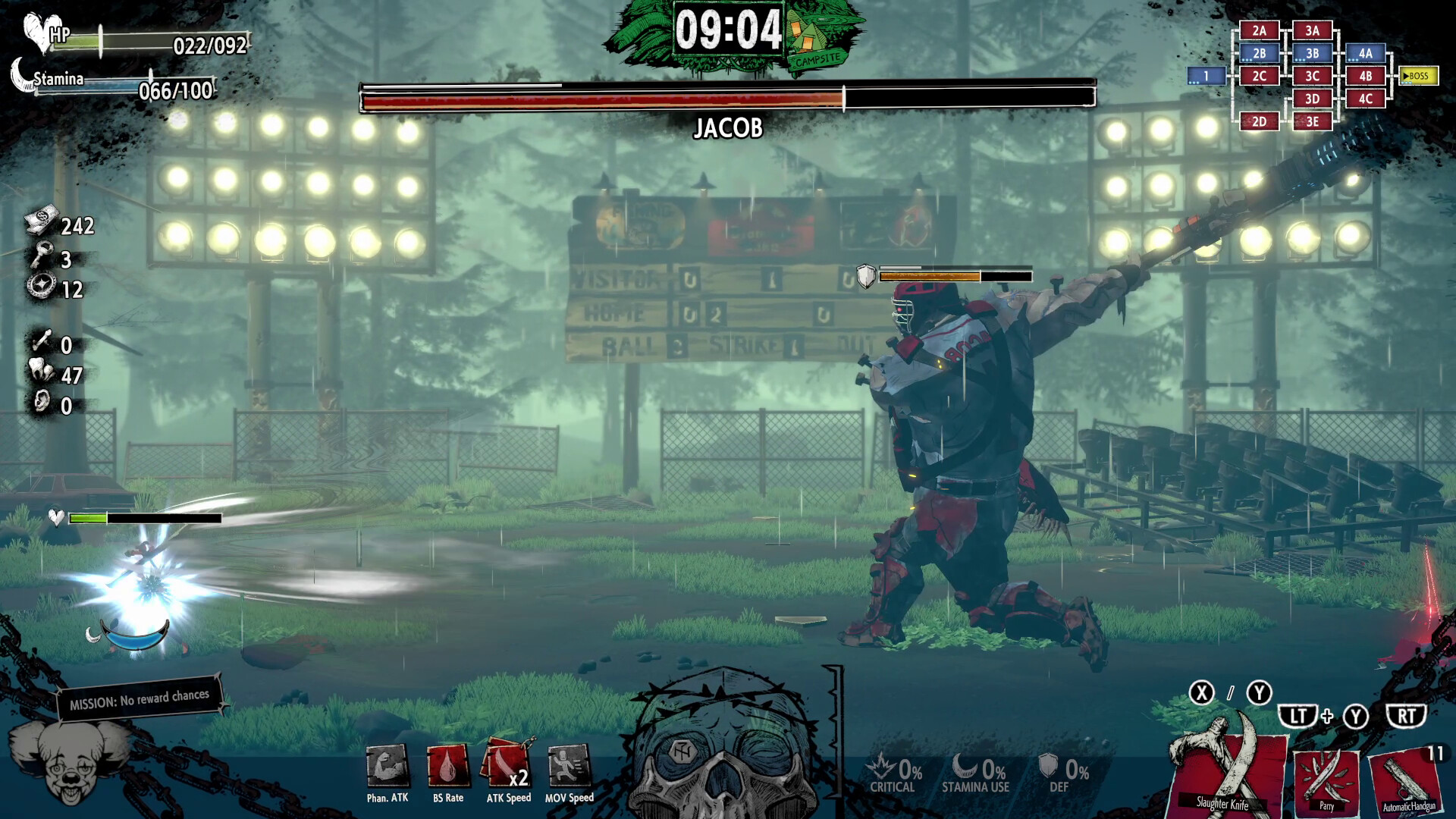
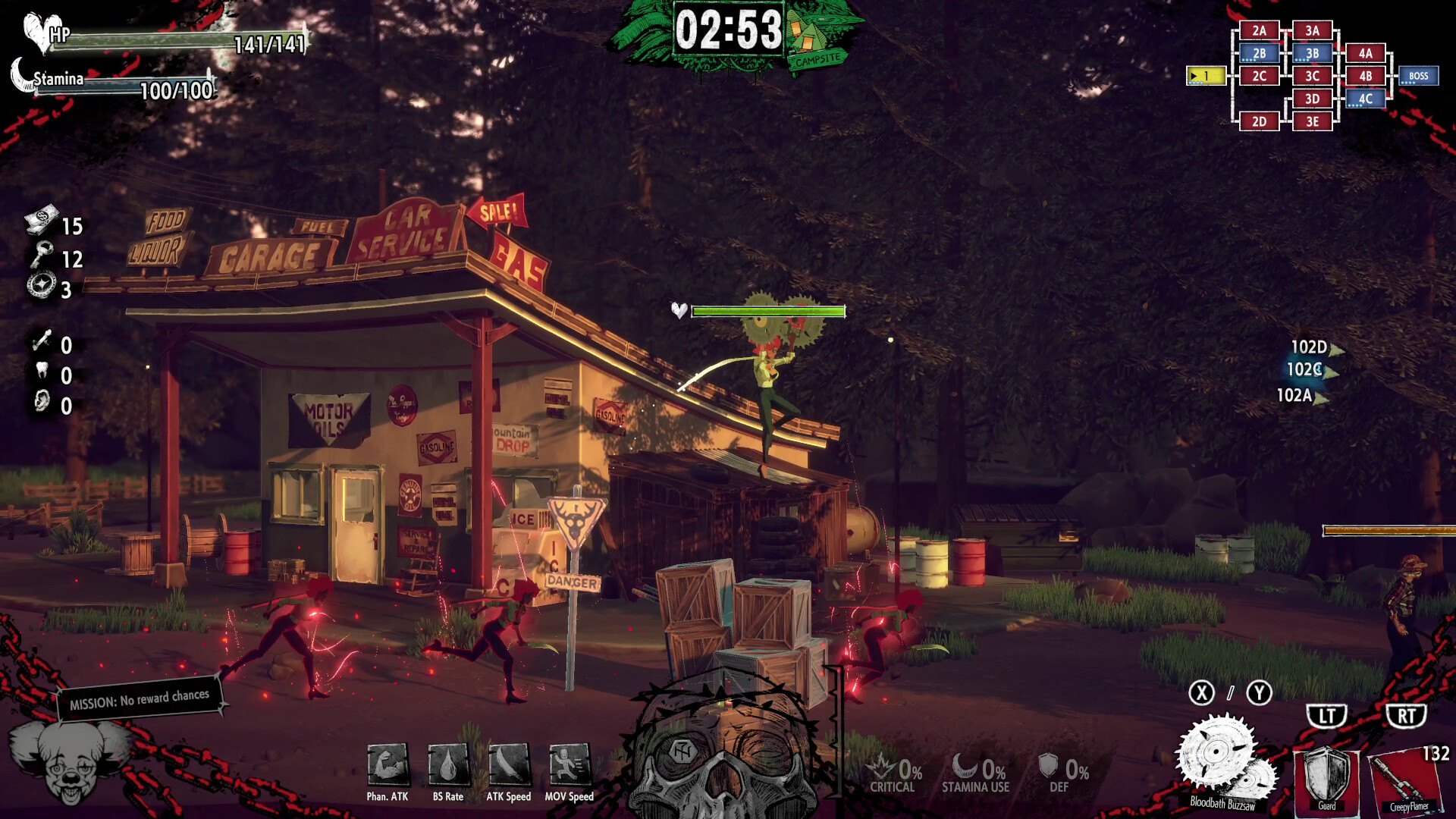
Hotel Barcelona is a roguelite, and while there are numerous roguelikes and roguelites in the indie scene, they don't compare to the vibe and style that Suda51 and Swery65 have created here. Think of it as a punk rock video game by two industry legends who don't need millions to express their wild creativity.
Source: Press Kit.
It's an effective 2.5D action game oozing with style. The core gameplay loop is enough to keep players coming back for more, and each return trip opens up more of the creativity. There are homages to gaming's past here, and plenty of powerful and provoking meta-commentary tucked away in both the game design and narrative flow. It's a violent game, but one for the thinking gamer. In the signature style of these developers, video game violence thrills are presented with a contemplative subtext.
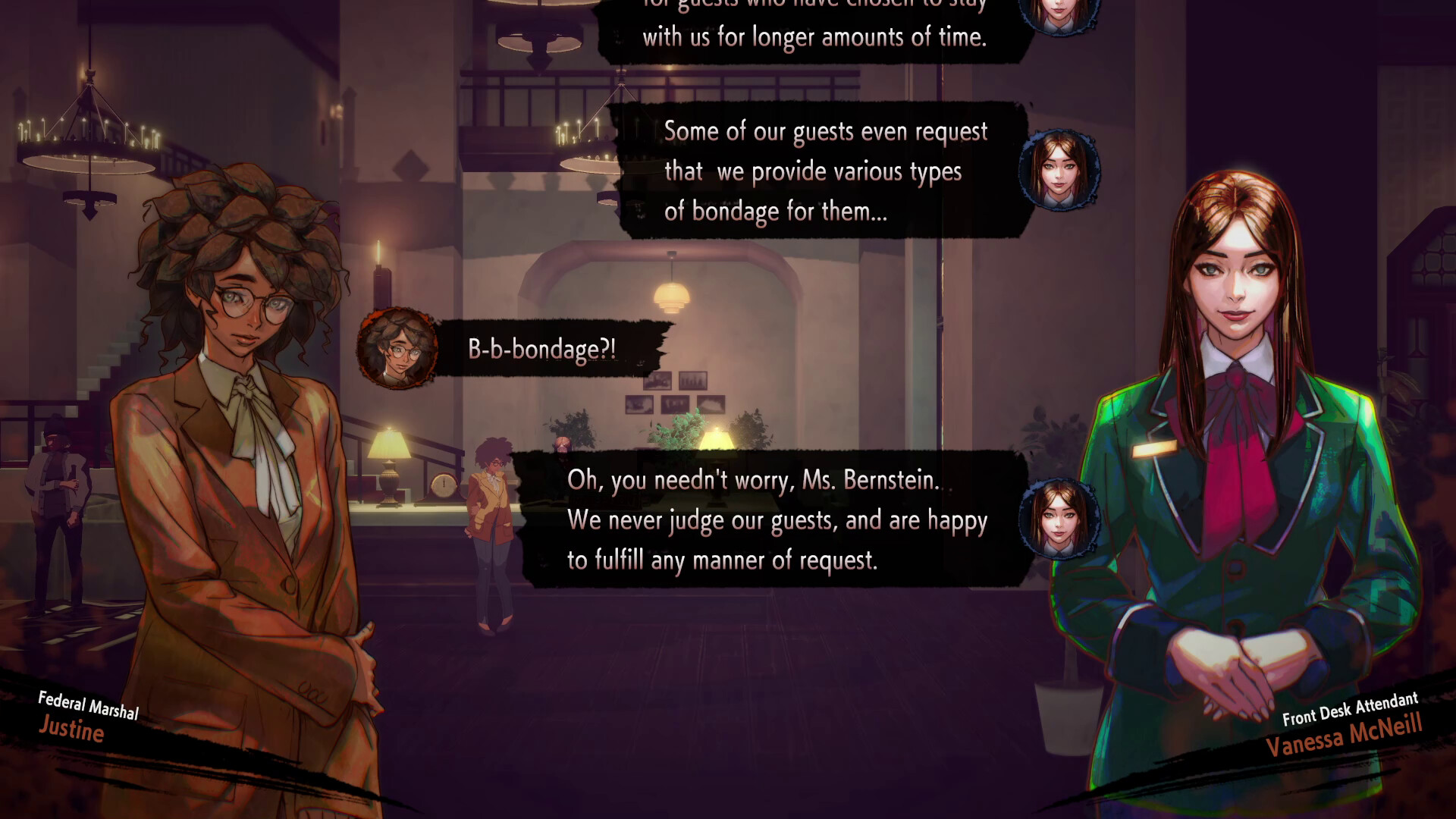
No one writes a protagonist quite like Suda51 and Swery65, and here we have Justine, a complex and reluctant anti-hero who expresses deep monologues as she wrestles with her demonic alter ego. The premise is gruesome and unkind, and yet there is a wicked sense of humour to it all, especially in the playful dialogue flow.
It's all about style, with a range of visual styles delivering a story that only Suda51 and Swery65 could dream up together. Speaking of the former, Suda51 has always been about boss battle presentation, and Hotel Barcelona delivers its cast of eccentrics in a style most game directors could only dream about. Aside from Kojima, nobody writes boss characters quite like Suda51. The first boss theme song samples 'For Whom The Bell Tolls' by Metallica, and the rest of the presentation isn't shy in referencing all kinds of media from heavy metal to horror cinema. The bosses are cool, and their presentation showcases true pop culture passion, but it's just too bad that the core gameplay makes the actual battles feel tedious.
I described the game as effective, and it is, but that's about the most glowing praise the core gameplay earns. Take away the layers of style and personality, and you're left with an action game that features cumbersome combat and dull level design, one where the set pieces and platforming rarely gel well with the clunky mechanics. It's all competent and serviceable enough, but oh so very dull. It also speaks volumes about how attractive the presentation and vibe of Hotel Barcelona can be; it's exciting enough to make the majority of the sluggish gameplay worth enduring.
Maybe persevering through rusty gameplay is the point of it all. Even when parts of the gameplay don't feel great, the sum of the many parts that make up the experience, whether it's the music or character designs, creates a whole that feels special. Put it this way: Black Sabbath didn't have an opera singer on vocals. The point isn't to have a good singer; the point is Ozzy Osbourne was the only voice to bring together the many imperfect yet unique parts of the Black Sabbath sound.
Hotel Barcelona is a flawed and imperfect game; it's not a low-budget indie game created by green developers, nor is it a AAA title backed by reputable industry veterans. Instead, this is a perfect in-between: it has modest production values and yet perfectly expresses lofty and ambitious ideas. It's a bit like when a punk rock band goes from playing small clubs to selling out stadium shows, without losing their artistic edge.
Forget the reviews and forget the accepted norms of AAA gaming; Hotel Barcelona is a title that will be savoured and studied for decades, long after games like Battlefield 6 have shut down their servers.
When I was younger, I was always convinced that the first Tomb Raider game got a sort of remake on the Game Boy Color. It makes a lot of sense in my mind, since the title of the game was Tomb Raider. And in the same time period, Indiana Jones and the Infernal Machine also got a port to the Game Boy Color. That game was an interesting remake in 2D. Now, we are not here to discuss an Indiana Jones game, so let us focus on the Tomb Raider games.
I do not always do research before I start playing a game. This game is one perfect example. I just started the game up, expecting the story starting with a rendition of the Ice Caves. But, to my surprise, the game started up different.
The actual subtitle of the game is The Nightmare Stone. On the box-art, we just got Tomb Raider as a title. On the box-art, we see that Lara is running away from an erupting volcano and behind her, you see several skeleton enemies. The bottom section is reserved for company logo’s like Eidos, Core Dynamics, the licensor Nintendo, and the publisher THQ. We also got the “Only on Game Boy Color” triangle in the left corner.
The game was released in June 2000. On June 7th, North America, Europe got it on June 28th and the UK two days later. Only Australia got the game a little bit later. Their version got released on July 18th. Nowhere on the box-art, the game got the subtitle The Nightmare Stone. The game just released as “Tomb Raider” in North America and released as “Tomb Raider: starring Lara Croft” in all other regions. This is a practice also done with the other Tomb Raider games. It would have been easier if they just added the subtitle, to make conversation easier.
The critics gave Lara Croft is first entry on the Game Boy Color very high praise. Various gaming magazines and websites gave this title 8 or 9 out of ten. The average score of this title is 79% on the aggregator GameRankings. One of the lowest scores I could find was by a German magazine named 64 Power in their June issue, giving it a three out of 5 or 60%.
Since Core Design developed this game, it will not be a surprise that you find a lot of developers on this game also worked on the main Tomb Raider games. This game was developed by people who knew how a Tomb Raider game should play. In this title, Lara is hunting after the Nightmare Stone. This stone is in possession of a treasure hunting group who wants to use it to release the evil god Quaxet, a factious god in the Mayan mythology.
Playing through this game, you really want to play through a Tomb Raider game. Of course, there are some big differences since the game got released on a handheld. The most obvious difference is that the game is in 2D. There were only a handful of 3D Game Boy games, and most of them did not involve jumping.
Another significant difference with the main line Tomb Raider games is that this game plays a lot slower. The controls are more limited on the Game Boy Color, and more action-packed gameplay could not really be implemented, per se without it becoming really clunky.
Speaking about the controls, it takes some time to get used to. I mostly played platformers or adventure games on the Game Boy, and I was so used to push the A button to make my character jump. But Lara jumps with the up arrow in this game. Not only that, if you want to climb up ledges, you need to hold B. Which is the button you use to run. If you are moving left or right and press B, Lara starts running. When Lara is running, and you press the jump button, Lara jumps in the direction she is running. This gives you a hint how to jump a gap when standing still. You have to press B first before the jump button to jump over a gap.
This control scheme is quite ambitious since there is no real tutorial in game explaining the controls. You do not have a training or testing level in Lara’s home. The manual explains these things quite well, but if you bought your copy today from a garage sale without the manual, I would advise you to look for it online. The control scheme is something that you will not really expect from a Game Boy game.
Earlier, I mentioned that this game has a slower pace compared to the main line Tomb Raider games. That was intentional. If you start running everywhere, you will find that this game will be quite harsh and brutal. There are several pits and gaps that either eat a good chunk of your health or kills you right away. Enemies are also hidden everywhere, and their damage can be unforgiving.
You cannot save where you want in this game, since the save crystals from early Tomb Raider console games return in this game. Learning where the save crystals are important. It is the only way you can save, and it is you respawn spot when Lara losses all her health. The save crystals are not close to each other, either, so I was always happy to find one.
If you do not really know the controls, it can feel a bit like trial and error. For example, I did not know that when you are running and jump, Lara will land further than from a standing jump. I did not expect this mechanic to be in the Game Boy Color games as well. Other things like dynamite being able to use to explode walls, which is something I’d have loved to get explained to me.
Overall, visually, this game is extremely impressive. Once everything starts clicking together, and you get used to the controls, this game is a hidden gem on the Game Boy Color. When you know what you are doing, this game takes around 4 hours to play through. For a first playthrough, I would say that you can finish this game in roughly 15 hours.
The game must have been quite successful since a year later we got a new adventure in the same engine and style. Eidos tried to get this game released around the time the first Tomb Raider movie released. Tomb Raider – Curse of the Sword, released in late June in North America and in August in Europe.
This time, the game was not released by THQ, but by Activision. Most of the team who worked on the first Game Boy game also worked on this title. Because this game got a shorter development time, this game is shorter compared to the first Game Boy Color game. If you know what you are doing, this game can be beaten in two and a half hours. For a first playthrough, I estimate that it will take 8 to 10 hours.
The sequel got the same reception from critics when it released. This game still shows off impressive visuals for the Game Boy Color. Remember that the Game Boy Color is an 8-bit system, and these two Tomb Raider games had such fluid animations that it looked next-generation. Did you know that there are over two thousand animation frames per game to make the animation work? Lara’s model is also forty-eight pixels, making her one of the most detailed characters on the Game Boy Color.
Personally, I feel like both games are amazing entries into the Tomb Raider series. While they play quite different from their console and PC counterparts, both are an amazing adventure through various locations. You still must solve various puzzles and platform your way around. In Curse of the Sword, you even have a chase sequence on the rooftops.
When I look with a critical eye at these two games in 2024, I would say that the lack of a tutorial for the controls really hurts the game. Also, some people might be put off from the difficulty level of this game. These games have some really difficult sections. Use the save crystals well! Otherwise, you might lose a lot of progress. And if I am really nitpicky, I could say that some areas would benefit from a map screen. But the levels are a bit too complex for those and with the small Game Boy Color screen, the map might not be even readable. Thankfully, there are various sources online, like Stella’s Tomb Raider site (tombraiders.net) that have amazingly drawn maps.
When you read this, you might think that beating these games without a walkthrough is almost impossible. But do not worry. These games are quite linear and straight forward. I rarely got stuck in these games by not knowing what to do next. Most of the time, I did not know I was able to perform a certain action or how to solve a certain puzzle.
The streak of releasing a new game every year continues in November 2002. The Game Boy Color was on its way out, and the next title was released on the Nintendo Game Boy Advance. For this title, Ubisoft Milan was tasked with creating a new game. That is because the main team was working on the sixth main title, Angel of Darkness. Tomb Raider – The Prophecy was released to mixed reviews. It released in early December in Japan.
This game played quite different compared to the Game Boy Color titles and played more as a top-down isometric puzzle platformer. If I am very honest, this is the gameplay style I expected more of the Tomb Raider series on the Game Boy. It is mainly because I associate Tomb Raider more as a top-down game on handhelds than it being a 2D side view game. The Game Boy Color version of Indiana Jones and the Infernal Machine showed me it was possible to have a game like that on Game Boy Color.
The story of this title is about the Tome of Ezekiel. In this tome, a story is told about three magical stones that bring great power. She faces a big cult by the name of Teg-du-Bhorez. The game takes about 6 hours to complete on a first playthrough. If you really know what you are doing, this game can be beaten in 2 hours and a half.
Honestly, for a portable Tomb Raider adventure, I really enjoyed this one. It is a rather underrated gem in my opinion and really can be quite exciting to play. Especially since the formula really works this way on the Game Boy Advance. The big issue is that reviewers compared it too much to the mainline series, which is quite unfair to do. What I can agree with, is that this game can feel a bit repetitive at times in terms of puzzles and level mechanics. But it is way less repetitive compared to the Game Boy Color titles, since a lot more puzzle solving like statue placing is used.
The final Tomb Raider title on the Game Boy line of platforms came in 2006. After the very mixed reception to Angel of Darkness, the IP was given to Crystal Dynamics and Tomb Raider Legend was born. Talking about that, can be an entire article in itself. But, to close off this article, I want to quickly focus on Tomb Raider Legend on the Game Boy Advance. I know there is a port to the Nintendo DS, but I do not have any nostalgic memories for that one. I do have nostalgic memories for the Game Boy Advance port.
Now, let me tell you, the Game Boy Advance port was rough. The game went back to the style in like the Game Boy Color games. Yet, it also tried to do intractable doors. I can totally understand why reviewers back in the day were extremely negative about this game. Especially, since the console and PC versions of this game were such a blast of fresh air in the series.
Still, why did I beat this title 100% three times? Because, it had a certain charm. You could find various secrets in the game to unlock secrets like concept art or even cheat codes. But you were not able to see if you got all treasures in a level. The jumping and swinging controls were a bit awkward, yet you had very forgiving checkpoints.
There are a few things that stick with me to this day, the fact that the final boss is rendered a joke in this version. Just mash the attack button and you easily win. No matter the difficulty. Also, the mini-games and exploring Lara’s home were fun distractions as well. Moreover, I want to thank all the pizza boys who delivered me pizza during the writing of this article, like in the credits of this game.
And with that, I want to wrap up this brief nostalgic look into the 4 Tomb Raider titles on the Game Boy Color and Advance. My name is NekoJonez and if you enjoyed my writing and want to read more of my work, you can find me over at: https://arpegi.wordpress.com. I want to thank you all for reading my article, and I hope you enjoy the work of the other writers in this magazine. But for now, I am out! I hope to welcome you in another article but until then, have a great rest of your day and take care!
Editorial note: This article has been written for a gaming magazine. Did you find this article interesting? Then you should read the other articles right here. Thank you so much Dominus for letting me publish an article. There are various articles about Ultimate Underworld Retrospective – Sin God – The Making of the Wipeout logo design – …