Skull and Bones marks its second year by inviting players to design their own sail patterns for the game
21. Únor 2026 v 01:00




It is nearly impossible to discuss the ‘cosy’ or ‘wholesome’ genre without thinking of Stardew Valley. Released in February 2016, the game quickly became the gold standard for the genre. Its accessible, charming slice-of-life style created a blueprint that countless titles have since tried to follow. Now celebrating its tenth anniversary, this indie darling has effectively reinvigorated an entire genre and changed how we think about video games at large.
I don’t know what Eric Barone (better known as ‘ConcernedApe’) has in his morning cereal, but I need some. Consider the staggering scale of Stardew Valley. Every element—from the code and pixel art to the music and dialogue—was created solely by Barone while he worked as a theatre usher just to keep the lights on.
This dedication translates into a level of consumer respect that many modern “AAA” publishers have forgotten. In an era of pointless battle passes and predatory microtransactions, Barone has delivered massive new content—including multiplayer and new regions—entirely for free. Ultimately, Stardew offers a world defined by the player’s choices rather than the size of their wallet, earning the developer tremendous goodwill.
Each 24-hour day in Stardew Valley lasts about 14 minutes of real time. This finite window to finish activities before the next cycle begins naturally fuels a “one more go” loop. You keep playing to catch an elusive fish, finish a farmhouse upgrade, or plant one last vegetable patch. There is always something more to achieve, yet it never feels like a forced chore. It’s a masterful modernisation of the formula established by the Harvest Moon series on the Super NES, which Stardew Valley naturally inherited and updated for a new generation.
The beating heart of the game is its deep social dynamics. With over 30 unique NPCs, the game reveals a cast with distinct personalities and needs. This is best shown through ‘Heart Events’—special cutscenes that reveal emotional struggles like depression or family trouble. The game invites you to share in these virtual lives in ways that can be truly detrimental to your real-world free time.
Beyond the village bustle and seasonal festivals, Stardew Valley hides a massive cache of secrets. You might find forest spirits that help restore the town, strange capsules from rare events, or a sewer filled with mysterious shadow people. There is never a shortage of mystery outside the core farming routine.
A major reason for the game’s popularity is the passionate modding community. Because the game is so open-ended, players have created thousands of mods. These allow you to extend the game indefinitely by adding new crops, villagers, and even entire new towns to explore. This community-driven content ensures that even veteran players always have something fresh to discover.
While many games from 2016 have long been forgotten, ConcernedApe is still releasing free updates. The most exciting is the forthcoming 1.7 update, timed to match the 10th anniversary. This substantial update brings expanded social content, new marriage candidates, and more reactive personalities for children. While the pace of these updates is steady rather than fast—expected for a solo creator—each one is crafted with the same care and attention that has defined the game since day one.
The post Stardew Valley 10th Anniversary: How One Indie Game Defined the Cozy Genre appeared first on Green Man Gaming Blog.
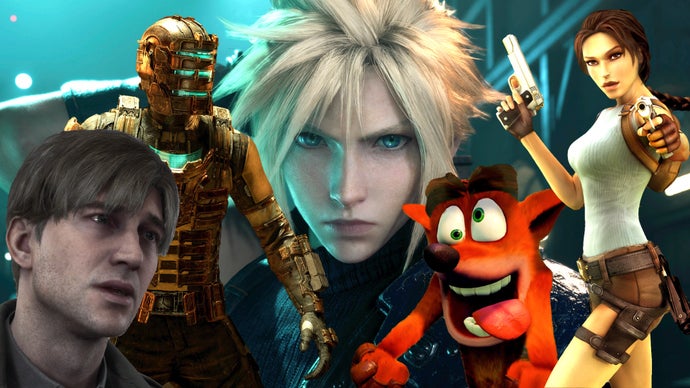
Remakes, you either love 'em or hate 'em! Or, more probably, you like some of 'em, aren't too keen on others, and are largely ambivalent to the rest. Whatever your perspective, it's obvious remakes - beloved of risk-averse publishers across the industry - aren't going anywhere. They offer the perfect maelstrom of nostalgia bait and brand recognition, meaning they're an easier sell compared to entirely new games, and if players love them, why stop now? But not all remakes are created equally; for every Resident Evil 2 or Silent Hill 2, there's an XIII - a remake so bad its publisher was forced to remake it. Which raises the question - you might call it the Big Question - what makes a remake great?
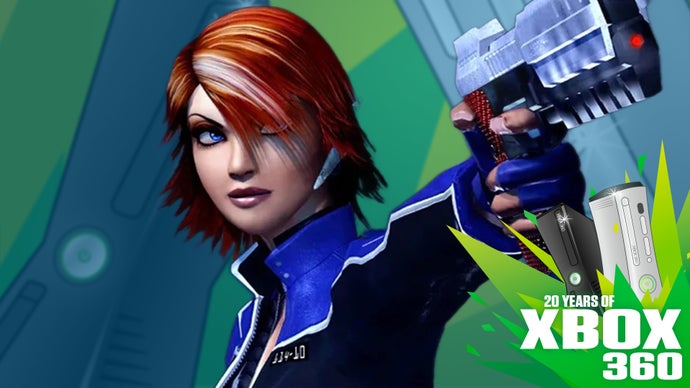
Time can be cruel. I'm not talking about the ravages of age when I say that - although, christ, the closer I creep to forty the creakier I become - but I'm thinking, I suppose, about legacy. The very nature of history, especially when it's oral in its delivery, is that it becomes truncated. Short-form takes over. For instance - think of a Prime Minister or President (back when we had normal ones of those, anyway), or the manager of a sports team, their tenure often ends up defined very broadly, no matter how much nuance there was at the time. Oftentimes, it's good or bad, with little in between. Which is a shame - because sometimes the nuance is where the most interesting thinking resides.
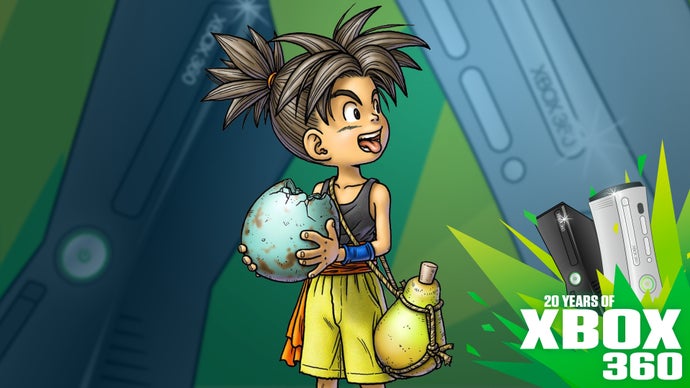
The Xbox business today is pretty unrecognizable from that of 20 years past, which on this week all that time ago was launching the Xbox 360. There's all the changes to the business, a different suite of executives at the top, and an entirely different first-party portfolio, of course - but when I think of the changes, one absence comes to the forefront of my mind: Japan.
When I look back on most consoles, I'm largely looking back at the games. The PS3 is LittleBigPlanet and Metal Gear 4, as far as I'm concerned, and even the GameCube, that squat, characterful delight, is largely hidden behind Mario Sunshine, Wind-Waker and Animal Crossing. (Even just typing that: cor, what a time that was.)
At the tail end of 2024 the original PlayStation turned 30 years old. While the Xbox 360 is only hitting 20 and it's not an industry shaker to the degree the PS1 was, there's no doubt it earned its place as one of the most important consoles of all time. Xbox managed to challenge Sony in the traditional home console space the PlayStation had dominated with PS1 and PS2, and the console's brilliant line-up of games played a major role in that.
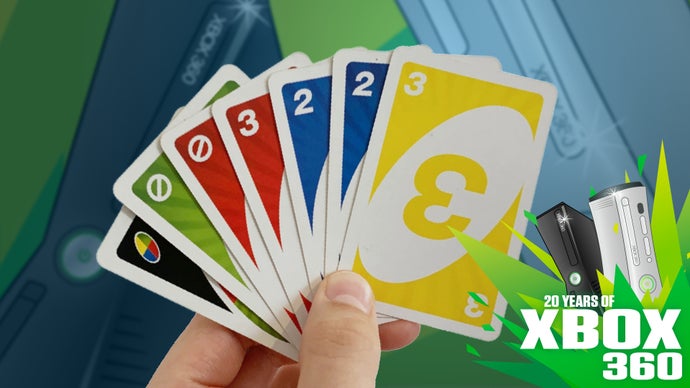
I'll lay my age card on the table here: Uno on the Xbox 360 was the first time I used a webcam. Ever. It was also one of the first games I ever played, on my first ever console. As you can imagine, this combination of first times has given the game a spot quite close to my heart - it showed me how social and casual gaming fits into the world of video games… as well as a few other things I probably shouldn't have been seeing.
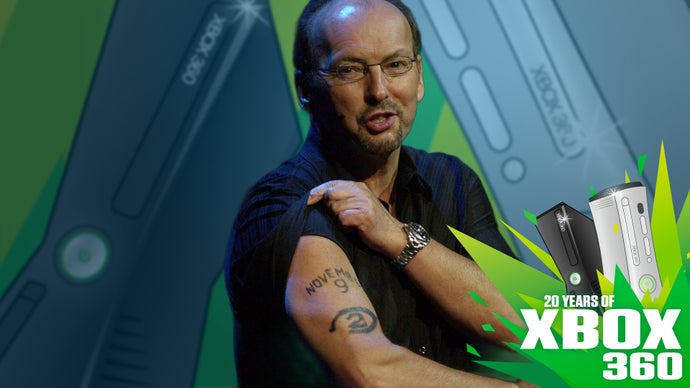
Yesterday, we published part one of our interview with former Xbox 360 boss Peter Moore, where he talked about the creation of Microsoft's beloved machine, the grand idea encompassing it, and how his team had to break from the stuffy office-worker image Microsoft had. "Guys with pocket protectors and thick glasses", as he described it. He also talked about "throwing punches" to provoke the Xbox vs. PlayStation console war.
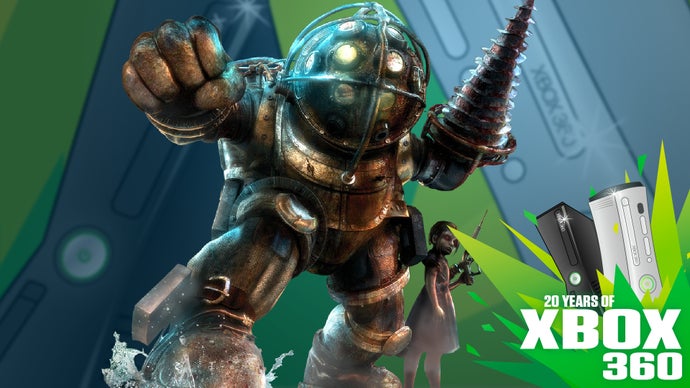
Back in 2007, I was taking my A-level exams. For both English Literature and Drama, I came out with A*s. I'm still quite proud of this, which you can probably tell from the fact I'm bringing it up all these years later - but there's a reason I'm bringing this up beyond the chance for a belated humble brag: I owe my full-scoring papers, weirdly, to BioShock.
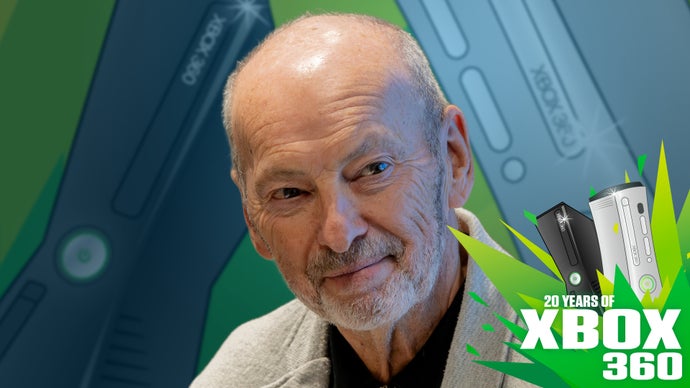
Peter Moore is one executive who can probably claim to have done it all. Having recently fulfilled a lifelong dream of being CEO of Liverpool Football Club, this Liverpudlian businessman also spent decades working in video games, leading EA, helping Sega launch the Dreamcast and, of course, making a real contender of Microsoft's gaming business with the launch of Xbox 360. Whenever the Xbox 360 made a move, Moore was the person on stage announcing it, literally rolling up his sleeves to display Halo and Grand Theft Auto tattoos, taking the fight to Sony and PlayStation.
Sony has revealed the next slate of games set to arrive on PS Plus for Extra and Premium subscribers this November.

If DOOM can be globally recognised as the godfather of the FPS genre at large, then surely Valve’s Counter-Strike must be thought of in similar statuesque terms when we come to terms with its impact on the online multiplayer FPS sphere. Nothing less than a games industry juggernaut with the global recognition to match, this is how, on its 25th anniversary, Valve’s Counter-Strike utterly redefined the online multiplayer FPS landscape and revolutionised a genre in the process.
Rather than being created in a vacuum, Counter-Strike was instead birthed from the design DNA of another legendary Valve shooter, Half-Life. Originally developed as a mod for Half-Life by developers Minh Le and Jess Cliffe and then published by Sierra Studios, Counter-Strike saw immediate success before being acquired by Valve in 2000.
Released as a standalone game by the House That Half-Life built from this point forward, Counter-Strike became much more than the sum of its parts as it trailblazed the formulation of communities both locally and online. From LAN parties that would spring up across the world to the empowerment of the community to manage its own competitive online platforms, Counter-Strike has arguably been at the vanguard of every major push that the FPS genre has made into the PC gaming community since the 21st century dawned.
Indeed, you can certainly make the case that had Counter-Strike not existed, the quality of the competitive multiplayer gameplay in titles such as Call of Duty and others would be nowhere near what it was in the late 2000s, when similar efforts had their own industry-defining successes.
Utterly detached and set apart from the likes of Call of Duty, Fortnite and Apex Legends with their innumerable perks, special abilities, funky weapons and unique skillsets that serve to artificially separate players from one another even before they peer down the barrel of their chosen boomstick, Counter-Strike instead was and continues to be all about player skill. If you’re downed, it’s not because the other person got you with an air strike or some devastating AoE ultimate attack; it’s because you were outplayed, plain and simple.
Everything is precisely calibrated in Counter-Strike towards mastery. Whether it’s getting to grips with the different degrees of weapon sway and recoil that are unique to each firearm, the physics which govern the throw of a grenade, or even just the feeling of kinetic movement as you sprint across a courtyard and leap over some obstacles, everything that you can get good at in Counter-Strike feels appropriately well-earned and satisfying when you do.
To that end, Counter-Strike has stripped everything right back. There are no perks, no gimmicks, no imbalanced hero characters and no exotic loadouts. Everybody begins with the same standard loadout, and only by the sweat of their brow and their gun-toting acumen can they earn sufficient money to purchase new armaments at the beginning of each consecutive round. Arguably, this approach has contributed to Counter-Strike’s ongoing contemporary success too, with Valve resisting the temptation of such industry dog-walking baubles and instead sticking to the core essence which garnered Counter-Strike all of its well-deserved critical and commercial popularity in the first place.
There’s also another, rather sizable upside to Counter-Strike’s streamlined gameplay, too. Not only is it supremely easy to grasp – you kill the folks on the other team and either plant or defuse the bomb depending on which side your find yourself on – making it catnip for newcomers, but so too does the fact that its core gameplay loop has seen so little change in 25 years that even lapsed Counter-Strike players can hop straight back in with little stress.
Counter-Strike was very much emblematic of the streamlined, eSports shooter archetype that we would later see proliferate across the PC space in the 2010s and in the last few years. Valve’s trend-creating online shooter remains a game that just about anybody can play regardless of their rig, and one which absolutely levels out the skill playground so that anybody, given enough time, could become a master in their own right. If you had to quantify all of the best aspects of the eSports concept as a single game, it would be Counter-Strike, make no mistake.
As much as Counter-Strike emphasises a purely skill-based approach to its straightforward gameplay loop, this is just one side of the figurative coin. The other, of course, is teamwork. No matter how good you are, success in Counter-Strike is all about teamwork and macro coordination. Not only should you and your teammates share enemy positions, but so too should there be ongoing strategising in every game where the team is constantly re-evaluating the threat and prioritising defending and attacking the objective accordingly. For the first time, comms in a competitive multiplayer game felt utterly essential, and this would be something that countless other tactical shooters that would follow in the wake of Counter-Strike would also take to heart.
Naturally, this focus on a dual team and skill-based approach that was devoid of such gimmicks and which made player competence utterly transparent, all came together to make Counter-Strike overwhelmingly fertile ground for the then-nascent eSports scene. Fast forward more than two decades, and that very same eSports scene has gone from strength to strength, not only opening the door for other titles to step into the competitive arena, but also reinforcing Valve’s seminal online multiplayer shooter as an eSports mainstay thanks to its easy-to-follow action and timeless, streamlined mechanics.
From the release of Counter-Strike 1.6 in the early 2000s to the cutting-edge Counter-Strike 2 of today, Valve’s legendary shooter has demonstrated a level of longevity and cultural impact that few games can rival. Twenty-five years on, the Counter-Strike 25th anniversary stands as a celebration of enduring design, precision gameplay, and a fiercely loyal global community. With the Counter-Strike Major Championships continuing to grow each year — offering ever-increasing prize pools and drawing millions of viewers worldwide — Valve’s flagship FPS shows no signs of slowing down. If anything, a quarter of a century later, Counter-Strike remains the definitive benchmark for competitive shooters and the enduring heart of the esports scene.
The post Counter-Strike at 25: How Valve’s Iconic Shooter Redefined Competitive FPS Gaming appeared first on Green Man Gaming Blog.


_CA0EO02.jpg?width=690&quality=85&format=jpg&auto=webp)