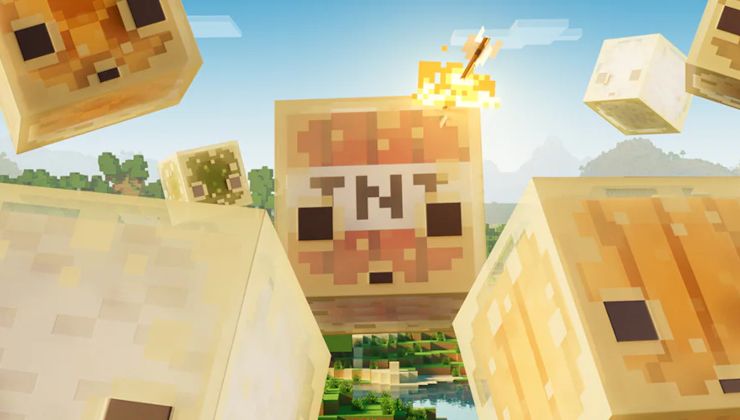
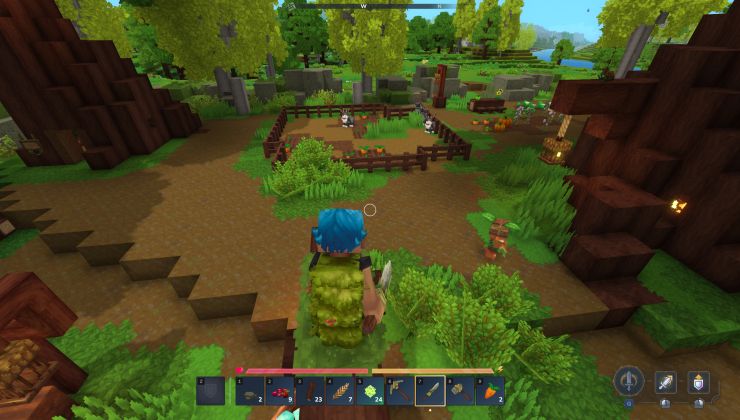
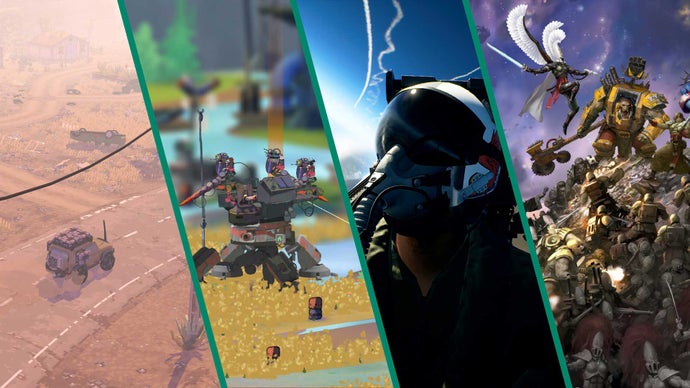
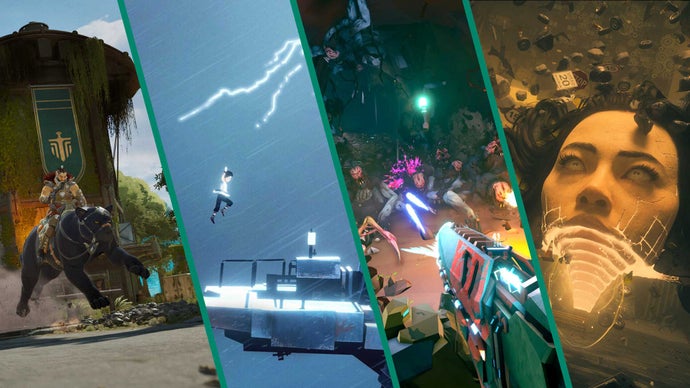
Spiny & Chilly is an interesting and wacky platforming exploration game where you are a penguin and hedgehog duo looking for ice. I’ve played a lot of platformers in my time, but...
I recently spent about an hour playing
GTA 5 Online
through FiveM,
trying out a server called Liberty 99 for the very first time, and honestly,
it was a pretty strange experience.
After jumping in, the first thing I did was create my character and customize
how they looked. Nothing too crazy, just enough to feel somewhat connected to
the game world. My plan going in was super simple: just explore, take it easy,
and avoid interacting with other players as much as possible. I wanted a chill
session with no pressure.
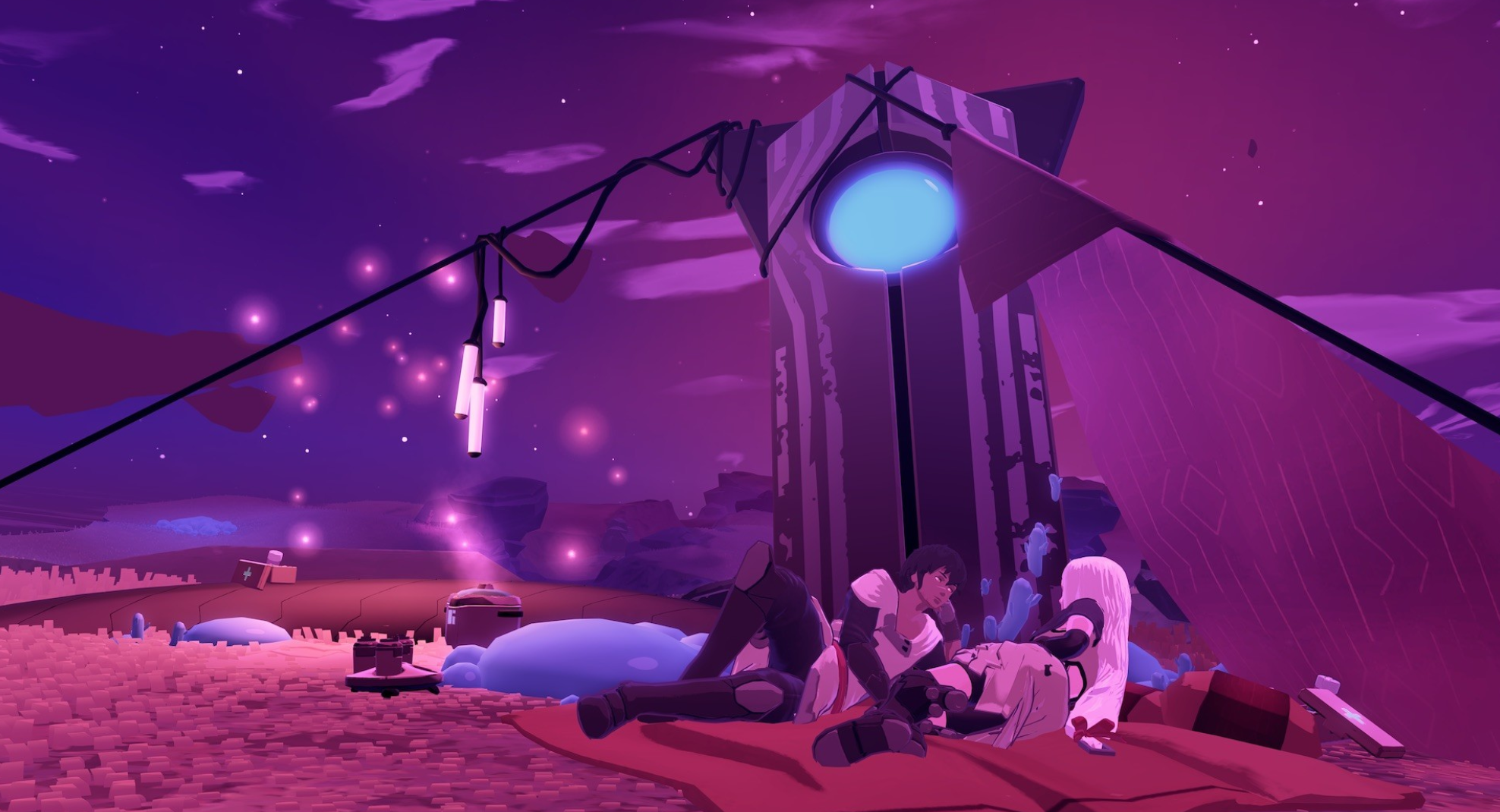
There's nothing quite like cruising through summer to upbeat techno. I have myriad fond memories of warm days to the tunes of Porter Robinson and Madeon, running along palm-lined boulevards. Haven brings me back there. I picked it up recently, following a sun-drunk day at the Renn faire, after it spent years in my TBP pile. Haven features these upbeat electronic soundscapes (from artist Danger) and pairs them with an exceptionally dream-colored world. Front and center, of course, is a love story. Or, rather, the continuation of one.
At its core, Haven is a relationship-sim. It isn't a romance game in the traditional sense, as you aren't responsible for romancing anyone from the ground up. Rather, you play as Yu and Kay, two already-lovers inhabiting a mysterious cluster of islands known as the Source after escaping their predestined lives under the authoritative space empire known as the Apiary. This dual POV means that you control dialogue options as either character, so you oversee their entire relationship. This more omnipresent overview allows you to witness the couple's collective post-honeymoon stages and all the struggles that ensue.
Outside of this, the rest of the gameplay involves open exploration, where you glide seamlessly over a cerulean-grassed landscape of broken-up islets, gathering materials to repair your ship, which also serves as the couple's crash-pad basecamp, affectionately known as the Nest. A mysterious "rust" plagues the islets and their creatures, though, so there's a good portion of discovery spent purifying these areas. It scratches a little bit of that sweet, sweet powerwash simulator itch, since you have to collect 'blooms' of rust to fully clear it out, and you can satisfyingly sweep around all of its red-pulsing patches as you see fit. Since the islets' little creatures grow hostile when infected with rust, this is also where you find the bulk of the game's fight mechanics, and its 'bosses' are usually bigger creatures you have to defeat to finalize the purification. Once the rust is gone, the islets can serve as launching points for further exploration and as places to resource-gather and camp.
All of these elements combine to paint a lovely picture – but, really, the core of Haven is the relationship between its heroes. It is, perhaps more so than many other romance-genre games, focused on the post-happily-ever-after dynamics: the pillow talk, the little in-between moments, the arguments, both awkward and real, that make a relationship worthwhile and cosmically beautiful.
Alone at Last
Upon release, Haven introduced its two leads – Yu and Kay – as a (respectively) female and male pairing. In a later update, they added two additional variations, so that you could play as a female Kay (paired with a still-female Yu) or male Yu (paired with a still-male Kay). This added a wonderfully inclusive element to an already lovely game, and the core component of being two young lovers navigating a life away from all they've known remains the primary throughline for all of them.
Source: Steam.
Their choice to flee the Apiary is due largely to its societal regulation of relationships (as well as implied authoritative measures), in which the domineering Matchmaker essentially assigns you a genetic partner. But Kay and Yu are not a matched pair, so they must flee together, lest they be separated by the Apiary's draconian control.
Haven dives a little into the darker implications of this system on a wider political scale, but it isn't a political game, and you really spend the bulk of your conversations exploring love and the prospects of planetary homesteading. Eventually, you must contend with the ramifications of your escape, but often these discussions of government and morality serve more to outline characters' feelings and showcase opinions and experiences. Yu and Kay aren't trying to change the world; they're trying to live well in it.
They have their setbacks and triumphs while on the Source, but they navigate this new life with a decent centering of 'safety.' The game itself never diverges into oppressively dark, melancholic, or pessimistic territory. It is smartly light-hearted, which seems purposeful, so as a player, you can happily float in the 'cozy' space with this game and never worry about it throwing you through a depressing loop (there is, though, a technically 'bad' ending).
This behind-the-curtain glimpse at intimacy can border on a little voyeuristic at times, only in the sense that the game doesn't shy away from the finer details of all aspects of a relationship, and our protagonists are extremely (this is a very good thing) sex-positive. Look, straight up – it made me feel immensely single, even if I liked it enough to not let the glimpses through the door remind me that I was, perennially, alone. Now, though, my approach is from a vastly different headspace. Obviously, this is anecdotal – but the game is fundamentally about a relationship, so some of your enjoyment may correlate to how much you can stomach PDA and overt flirtiness. Are you a nose-scrunching-in-disgust kind of person, or do you tilt your head and let out a long 'aweeee?'
The game mentions sex and insinuates about it fairly often, and Kay and Yu are clearly, intoxicatingly in love. They flirt all the time and slyly wriggle their eyebrows at each other (suggestively, of course) many times throughout. This isn't played with in the usual romance genre fashion, in that most of those narratives tend to stretch that delicious tension of dramatic buildup until it ultimately culminates in a, you know, 'big' scene. Because these characters are established as being in love, the sex feels organic in a way that's refreshingly realistic and empty of exploitation. It's never shown (outside of clothed straddling or occasional glimpses of far-away pixelated nudity... alright, it's comparatively chaste) but rather wholly discussed, which makes the moments feel more real. For me, it is that frankness, that normalization of such things, that makes Haven's relationship and writing so special.
Source: Steam.
Love – learned and earned and fought for – is what sets the precedent.
Obviously, aside from that physical magnetic pull, Kay and Yu orbit each other emotionally in a way that almost forces a type of co-dependency. They are, after all, the only two denizens on this atypical planet, with only a few wandering critters (Oink, their resident mushroom-backed lizard, among them) and the remnants of some of the Apiary's research stations. As Kay and Yu navigate these mysteries and hone their survivalist skills, they get into arguments, house regrets, and have to depend on one another for everything, which forms a core component of some of their larger disagreements.
What I genuinely loved about Haven went beyond that frankness, in that it explores the complications of a relationship with a softer, kinder lens. Yes, all relationships take work - you are inevitably two people deeply in love and deeply invested – but also deeply different. You have to know your partner's weaknesses, their tendencies, and the game lovingly explores how two people might help individually navigate that potentially eternal forced proximity. Haven makes the argument, with its 'good' ending, that love is not defined by algorithms, which feels dangerously close to a world we're moving into creating. Yu and Kay's love is largely offline and analog. The game lambasts the codified genetic matching by supposing that love can be learned and formed outside the womb of statistics. It's reflective of my own feelings, in that I find, say, the supposition of soulmates fairly fatalistic. Love – learned and earned and fought for – is what sets the precedent. Haven showcases that with beautiful aplomb.
Islet to Islet
Haven's tendency towards unity with its couple is showcased even in the gameplay. In cooking and in battles, you have to simultaneously select your options. In cooking, this means picking with the D-pad and the, uh, shape-buttons? (whatever they're technically called – I'm playing on PS5) to contribute to the dish. In battle, it means selecting from four options also at the same time, depending on enemy action. Do you remember that elementary-school game of 'rub your tummy and pat your head at the same time?' Some of the ways in which the dual controls work reminds me of that, which is fairly tough for a failed multi-tasker like me. But it is reflective of the game's own central style and is a fantastic symbiosis with theme. You really can't win a battle or cook a meal alone, just as you can't survive here without each other.
The flow (ha) of the game itself, outside of the relationship navigation, is a careful monitoring of its day/night system and, more importantly, its hunger/sated cycle, which you can track in the menu but also hear about based on overworld character chatter. If they start to mention being hungry, you know it might be a good time to find an islet with a camp or return home to the Nest for some food. Being hungry slows down your reactions during combat, so it is in your best interests – especially as you start exploring farther out – to keep your two little lovers well-fed. And as you further push beyond the Nest, you'll be able to unlock more islets and find more ways to navigate beyond simply riding the flow bridges between each.
And that's how Haven's exploration works: each islet is connected to one or more 'flow bridges', with flow being this force that exists, almost gravitationally, in the world. It reminded me, in visual practice, of the anime Eureka Seven's trapar waves, which are essentially rideable energy waves in the air. In that show (an old favorite), the process of surfing them is called 'lifting', and it's basically surfing on the wind. Flow, in Haven, allows Yu and Kay to glide across the landscape similarly, and there are also flow threads produced organically from the ground that you 'ride' along, tracing in the air until they lead you to an endpoint. These can be tricky to follow, as you have to perfect the timing and 'drift' certain sharp turns with relative expertise. Surfing some of these is how you reach high ground that can't be glided to, which you'll need to do to gather resources or other important items. These flow springs litter the open world, so you can easily trace them for fun as well.
Source: Steam. The blue line = a flow thread; the red = rust.
Haven's got that 'bite-sized but could be a mouthful' concept of gameplay, where you can easily play it in short bursts, but the cycle is addicting enough to keep you revolving around it for hours.
A Planetary Infinity
The pace of the game isn't a race to any real end (at first), but it's compelling enough in story, landscape, and stakes to keep you wanting to push past your last area of exploration. Haven's got that 'bite-sized but could be a mouthful' concept of gameplay, where you can easily play it in short bursts, but the cycle is addicting enough to keep you revolving around it for hours. It helps that Danger's soundtrack never grates on the ears and provides a smooth background for both exploration and relaxing moments. Paired with beautiful animation and wonderful character design, Haven really has me in a vice grip at the moment. The diversity of gameplay elements – combat, cooking, collecting ingredients, clearing rust, and locating parts to repair the Nest – offers a pretty endless stream of vibe-friendly to-dos.
These elements also boost your characters 'unity' gauge (that's my name for it, at least), which allows them to build up to an 'applebrew' moment, sharing in a drink to celebrate one another. Reaching these moments strengthens your combat prowess, upgrading your offensive techniques and increasing HP. Pair this with the other elements of gameplay and just-frequent-enough character chatter (in which I find Kay and Yu very lovable), and you've got a winning feedback loop. It's a perfect 'cozy' game for the summer months.
Haven is, at its center, a celebration of love. It is an exceptionally fun and well-executed story about how we can find safety and true joy in the arms of another, and, against all odds, maybe make a home somewhere far from the prying eyes of expectations.
And with that the Summer Game Fest is over. At least, the official Geoff Keighley showcase - there are still many more streams over the weekend. I wouldn't say there were many surprises, but it was excellent to get a first look at games like Alien Isolation 2, Fumito Ueda's genAtlas, and Guild Wars 3.
If you don't want to watch through the full two hours. Below you will find every everything announced for PC at Summer Game Fest 2026.
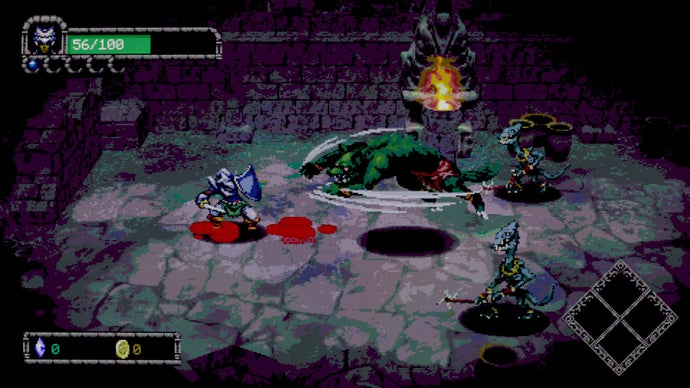
Dungeon crawlers conceptually appeal to me as a genre, but I've never quite found one that I've entirely clicked with. I'm talking oldschool dungeon crawlers here, where you take each step as it comes. I want to crawl some dungeons! Perhaps just not like that. Hopefully, Dungeon Lurker, with its crunchy dark fantasy pixel art and muddy, deep sound effects, will be able to make the difference.
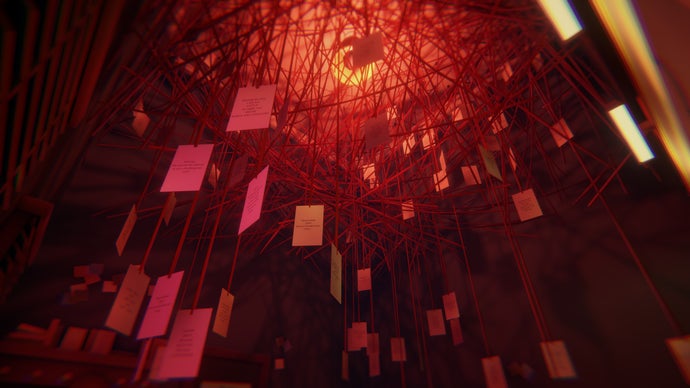
I am intrigued by Farsight, a nervy (if trendily) liminal space explorer announced at Not E3’s Horror Game Awards Showcase. It tugs on a fear I’ve never had, but will probably start thinking about at every future Specsavers visit: being dragged into that distant red-roofed house shown in optometry exams, and hunted by the spooks within.
However, I’ve also recently been made aware of another first-person, eye-related psychological indie thriller, Time to Wake Up. And, well, this one has a Steam demo, so...
There are plenty of philosophical critiques to be had of The Witness (and its creator at large), but there was something still quite appealing about the idea of a world harbouring puzzles in unexpected places. Thankfully, there's a new one of those on the way that can knock The Witness off of its podium called Red Frame, a time manipulation game set in a buried mansion where if you can see something that might look like a red frame, you're certain to find a puzzle.
There is no abundance of train sims in this world, that's for sure. But I am a person that likes two cakes, so you won't find me complaining when a new one rocks up. Today, that new one is Running Train, a quite lush looking train sim that places a big emphasis on looking as realistic as possible, set in tourist's and gaming's current favourite destination, Japan.
"Since the last round of EMTERR ‘stabilisation’, they’ve been trying to force us lifers out," the phantom line engineer tells Zero Parades protagonist Hershel Wilk. "We can’t be fired, not easily, but they can take away the work that made us stay in the first place,” he continues. “I have two options. I could falsify my reports and declare line 9 safe for construction anyway, or I could quit. Either way, the company can’t lose."
Approximately 15 minutes later, I’m talking to a monkey sat atop a pile of goods in a random abandoned house. "YOUR PRESENCE IS WEAK. FATE DELIVERS ME AN UNWORTHY ADVERSARY," it says, before declaring its name to be the KING OF TRADE. Immediately, one of the voices in Herschel’s inner chorus, dubbed Statehood, starts shouting back about needing to defeat the forces of capitalism.
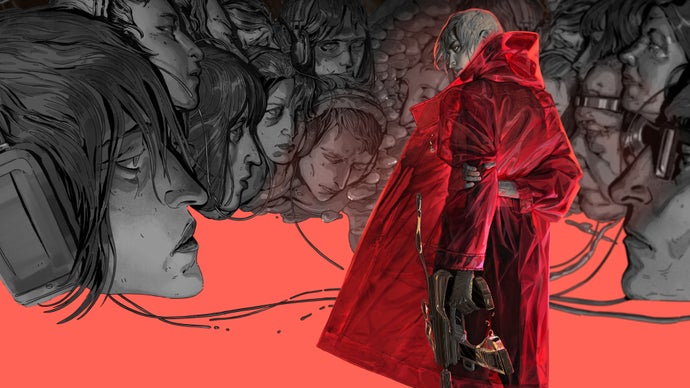
Both of these are scenarios I ran into while playing the Next Fest demo of the spy CRPG finally emerging from ZA/UM, following years of reported bad times and discord at and around the Disco Elysium studio. Both of them feel simultaneously like encounters you could plausibly have run into in the original Disco, and like they could just as easily be pale imitations dressed up to resemble that first game’s much quoted trenchcoat of surrealist detecting.
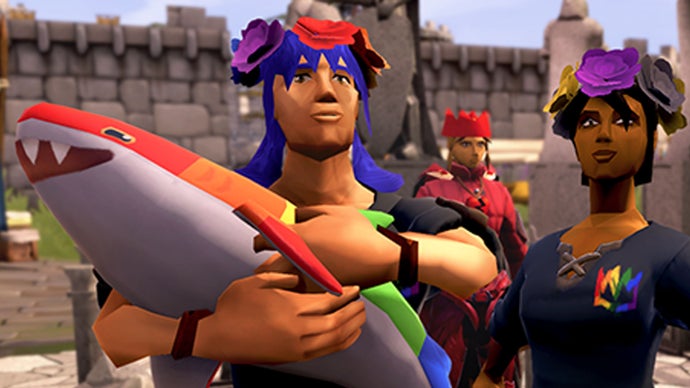
Last June, Jagex - the developers of medieval MMO Runescape - found themselves at odds with players after deciding not to create any new content for Pride Month. Disputed internally at the studio before the discussion then leaked online, the decision appeared to be a retreat in the face of a world turning on minority groups.
Following up in September, Games Industry asked Jagex CEO Jon Bellamy if he stood by the call to simply re-run existing Pride-themed quests and events. "Ultimately, my job is governance and protection as much as anything else, and so sometimes those kinds of harsh decisions have to be made to protect the imminent future of the game," he told them. "If there are tough decisions to be made next year, we'll make them. If the world has changed a bit and the environment is different, we will react accordingly."
Five months on and with this year's Pride Month on the horizon, we've asked if the environment is different.
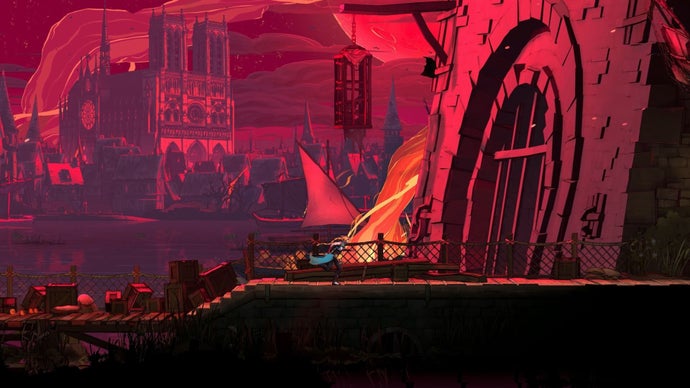
Sharpen your fangs and chuck out all of the garlic bread in your house, Castlevania's back with a new game co-developed by the folks who made roguelike-Metroidvania Dead Cells. Castlevania: Belmont's Curse is the name of this fresh bout of vampire whippage set in medieval Paris, which publishers Konami have teased is just the first of many Castlevania things they have coming as the series turns 40.
If you’ve ever wanted to explore Second Life without installing a heavy desktop viewer, Speedlight Viewer might be the perfect solution. It’s a browser-based viewer that lets you log in, explore, and chat—all from your web browser.
I recently decided to test Decor Forge, a gather-and-crafting RPG in Second Life, using Speedlight Viewer. The experience was interesting! While some visual effects, like sparkles on resource nodes, didn’t appear (making resource gathering a bit tricky), I could still explore the world, interact with others, and enjoy casual gameplay.
Why Speedlight Viewer is Great
Browser-Based: No downloads or installations required—just open it in Chrome, Firefox, or your favorite browser.
Explore & Chat: Move around, meet people, and socialize without a heavy viewer.
Lightweight UI: Perfect for quick access or casual Second Life sessions.
Accessible Anywhere: Works on computers where a full viewer isn’t practical.
Limitations
Graphics: Some effects, like sparkles in Decor Forge, don’t appear.
Features: Advanced building or scripting won’t work well.
Performance: Browser viewers can lag in crowded areas.
My Recommendation
If you want to test Second Life in a browser, chat with friends, or casually explore, Speedlight Viewer is ideal. It’s not perfect for heavy crafting or advanced gameplay, but it’s a lightweight, accessible way to experience Second Life.
As the Bob Dylan song goes, how many lush alien planets must a Man presumptuously land on and turn into poorly optimised Toyota plants before he finally decides he’s sick of being an extractivist piece of shit? Dylan was being rhetorical, but I studied at the school of Homer Simpson, and want you to give me an actual figure. I’m going to say: four and a half. If you’ve yet to hit your personal quota, well, here’s StarRupture out now in early access.
A nice, juicy nine-minute-long Styx: Blades of Greed gameplay trailer has been plucked from the tree of stealth games today. Juicy in the sense that nine minutes is plenty of time to help ascertain whether a game looks like it could be fun, yet if we're sticking with this metaphor this is one of those apples that's really good but has a nasty bruise on it you have to avoid.
Oodles of games are coming out in 2026, and many look impressive. There's the new Resident Evil, yet another reimagining of Tomb Raider 1, and a 007 game that reminds me of the often-forgotten cartoon series James Bond Jr. All will probably be decent, and some might even dictate my guide writing duties.
While the old saying goes 'A game in the basket is worth two in Steam Wishlist', as we teeter into a new year it's good to highlight a couple of the games shuffling our way. Especially when there are quite so many of them that include big stompy mechs. Some of them as big as cities. My engine oil-starved heart beats and thumps in anticipation.
I've tried to keep the list to games confirmed for release next year – tragically cutting The Free Shepherd, which is planned to release in 2027 – but there is one exception.
So let's begin with the outlier that's likely to wander tardily into 2027.
A recap: of the seven hopefuls I slipped into our bulk 2025 list of "Oh, that looks alright" games, only three actually released in 2025, and one of them wasn’t very good. If it’s the hope that kills you, I am therefore dead four, arguably five times over. Real Necron shit, honestly.