Rubbing shoulders with factions is a big part of the Fallout: New Vegas charm, even if it often devolves into you doing a bunch of favours if you don't want to risk ending up on the vilified naughty list for one too many accidental grenade pickpocktings. You do get some nice perks for keeping the likes of the NCR or Legion on side, but a new mod aims to take that to a new level, letting you send faction cronies out on handy odd jobs while you kick your feet up.
The second series of Amazon’s Fallout adaptation has now fully emerged from the vault, its eight episodes having been plinked out gradually, rather than whipped out in one fell swoop. Naturally, one of us has taken in the show how its distributors intended, injecting a stimpak a week in calm and measured fashion. The other waited until all the episodes were out, and then injected them all at once like an unhinged adventurer blowing through half their chem stash in a mid-fight panic. I’ll let you try to work out which is which, here’s our verdict.
Major spoilers for season 2 of the Fallout TV Show lie ahead.
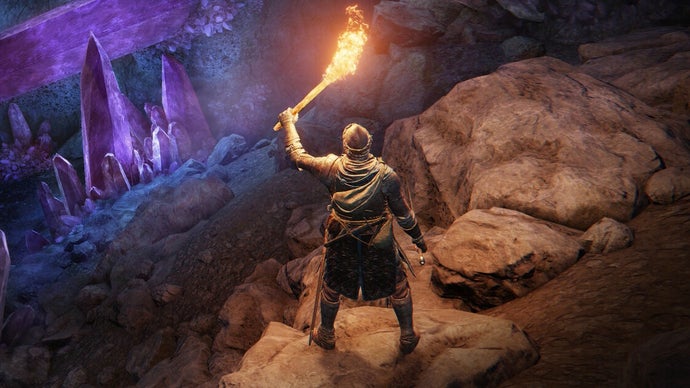
Elden Ring Nightreign is a pretty sweet co-op game full of surprises. It also has one of the best original soundtracks of 2025, and that includes its Forsaken Hollows DLC. Sadly, we were barred from putting together the ultimate FromSoftware-made Soulslike playlist until the expansion's music was made officially available. Now, the wait is finally over.
Code Vein II, launching for PlayStation 5 on January 30, is the newest entry in the dramatic exploration action RPG series, Code Vein. Set in a post-apocalyptic future, it depicts the drama of Revenants and humans who fight to defy their doomed fate. Players confront relentless foes and treacherous locations alongside a trusted partner, while their choices rewrite history and shape the destinies of both the world and its characters.
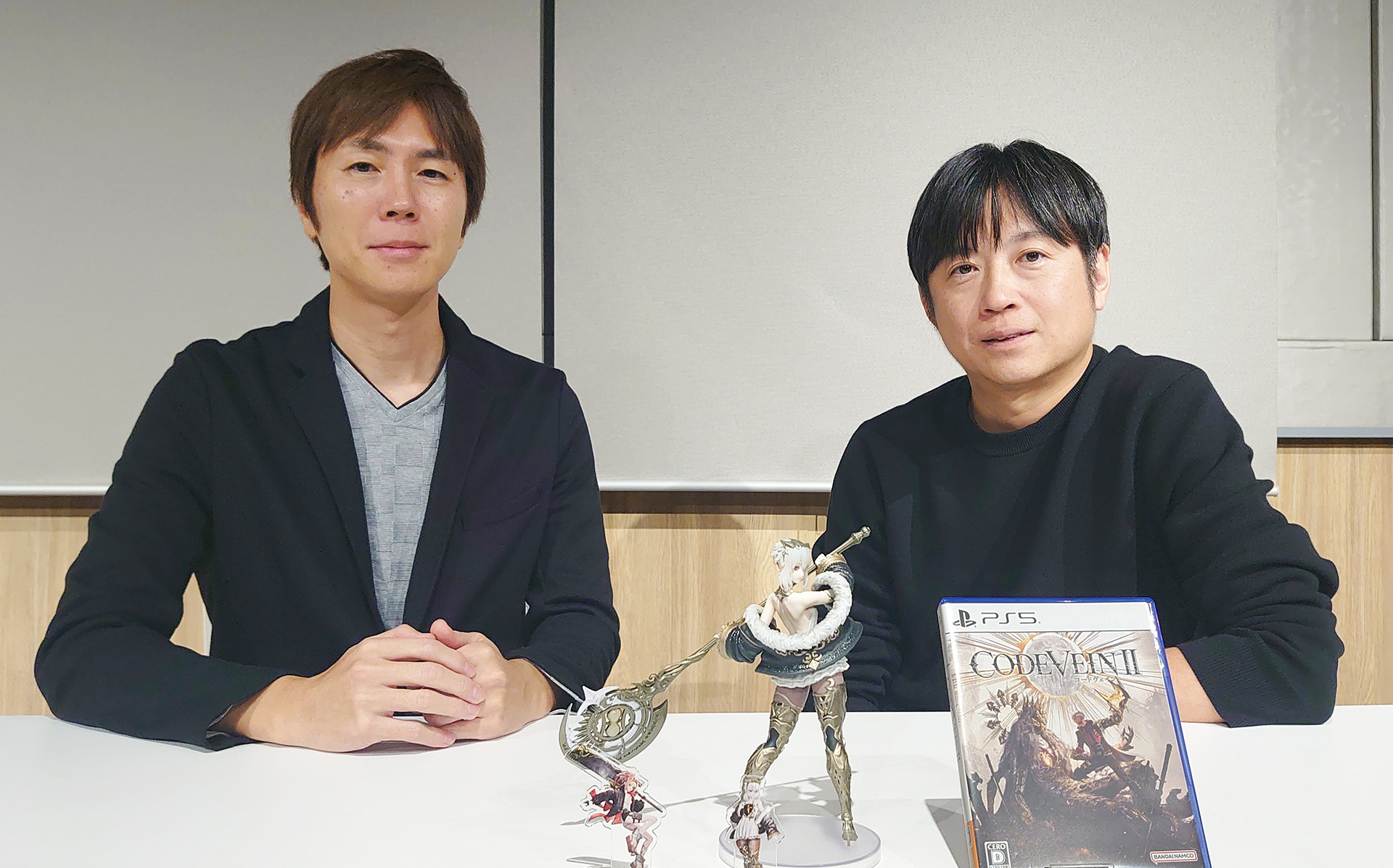
We recently got a chance to go hands-on with the upcoming title and have a chat with the game’s producer, Keita Iizuka, and the director, Hiroshi Yoshimura.
Keita Iizuka, Producer, Bandai Namco Entertainment (left) & Hiroshi Yoshimura, Director, Bandai Namco Entertainment (right)
Follow a hero’s journey that transcends time to rewrite fate and history
PlayStation Blog: Your studio has worked on action RPGs like the God Eater series, the Tales series, and Scarlet Nexus. What aspects did you focus on to set this title apart from those games?
Yoshimura: I think one of Code Vein’s defining features is its challenging difficulty.
Iizuka: Another crucial aspect of Code Vein is that you can only bring one companion on your journey. Even when facing deadly environments or powerful enemies where a single mistake could mean death, it’s just the two of you. That may feel isolating at times, but the unique bond and trust that form between you and your partner is unique to Code Vein.
Yoshimura: Code Vein also places a strong emphasis on creating a world grounded in realistic backgrounds. The team made thoughtful design choices to blend anime-style characters naturally into these detailed environments. This commitment to a distinctive visual style is another hallmark of the game.
Yoshimura-san, back when you were developing God Eater 2, you talked about how you organized your ideas by carefully putting them into words. Did that approach carry over or influence your work on this project?
Yoshimura: The “verbalization method” I used during God Eater 2 has been applied not only to this title, but also to the previous Code Vein. It involves the enormous task of writing out every game element and clarifying how they connect to one another. We repeatedly iterated on the core action systems from the prototype stage. As projects grow in scope and development periods stretch, the market and player expectations keep evolving. If the team does not continually update its mindset during development, the game risks feeling outdated by the time it launches. The action in this title is the result of extensive iteration; while respecting and carrying forward the sense of camaraderie with your buddy that was so well received in the previous game, we rebuilt the system around two new strategic concepts – “Summoning,” where you fight alongside your partner, and “Assimilation,” where you become one with them. We hope players will enjoy this new approach.
When it comes to the game’s worldbuilding, were there any elements you carried over from the previous title or specific aspects you chose to emphasize?
Yoshimura: Code Vein II establishes a new setting while still retaining core elements from the previous game. Because this title is built around the idea of rewriting history, directly linking it to the previous game’s world would risk overturning the established history and player experiences. That said, it’s not an entirely separate world either; fans will notice familiar items, weapons, gifts, and other small callbacks scattered throughout the game.
During the hands-on demo, the design differences between Josée as your Revenant buddy and as a boss really stood out. What’s the concept behind the Revenant’s bosstransformations?
Yoshimura: Those design differences are intended to make players wonder what happened to the character. While their appearance changes drastically, there are still subtle elements shared between the two forms. You might miss them during battle, but as the story unfolds, you’ll begin to understand the reasoning behind the transformations. We’d love for players to look back at the character designs after those revelations.
Player choices play a big role in this game. Does altering history result in multiple endings?
Iizuka: The core gameplay revolves around traveling between the present and past to progress the story. When you intervene in the past and return to the present, relationships with characters or the world itself will change. The game has multiple endings, so even after reaching one ending, you can go back in time to alter it.
Yoshimura: It’s a pretty unique structure. There are multiple endings, but the way players approach them is different. What really defines this game is how players actively shape the story through their own choices.
Iizuka: There’s also New Game+ that lets you carry over your levels and certain progress for those who want to revisit the story from the beginning.
The history-altering system must be challenging to maintain story consistency. What were your key focuses or struggles when crafting the narrative for this title?
Yoshimura: I took it on myself, but it was far more challenging than expected. As I built out the narrative, I found myself wanting to push the boundaries further. I want to create living, breathing characters, so I refused to make them act like puppets that were convenient to the game’s system. Maintaining narrative consistency was tough, but character integrity mattered even more. My core rule was ensuring that player experiences were reflected without any contradictions. The complexity made it difficult to convey my vision clearly to the team, so I just powered through it myself (laughs).
Iizuka: The story went through extensive rewrites. However, the final version achieves solid consistency and a smooth flow, making the history alterations feel seamless without any sense of disconnect.
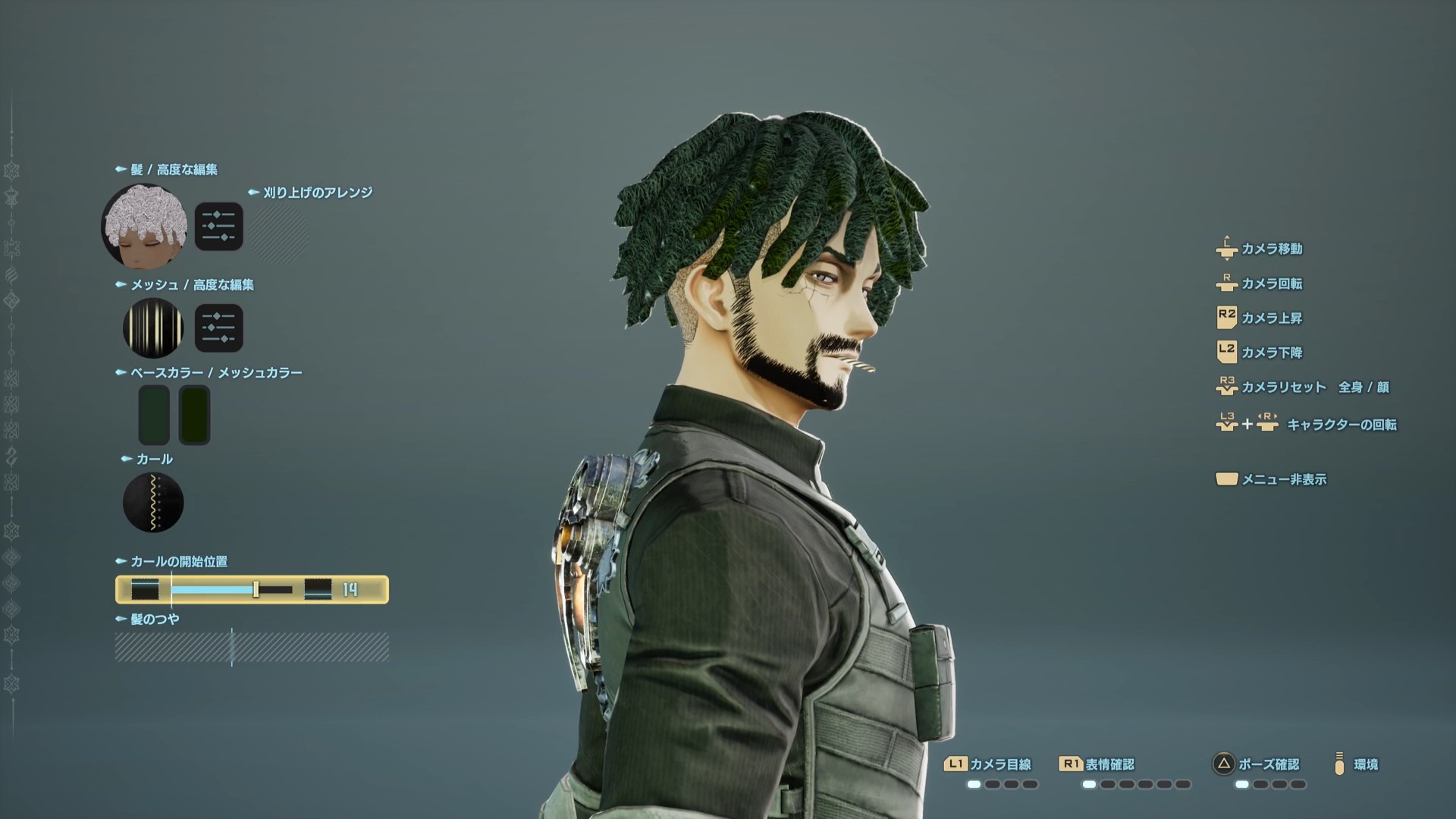
Character creation has expanded with adjustable body types, new hair options and broader gradient options. You can mix-and-match outfits with on/off toggles to unlock even more variety. Cloaks and hoods are separate parts of vampire gear, and there are no longer accessory cost limits.
What are the standout features of the new Rune Blade and Twin Blades? Are there any changes to weapons carried over from the previous game?
Yoshimura: The Rune Blade is a tricky weapon that leverages formae power to levitate swords. With specific formae, you and the blade can move independently to attack, pulling off solo coordinated assaults. Twin Blades, held in both hands, prioritize speed and spin. It was highly requested by fans of the previous game, so we’re excited for the new addition. In Code Vein II, you can stack wounds with every hit to maximize Ichor from blood drains, so hit count is key.
It’s difficult to pinpoint changes to the five returning weapon types, but the animations have seen a major quality upgrade, so nothing feels exactly like the previous game. Every move, from weighted swings to combos, has been fully rebuilt to match the elevated animation standards.
Iizuka: This game now lets you equip formae directly onto weapons, with many more type-specific options. This makes tailoring builds to each weapon’s strengths far more intuitive than in the previous title.
Code Vein II maintains the core elements of its predecessor, but it feels more like a standalone action-RPG than a sequel. That’s because it greatly expands on the series’ combat systems and ideas to offer a huge amount of customization, while telling an all-new story about vampiric characters called Revenants that’s not linked to the original Code Vein.
I recently got a chance to go hands-on with Code Vein II to check out its new systems, its time-traveling story, and its tough-as-nails bosses. Here’s everything I saw along the way.
A host of combat options
At first blush, Code Vein II feels similar to other Souls-like games, as well as to its predecessor. You can fight with a host of weapons ranging from huge greatswords to fast, gun-mounted bayonets and, new to the sequel, dual blades. Hitting Square gives you a fast, weak attack, while Triangle fires off a stronger, slower one. You can also dodge with Circle and block attacks with L1 to lessen the damage you take, or parry blows completely if you hit L1 just as an attack lands.
Where Code Vein II sets itself apart is in all its combat options. For starters, for each weapon, you can equip four special abilities called Formae; one for each of the face buttons. Holding R1 and hitting one of those buttons activates the Forma equipped to it.
Formae come in three different categories — Combat, Magic, and Support — and they all have different uses in battle. One might give you a powerful attack, while another can help you dodge out of the way of an enemy before striking back when there’s an opening, and another might cover a patch of ground with flames.
Draining your foes
Powering your Formae attacks takes Ichor, and like in the first Code Vein, you only have so much. You steal Ichor from enemies by activating slow but powerful Drain Attacks when you hit or hold R2. These strikes use special weapons, Jails, and, like the Formae, each is useful in its own specific way.
Jails can be equipped like other weapons in Code Vein II, and I tried several to see how they mix with different builds and abilities. The Ogre Jail is a huge claw that slashes away at enemies, while the Hound is a pair of dog-headed gauntlets that latch onto and bite enemies.
Another Jail fires off like a scorpion tail, giving you lots of range, while another lets you send a horde of tiny bats to tear at enemies. Each Jail has particular attributes that fit different Blood Codes, the central aspects of a build that determine your character’s fighting style.
Between weapons, Formae, Jails, and Blood Codes, there’s a huge amount of customization in Code Vein II’s combat.
An adventure through time
The world of Code Vein II lies on the brink of destruction. The only way to save it is for you, the protagonist, to team up with a Revenant named Lou with the ability to travel through time. The plan is to head 100 years into the past to just before an event called the Upheaval, where you can hopefully alter history to stop a world-ending force called the Resurgence.
My preview started on MagMell Island in the present, where humans and Revenants were holed up, fighting to survive. But in the past, the place was under attack from bandits, forcing me to fight my way through its corridors and join other characters as they worked to defend it.
The second level, a dungeon called the Sunken Pylon, was ruined, flooded mall into the ground — a place now overrun by Horrors, the corrupted former humans and Revenants created by the Resurgence. In both levels, there are often side paths with tough, optional fights and hidden rewards to find. Often, you’ll loop back to an earlier checkpoint by unlocking shortcuts and elevators in classic Souls-like style.
Gaining Partners
Time travel also lets you meet characters from the past and team up with them. Partners are a major part of the series, but Code Vein II adds new aspects to the system. Your computer-controlled ally will fight by your side, making them great for taking on multiple enemies or distracting a boss so you can heal. But you can also “assimilate” your partner, fusing the two of you together to give yourself a stat boost while your partner is off the field.
You can activate assimilation whenever you want, making it a handy part of your strategy, assimilating to pull off a few high-power moves before releasing your partner back into the fight.
Partners are also something of an extra life. When your health runs out, your partner will revive you and briefly disappear. If you can stay alive long enough, a timer will run down, bringing your partner back into the fight.
Code Vein II’s story hinges on your partners, with the Sunken Pylon focusing on Josée, a Revenant hero wracked with guilt over the death of her twin sister. After channeling Josée’s memories to unlock her past, the dungeon culminated in a battle with the vicious Horror responsible for her sister’s death.
Battling the Metagen Remnant
At the bottom of the Pylon was the Metagen Remnant, a colossal creature that showed how brutally tough Code Vein II’s massive bosses can be. The trick to the fight was to get in close, dodging the Remnant’s enormous, burly arms, and then hitting it in the face whenever there was an opening — while also being careful not to over-commit and get pummeled.
Even once I had the hang of what the Metagen Remnant could throw at me, it was an arduous battle. Bosses have huge health pools and lots of deadly tricks up their sleeves. But if you can hammer them hard enough, you can stagger bosses just like other enemies, allowing you to perform Special Drain Attacks to do massive damage.
Taking on Josée
The last part of the preview, and the final boss fight, saw Lou and me returning to the present to complete our true goal. During the Upheaval, several heroic Revenants used their life force to seal the Resurgence, but the calamity facing the world is a result of those seals weakening. In order to stop it, we need to release the heroes — now corrupted into horrible monsters — and defeat them.
Joséewasn’t exactly as we remembered her; she was now a towering, katana-wielding, armored warrior. Her fighting style is all about fast, sweeping attacks, and using a status effect that can root you to the ground and leave you open to strikes. I had the most success battling Josée with speed, pummeling her with fast attacks and staying light on our feet to dodge her strikes. But like the Metagen Remnant, Josée puts up a serious fight, making it clear that Souls-like fans are going to need to hone their skills to defeat Code Vein II’s toughest challenges.
Altering history
The boss fight is a tragic addendum to Josée’s tale. But as Director Hiroshi Yoshimura mentioned during the event, after beating Josée, you’ll potentially have the option to return to the past and change her fate. That might give you the chance to save her, but it could put your overall mission at risk, too. While I didn’t get to see how the timeline might change in Code Vein II, it’s clear time travel is a big part of how its deep story will unfold.
Code Vein II has added a lot to its predecessor’s foundations, offering versatility in playstyles and plenty of options with your partner, your weapons, and your Formae. But the most interesting part might be its time-hopping story, with the chance to get close to Code Vein II’s characters and, ultimately, change history.
You can see how it all comes together when Code Vein II launches for PS5 on January 30.
A Code Vein II Character Creator Demo will be available January 23 on PlayStation Store, letting you explore the game’s central hub, MagMell Institute, experiment with Photo Mode and try the game’s character customization options. Your custom character can be transferred to the full game.
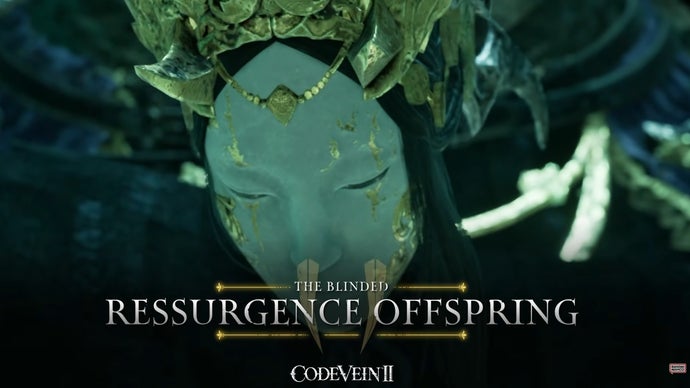
Code Vein 2 is just a few short weeks away now, and to celebrate, Bandai Namco has dropped an all-new teaser trailer entitled "The Blinded Resurgence Offspring".
Game of Thrones author George R. R. Martin would probably be quite surprised by how the world of Elden Ring - which he helped developer FromSoftware create a backstory for - actually turned out in the end.
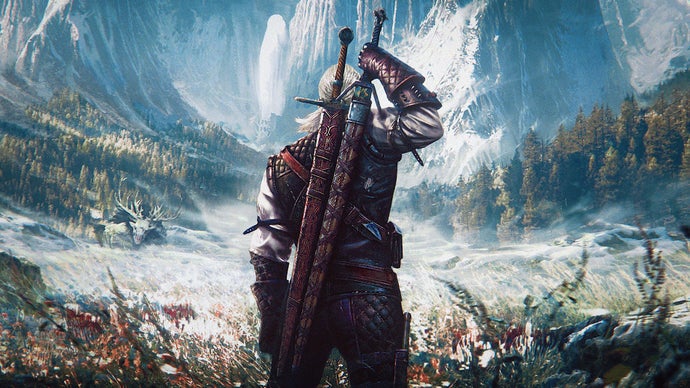
It's been a busy year so far for a game that's over 10 years old. If you've not been following, last week, we asked "is there really going to be a new Witcher 3 expansion this year?", responding to comments from Borys Nieśpielak, a trusted source of Polish games industry information. Following his remarks, a Noble Securities analyst then added fuel to the fire this week.
Netflix has today confirmed that the fifth and final season of The Witcher will air on the streaming service this year. It follows Season 4 in rapid succession - that series having launched at the end of October last year.
The analyst who forecasted a Witcher 3 expansion release in 2026 has told me they're "100 percent certain [CD Projekt Red] will release significant new content this year".
Polish developer Rebel Wolves has unveiled the main musical theme for its promising dark fantasy role-playing The Blood of Dawnwalker, and surprise surprise, it sounds a lot like The Witcher 3.
43.8 million player votes later, the winners of the 2025 Steam Awards have been announced, with Hollow Knight: Silksong securing top prize, Game of the Year.
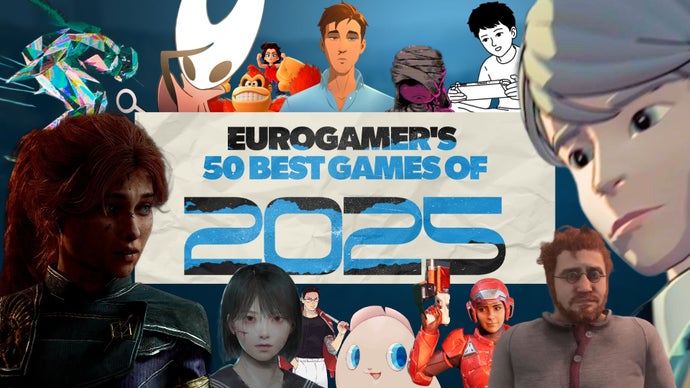
It's been another strange, difficult, and yet somehow also brilliant year for video games in 2025. Triple-A releases have been sparse again, compared to the boom times of old, with a great big GTA 6-shaped hole left in the final few months of the year. And yet once again, every gap left by the established order has been filled twice over with something brilliantly new.
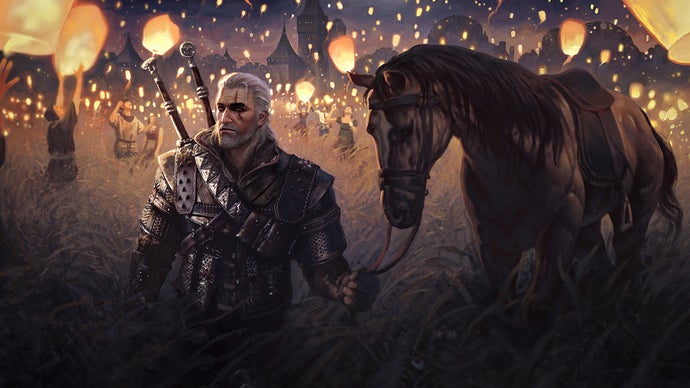
Gerry from the River rides up to a noticeboard for the second time this week. Between contracts, he scans the pinned scraps for a fresh job to take on, only for his eyes to rest on another particularly peculiar bit of prose. 'There's a mysterious extra DLC for The Witcher 3 in the works', this bit of paper claims. 'Oh yeah, I heard about that,' Gerry's brain responds. 'Also, it reportedly might be set in Zerrikania,' says the paper. 'Ooh, that's new,' the Witcherman's noggin thinks.
While it hasn't taken as commanding a stranglehold over the world's collective consciousness as its debut series did, the second helping of Amazon's Fallout TV show is succeeding in helping drive a number of extra Steam players back to the wasteland. That said, a number of said wastelands being heavily discounted as part of the platform's recently concluded winter sale likely hasn't hindered those efforts.
Ah, hello, Prince Arthur. This is King Dutch. Long time no see. We thought today would be a good day for rolling. The katamari. The gunslinger suffering from tuberculosis. Where the first rolls the second follows. Roll, roll, roll.
That, essentially, is the ethos behind a Red Dead Redemption 2 mod which streamer Blurbs created late last year, and has since shown off in a video that's heavy on large masses of horses and pardners being rolled into rootin' tootin' chaos balls.
Gerry from the River rides up to a noticeboard. Between contracts, he scans the pinned scraps for a fresh job to take on, only for his eyes to rest on one particularly peculiar bit of prose. 'There's a mysterious extra DLC for The Witcher 3 in the works', this bit of paper claims. 'Oh, you mean that anniversary patch which was delayed last year?' Gerry's mutant brain asks in response. 'No, seemingly not that one,' the sentient scrap replies.
Gerry grumbles to himself in mild confusion. The RPG's a decade old at this point, and while CD's love of relentlessly adding more stuff to their games is well-documented, they're surely busy focusing on the likes of The Witcher 4 and Cyberpunk 2?