Circan’s November 2025 video game sales report has easily been one of the most anticipated. For one, November is always one of the most lucrative for the games industry, but this year in particular has seen several major hits - including new entries in two rival series.
Game of Thrones author George R. R. Martin would probably be quite surprised by how the world of Elden Ring - which he helped developer FromSoftware create a backstory for - actually turned out in the end.
43.8 million player votes later, the winners of the 2025 Steam Awards have been announced, with Hollow Knight: Silksong securing top prize, Game of the Year.
It's been another strange, difficult, and yet somehow also brilliant year for video games in 2025. Triple-A releases have been sparse again, compared to the boom times of old, with a great big GTA 6-shaped hole left in the final few months of the year. And yet once again, every gap left by the established order has been filled twice over with something brilliantly new.
Elden RingDirector Hidetaka Miyazaki has revealed during an interview with Game Informer that much of the game world in the fantasy epic had evolved during development that collaborator George R.R. Martin would be surprised by how it turned out.
The Game of Thrones author helped craft the world and characters of Elden Ring during its planning stages, although these were largely shaped by FromSoftware’s narrative team. As such, Miyazaki-san feels that Martin would be surprised by some of the changes as they were quite significant compared to what was originally planned out.
The Dark Souls creator explained the reason for taking over is because “as a player walks through this world, […] they have a very fragmented understanding of the lore, the surroundings, and the type of monsters, whereas I don’t.” He added that it’s important Elden Ring’s biggest moments “aren’t lost,” which is achieved by bringing “the map and level design” together “to serve as a guide, to help players pick up more information and piece together what they think that world is.”
Today the overwhelming majority of workers at Doom studio id Software – 165 of around 185 total employees – announced that they’re forming a wall-to-wall union in conjunction with Communications Workers of America (CWA), the union that’s aided thousands of game workers across Microsoft in organizing.
"id Software is historically important – one of the more famous American studios that survived a length of time that few others have,” id Software producer Andrew Willis, who was part of the organizing effort from the jump and filed the initial paperwork to CWA, told Aftermath. “So it feels really awesome to get this done for something with such historical and cultural importance."
"With Bethesda unionizing, it was a push for people [at id] to start talking, and that's when it started,” id Software lead services programmer Chris Hays told Aftermath. “But then the big push that got it rolling was the closure of Tango [Gameworks] and layoffs within Microsoft at Arkane Austin. It was a wakeup call for a lot of people. People decided that it was time that we took our future into our own hands."
"The big push that got it rolling was the closure of Tango [Gameworks] and layoffs within Microsoft at Arkane Austin. It was a wakeup call for a lot of people."
id itself, Hays said, has suffered “a few” layoffs “here and there” in recent years, but nothing comparable to the scale of Zenimax Online Studios, which lost hundreds of employees earlier this year amid Microsoft’s latest round of mass layoffs and project cancellations. Now, he believes, is the time to secure workers’ rights – before the scythe swings, as opposed to after.
"Not that we're not scared that [layoffs] will one day come," said Hays. "In fact, avoiding each of the previous rounds has made us more anxious about if the next round will be us. And the most recent round of layoffs happened after several [studios] had already organized. People [at id] can see what it was that they got. We got to see them negotiating where they didn't actually lose their jobs [for a couple months]. They were still on payroll. They still had their health insurance. ... They had the extra time to make sure they could get their lives [in order], and many have actually gotten their jobs back through negotiations on where they could place people in the company."
CWA has been able to successfully unionize so many studios within Microsoft and Activision Blizzard in large part due to a legally binding neutrality agreement it struck with the company in 2022 when it was facing regulatory scrutiny over its $68.7 billion purchase of Activision Blizzard. That deal lapsed earlier this year, but according to Hays, only on the Activision Blizzard side of things.
"For us under Zenimax, there's actually a separate neutrality agreement, and that one is still valid until May [2026]," said Hays. "But that was definitely on our minds when we were looking at when we wanted to think that we had enough support [to unionize]. … We knew that it was really special for us to have the neutrality agreement, to have the freedom to be able to talk to each other more openly and not face the kind of pushback you would have in other unionization campaigns. We wanted to make sure that we took advantage of the benefit while we had it."
While the union plans to conduct a bargaining survey before members go to the table with Microsoft to hammer out a contract, preliminary discussions have focused on a few pillars: benefits, remote work, and AI.
"There's a lot of blind spots in our benefits, and a lot of us don't know what we have and what we don't and where things are lacking,” said Hays. “When talking with a lot of people, some would say 'Oh, I think we're lacking this particular kind of benefit, or something around child care.' Personally, I'm really motivated to get protections around remote work and responsible use of AI."
"There's definitely a directive from Microsoft to use [AI] more.”
Remote work has been a sticking pointat multiple Microsoft studios, with many issuing return-to-office mandates despite teams’ demonstrable success collaborating from across the country – and even the globe – in 2020 and 2021.
"We actually launched Doom Eternal during covid,” said Hays. “The month of [the launch], we started our work from home. ... We did a launch event, the whole internet fell apart, and we had to learn how to do all of that remote. And then starting a project [Doom: The Dark Ages] from the beginning, all remote, we learned a lot of lessons. On my team, we learned to change how we work, to be more remote friendly. We ended up becoming more productive as a result. So we've done this before. We've learned lessons, and I think we can continue to use that. We shouldn't just throw away all the great wins we got with remote work."
As for AI, Willis was cagey about precisely how it’s being used within id, noting that going into specifics would involve divulging secrets about proprietary tech. But he said that in his view, some of the current applications are “good,” while others are… less so.
"There's definitely a directive from Microsoft to use [AI] more,” Willis said. “In what ways and how careful they're being about implementing it within the studio to actually benefit the creation of a better game or a more efficient process, I personally don't think that's being done in a careful enough way to have it be beneficial.”
Last year, the Zenimax QA union secured AI protections that commit the company to uses of AI that "augment human ingenuity and capacities ... without causing workers harm" and require that Zenimax provides notice to the union in cases where "AI implementation may impact the work of union members and to bargain those impacts upon request." Willis and Hays hope the new union can make something similar happen under id’s roof.
"We are going to be in a fortunate position in that we have a lot of other people who've gone through this,” said Hays, “so we can look at what they have bargained for, especially around AI, and take that as a starting place, which hopefully means that it's going to be easier for us than anyone before."
"It would be difficult to say [if we’ll make Israel a core bargaining issue] without seeing what the bargaining surveys comment on, but I can say for myself personally that, yeah, I want no part in [Israel's] usage of Microsoft tools and the deals between Israel and Microsoft," said Willis.
"The folks that are in charge of a lot of these decision-making processes, it's a lot of Ivy League MBAs, a lot of folks with zero game experience."
More broadly, Willis believes the union will allow for more input from developers, as opposed to execs who have never shipped a game and, indeed, might not play them at all.
"We see the direction the industry is headed,” said Willis. “The folks that are in charge of a lot of these decision-making processes, it's a lot of Ivy League MBAs, a lot of folks with zero game experience – not just from the management standpoint, but zero experience in actually making games. ... I find little evidence of them really enjoying games or playing games personally."
“I think the more video game studios that unionize, and the greater percentage of video game employees that are in a union, it's not just better for them as individuals or folks that are raising families or have mortgages; it keeps talent from shedding,” he added. “You get to keep people in the industry who have experience and the amount of game credits that allow them to do things and create games that a contract-only or much more volatile workforce simply couldn't.”
The emulator just got even more simplified, which will make it convenient to run games directly from the ISO files. ISO-Based Disc Loading Comes to RPCS3 Emulator, But Only Decrypted ISOs Are Supported The popular PlayStation 3 emulator, RPCS3, just got a big update. Usually, one would need to extract the contents of the game ISO files to allow RPCS3 to run the game, but the new update just eliminated this step. Contributor Functionable submitted the code, which removes a long-standing inconvenience for users who had to extract the disc images into folders to run the game. This might look […]
OK, I'll admit it: I actually quite like the newly revealed Fallout crossover in Black Ops 7. I'm not proud of it, given my past criticisms of Call of Duty's bizarre, totally unrelated collabs. Sure, seeing Ella Purnell call in a UAV or The Ghoul wall-bouncing with a rocket launcher is jarring, but as a fan of Fallout (the games and the Amazon series) they're pretty cool skins. However, I'm not sure liking it is the same as supporting it. I think some elements work well here, but on the whole, seeing Pip-Boys and blue jumpsuits in Black Ops 7 before Season 1 has even wrapped does absolutely nothing to support CoD's mission to be more "authentic."
Why is that a problem? The Call of Duty App doesn’t just include Call of Duty: Black Ops 7, which launched last year to underwhelming reviews due to its campaign. It also tracks Black Ops 6, Warzone, the Modern Warfare series, and much more. Keep in mind that these player counts follow Holiday discounts and even a free week. The sad part is that this isn’t even the lowest in the past week, as it reached 39,015 peak concurrent players on January 8th.
Of course, none of this changes the fact that Call of Duty: Black Ops 7topped last November’s US sales charts (even if Battlefield 6 emerged as the top-selling premium game of 2026). Engagement with the app on consoles in the region was also as strong as ever, only lagging behind Fortnite and eking out ahead of Grand Theft Auto 5.
Nevertheless, Activision has pivoted significantly by announcing that it would no longer release back-to-back Modern Warfare and Black Ops titles. “We will drive innovation that is meaningful, not incremental. While we aren’t sharing those plans today, we look forward to doing so when the time is right.” Its developers have apparently been building the “next era of Call of Duty,” and judging by the current release cycle, it may be Modern Warfare 4.
In the meantime, check out our review for Call of Duty: Black Ops 7here. We gave it a five out of ten for the multiplayer (despite netcode and hit registration issues), and Zombies (despite the overtly safe gameplay loop). The campaign is an utter disaster, but at least Treyarch released an update to let you skip it and go straight to Endgame.
The European Commission (EC) has opened a 'call for evidence' (via LWN.net) to inform the "European Open Digital Ecosystem Strategy." In other words, it's looking for experts and relevant parties to help it figure out how to push towards open source software.
This has the SteamOS-loving and Linux-pining part of myself getting all excitable on a Friday afternoon, because any movement towards open source software can only mean more publicity and acceptance of, and potentially even funding in, open source projects in general, including Linux and its gaming-related off-shoots like SteamOS, Bazzite, and Nobara.
According to the EC, the European Open Digital Ecosystem Strategy it's looking to create will set out "a strategic approach to the open source sector in the EU that addresses the importance of open source as a crucial contribution to EU technological sovereignty, security and competitiveness".
"A strategic and operational framework to strengthen the use, development and reuse of open digital assets within the Commission, building on the results achieved under the 2020–2023 Commission Open Source Software Strategy."
Judging from the aforementioned Commission Open Source Software Strategy documentation, the main goals of this previous strategy was to have teams "build and extend a collection of solutions they can use to run digital government solutions", move the EU towards relying upon this open source software, and develop an internal culture oriented towards open source, as well as promote its adoption elsewhere in public offices.
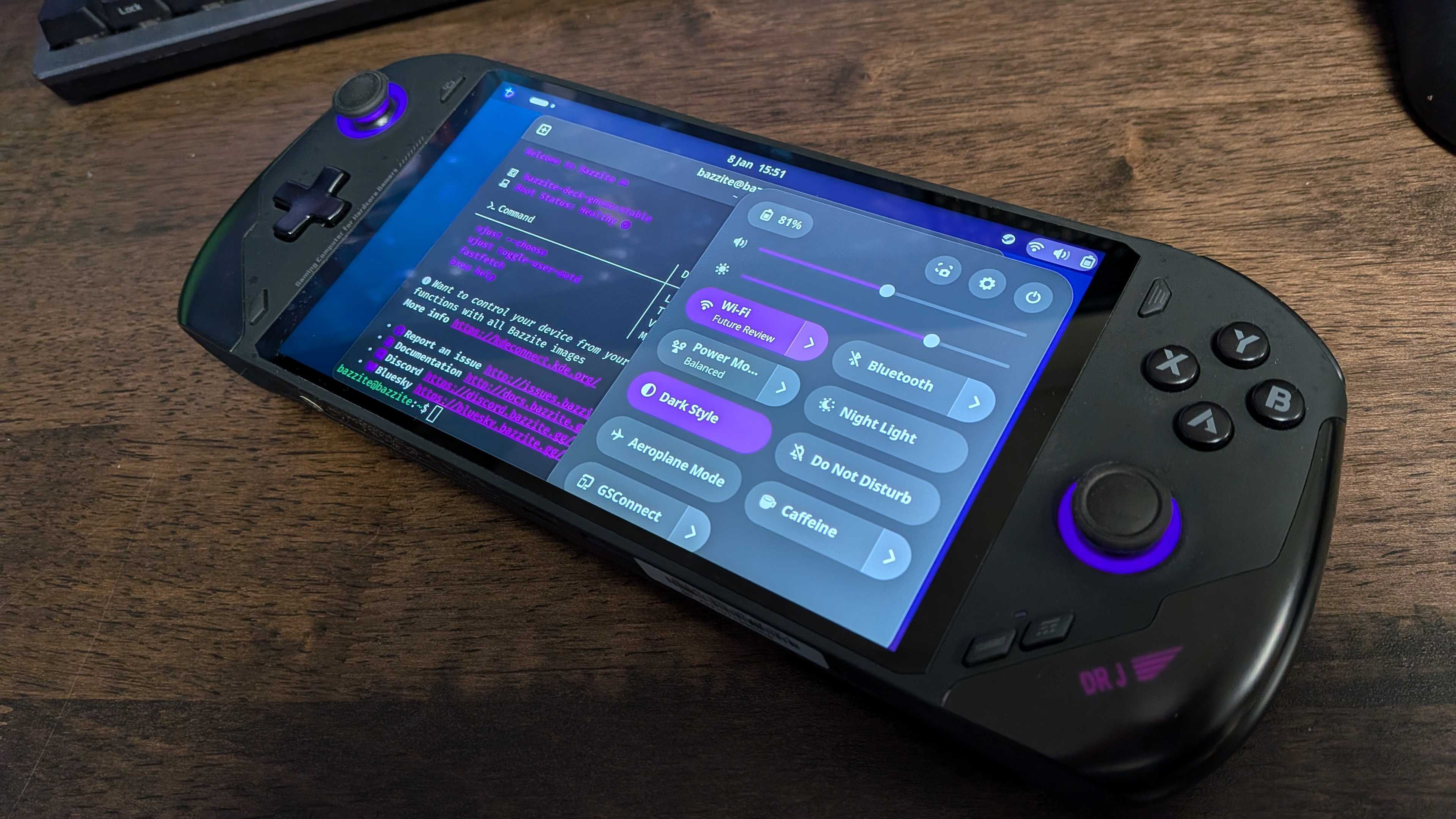
A handheld gaming PC on a desk running Bazzite, an open source Linux OS, on-screen. (Image credit: Future)
In other words, it wasn't a limited push; the Commission seems to really want to lean into open source as much as it can. Which is fantastic, of course, and helps explain this recent call for evidence. To this end, it established the Open Source Program Office to oversee and help implement the push.
The recent call for evidence, however, seems to focus more specifically on solving the EU's reliance on foreign software: "The EU faces a significant problem of dependence on non-EU countries in the digital sphere. This reduces users’ choice, hampers EU companies’ competitiveness and can raise supply chain security issues as it makes it difficult to control our digital infrastructure (both physical and software components), potentially creating vulnerabilities including in critical sectors."
Catch up with CES 2026: We're on the ground in sunny Las Vegas covering all the latest announcements from some of the biggest names in tech, including Nvidia, AMD, Intel, Asus, Razer, MSI and more.
The call for evidence is intended to figure out how to shape its strategy, taking input from the open source community, businesses, public experts, researchers, and more—essentially, anyone knowledgeable and relevant. It's nice and fitting to see that the EC is openly sourcing feedback to help inform its movement towards EU-first open source software.
The EC also wants to ensure the EU is going further in this direction than before. It points out that while it has "invested in open source and its communities, with good results" (for example, through the Next Generation Internet initiative and investing in RISC-V hardware and related open-source software stacks), "supporting open-source communities solely through research and innovation programmes is not sufficient."
All very good news for anyone with an interest in seeing Linux do well, of course, however indirect that path might be—any positive movement towards an open source philosophy can only help open source companies, movements, and products. And given the increasing interest in Linux in the PC gaming industry, mostly thanks to SteamOS, that will be increasingly relevant to us PC gamers moving forwards.
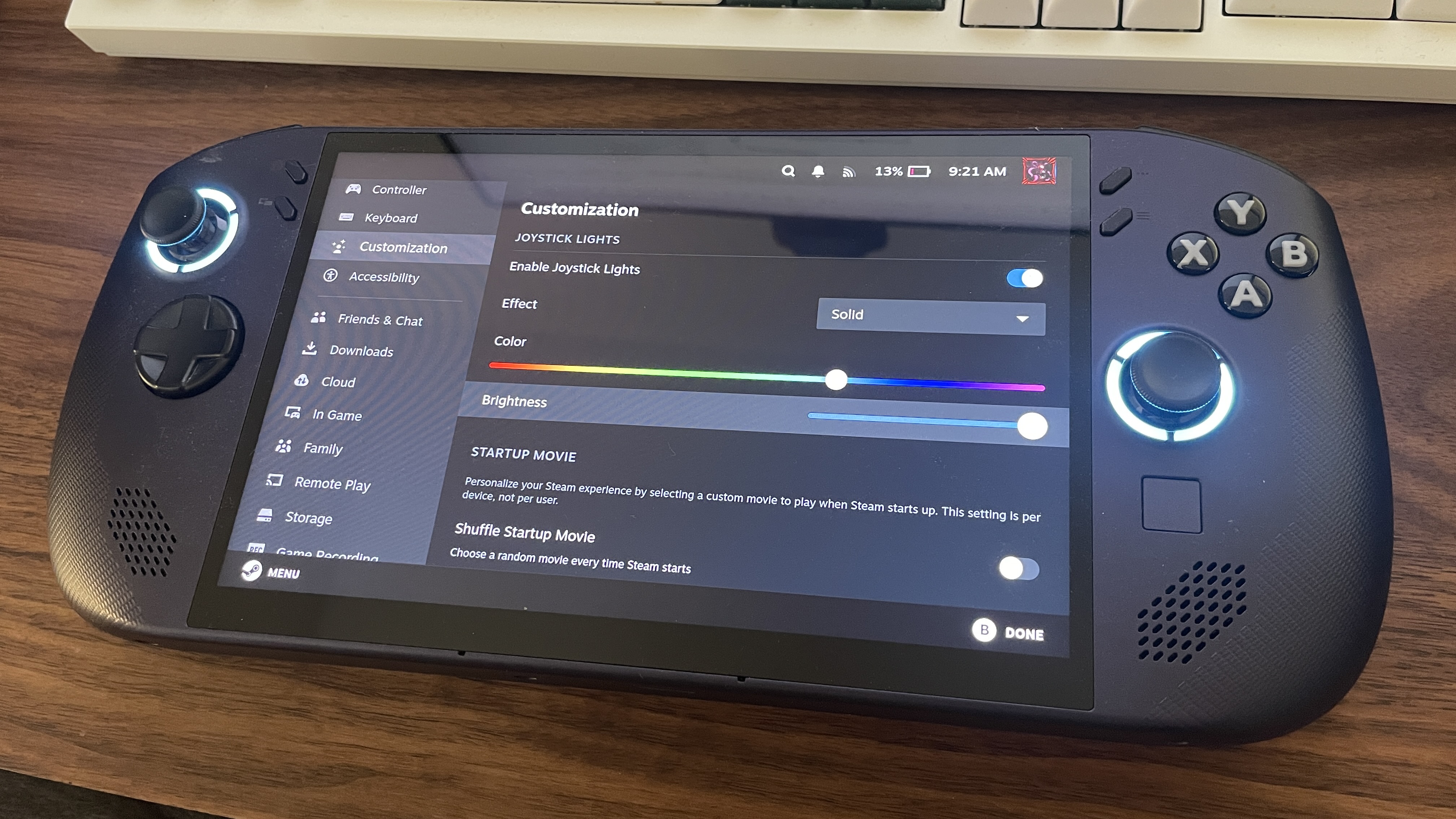
A Lenovo Legion Go S running SteamOS, an open source Linux distro. (Image credit: Future)
Which is a good thing, I think. Whenever I think about open source, I'm reminded of the discussions I had with various experts about age verification and digital ID in general. From the time I spent discussing and reflecting upon those technologies, the one thing I came out most certain of was that the most promising visions of the future is one where technologies are based on open standards.
If we do end up handing our personal data off to verify our identities—an idea I think we should refrain from considering to be inevitable—wouldn't it be best if the codebases, zero-knowledge proof-based or otherwise, are available to be combed through by anyone? And heck, a general open source culture might even encourage us to think beyond solo providers for these services, perhaps considering blockchain-like approaches to such potentially ubiquitous systems.
But I'm getting way ahead of myself. First, we need more open source in general. So, good on you, EC, keep that ball rolling.
Where some are sick of AI usage, others are sick of debate about AI usage. And when it comes to mentioning the use of LLMs in kernel documentation, Linux creator Linus Torvalds seems to be very much in the latter camp.
As reported by The Register, Linux kernel engineer for Oracle, Lorenzo Stoakes, recently critiqued Torvalds, arguing that AI tools are not the same as any other tool and need unique documentation and flagging. Stoakes then replied to Dave Hansen, kernel hacker at Intel, saying, "We're noticing a lot more LLM slop than we used to. It is becoming more and more of an issue."
Stoakes argues LLMs have had a negative impact in many areas, "for which you need only take a cursory glance at the world to observe". Furthering this point, Stoakes says, "Thinking LLMs are 'just another tool' is to say effectively that the kernel is immune from this. Which seems to me a silly position."
This is where Torvalds comes into the conversation. He says, "No. Your position is the silly one. There is *zero* point in talking about AI slop. That's just plain stupid. Why? Because the AI slop people aren't going to document their patches as such. That's such an obvious truism that I don't understand why anybody even brings up AI slop."
Torvals argues that he wants no kernel development documentation to mention AI, as "We have enough people on both sides of the 'sky is falling' and 'it's going to revolutionize software engineering', I don't want some kernel development docs to take either stance."
(Image credit: Jim Sugar via Getty Images)
Effectively, the 'it's just a tool' statement is one that backs up this belief. Torvalds says the "AI slop issue" won't be solved through kernel documentation, and AI documentation is, instead "pointless posturing". It is worth noting that Torvalds does see value in AI tools, as expressed back in 2024.
a. For the tech press to not gleefully report that the kernel just accepts AI patches now since hey it's just another tool.
b. To be able to refer back to the document when rejecting series.
"As to point a., as I said before in other threads, I remain concerned that the second the tech press say 'the kernel accepts AI patches now' we'll see an influx. It's sad we have to think about that, but it's a fact of life."
As is the way within the AI debate, one side argues that accepting AI work as any other directly human created work could open the floodgates for AI agents, and another wishes for it to be welcomed as any other tool. Some within the threads have highlighted patches successfully laid out by AI, but the conversation around it seems much bigger than that. There might be 'zero point in talking about AI slop', and yet the thread has only grown since.
Steam's grip on the PC gaming market is undeniable - in fact, 72% of developers think it has a functional monopoly. As Larian publishing director Michael Douse put it, "It's almost as if it isn't providing a shit service". The Epic Games Store, the Xbox App, Ubisoft Connect, the EA App (why does every publisher have an app?), none of these platforms come anywhere close to matching Steam's generally stellar experience.
That being said, a lack of real competition is the root of complacency, and I for one would like to see Steam continue to improve, especially as it invades the living room with its second and much more promising attempt at the Steam Machine.
So, I rallied some PC Gamers, we bashed our heads together, and came up with a list of nine things we'd like Steam to add in 2026.
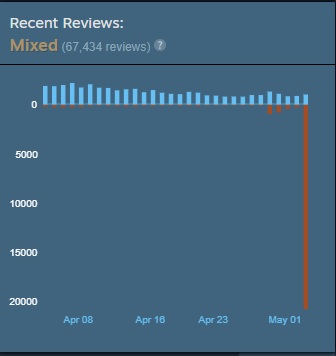
More detailed options for Steam reviews
Can you guess the game? (Image credit: Steam)
Scott Tanner, Senior Video Producer: It’s silly that Steam reviews are distilled into a binary thumbs-up/thumbs-down choice. There are plenty of games I would recommend with major caveats, or ones I’d warn people of that still have redeeming qualities. And that’s without the ones that leave me totally ambivalent. A five-star rating system, or optional scores for specific attributes like graphics, gameplay, and accessibility, would be hugely beneficial for the consumer.
I’m not alone in wanting this either. We interviewed Felipe Falanghe, one of Kerbal Space Program’s devs last year at GDC and he advocated for exactly the same thing. “For me, that’s my primary line of feedback to know what people think about the game,” he said, “and it just kind of sucks that the good and bad binary choice that we get have the same weight if you absolutely hate the game and think it’s the worst thing ever, or if you just think it’s not all the way there yet. Like, that’s the same button.”
Rory Norris, Guides Writer: One of the things that bugs me to no end about Steam reviews is that you can't see players' system specs, so I'd also like to see this information added to the store page. Stuff like graphics card, CPU, and RAM could be optionally attached to user's reviews, so it's no extra work for players. I say optionally because some players might not want to include their specs, and that's fine.
Nevertheless, if I see a review that mentions performance, whether positive or negative, I immediately want to know if I can expect similar results on my own machine. Unless the user handily lists their device's specs of their own volition in the review itself (most don't), you've got little context. After all, system requirements given by developers aren't always spot on, so conveniently attaching this data in reviews would save me a lot of heartache and/or research.
Hell, it could potentially even help developers avoid some unnecessary negative scores where performance woes are unjust, if the Steam reviewer in question is severely under the system requirements.
Store page upgrades
(Image credit: Xbox)
Kara Phillips, Evergreen Writer: I'm sick to death of getting an email every single time a game from my wishlist goes on sale, but I do find myself curious as to how much the price of certain games has varied across different events.
Adding something like a price tracker (akin to SteamDB's) could allow users to be far more informed when buying. Everyone wants to save some pennies when they can, and this would certainly make it easier.
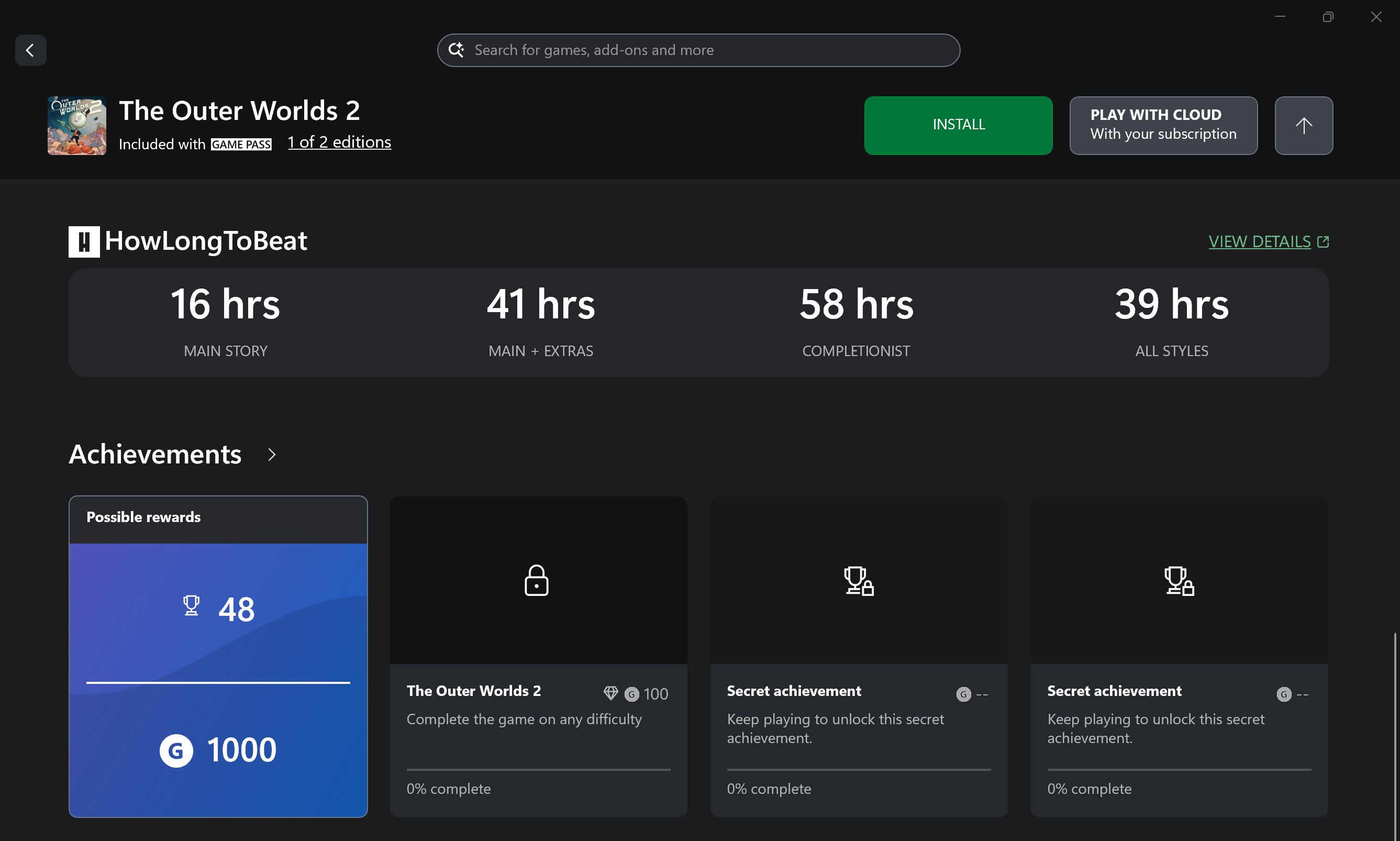
Rory Norris, Guides Writer: Speaking of saving you clicks from visiting out-of-Steam resources like SteamDB, there's another store feature I'd like to see 'borrowed', and it's from the Xbox PC App of all places.
I hate the Xbox App, especially now that it's decided to clog up my library with everything from every other platform I have against my will. I literally only use it for a handful of Game Pass games, Microsoft, I'm not playing my Steam games on your clunky platform even if you take them hostage.
With that being said, this shoddy storefront does have one thing up its sleeve: HowLongToBeat integration. Basically, it uses HowLongToBeat's data to tell you…how long it takes to beat key playstyles in games, like b-lining the main story, an average playthrough, and a completionist run.
I don't normally pay too much attention to how long a game is (any Assassin's Creed will show you size doesn't equal value), but it's helpful to have an idea of whether the game you're contemplating is a 100-hour epic or a short but sweet five hours.
A currently playing section in the library
(Image credit: Valve)
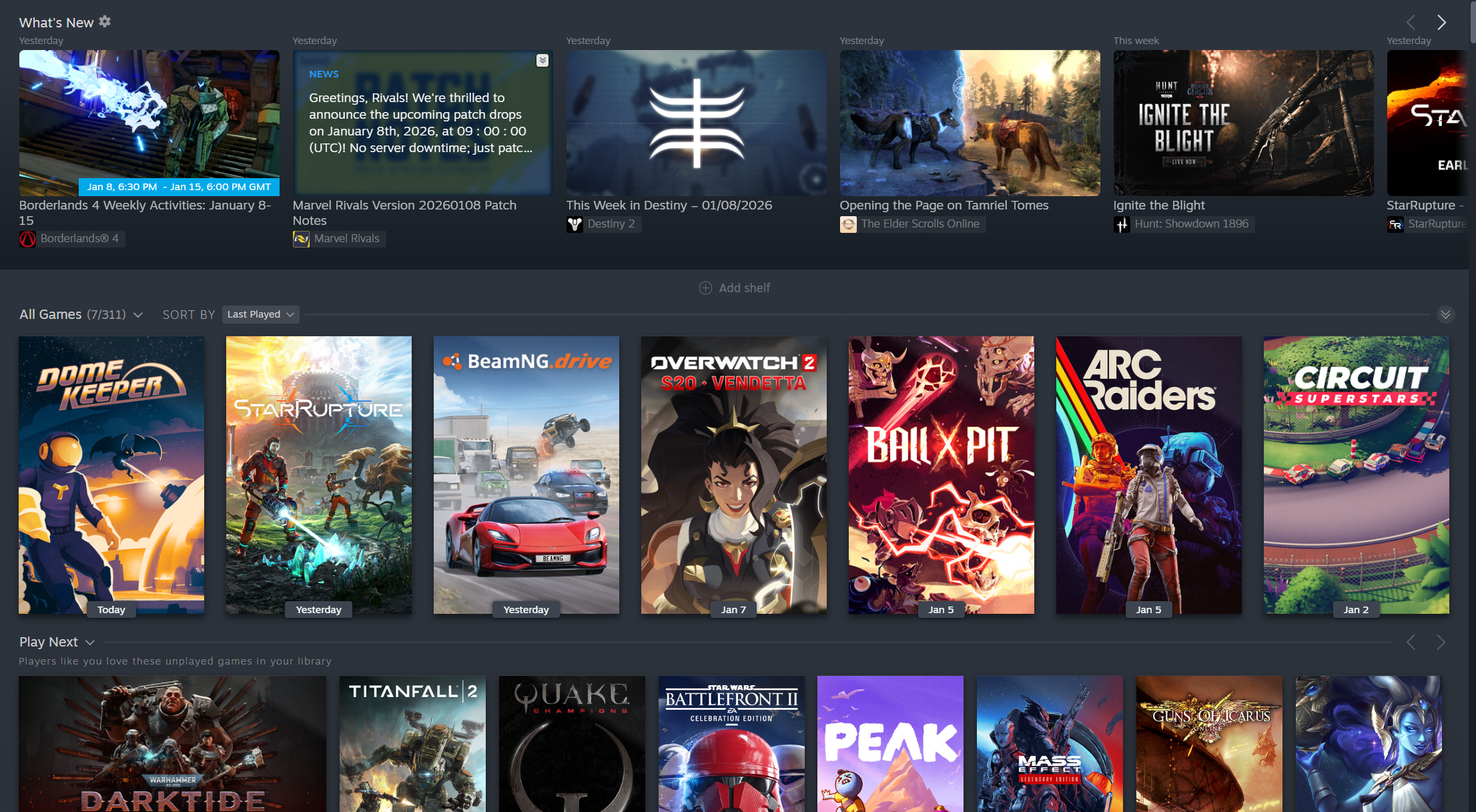
Lauren Morton, Lead SEO Editor: I already wrote about how I think that book tracking apps should learn from Steam but maybe Steam could learn just a little bit from the Goodreads and Storygraphs of my life too. What they've got that we don't is a little section at the top of your dashboard to track what you're currently reading and your current completion progress.
My time with a game isn't always as linear as reading a book front to back, sure. I mean, am I ever not currently playing Stardew Valley? I already sort of mimic this by keeping my "recent games" shelf at the top so I can quickly access whatever I put down last. It would be cool to have a little "currently playing" toggle and dedicated shelf in the library to make it feel a little more special. Maybe it could show achievement percent completion and hours played so far or something. I want my Steam library to feel more like my own command center and less like just a big database.
Achievement categories for streamlined 100%
(Image credit: Valve)
Rory Norris, Guides Writer: While I'm a completionist in the sense that I like to collect every item and do every activity in a game, I've never been too bothered about ticking off all the achievements. Why? Because it's a hell of a lot of effort that I can't be arsed to go through, so I feel the plight of those who are up to the challenge.
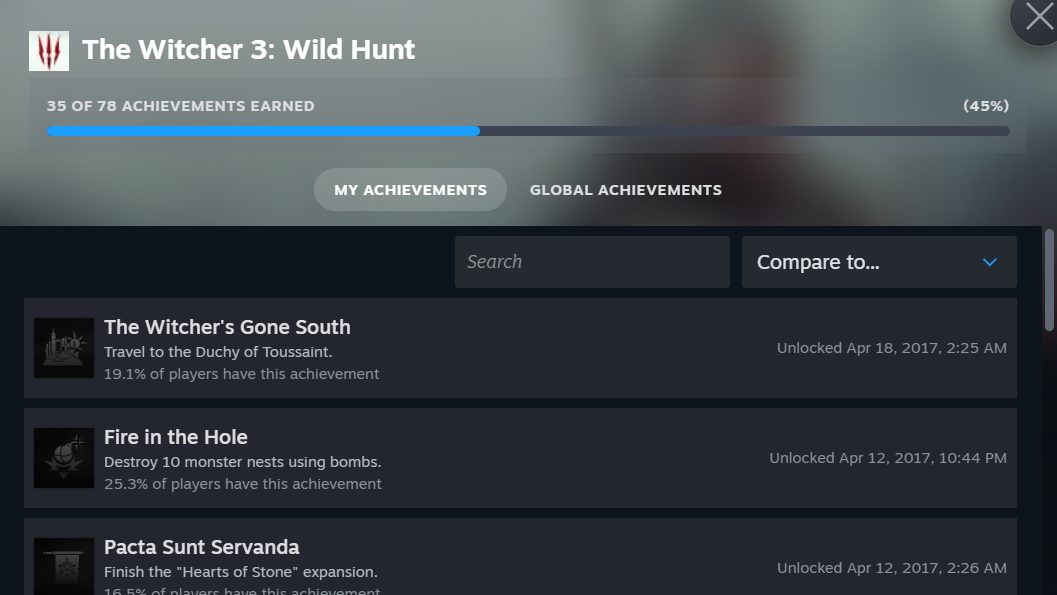
Steam already has a fairly robust achievement system—I love that it shows you the percentage of players that have completed any given challenge—but it's a bit of a mess.
Unfortunately, base game and DLC achievements are currently clumped together on Steam, so it's impossible to 100% certain titles if they have expansion challenges. For example, if you want to 100% The Witcher 3 today, you need to complete the achievements for the base game and its two expansions, Hearts of Stone and Blood and Wine. If you don't own expansion content for any given game, then you're out of luck.
One thing PlayStation does very well is creating sub-sections for later content additions, so you can 100% the base game and expansions separately. Anything to make the arduous task any easier is a plus in my book.
A better way to scoop up unowned DLC
(Image credit: Valve)
Jake Tucker, Editorial Director, PC Gaming Show: Often when I come back to a game after a long time away, I'll duck into the store page to see if there's any good DLC. Sadly this often means navigating nonsense cosmetic DLCs or working out what I already own from the myriad of bundles first. Steam adding a way for me to grab the big DLCs easily would mean I could spend less time buying and more time playing.
Better mod support
(Image credit: Valve)
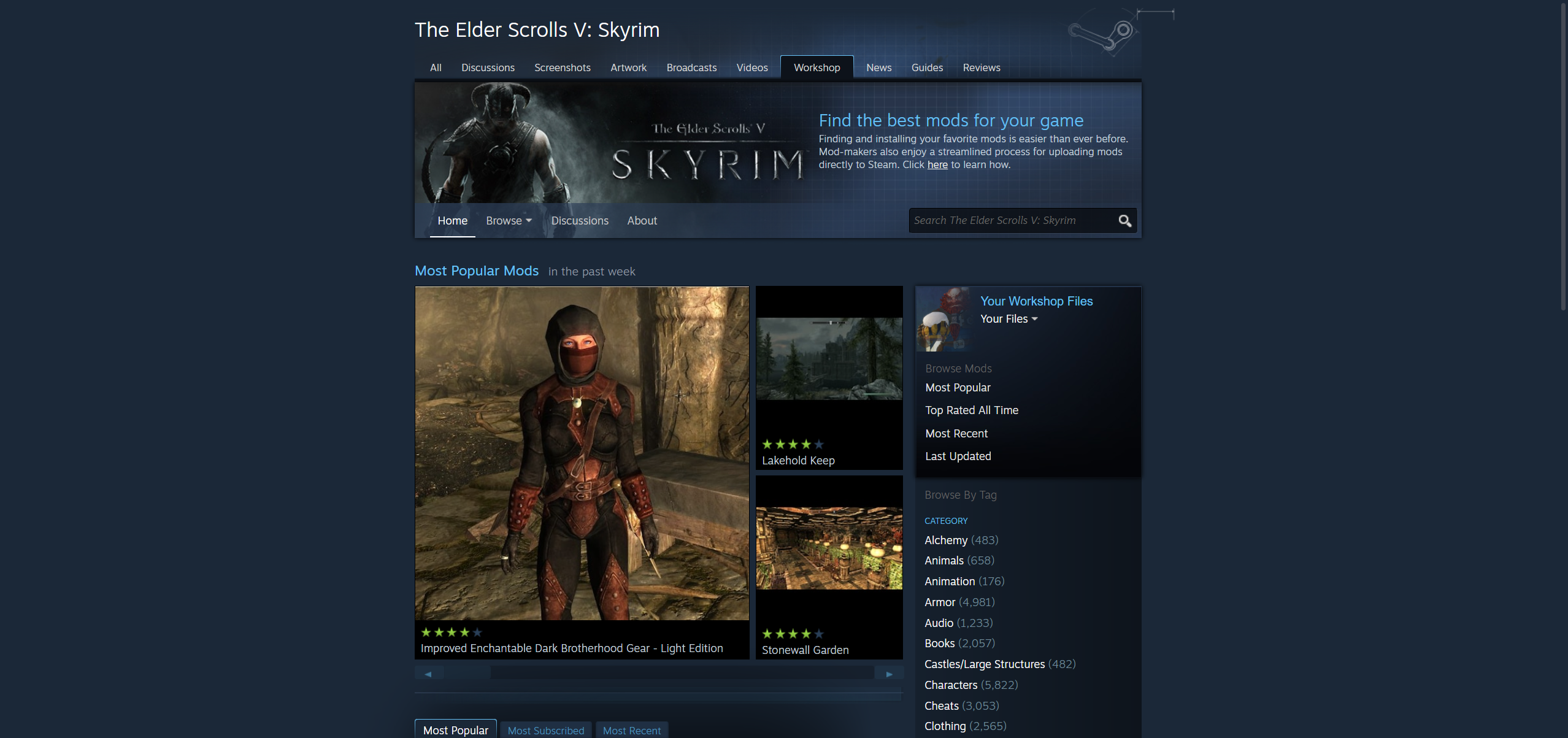
Joshua Wolens, News Writer: Back when Steam Workshop was introduced, sometime just after the dinosaurs went extinct, I had incredible visions of the bright future it promised.
No longer would any install of a Bethesda game be followed, inevitably, by several hours of modding. No longer would I have to keep tabs on 10,000 different mods on 1,000 different sites for 100 different games to see when they got vital updates, or if they got supplanted by a new, better project. Steam was gonna handle it all for me, slotting everything into place at the same time as it downloaded everything else, and keeping it all spick and span in the background.
Well, it didn't work like that. The Workshop is, you know, fine, but even the recent(ish) addition of load orders didn't really bring it up to pace with features offered by mod organisers like, uh, Mod Organizer. Nor is it as widely adopted as I'd like—which is admittedly more on devs and publishers than Valve.
I'd love to see the Workshop get some love in 2026, and particularly, I'd love to see it grafted onto more old games. If I could download New Vegas and have it automatically install the latest and greatest fan patches? I'd be a happy man.
More wishlist controls
(Image credit: Valve)
Rory Norris, Guides Writer: Ahh, your Steam wishlist. In the early days of your account, I'm sure you actually used this as a shopping list for all the games you were planning on getting when they were released or on sale.
After years of adding games to a single list and little in the way of organising it, my wishlist is now a dumping ground that doesn't serve its purpose. Sure, I could go through the 414 games (rather small compared to most users, I reckon), vetting them one by one, but I'm not going to—and no, you wouldn't do that either.
Taking a page out of Steam's own excellent game library organisation, it's high time we were able to create separate collections or even multiple wishlists to house specific types of games. Perhaps I want a wishlist dedicated to games I'm actually going to buy when I can afford to, and another for games that I just think look neat but probably won't ever get around to.
SteamOS for every PC
(Image credit: Future)
Wes Fenlon, Senior Editor: Enough talk about putting things in Steam. Let's talk about putting Steam on things. Since the arrival of the Steam Deck, we've been eagerly awaiting the day Valve releases SteamOS as a full-on Linux distro that any PC gamer can install on their desktop. And, well, we're still waiting.
SteamOS has improved enormously over the last couple of years and added support for thousands more games, but progress on the hardware and driver front has been slower. Right now it's just the Steam Deck and the Legion Go, with the ROG Ally and "other AMD-powered handhelds" listed as having beta support.
But with the desktop (or living room) Steam Machine arriving this year, I want to see SteamOS available for computers full-stop, too. That means driver support for Nvidia graphics cards and Intel CPUs and other varied hardware, a smooth installation process, etc. Right now, PC gamers who want to ditch Windows are largely installing Bazzite in lieu of SteamOS; Bazzite is great, and as PC Gamer's Joshua Wolens has already passionately argued, you shouldn't be afraid to install it on your PC right now. But a lot of people will still be afraid to venture off into community-led Linux land. "Just install SteamOS" is the least scary I can imagine Linux sounding to them as a Windows alternative.
SteamOS is really good now—time to finish the job Gabe Newell started 14 years ago.
Gabe yacht tracker
(Image credit: Valve software)
Tyler Wilde, US EIC: If PC gaming is going to have an ultra-rich baron of the deep seas, I think we should get frequent updates on what he's finding down there.
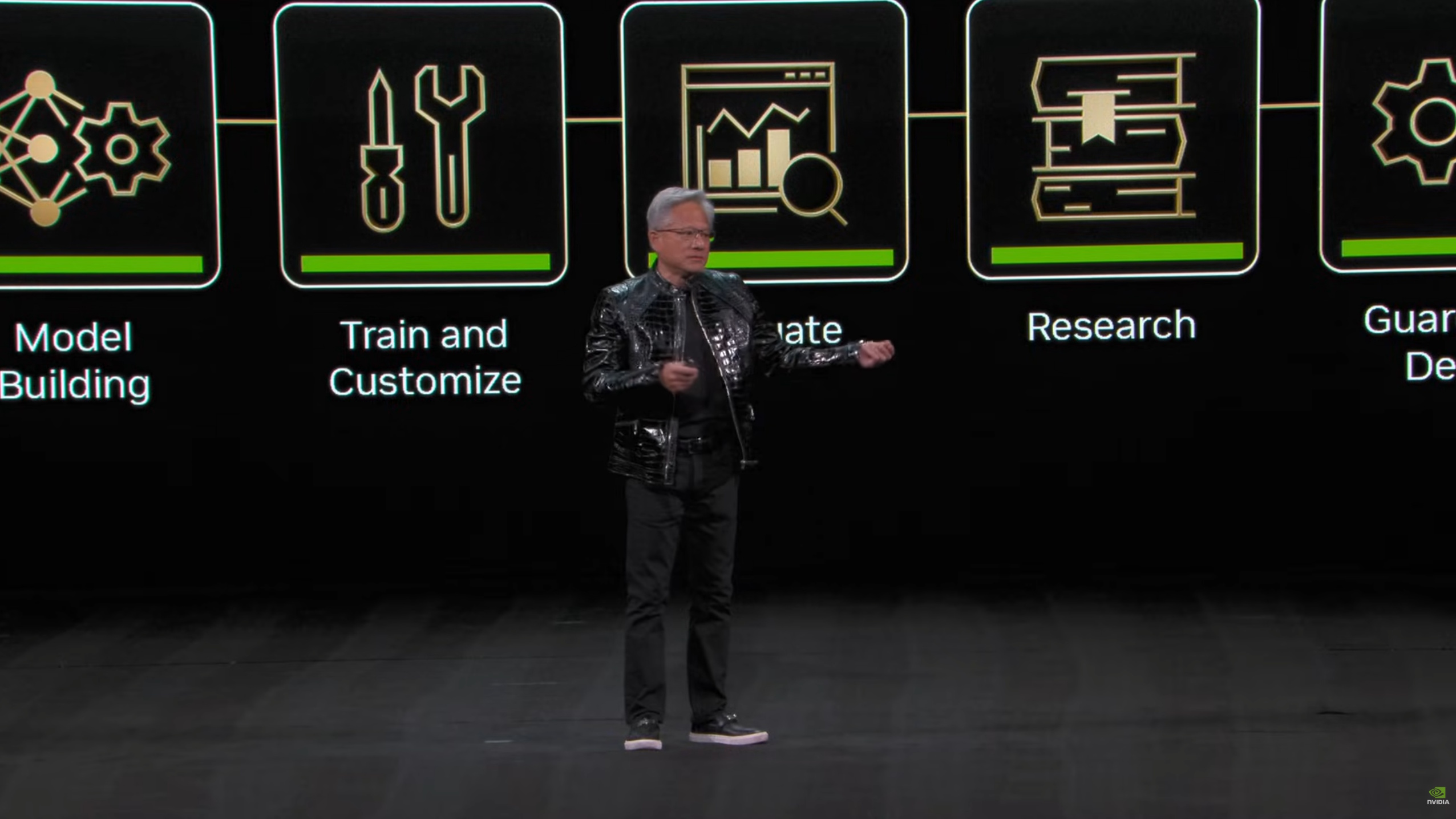
Did you watch every CES presentation this year? If you didn't, don't worry, you didn't miss much. We tend to keep a close eye on Nvidia and AMD for any news about upcoming products, but this year, it was all about AI. I've run the numbers, with a little help from AI-powered transcription, and the mentions of AI are rather staggering.
If you thought Nvidia was emperor of AI, think again. The company's presentation was primarily focused on AI and robotics, but it logged a mere 120 mentions of AI during its 91 minute runtime. That's only 1.3 mentions of AI per minute (AI/min).
AMD's CES keynote, led by Dr. Lisa Su, hit a staggering 210 mentions of AI. That was over a longer runtime of 117 minutes, though it works out to a much higher 1.8 AI/min. Su really wanted to drive that point home, huh?
Now, bear in mind that some Ryzen products have AI in the name. Ryzen AI Max, for example, though only 13 mentions of AI in AMD's show were preceded by the word 'Ryzen'.
If you're wondering what percentage of the words spoken were 'AI', and of course you were, here you are:
1.2% of all words spoken during AMD's show were 'AI'
0.95% of all words spoken during Nvidia's show were 'AI'
Though neither company could match Lenovo. Our Andy sat in on Lenovo's event in the Las Vegas Sphere and had some opinions on that experience, and justifiably so looking at these numbers. Lenovo managed 219 mentions of AI in a 114 minute runtime. That's 1.9 AI/min.
(Image credit: Nvidia)
As for gaming, AMD and Lenovo mentioned that specific term just three times throughout their respective shows. So we see where the money is coming from these days.
That said, AMD still earns nearly as much from client and gaming sales as it does from data centre revenue, at a little over $4 billion a piece. Nvidia is much more focused on data centre sales—only $4.3 billion of its $57 billion revenue near the end of last year was from gaming. That might explain why Nvidia had zero mentions of the word 'gaming' in its CES presentation—though it posted a separate pre-recorded presentation specifically on gaming announcements.
None of this is surprising. AMD, Nvidia, and most of the tech world are at a fever pitch for artificial intelligence right now. While I, nor Dell, see the same sort of fervour for AI products in terms of consumer spending, I did just use AI to transcribe all of these very long presentations in 20 minutes. So, any complaints with the methodology or results, send those to the big AI firms. Cheers.
Catch up with CES 2026: We're on the ground in sunny Las Vegas covering all the latest announcements from some of the biggest names in tech, including Nvidia, AMD, Intel, Asus, Razer, MSI and more.
The world could certainly do with another game about slapping up Swastika-wearers right now. Thankfully, having finished off Indiana Jones And The Great Circle, Machine Games are reportedly working on the previously teased Wolfenstein 3.
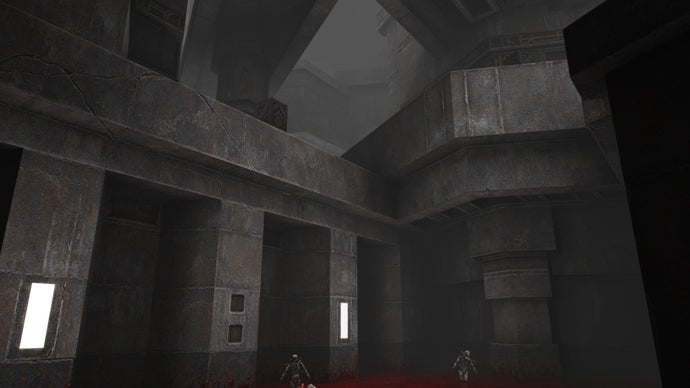
If you're a fan of both the colour grey being draped all over designs that could be accurately described as both angular and slabby, you're in luck. A third brutalist map jam has hit Quake, with this one being less of a fan-made map pack and more of a huge overhaul mod - the concrete cavernousness of which dwarfs the original game.
It was an interesting Advent Calendar this year, from my perspective. My top four games - Arc Raiders, Silksong, Clair Obscur, and Hades 2 - were all highly ranked. And then none of my remaining games made the cut. I guess I should have strategically placed these games higher up for a better chance of making the cut. Bit of gaming the system, you know?
'If you want to torture somebody, first show them your tools' is one of the better horror game design lessons taught by Amnesia: The Dark Descent. I thought of Amnesia's cistern chapter while playing through a later area in Lunar Software's excellent first-person spookathon Routine, announced 13 long years ago, though only in active development for around five. The area centres on a curious underground tree, with water dripping from a hydroponic ceiling and sealed doors on all sides. You can imagine Amnesia's Shadow manifesting here, clogging the roots with acid rot as it homes in on your comically loud footfalls.
An online co-op mod for very French and very puppety soulslike Lies of P has been released in alpha form. As of writing, it'll let you take on boss battles with a friend and its creators are hoping to offer full multplayer playthroughs similar to Elden Ring's brilliant seamless co-op mod further down the line.